The Borgward chronicle with Hansa-Lloyd from 1931, Goliath, and Lloyd
Page 5
By Christoph Büch and Steve St.Schmidt (2026)
Borgward after 1945
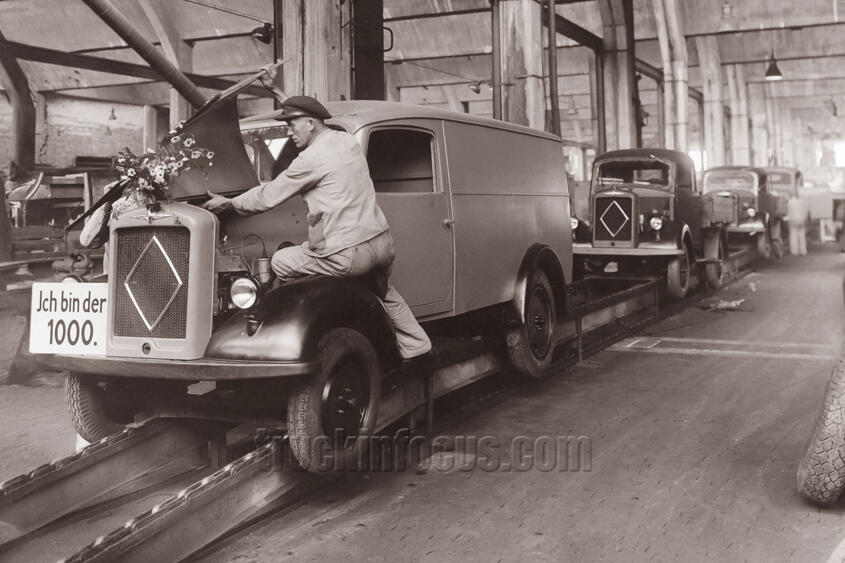
Despite severe war damage, production was resumed in 1945/46. The rubble was cleared away and the factory facilities rebuilt, so that series production could soon begin, initially for urgently needed trucks. The Osterholz-Scharmbeck plant once again contributed cabs and superstructures, so that within a few years a close-knit network of locations had been reestablished.
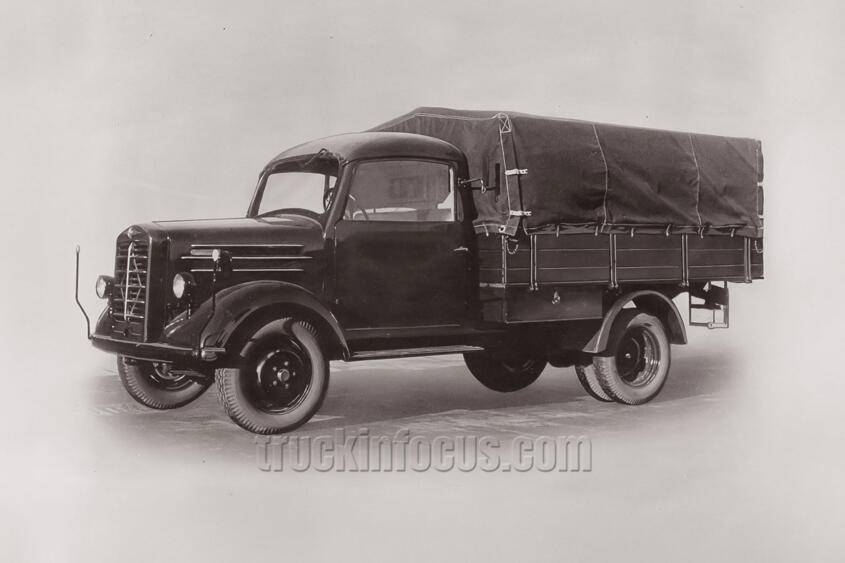
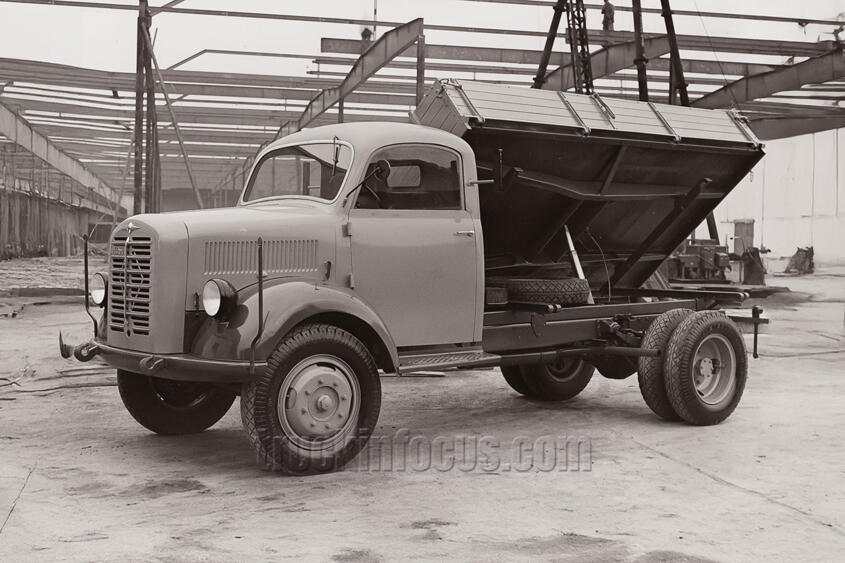
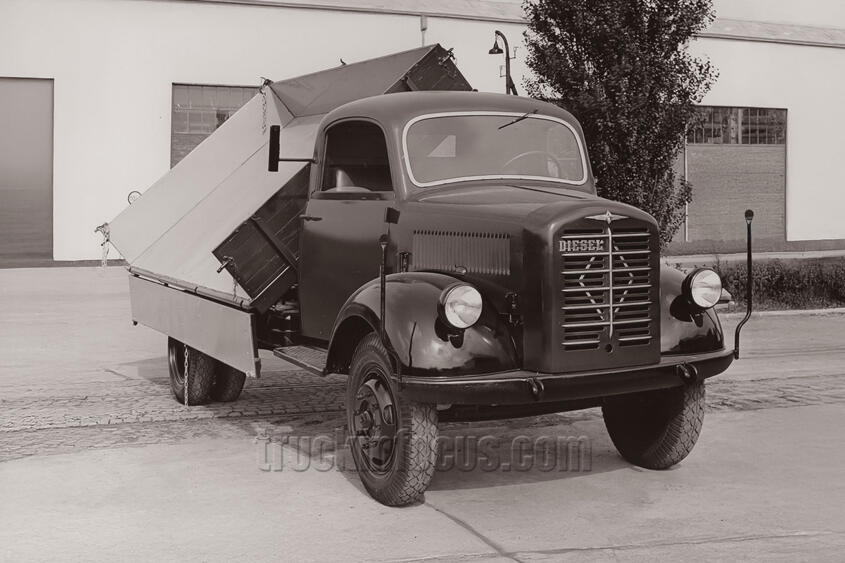
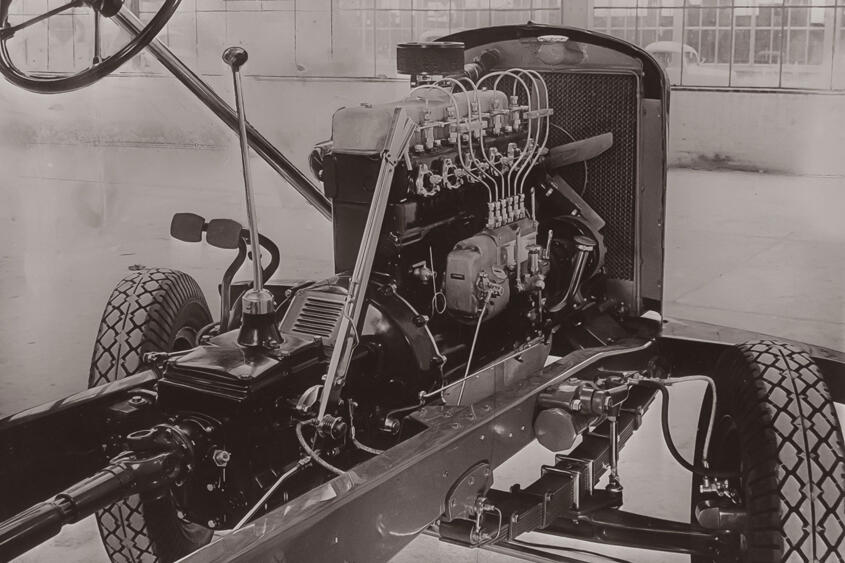
Post-war production began with the three-ton B 3000 S, initially involving 400 employees. Under the supervision of Wilhelm Schindelhauer, the trustee appointed by the American occupying forces, the first vehicles were initially assembled from spare parts from the slightly damaged parts warehouse at the Sebaldsbrück plant. New parts were supplied by the Bremen-Neustadt plant, while axles, transmissions, and engines came from Delmenhorst and Ottersberg. With the BO 3000 model, 102 units with lowered frames were also produced as the basis for bus superstructures.
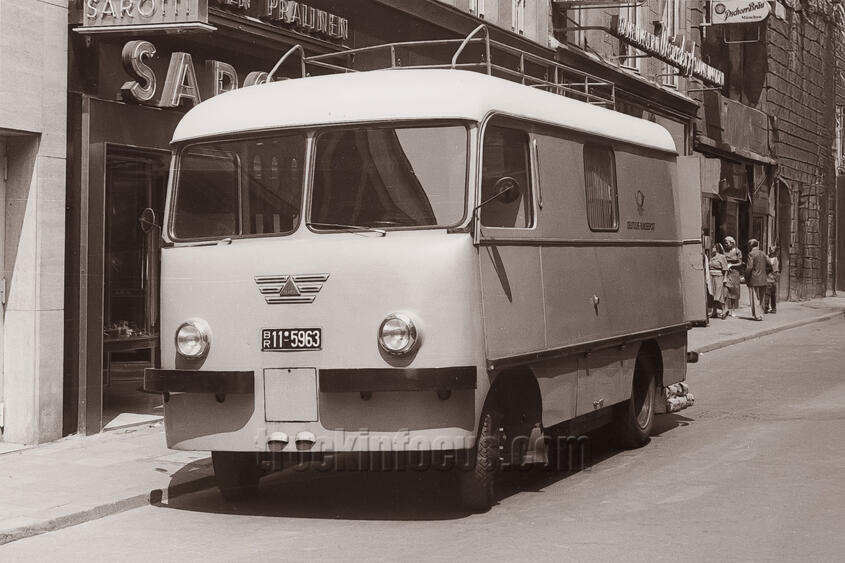
At the end of 1947, the construction of electric vehicles also resumed with the three-ton BE 3000 and the EK 1.5 electric cart (1.5 tons payload). This also required approval from the American authorities. From 1950, the Lloyd EL 1500 and EL 2500 electric trucks were added. In all these models, the battery capacity limited the range to 50 to 70 kilometers – sufficient for many local transport tasks. The EL 2500 was sold in large numbers to the German Federal Post Office until 1955. An electric bus, on the other hand, found little market.
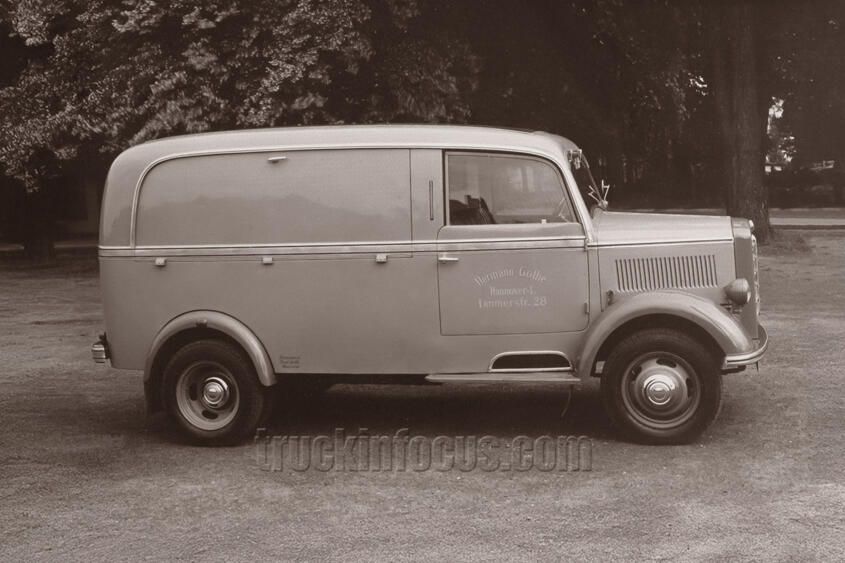
From December 1947, the Borgward B 1000, powered by a 1.4-liter gasoline engine with 33 hp, was back on the market. By June 20, 1948, the day of the currency reform, 2,700 Borgward trucks had already been produced. Carl F. W. Borgward himself was initially interned after the war because of his involvement in the production of war material, but was allowed to take over his factory again after three years, on July 13, 1948, as part of the Allied armament programs at the onset of the Cold War. In order to obtain larger allocations of raw materials, he reactivated Goliath GmbH for light transporters in 1949, founded Lloyd Maschinenfabrik (Lloyd Motorenwerke from 1951) for small car production and parts manufacturing, and converted the Borgward works into “Automobil- und Motorenwerke Carl F. W. Borgward GmbH.” By August 5, 1949, the ten thousandth post-war Borgward truck had already rolled off the production line.