The Borgward chronicle with Hansa-Lloyd from 1931, Goliath, and Lloyd
Page 6
By Christoph Büch and Steve St.Schmidt (2026)
Goliath in the 1950s
In October 1944, the Goliath factory in Bremen-Hastedt was largely destroyed by Allied bombing raids. The factory, which had manufactured three-wheeled transporters, small cars, and commercial vehicles before the war, produced exclusively armaments such as half-track vehicles, torpedoes, and ammunition during the war. But just a few months after the end of the war, reconstruction began. Initially, handcarts and bicycle trailers were manufactured.
In September 1949, Goliath-Werk GmbH was founded as an independent subsidiary of the Borgward Group. Half of the share capital of DM 100,000 was provided by Carl F. W. Borgward, DM 40,000 belonged to his wife Elisabeth, and DM 10,000 was contributed by Friedrich Kynast, an important designer at Borgward who had played a key role in the development of the first three-wheeled delivery van in 1924. After his death in 1950, Borgward took over his share from the heirs.
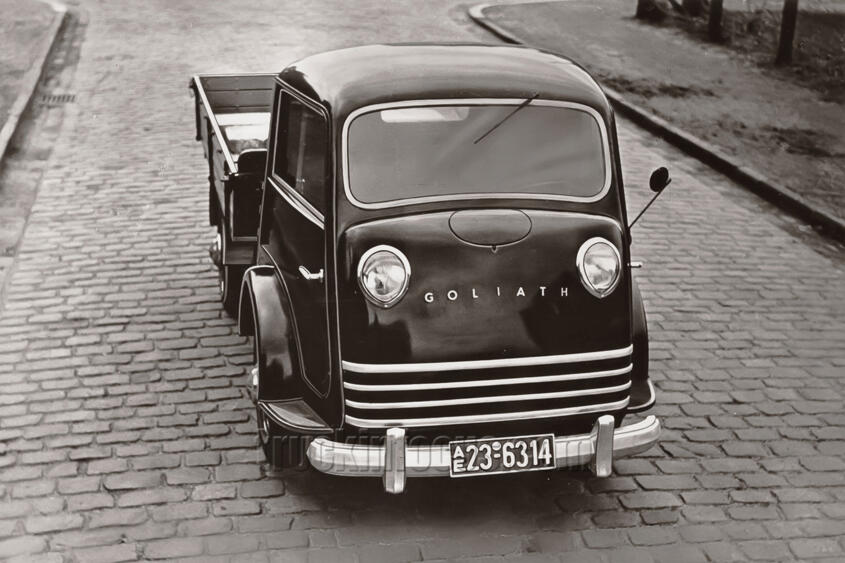
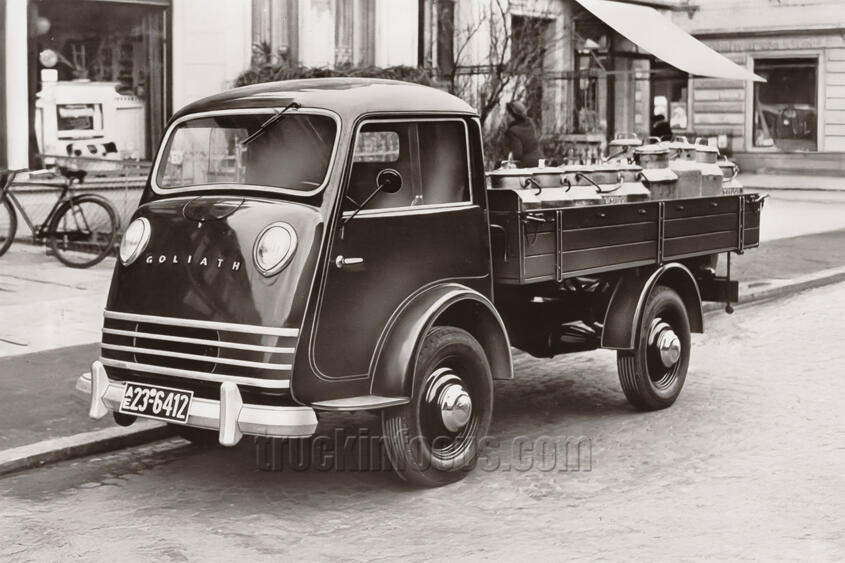
With a keen sense of customer needs, Borgward introduced the Goliath GD 750, a three-wheeled delivery van, in 1949. It was a further development of the pre-war FW 400 model, featuring an improved cab, a 14 hp two-stroke engine, and a payload of 750 kg. This light commercial vehicle, initially priced at DM 3,425.00, soon became an important aid in Germany's reconstruction.
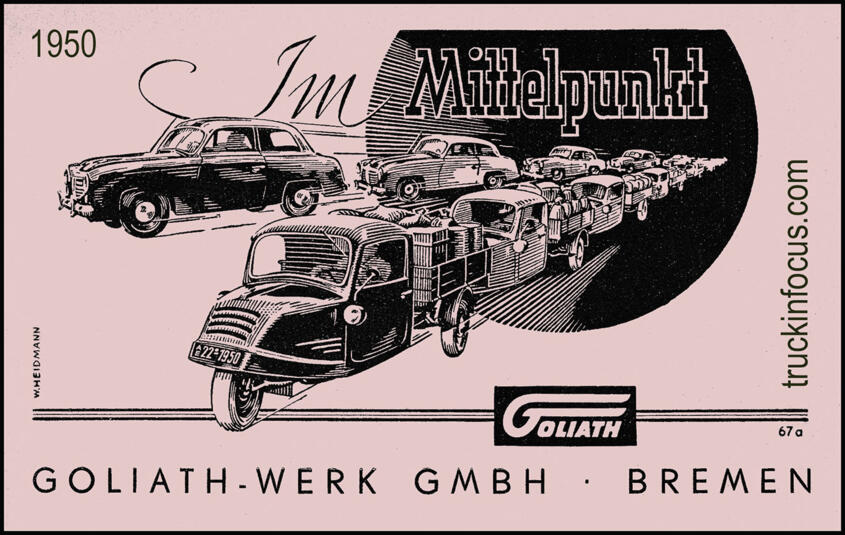
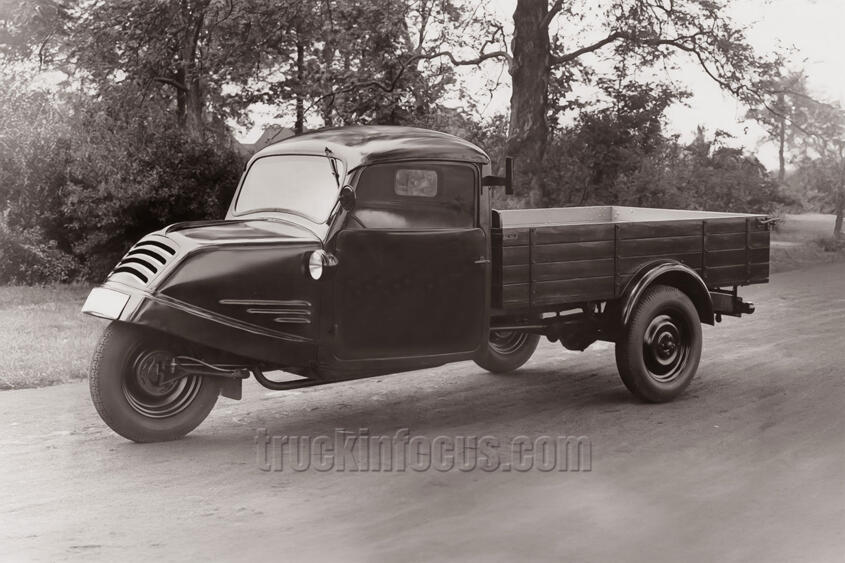
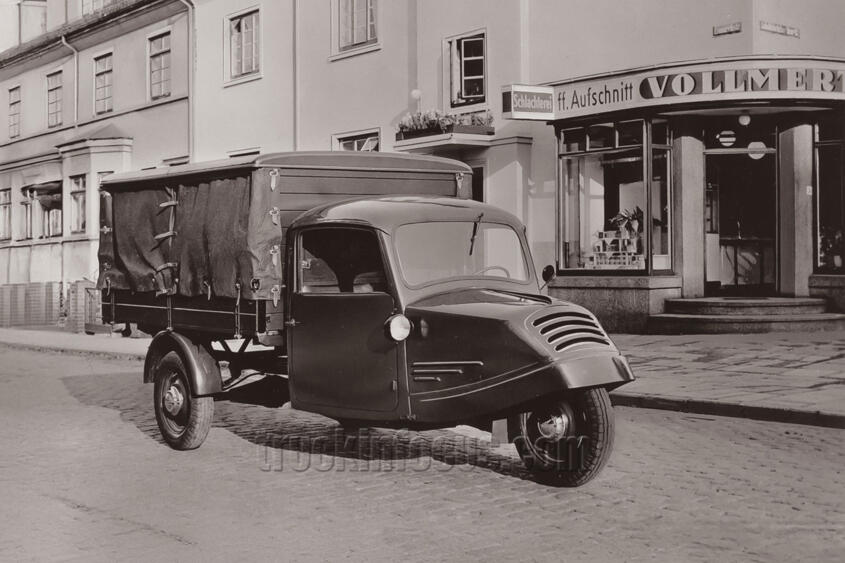
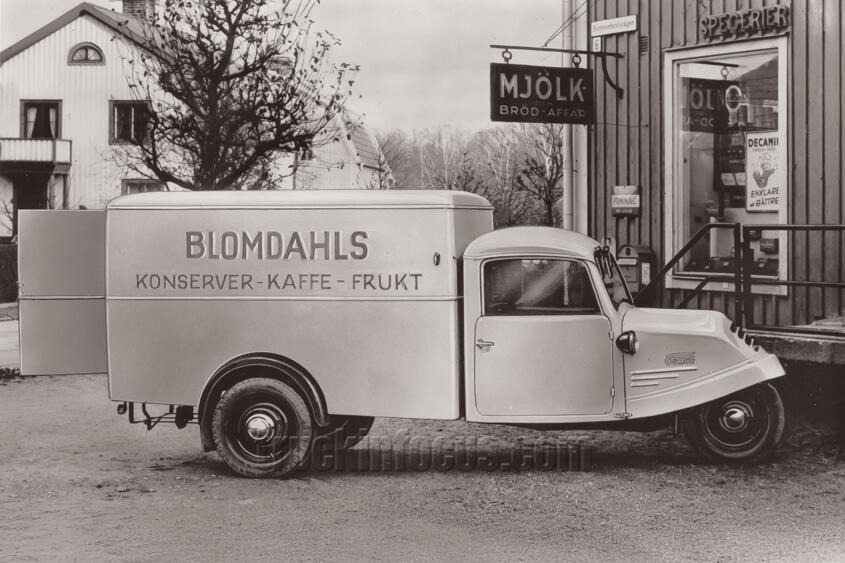
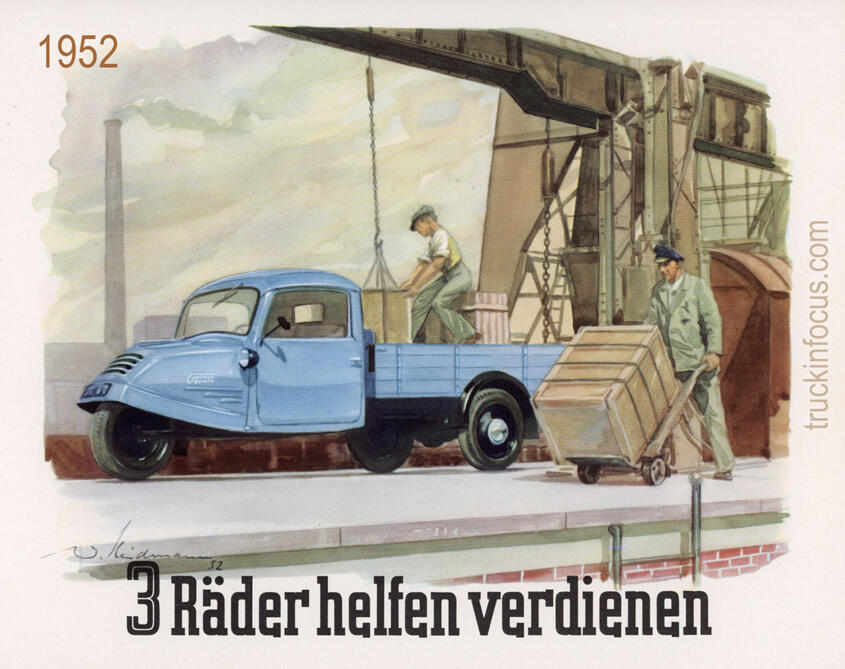
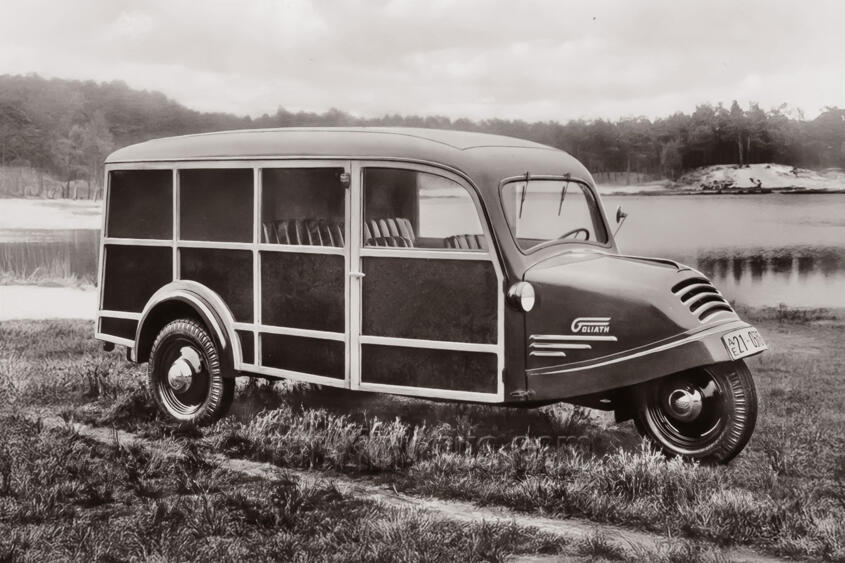
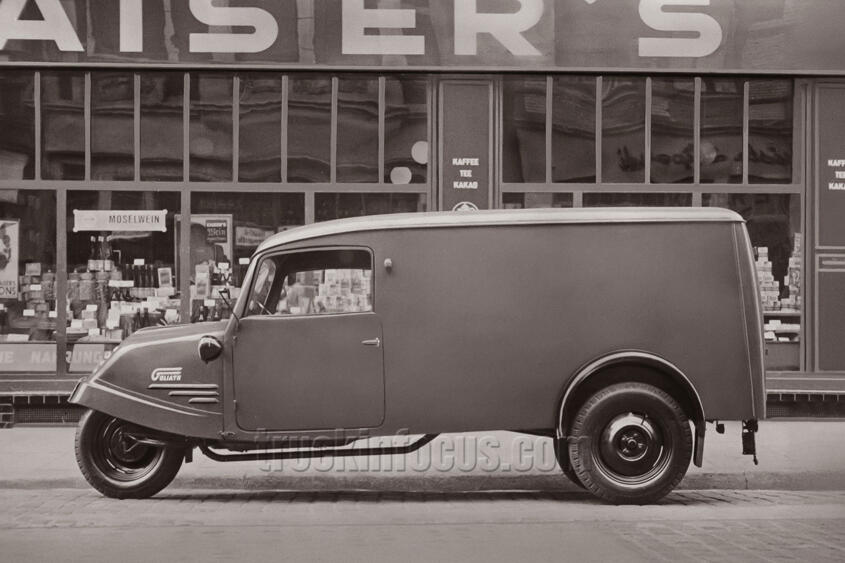
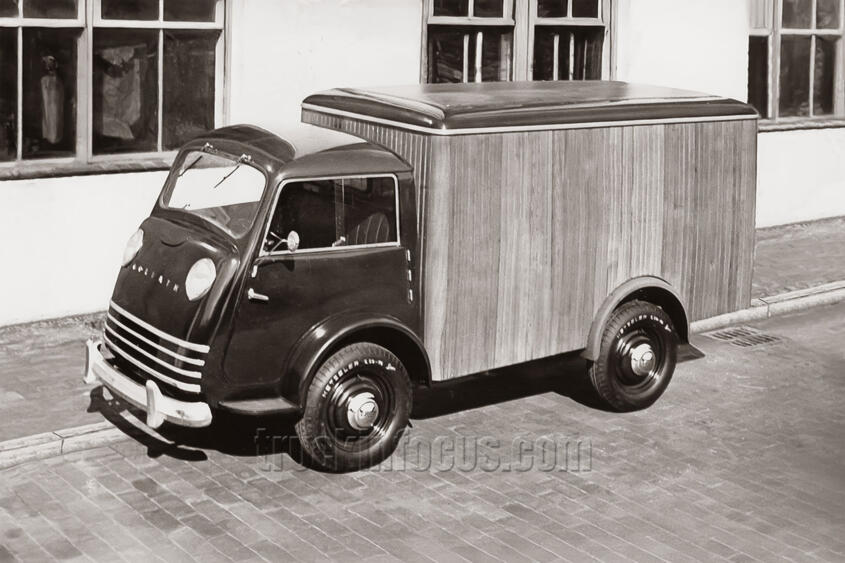
Not only the first post-war Goliath cars of the GP 700 type, but also, and above all, the GD 750 three-wheeled delivery vans in the foreground emerged from the slightly off-center focus of this 1950 advertisement.A total of more than 30,000 Goliath GD 750 three-wheeled delivery vans were sold. Together with the “Tempo” three-wheelers from the Vidal company in Hamburg, they represented an inexpensive means of transport for countless small businesses in post-war Germany.The GD 750 was produced from 1949 to 1955 at the Goliath factory in Bremen. The purchase price for a flatbed truck was 3,600 marks, which is less than 2,000 euros today.The Borgward Group also engaged in export business. So it's no surprise that Goliath vehicles were also sold to other countries – such as this three-wheeled transporter, which was used in Sweden.A GD 750 could carry three-quarters of a ton. A brochure from 1952 shows how three wheels can help you earn money – but it's not without hard work.Also available as a “Woodie”: the Goliath GD 750 with wooden walls. The roof, however, was made of sheet steel.There was also a panel van version with an integrated body. Here are a few more technical details: The GD 750 had a water-cooled two-cylinder two-stroke engine with a displacement of 396 cubic centimeters, which produced 13 to 14.5 hp (the figures vary). The maximum speed was 55 kilometers per hour. Power was transmitted to the rear axle via a cardan shaft (in contrast to the front-wheel-drive “Tempo” tricycles). An air-cooled 16 hp engine with a displacement of 494 cc was also available at an additional cost of DM 75. The engines were installed behind the front wheel.
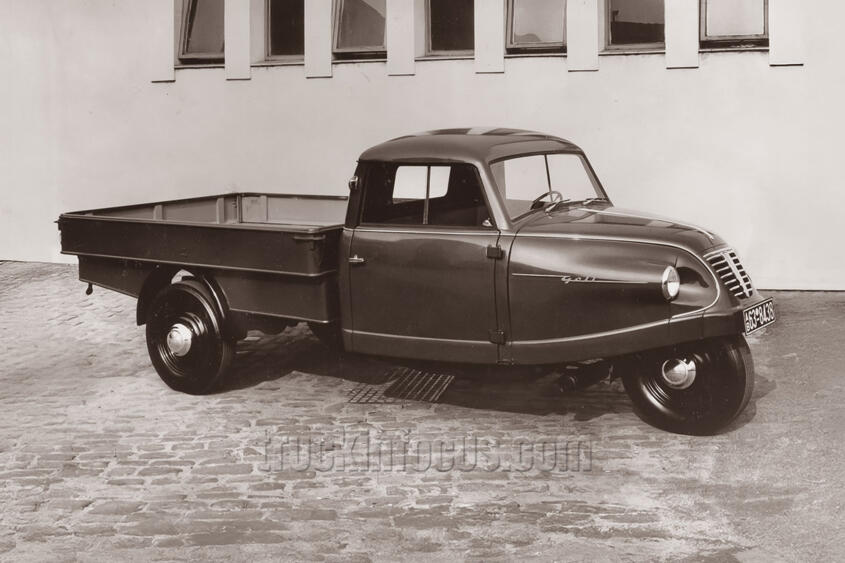
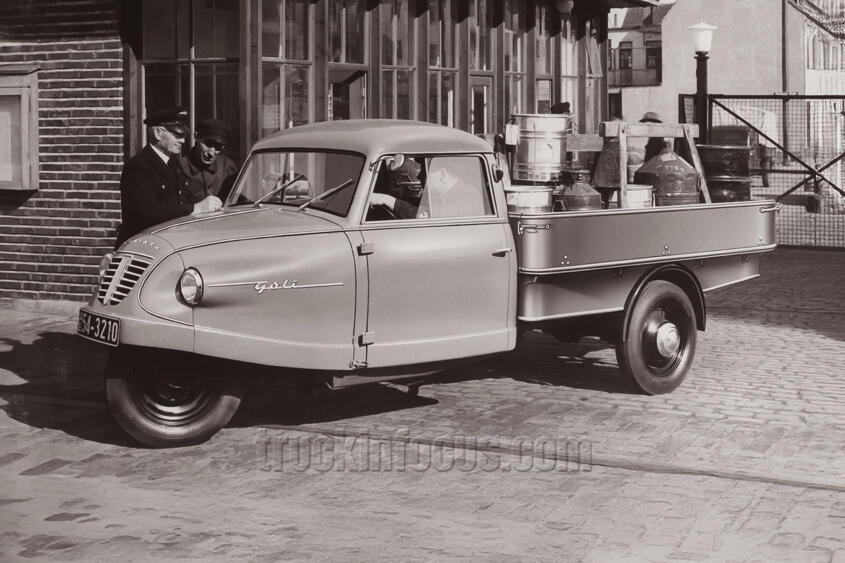
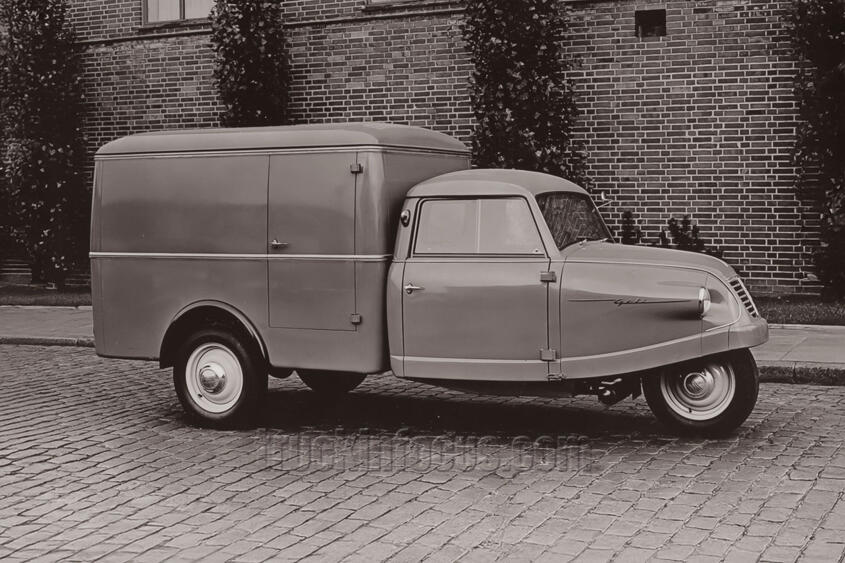
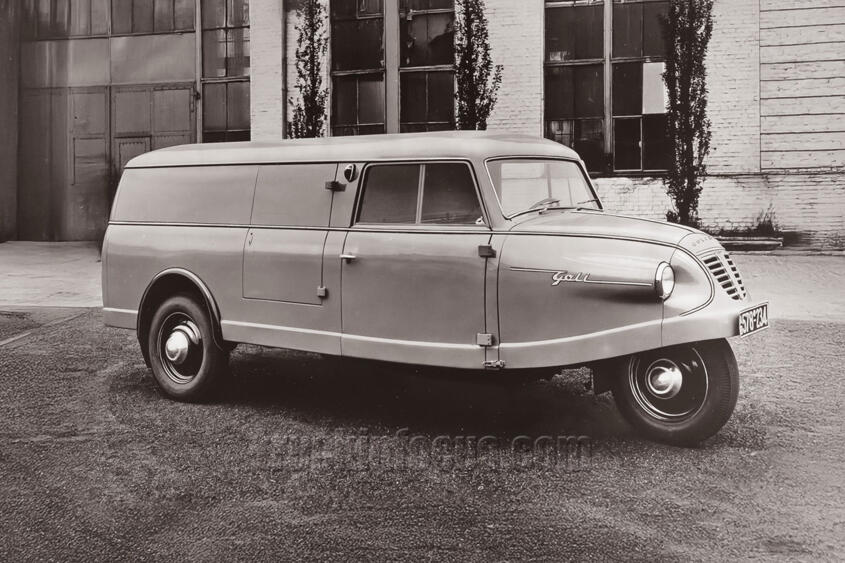
The GD 750 was produced until 1955, when it was succeeded by the “Goli” three-wheeler with a larger, aerodynamically shaped all-steel cab and a more powerful engine. There were flatbed and box body versions, chassis for special bodies, and a particularly elegant panel van version.
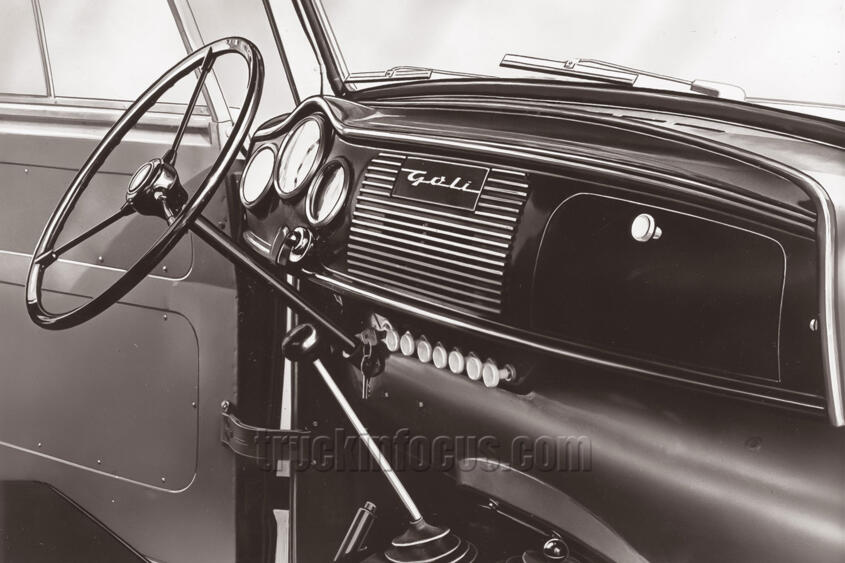
The “Goli” was much “nicer” than the GD 750 when it was launched in 1955. Its aerodynamic front design made it the modern three-wheeled transporter of the 1950s.Not only were the hood and cab of the Goli redesigned, but the steel flatbed and its substructure also made a modern impression.The Goli as a panel vanThe flowing lines of the Goli were also continued in the interior.The Goli was particularly stylish as an integrated panel van. Despite its harmonious design, however, the Goli had no future, as sales of all German three-wheeled delivery vans declined from 1957 onwards. The economic upturn was making itself felt, and people now preferred four-wheeled cars, even if they were more expensive. The Goli was the last three-wheeled transporter to be offered until 1961, the year in which the Borgward Group ceased to exist.
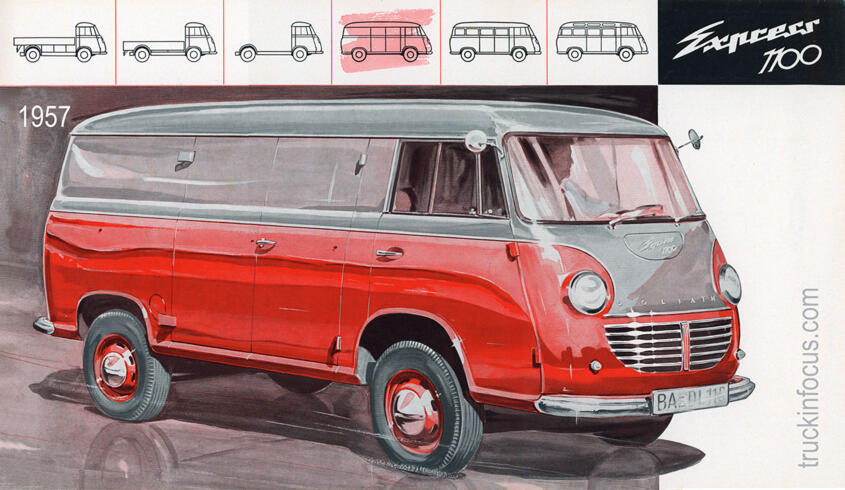
From 1951 to 1953, Borgward also offered the Goliath GV 800 four-wheel vehicle with a payload of 0.8 tons. It was equipped with front-wheel drive and a 16 hp two-stroke engine. The Goliath Express model followed in 1953 and was produced until 1957. It had a spacious all-steel cab. There were various versions, from flatbed trucks to minibuses, as well as a version with a closed body. The front wheels were driven by a 40 hp two-stroke engine. Its successor was the Goliath Express 1100, which was produced from 1957 to 1961. The body remained unchanged, but the payload increased to 1,000 kg and the two-stroke engine was replaced by a 40 hp four-stroke boxer engine. From 1960 onwards, it was marketed as the “Borgward Express 1100.”
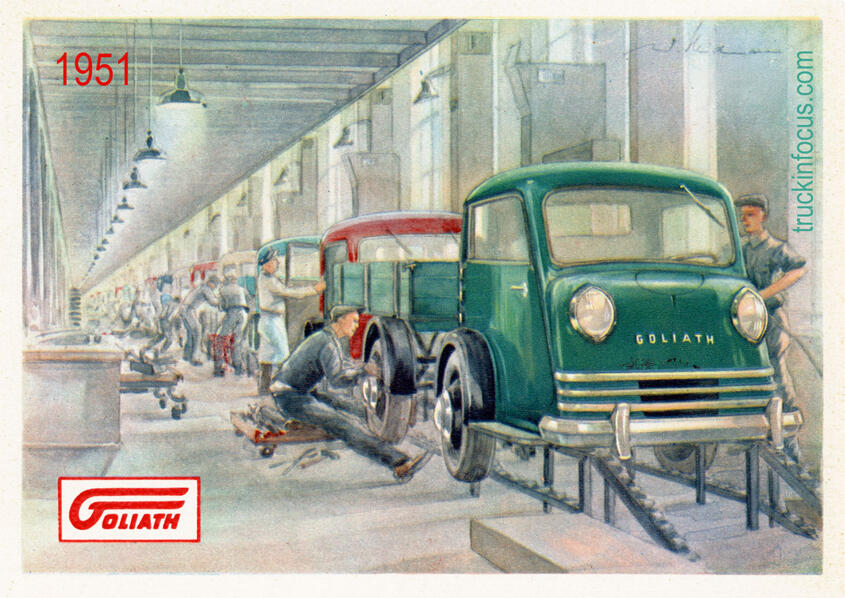
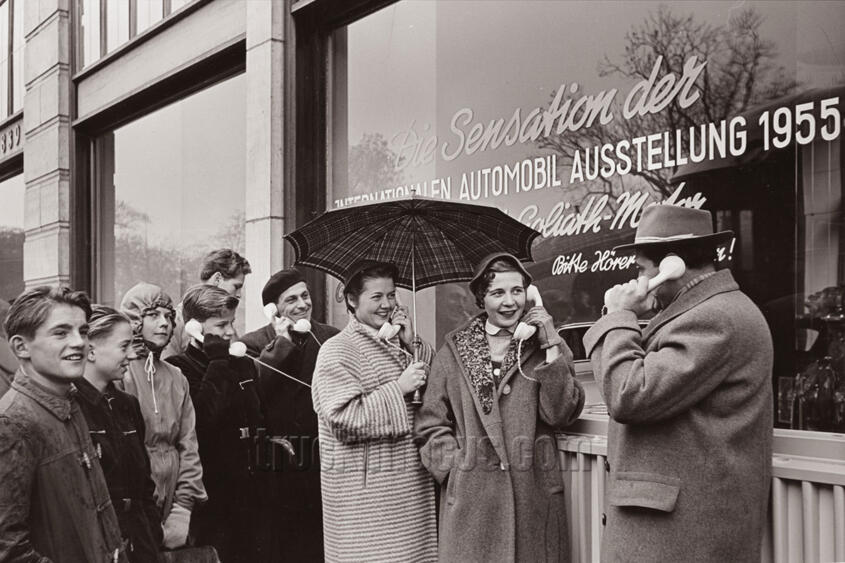
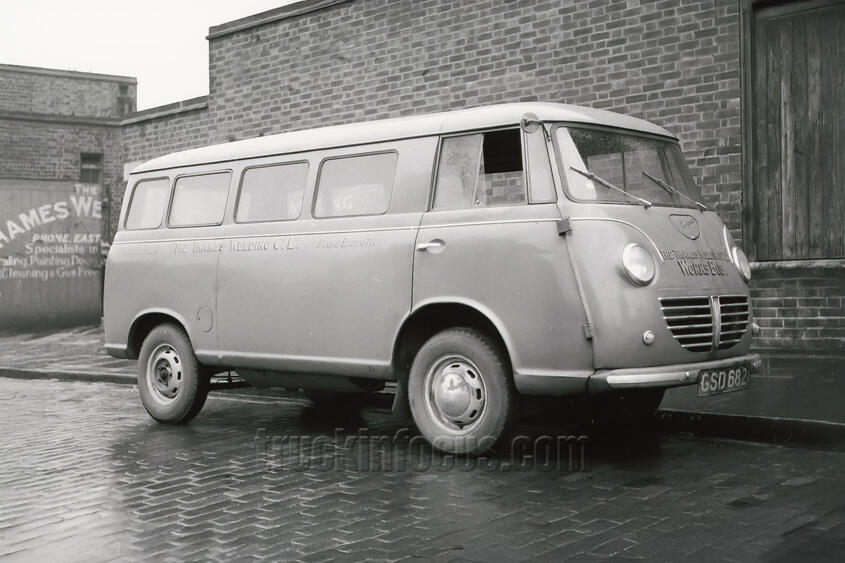
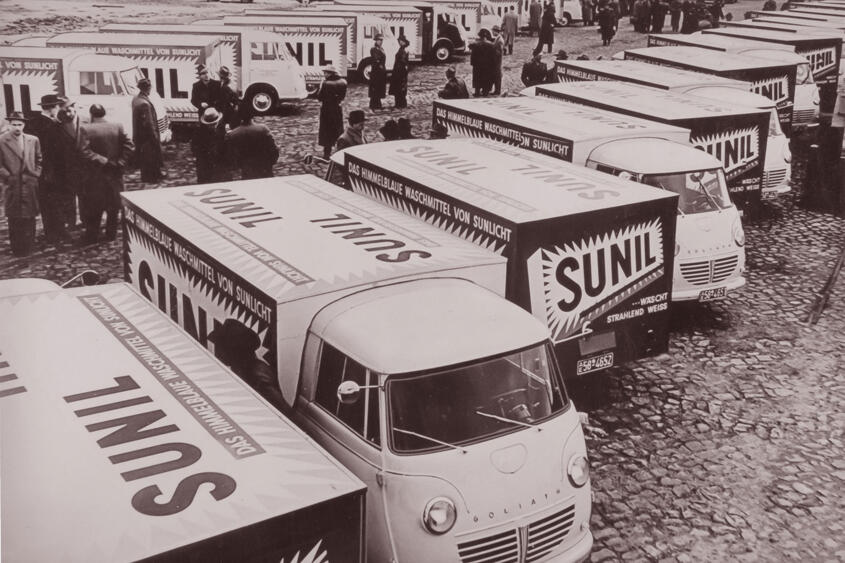
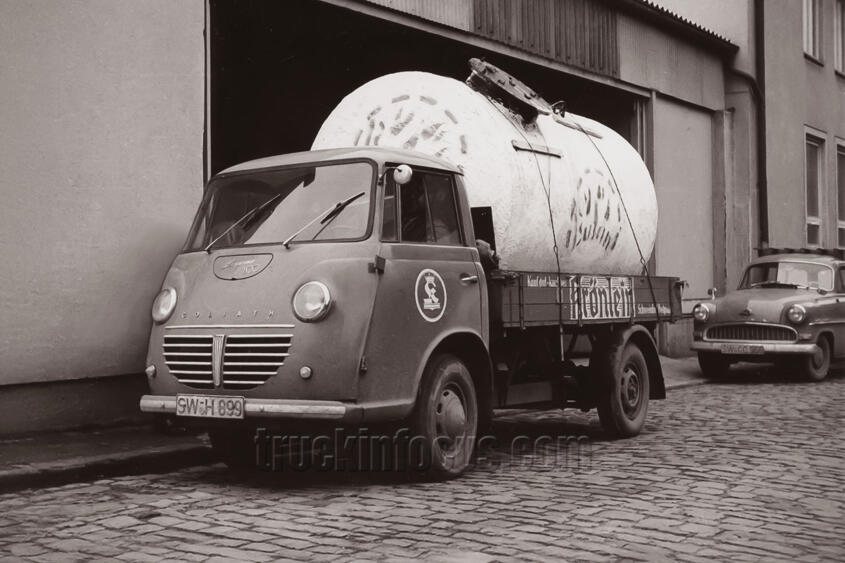
In 1951, the first postwar four-wheeled delivery van from Goliath came onto the market. The small delivery van with the faithful eyes was called the GV 800 because its payload was 0.8 tons. Its 16 hp engine with a displacement of 465 cubic centimeters was installed behind the front axle between the chassis beams and drove the rear axle.After a year of production of the GV 800, during which the 16 hp engine proved to be too weak, an upgrade was carried out. A larger engine with a displacement of 586 cubic centimeters and 21 hp was now installed, and the model designation changed to GV 800 A.With high expectations, work began in 1951 and the Goliath GV 800 was assembled. However, the project was not a great success: in the approximately two and a half years of its production, only 4016 cars, including the GV 800 A, were sold. GV 800 with wooden slat body, which was commissioned from an external body manufacturerOn the occasion of the 37th International Motor Show in Frankfurt am Main at the end of September 1955, Borgward provided a public telephone system with five handsets in downtown Bremen. This free service allowed interested members of the public to find out about Goliath's vehicle line and engines.In 1953, the successor to the GV 800 cabover vehicle was launched. It was called the Goliath Express, although it had nothing in common with the pre-war models of the same name. The minibus in the photo was exported to England, where it was used by the Thames Welding Company. The photo was taken by Bill Godwin and comes from Michael Haeder's collection.In 1955, Sunil was one of the first fully synthetic detergents to be launched in Europe, alongside Omo. At the time, it was manufactured by the Dutch-British consumer goods group Unilever. In Germany, a whole fleet of eye-catching Goliath Express delivery vans, designed to look like detergent boxes, was used to deliver Unilever products. The reason for the vehicle presentation in the photo is not known.In June 1957, Goliath introduced the Express 1100, the successor to the Express. The body was unchanged from the previous model, but the previous two-stroke engine was replaced by a new four-stroke boxer engine. This engine also powered the Goliath GP 1100 passenger car, which was also launched in 1957. The water-cooled engine produced 40 hp and was similar to the air-cooled engine of the VW Beetle. The photo shows a heavily loaded Goliath Express 1100 belonging to the Krönlein company from Schweinfurt, which is still in business today (www.kroenlein.de).A brochure illustration shows the variants of the Goliath Express 1100 available between 1957 and 1961.