The Borgward chronicle with Hansa-Lloyd from 1931, Goliath, and Lloyd
Page 10
By Christoph Büch and Steve St.Schmidt (2026)
Heyday and decline
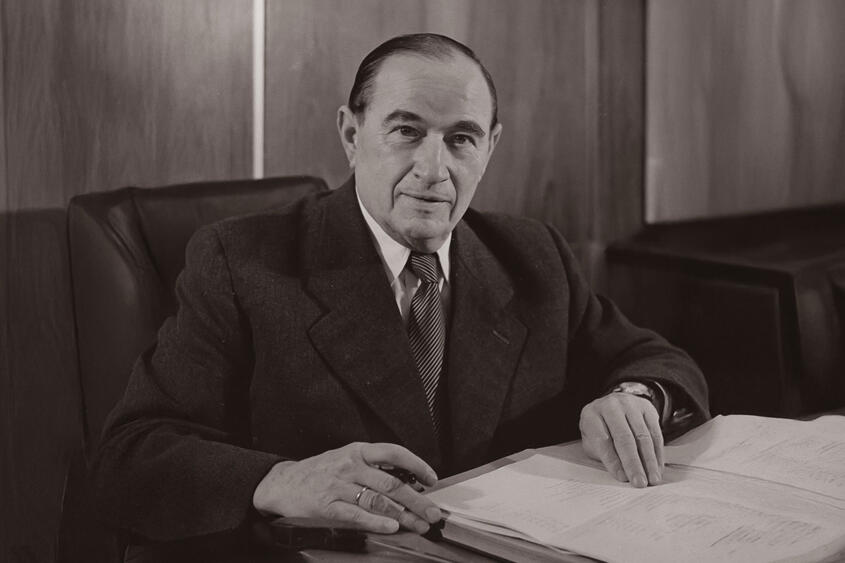
Borgward never rested on its laurels: during the 1950s, the company came up with numerous innovations, including progressive suspension and braking concepts, five-speed transmissions for the first time at extra cost, engine preheaters, and the development of modular electrical and hydraulic systems. The gradual standardization of important parts and the availability of different wheelbases made it possible to customize the vehicles to customer specifications.
Another field for innovation was experimental hybrid and electric drives. From the end of the 1950s, individual B 2500 models with LPG drives were produced for airport services, as well as prototypes with additional electric drives for short-distance deliveries. In cooperation with public authorities, mobile fuel tanks, high-pressure washing systems, and water treatment units were also developed. Special models with high-performance coolers, double roof insulation, and sand filtration were developed for export markets such as the Arab countries and South America; in Northern Europe, cold-resistant variants with reinforced auxiliary heating, battery insulation, and double fuel filter systems appeared.
Thanks to their impressive build quality, Borgward vehicles were also very popular outside Germany. The most important export markets were Sweden and the Benelux countries, followed by countries such as Switzerland, Austria, England, Portugal, and increasingly France and Italy. Overseas markets were also served. Assembly plants in Argentina, Indonesia, the Philippines, South Africa, and Brazil are evidence of the company's international presence. Borgward responded to the requirements of its international customer base with technical adaptations: reinforced cooling systems and additional dust filters were available for the Middle East and North Africa, while tropical-proof electrical systems, wider rims, and country-specific superstructures were standardized for South America.
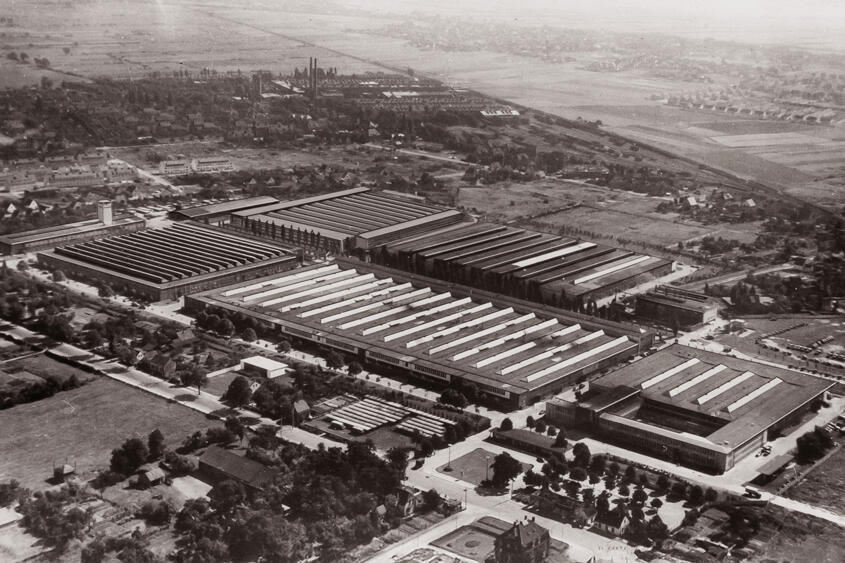
However, internationalization and export also posed new logistical challenges: to handle overseas business, Borgward had already set up its own loading stations in ports in the late 1940s, and employees regularly traveled to South America, North Africa, and the Middle East to supervise assembly and service.
Borgward achieved its breakthrough in international business with the introduction of the CKD (Completely Knocked Down) system, which was already in use by the end of the 1940s. Vehicles were dismantled and shipped as kits to Chile, Greece, Iran, and Egypt. To save on customs costs and meet local quality standards, assembly plants in the export countries took over the final production. In Chile and Argentina, the light and medium-duty trucks (B 2000 and B 2500) were very popular in road construction and scaffolding, and sometimes also in agricultural transport. In Greece, a classic growth market in the post-war years, Borgward vehicles became popular as municipal vehicles and for food transport, often modified with insulation technology and specially reinforced frames for local road conditions.
At the end of the 1950s, the manufacturer also ventured into North America. Pickups and fire trucks based on the B 2000 and B 2500 series appeared there, but success was limited due to regulatory hurdles and strong US competition.
The year 1959 marked a technical high point for Carl F. W. Borgward. The motorsport department developed a 1.5-liter Grand Prix racing car, boat engines found interested buyers, and even a helicopter project caught the attention of the aviation industry. By the end of the 1950s, total production from Bremen and the other plants exceeded 30,000 vehicles per year. By then, the Borgward plants employed around 20,000 people.
Despite all its successes, Borgward became increasingly bogged down in the jungle of its own product diversity. By the early 1960s, the portfolio was simply too broad, with expenses significantly exceeding revenues. Sales of the Lloyd and Goliath models in particular stagnated, and the administration of the various Borgward companies incurred enormous costs. Added to this were considerable investments in the helicopter project and an expensive recall of the first thousand Arabella cars.
Structural problems also became increasingly apparent, exacerbated by rapid growth and the broad model range. The high development costs for ever new variants, such as the Isabella in the passenger car sector or all-wheel-drive commercial vehicles for export, led to increasing capital commitment and liquidity bottlenecks. In addition, the export business was subject to sometimes abrupt market fluctuations, as political upheavals, currency depreciation in target regions, and a decline in government orders caused sudden slumps in sales. Storage capacities grew, and unsold vehicles and spare parts weighed heavily on the balance sheet.
In addition, competition in Germany and on international markets was noticeable. Large companies such as Daimler-Benz and Opel were targeting the same government customers and standardizing their offerings for internationally active dealers and fleet customers. Borgward was forced to offer price reductions, which increasingly reduced its profit margin. At the same time, the situation was exacerbated by internal management errors: the group structure led to inefficient approval processes and personnel conflicts, while investments in new production facilities were sometimes made haphazardly and without comprehensive market analysis.
In 1960, Borgward was forced to ask the Bremen Senate twice for a guarantee for necessary bank loans, using its own real estate as collateral. As a result, the Bremen Senate appointed auditor Dr. Johannes Semler as restructuring officer. It is noteworthy that Semler had previously served as chairman of the supervisory board at BMW, a direct competitor. Semler and the Bremen senators responsible for finance and economics jointly concluded that Borgward was not creditworthy – even though, according to press reports, both the operating assets and the stocks of finished and semi-finished vehicles far exceeded the amount of credit requested.
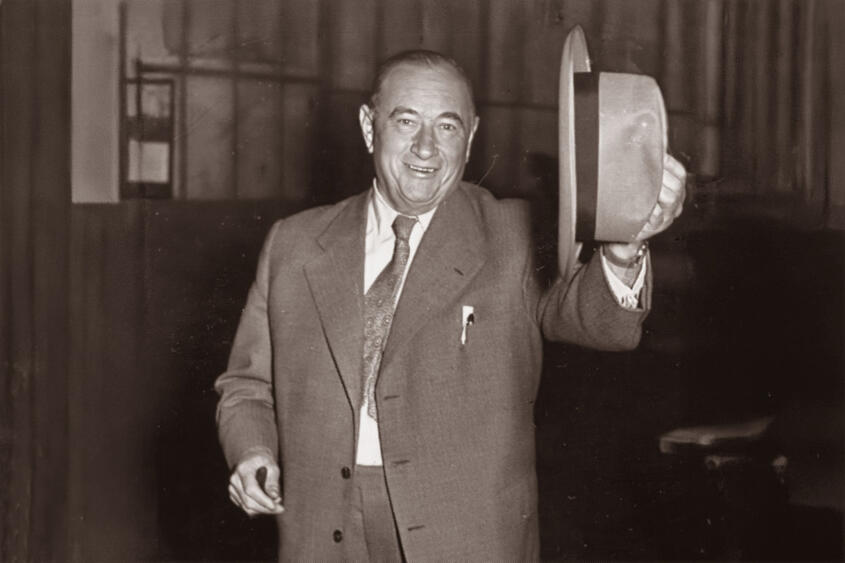
In 1961, Dr. Semler held unsuccessful sales talks with international corporations such as Ford, Volvo, Saab, and Chrysler. As his restructuring mandate was unsuccessful, a settlement was initiated on July 28, 1961, to liquidate the assets of Carl C. F. Borgward GmbH, Goliath-Werke GmbH, and Lloyd-Motorenwerke GmbH. An attempt by former Borgward customers and suppliers, together with various banks, to found a new Borgward-Automobil GmbH and acquire the Sebaldsbrück plant for DM 90 million failed. In order to save his life's work, Carl F. W. Borgward, now 70 years old, handed over his company to the Free Hanseatic City of Bremen and retired to private life.
On September 11, 1961, bankruptcy proceedings were officially opened. The Bremen Conservative Party CDU advocated for the establishment of a parliamentary committee of inquiry, but met with resistance from the Social Democratic majority faction, which rejected the motion. Just in time for the start of the company holidays, 12,600 employees received their notices of termination.
The bankruptcy proceedings were not fully completed until 1969, with all creditors receiving full payment of their claims. In the course of the proceedings, part of the production facilities were shipped from Bremen to Mexico in 1963, where Borgward cars continued to roll off the production line between 1966 and 1970. The plants in Bremen went to various subsequent users and metalworking companies. Individual facilities in Osterholz-Scharmbeck continued to be used for spare parts production, service, and as a Borgward club center until the 1970s.
The spectacular bankruptcy marked the end of a successful automobile brand. The excellent quality of the vehicles was not enough to overcome the manufacturer's economic problems. Under the impact of the bankruptcy, Carl F. W. Borgward died on July 28, 1963, after a long illness. His company, once a symbol of advancement and modernization in German automobile and commercial vehicle manufacturing, became synonymous with one of the most famous industrial bankruptcies of the post-war period. The causes of this were analyzed for decades in the media, as well as in literature and research.
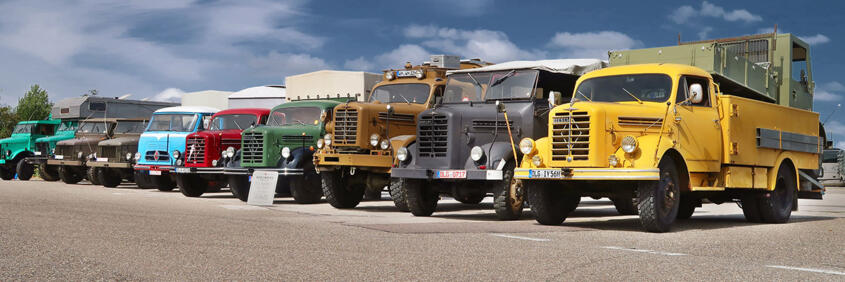
Borgward cars and commercial vehicles remained a fixture on German roads and beyond for a long time to come. They still enjoy an excellent reputation today.
Sources:
Peter Michels: Vom Blitzkarren zum Großen Borgward (From the Blitzcart to the Great Borgward), Verlag Bärbel Michels, Schmallenberg, 1984, ISBN 3-9800735-0-5 (Without Peter Michels' book, this Borgward chronicle would hardly have been possible.)
Jens-Theo Müller / Frank Wendler: Goliath, VF Verlagsgesellschaft, Wiesbaden, 1989, ISBN 3-926917-01-6
Ulrich Kubisch: Hansa Lloyd Automobilbau, Steintor Verlagsgesellschaft mbH, Bremen, 1986, ISBN 3-926028-00-9
Web links:
https://de.wikipedia.org/wiki/Borgward
https://de.wikipedia.org/wiki/Lloyd_(Automarke)
https://de.wikipedia.org/wiki/Goliath_(Automobilhersteller)
https://de.wikipedia.org/wiki/Hansa-Lloyd
Nutzfahrzeug-Lexikon - Borgward.pdf
Have errors crept into this article? If you have any suggestions for improvement, just let us know and we'll take care of it. Thank you for your commitment. Please use this e-mail address for your corrections: corrections@truckinfocus.com