The Borgward chronicle with Hansa-Lloyd from 1931, Goliath, and Lloyd
Page 9
By Christoph Büch and Steve St.Schmidt (2026)
Borgward in the late 1950s
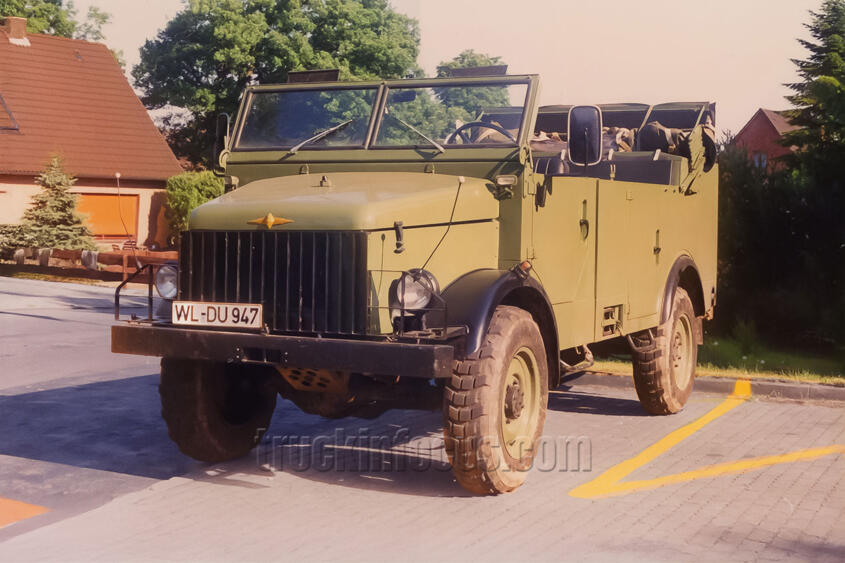
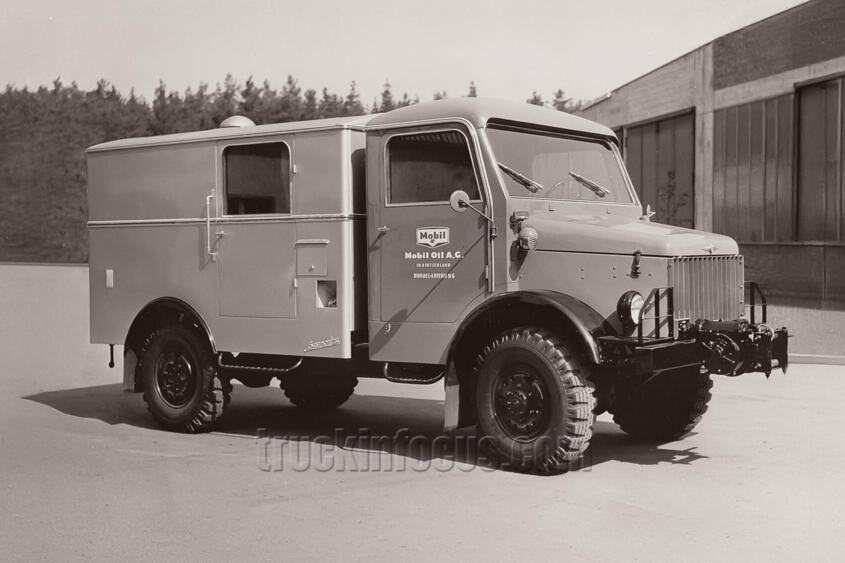
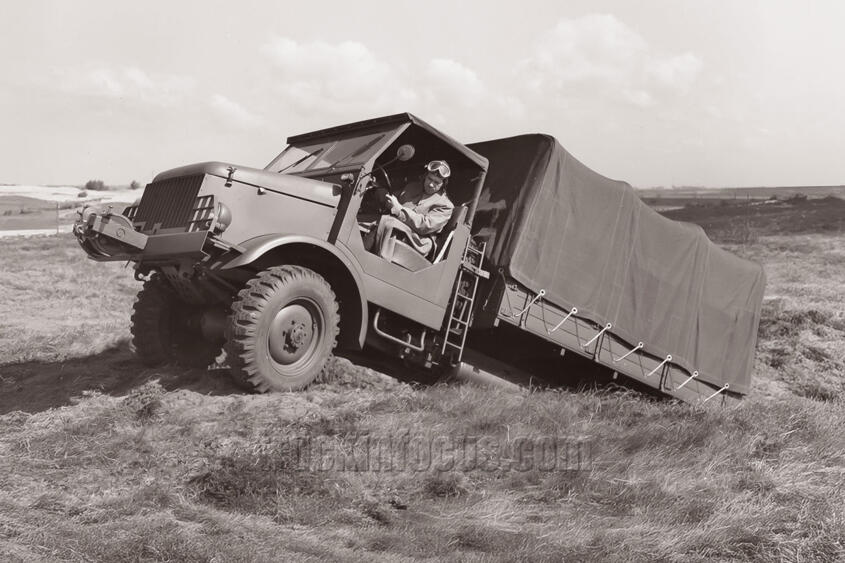
The B 2000 also served as the basis for the B 2000 A/O (0.75 t truck) in an angular military design, which was built from 1955 to 1961 as a Kübelwagen (bucket-seat-car) and as a flatbed truck with a 0.75 ton payload. The vehicle had extended gear ratios, switchable all-wheel drive, and special off-road tires, offered space for eight to nine men and their equipment, and was equipped with a tarpaulin frame, double fuel filter, and 24-volt electrical system. At its heart was a six-cylinder gasoline engine with a displacement of 2.4 liters and an output of 82 hp. In addition to the Federal Border Guard, numerous police departments and the Technical Relief Service also opted for the versatile B 2000 A, with different body versions being used. Individual prototypes were converted into amphibious transporters, sand and snow vehicles, or mobile radio centers – the wide range of variants demonstrated the concept's suitability as a universal base vehicle. Between 1955 and 1961, the German Armed Forces purchased around 5,700 Kübelwagen and several hundred flatbed trucks from Borgward. From 1962 to 1968, Büssing produced around 165 of these vehicles for the Federal Border Guard, unchanged but with its own lion emblem on the radiator grille. Büssing had taken over the former Borgward truck factory in Osterholz-Scharmbeck (and sold it to FAUN in 1969).
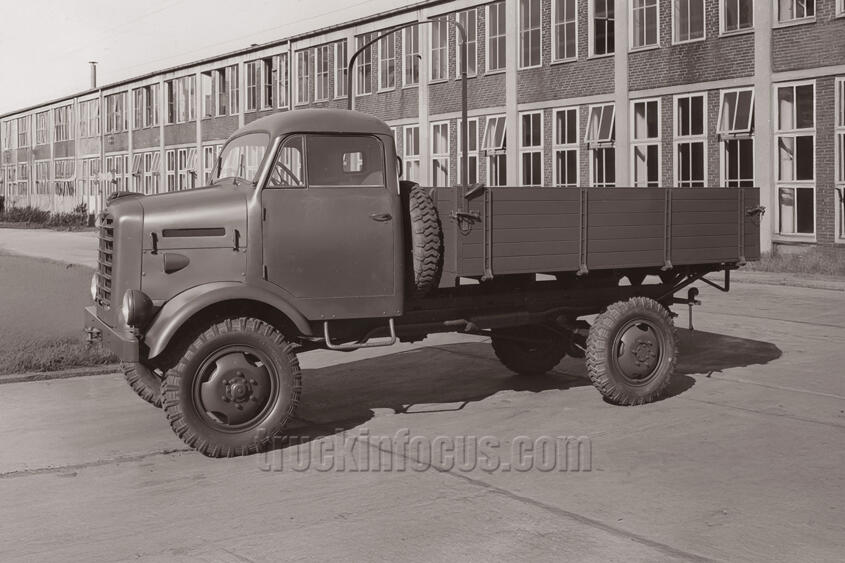
The Borgward B 2000 also served as the basis for the B 2000 A (0.75 t gl truck), which was produced from 1955 to 1961 in an angular military version as a bucket truck and flatbed truck with a payload of 0.75 tons. The photo from 1984 was taken by Sigmar Koeke from Berlin.Borgward B 2000 A/O with special bodywork for Mobil Oil AG, which was used as a registration vehicle with permanently installed equipment for recording seismic waves. The manufacturer was Hermann Harmening KG, a vehicle and bodywork factory founded in 1879 as a court carriage factory in Bückeburg (Lower Saxony). In the 1950s, Harmening mainly produced bus bodies. In 1958, FAKA took over the production facilities.Only 14 units of the military four-wheel-drive flatbed truck “Lkw 1.5 t gl” with a 3.4-meter wheelbase were built in 1959.
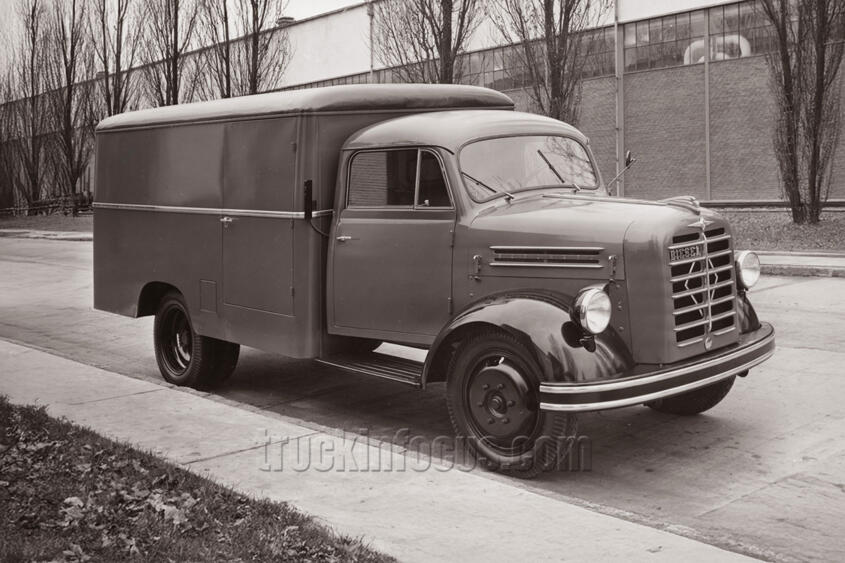
Also in 1954, the B 2500 model was introduced (renamed B 522 in 1959). Although outwardly almost indistinguishable from the B 2000, it did offer a number of improvements. For example, it had a hydraulic pressure accumulator for the oil pressure brakes, larger wheels, and an optional five-speed transmission. In 1960, the B 2500 was given a higher roof. There was also a version with switchable all-wheel drive, the B 2500 A. It was primarily intended for the German Armed Forces, as well as for disaster control, firefighting, and municipal operations. From 1959 to 1961, a version of the B 522 A with an angular military cab was also available.
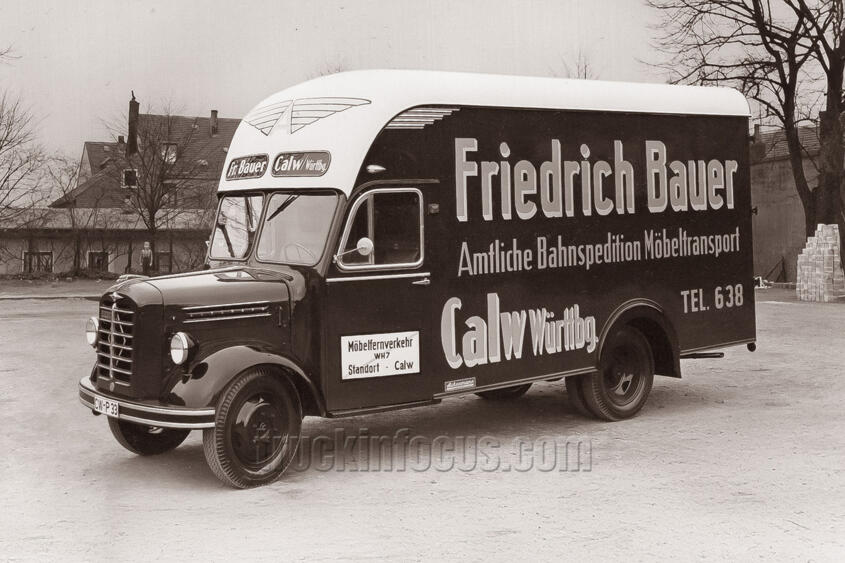
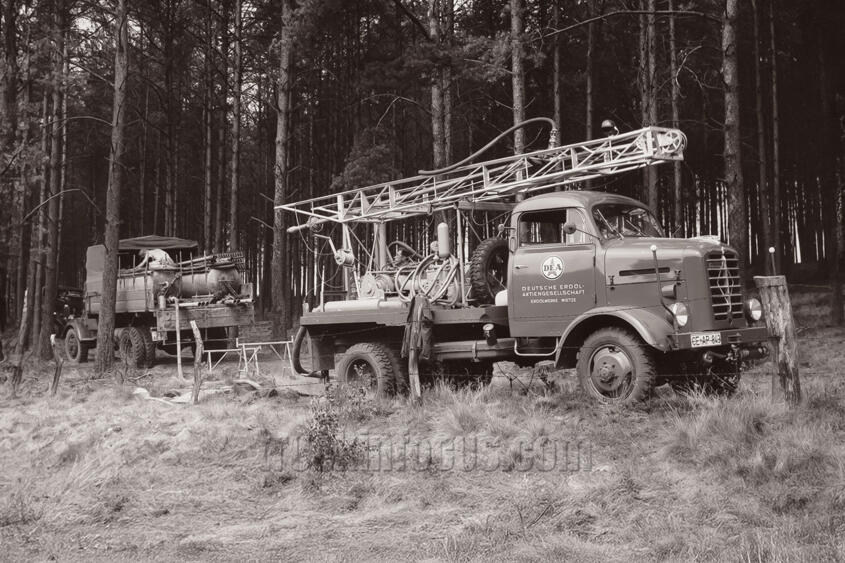
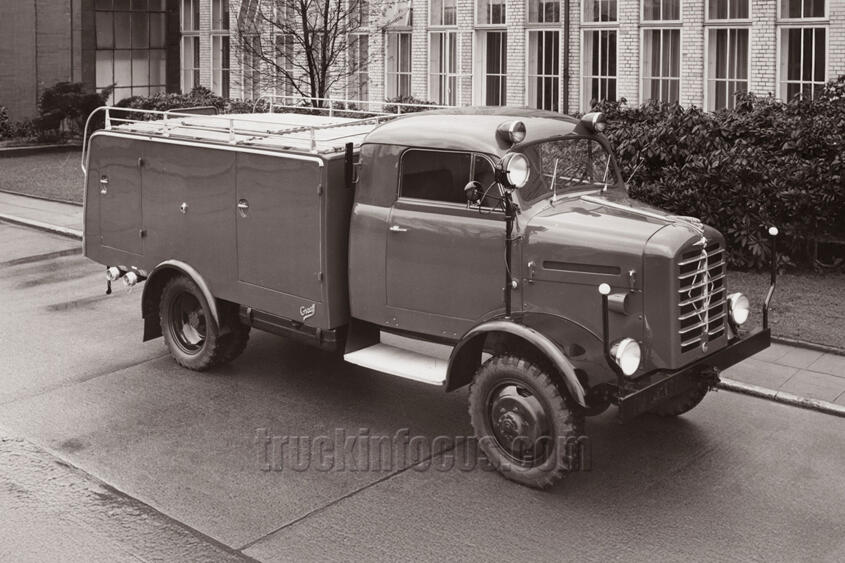
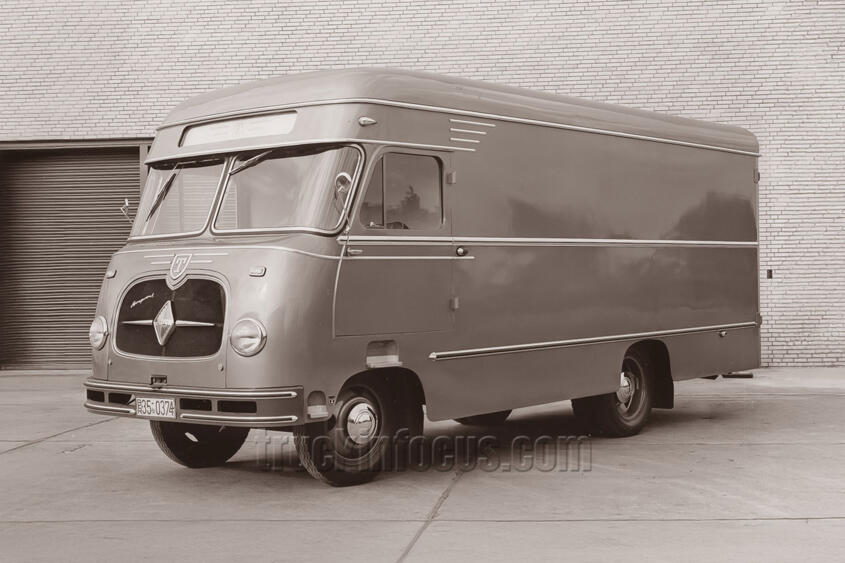
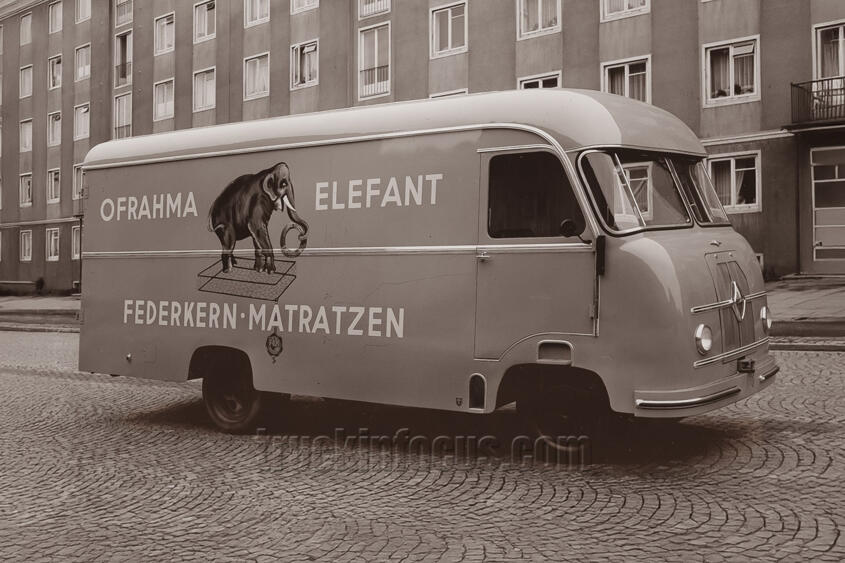
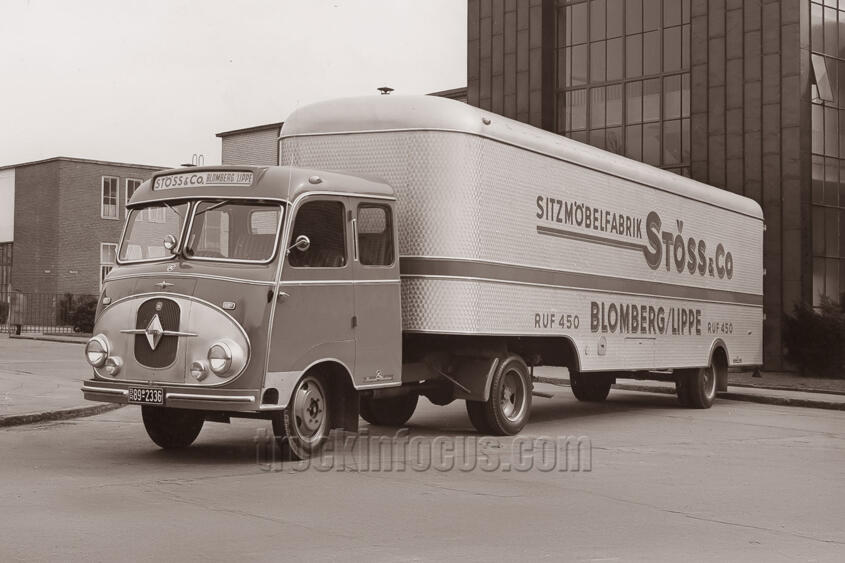
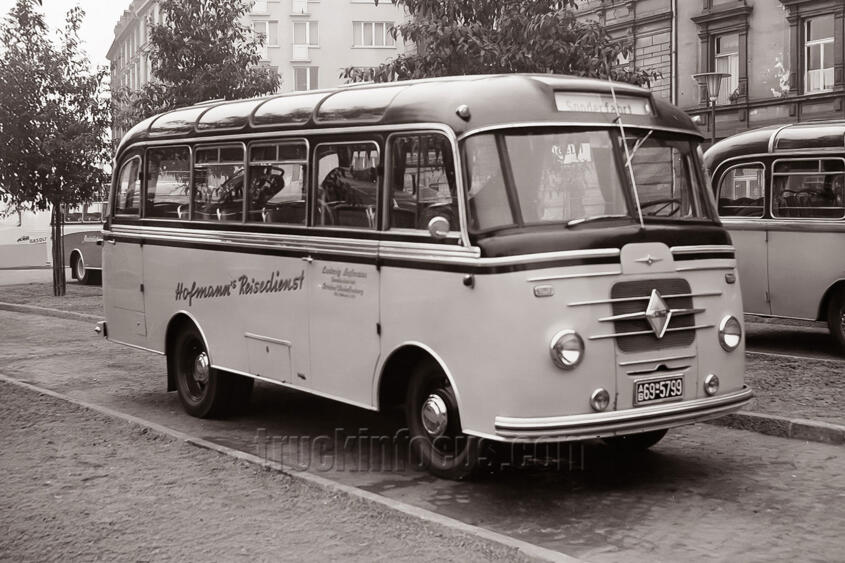
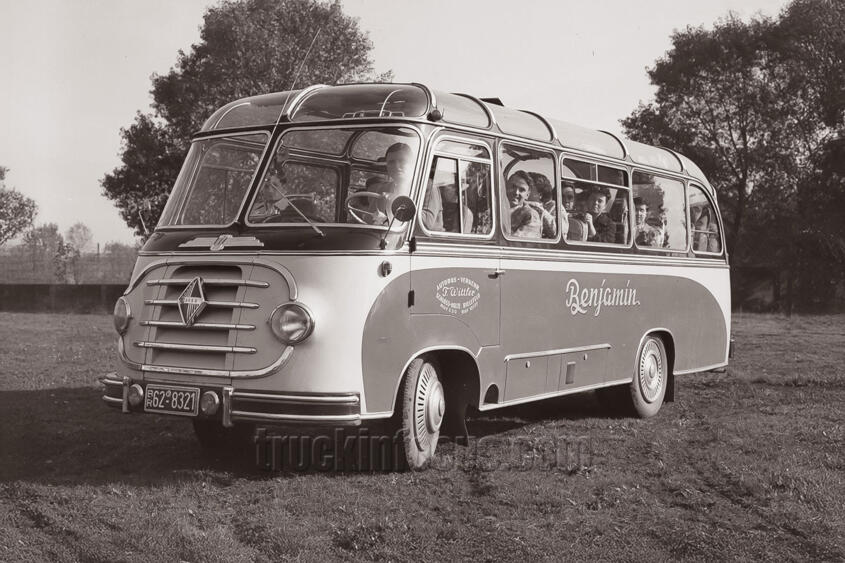
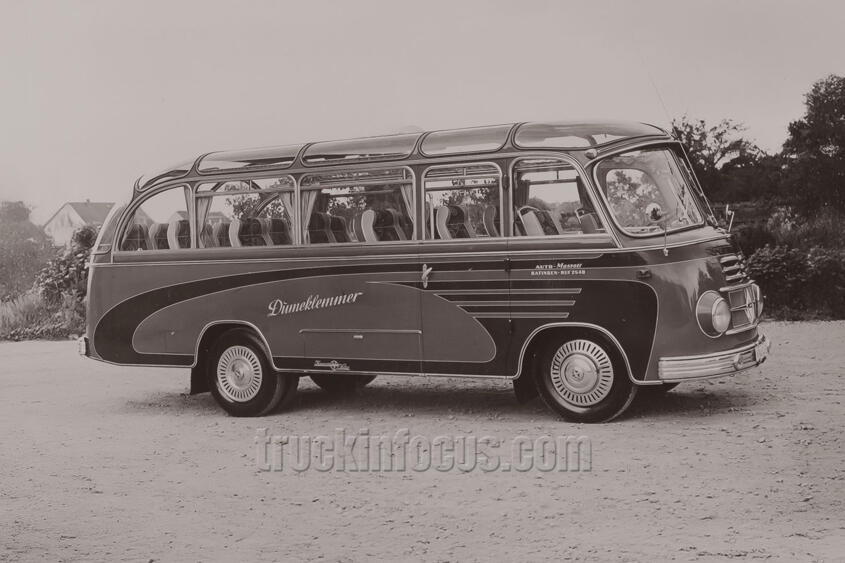
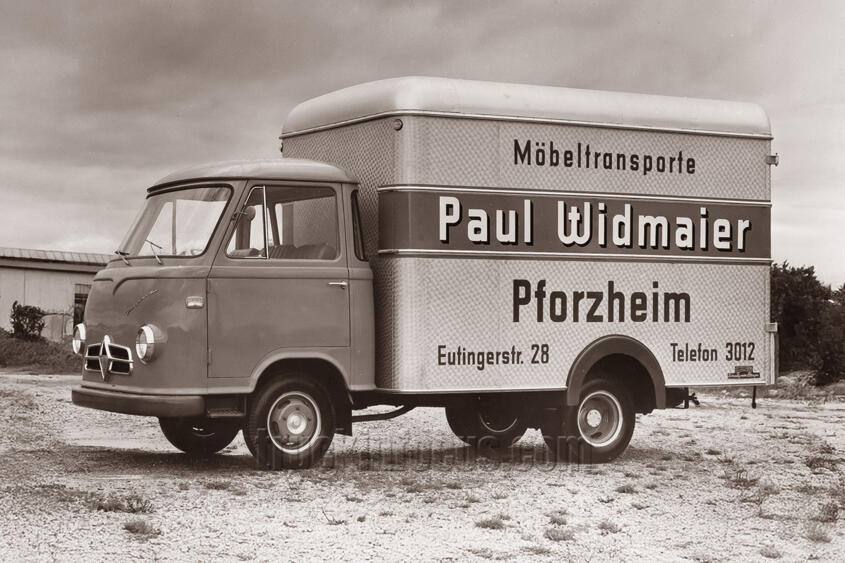
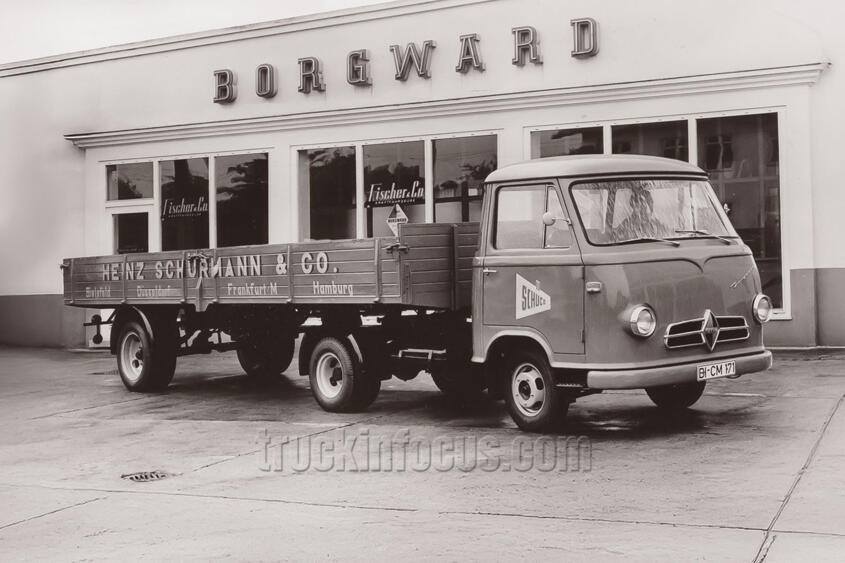
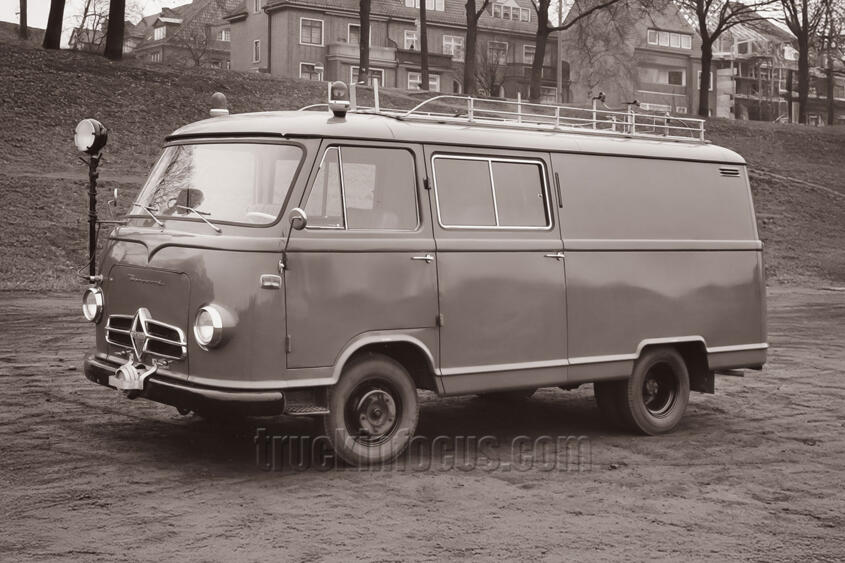
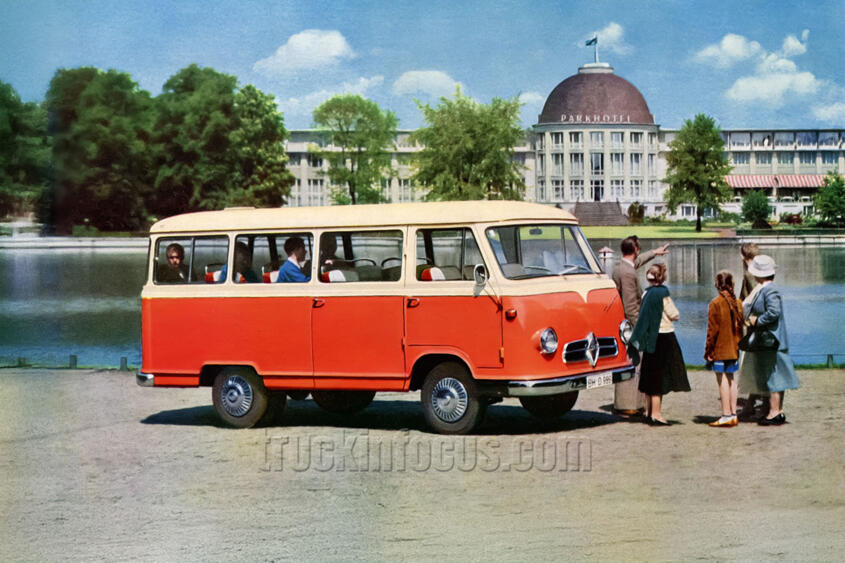
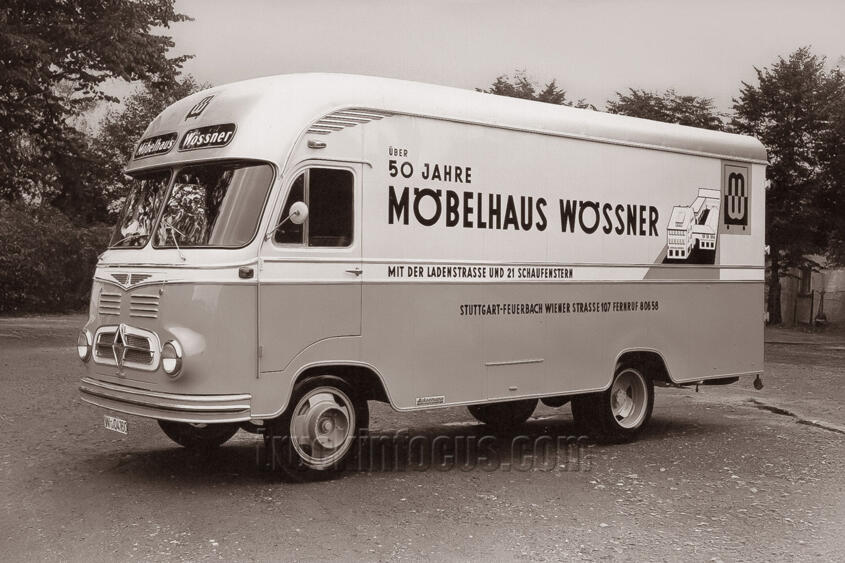
As the successor to the B 2000, Borgward launched the B 2500 in 1954. Visually, it differed little from its predecessor, but scored points with a hydraulic pressure accumulator for the oil pressure brakes, larger wheels, and an optional five-speed transmission. In 1960, it was given a higher roof.B 2500 with moving van body by Ackermann from Wuppertal. The Friedrich Bauer company from Calw, formerly the “Royal Württemberg Freight Carrier,” is still active today as a family-run freight forwarding company and can look back on 175 years of company history.The B 2500 was also available as an all-wheel-drive version, initially called the B 2500 A and renamed the B 522 A in 1959. The picture shows an all-wheel-drive Borgward from this series with a special body designed as a fold-down oil drilling rig.Borgward B 2500 A in military version. From 1959 to 1961, the B 2500 A was also available with the angular military cab, but then as the B 522 A.The manufacturer of this fire truck superstructure as a tank firefighting vehicle (TLF 8) based on the Borgward B 2500 A was the Lower Saxony wagon factory Joseph Graaff from Elze near Hanover. Founded in 1914 as a repair workshop, the company built buses and tram cars before World War II, and freight cars and car transporters after the war. Since 2008, it has been part of VTG, a Hamburg-based specialist in freight car rental and logistics.From 1956 to 1959, there was a cabover version of the B 2500, which was called the B 2500 F. It was later renamed the B 522. Borgward itself did not offer its own bodywork for this version, but manufactured the corresponding chassis, which were then bodied by external body manufacturers. The photo shows a panel van built by Thiele in Bremen.This cabover vehicle was also a B 2500 F with a body built by Thiele. The company was founded in 1895 as a wheelwright's workshop in Bremen and later operated under the name Karosserie- und Fahrzeugfabrik Wilhelm Thiele. In 1953, Fritz Thiele, the son of the company's founder, took over the business and built buses, special bodies, and fire trucks. Since 1986, armored and extended limousines and special bodies for the police and fire department have been manufactured in Bremen under the name Thiele Spezial-Karosseriebau GmbH.The Borgward B 2500 F could also be used as a semi-trailer truck chassis. With its 60 hp engine, this semi-trailer truck was somewhat underpowered, but the cab offered plenty of space and the products from the Stöss & Co. seating furniture factory were comparatively light. The cab and the single-axle semi-trailer came from Kässbohrer in Ulm.The Borgward B 2500 F chassis was also suitable for smaller buses. The body of this 1956 model came from Norddeutsche Karosseriefabrik Conrad Pollmann GmbH in Bremen. Founded in 1926, the company initially built convertibles, limousines, truck bodies and buses, and later mainly hearses based on Ford and Mercedes-Benz models. After filing for bankruptcy in 2008, the company was taken over by Rehda-Carosse Bremen GmbH.The photo shows another bus based on the Borgward B 2500 F, which was bodied by Ottenbacher Karosserie- und Fahrzeugbau GmbH, founded in 1946 and based in Schönau in the Black Forest. The company is known for fire trucks, dump trucks, tankers, and special bodies on Borgward, Magirus, and Mercedes chassis in the 1950s and 60s and is still active today as a commercial vehicle specialist.The third bus on a B-2500-F-2 chassis is a so-called club bus, which was bodied in 1957 by Walter Vetter Karosserie- und Fahrzeugbau, based in Fellbach near Stuttgart.
The B 4500 (renamed B 555 in 1959), produced from 1953 to 1961, was the heaviest Borgward truck, which was also available with all-wheel drive and a climbing ability of up to 60 percent (B 4500 A, B 555 A from 1959). Its six-cylinder engine with a displacement of five liters initially produced 95 hp and reached 110 hp in 1957. The last version of the B 555 from 1960 also had turn signals on the front fenders.
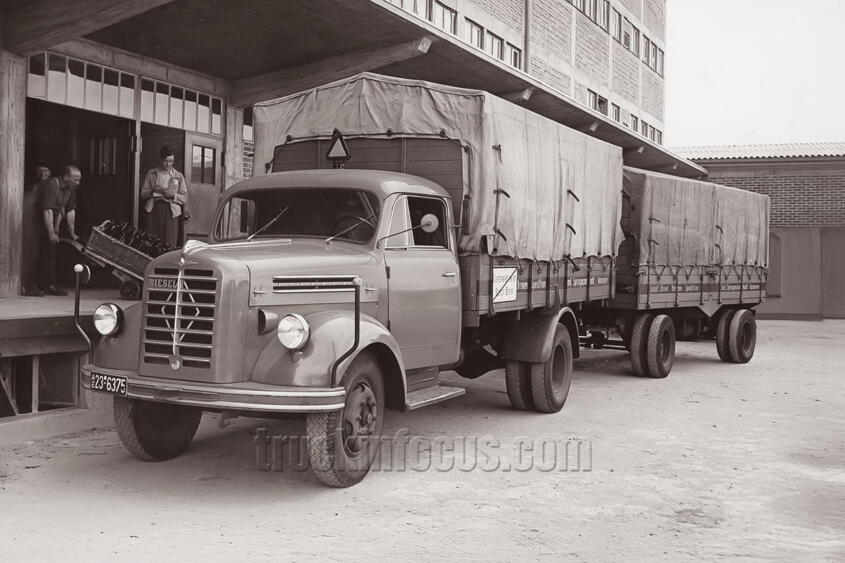
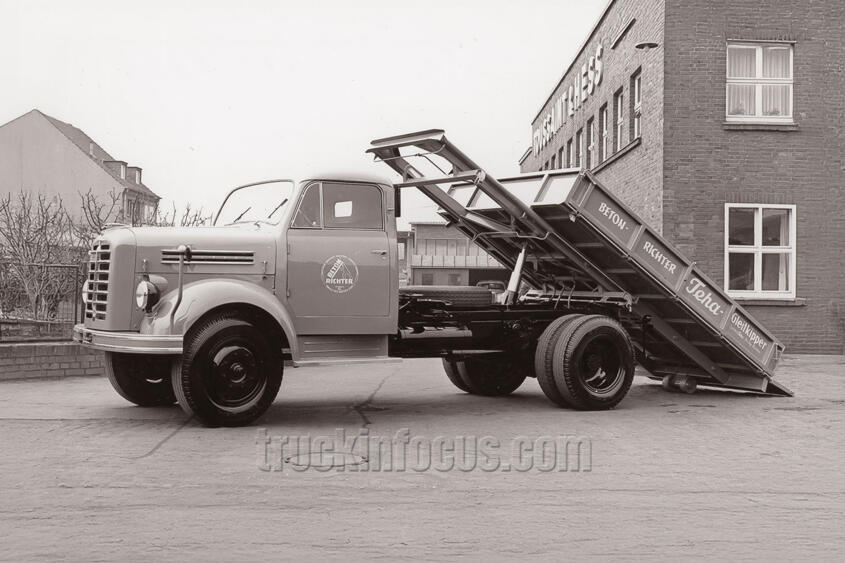
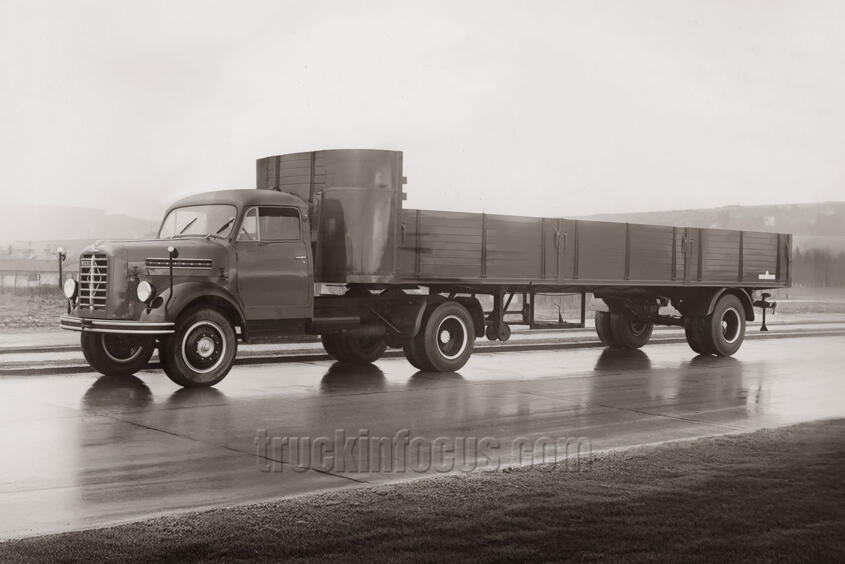
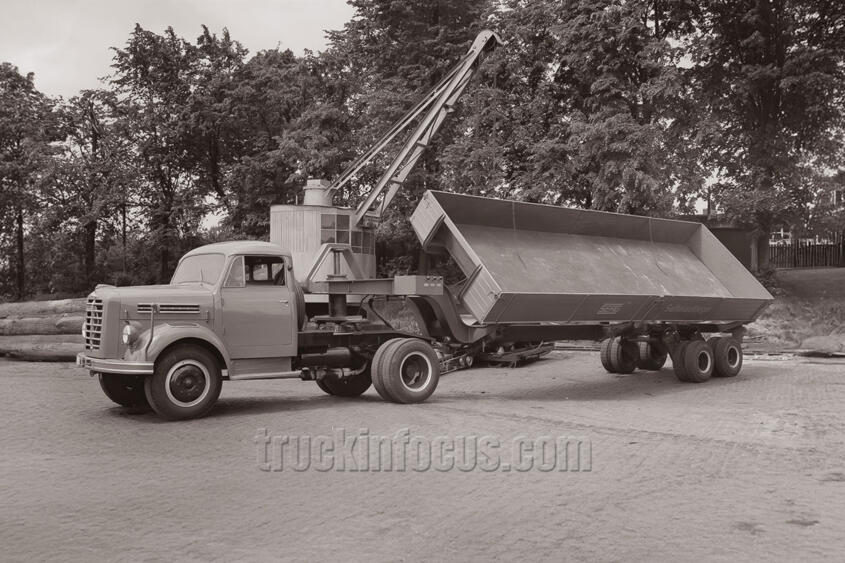
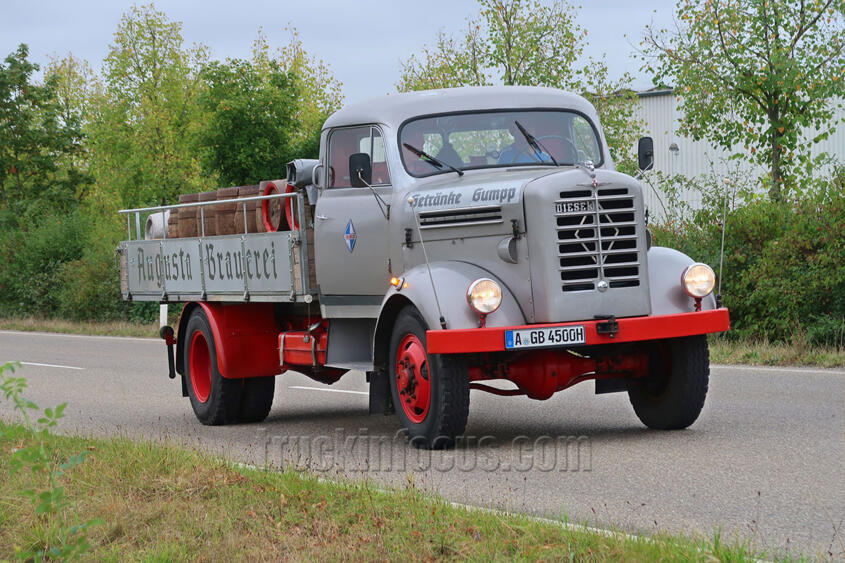
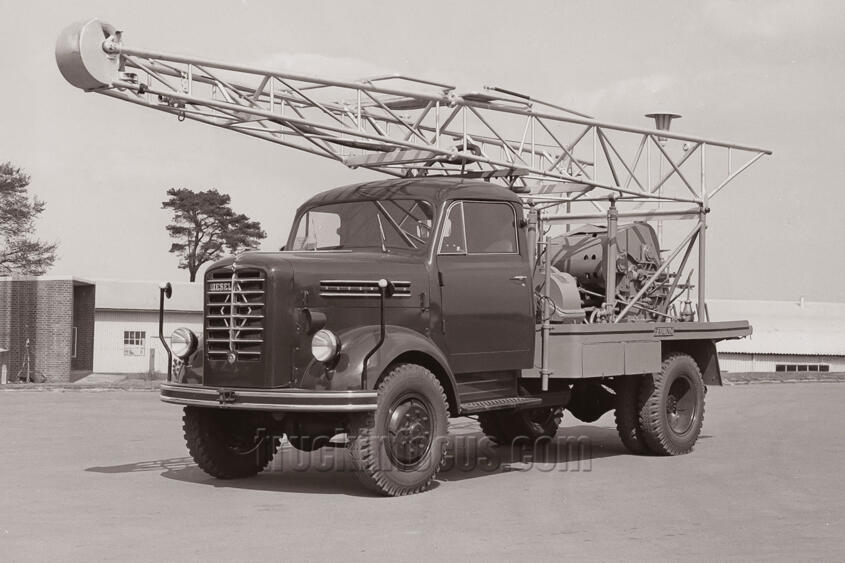
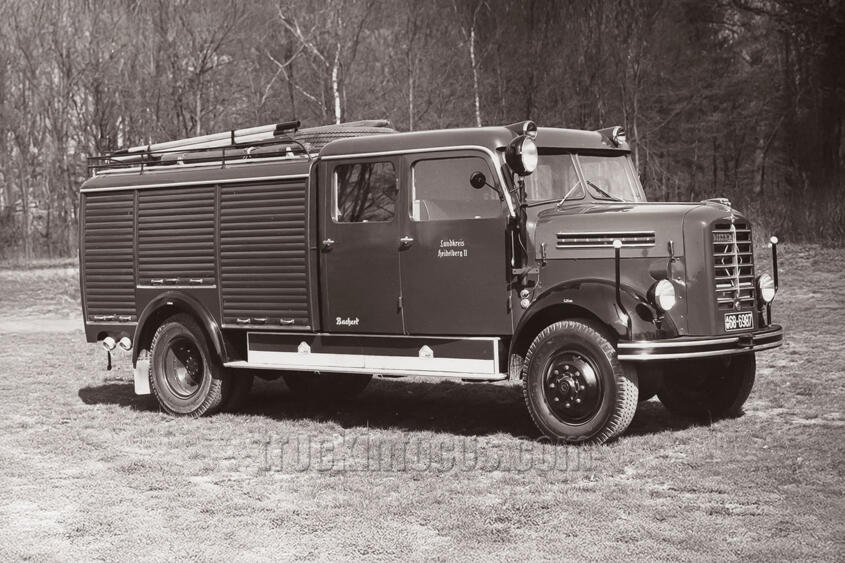
The heaviest conventional truck ever built under the Borgward name in Bremen was the four-and-a-half-ton B 4500, which was manufactured from 1953 to 1959. It was then renamed B 555 and remained in production until 1961. Until 1957, it had to make do with the 95 hp six-cylinder engine of the B 4000, but then it was given a new 110 hp engine. The engine was particularly notable for its low fuel consumption: it managed 14.5 liters of diesel per 100 kilometers.This photo of a 1955 Borgward B 4500 with bodywork by Toussaint & Hess (Teha) shows an interesting precursor to the roll-off dumpers that are now in widespread use. In the 1950s and 60s, the Düsseldorf-based company specialized in hydraulic lifting equipment, primarily tippers and lifting systems for truck bodies.B 2500 as a semi-trailer truck with a single-axle semi-trailer from KässbohrerThis Borgward B 4500 pulled a special semi-trailer from Siegener Eisenbahnbedarf AG (SEAG) in Dreis-Tiefenbach, which could unload its bulk cargo from the side. On the back of the original photo from 1957, there is a handwritten note stating that the trailer's loading area can hold the contents of an entire railroad car. Whether this is true is doubtful.This photo of a carefully restored all-wheel-drive beer truck of the B 4500 A type was taken on the way to the 2024 veteran truck meeting at the Wörnitz truck stop in Germany.Another four-wheel drive truck of the type B 4500 A was equipped with a special superstructure from Failing as a mobile oil drilling rig. Unfortunately, we were unable to find out anything about the US company Failing. If you have any information, please contact us by email.Four-wheel-drive fire truck from 1955 with Bachert body as a tank firefighting vehicle (TLF 16) on a Borgward B 4500 A chassis with crew cabFrom 1956 onwards, Borgward also manufactured chassis for cabover vehicles based on the B 4500. The photo shows a moving van with an Ackermann body from Wuppertal.The semi-trailer version of the Borgward B 4500 F looked like a big rig when the cab was designed to be spacious, as in this example built by Bunge. The Bunge vehicle factory (C. H. Bunge KG) in Bremen-Mahndorf was founded in 1896 by Christian Heinrich Bunge as a forge in Bremen-Hemelingen and began manufacturing trailers in 1926 and special vehicles in 1945. After being taken over by Gebr. Sommer GmbH (Bielefeld) in 1988, the Bremen plant was closed in 2003.
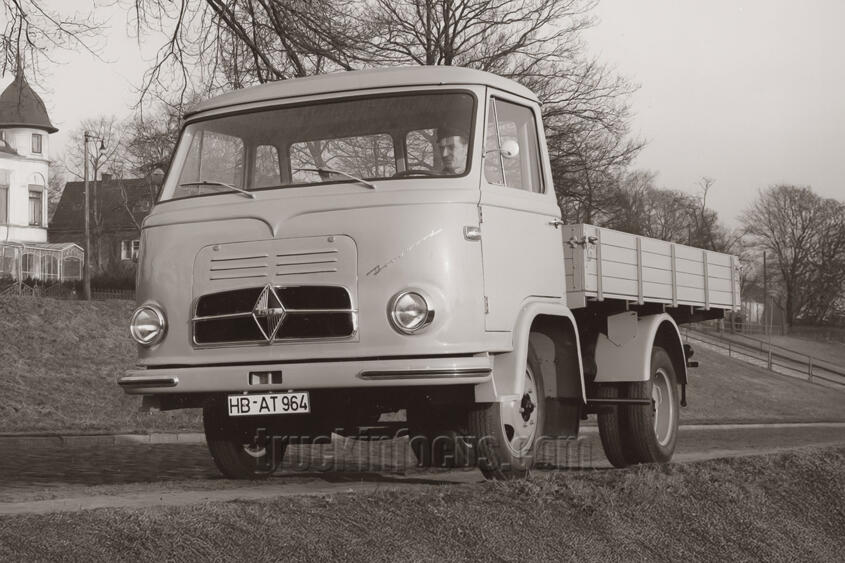
The year 1957 marked the beginning of the cabover era at Borgward. In addition to its conventional trucks, Borgward now also offered modern vehicles, partly in order to comply with the new German length specifications for trucks under Minister Seebohm. The 1500 F (renamed B 611 in 1959) with a payload of 1.6 tons was presented at the IAA in Frankfurt am Main. Powered by the 60 hp engine from the Isabella passenger car (or alternatively by the proven 42 hp diesel engine) and equipped with independent front suspension, it drove like a car, according to the advertising. Flatbed trucks, panel vans, and minibuses were available. In 1959, the larger versions appeared, the B 622 with 70 hp and the B 655 with 110 hp, as 2.75-ton and 5.5-ton models. At first glance, they differed from the smaller B 611 in the arrangement of the headlights, which were now positioned at the same height as the radiator grille. The visible difference between the B 622 and the B 655 is the rim size: the smaller B 622 had six-hole rims, while the larger B 655 had eight-hole rims. Both were available with two different wheelbases, as flatbed trucks, dump trucks, semi-trucks, and as chassis for all kinds of superstructures.
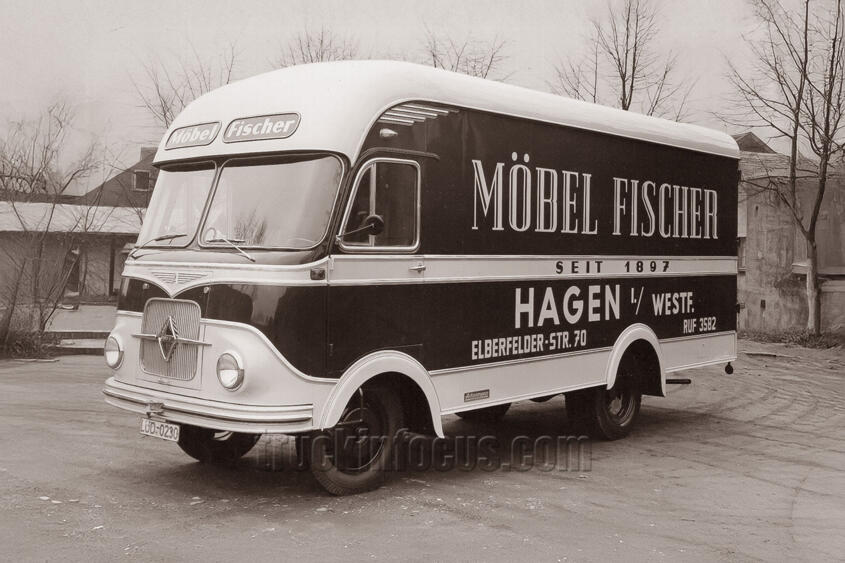
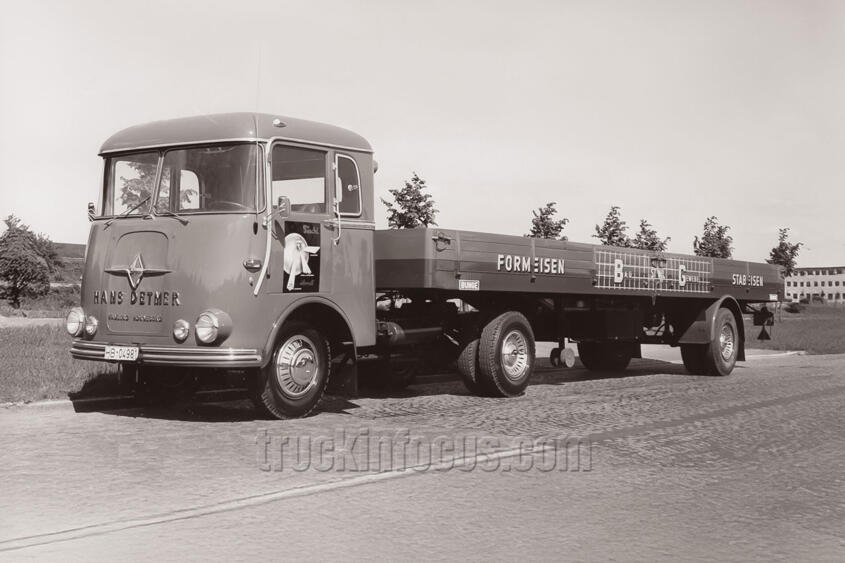
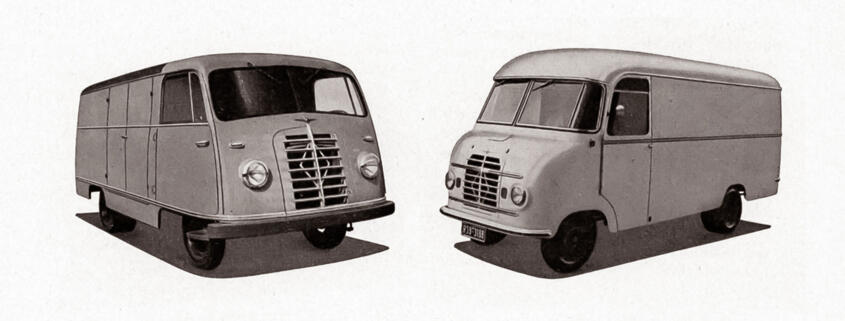
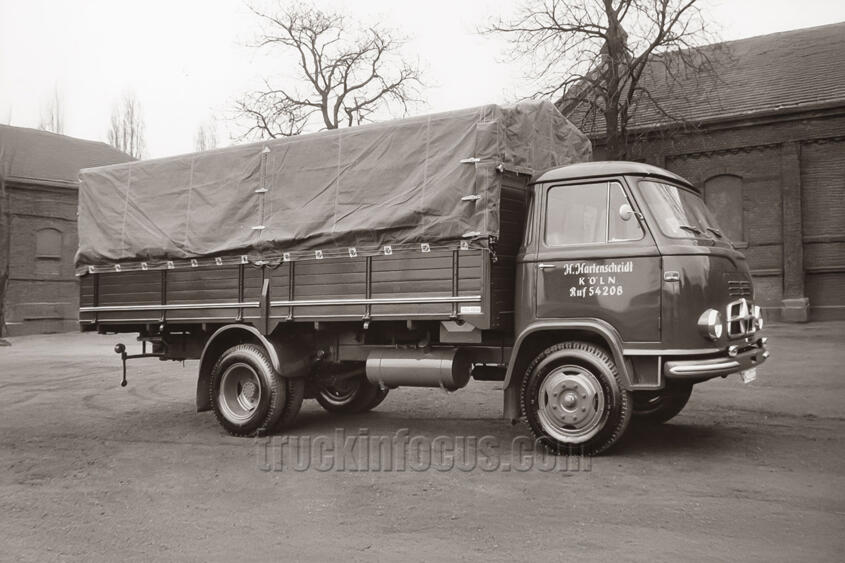
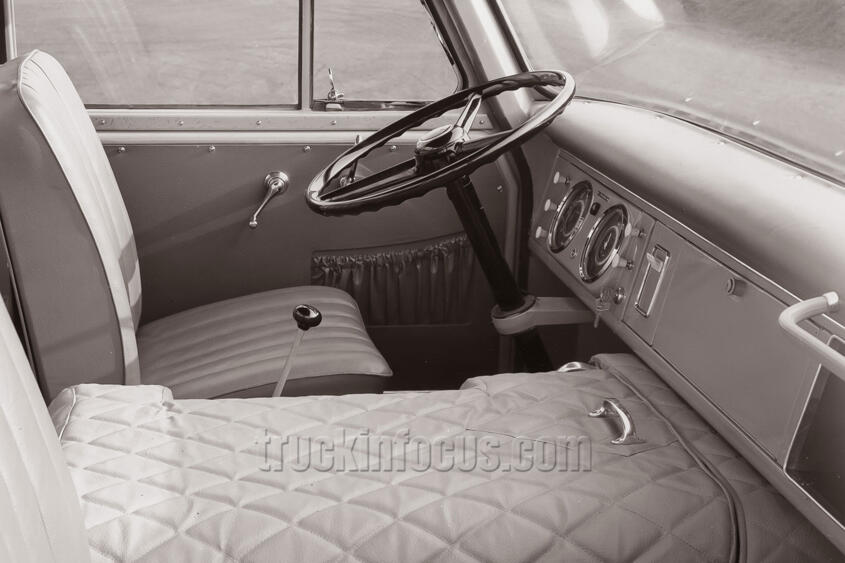
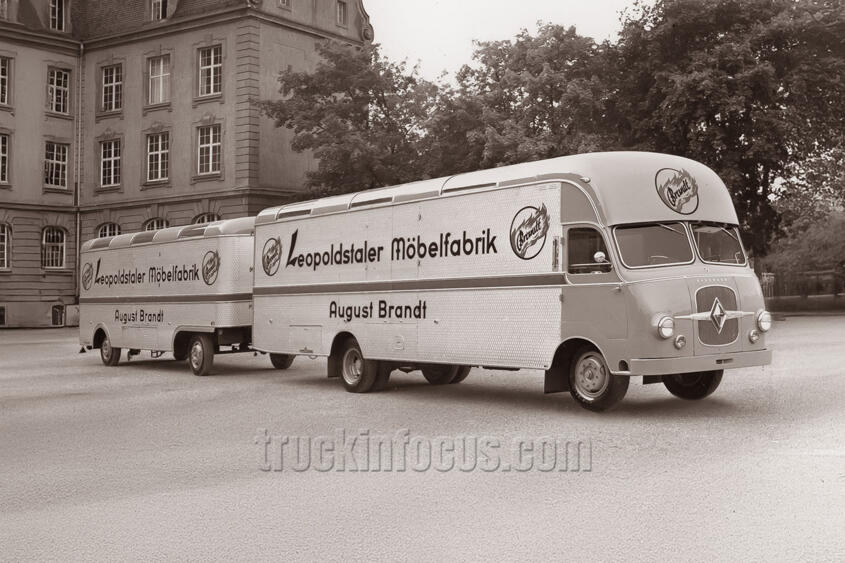
Even before 1957, the year in which Borgward launched its first and last cabover vehicles, there had been several attempts to build small trucks without a hood. The picture shows two of these creations from the mid-1950s. They were probably built at the Borgward factory, but it is also possible that they were bodied at Thiele.In April 1957, the time had come: at the 19th International Motor Show (IAA) in Frankfurt, Borgward presented the 1.5-ton cabover truck. The B 1500 F was very well received by experts due to its successful design. However, the photo was not taken at the trade fair, but shows a model with a panel body from the Staufen company in Eislingen.The B 1500 F was also suitable as a small semi-trailer truck.This small fire engine based on the Borgward B 1500 F was bodied by Arve-Fahrzeugbau GmbH from Springe near Hanover after it had already been renamed B 611. The photo, which shows an LF8/TS firefighting vehicle with a concealed front-mounted pump, was taken in 1960.The Borgward B 1500 F from 1957, which was designated B 611 from 1959 onwards, was also available as a minibus. The photo is taken from a Borgward advertising brochure.Two years after the market launch of the B 1500 F, the B 622, a larger cabover vehicle with a payload of 2.75 tons, was launched. From the outset, its type designation was based on the new nomenclature introduced in 1959. The external difference to the B 611 (previously B 1500 F) was clearly visible at second glance. The headlights were at the same height as the radiator grille, whereas on the smaller model they were positioned higher.And there was also an even bigger option: at the same time as the 2.75-ton B 622, the 5.5-ton B 655 was introduced in 1957. Since both cabover vehicles had the same cab, you had to look more closely to identify the vehicles correctly. The difference was noticeable in the rims: the smaller B 622 had six-hole rims, while the larger B 655 had eight-hole rims. The vehicle in the photo had been fitted with a flatbed body by the Hall company in Cologne.A look inside the cab of the B 655 reveals the excellent all-round visibility that characterized the new Borgward cabovers.Of course, the cabovers were also available as chassis for special bodies. This B 622 was bodied as a moving van by the Ackermann company in Wuppertal.The ninth page of this chronicle of Borgward commercial vehicles concludes with a magnificent rig: the Borgward B 655 with a Kässbohrer body and trailer from 1961, the fateful year that saw the end of all vehicles from the Borgward Group.