IAA 2026 - Part 1: Trucks from Around the World
The Manufacturers in Review
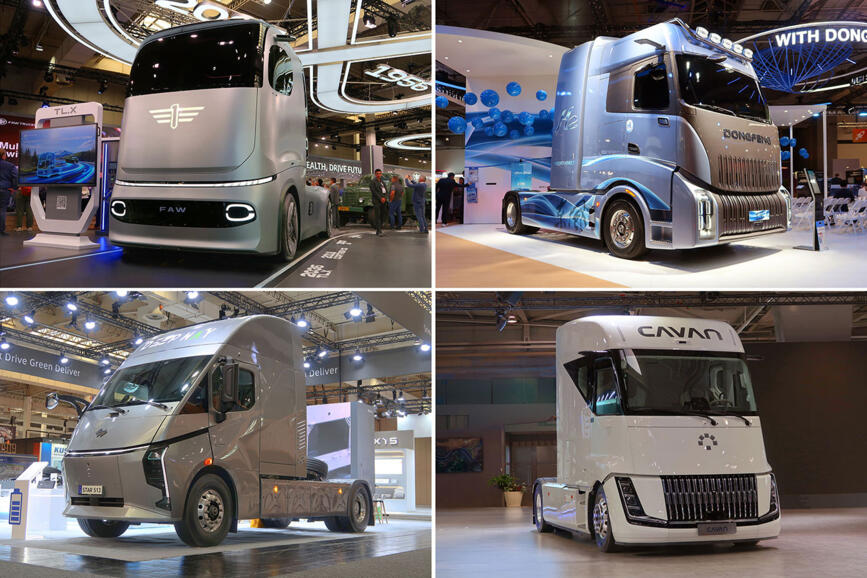
IAA Transportation 2026 primarily showed where manufacturers intend to take heavy road freight transport in the coming years. Battery-electric long-haul trucks with ever-increasing ranges, hydrogen concepts and new market entrants shaped the show. On the road, however, diesel trucks continue to dominate. Part 1 of our review presents the most important heavy commercial vehicles and concepts outside the large Chinese exhibition block – from DAF and Ford Trucks to Tesla, SuperPanther and Volvo Trucks. The many other Chinese manufacturers will follow in Part 2 of our IAA review.
IAA Transportation 2026 in Hanover offered a clear picture of the technologies manufacturers intend to bring to market in the coming years. That picture, however, should not be confused with the current reality of road freight transport. Worldwide, road transport continues to rely overwhelmingly on diesel trucks; vehicles with battery-electric, hydrogen-based or other alternative powertrains still account for only a small share of the fleet.
That is precisely why it was interesting to see how far manufacturers have developed their alternative powertrains. Ranges are increasing, electric model lineups are becoming broader and heavy-duty applications are being added. At the same time, many manufacturers continue to invest in more efficient diesel powertrains and are pursuing different approaches to hydrogen.
Alongside the established European brands, new manufacturers are becoming increasingly visible. Tesla is firming up the European launch of the Semi, SuperPanther is having the eTopas 600 assembled in Austria, and specialists such as Volta Trucks and Terberg are pursuing very distinct operating concepts.
In this first part, we focus on heavy trucks and special-purpose vehicles outside the large Chinese exhibition block. The numerous Chinese manufacturers will follow separately in Part 2; vans and light commercial vehicles will then be covered in a third part. In all three parts, we proceed alphabetically.
BMC – 560 hp for Europe
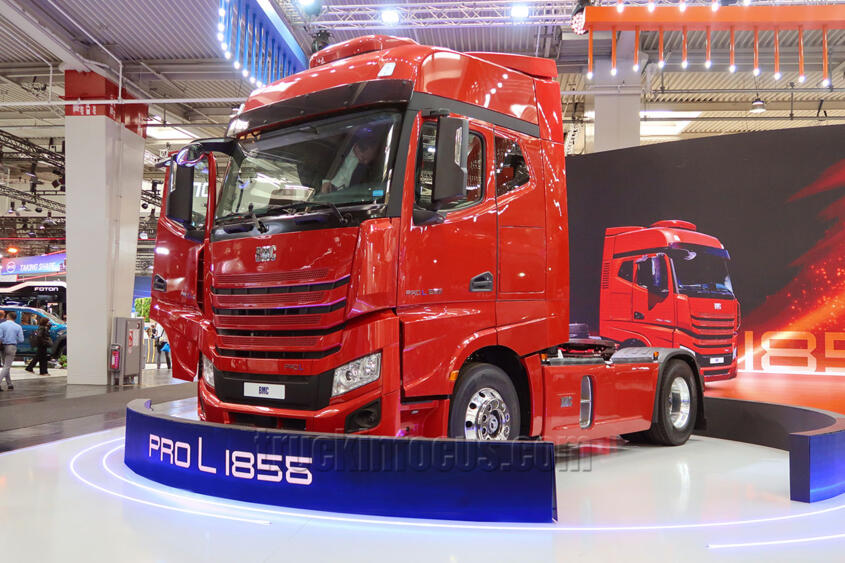
Turkish manufacturer BMC presented the new PRO L 1856 for the first time at IAA Transportation 2026. The 4x2 tractor is the most powerful model in the PRO-L range to date and was developed specifically for international long-haul transport. The 12.9-liter Cummins X 13 DT produces 560 hp, or 412 kW, and delivers 2,500 Nm of torque. Power is transmitted through a 12-speed automated ZF transmission with Intarder.
The cab also shows that BMC is placing greater emphasis on the European long-haul market. The PRO L 1856 features a high-roof cab with two bunks, a 10.4-inch touchscreen and an electrohydraulic steering system adjustable for both height and reach. Two aluminum tanks hold a combined 1,200 liters of diesel. Assistance systems such as BSIS and MOIS are intended to improve safety in the immediate area around the vehicle. At the same time, BMC continues to expand its dealer and service network in Europe, including Germany, Spain, Portugal, Poland, Croatia and Denmark.
More information is available on the BMC website.
DAF – More Choice for Diesel and Electric
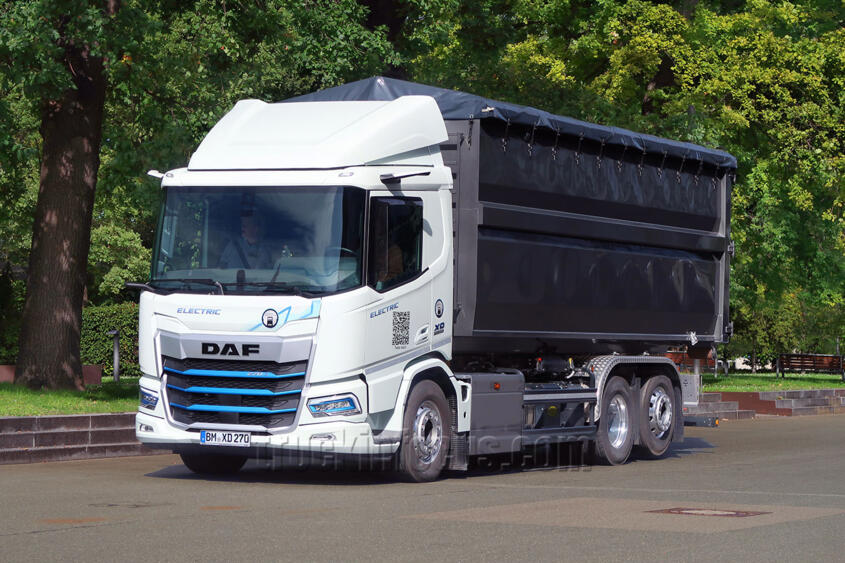
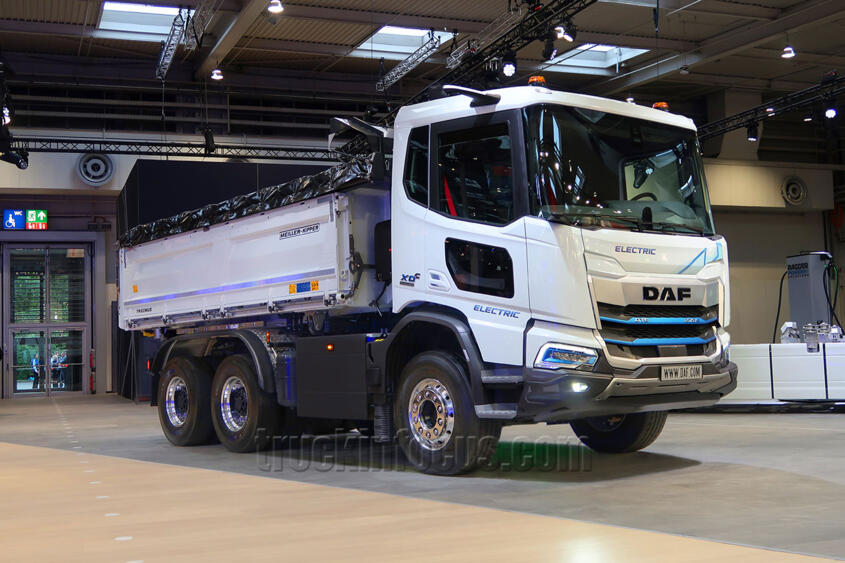
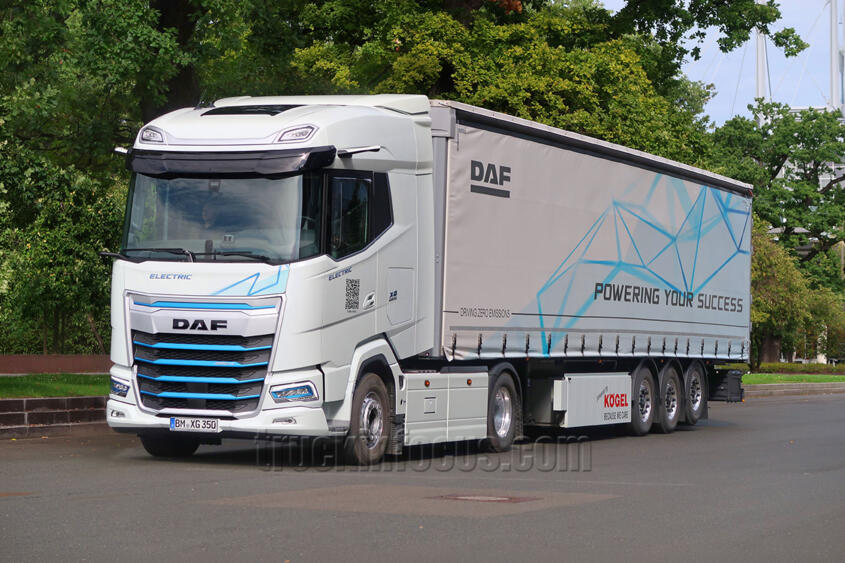
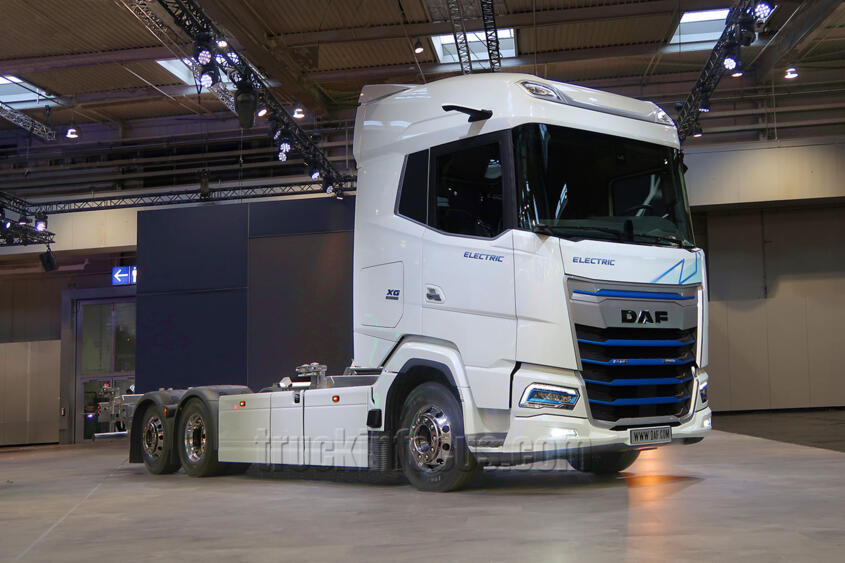
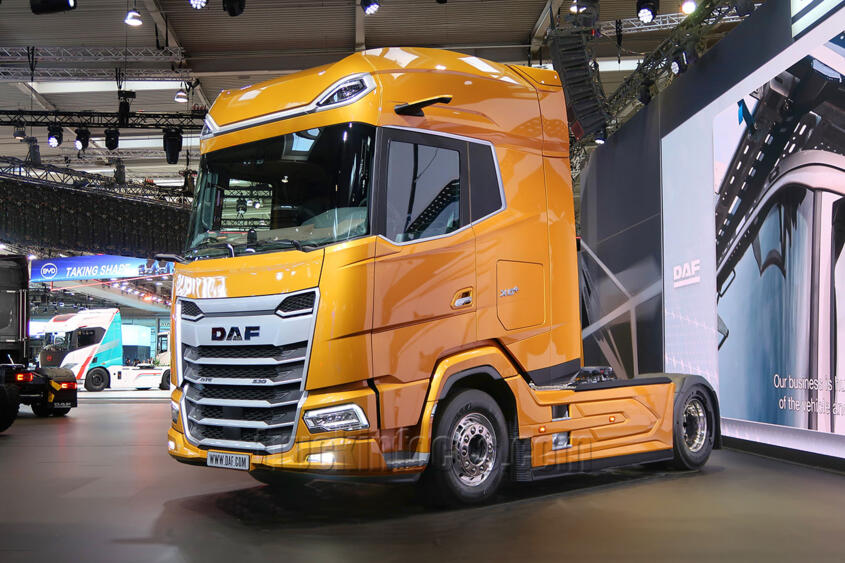
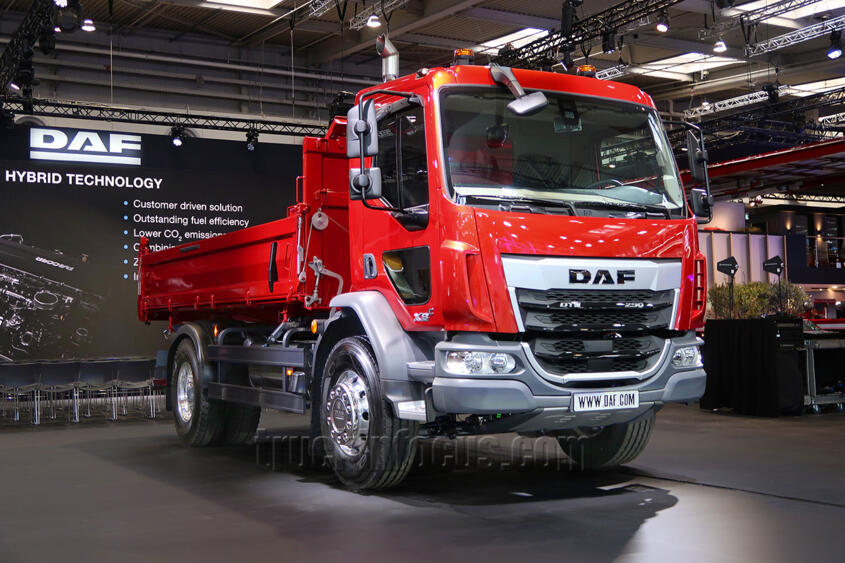
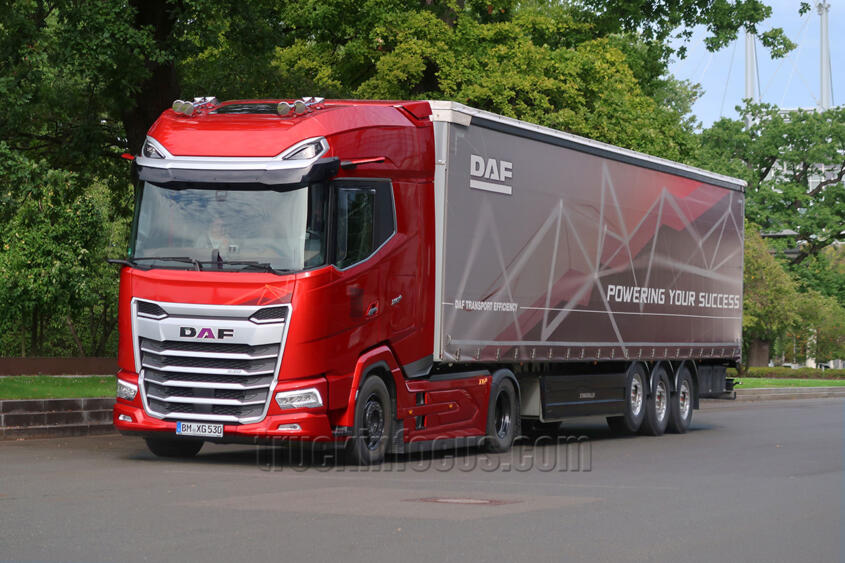
Rather than placing one spectacular individual vehicle at the center of its presentation, DAF focused on a significantly broader model range. New configurations include numerous axle layouts for the XD, XF, XG and XG+, with both diesel and electric powertrains. These include particularly low chassis for car transporters as well as new electric 6x2, 6x4 and 8x4 versions.
The new XG Electric and XG+ Electric are particularly noteworthy. They extend the electric drivetrain previously offered in the XD and XF to DAF’s largest cabs and provide ranges of more than 550 kilometers. By rearranging the battery packs, DAF can also reduce the load on the front axle and, depending on the configuration, significantly increase payload. Above all, the IAA presentation showed how extensively DAF has expanded its electric range for specialized transport applications.
More information is available on the DAF Trucks website.
DPX – Four Vehicles, One Platform
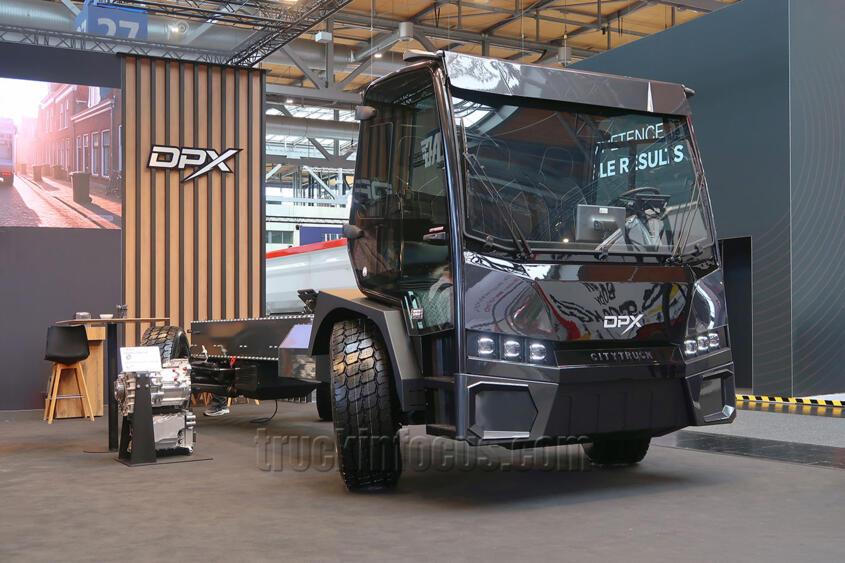
DPX, a new brand of the Dutch Peeters Group, unveiled its modular, all-electric vehicle platform at IAA Transportation 2026. The platform serves as the basis for the CityTruck, AgriTruck, AeroTruck and ArmyTruck. These variants are designed for municipal services, agriculture, airport operations, military use and other specialized applications. With a top speed of 45 km/h (28 mph), the platform is intended as a versatile work vehicle rather than for long-haul transportation.
Depending on the configuration, the liquid-cooled electric motor delivers 188 kW of continuous power and 330 kW at peak. A dual-motor version with up to 660 kW of peak power is planned for the CityTruck and AeroTruck. Battery capacity ranges from 141.3 to 211.9 kWh, while the battery enclosure can be pulled out from the rear of the frame for maintenance or replacement. Payload capacity reaches up to 15 metric tons. Four steering modes, including crab steering, improve maneuverability. The driving position is also adjustable and can be located on the left, in the center or on the right. Production in the Netherlands is scheduled to begin in the fourth quarter of 2027.
More information is available on the DPX website.
Ford Trucks – Moving Up
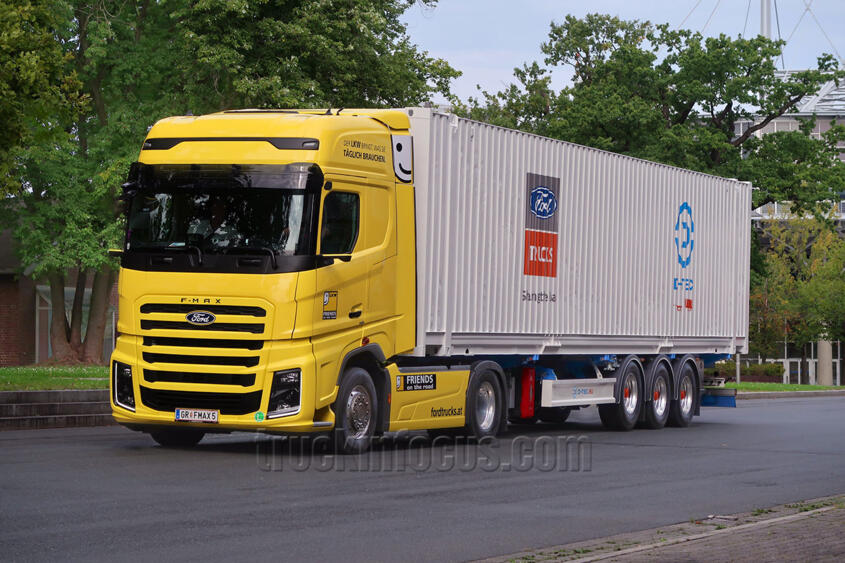
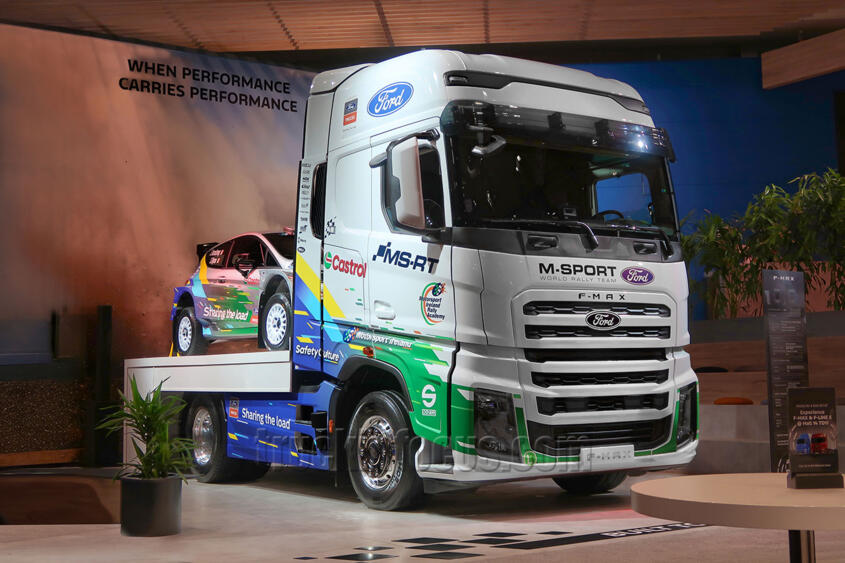
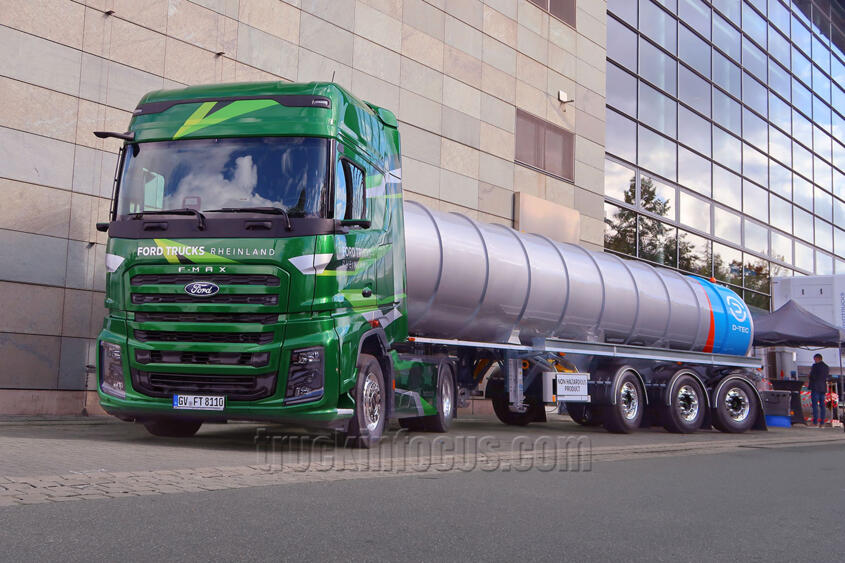
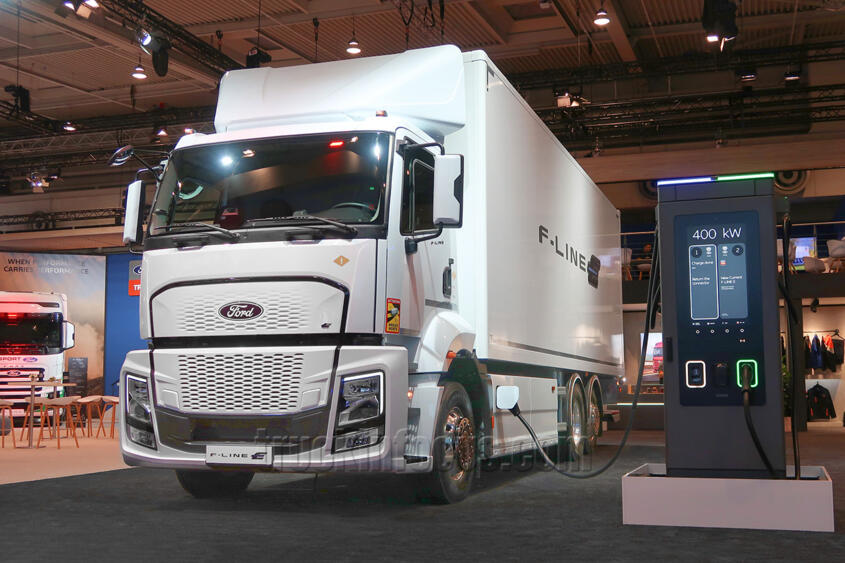
Ford Trucks, the commercial-vehicle brand of Turkish manufacturer Ford Otosan, has steadily established itself in the European market in recent years and is increasingly becoming a permanent part of the major truck-manufacturer landscape. At IAA Transportation 2026, the new F-MAX GEN 2.0 took center stage. It features a new appearance. The further-developed second-generation Ecotorq engine, aerodynamic improvements and new assistance systems are aimed at greater efficiency and lower operating costs. We have already covered the second generation of the F-MAX in detail on truckinfocus.com.
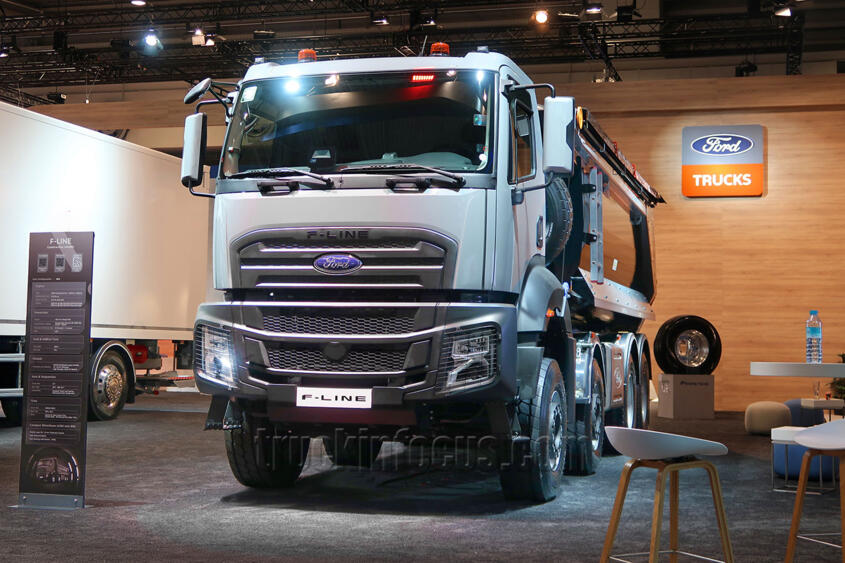
Ford Trucks also displayed the F-LINE Construction and, with the F-LINE E, its entry into the battery-electric heavy commercial vehicle class. The range is complemented by ConnecTruck, which digitally connects vehicle and fleet data. The IAA presentation made clear how strongly Ford Trucks intends to continue expanding its presence in Europe.
More information is available on the Ford Trucks website.
HBS – Turkish In-House Development for Europe
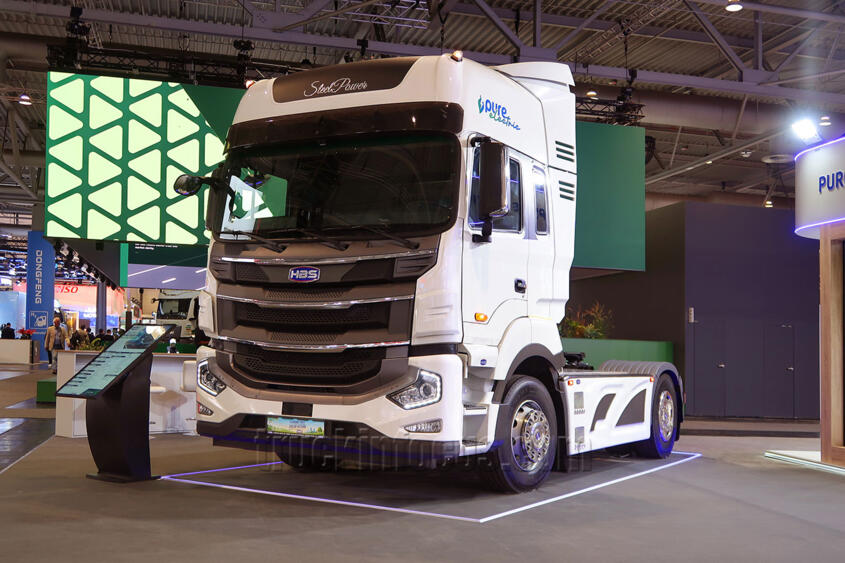
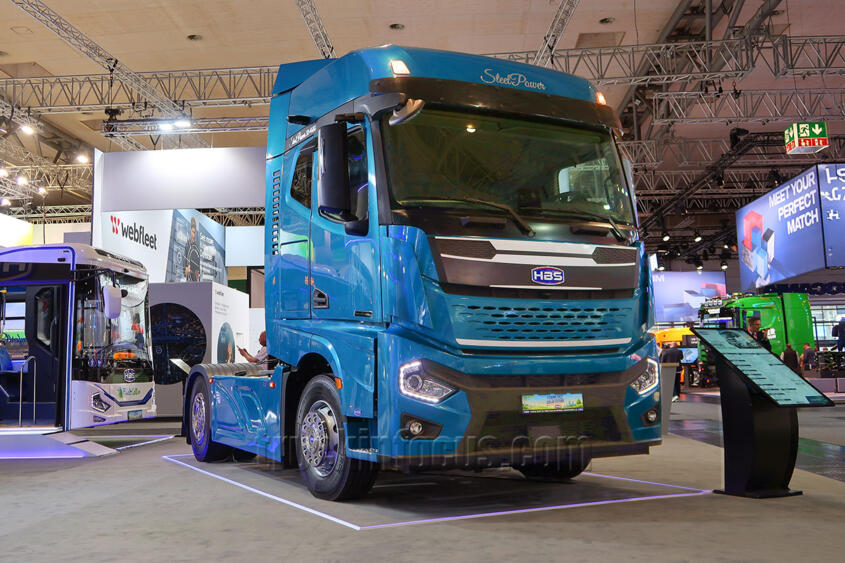
HABAŞ attended IAA Transportation for the second time in 2026 and presented both a diesel-powered and a fully electric 4x2 tractor under the HBS brand. The commercial-vehicle division is still young: HABAŞ entered vehicle development in 2021 and began series production at its new plant in Manisa in 2025. According to the company, the facility is designed for an annual capacity of up to 15,000 vehicles.
The HBS SteelPower is offered with Euro 6e diesel engines rated from 450 to 530 hp; the vehicle shown at the IAA was specified with a Mercedes-Benz OM 471 producing up to 2,600 Nm. HABAŞ uses its own high-strength steel for the chassis and highly stressed structural components. Alongside it stood the electric SteelPower-e: the 4x2 version produces 410 kW, equivalent to around 557 hp, and 3,100 Nm. HABAŞ specifies a Voith electric drive and battery packs adapted at its own development center.
In addition to the trucks, HBS also displayed the hydrogen-powered ComfortCity-H2 city bus in Hanover.
More information is available on the HABAŞ website.
MAN – The Entire Line Goes Electric
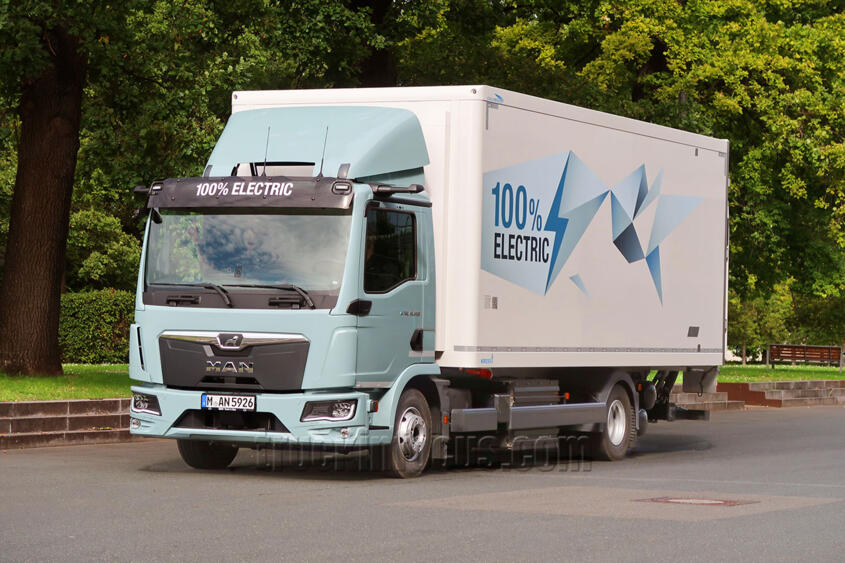
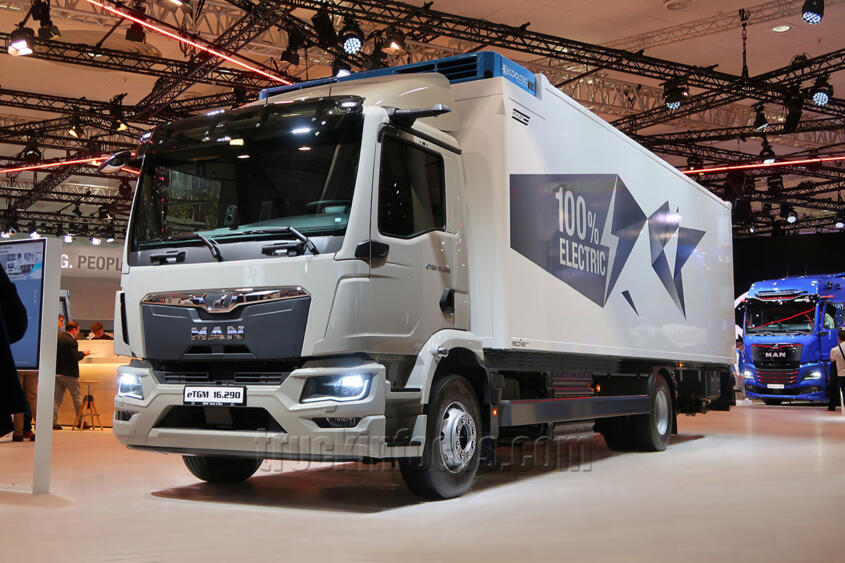
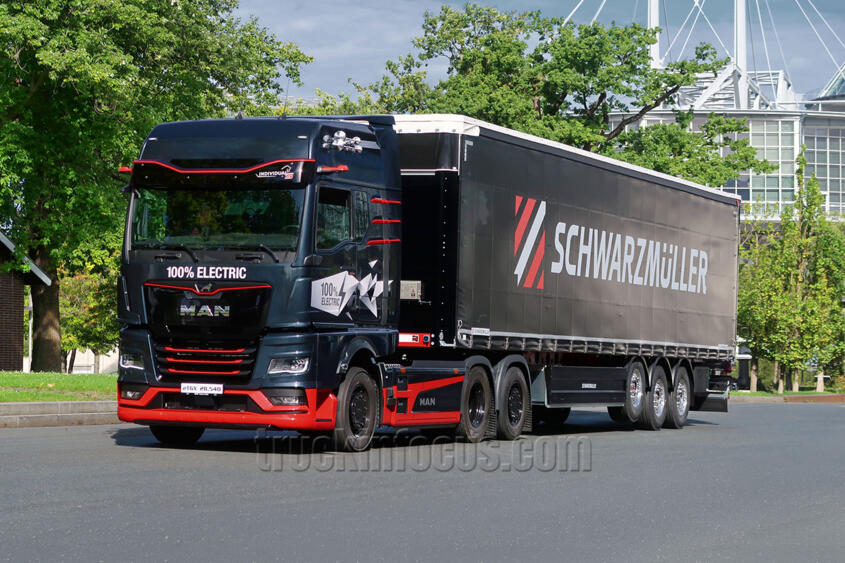
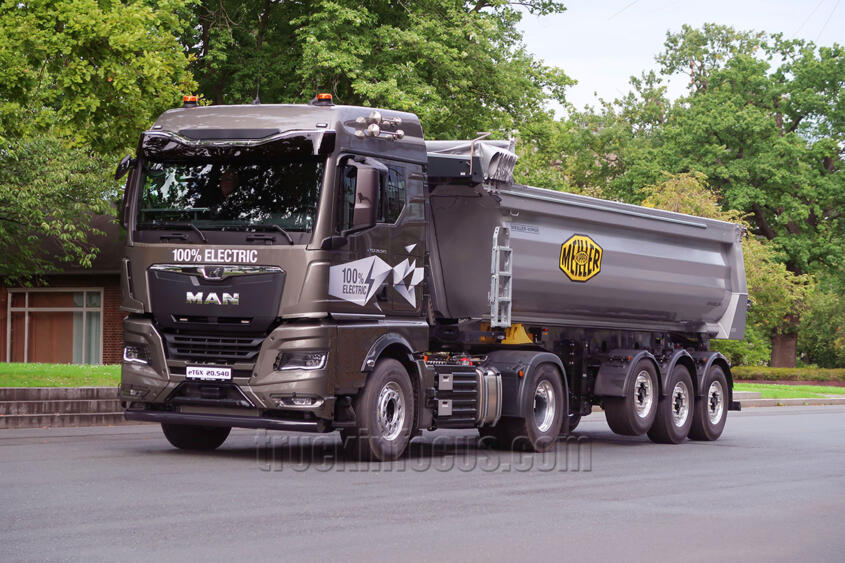
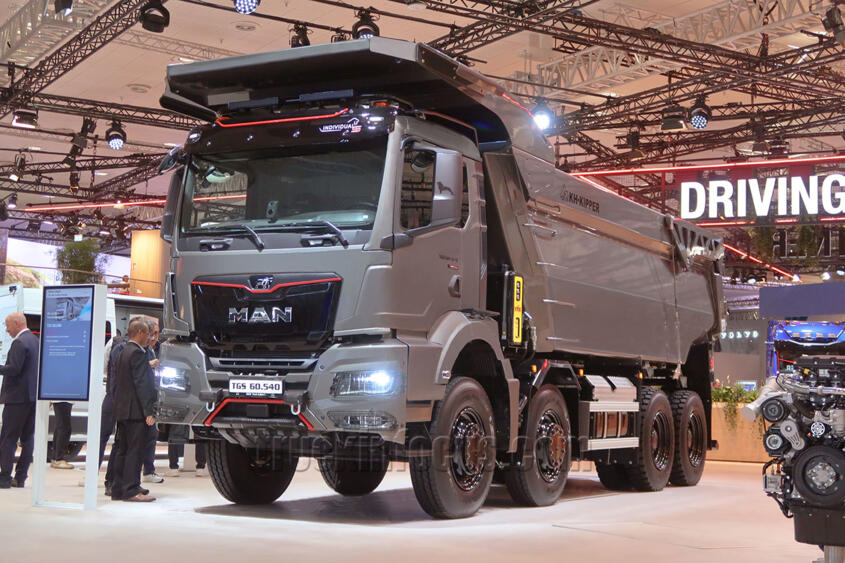
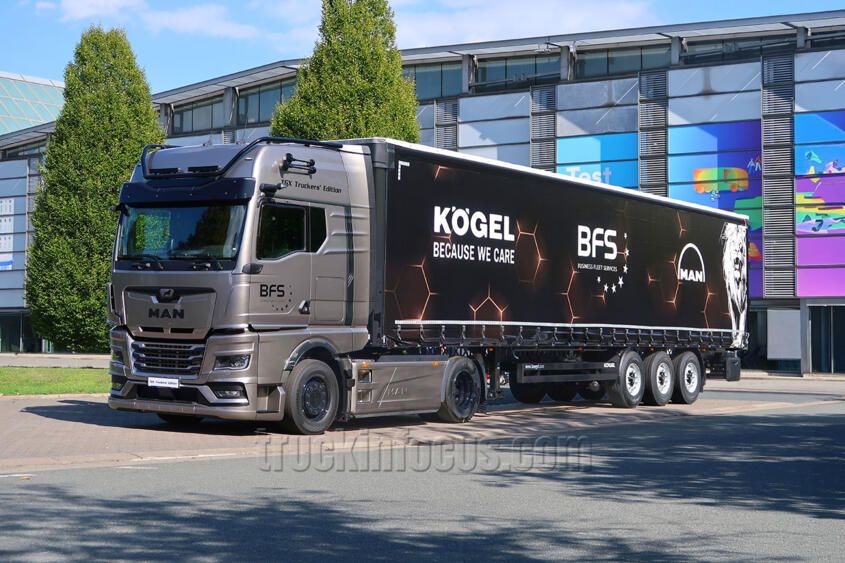
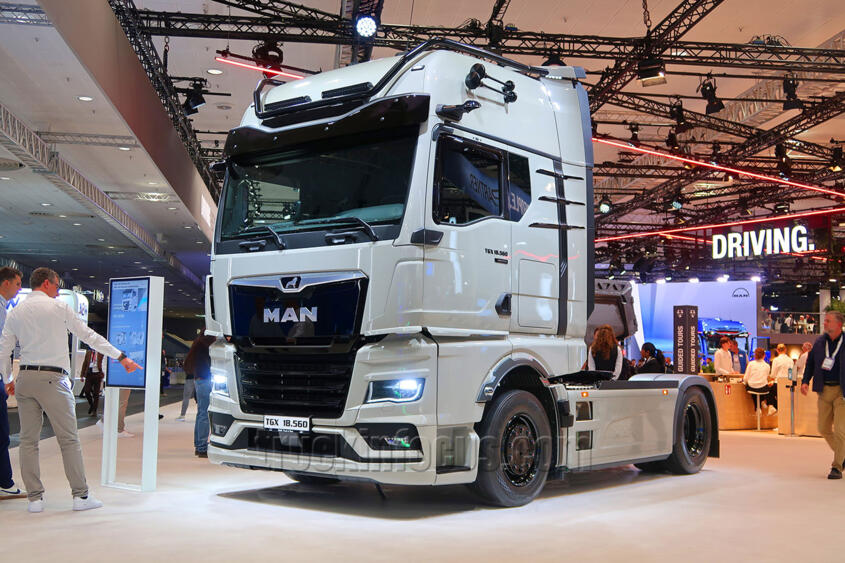
MAN used IAA Transportation 2026 to present its complete electric truck family together for the first time. With the eTGL, eTGM, eTGS and eTGX, the battery-electric range now extends from 12 to 50 metric tons and therefore covers almost the entire spectrum of applications, from distribution and municipal transport to construction and heavy long-haul work.
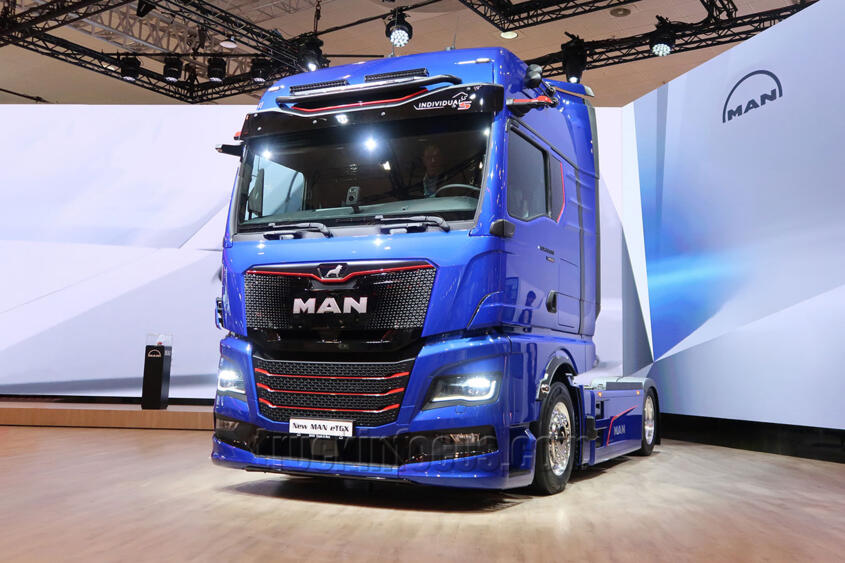
The further-developed eTGX took center stage. As a 4x2 tractor, it achieves a range of up to 660 kilometers thanks to a new battery generation, improved aerodynamics and increased recuperation performance. The new 6x2 version can be equipped with a seventh battery and reaches up to 720 kilometers with a total capacity of 644 kWh. MAN also quotes payloads of up to 25 metric tons and MCS charging at up to 750 kW.
In Hanover, MAN therefore demonstrated particularly clearly how its electric offering has evolved from individual special-purpose vehicles into an almost complete model range. At the same time, conventional powertrains remain part of the program: efficient diesel trucks, including models with the D 30 PowerLion, were also part of the IAA presentation.
More information is available on the MAN website.
Mercedes-Benz – Electricity, Hydrogen and Diesel
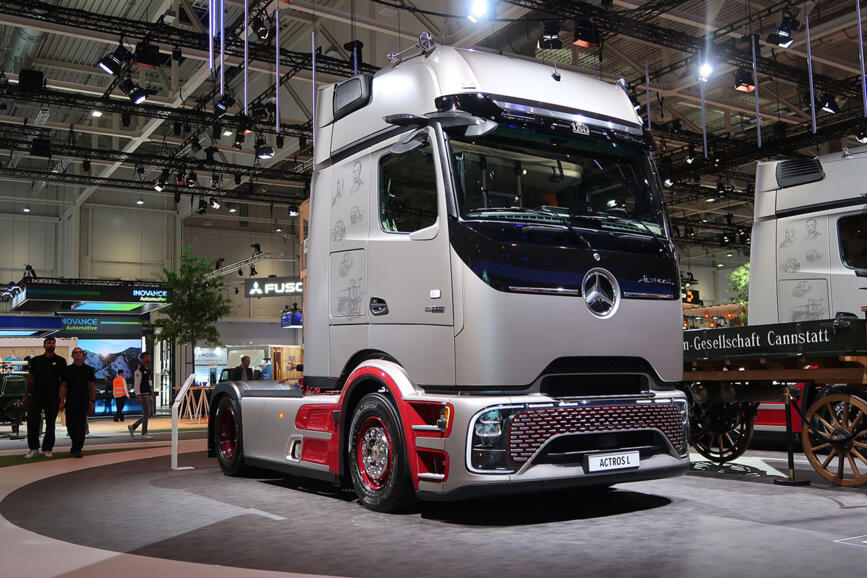
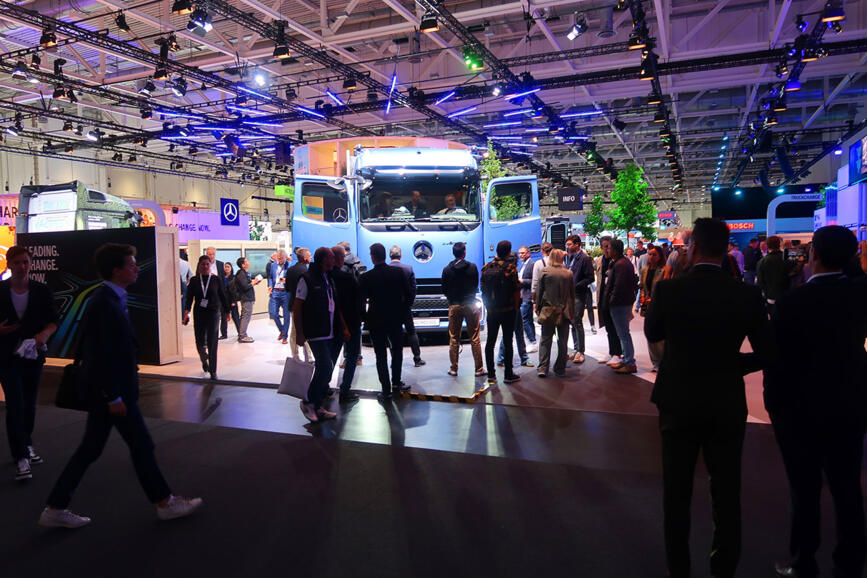
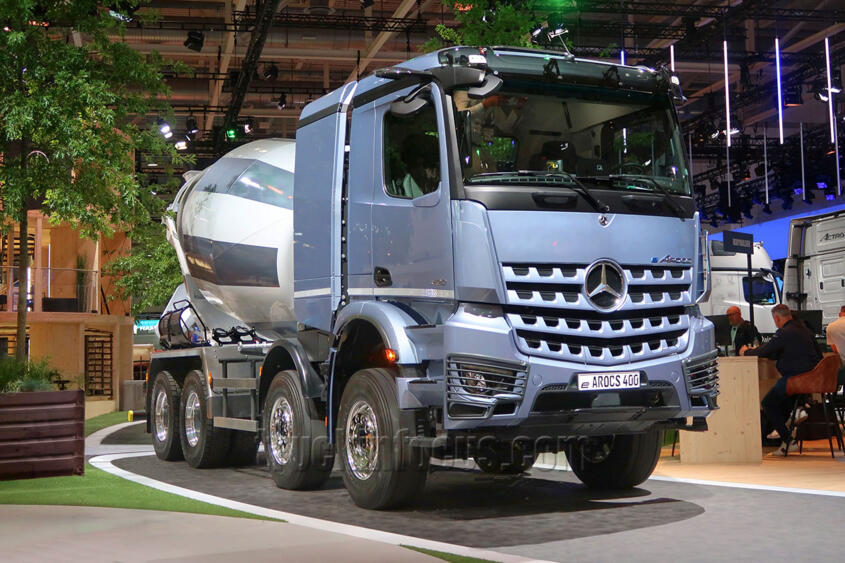
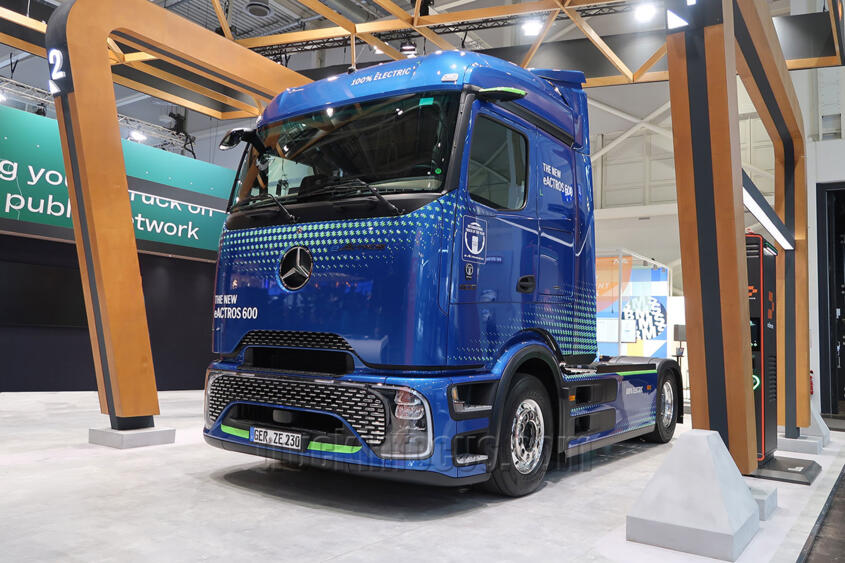
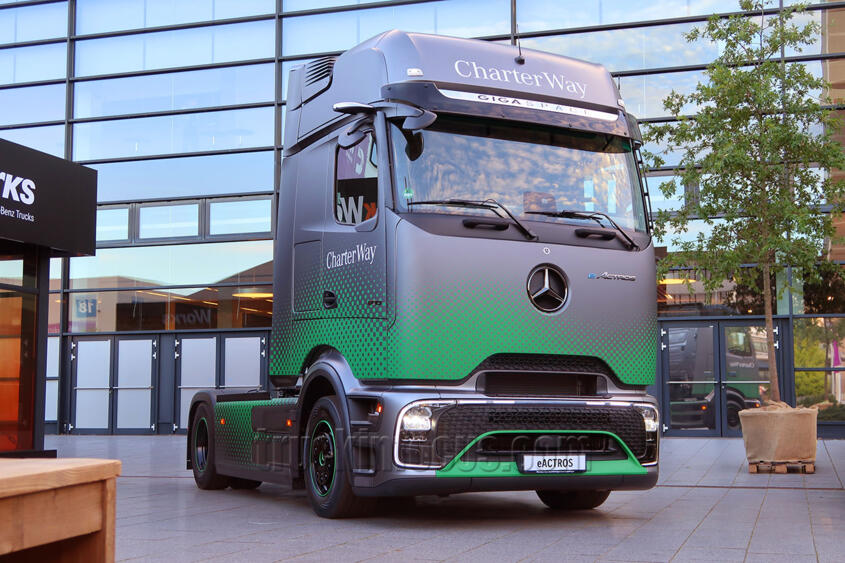
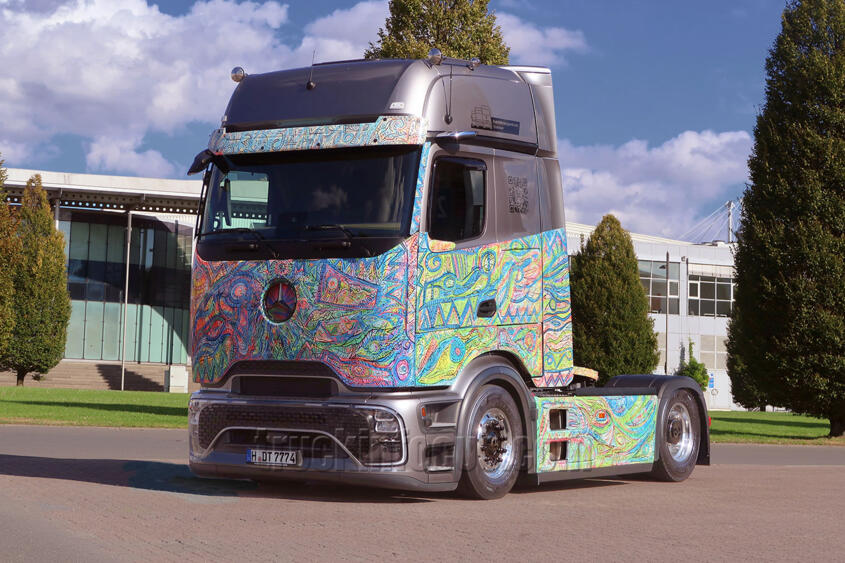
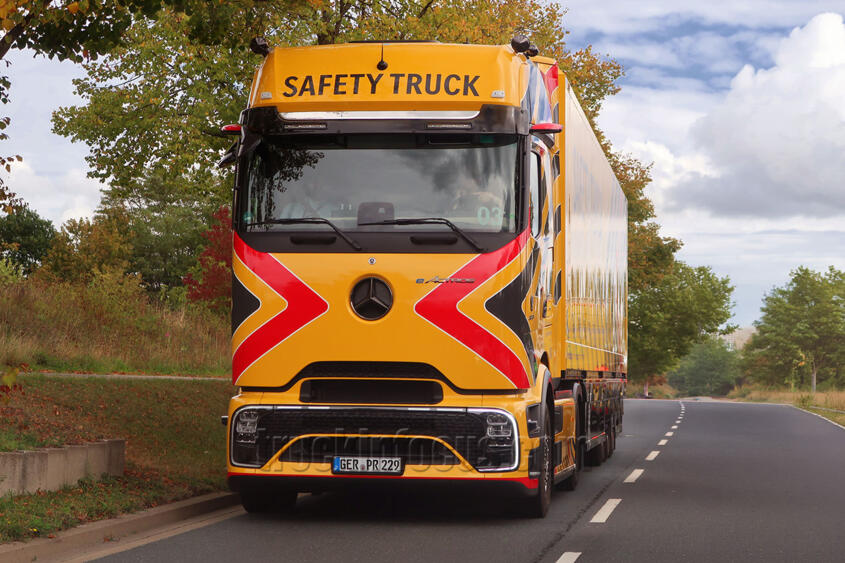
Mercedes-Benz Trucks deliberately presented several possible paths for the future of road freight transport at IAA Transportation 2026. The new eActros Lowliner celebrated its public premiere. It uses the technology of the eActros 600 for high-volume transport. The version with three battery packs offers a range of around 500 kilometers when fully loaded and is scheduled to enter series production in Wörth in the second quarter of 2027.
Mercedes-Benz also placed the NextGenH2 Truck in the spotlight. The fuel-cell truck continues to use liquid hydrogen; the first vehicles from a small series of 100 units are scheduled to enter customer operation before the end of 2026.
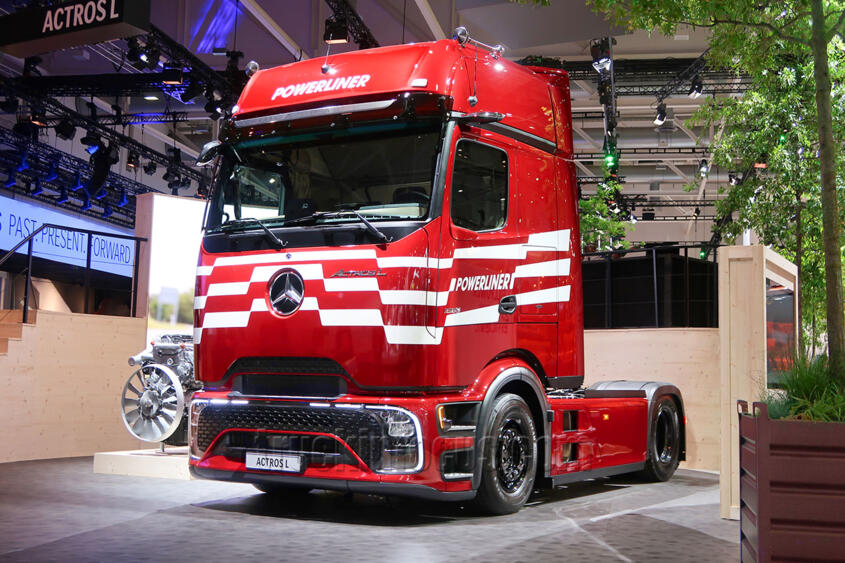
With the Powerliner, Mercedes-Benz Trucks also presented a new generation of diesel powertrains. Further-developed engines from the OM 470 and OM 471 series, new transmissions and matched axles form an integrated drivetrain system. Compared with a similarly equipped predecessor, fuel consumption is expected to decrease by up to four percent. The Powerliner will be offered for the Actros and Arocs from April 2027.
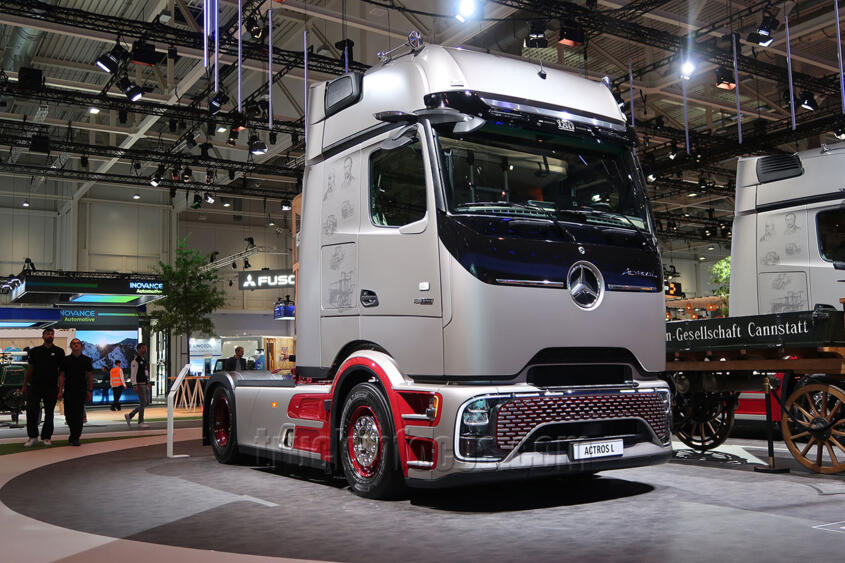
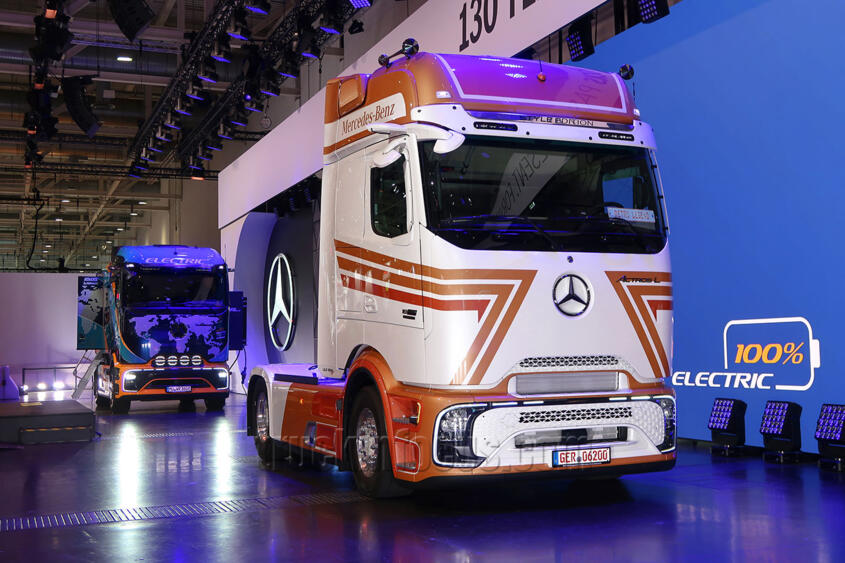
The “130 Years Trucks Edition,” limited to 400 vehicles worldwide, commemorates 130 years of truck history. For the first time, Mercedes-Benz Trucks is offering such an anniversary edition with both diesel and battery-electric powertrains. It is based on the Actros L and eActros 600 and differs from the standard models through around 30 special equipment and design details.
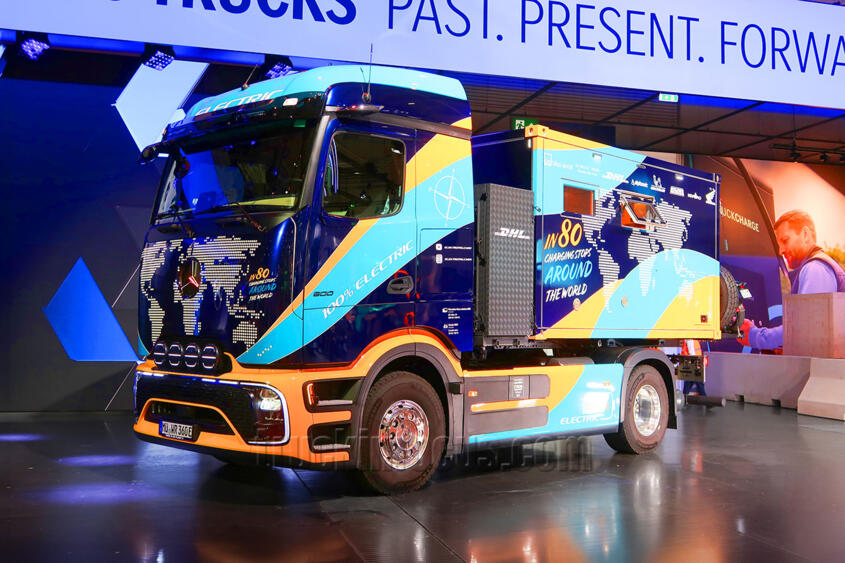
Additional attention was attracted by Tobias Wagner’s eActros 600. Under the motto “In 80 Charging Stops Around the World,” the professional driver known as the “Elektrotrucker” set off directly from the IAA on a journey of around 45,000 kilometers through approximately 30 countries – a reference to Jules Verne’s “Around the World in Eighty Days.”
More information is available on the Mercedes-Benz Trucks website.
Renault Trucks – Electric Range up to 660 Kilometers
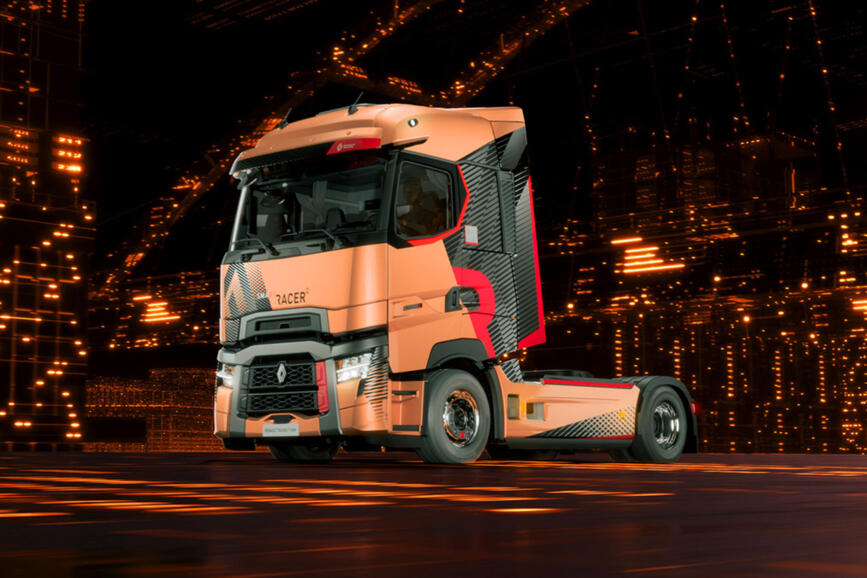
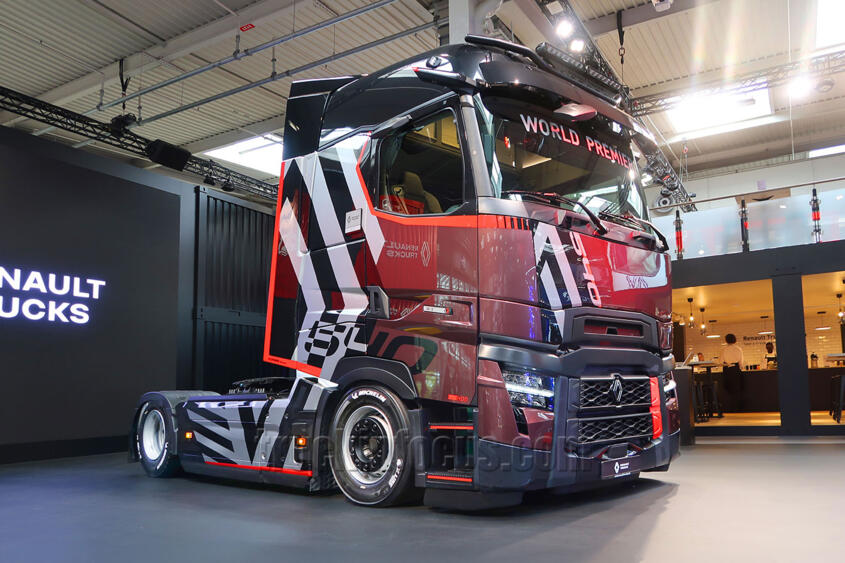
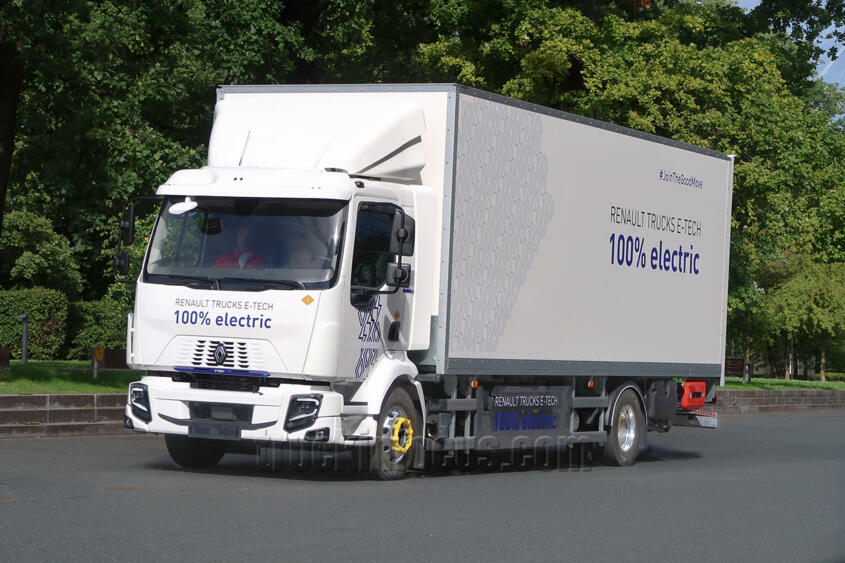
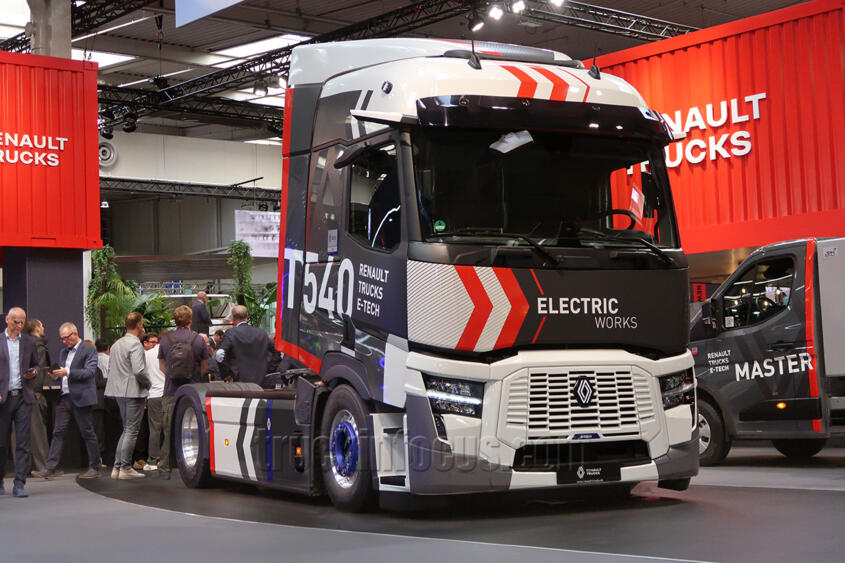
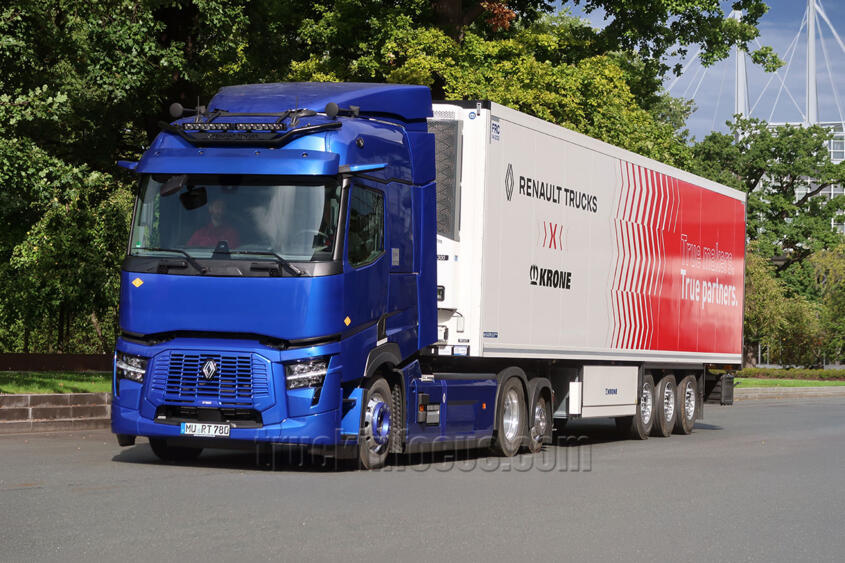
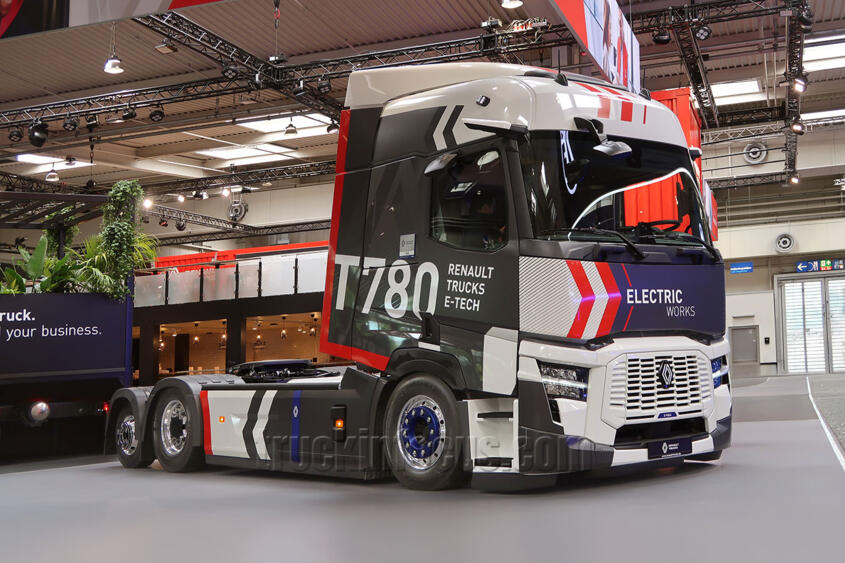
Renault Trucks presented an unusually broad mix of new electric vehicles and further-developed diesel technology in Hanover. At the top of the electric range is the new E-Tech T 780 for long-haul transport. With a new e-axle and additional batteries, it achieves a range of up to 660 kilometers while retaining a high payload. It is complemented by the E-Tech T 585 and T 540 as well as new electric distribution vehicles with gross weights of 12 and 14 metric tons. Renault Trucks’ electric range now extends from 2.8 to 50 metric tons.
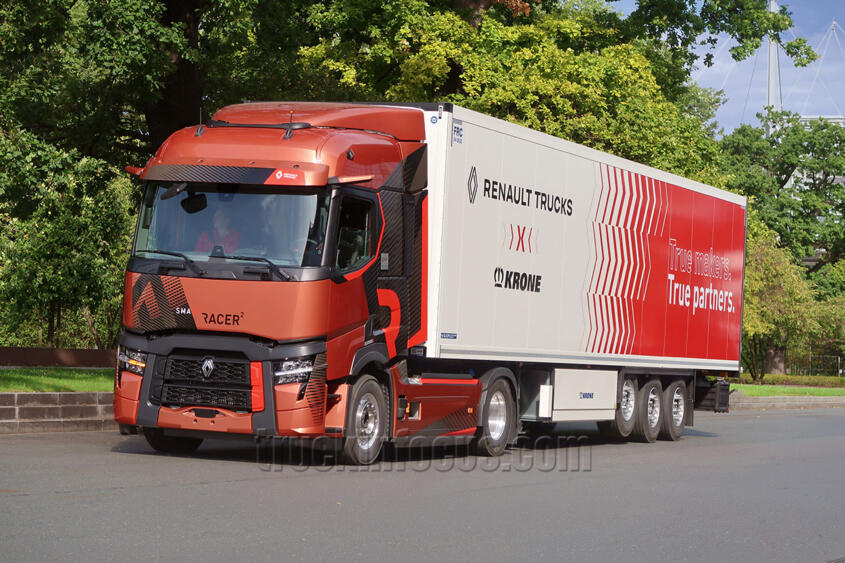
At the same time, Renault Trucks presented the new DE 13 R diesel engine for the T, T High, C and K. It is claimed to reduce fuel consumption by up to four percent compared with the previous generation and produces up to 540 hp.
More information is available on the Renault Trucks website.
Scania – 720 Kilometers and a New Face
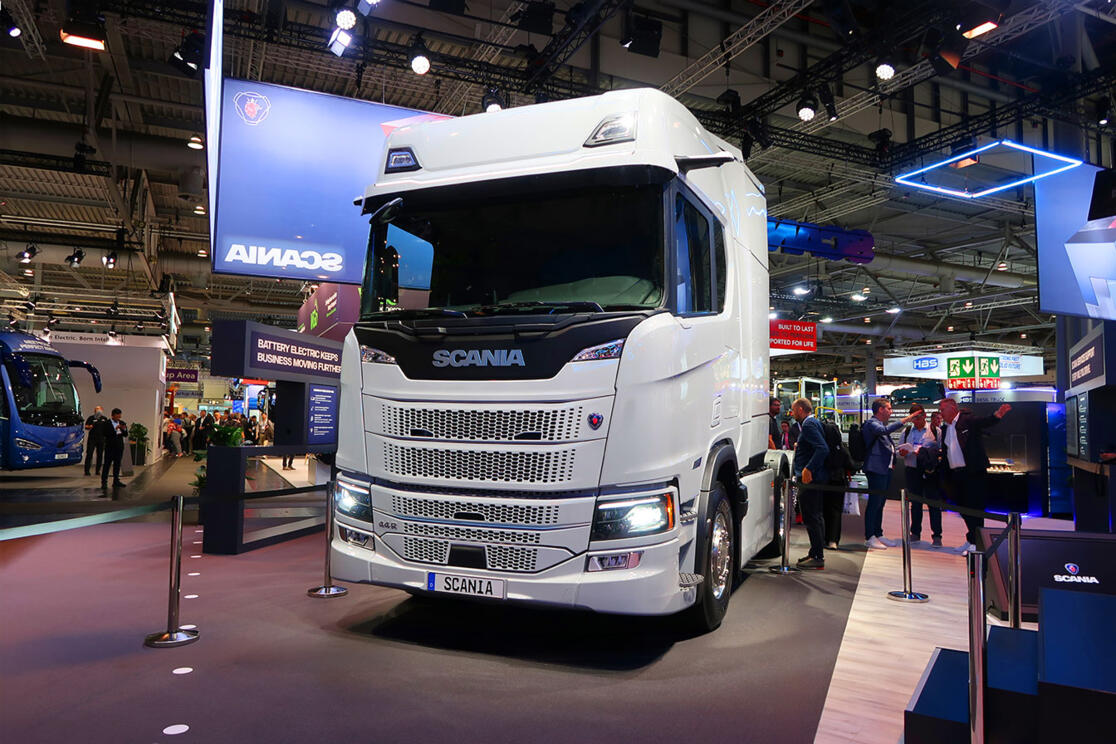
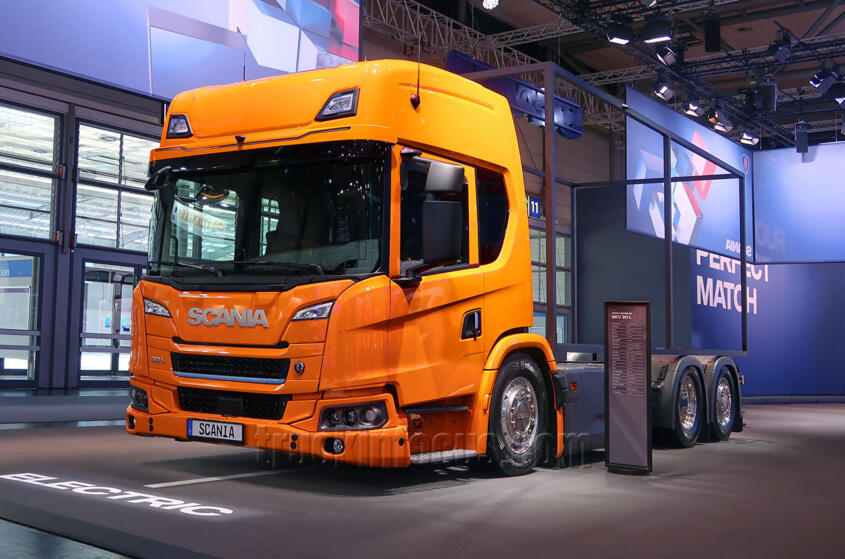
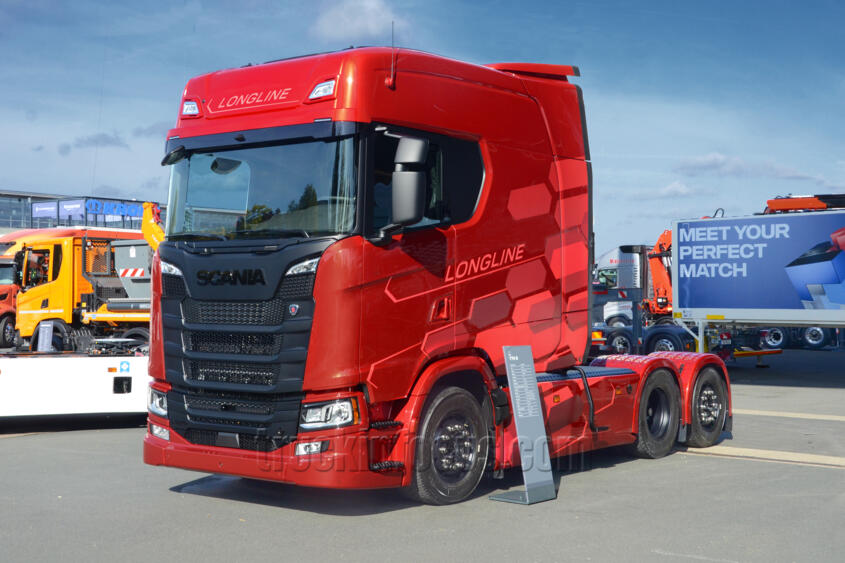
At the IAA, Scania combined greater electric range with a comprehensive update of the R and S series. For electric long-haul transport, the manufacturer now quotes a range of up to 720 kilometers, putting it on the same level as MAN with the eTGX 6x2. This is made possible by additional battery capacity behind the cab. In a typical configuration, two battery packs with a combined capacity of around 356 kWh supplement the batteries already mounted on the chassis.
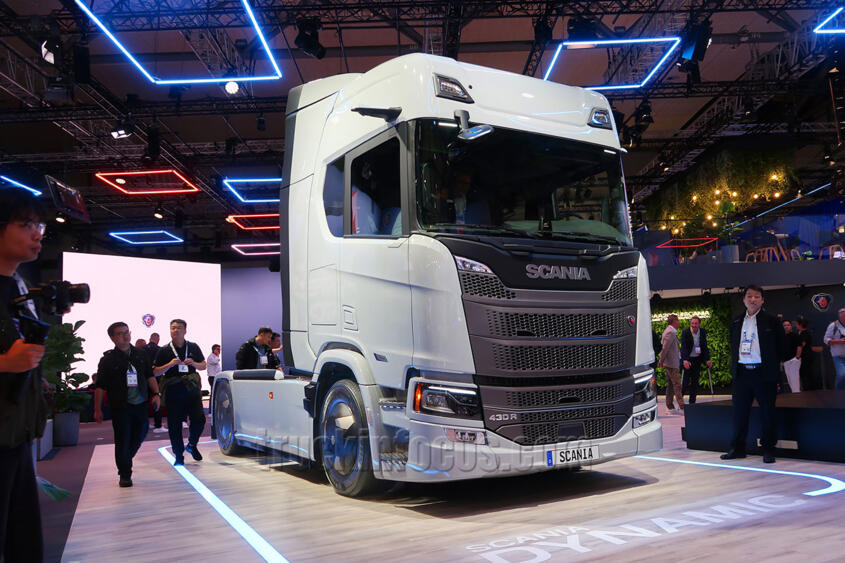
At least as visible was the new Scania Dynamic. Revised aerodynamics, digital mirrors, redesigned A-pillars and door handles, as well as extended side skirts, are intended to reduce total energy consumption by around two percent. At the same time, the cab, seats, lighting and bunk have been further developed. Notably, Scania is not limiting these changes to one type of powertrain: Dynamic applies to both battery-electric vehicles and trucks with combustion engines.
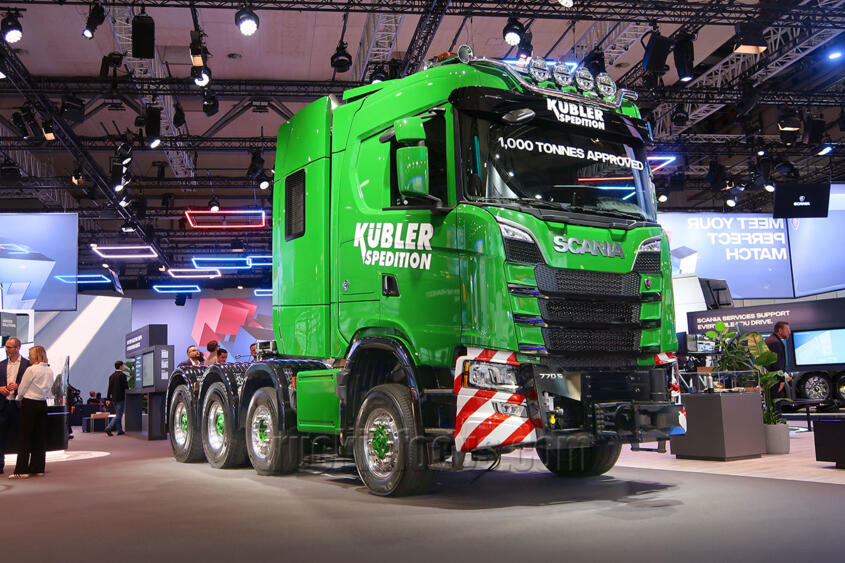
With the S 770 Longline, Scania also showed the return of a particularly impressive cab concept in Hanover. The factory-certified long cab is going into production not as a concept study but as a low-volume model. The vehicle displayed at the IAA had the CS 28 cab, which is around 80 centimeters longer than the regular CS 20 cab. Scania has also announced an even longer CS 31 version. Longline cabs are manufactured at Scania in Laxå; their deliberately reduced initial interior specification leaves room for individualized living and working areas.
More information is available on the Scania website.
SuperPanther – Chinese Technology from Austria
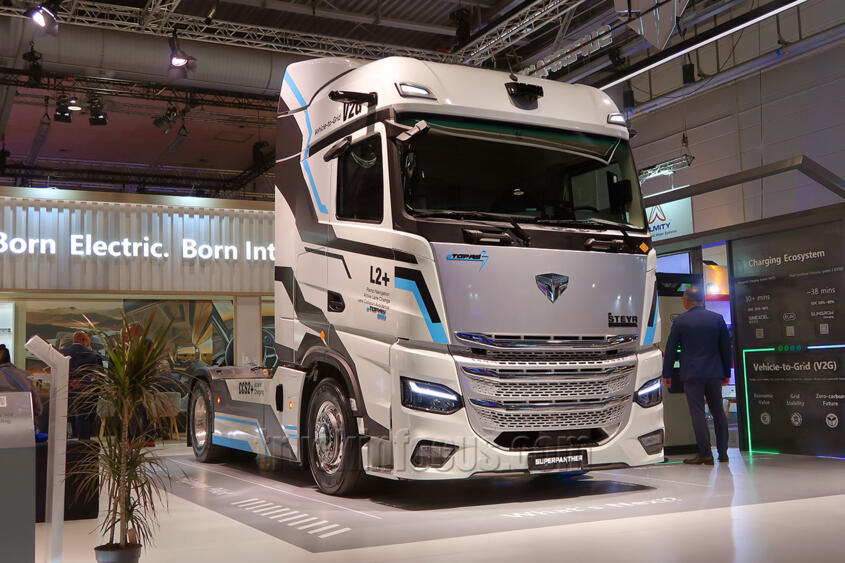
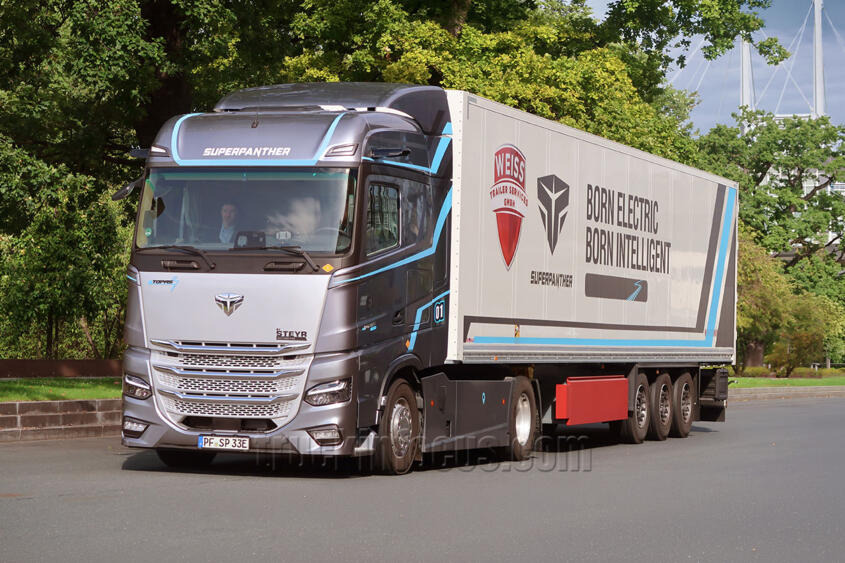
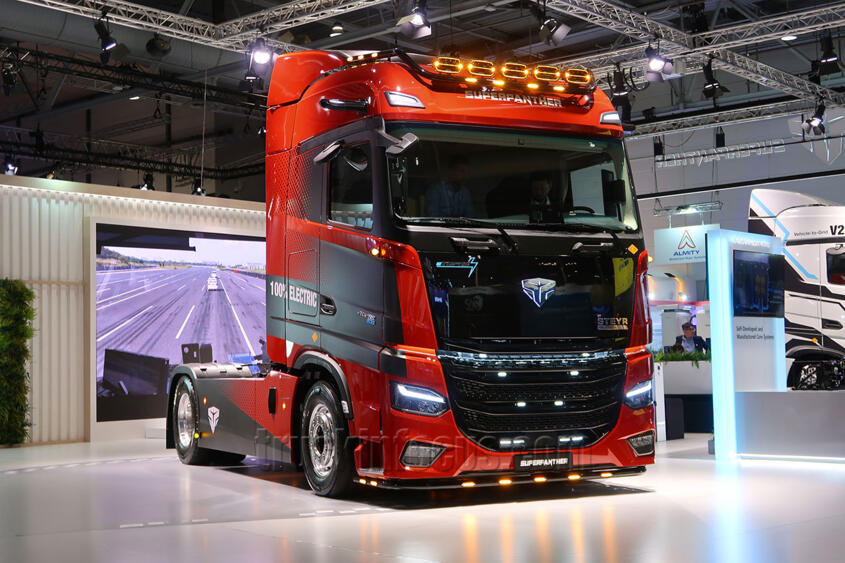
Founded in 2022, SuperPanther is a Chinese manufacturer, but it is taking a distinctive approach in Europe. The eTopas 600 was developed specifically for the European market and is final-assembled by Steyr Automotive in Austria using the SKD process. Preassembled modules arrive from China, while additional components are sourced from European suppliers. Steyr Automotive handles final assembly, commissioning and quality inspection. We have already covered the eTopas 600 and the start of production in Steyr in detail on truckinfocus.com.
The 4x2 tractor uses an 876-volt architecture. The dual-motor e-axle, high-voltage power electronics and thermal management system come from SuperPanther; the 621-kWh LFP battery is supplied by CATL. The two electric motors together produce 394 kW continuously and up to 692 kW at peak. The stated range is up to 560 kilometers. Using two CCS2 connectors in parallel, the eTopas 600 can charge at up to 660 kW; under favorable conditions, the battery is said to be capable of charging from 20 to 80 percent in no more than 38 minutes.
The first production vehicle rolled off the line in Steyr at the end of July 2026. The first eTopas 600 trucks have already gone to customers including DHL, Gress, Temmel and Lontex. SuperPanther thus combines its own Chinese drivetrain technology with European assembly, components and quality control.
More information is available on the SuperPanther website.
Terberg – Electric Yard Work
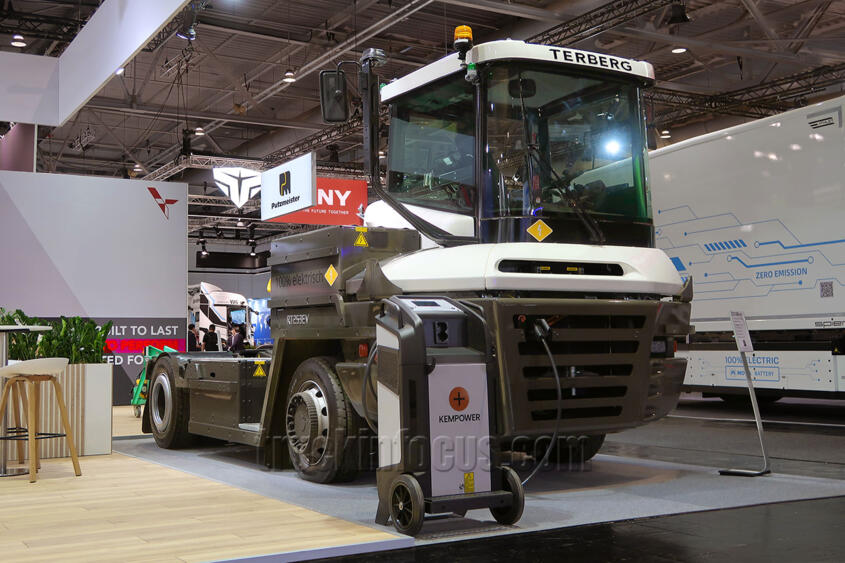
Terberg displayed a fully electric terminal tractor for use at industrial sites, logistics centers and ports. The Dutch specialist-vehicle manufacturer has been electrifying this segment for several years, but significantly further developed its range in 2026. The YT 203 EV is now available with 155- or 310-kWh LFP batteries and is designed for gross combination weights of 50 to 90 metric tons.
The operating concept is straightforward: on short, regularly repeated routes with frequent shunting movements, electric drive and recuperation can make particularly effective use of their advantages. Terberg now offers not only the YT 203 EV as a 4x2 terminal tractor but also other electric specialist vehicles for terminal and RoRo operations. Charging is via CCS2.
More information is available on the Terberg Special Vehicles website.
Tesla – The Semi Is Coming to Europe
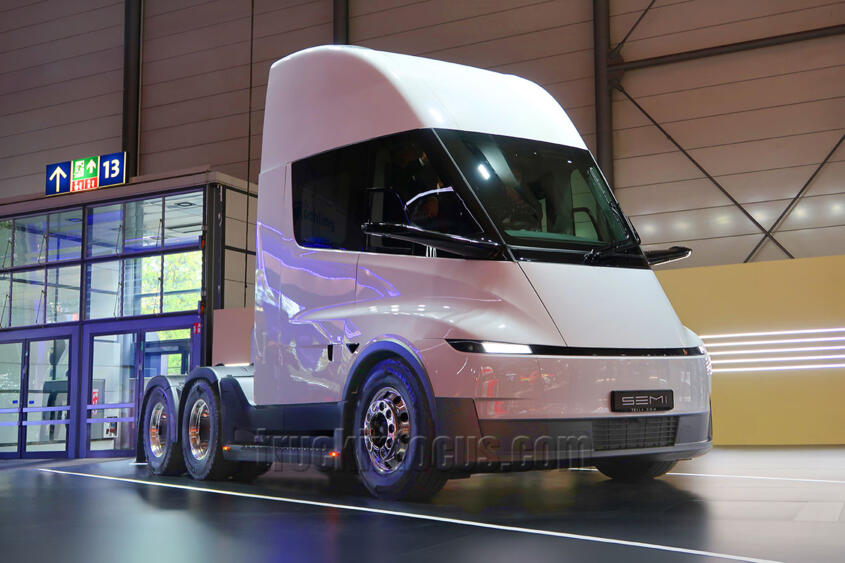
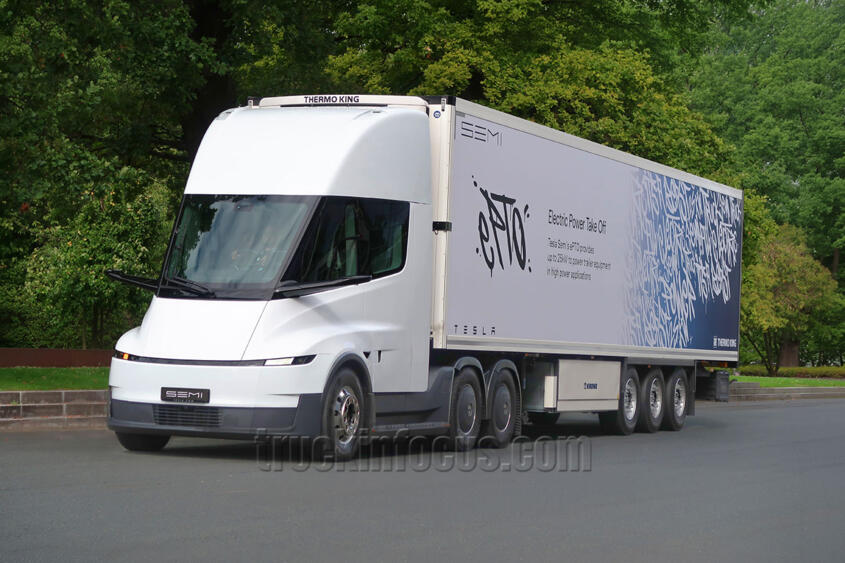
Tesla had already displayed the Semi at IAA Transportation in 2024. Two years later, the manufacturer showed the version intended for Europe in Hanover for the first time. Technically, it is largely based on the American Standard Range version. The drivetrain, battery, axle layout and platform remain essentially unchanged. Visible changes were made to comply with European regulations: the large conventional mirrors of the US version have been replaced by a camera-monitor system, while the lighting, roof area and rear mudguards, among other details, have also been modified.
For Europe, Tesla quotes a range of around 550 kilometers at a gross combination weight of 40 metric tons and energy consumption of approximately 1.0 kWh per kilometer. Three electric motors on the two rear axles provide a combined drive output of up to 800 kW. According to Tesla, the tractor has a curb weight of less than 9.1 metric tons.
Charging is via the Megawatt Charging System. Tesla specifies charging power of up to 800 kW for the European version; within 30 minutes, enough energy for up to 60 percent of the vehicle’s range is said to be replenishable. The first deliveries to European customers are planned for 2027. In Hanover, the Semi was not only displayed on the stand but also took part in the IAA Test Drives.
More information is available on the Tesla website.
Volta Trucks – Built for the City
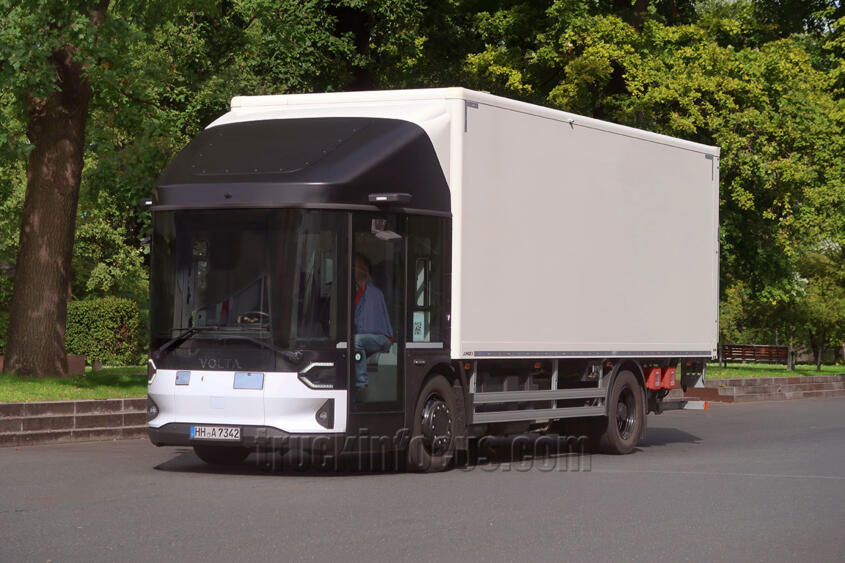
Volta Trucks once again displayed the fully electric Volta Zero at IAA Transportation and also made it available for test drives. The 16-metric-ton truck was developed from the outset for urban distribution. Its defining features are the unusually low and central driving position and the extensively glazed cab. This provides a broad direct field of vision intended to reduce blind spots and, above all, improve visual contact with pedestrians and cyclists.
The concept also has advantages where drivers frequently enter and leave the vehicle in urban delivery work. The driver sits considerably lower than in a conventional truck, and access to the cab is correspondingly low. Volta therefore continues to pursue a different approach from the major long-haul truck manufacturers: the Zero is not intended to travel as far as possible, but to function specifically where heavy vehicles operate in the middle of city traffic.
More information is available on the Volta Commercial Vehicles website.
Volvo Trucks – 700 Kilometers Enter Series Production
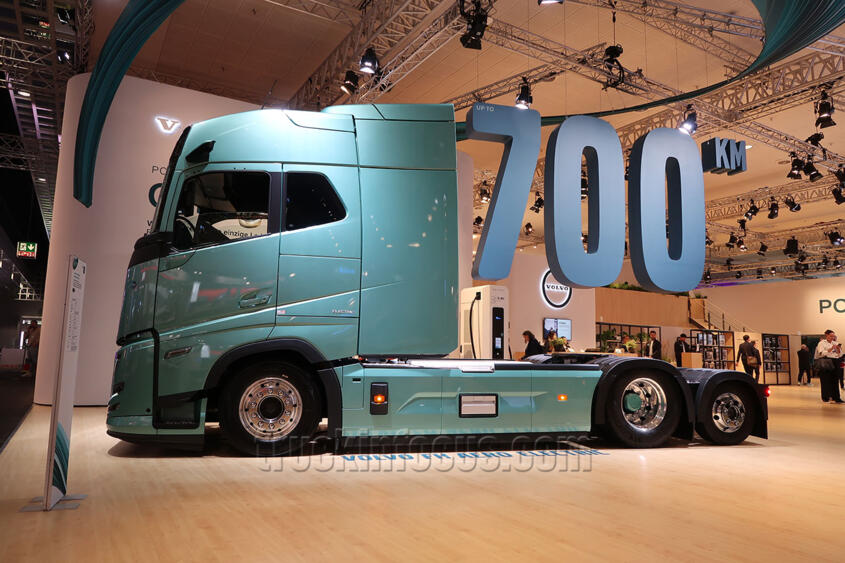
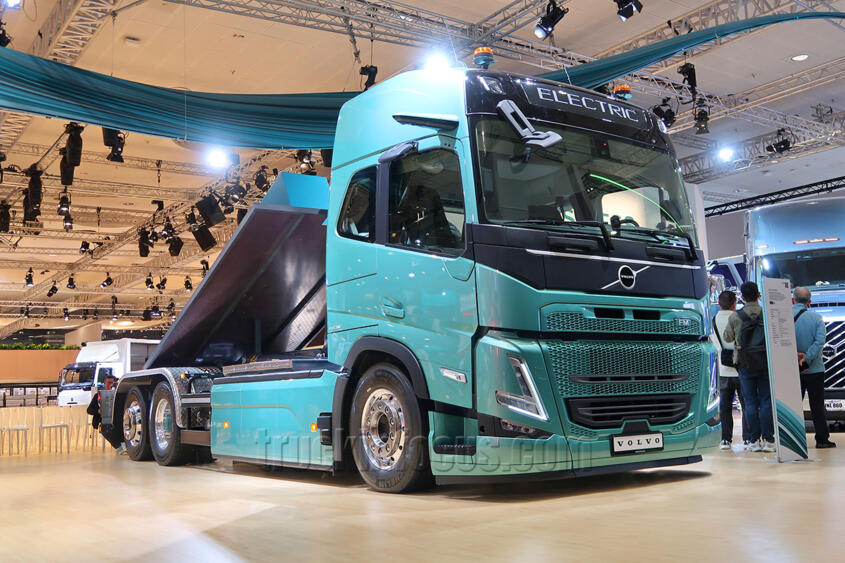
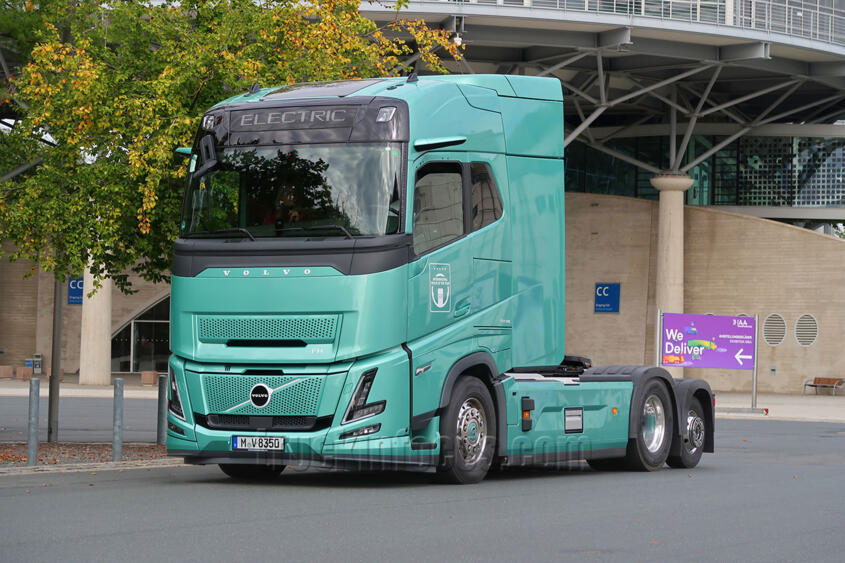
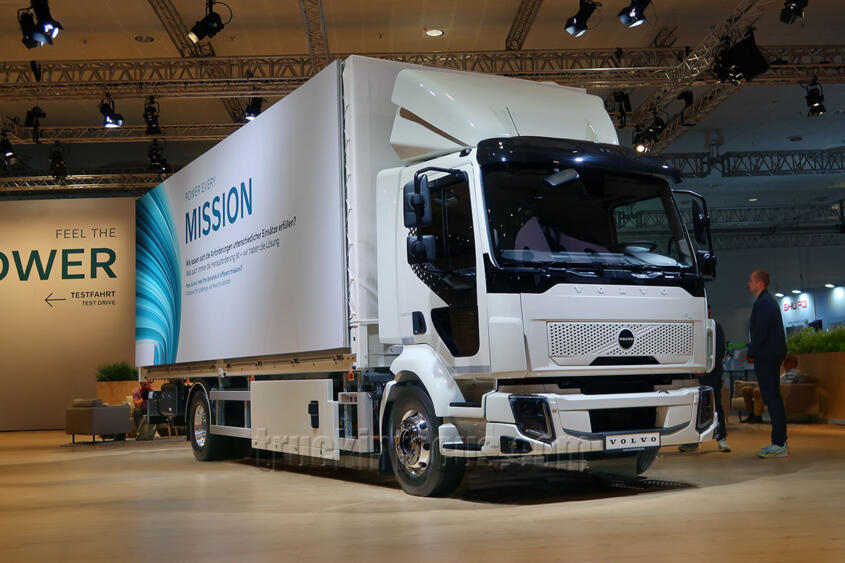
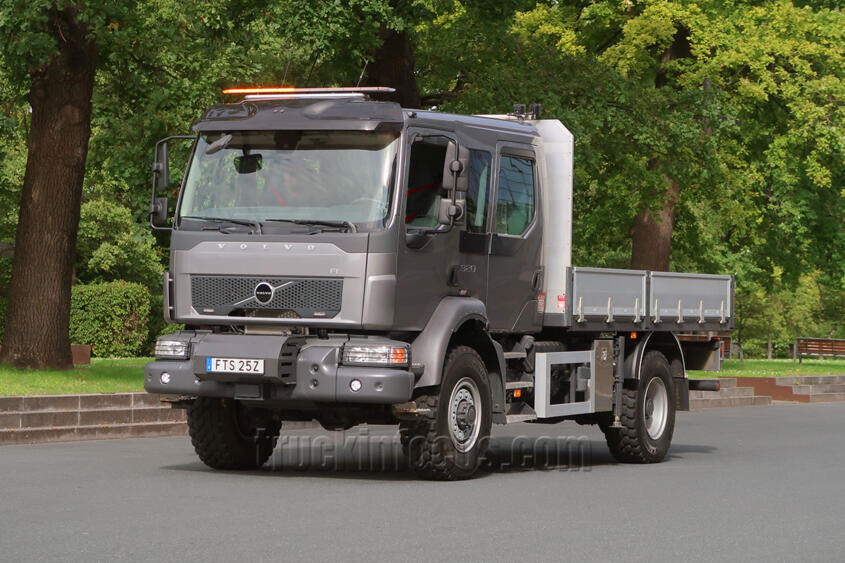
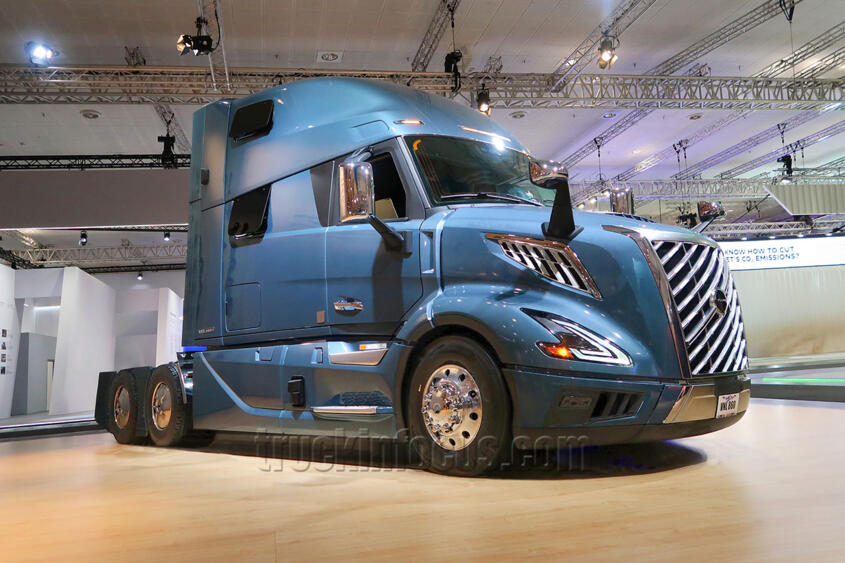
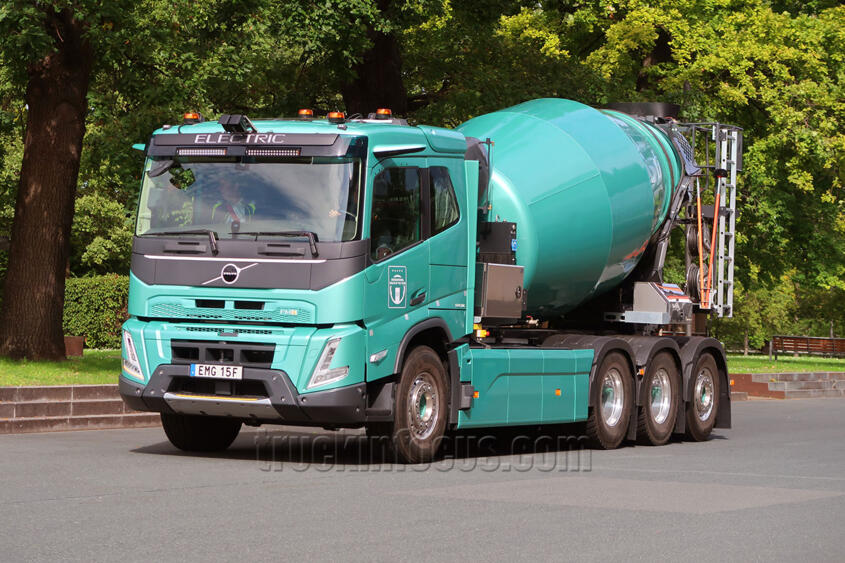
Volvo brought something to the IAA that went beyond a mere announcement: series production of the new heavy electric trucks with ranges of up to 700 kilometers has already begun. The FH Aero Electric with Extended Range uses a new e-axle that creates additional space for batteries. The FH, FM and FMX Electric have also been comprehensively further developed.
Volvo also presented an electric FH variant for particularly heavy combinations with gross combination weights of up to 80 metric tons. At 76 metric tons, it is said to offer a range of up to 420 kilometers. MCS charging at up to 680 kW is possible; usable battery capacity is 640 kWh.
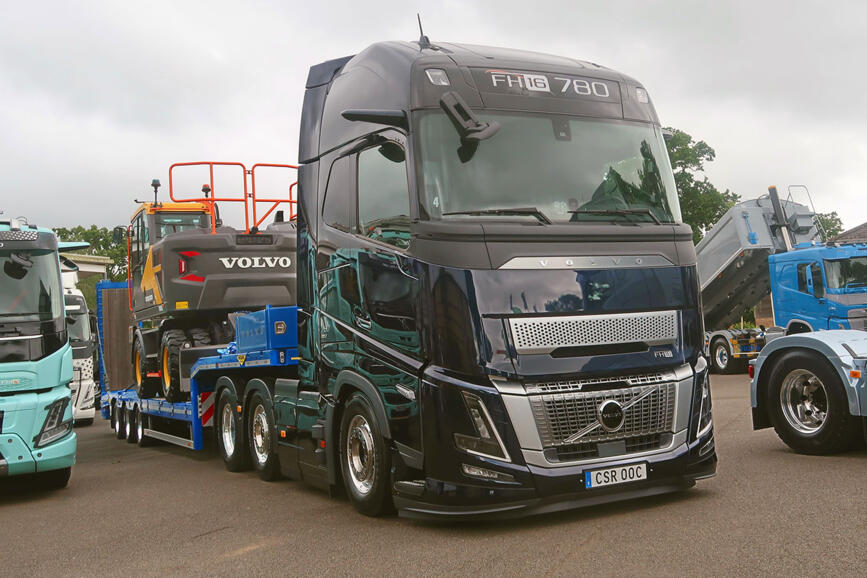
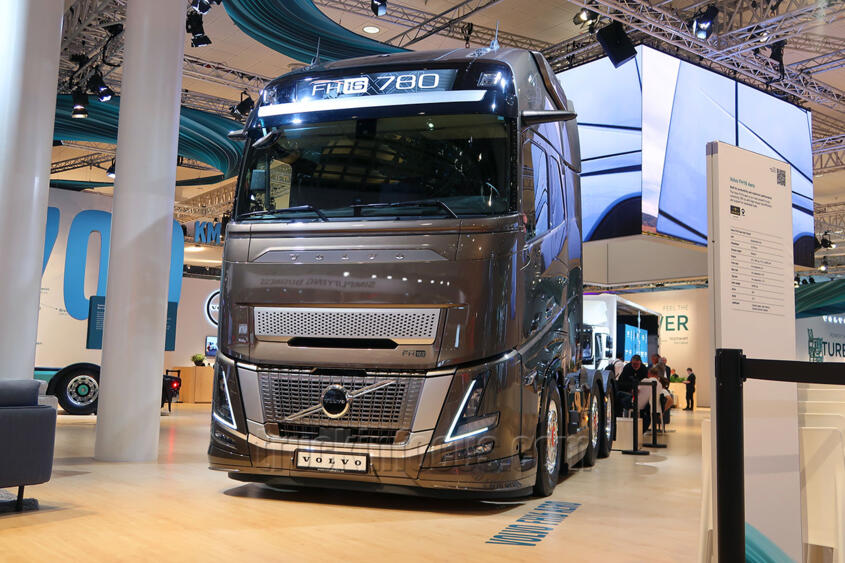
Amid all the electric innovations, a classic diesel model served as a reminder that Volvo also remains active at the other end of the performance scale: the FH 16 780. Its 17.3-liter D 17 inline six produces 780 hp and 3,800 Nm of torque. It is the most powerful engine Volvo Trucks has ever offered in a production truck. The vehicle was not an IAA premiere – the D 17 was introduced in 2024 – but as the flagship of Volvo’s conventional range it fitted well into the company’s comprehensive IAA presentation.
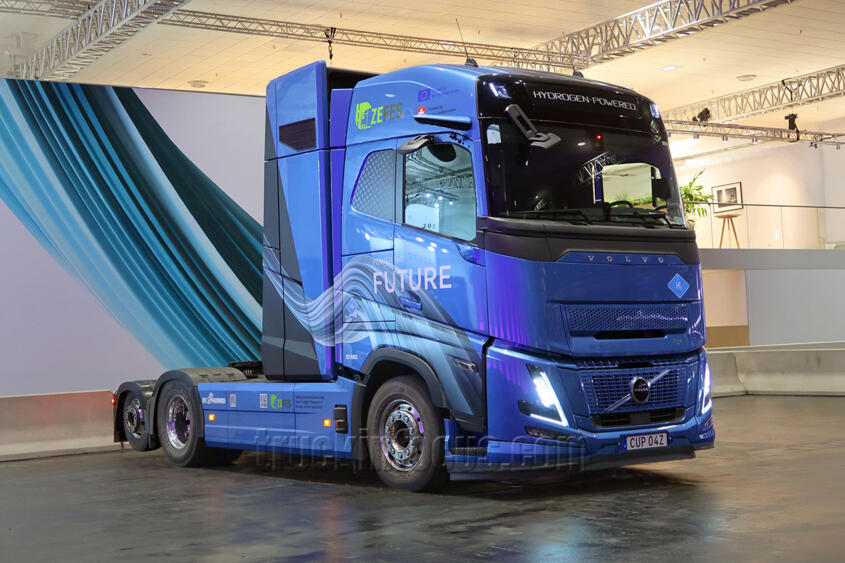
At the same time, Volvo continued to present diesel, gas and future hydrogen solutions. The new electric range comprising the FH, FM, FMX and FH Aero Electric was also named “International Truck of the Year 2027” during the show.
More information is available on the Volvo Trucks website.
The photos (except for the Scania Longline) and the text for this trade show recap were provided by Steve St.Schmidt. Generative AI was used to assist with research, structuring, and writing.