SuperPanther Launches Production in Steyr
Chinese Technology, Made in Austria
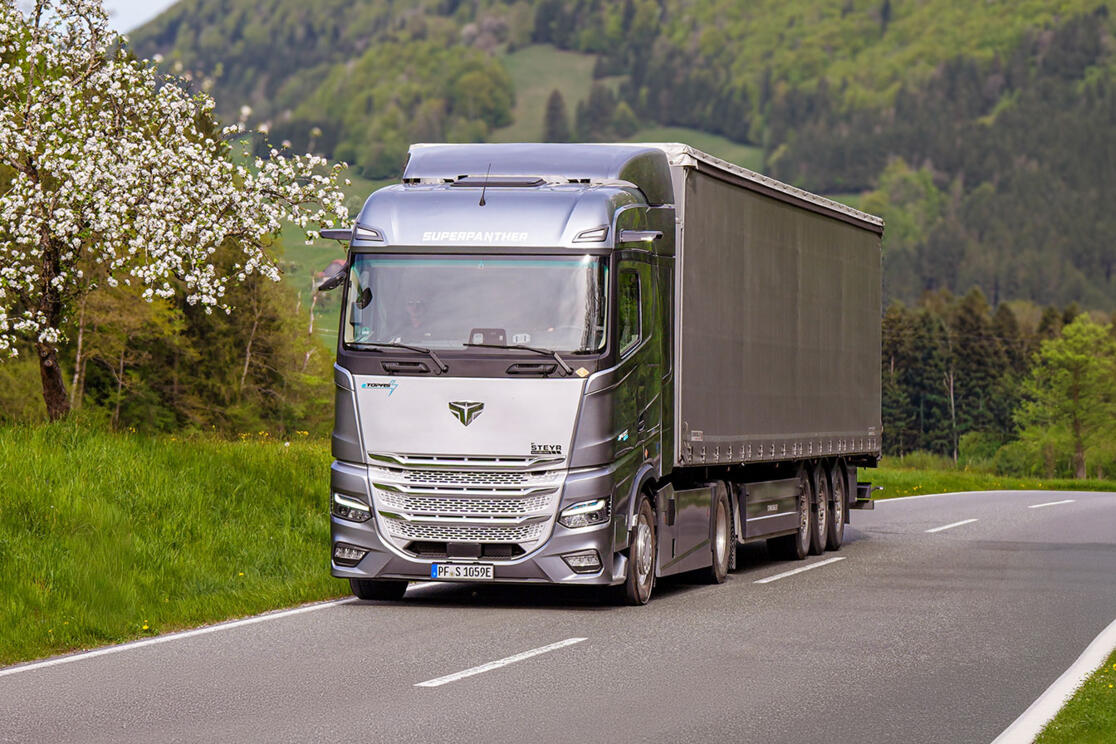
Series production of the battery-electric SuperPanther eTopas 600 has begun at Steyr’s historic truck plant. Developed in China, the electric truck is final-assembled in Austria for the European market and the first units have already been delivered to customers. Although it is not the first Chinese truck on European roads, it marks a new phase in the competition with established manufacturers. Rather than relying solely on imports, SuperPanther is building its strategy around European manufacturing, suppliers, and service partners.
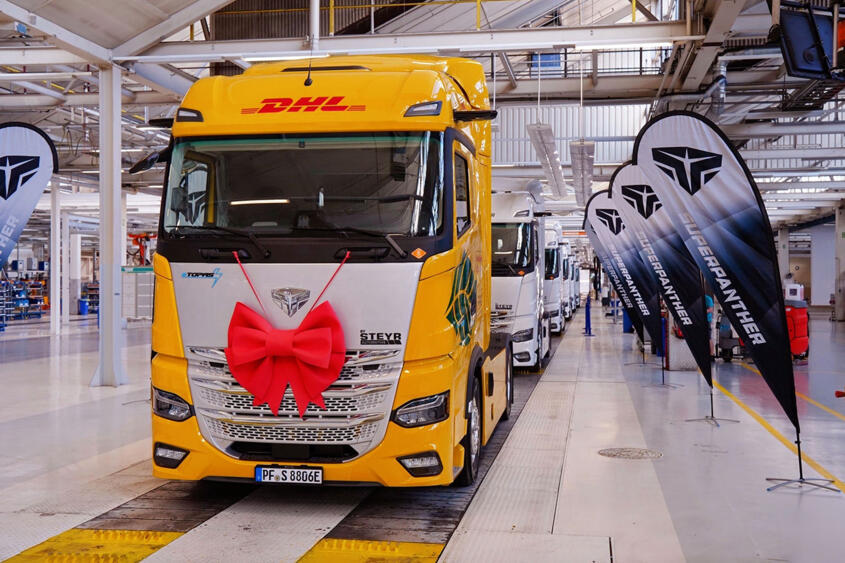
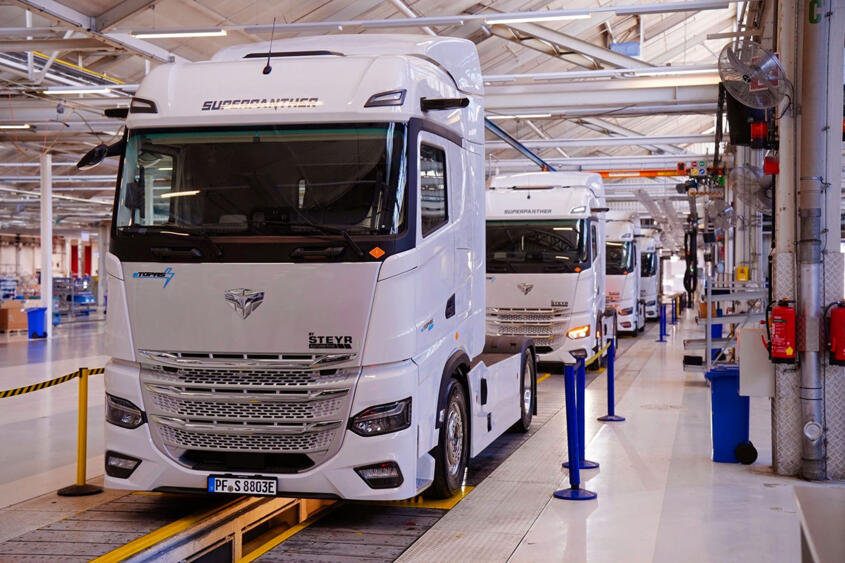
On July 27, 2026, a striking yellow electric truck bearing DHL branding and a large red bow across its grille stood in the Steyr Automotive assembly hall. More tractor units were lined up behind it. Chinese manufacturer SuperPanther had invited guests to witness the handover of the first series-production examples of its eTopas 600.
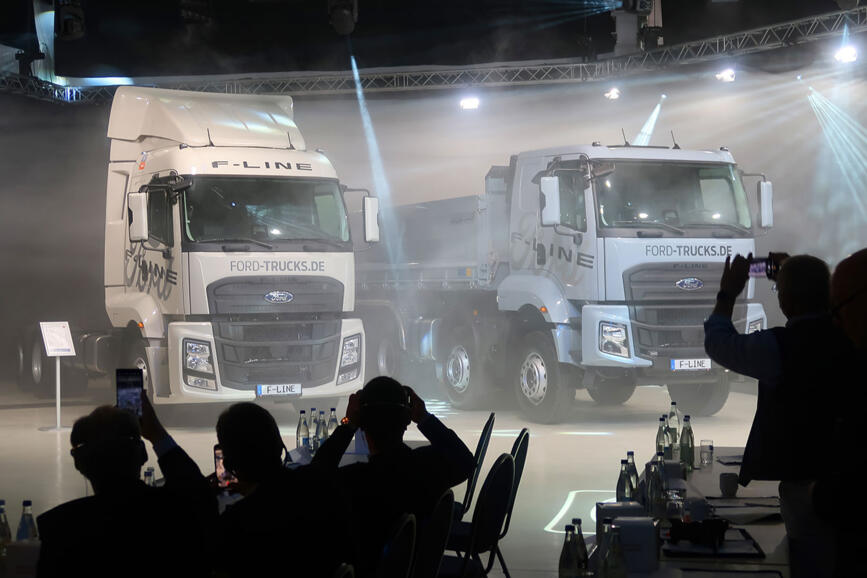
This means that complete heavy-duty tractor units are once again being built in Steyr, Austria. Contrary to some initial reports, however, this is not a new truck from the Steyr brand. The eTopas 600 is sold under the SuperPanther name. A small “by Steyr Automotive” badge identifies the Austrian manufacturing partner.
Even so, the start of production represents more than a conventional contract-manufacturing project. It shows how Chinese commercial-vehicle manufacturers are preparing to enter the European market. Instead of simply importing fully assembled vehicles from China, SuperPanther combines its own electric platform with European production, supplier technology, homologation, and an established service network.
A Chinese Newcomer
Founded only in 2022, SuperPanther focuses on electric powertrains and heavy-duty electric trucks. The company sees itself as more than a vehicle manufacturer and also intends to offer its powertrain technology, software, and charging systems to other manufacturers.
In China, SuperPanther already offers the Black Diamond heavy-duty electric tractor. That 6×4 model is not intended for Europe, however. The eTopas 600 was developed for this market as a conventional 4×2 tractor, with dimensions, axle loads, and connection systems customary in Europe.
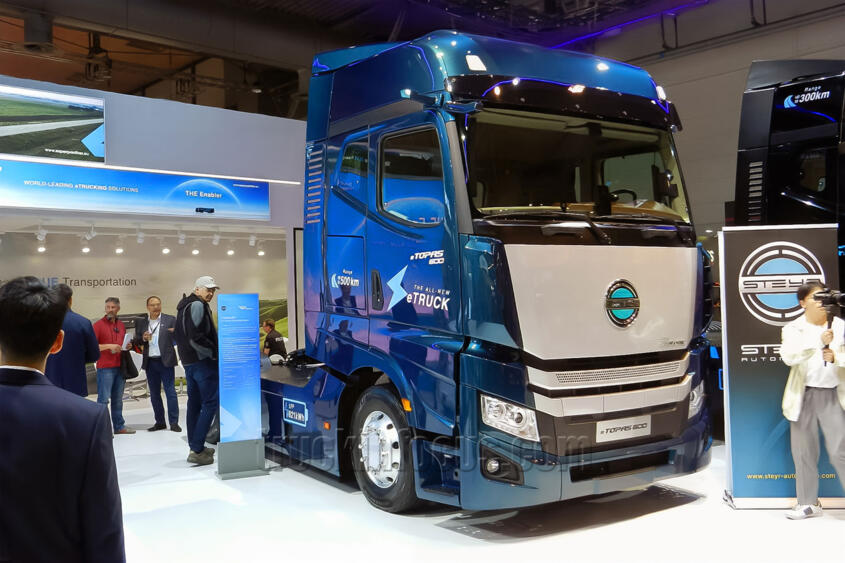
Visitors to IAA Transportation 2024 in Hanover got an early look at the vehicle. At the time, the Steyr name was still displayed prominently on the front, while SuperPanther kept a lower profile. The roles are clearer on the production model: the SuperPanther brand and emblem dominate the front, while Steyr Automotive is identified as the manufacturing partner.
Production on Historic Ground
The Steyr plant has a long tradition in commercial-vehicle manufacturing. Steyr-brand trucks were built there for decades. After MAN acquired the commercial-vehicle division, the Upper Austrian plant produced models including the MAN TGL and TGM series. Since 2021, the company has operated under the Steyr Automotive name as an independent contract manufacturer and industrial enterprise.
For SuperPanther, Steyr Automotive handles final assembly, commissioning, and quality acceptance. Production initially follows the semi-knocked-down, or SKD, process. Delivered assemblies and preassembled modules are combined in Steyr to create complete vehicles.
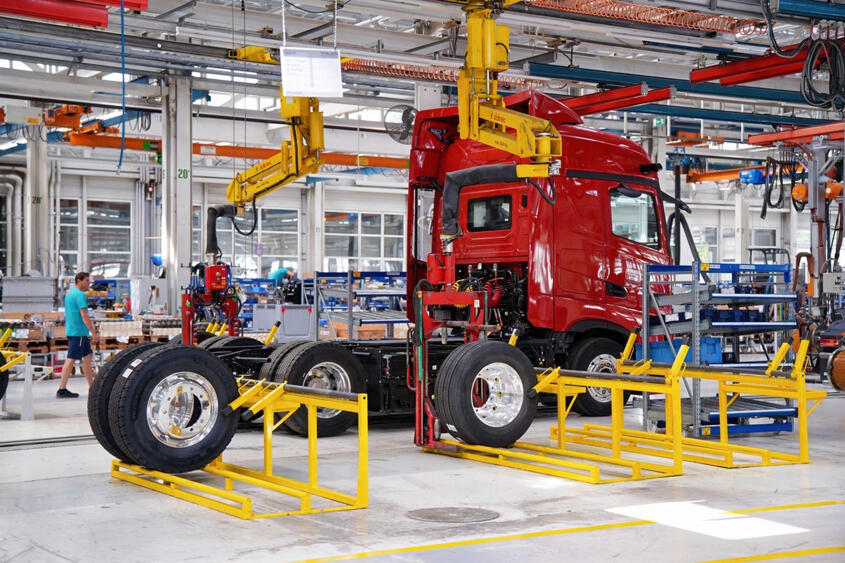
SuperPanther supplies the core electric-drive technology, including the dual-motor e-axle, high-voltage power electronics, and thermal-management system. European suppliers including ZF, Schaeffler, Aumovio, Infineon, Michelin, Continental, Goodyear, and Castrol are also involved.
The eTopas 600 is therefore neither a purely Chinese import nor a truck developed entirely in Austria. It is an international product whose technical platform comes from China and whose industrialization for Europe is being carried out jointly with local partners.
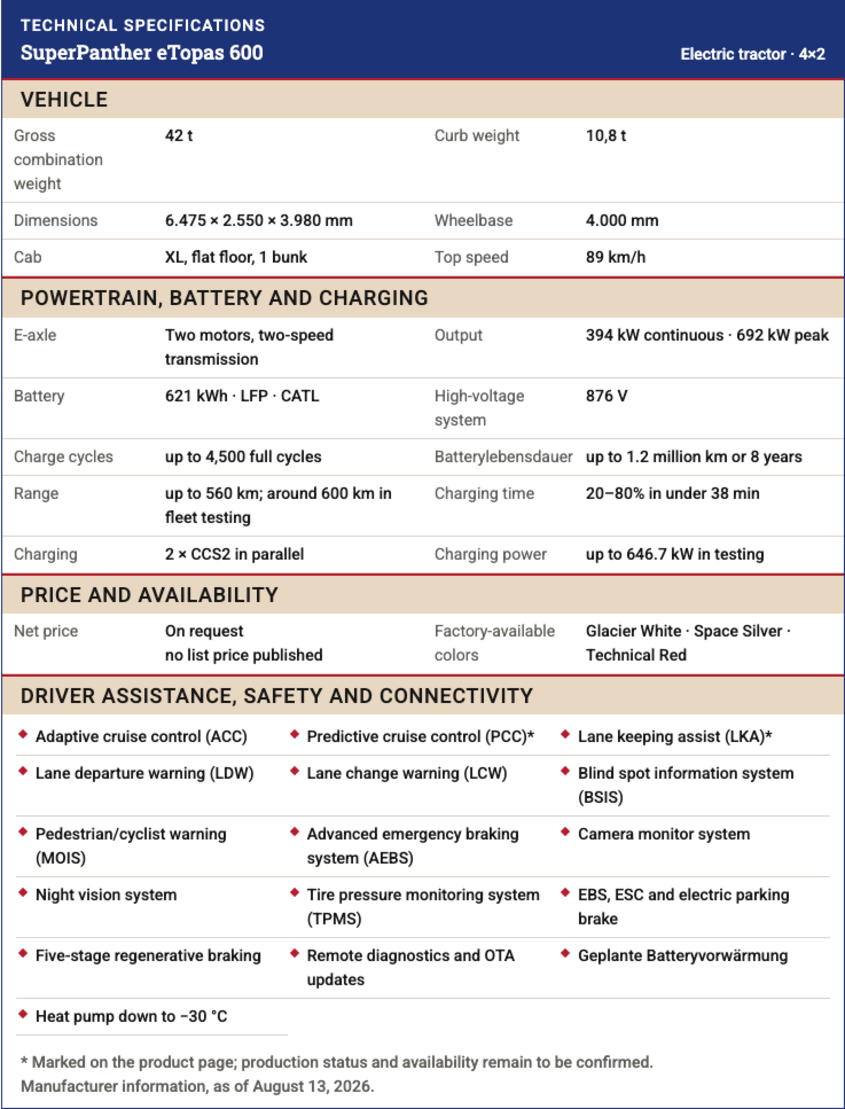
The specifications position the eTopas 600 against battery-electric long-haul models from Europe’s established manufacturers. Since March 2026, a customer test fleet is said to have covered more than 70,000 kilometers on a variety of routes. According to SuperPanther, average energy consumption was approximately 0.94 kilowatt-hours per kilometer. Further independent testing will be needed to determine whether that figure can be replicated in sustained fleet operations.
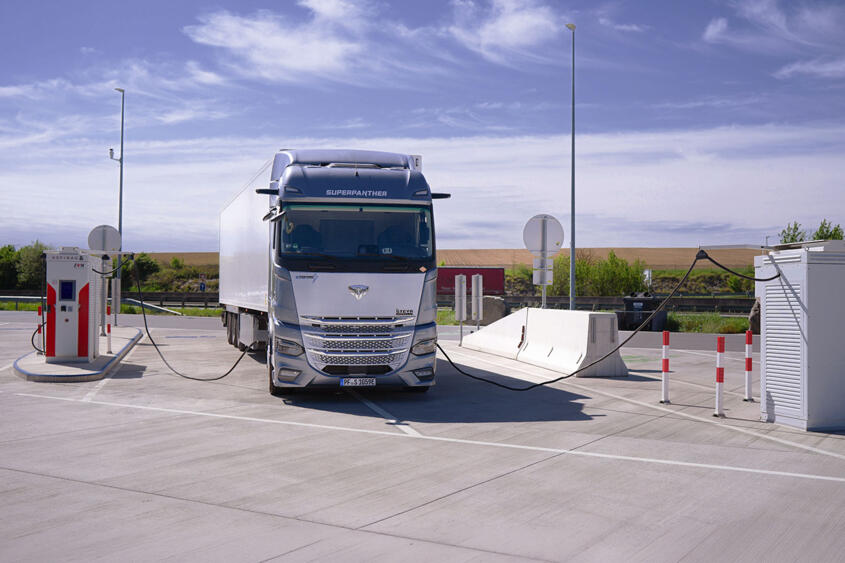
The charging system is one of the truck’s distinctive features. A CCS2 port on each side allows the battery to be charged through two cables simultaneously. According to the manufacturer, the measured peak charging rate of nearly 647 kW allows the battery to be charged from 20 to 80 percent in less than 38 minutes.
This requires two compatible charging points capable of delivering the necessary power. The full combined output will therefore not be available at every charging station. For long-haul operation, the short charging time remains attractive because it roughly coincides with a mandatory driver break.
From Testing to Customer Operations
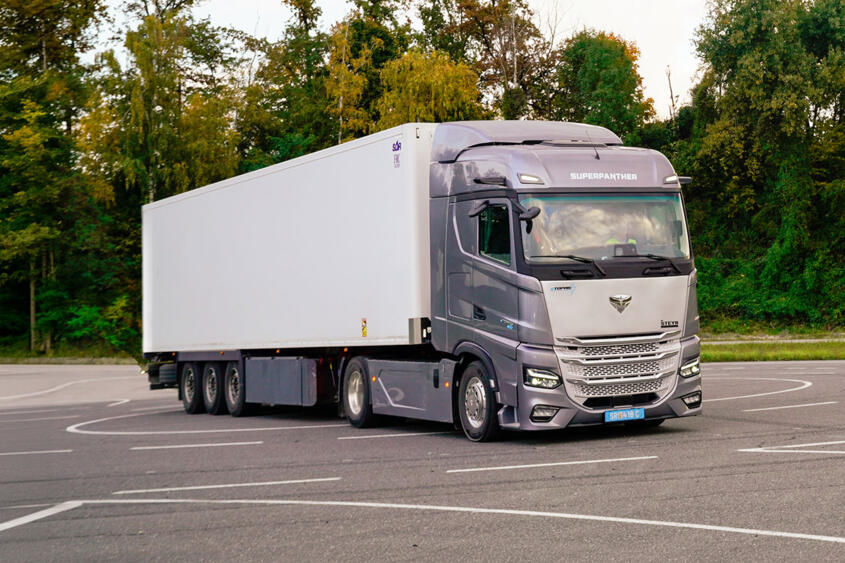
DHL Freight was closely involved with the eTopas 600 well before series production began. In the fall of 2024, DHL and SuperPanther agreed on a strategic partnership at IAA Transportation. Real-world trials began in Austria in late 2025.
One test route ran from Wels to Vienna and back. The eTopas carried 15 metric tons of cargo on the roughly 400-kilometer round trip. The trials examined not only range and energy consumption, but also operation, safety, charging integration, and compatibility with existing workflows.
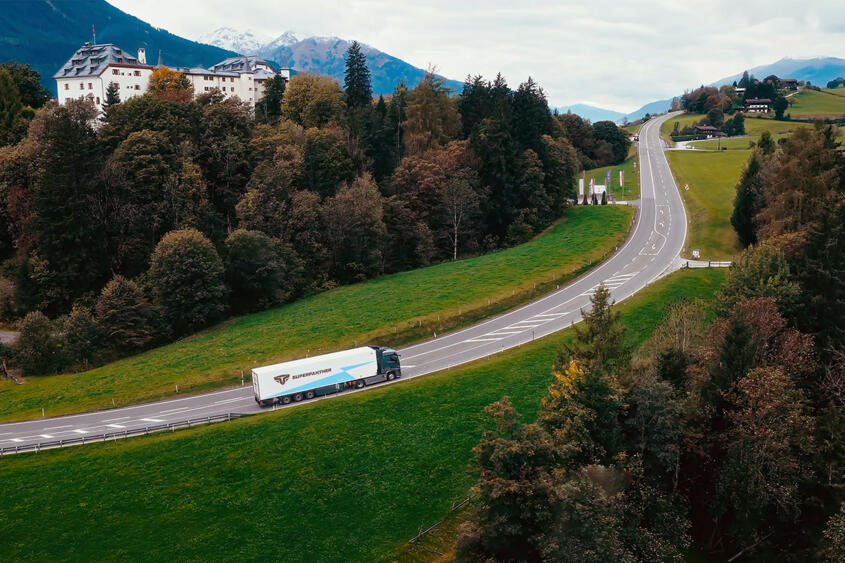
At the start of series production, vehicles were delivered to DHL Freight, Germany’s Gress Speditions GmbH, Austrian company Temmel, and the Lontex Group, which operates in Poland and the Czech Republic. According to SuperPanther, this marks the beginning of commercial operation in Germany, the Netherlands, Austria, Poland, and the Czech Republic.
Lontex is also taking on sales and service responsibilities in Poland and the Czech Republic. For maintenance, repairs, and roadside assistance, SuperPanther is additionally working with Alltrucks, an independent multi-brand workshop network. A dependable service network is almost as important to a new manufacturer as the vehicle itself. Carriers are not merely buying range and motor output; they also expect reliable parts availability and rapid support when a truck is out of service.
Not the First Chinese Truck
The eTopas 600 is not the first Chinese heavy-duty truck to reach European customers. Sany has been delivering its e263 electric tractor in Germany since spring 2026. In July, Chinese startup Windrose handed over its first Global E700 to Belgian carrier Gilbert De Clercq.
Sinotruk is another entrant. Assembly of diesel and electric trucks from the Chinese manufacturer also began at Steyr Automotive in March 2026. The first vehicle produced under that partnership was completed on March 3.
SuperPanther is therefore part of a broader trend. BYD and Geely subsidiary Farizon are among the other Chinese manufacturers pushing into Europe’s commercial-vehicle market. Some compete on price; others emphasize large batteries, high charging rates, and long range.
For Daimler Truck, Volvo, Traton—with MAN and Scania—DAF, Iveco, and Renault Trucks, this means new competition. The established manufacturers still retain major advantages, however: long-standing customer relationships, dense sales and service networks, financial services, and extensive experience with the requirements of European transport companies.
Building a reliable parts supply chain and an effective customer-service operation may prove a greater challenge for the newcomers than developing technically impressive vehicles. SuperPanther is attempting to overcome that obstacle with the help of European partners.
More Than an Imported Truck
“Europe does not need another imported truck. It needs another industrial partner,” SuperPanther founder Chao Liu said at the start of series production. The statement encapsulates the company’s strategy.
The eTopas 600 is not intended to arrive as an outsider from China. It is assembled and inspected in Europe, holds EU whole-vehicle type approval, uses components from European suppliers, and is supported by an existing workshop network. That does not make it a European truck in the traditional sense. But it does distinguish the eTopas from a vehicle shipped fully assembled from China and sold solely through an importer.
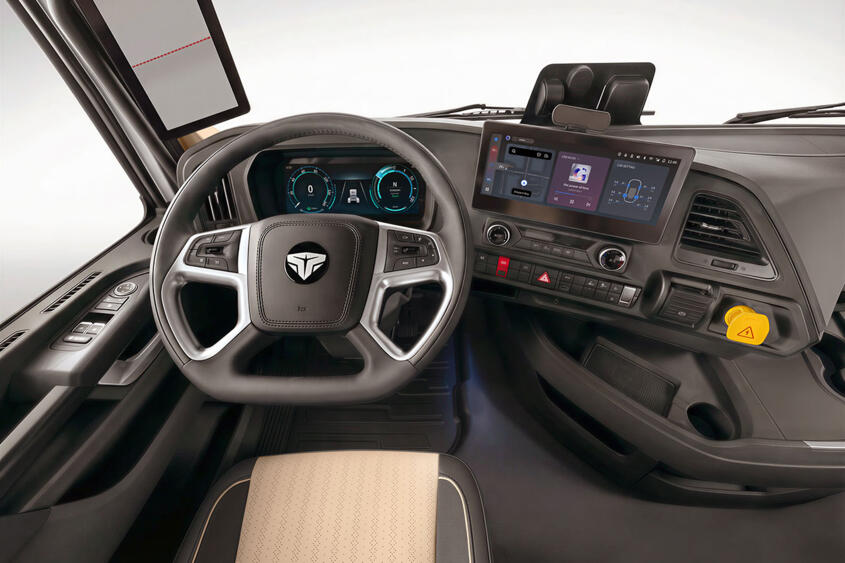
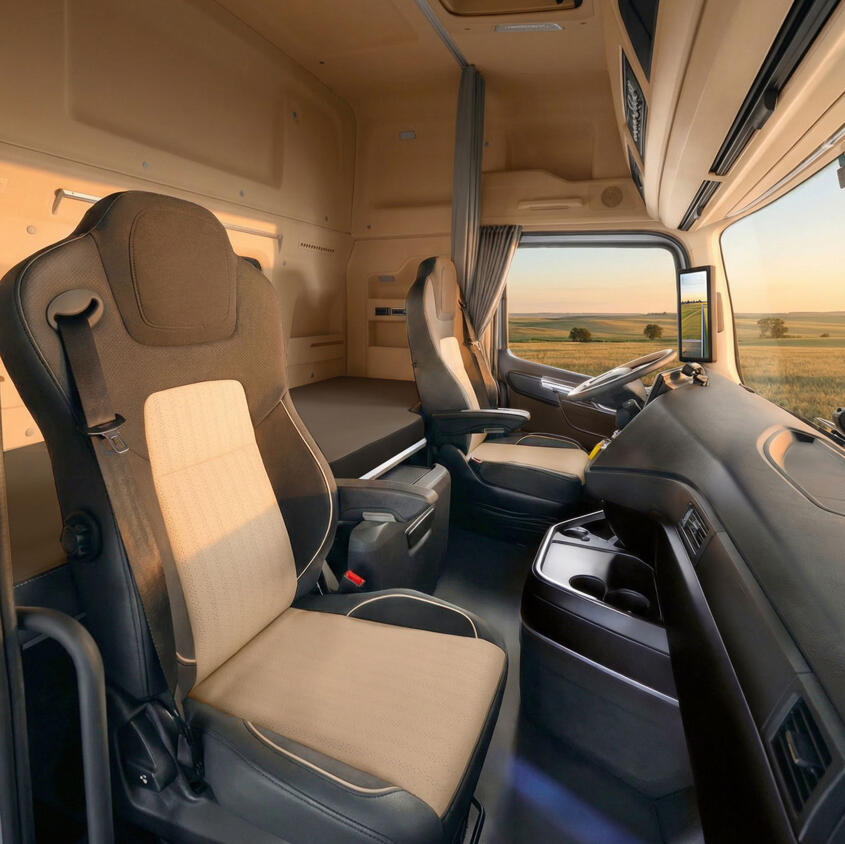
The yellow eTopas 600 in front of the Steyr assembly line therefore represents less a single premiere than a potential turning point. Chinese truck manufacturers are no longer limiting themselves to trade-show appearances and announced projects. Their vehicles are reaching European customers and entering regular service.
Whether SuperPanther can truly challenge the established brands will not be decided by specifications on paper. Reliability, price, residual value, service quality, and the experiences of the first drivers and fleet operators will be decisive. That real-world test begins now—on Europe’s roads.
Text: Steve St.Schmidt
Photos, unless otherwise credited: SuperPanther – with thanks for providing the images.
Generative AI was used to support the research, structuring, and writing of this article.