IAA 2026 - Part 2: Trucks from China
The Manufacturers in Review
Chinese truck manufacturers were more prominent than ever at IAA Transportation 2026. At least 16 brands presented heavy electric trucks, hydrogen vehicles, autonomous concepts and new platforms. Many appeared in Hanover for the first time – and several are already building sales, service or even production structures in Europe.
With 1,589 exhibitors from 46 countries, IAA Transportation 2026 reached a new high in international participation. More than 140,000 visitors came to Hanover, including over 113,000 trade visitors on weekdays. Forty percent of trade visitors traveled from abroad. China was particularly well represented among both visitors and exhibitors. More than 150 world premieres and other new products were presented during the show.
The number of Chinese truck brands was particularly striking. Following the first part of our show review, covering vehicles from Europe and around the world, this second part presents 16 Chinese truck manufacturers that displayed their products at IAA 2026 in Hanover. More than two-thirds of them did not feature in our 2024 IAA review. The exhibits spanned battery-electric long-haul trucks, hydrogen and range-extender concepts, and Level 4 vehicles for autonomous transportation. Level 4 is a degree of automation in which a vehicle performs all driving tasks itself within defined operating conditions, such as on specific routes or within designated operating areas. A person does not have to continuously monitor the system or intervene when needed within those conditions; if problems arise, it must reach a safe state on its own, for example by stopping.
Established manufacturers joined young startups in Hanover. Sinotruk, FAW/Jiefang, Dongfeng, Shacman, and Foton represented some of China's largest and longest-established commercial vehicle manufacturers. At the same time, new brands such as DeepWay and RYGG show how quickly China's commercial vehicle industry is changing. Another notable development is how many manufacturers now want to do more than export vehicles: parts warehouses, service networks, European development work, and even local production are increasingly part of their strategies.
BYD
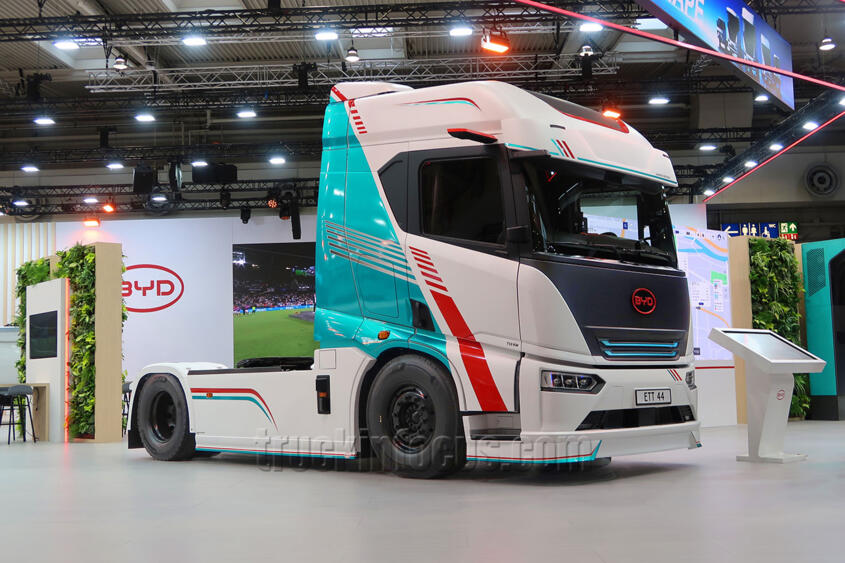
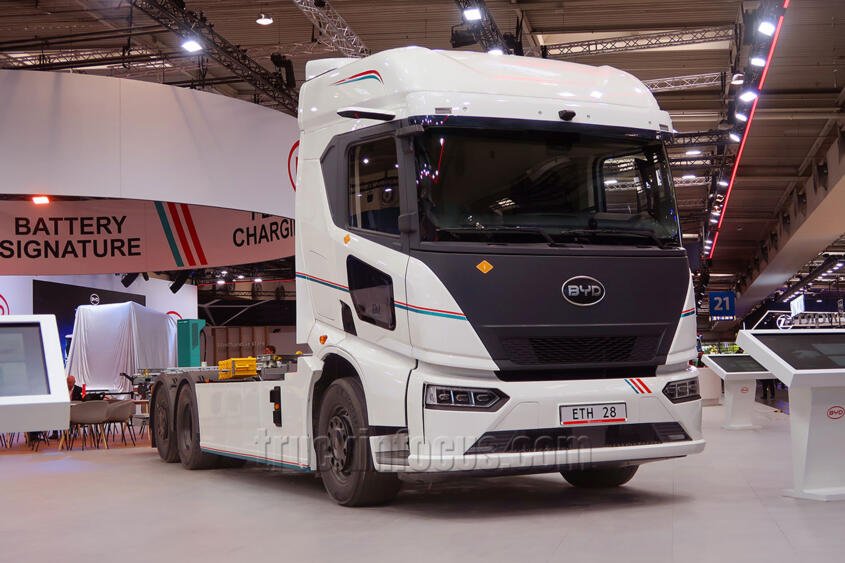
BYD used IAA 2026 to make a much stronger push into the European heavy truck market. The centerpiece was the new ETT 44, a tractor developed from the ground up as an electric vehicle, with a 651-kWh Blade Battery. BYD quotes a range of up to 600 kilometers, output of up to 750 kW, or approximately 1,000 metric horsepower, and megawatt-level charging power. Charging the battery from 20 to 80 percent is expected to take about 20 minutes.
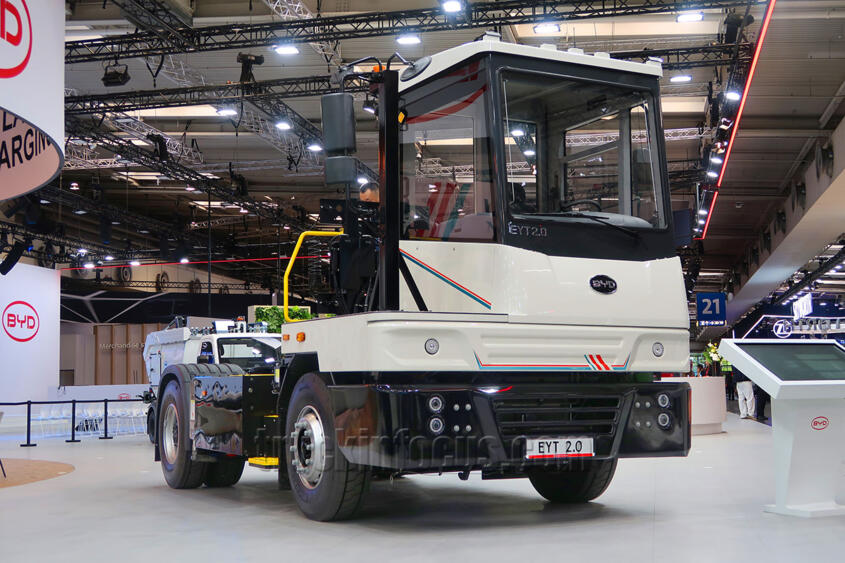
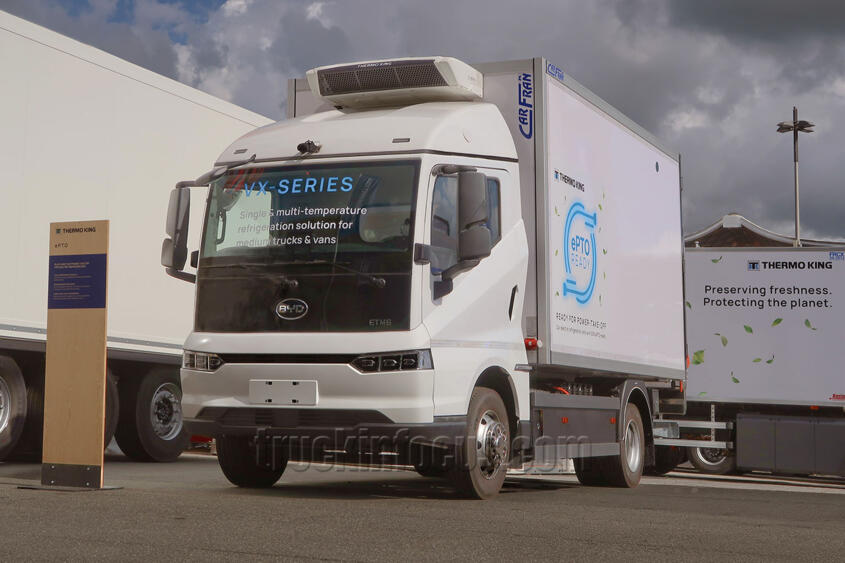
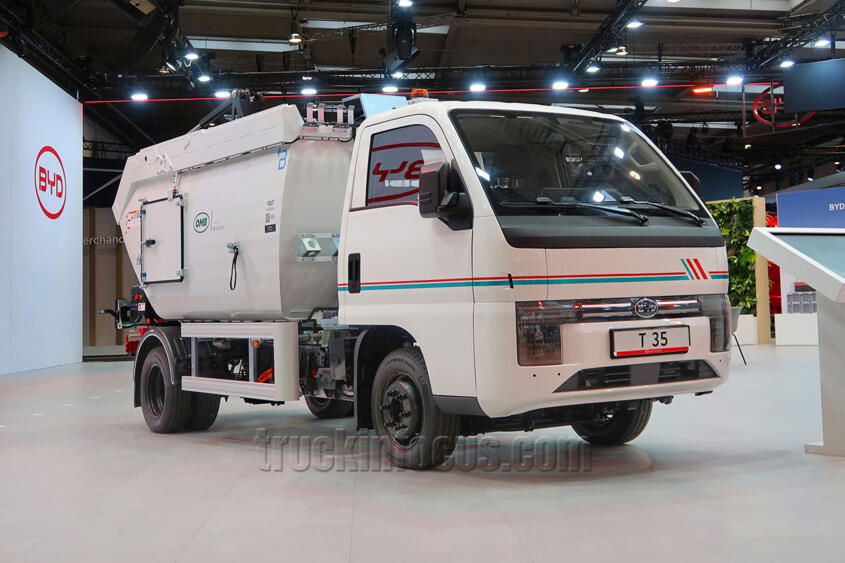
The ETT 44 was not alone, however. BYD also displayed new 4×2 and 6×2 rigid trucks, bringing its European commercial vehicle offering to weight classes from 3.5 to 44 metric tons. Particularly interesting is that BYD intends to sell more than vehicles. Its concept also includes charging infrastructure, stationary energy storage, energy management, service, and financing. The group is thus seeking to offer fleet customers a complete system built around the electric truck. The heavy truck product line is scheduled to enter the European market from 2027.
More information is available on the BYD website.
C&C Trucks
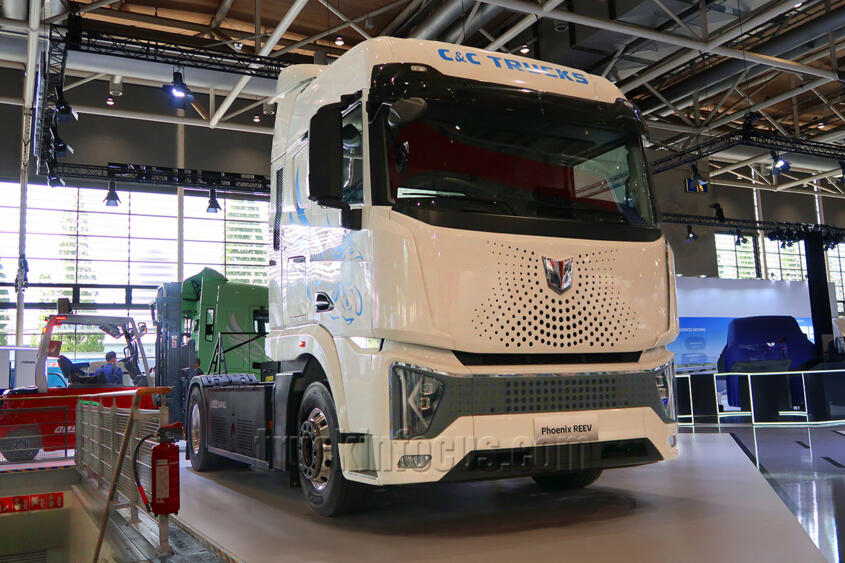
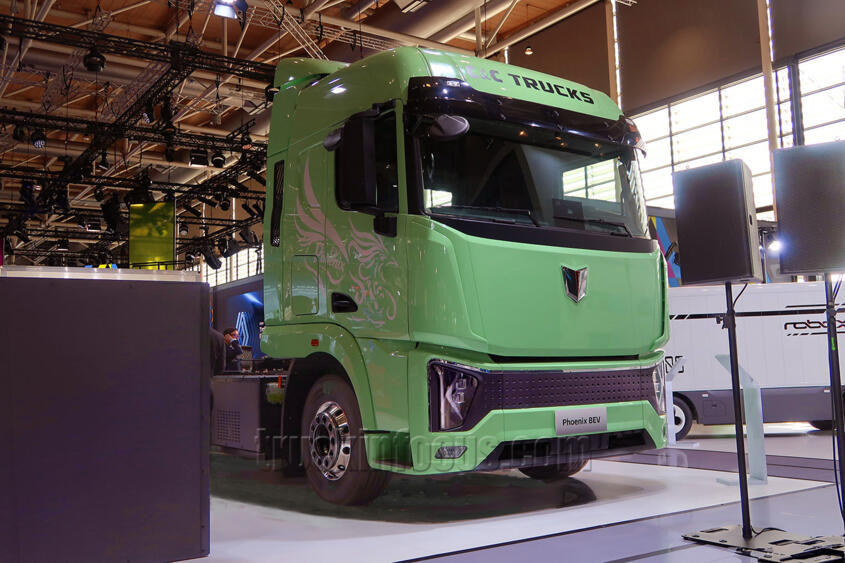
C&C Trucks is the heavy truck brand of Chery Commercial Vehicle. Two versions of the new Phoenix tractor were displayed in Hanover: a fully battery-electric BEV and a REEV with a range extender. C&C is responsible for the group's heavy truck business.
The energy concept is particularly unusual. The electric Phoenix tractor has a battery of approximately 431 kWh. A second energy storage unit of the same size can also be installed in the semitrailer, providing a total of around 860 kWh. The driver can switch between the two energy sources during operation. The electric drivetrain delivers peak output of 400 kW; C&C quotes a range of up to 500 kilometers for the BEV version.
The REEV version adds a 3.0-liter diesel engine acting as a generator and a 200-liter fuel tank. The combustion engine generates electricity rather than driving the wheels directly. Chery is thus demonstrating two different approaches to electric long-haul trucks, especially for areas where high-power charging infrastructure is not yet widely available.
More information is available on the Chery Commercial Vehicle website.
DeepWay
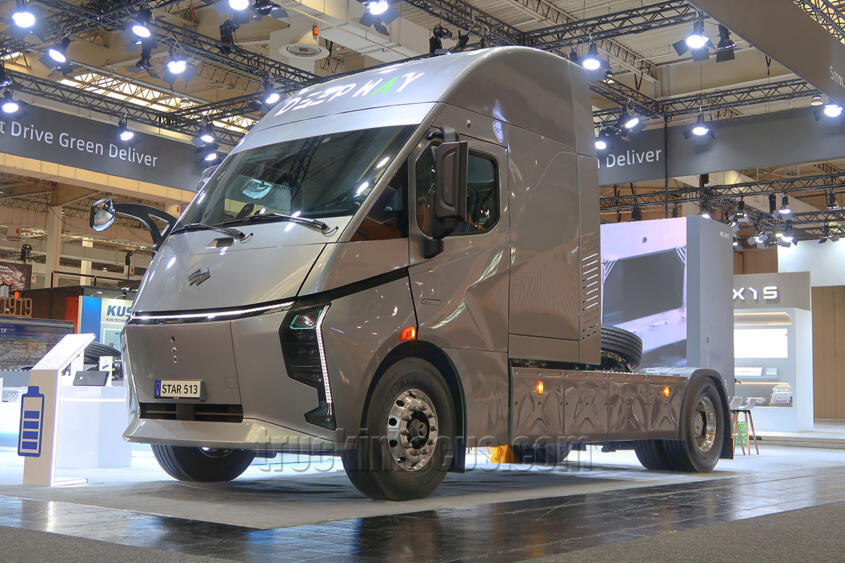
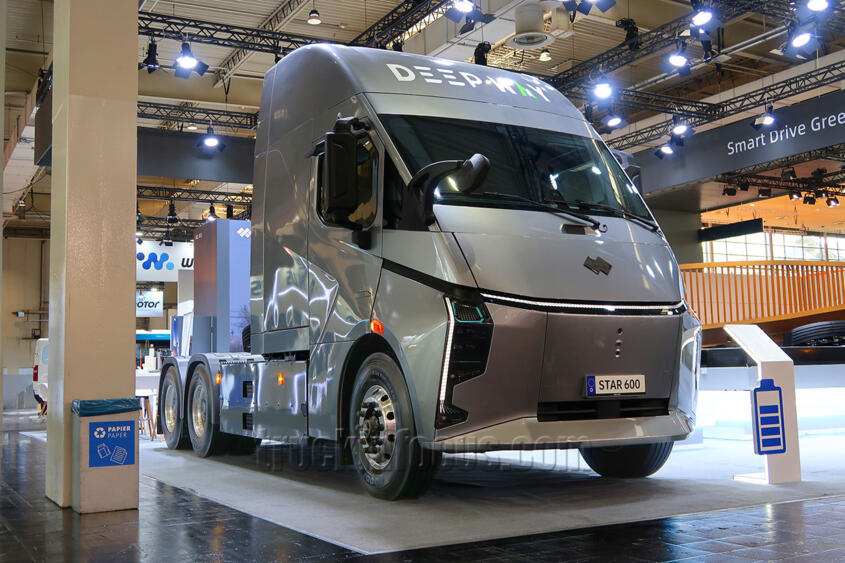
DeepWay made its European debut in Hanover. Founded in 2020, the company focuses on heavy battery-electric trucks and closely integrates its vehicles with digital and automated driving functions. DeepWay announced a heavy truck specifically developed for Europe for 2027. Rather than simply transferring a model from its Chinese product line, it plans to adapt the vehicle to European regulations, road conditions, charging infrastructure, and fleet requirements.
The company sees the electric truck as only the first step. Its development path extends from driver assistance and connected fleets to fully autonomous freight vehicles. DeepWay's long-term vision centers on “Freight Robots,” with a clear progression toward Level 4. Electrification and automated driving are considered together from the outset.
More information is available on the DeepWay website.
Dongfeng
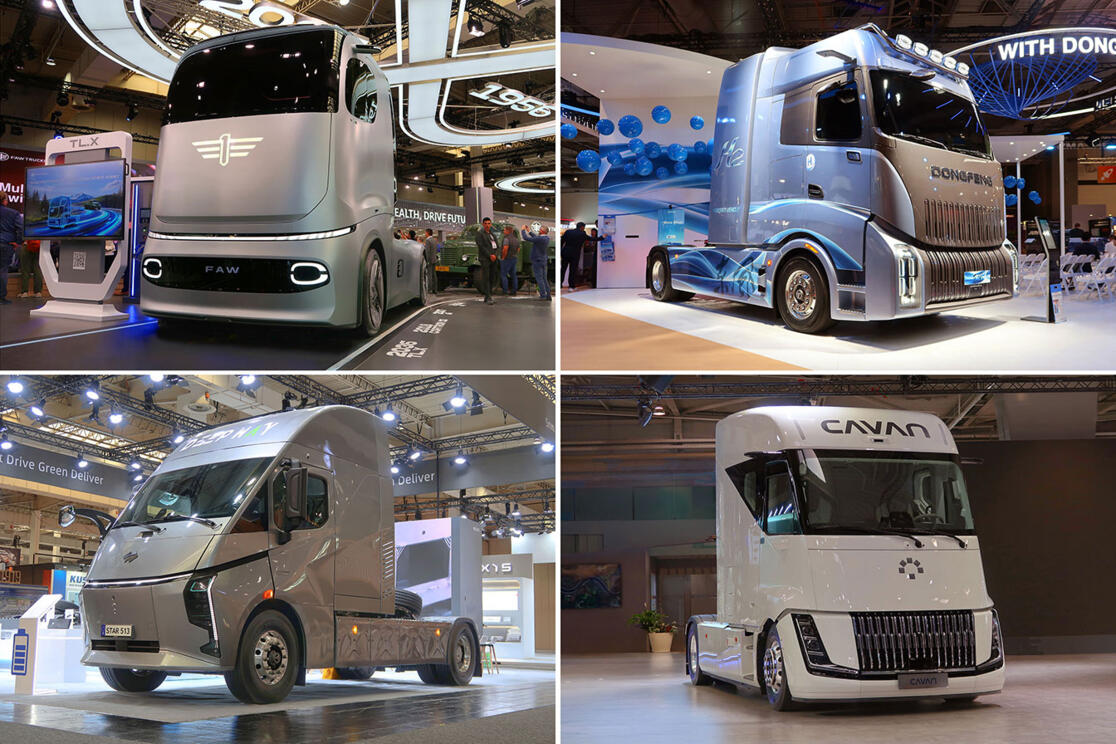
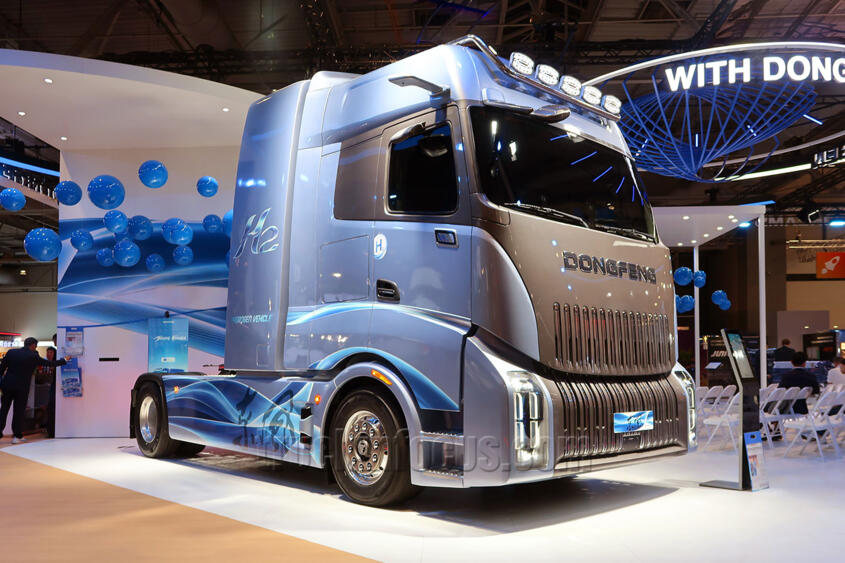
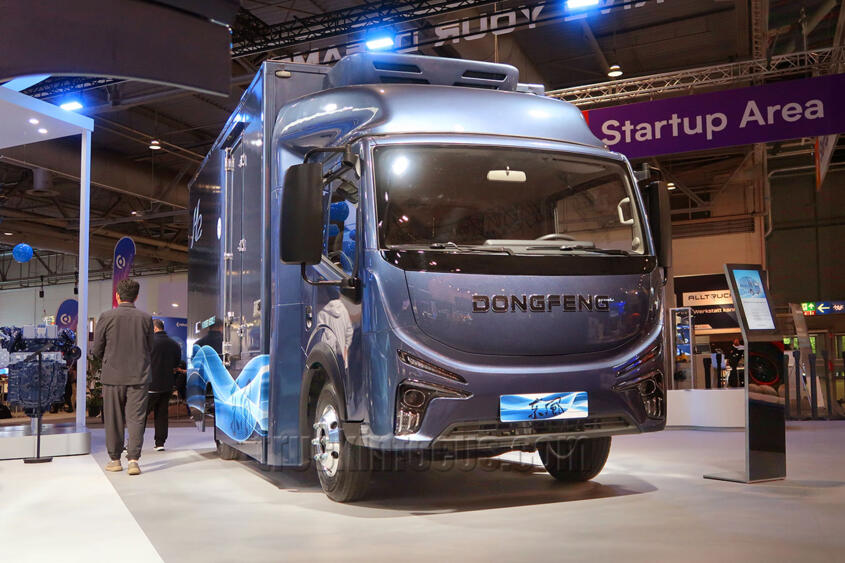
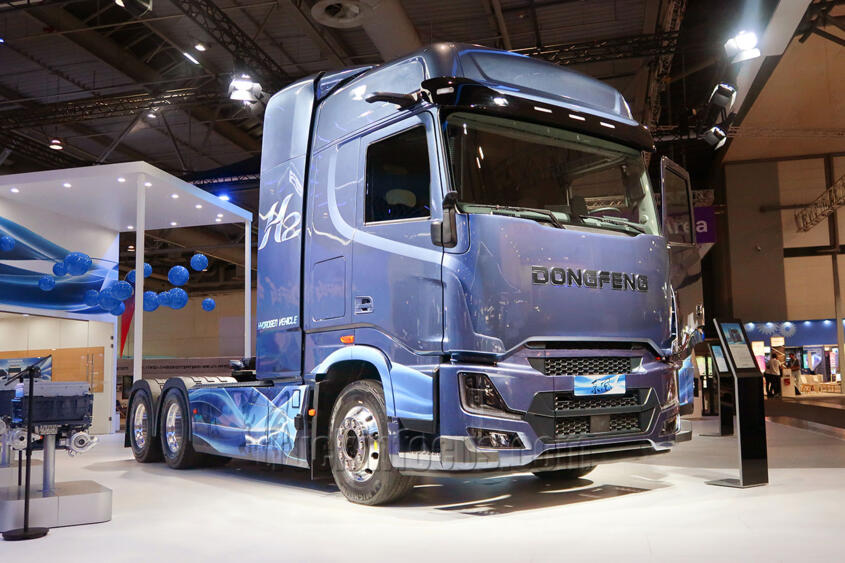
Dongfeng is one of China's largest and longest-established commercial vehicle manufacturers. At IAA 2026, the group staged its first major independent presence at the show, focusing almost entirely on hydrogen.
Three hydrogen-powered vehicles were displayed for different applications: long-haul transportation, raw materials and bulk cargo, and refrigerated and distribution operations. An in-house-developed 400-kW fuel cell system also made its world debut. The vehicles are based on the new T1 platform, which integrates the fuel cell, hydrogen storage, battery, electric drivetrain, controls, and thermal management into a complete system.
This set Dongfeng clearly apart from many Chinese competitors, whose displays in Hanover focused on battery-electric vehicles. The manufacturer continues to pursue several powertrain approaches and sees opportunities for hydrogen particularly in heavy long-haul transportation and energy-intensive applications.
More information is available on the Dongfeng website.
Farizon
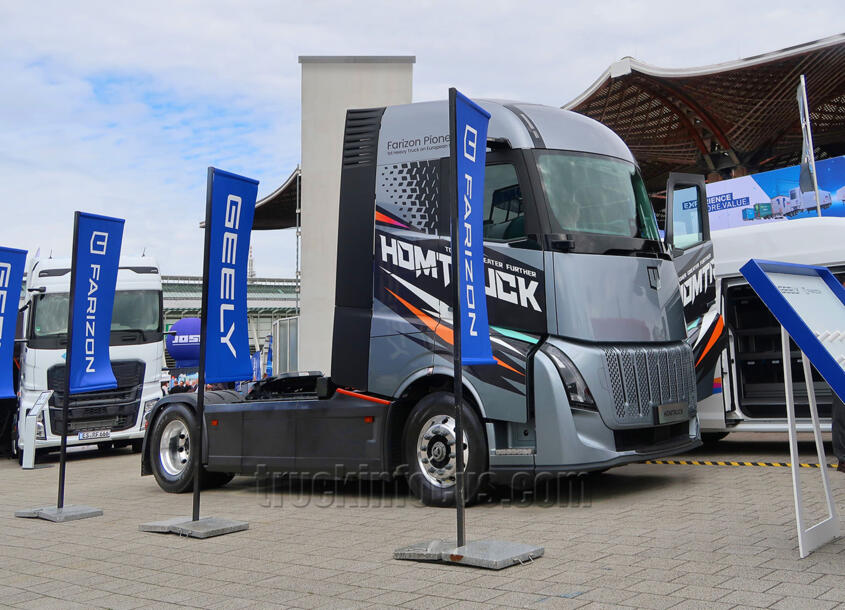
Farizon, the commercial vehicle brand of China's Geely Group, made its IAA debut in 2026. The centerpiece was the fully electric Homtruck, presented with a European focus for the first time. Farizon positions it for heavy transportation and long-haul operations, although the company has not yet announced a firm European sales launch date.
The infrastructure already taking shape is at least as interesting as the vehicle. Farizon is systematically expanding its European presence, including offices in Germany and France. A spare parts warehouse has also been established in Gaggenau, Germany. Geely is thus already creating service and supply structures, even though the heavy Homtruck series is not yet routinely offered on the European market.
More information is available on the Farizon website.
FAW Trucks
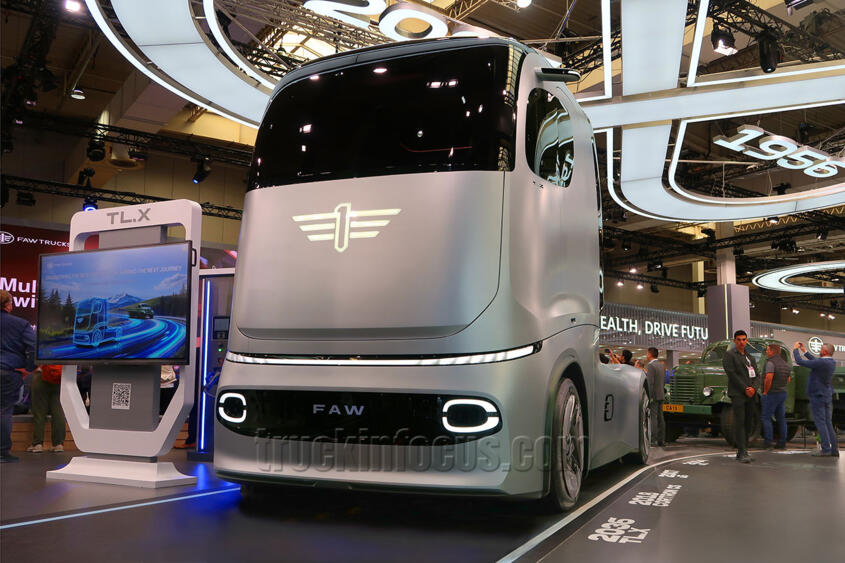
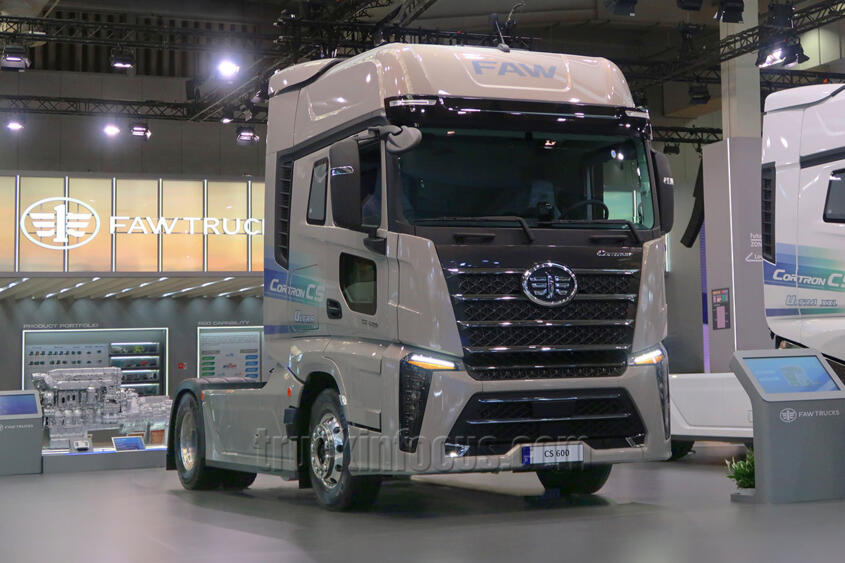
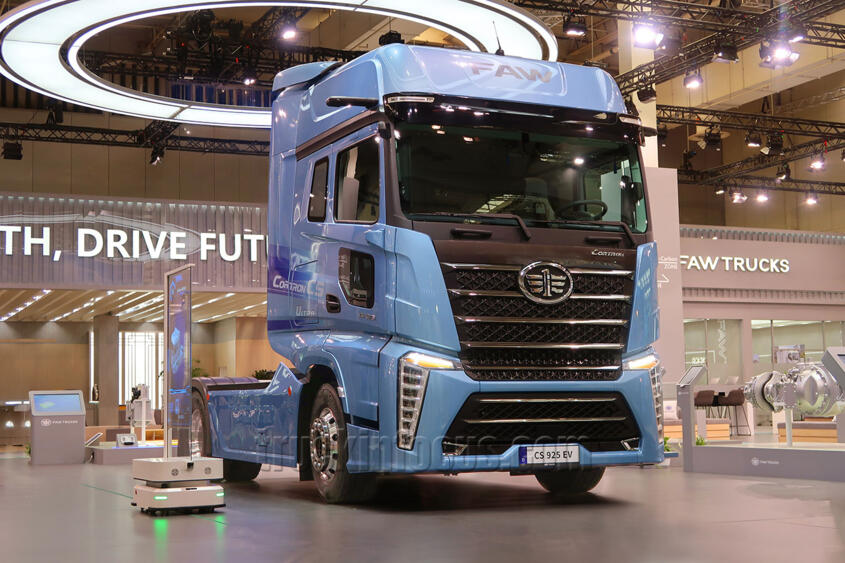
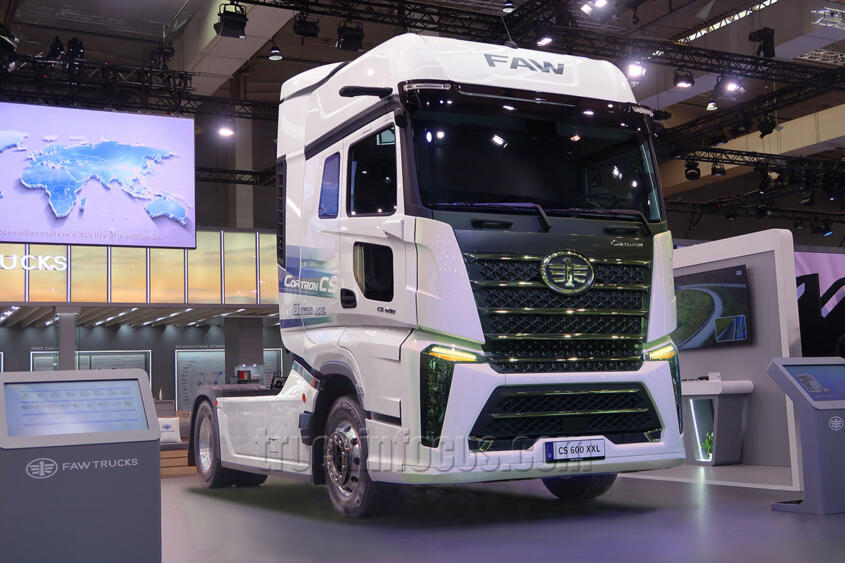
FAW Trucks provided a particularly vivid link between past and future in Hanover. The Chinese manufacturer brought five complete vehicles and nine key powertrain and technology modules. Exhibits included the new CORTRON CS series for the European market and the futuristic TL.X Concept Truck, intended as a look ahead to 2036.
FAW is pursuing a broad powertrain strategy with CORTRON. Alongside diesel versions, it displayed the CS 925 battery-electric tractor. Across its overall product line, FAW lists diesel, natural gas, hybrid, battery-electric, and hydrogen powertrains. The company therefore does not intend to commit to a single technology, but to offer different solutions for different applications.
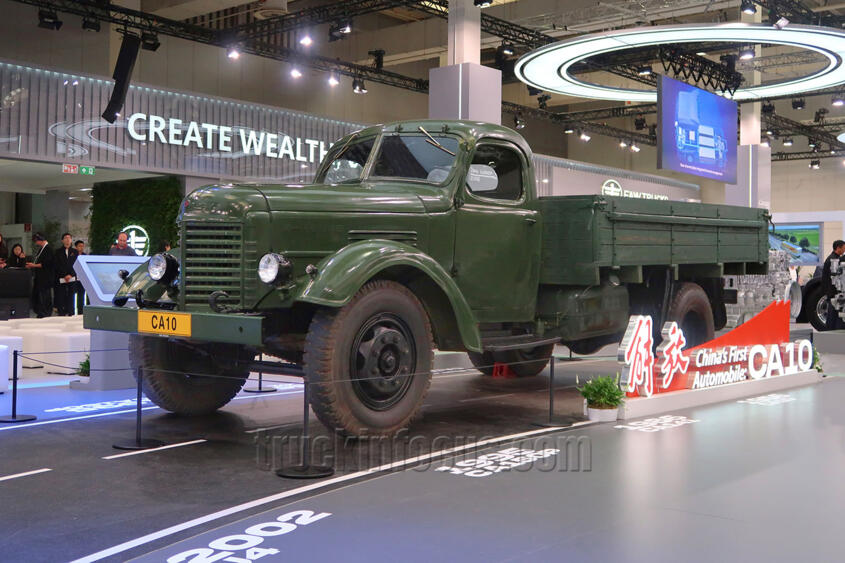
FAW is one of China's major traditional truck manufacturers. Appropriately, its booth also featured a historic Jiefang CA 10 from 1956, the vehicle that marked the beginning of industrial automobile production in the People's Republic of China. Right beside it, the new CORTRON models and the TL.X demonstrated how far China's commercial vehicle industry has developed in 70 years.
More information is available on the FAW Trucks website.
Foton
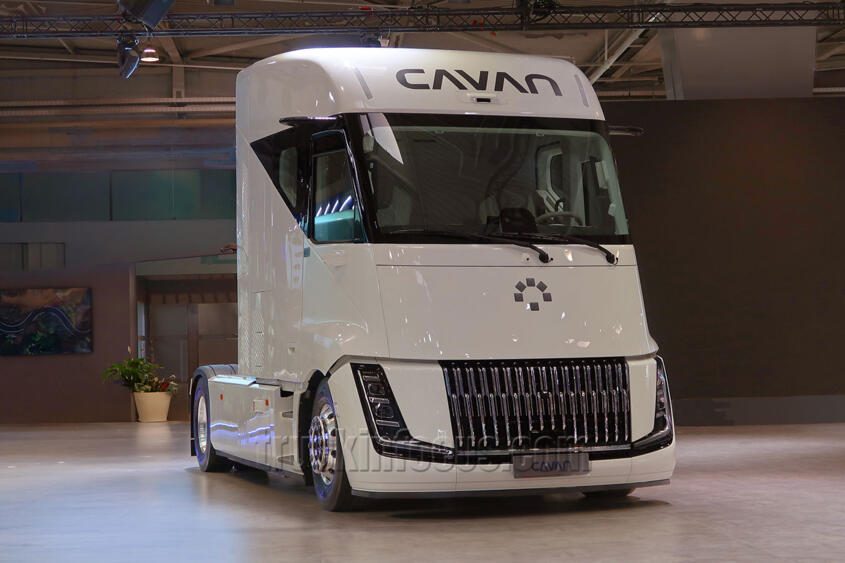
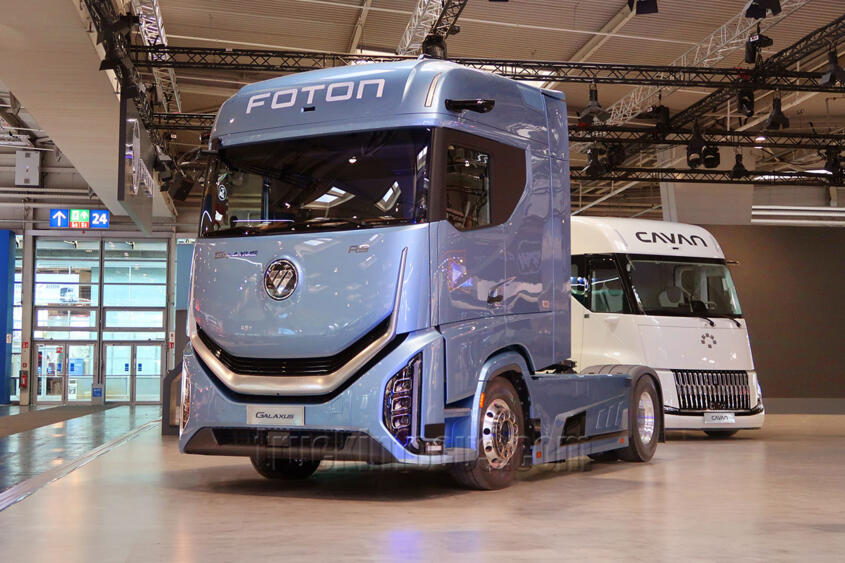
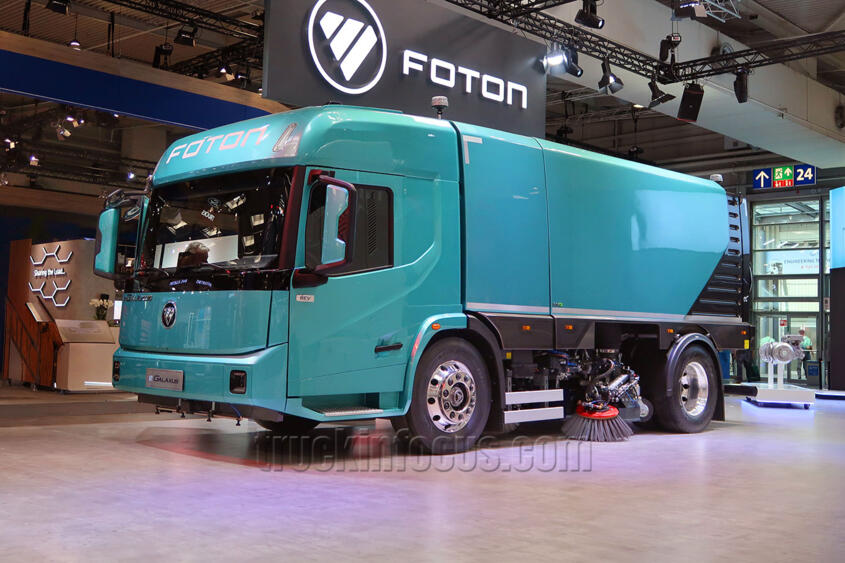
Foton used IAA 2026 for the international premiere of the new CAVAN BEACON and to present a broader European strategy. The futuristic heavy truck is more than a design study: it forms part of a new modular platform for battery-electric and hydrogen powertrains.
For the battery-electric version, Foton quotes a range of more than 600 kilometers and charging power extending into the megawatt class. A fuel cell version with a significantly longer range is also planned. CAVAN is therefore intended to cover both battery-electric and hydrogen-powered long-haul transportation.
Foton already has a European presence with lighter and medium-duty commercial vehicles and continues to expand its infrastructure. A key element is the European parts center that has now opened in Unna, Germany. The group emphasizes that Europe should be more than an export market: it intends to build local sales and service structures and, in the longer term, production operations as well.
More information is available on the Foton website.
GAC / Pony.ai
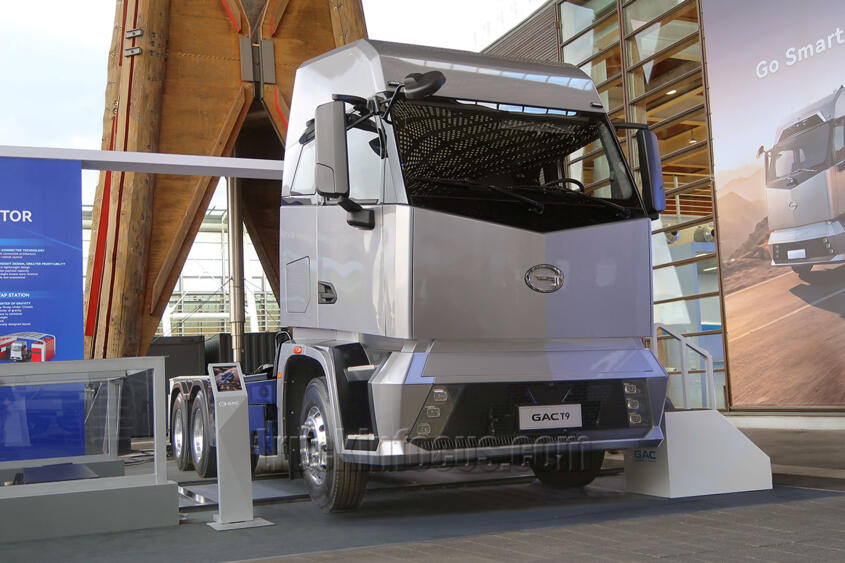
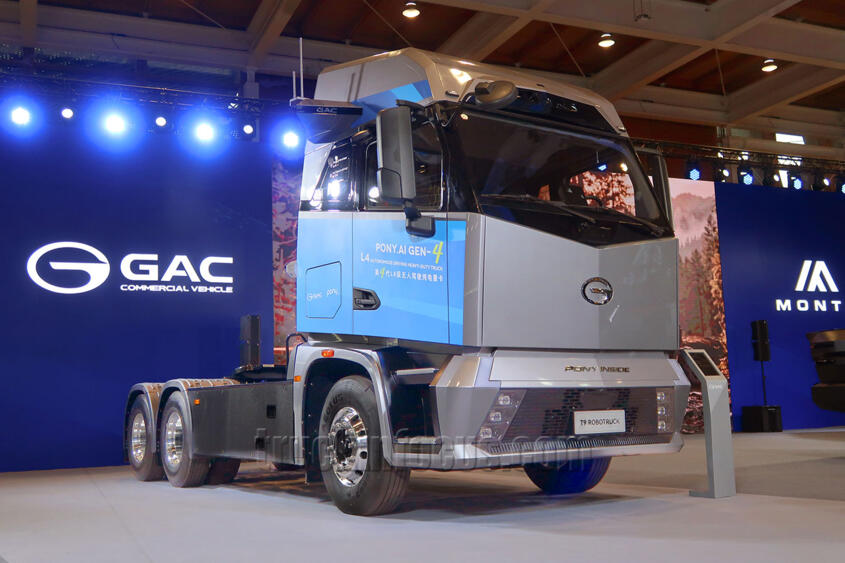
GAC Commercial Vehicle and Pony.ai jointly displayed the T9 Robotruck. The vehicle is based on GAC's battery-electric T9 heavy truck platform; Pony.ai supplies the fourth-generation autonomous driving system. The 6×4 truck has a 402-kWh battery, a stated range of 330 kilometers, and a gross combination weight of 49 metric tons.
Its Level 4 system uses 13 cameras, nine LiDAR sensors, and three radars. Four Orin-X computers provide a combined computing capacity of 1,016 TOPS.
Notably, the T9 was not presented merely as a long-term study. Pony.ai announced the start of series production before the end of 2026. Initial applications are intended to include long-haul transportation, fixed logistics routes, and port operations, where routes and operating procedures are relatively easy to control.
More information is available on the Pony.ai website.
JAC Motors
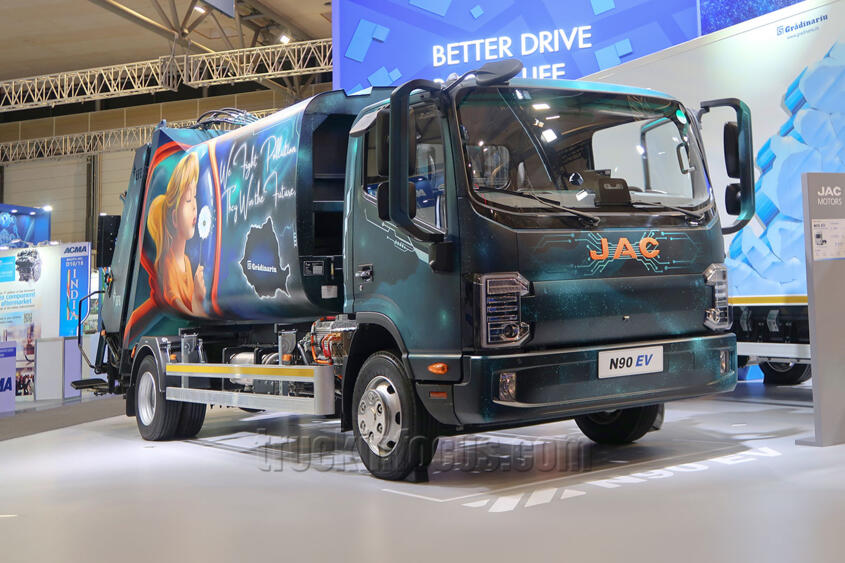
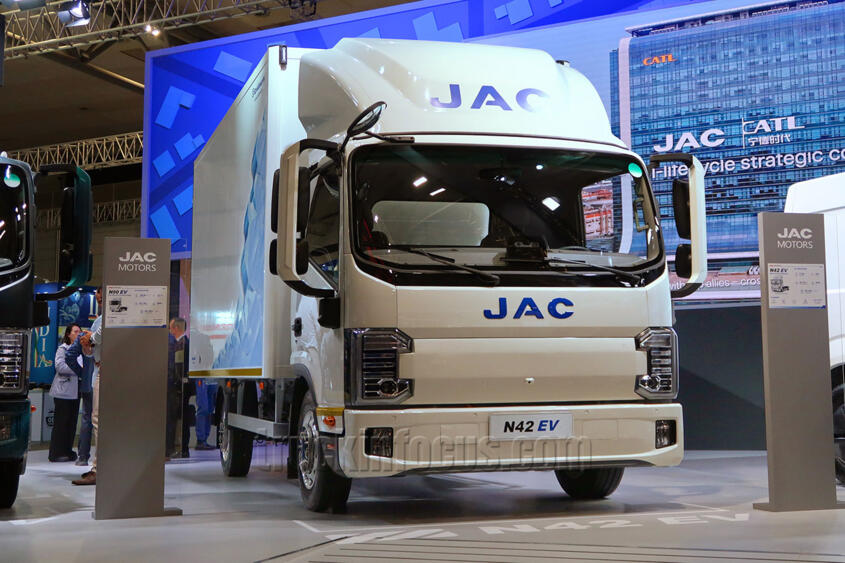
Following its 2024 appearance, JAC participated in IAA Transportation for the second time. The manufacturer exhibited four vehicles expressly developed for the European market. The battery-electric N 42 EV and N 90 EV were particularly relevant to the truck sector, joined by the eSUNRAY PRO electric van and the T9 PHEV plug-in hybrid pickup.
JAC stands out less for spectacular long-haul concepts than for its relatively down-to-earth focus on light distribution vehicles and products already adapted for Europe. It thus occupies a different segment from many Chinese suppliers, whose Hanover presentations concentrated on 40-metric-ton tractors.
More information is available on the JAC Motors website.
Maxus
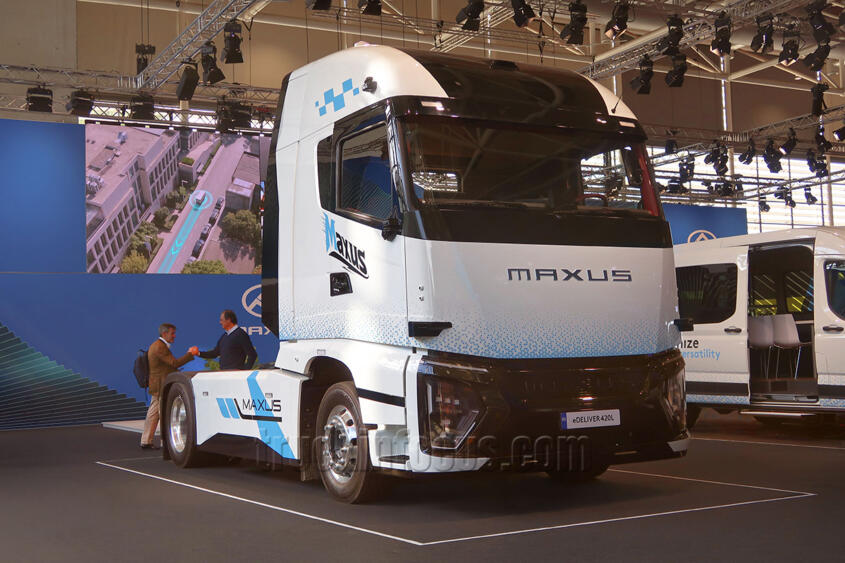
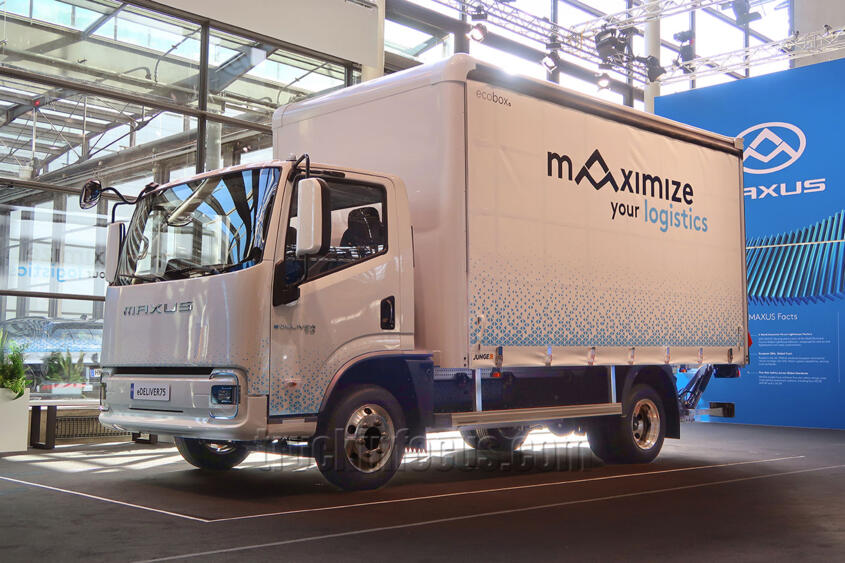
In Europe, Maxus had mainly been associated with vans and pickups. At IAA 2026, however, the brand belonging to China's SAIC Group extended its product line substantially into higher weight classes.
With the eDELIVER 75, Maxus displayed an electric chassis in the 7.5-metric-ton class. The new eDELIVER 420 L is considerably larger: a fully electric 42-metric-ton tractor for heavy long-haul transportation. It is based on the modular AILink architecture and has a 615-kWh battery from CATL. Charging from 20 to 80 percent is expected to take around 25 minutes. Maxus had not yet provided a firm range figure at the show.
Maxus is thus entering weight classes in Europe where the brand has previously had virtually no presence. A van also displayed at the show will be covered in our third part, devoted to light commercial vehicles.
More information is available on the Maxus website.
RYGG
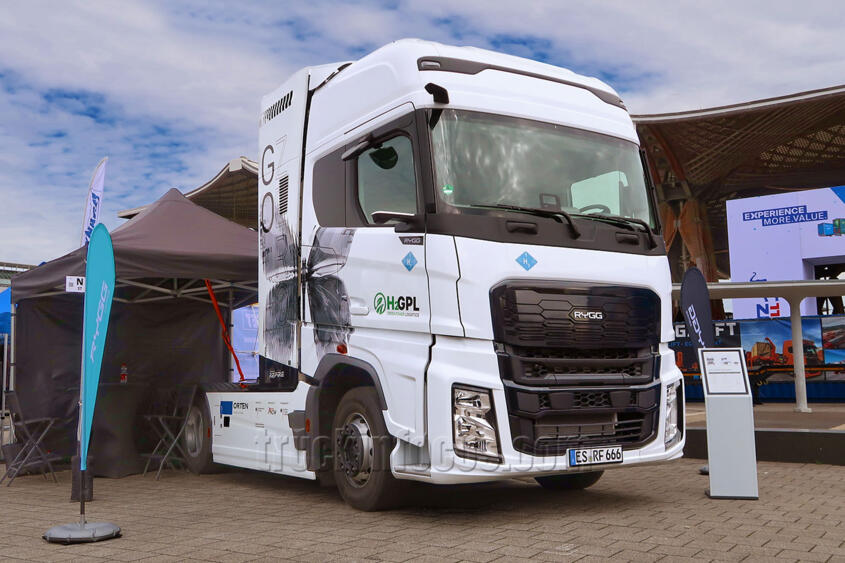
RYGG is a special case. The brand was created specifically for the European market and belongs to Chinese fuel cell manufacturer REFIRE. The Nova F-L shown in Hanover is based on the Ford F-Max, combining its cab and base vehicle with a Chinese fuel cell powertrain.
The 44-metric-ton tractor already has European type approval. RYGG is conducting tests and roadshows in countries including Germany and the Netherlands. Additional variants, including lowliner and ADR versions, have been announced.
This sets RYGG apart from both conventional Chinese export trucks and vehicles developed entirely in Europe: a Turkish-European base vehicle is combined with Chinese hydrogen technology to create a new European product.
More information is available on the RYGG website.
SANY
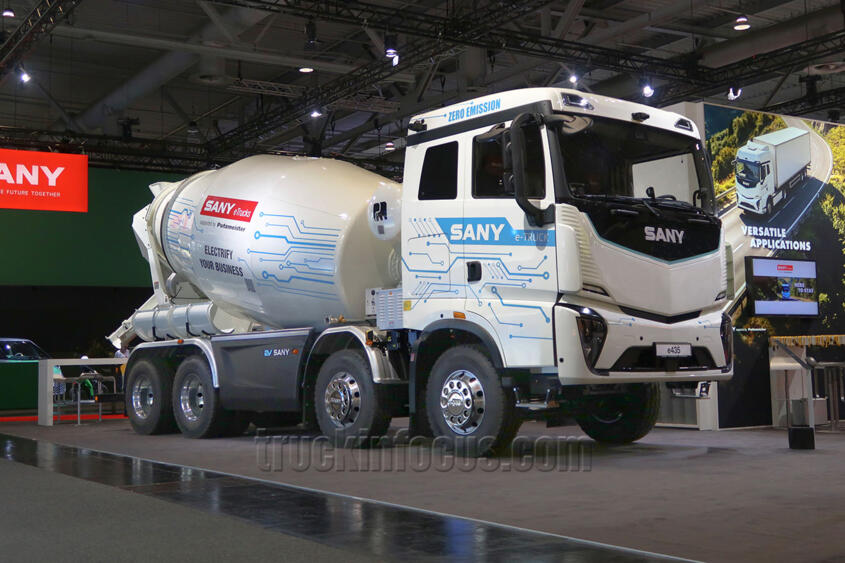
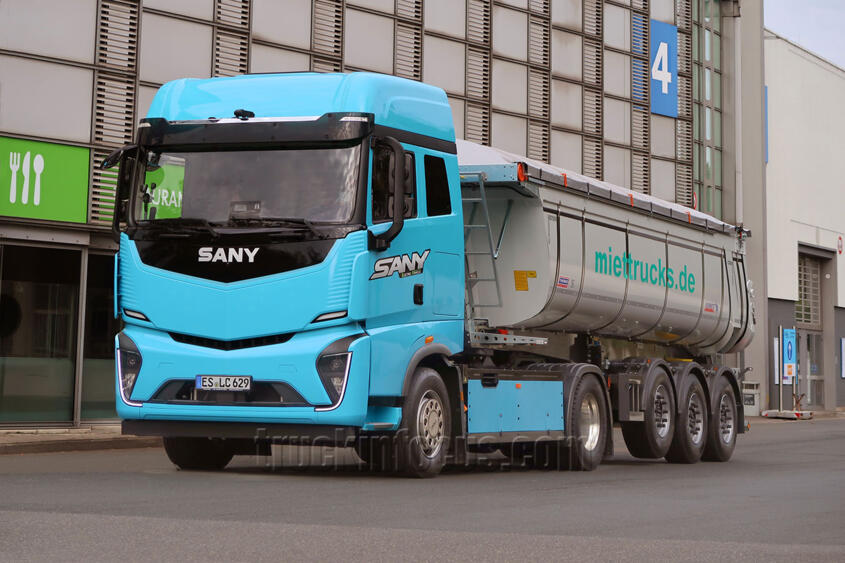
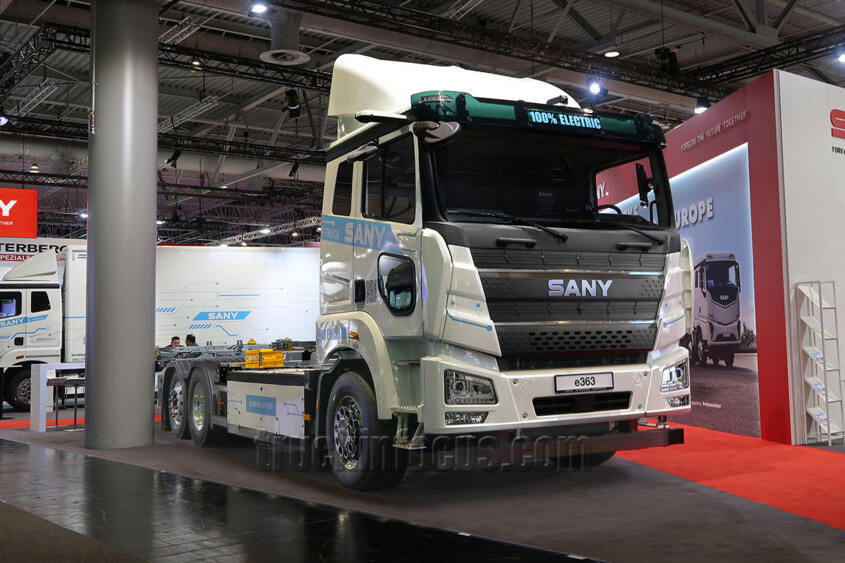
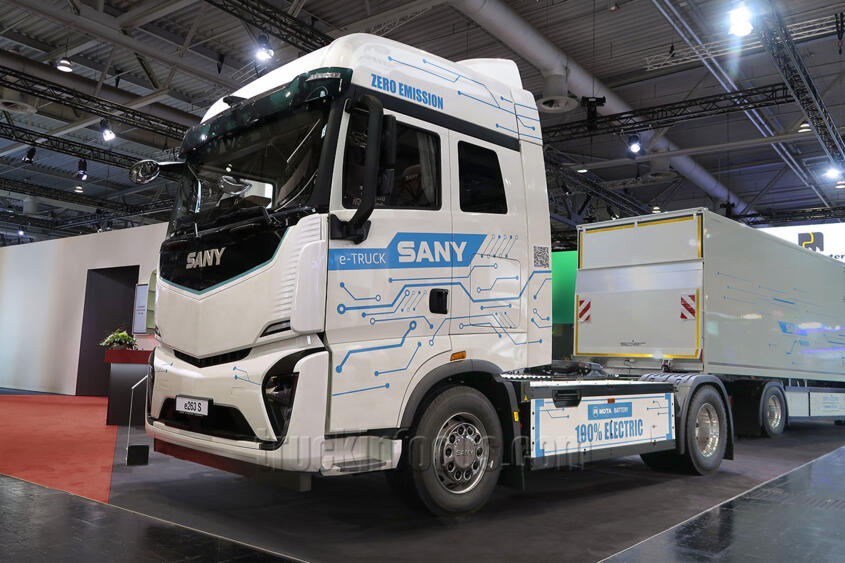
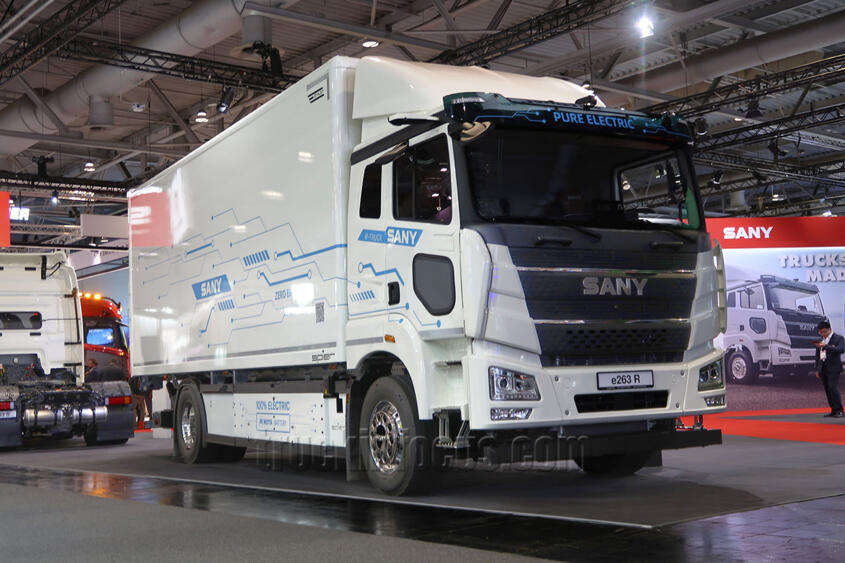
In 2026, SANY demonstrated how quickly a single show vehicle can grow into a complete market presence. An electric SANY concrete mixer had already appeared at IAA in 2024, at the time in association with Putzmeister and ETC Miettrucks. Two years later, SANY appeared with its own eTruck brand and a complete European electric truck product line.
Five models cover construction, logistics, distribution, and municipal applications: from the e435 8×4 for concrete mixers and dump trucks through the e263 S 4×2 tractor and the e345/e360 6×2 chassis to the e363 for swap bodies and heavier logistics applications, and the e263 R for mail and parcel operations. The e363 has a 636-kWh battery and is expected to achieve a range of up to 500 kilometers.
Putzmeister plays an important role in this effort. The German company has been part of SANY since 2012 and contributes development expertise as well as sales and service experience to the European truck initiative. SANY also works with around 650 Alltrucks workshops in Europe and offers 24/7 roadside assistance.
SANY itself is far from being a small newcomer. According to the company, more than 50,000 electric SANY trucks are in operation in China. The progression from a single electric mixer in 2024 to a complete European product line in 2026 clearly shows the direction the manufacturer has taken.
More information is available on the SANY website.
Shacmoto / Shacman
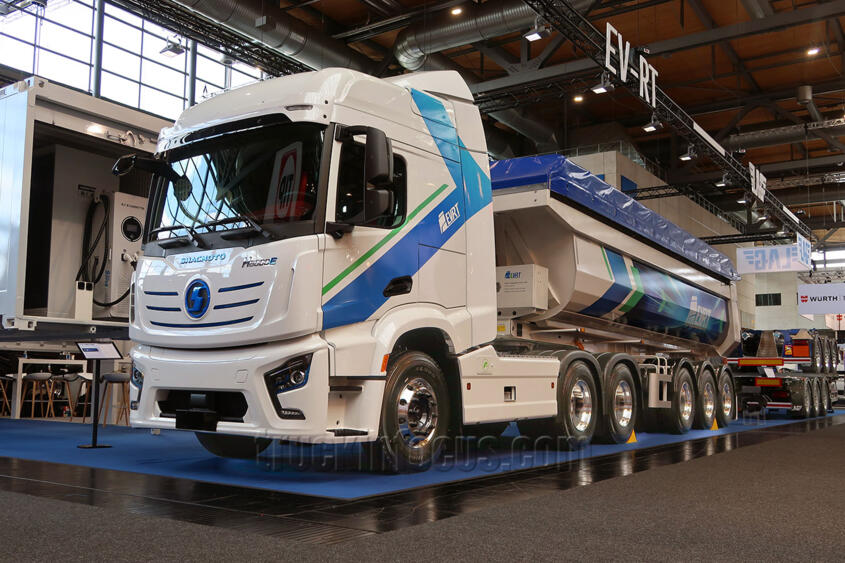
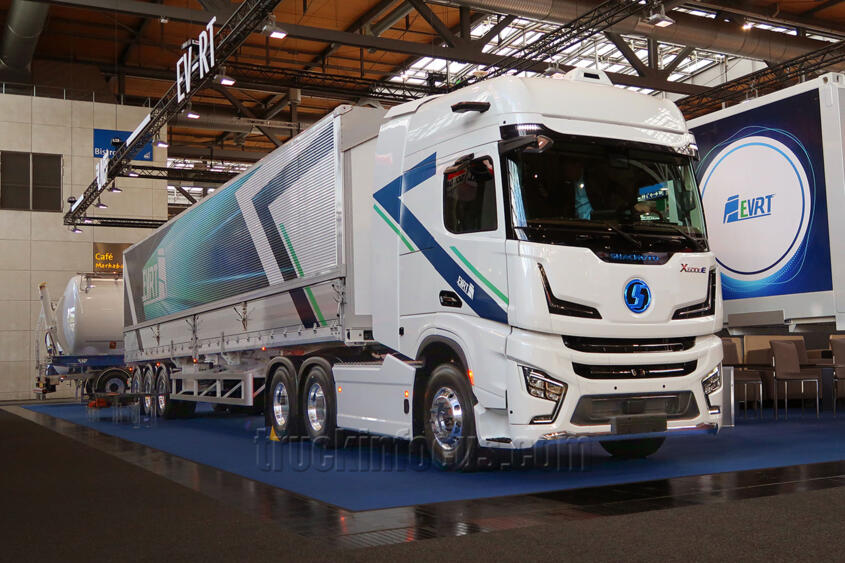
Shacmoto, generally known internationally as Shacman, was already represented at IAA in 2024. Behind the brand is Shaanxi Automobile Group, one of China's major heavy truck manufacturers.
The two battery-electric models H 6000 E and X 6000 E were displayed in 2026. At the same time, Shacman continues to develop its entire heavy truck product line and expand its international presence. The brand now also occupies the upper end of the power scale with conventional vehicles; the X 6000 product line offers engine outputs of up to 720 metric horsepower.
The display thus presented more than individual electric vehicles: it showed a manufacturer increasingly orienting its heavy truck series toward international markets.
More information is available on the Shacman website.
Sinotruk / Sitrak
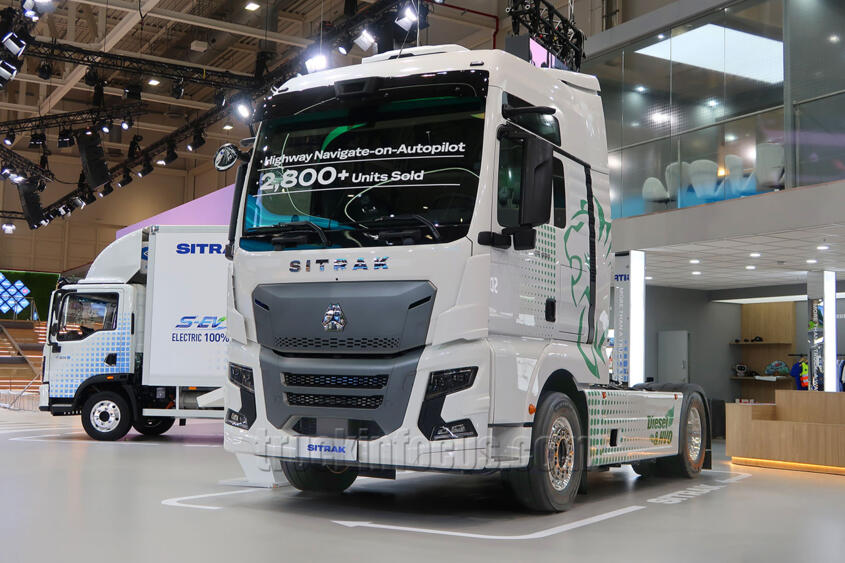
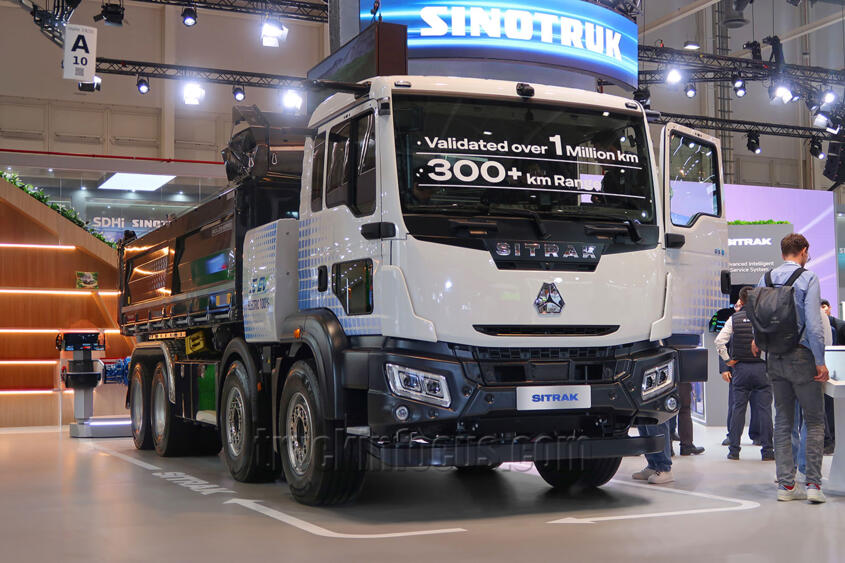
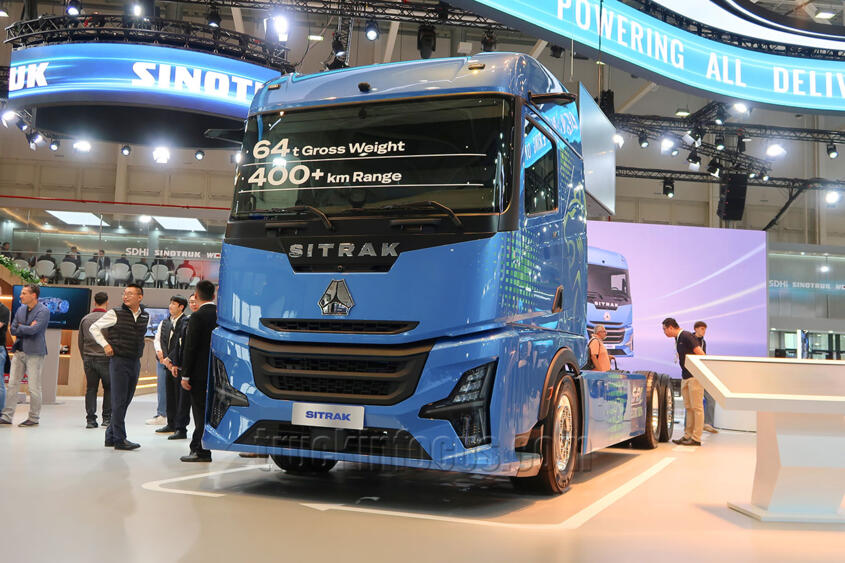
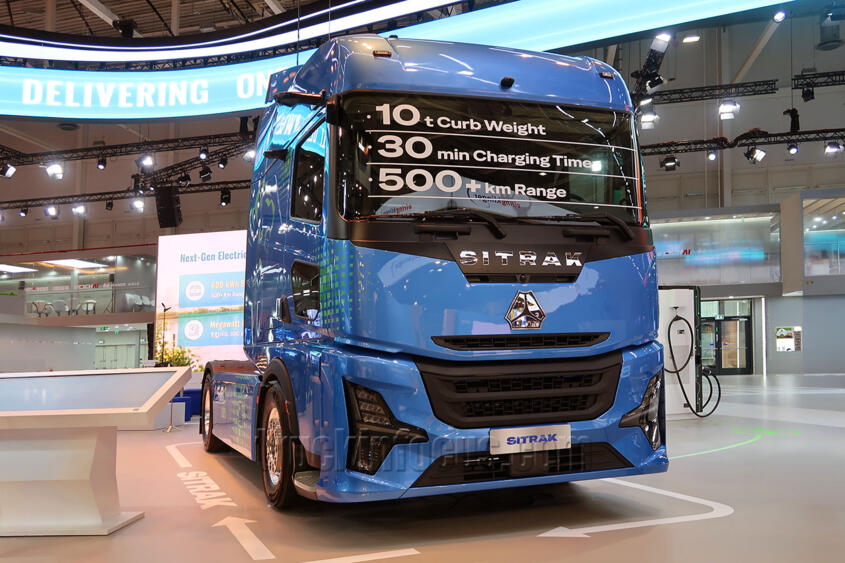
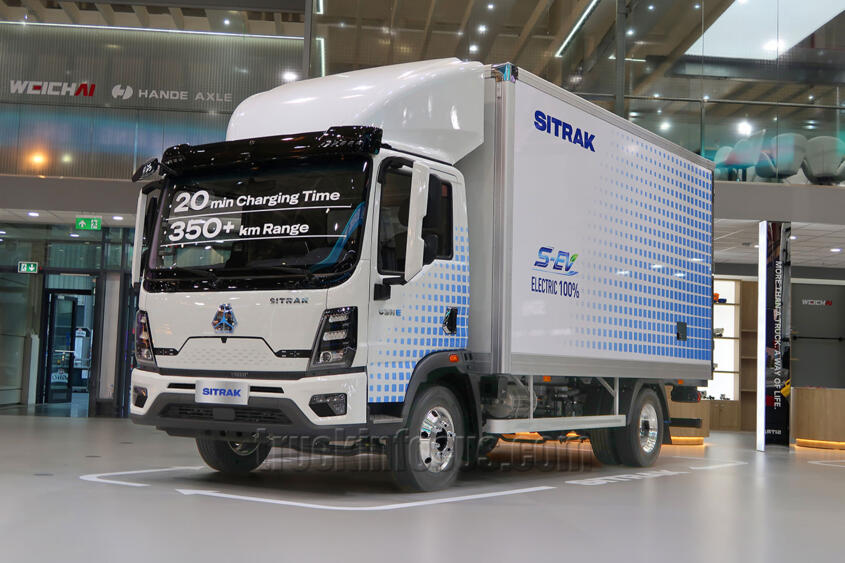
Sinotruk is one of China's leading heavy truck manufacturers and was the market leader in the country's heavy-duty segment for the fourth consecutive year in 2025. At IAA, the group's presence centered on the Sitrak brand.
Five vehicles were displayed, along with powertrain, charging, and energy solutions. The centerpiece was a new battery-electric 4×2 tractor with 800-V technology and a battery system in the 600-kWh class. Sinotruk quotes a range of up to 500 kilometers at a gross combination weight of 44 metric tons. The manufacturer sees electrification as more than a vehicle issue, combining trucks, energy supply, charging, battery swapping, and fleet operations into a complete system.
Production in Austria is particularly relevant to Europe. Since March 2026, Sinotruk has had diesel and electric trucks assembled by Steyr Automotive. Production initially uses the SKD process; greater local value creation is planned later, extending to CKD assembly, cab production, and painting.
Steyr Automotive also builds vehicles for SuperPanther at the same site. Steyr, Austria, is thus increasingly developing into a European production base for Chinese truck projects.
More information is available on the Sinotruk website.
Skyworth
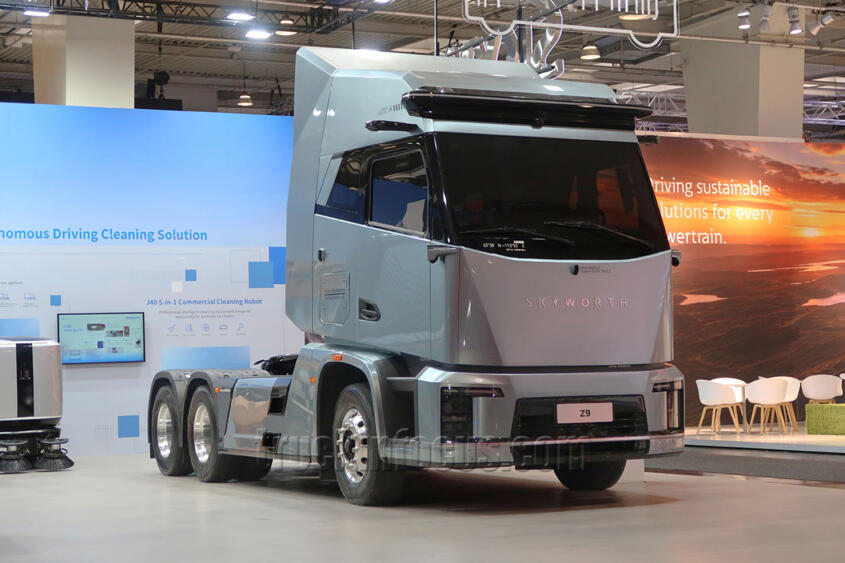
Skyworth Auto made its IAA debut in Hanover with five electrified commercial vehicles. The centerpiece was the world premiere of the Z9, a heavy electric 6×4 tractor. The vehicle was designed from the outset for Level 4 autonomous driving.
The Z9 produces 610 kW and has a 400-kWh LFP battery. Five LiDAR sensors, five millimeter-wave radars, and ten HD cameras provide 360-degree perception of its surroundings. Initial applications are intended to be clearly defined operating environments such as ports, steel mills, rail yards, and fixed logistics corridors.
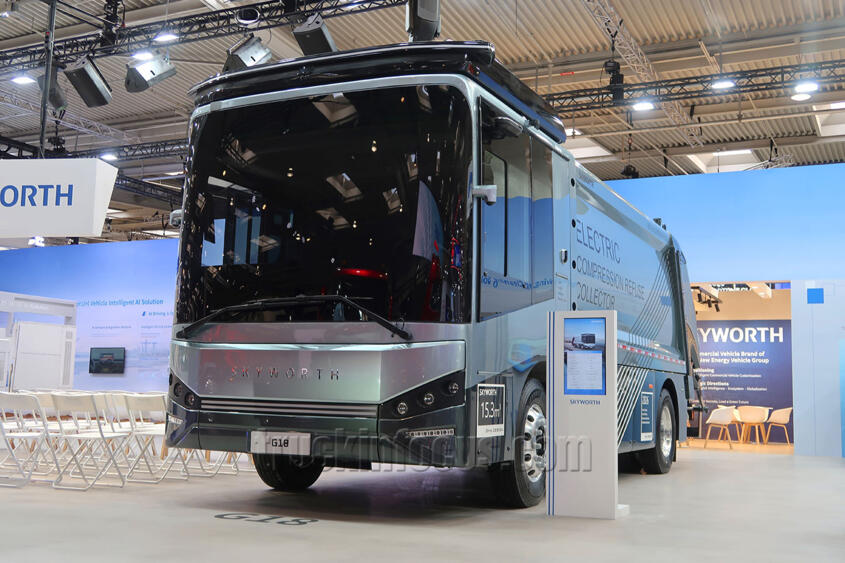
Skyworth also displayed the G 18 refuse collection vehicle, likewise developed for Level 4, the autonomous Urban Elf Robobus, and electric van and chassis solutions. The manufacturer explicitly describes its development as a transition from a traditional vehicle maker to a technology-oriented provider combining alternative powertrains, AI, autonomous driving, and customized vehicles.
More information is available on the Skyworth website.
XCMG
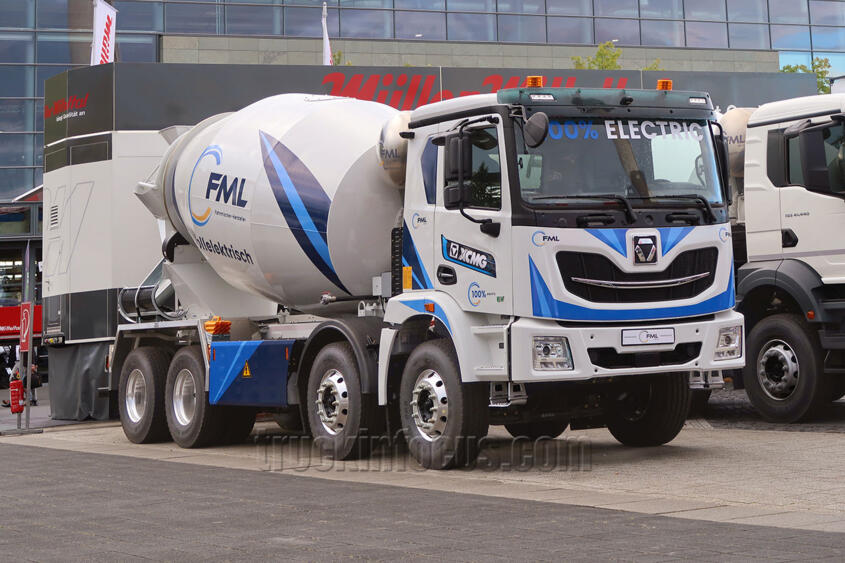
XCMG is best known as one of China's major construction equipment manufacturers, but it also has its own commercial vehicle product line. A fully electric XCMG chassis with a concrete mixer body by Polish manufacturer FML (Fabryka Maszyn Leżajsk) was displayed at IAA. FML develops and manufactures these bodies at its own factory and combines them with chassis from various manufacturers. This is the XCMG vehicle we photographed.
However, the vehicle was not displayed on a separate booth clearly identifiable as XCMG's own. We could not locate a dedicated XCMG presence across the extensive showgrounds. The presence of an XCMG truck in Hanover is therefore confirmed; whether the manufacturer also had its own booth remains unclear.
More information is available on the XCMG website.
The text and photographs for this show review are by Steve St.Schmidt. Generative AI was used to assist with research, organization, and wording.