The 19th Wörnitz Vintage Commercial Vehicle Meeting in 2026
Familiar vehicles and plenty of newcomers at the truck stop
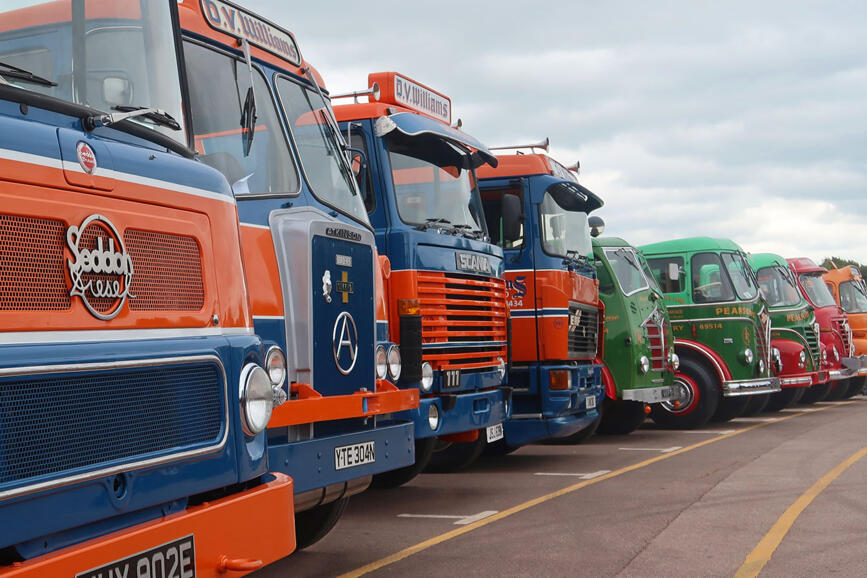
In mid-September 2026, the Wörnitz truck stop hosted one of Europe’s most important vintage truck meetings for the 19th time. Around 270 historic commercial vehicles from Germany and neighboring countries came together, many with trailers and semitrailers. Alongside familiar vehicles, the large number of visitors also saw plenty of newcomers making their first appearance at the Wörnitz vintage vehicle meeting.
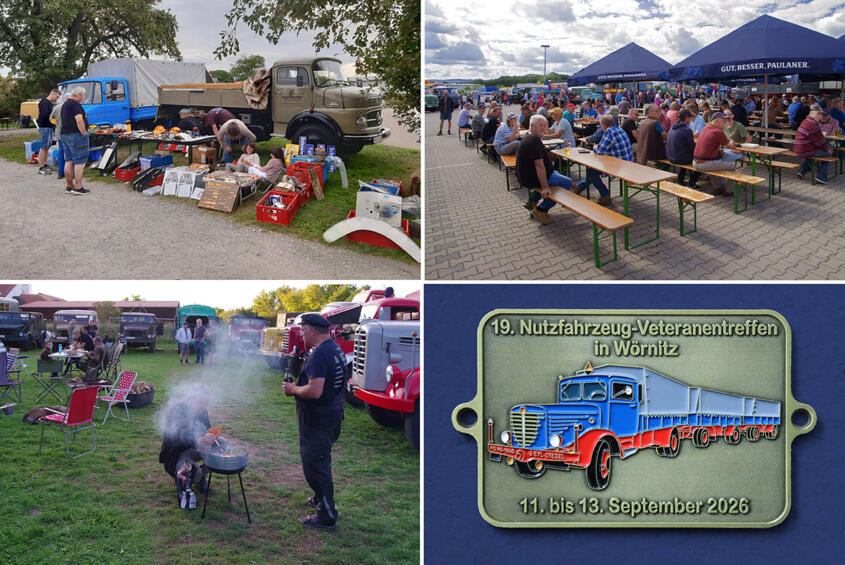
As always, the meeting at the truck stop was a great success. For participants and their vehicles, and for everyone who loves classic commercial vehicles, even the longest journey was worthwhile. Everything had been taken care of. Alongside the large number of classic trucks, buses and fire trucks, there were several places to get something to eat or drink: a food stand with plenty of tables and benches, the truck stop restaurant, and a Burger King. There were also stands selling specialist magazines such as “Last & Kraft” and “Historischer Kraftverkehr,” old brochures, model vehicles, spare parts, care products and other accessories. This small shopping area was located on the approach to the Borgward meadow, where many vehicles from other manufacturers were also lined up.
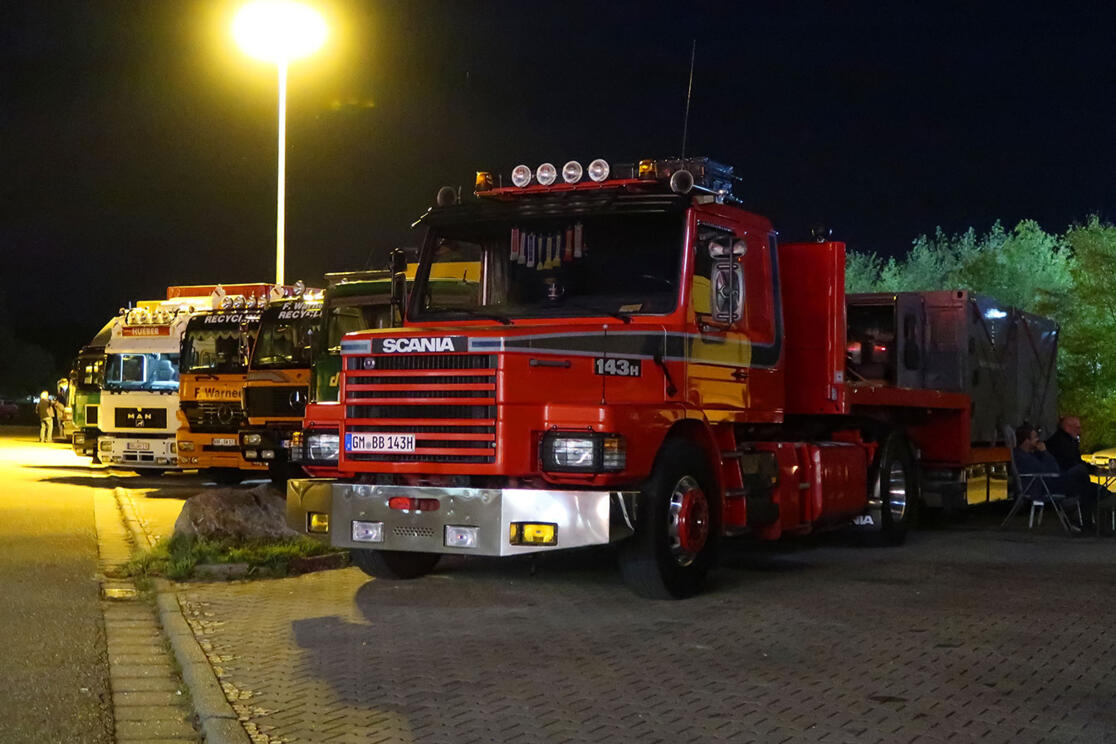
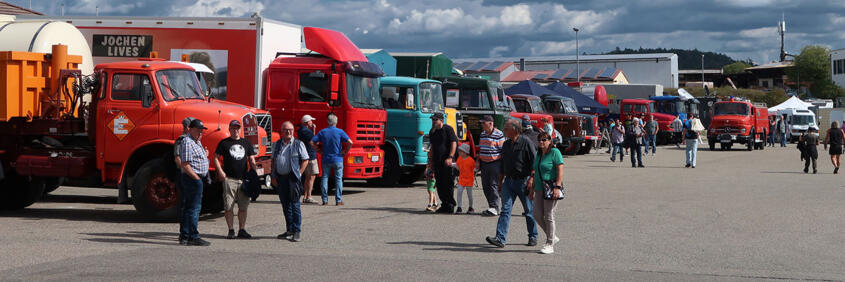
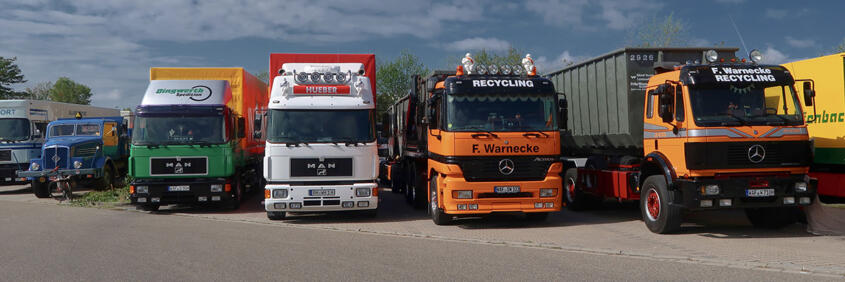
On Friday evening, it was still possible to photograph the vehicles lined up at the Wörnitz truck stop with a clear, unobstructed view.By Saturday morning, the scene had changed. Participants and visitors were everywhere, looking at the vehicles and enjoying lively conversations about them.All the photos in this article showing few or no people were taken “outside opening hours.”
Special thanks go to Marcel Bark and his team at Schaal GmbH: the truck stop operators’ straightforward support made the event possible in the first place. As usual, Harald Brem looked after the participants and their needs, and ensured that the vehicles were parked in an orderly display. The owner of a Mercedes L 1113 short-hood truck, who has been involved in the vintage commercial vehicle scene for decades, had his hands full accommodating the various requests, together with his son Christoph and a number of helpers from the scene. His contacts with virtually all potential participants across Germany make the Wörnitz truck stop’s biennial event possible. Unfortunately, he could not prevent some vintage vehicle owners from being deterred by the online registration process. It is still not something everyone feels comfortable with, especially among the older generation.
Even so, the meeting was a success all around. In sunny weather, visitors could admire the classics of truck history, talk to their owners, and take a short ride outside the event grounds. The organizers had devised this option as a replacement for the traditional road run, which was absent from the program this time. Many participants welcomed the change, as it gave them more time to relax and talk with like-minded enthusiasts.
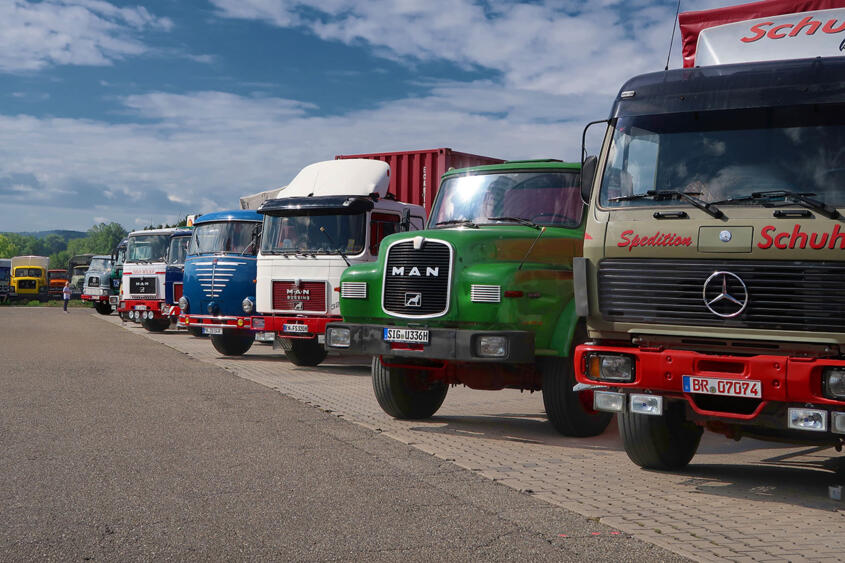
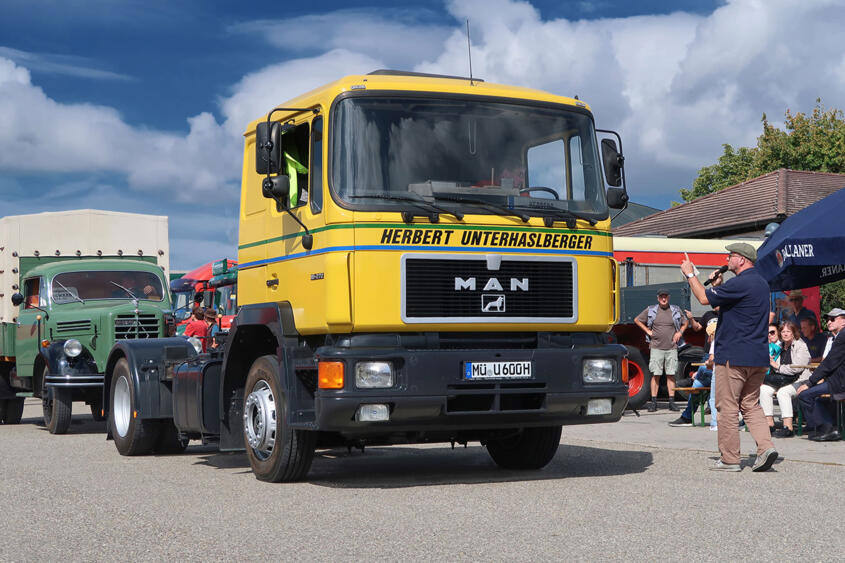
The absence of the road run did nothing to diminish the event’s success. Quite the opposite: happy faces were everywhere, among participants and visitors alike. One highlight was the large vehicle presentation on Saturday morning. This time, it was oriented toward the sun to show the vehicles in the best light. As usual, host Holger Hahn did an excellent job. He knew the technical details of every vehicle and could add an anecdote or two as well. Numerous photographers had lined up to capture these classics of commercial vehicle history during the presentation. Whenever someone lingered absentmindedly in front of a vehicle without noticing the photographers, a collective cry went up. It was an amusing scene to watch.
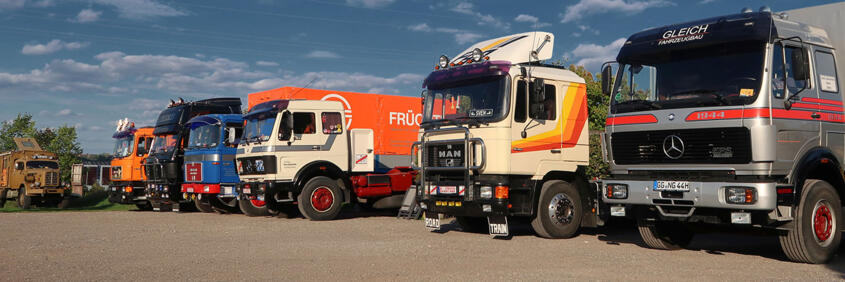
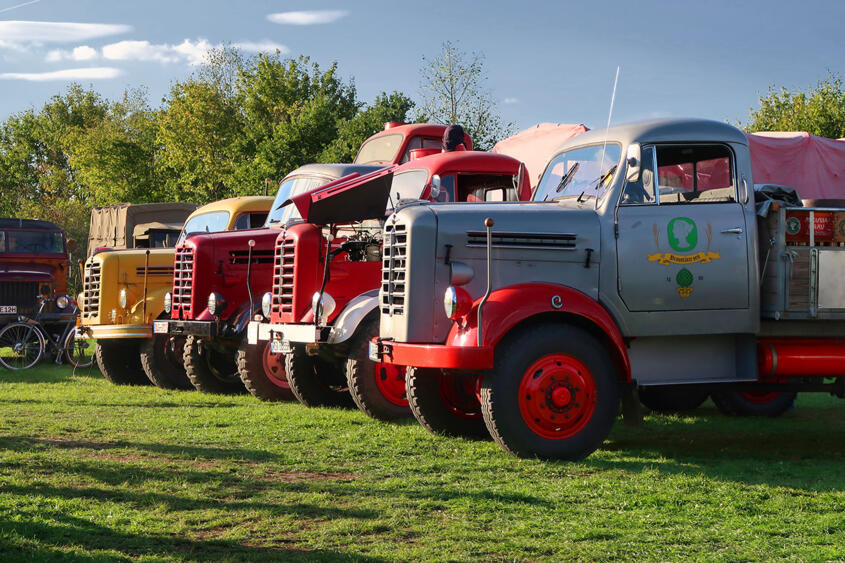
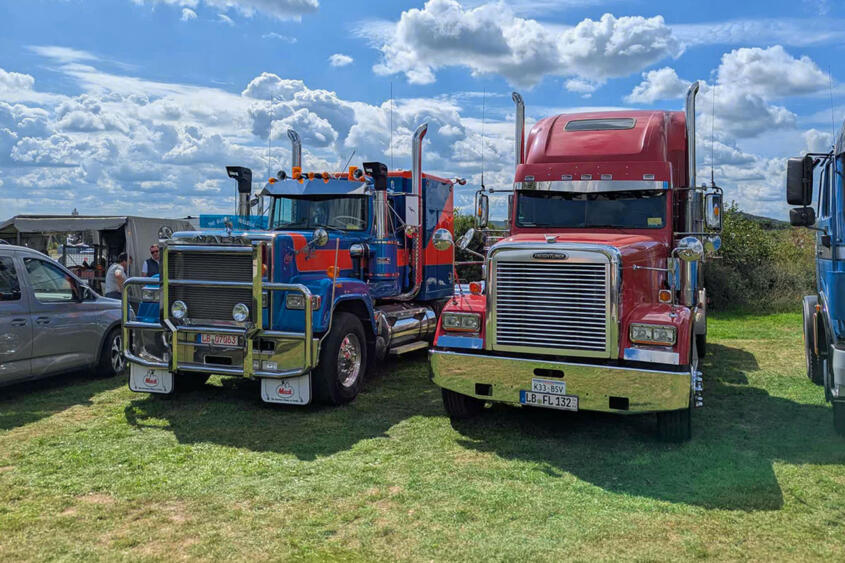
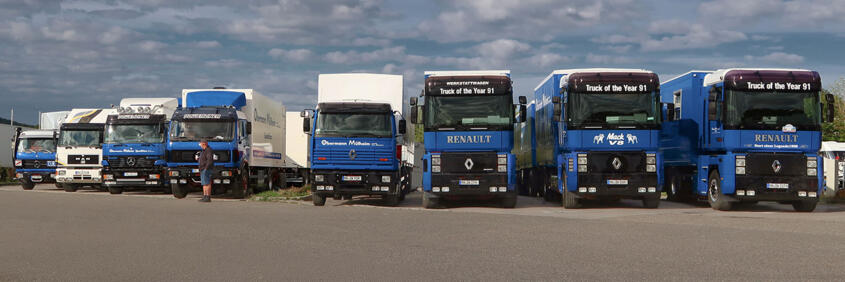
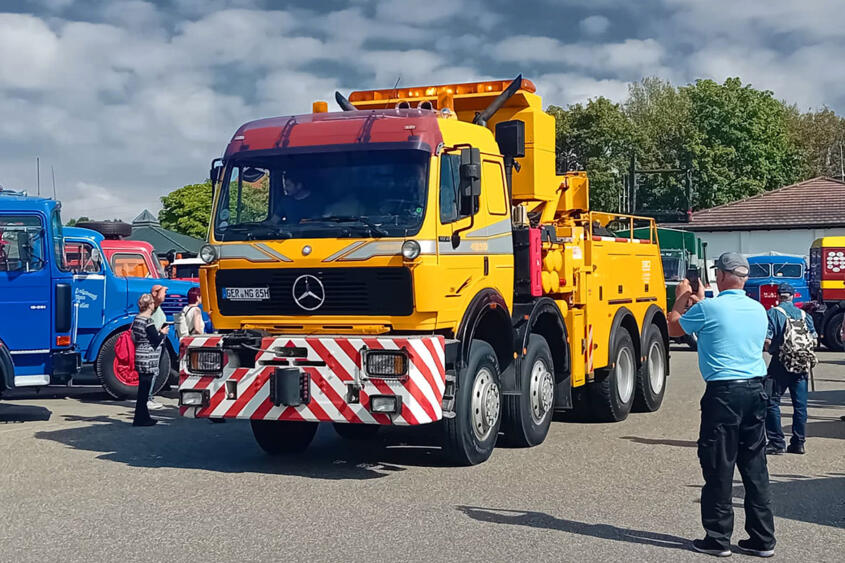
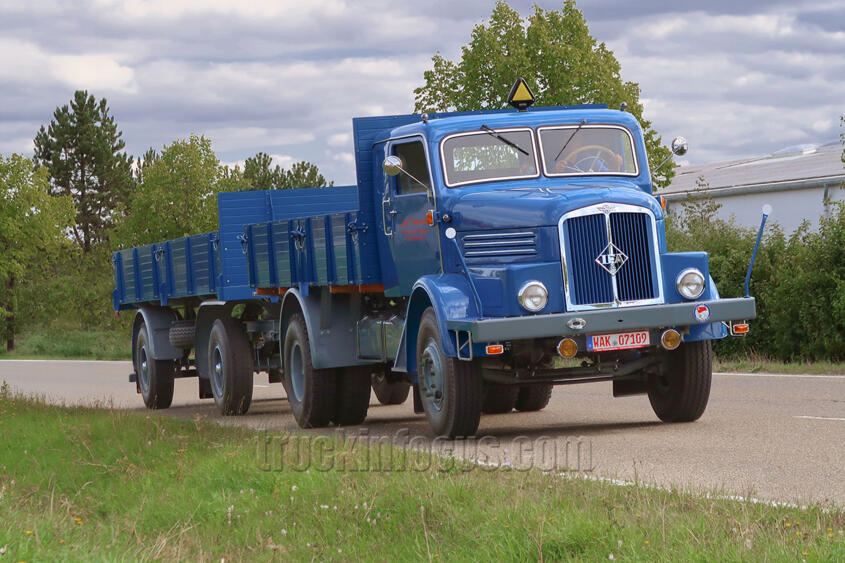
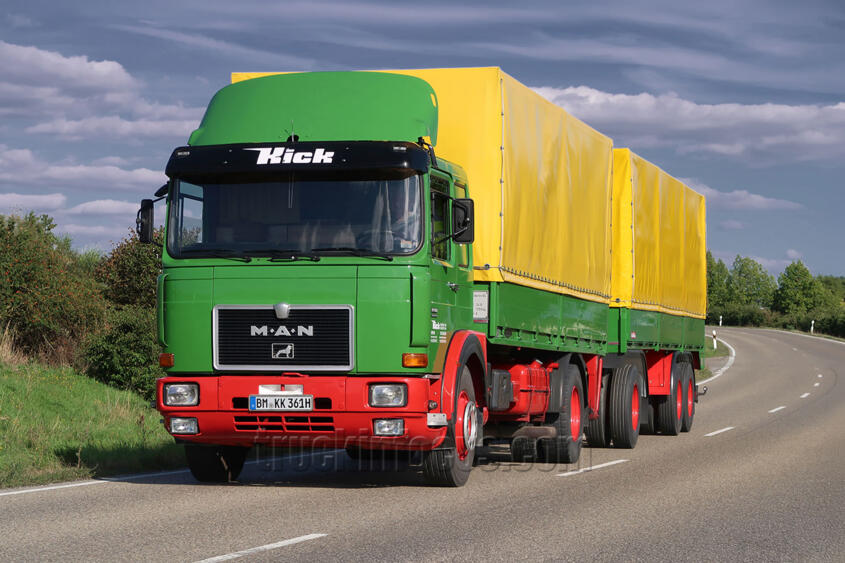
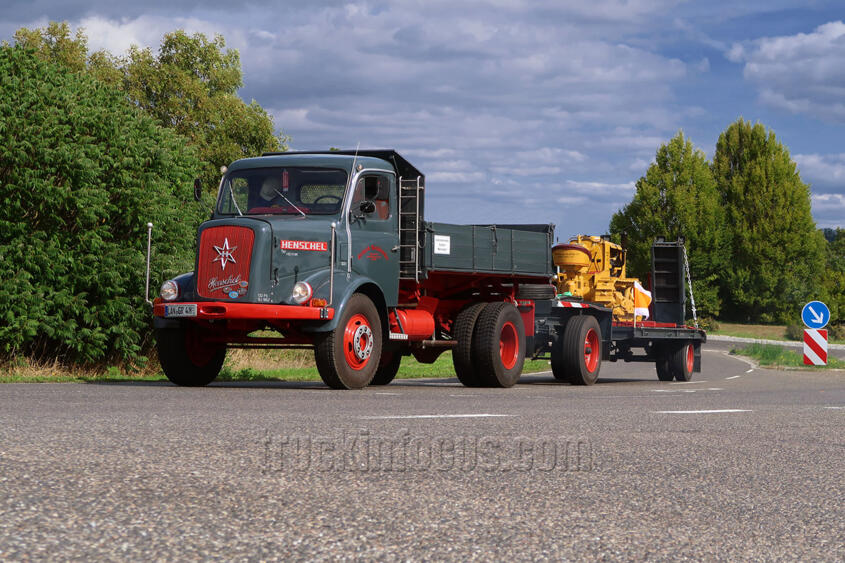
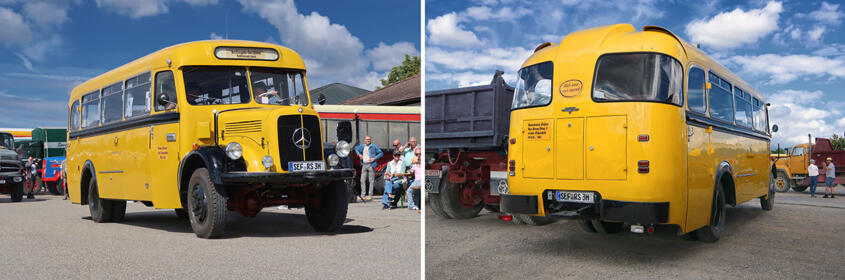
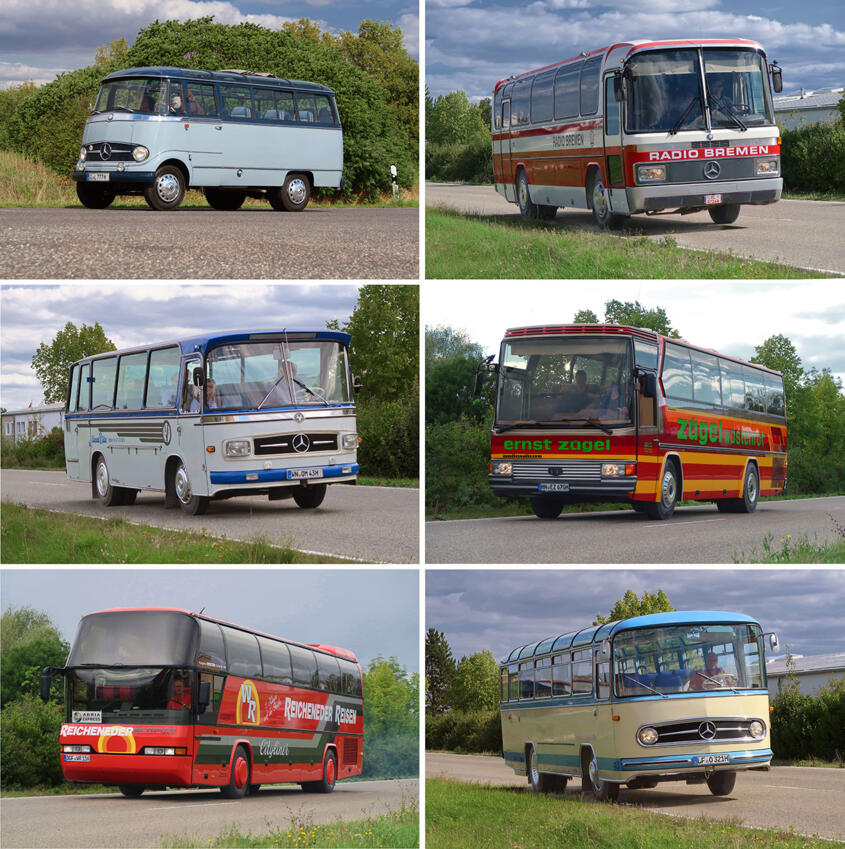
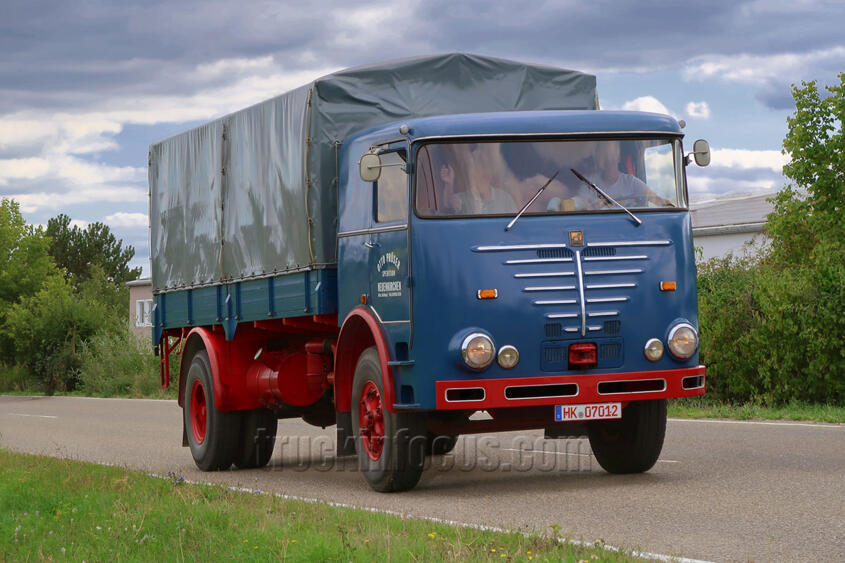
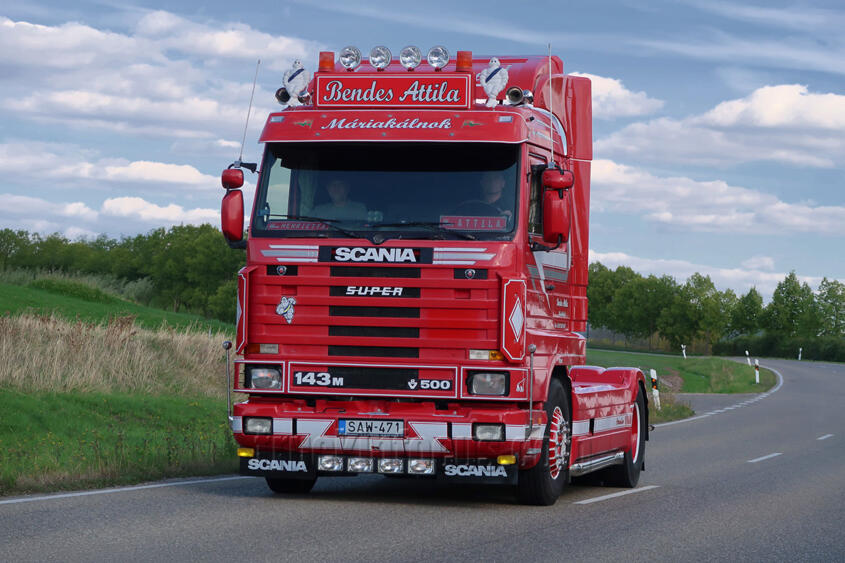
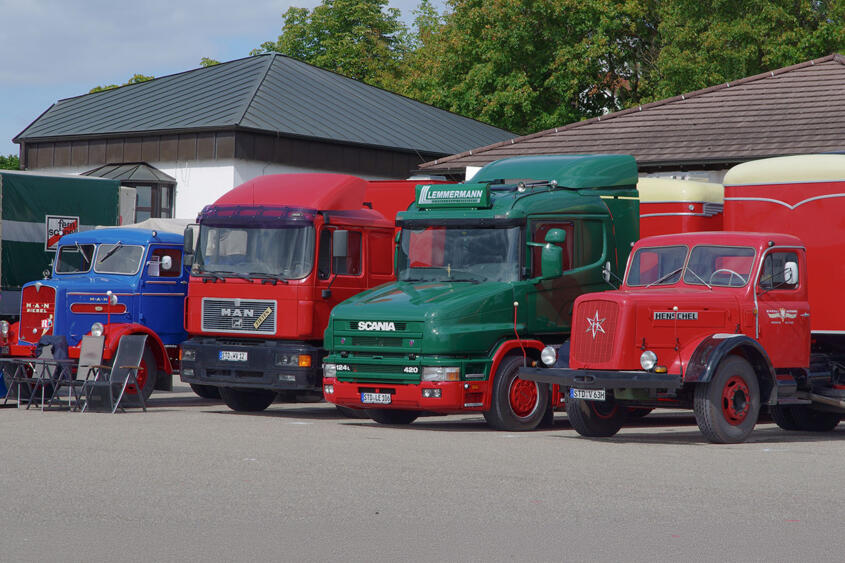
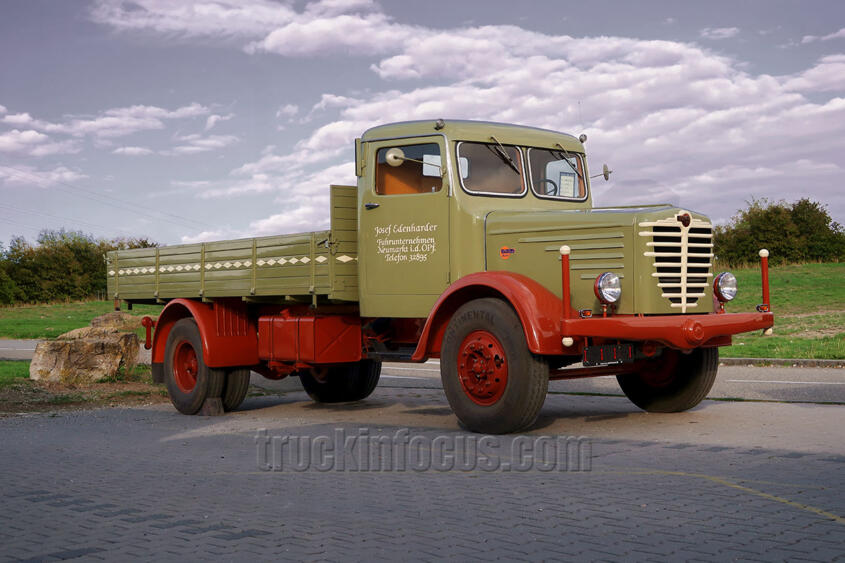
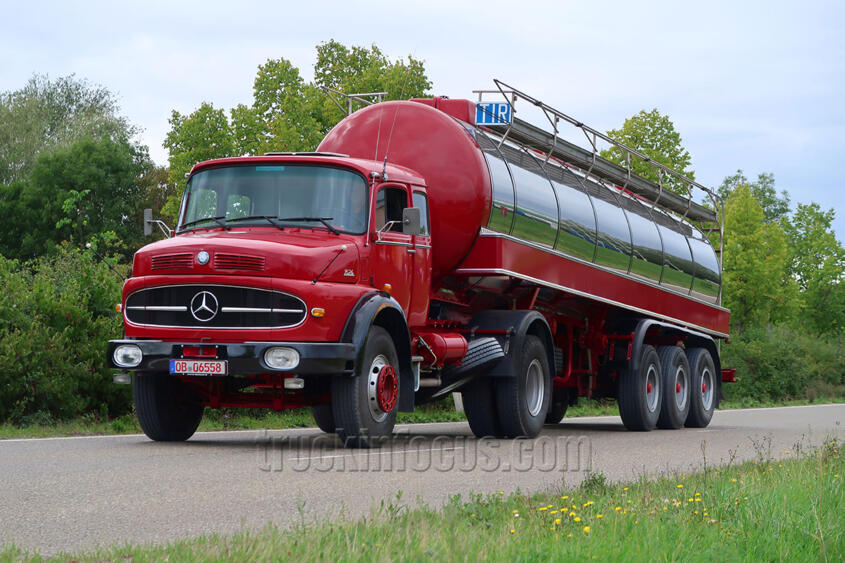
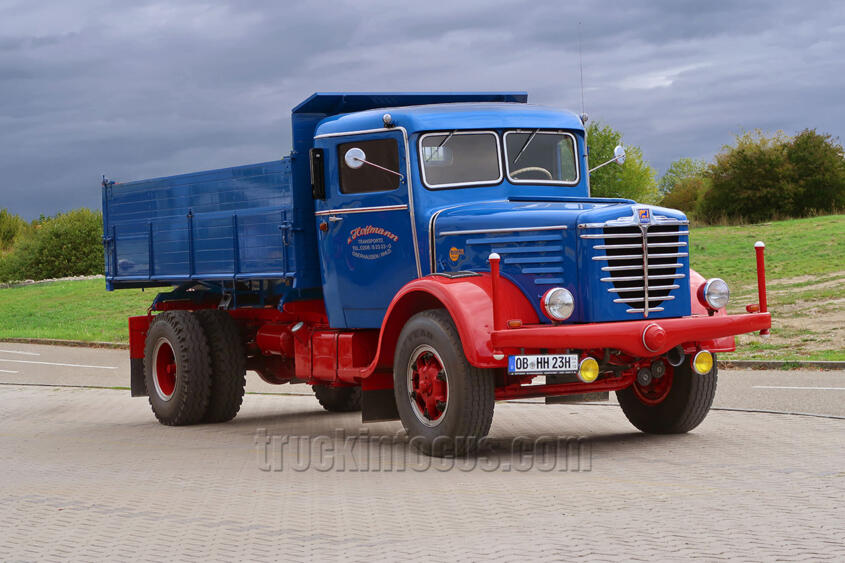
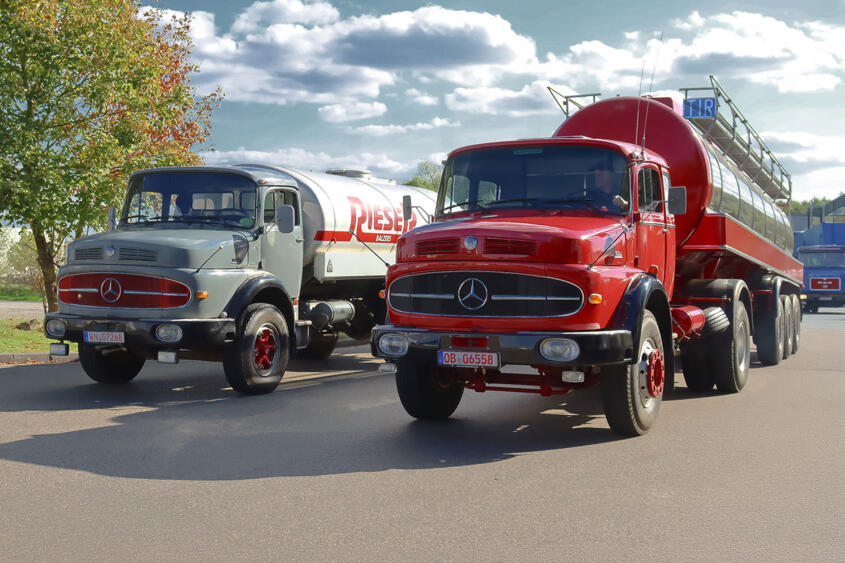
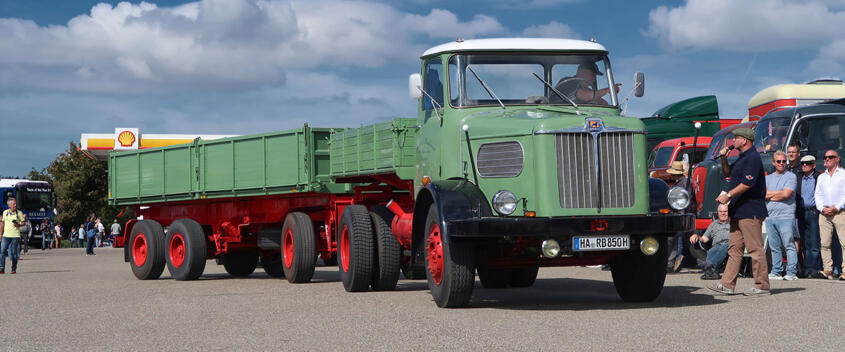
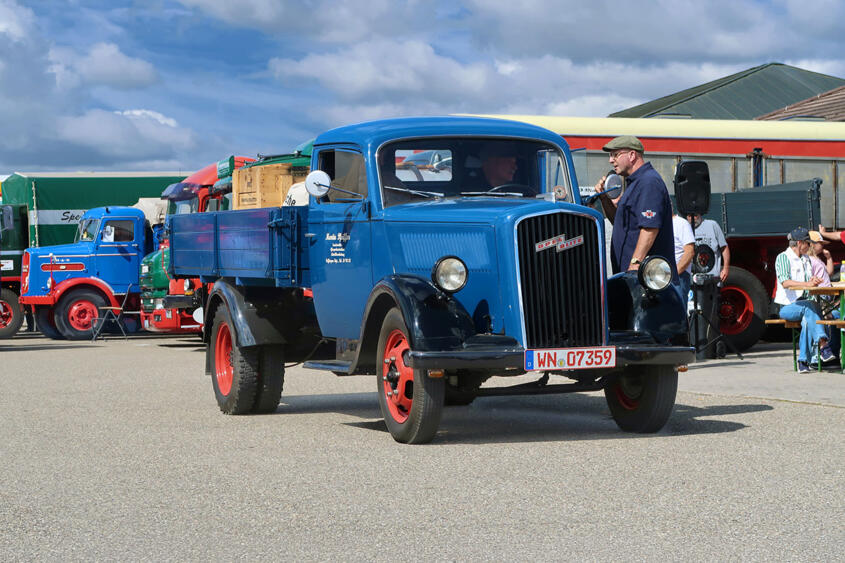
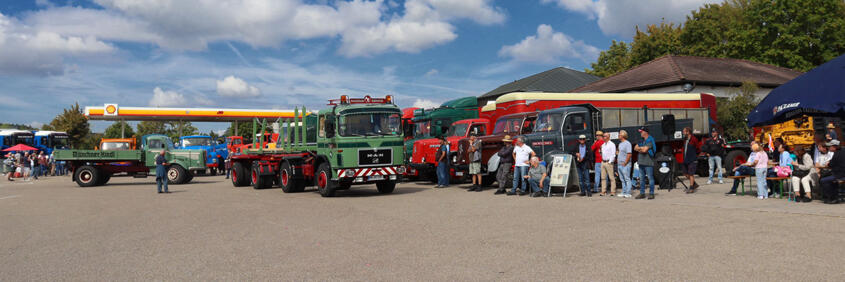
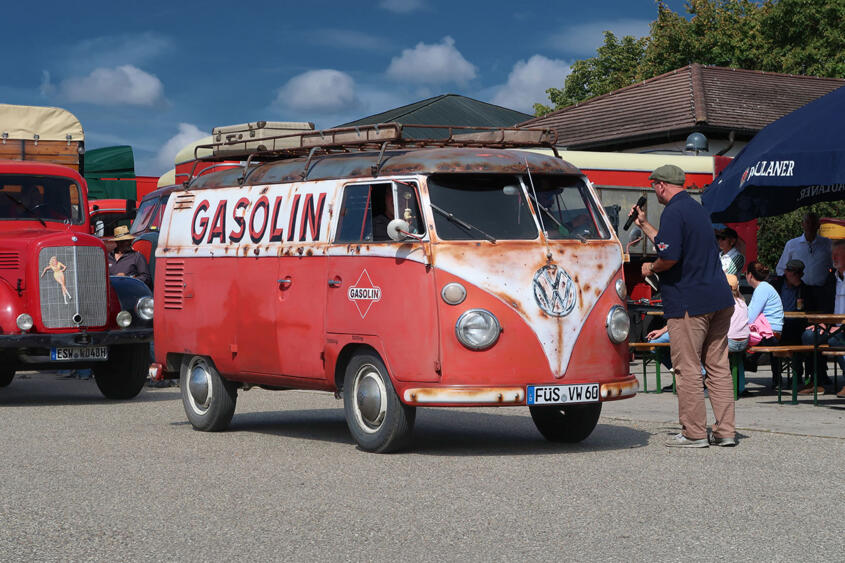
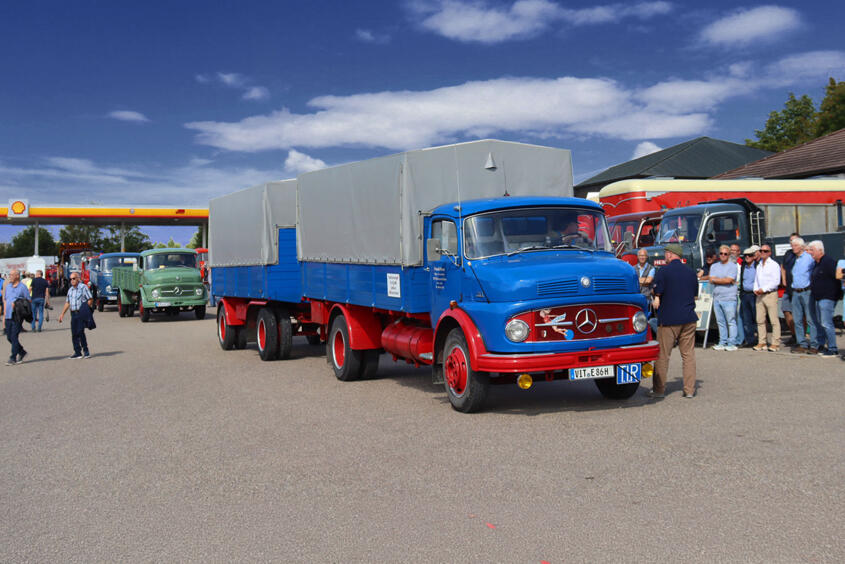
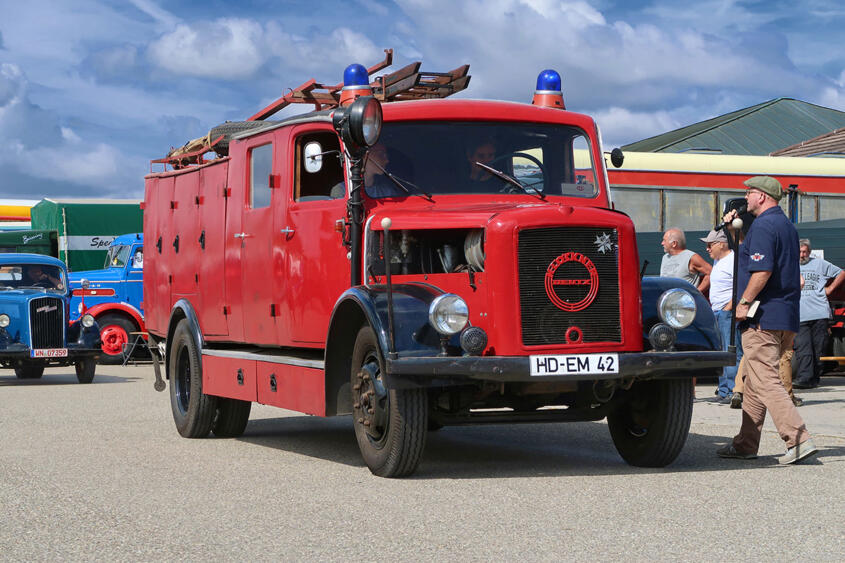
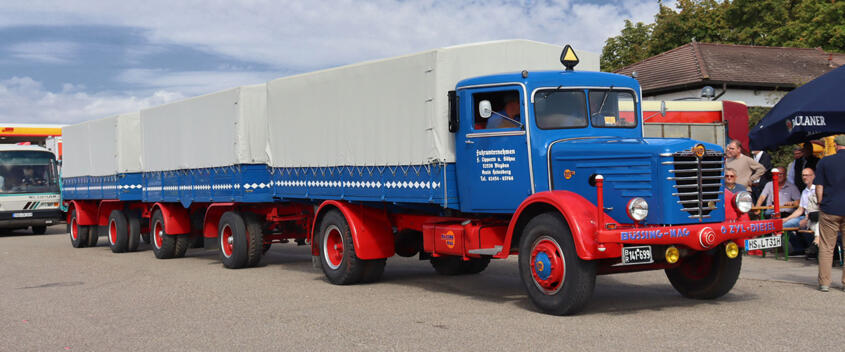
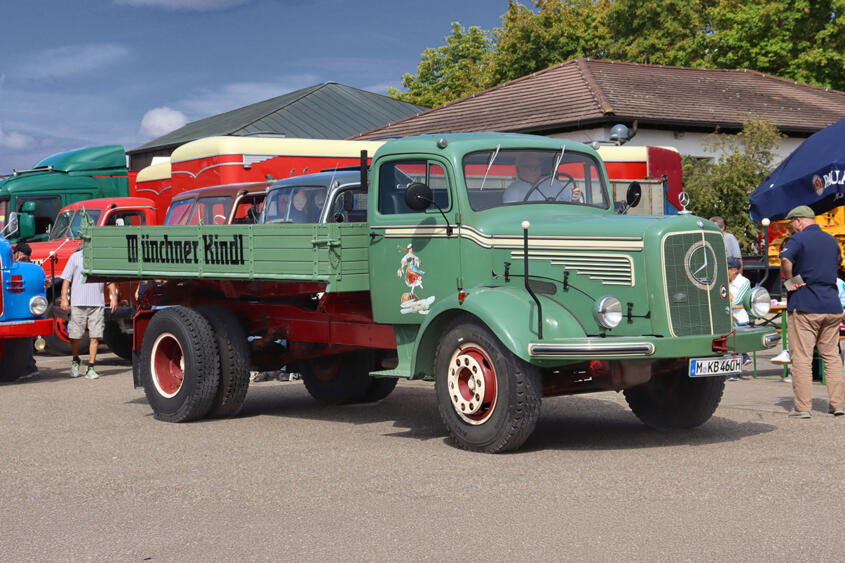
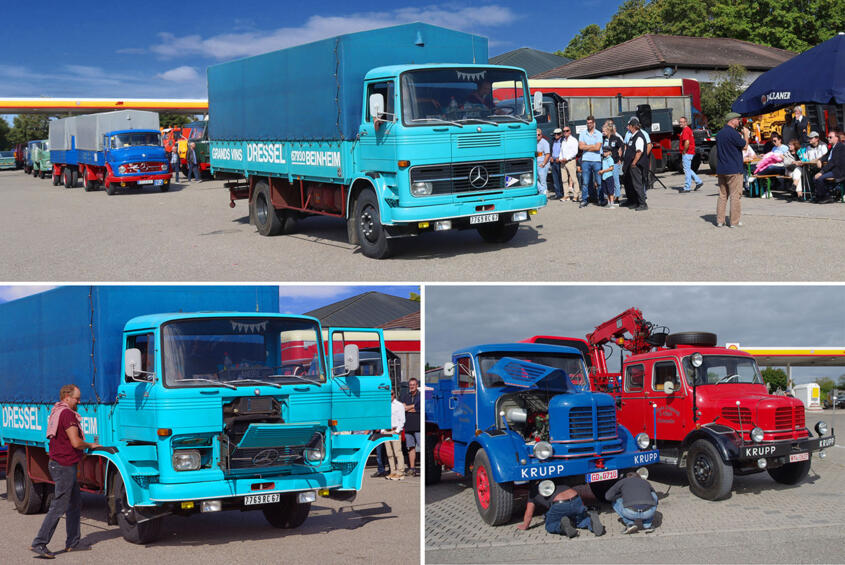
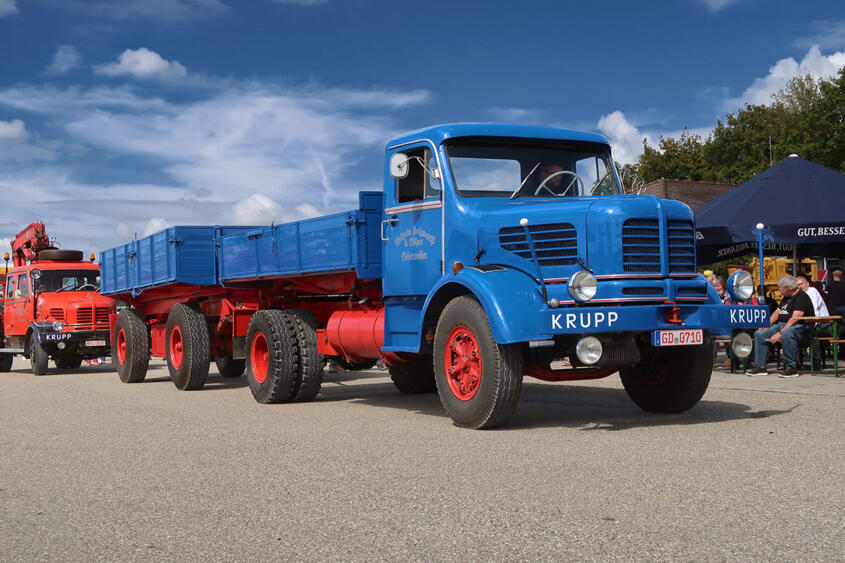
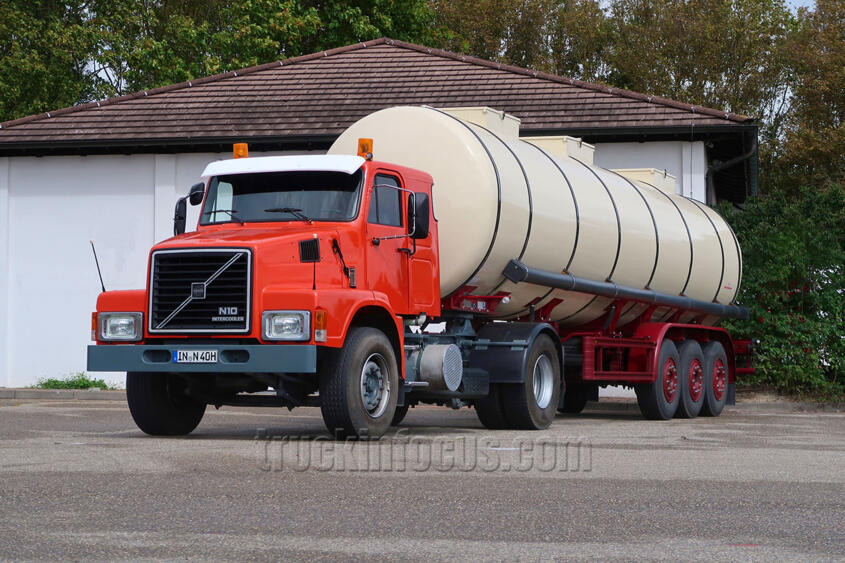
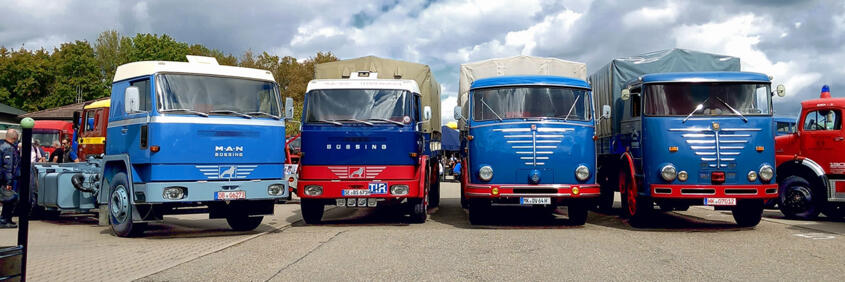
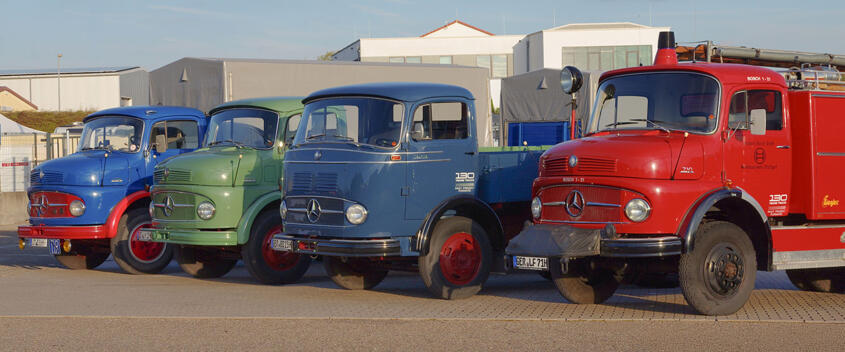
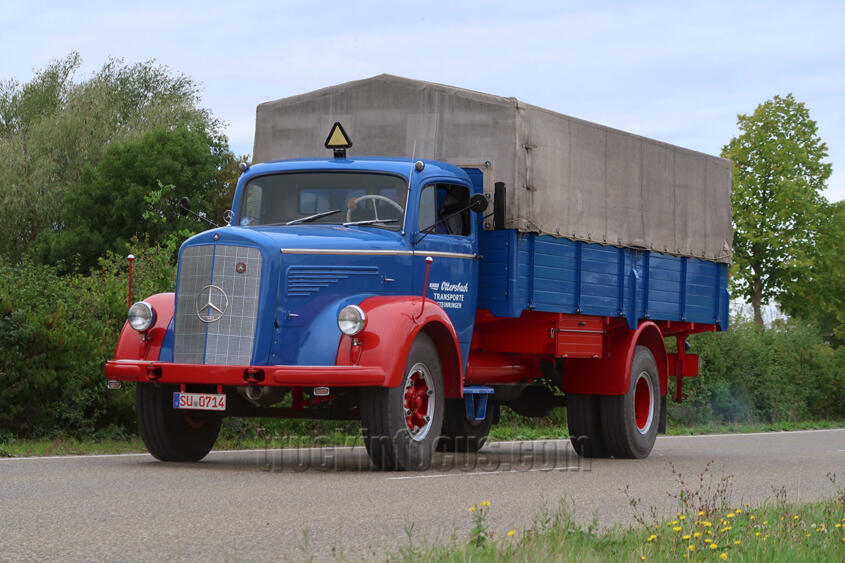
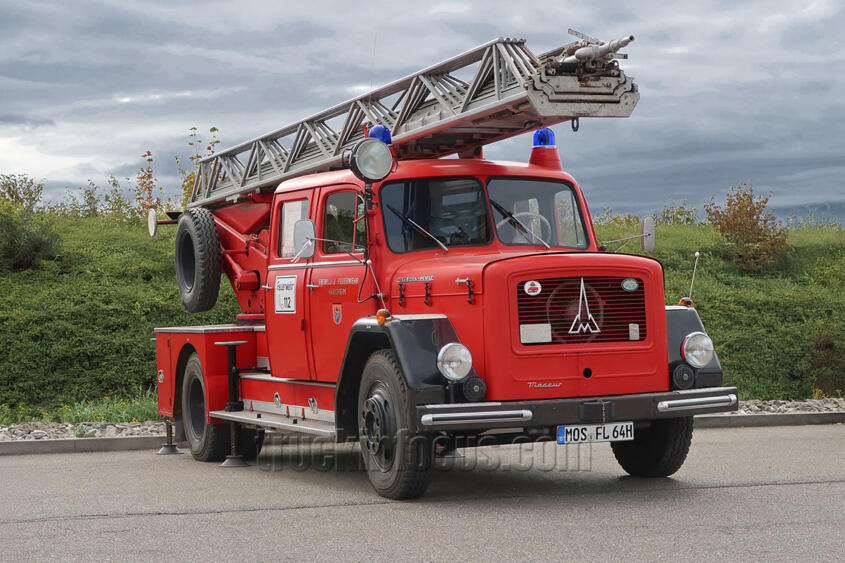
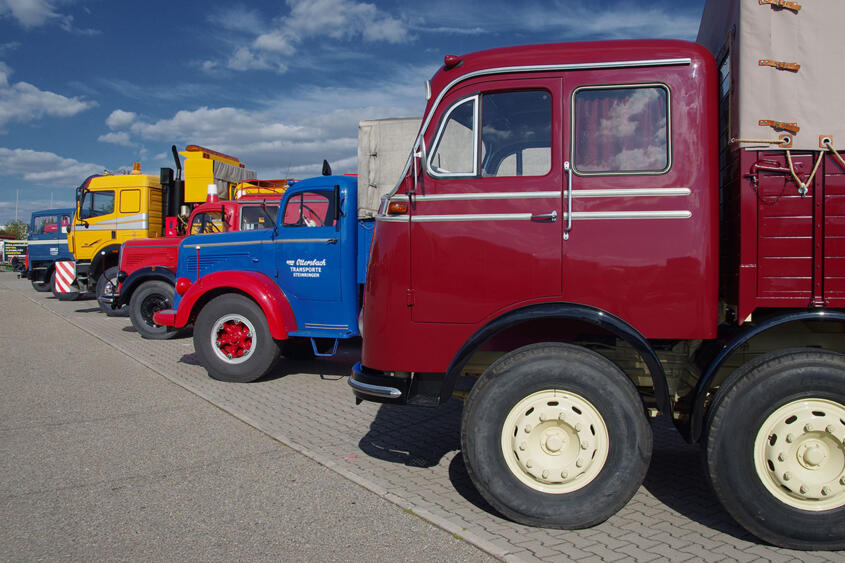
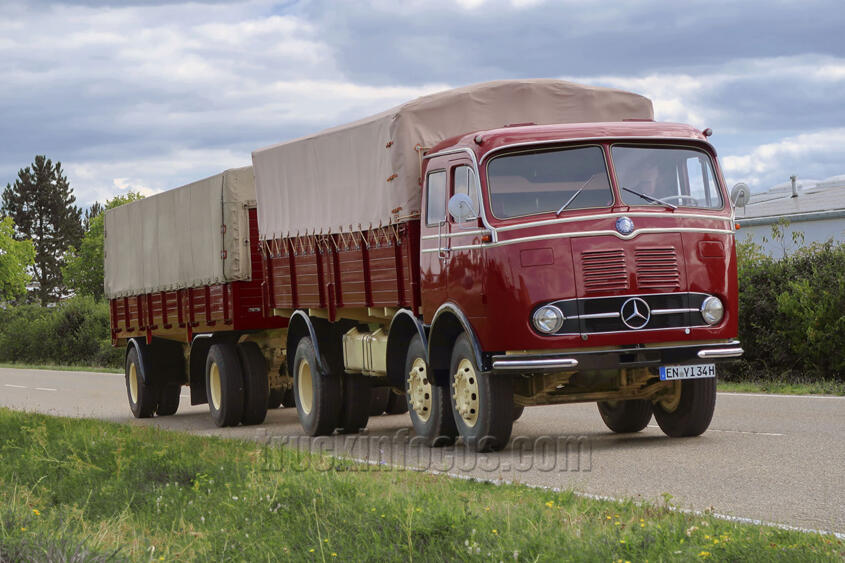
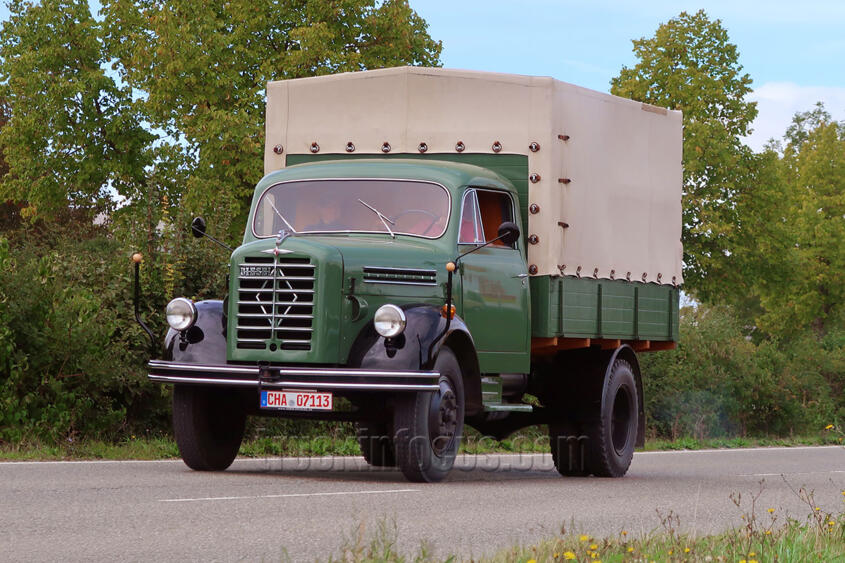
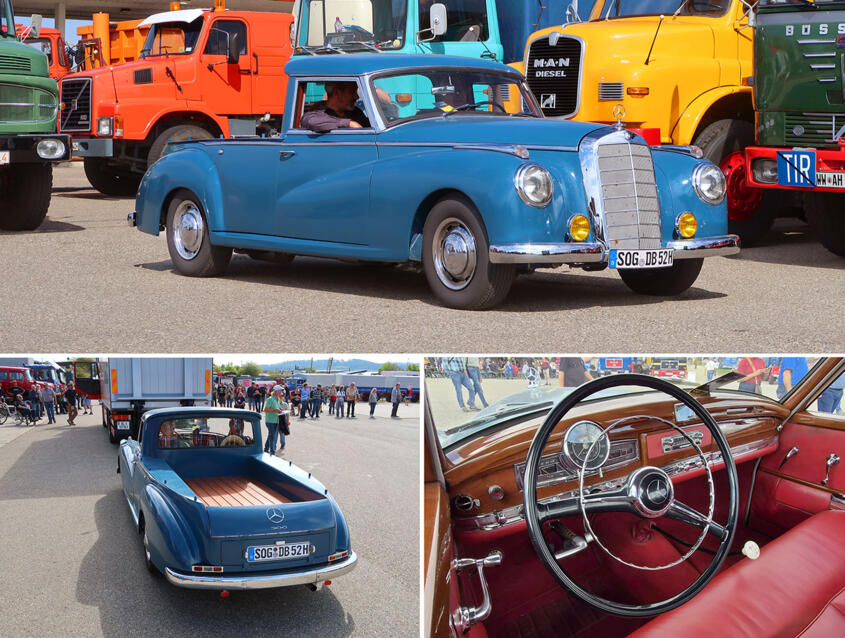
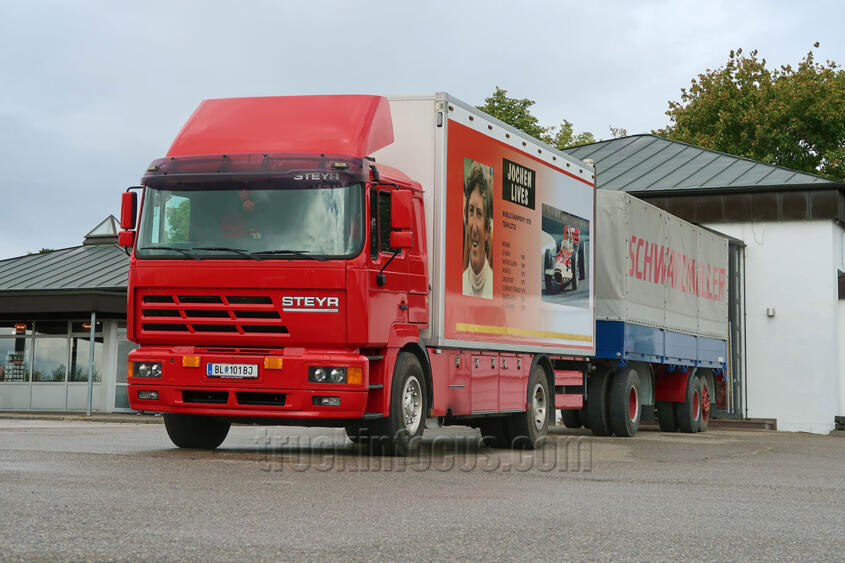
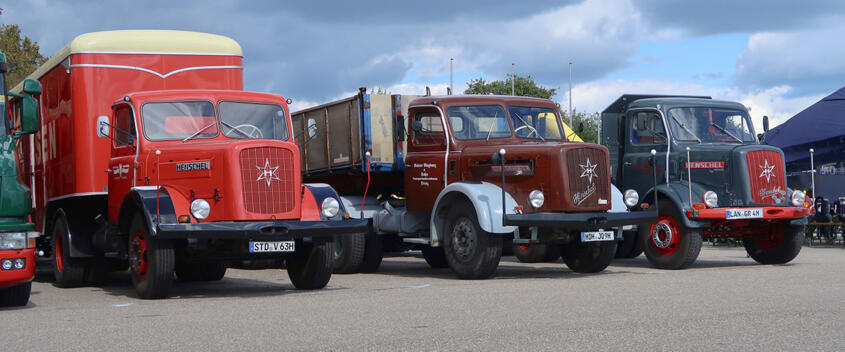
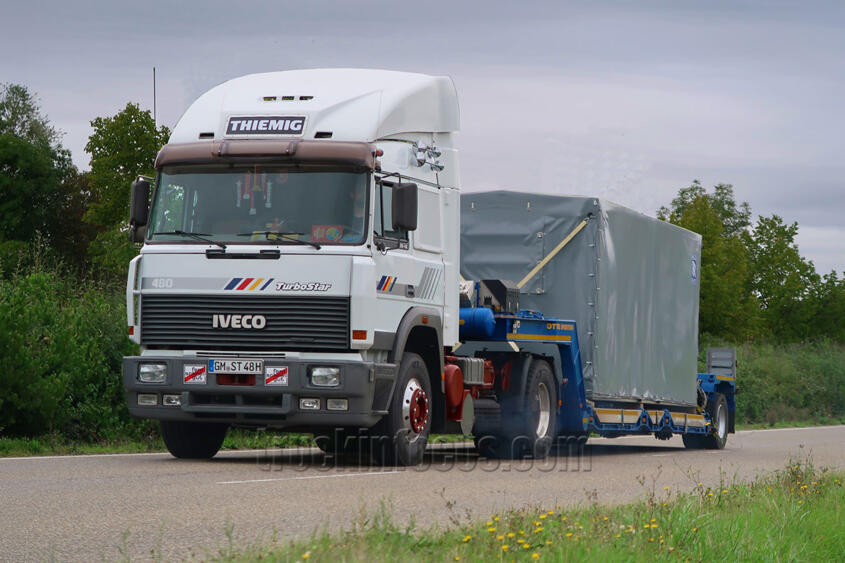
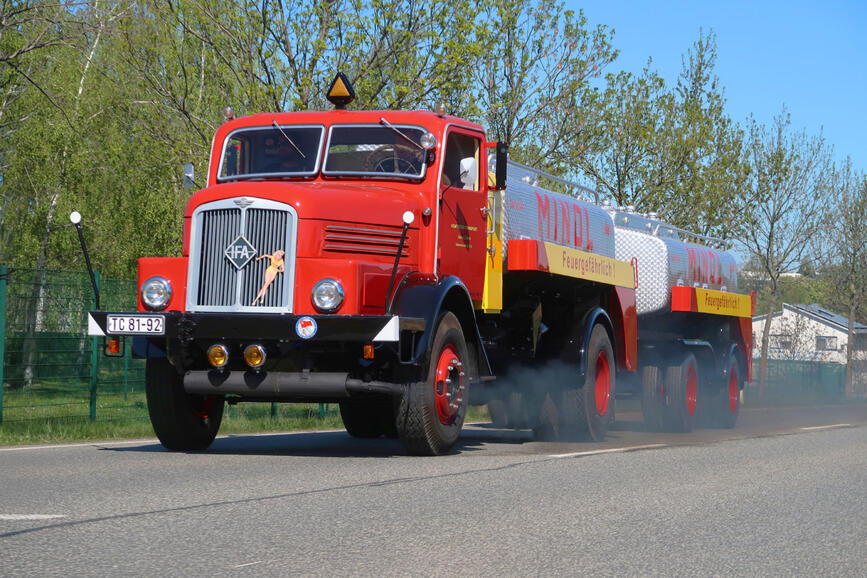
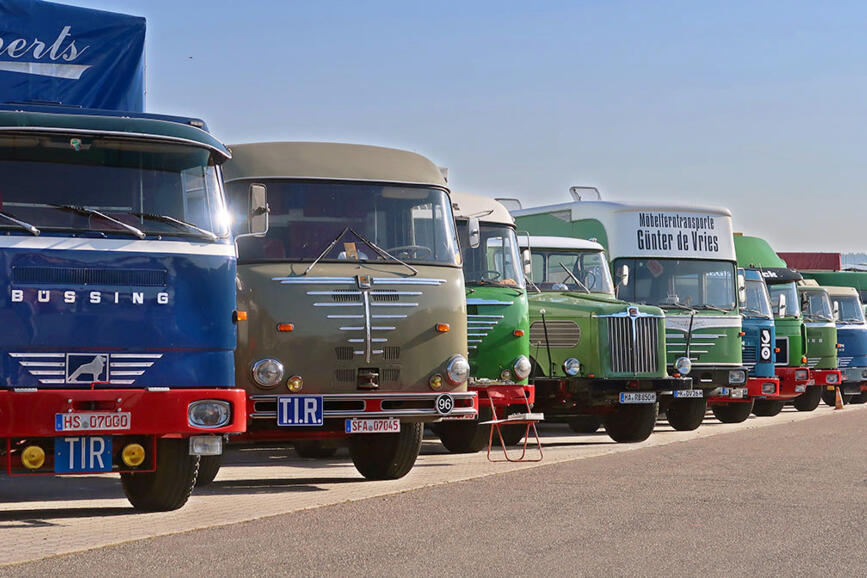
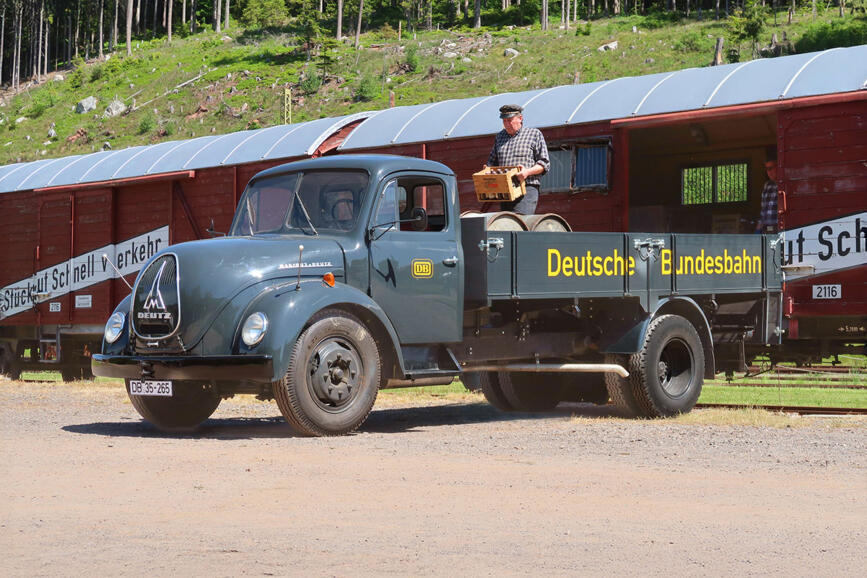
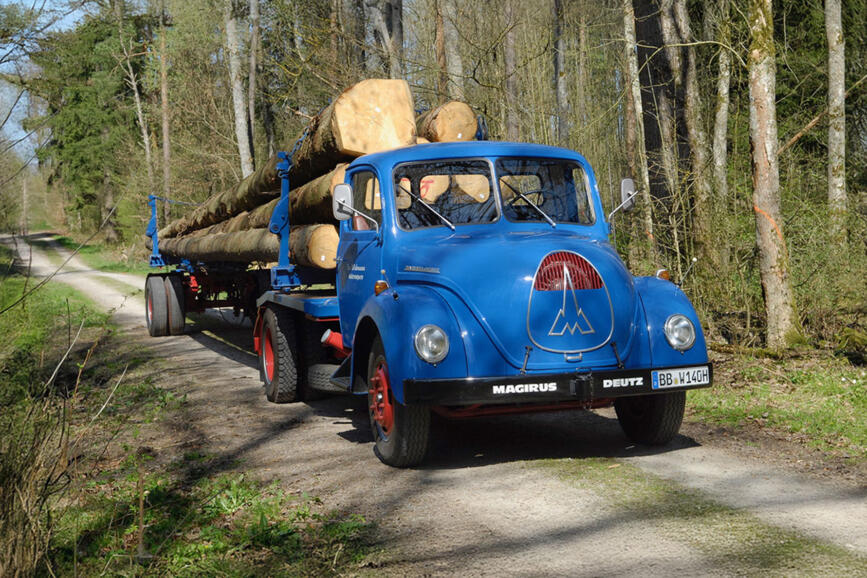
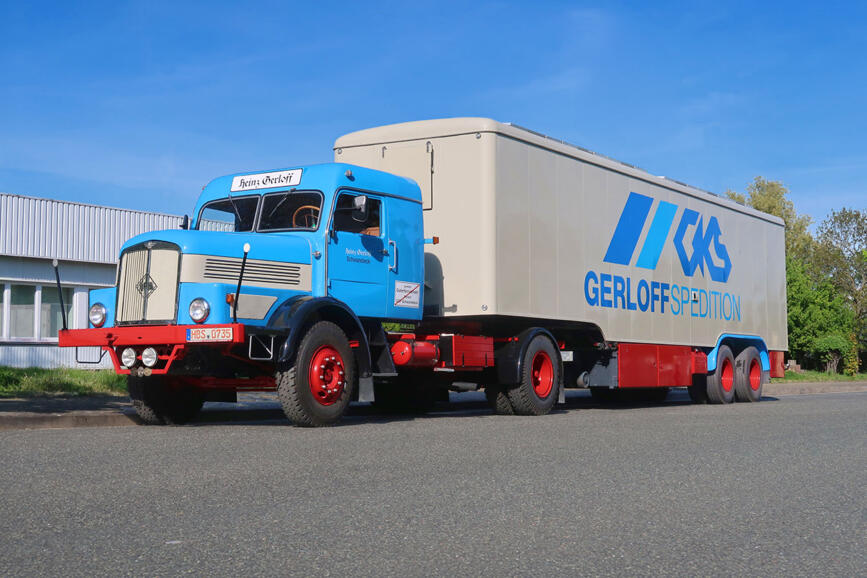
All-wheel-drive vehicles were in the majority on the Borgward meadow. There were also a few light trucks from the Bremen manufacturer with a 4x2 drive configuration, although none are shown in this photo.Vehicles from other manufacturers were also lined up on the Borgward meadow, including these spectacular tractors from the USA: on the left, a Mack Superliner RW 700, built from 1977 to 1993; on the right, a Freightliner FLD 132 Classic XL, built from 1990 to 2010 (Photo: Christoph Brem).Dirk Obermann from Mülheim an der Ruhr brought not only his collection of Renault AE and Magnum trucks, but also a few modern classic Mercedes trucks and a MAN. Lined up side by side, they certainly made an impressive display!A heavy four-axle NG 4850 tow truck from the Mercedes-Benz Trucks Classic collection attracted plenty of attention. During its restoration, the doors were replaced with those from an SK-series truck. Visitors could request a short ride in the four-axle truck outside the event grounds (Photo: Christoph Brem).A vehicle from the former East Germany also made the journey from Thuringia to the southern part of western Germany, providing a little eastern representation. With its distinctive styling, the IFA H6 was certainly a highlight of the Wörnitz meeting in 2026. Thanks for coming!The former Kick trucking company, which was based in Kerpen and Berlin, brought a perfectly restored MAN 19.361 U with an underfloor engine and F8 cab to Wörnitz this time. The model was built from 1985 to 1986.Gerhard Reicheneder arrived in his Henschel HS 11 HK, bringing a freshly restored vintage Caterpillar crawler tractor on the trailer.This all-wheel-drive postal bus, based on a Mercedes LA 311 with Hubertia bodywork, is a real gem even from the rear. Its yellow paint and black details make it a true eye-catcher.Buses were a common sight at Wörnitz this time. According to the organizer, this part of the event is set to grow in the future.The Büssing LU 11/16 Commodore was built from 1963 to 1965. It is one of the legendary models from the Braunschweig company, which ceased to exist in 1971. Vintage truck enthusiasts have known the example pictured here for decades. Friedel Prüser from Neuenkirchen used to take this cabover to the established meetings; today, his son Jens carries on the tradition.This Scania 143 Streamline came to Wörnitz from Hungary. This now-rare modern classic was built from 1992 to 1996, before being replaced by the 4 Series. The basic form of that series’ rounded design remained until the new generation arrived in 2016.No generation gap here: trucks from different eras stood peacefully side by side at the Wörnitz vintage truck meeting (Photo: Wolfgang Michtl).The Büssing-NAG 5000 S was built from 1945 to 1950. The flatbed truck in the photo attended the very first vintage commercial vehicle meeting in Wörnitz, when it still belonged to Josef Edenharter. It is now part of Helmut Hoffmann’s collection in Oberhausen. He brought it to Wörnitz on a lowboy trailer together with his Büssing 7500 S.By contrast, Helmut Hoffmann drove this imposing tanker rig, with its Mercedes LS 1624 tractor (built from 1969 to 1975), from Oberhausen to Wörnitz and back himself, under its own power.Today, Helmut Hoffmann is one of the best-known restorers on Germany’s vintage truck scene. He owns an enormous collection of vehicles and has helped countless owners of old trucks with advice and practical assistance in his workshop. This Büssing 7500 S laid the foundation for it all. Helmut brought it to Emil Bölling’s meeting in Castrop-Rauxel in 1987, surprising all the other participants, who had never heard of Helmut Hoffmann before.Here is Helmut Hoffmann’s tanker rig once again. Beside it stands a close relative: a short-hood 1924, built from 1969 to 1982. Michael Kaumeyer acquired the vehicle in Switzerland (Photo: Harald Brem).On the left is the IFA H6, alongside classics from MAN and Mercedes, including an Actros 1 that now qualifies as a vintage truck. After all, 30 years have already passed since the Actros replaced the SK series.Besides admiring vintage commercial vehicles, there were plenty of other ways to pass the time at the truck stop meeting: hunting for spare parts, historic truck brochures or model vehicles; enjoying a snack and perhaps a beer; having a barbecue on the Borgward meadow or elsewhere; or buying a commemorative badge to bolt on somewhere. Just please keep it off the radiator grille: a collection of badges does little to improve its looks. (Photos: Christoph Brem, Harald Brem, Wolfgang Michtl)The eagerly awaited vehicle presentation began on Saturday morning, with many participants introducing their vehicles to the public. Host Holger Hahn, who owns a small collection of vintage commercial vehicles himself, did an excellent job. He presented the key specifications of each vehicle and had plenty of stories to tell. The photo shows a MAN F 90, model 19.272.On the last conventional Büssing trucks, the so-called Büssing spider—the crossbars arranged in a shield shape on the radiator grille—gave way to vertical bars. From 1963 to 1965, the Commodore S was available as a flatbed truck for export, a tractor, and a dump truck with or without all-wheel drive.As in 2024, Martin Pfeiffer from Fellbach-Oeffingen returned with his now-rare Opel Blitz 1,5 t. It was built from 1946 to 1951, then replaced by the “Weichblitz,” a nickname referring to the flowing shape of its hood.The Wörnitz truck stop in glorious sunshine during Saturday’s vehicle presentation (Photo: Harald Brem).Appearances can be deceiving. What looks like a rare barn find is, in this case, a cleverly crafted imitation. The rust patches, other signs of aging and the lettering were all skillfully applied with paint, with a striking effect. As for the vehicle itself, the VW Transporter T1 was built from 1950 to 1967 as a flatbed, minibus and panel van. Its payload ranged from 0.86 to 0.93 metric tons.This truck-and-trailer combination, with a Mercedes L 1113 as its towing vehicle, belongs to Harald Brem from Ruhmannsfelden in the Bavarian Forest. Harald is a longstanding figure on the vintage truck scene. In 2015, he and his son Christoph took over organization of the Wörnitz meeting from Wolfgang Rieck, Werner Lachnit and Ronny Pflug, then the truck stop’s managing director, and have steadily expanded it ever since.Andreas Fehsenmeier’s Klöckner-Deutz S 3000 also attended in 2024 and in earlier years. Its license plate, without the blue EU band, reflects its many years with the same owner. This fire-service equipment truck from 1942 was the predecessor of the first square-hood Magirus of 1948, which in turn was replaced by the round-hood model in 1950.The Büssing-NAG 5000 S was built from 1945 to 1950. Trucks were allowed to tow two trailers in Germany until 1951. To attend the Wörnitz meeting, this impressive combination had to be uncoupled and loaded onto a lowboy trailer. One of the trailers was towed by a tractor (Photo: Harald Brem).This Mercedes LK 325 flatbed truck, built from 1954 to 1957, featured an elaborate paint finish and distinctive trim (Photo: Harald Brem).The Mercedes trucks of the cubic cab generation were introduced gradually from the mid-1960s. They earned the nickname “Advent calendar” because of the many small panels on the cab that could be opened to reach the mechanical components inside. The turquoise truck in the photos, which came from France, is an LP 1113 flatbed. At the bottom right are the two conventional Krupp trucks brought to Wörnitz by Wilhelm Holzwarth and his son Christian. The lack of suitable access panels is just one reason why reaching certain engine components is rather awkward (Photos: Harald Brem, Wolfgang Michtl).Wilhelm Holzwarth’s conventional Krupp trucks appeared in all their glory during the presentation. First came a K 801 dump truck (1960–1963), followed by a crane truck based on the 60 W3 Widder (1955–1962).A real showpiece was this conventional Volvo N 10 with an extended cab and tanker semitrailer, displayed in Wörnitz for the first time by Gerhard Peter. The tractor with the extended cab is said to have originally been intended for the USA, but ultimately remained in Europe. For context, from 1987 onward, N-series vehicles carried the logo in the center of the radiator grille, and the Volvo lettering at the top of the grille disappeared. From 1991 onward, the Swedish brand’s conventional trucks were produced only in Brazil.This lineup of Büssing cabovers was arranged in the sunshine especially for truckinfocus.com. From left to right: a MAN-Büssing BS 22.320 with an underfloor engine, an LU 11/16, a Commodore U with an Aurepa cab, and a Commodore LU 11/16 (Photo: Harald Brem).Mercedes medium-duty models of the late 1950s and 1960s, neatly lined up for the many photographers at Wörnitz. On the far left are two short-hood L 1113 trucks (1963–1969); in the center, an LP 323 cabover (1961–1963); and on the right, a fire truck based on the LAF 710 (1963–1970) with Ziegler bodywork. The three vehicles in the foreground belong to the Mercedes-Benz Trucks Classic collection and were also available for rides (Photo: Wolfgang Michtl).Mercedes built the L 6600 from 1950 to 1954. It had two towing couplings on the bumper, whereas its successor, the L 315, produced until 1958, had to make do with a single coupling in the center. Werner Ottersbach from Henneff presented the 6600 with Trilex wheels shown here at Wörnitz.Several historic fire trucks could also be admired at Wörnitz, including this Magirus DL 25/2 turntable ladder truck, a Mercur 125 built in 1964. Vehicles of this kind were once part of almost every German fire department’s fleet.A side view of Mercedes vehicles from different eras. In the foreground is an LP 333 (1958–1961), with its somewhat exaggerated “centipede” nickname. It had two front axles and six wheels in total. This configuration is also known as a “Chinese Six” (Photo: Wolfgang Michtl).This truck-and-trailer combination deserves a photo showing it in full. Only a few Mercedes L 333 trucks survive today. It was good to see brothers Jens and Rainer Breddermann bring their beautifully restored “centipede” back to Wörnitz this year, astonishing visitors with its unusual axle arrangement.“He was too good for this world”—or words to that effect—is a saying associated with Borgward. More than 20 commercial vehicles from the Bremen brand were on display at Wörnitz in 2026. The company went bankrupt in the early 1960s, but still has many enthusiasts today. The photo shows a 4.5-ton B 4500. It was built from 1953 to 1959, then continued as the B 555 until 1961.One of the most unusual commercial vehicles at Wörnitz in 2026 was this Mercedes 300 Pickup, once part of the Prince of Monaco’s fleet. Louis Henri Maxence Bertrand Rainier Grimaldi, known as Rainier III., ruled the small country from 1949 until his death in 2005. To provide his gardener with a suitable vehicle, he had one of his luxury sedans converted into a light truck. How wonderful that this one-of-a-kind vehicle survives today. Hans Kleissl of HK Engineering made it available for the meeting. The Mercedes 300 Adenauer was offered from 1951 to 1962.Another rarity is the Steyr 19 S with the MAN F 2000 cab. Built from 1994 to around 2000, it was the long-established Austrian brand’s last heavy-duty series to retain some of its own engineering. Production subsequently switched entirely to shared MAN components. MAN had already acquired the plant in 1989. The side of the body on the vehicle shown pays tribute to racing driver Jochen Rindt (1942–1970).On the left of this Henschel lineup are two HS 140 S tractors. This model was built from 1951 to 1958 with a choice of engines. The truck on the left has a 192 PS engine under its hood, while the one on the right had to make do with 140 PS. On the far right is the 132 PS HS 11 HK (1961–1962).The IVECO TurboStar 190-48 is a true truck legend of the 1980s and 1990s. Its cab was based on the earlier IVECO Turbo, itself a development of Fiat’s “T-Range,” and represented a major reworking of the first IVECO generation. As the top model in the series, it combined impressive V8 power with cab comfort that was pioneering for its time. Introduced in 1989 as the new flagship, it replaced the previous 420 PS V8 version and remained in production until 1993.An intriguing stack: Mercedes trucks from three generations (Photo: Wolfgang Michtl).
The event came to an end on Sunday. Participants packed up, loaded their vehicles and had a final conversation with fellow enthusiasts. Photographers took the opportunity to photograph individual vehicles as the truck stop gradually emptied. Truck spotters, many of whom had known each other for years, stood along the road to the highway. They waited for the vintage trucks leaving the event grounds to head home. Drivers often waved goodbye to the photographers. And so Wörnitz 2026 drew to a close—a special weekend for everyone who loves classic commercial vehicles. The next meeting will be a special anniversary event: in 2028, vintage commercial vehicle enthusiasts will gather at the Wörnitz truck stop for the 20th time. There is already plenty to look forward to.
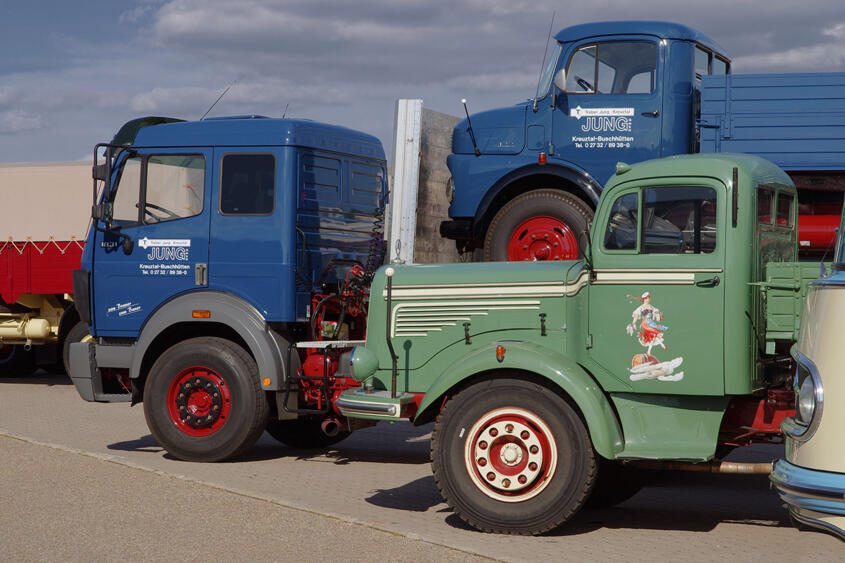
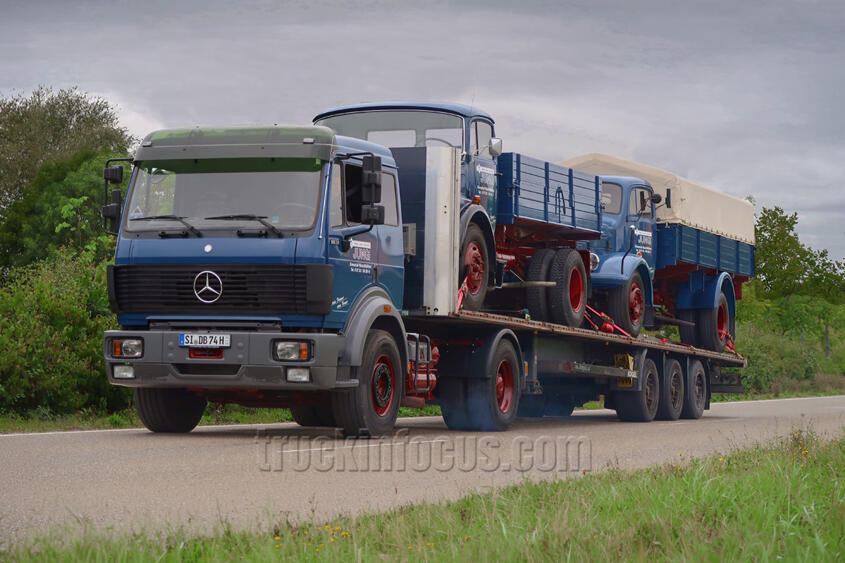
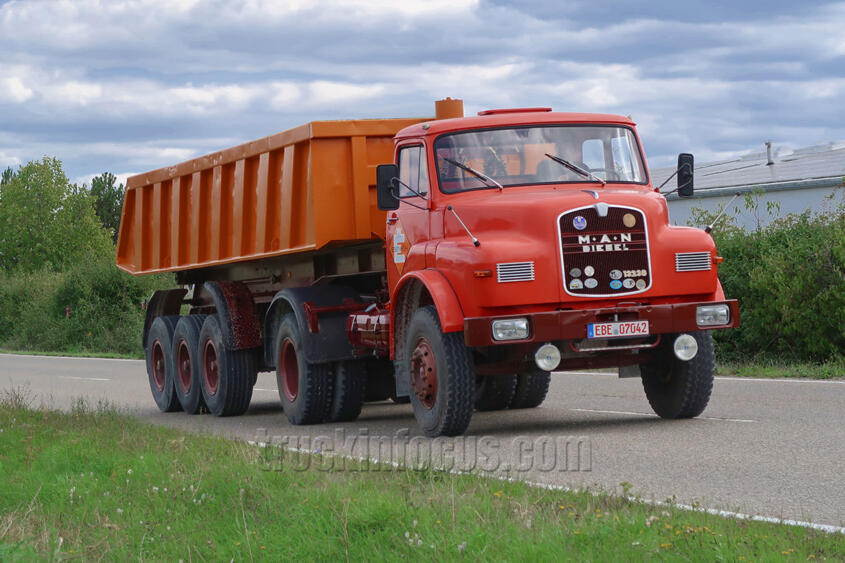
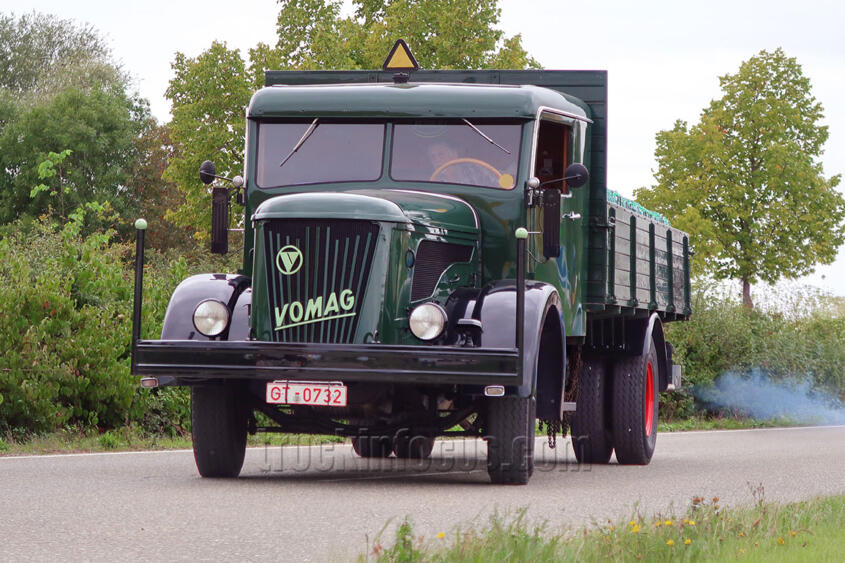
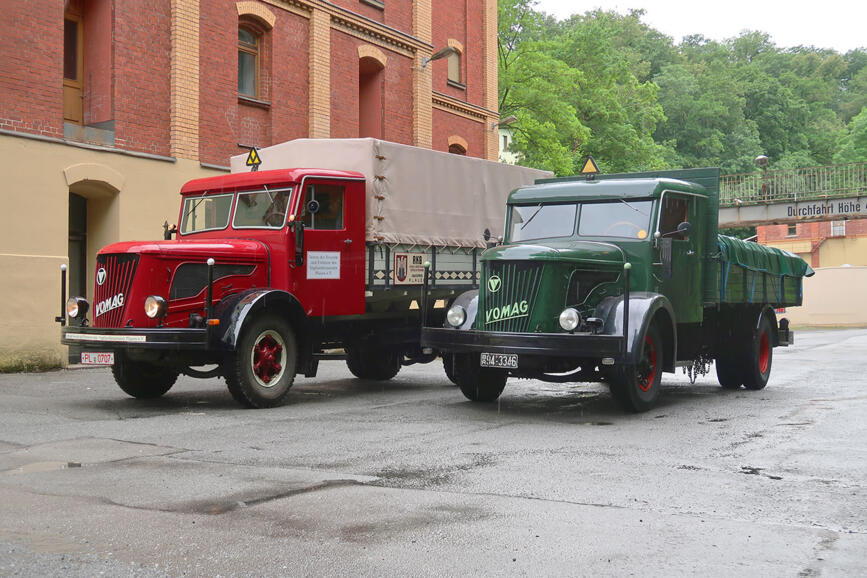
Riding piggyback: Treber Jung from Kreuztal-Buschhütten, with his three-vehicle contribution to the Wörnitz meeting, on the way home to the Siegerland region.The MAN 13.230 was built from 1967 to 1974. Jürgen Ebenhöh from Pliening near Munich brought the imposing tractor and tipping semitrailer shown here to Wörnitz.To close this look back at Wörnitz 2026, we show what was probably the oldest vehicle at the event: one of the few surviving VOMAG 4,5 LHG 448 trucks. Its owner, Walter Höcker, brought the roughly 85-year-old vehicle from Versmold to Wörnitz on a lowboy trailer and took interested passengers for a few laps there.
Unless otherwise indicated, the text and photos in this article are by Steve St.Schmidt. Many more photos of vehicles that attended the Wörnitz meeting in 2026 will be available soonat this link
Frequently asked questions about the Wörnitz vintage commercial vehicle meeting in 2026
How often is the vintage commercial vehicle meeting held at the Wörnitz truck stop?
The meeting takes place every two years. The date for the anniversary meeting in 2028 has not yet been set.
How much does it cost to attend the Wörnitz meeting?
Admission is free for visitors. Participants pay a fee for each vehicle. In 2026, the participation fee was 45 euros.
How many classic commercial vehicles took part in the event in 2026?
Participants brought around 270 vintage commercial vehicles to the meeting in 2026.
Where exactly is the Wörnitz truck stop?
The truck stop is in southern Germany, near the A7 highway at exit 109 Wörnitz. The exact address is Bastenauer Straße 10–12, 91637 Wörnitz.
Where can owners register their vintage commercial vehicle for the next meeting in 2028?
Registration details will be announced on truckinfocus.com once the date for 2028 has been set.