The New Volvo VNX
For Construction and Heavy Haul in North America
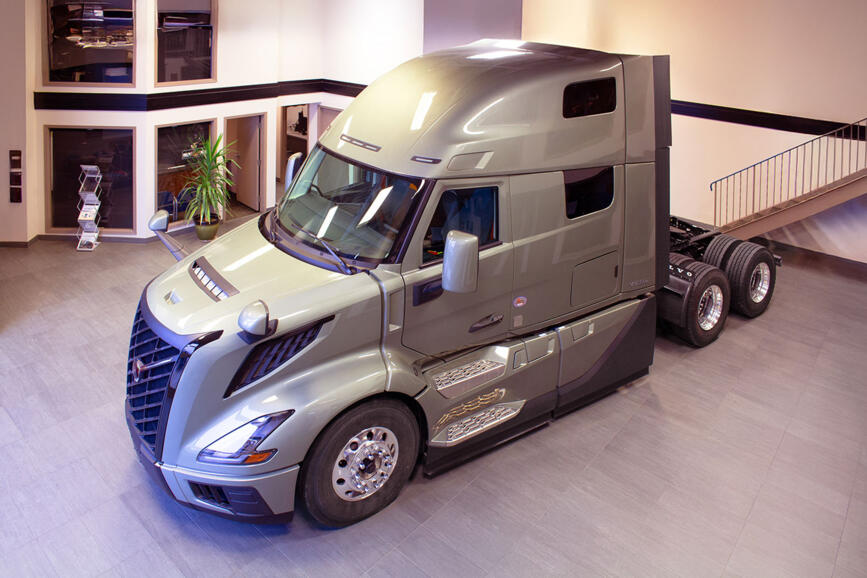
Volvo Trucks has unveiled the new Volvo VNX for the North American market. The heavy-duty model line covers applications from construction-site work to heavy haul on highways. According to the manufacturer’s press release, the Volvo VNX combines a D 13 engine producing up to 540 hp with new safety and driver assistance systems. It completes the renewal of Volvo’s North American truck lineup.
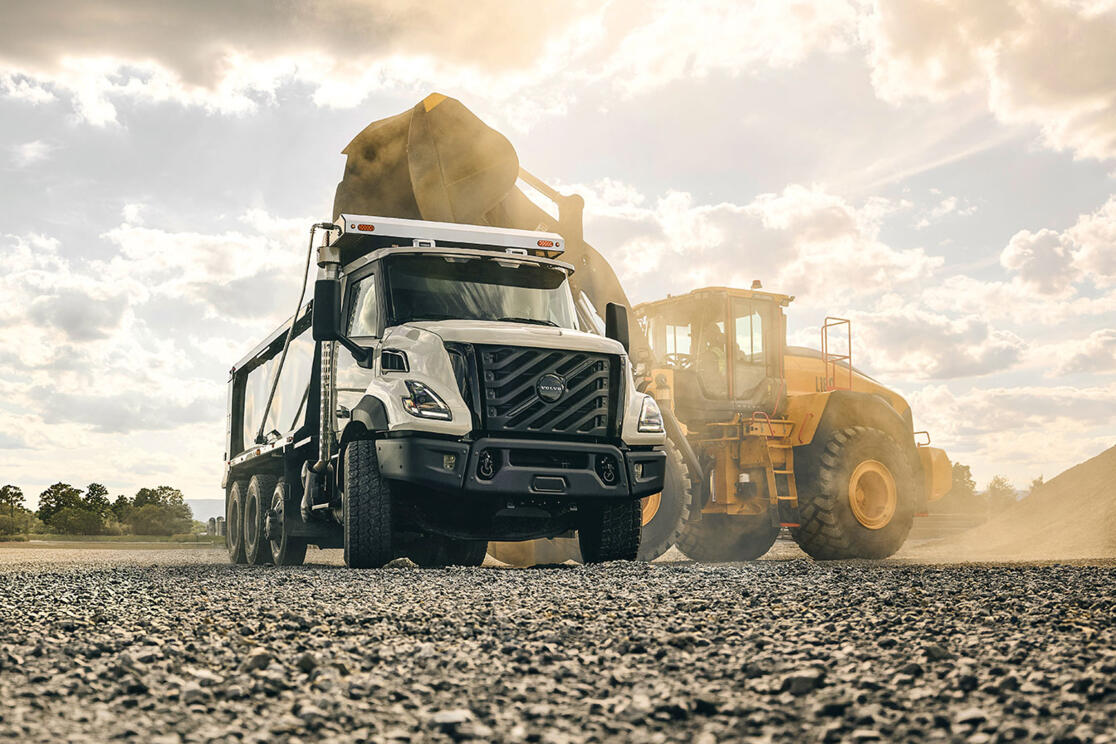
Following the VNL in 2024 and the VNR in 2025, the VNX is the third new model Volvo has introduced in North America in less than three years. All three share a common platform. Volvo invested a total of SEK 30 billion, equivalent to approximately $3 billion, in product development and manufacturing. We previously covered the long-haul VNL in our article “The New Volvo VNL for the USA and Canada”, in which our North American correspondent Sammy Führe shares his first impressions.
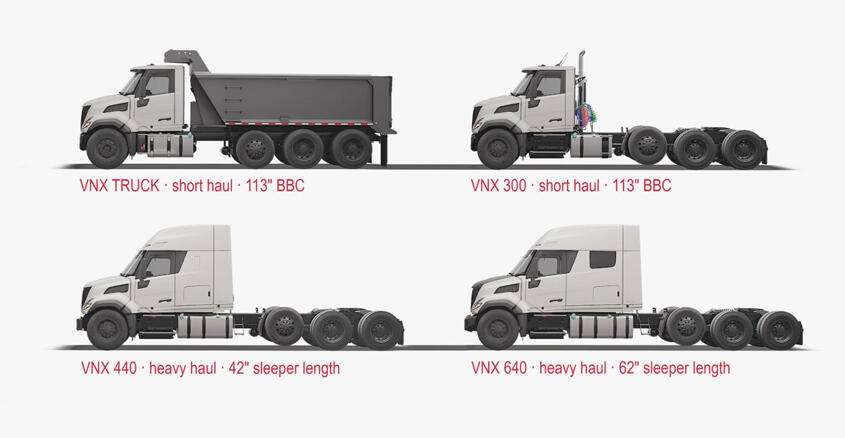
“Built for abuse” is one of the slogans Volvo uses to promote the VNX. Its intended applications include construction, concrete operations, infrastructure projects, agriculture, and highway heavy haul. Peter Voorhoeve, president of Volvo Trucks North America, describes it as the toughest, safest, most connected, and most powerful vocational truck the company has built.
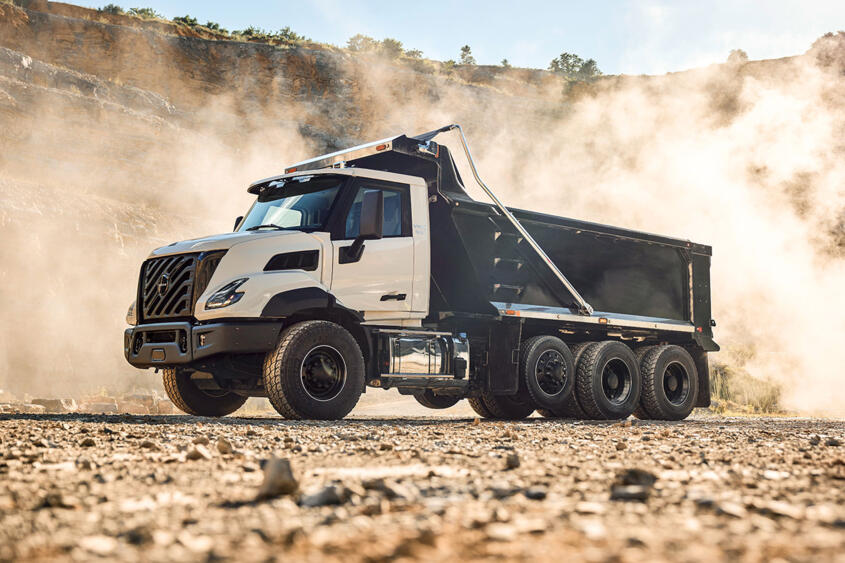
Pedestrian Detection and Surround View
The VNX adopts the safety platform already introduced on the VNL and VNR. Standard equipment includes forward pedestrian detection, which continuously scans for people around the truck. Optional blind spot detection is available on both sides. If a person is alongside the truck and trailer, the system provides an amber warning light and an audible alert when a lane change or door opening is attempted. A 360-degree camera system provides a bird’s-eye view of the area around the cab.
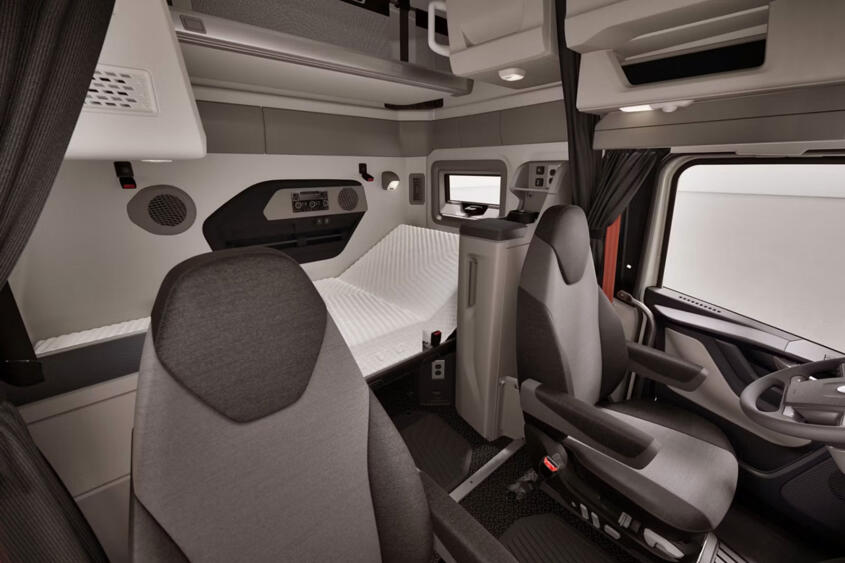
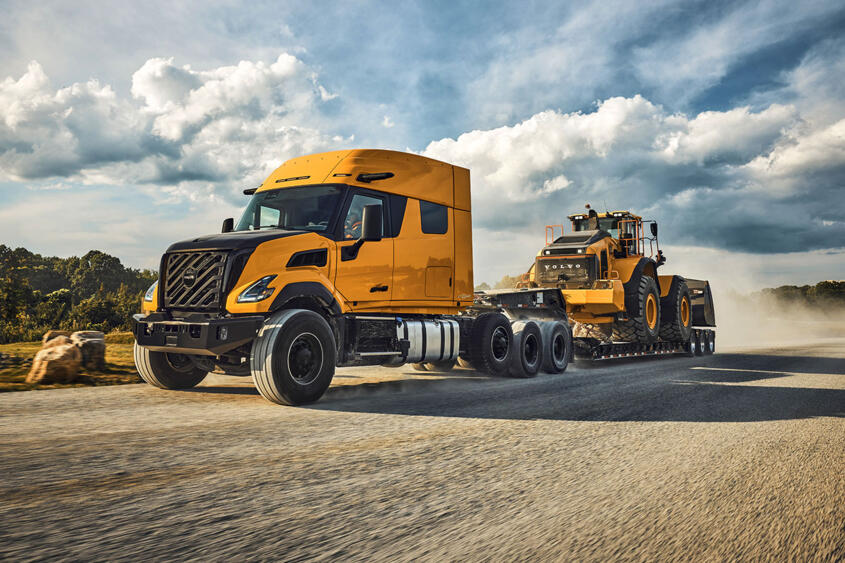
According to Volvo, the cab contains one-third more ultra-high-strength steel than its previous vocational trucks. A driver-side curtain airbag, which deploys alongside the head in a crash to help protect that area, is standard. Volvo says it is the only manufacturer offering this feature as standard on a vocational truck in North America.
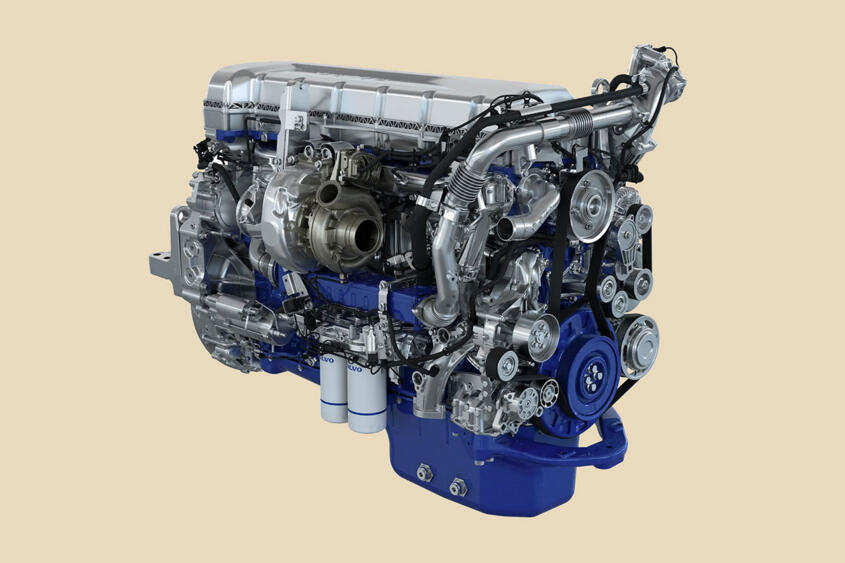
D 13 Engine Rated at 405 to 540 hp
Power comes from the Volvo D 13, with ratings ranging from 405 to 540 hp. Depending on the version, torque ranges from 1,450 to 1,950 lb-ft. The engine brake delivers up to 630 braking hp. The engine is certified to EPA 2027 emissions standards.
The cab is designed to reduce noise and vibration. Volvo Dynamic Steering reduces steering effort and helps keep the truck stable on uneven ground. This is intended to improve control and reduce driver fatigue.
Technical data
Volvo VNX
Truck Line for Construction and Heavy Haul
- Models
- VNX 300, VNX 440, VNX 640
- Vehicle types
- Tractor, straight truck
- Cab configurations
- Day cab; 42-inch and 62-inch mid-roof sleepers
- Engine
- Volvo D 13
- Engine output
- 405–540 hp
- Maximum torque
- Up to 1,950 lb-ft
- Transmission
- Volvo I-Shift, 12-, 13-, or 14-speed
- Axle configurations listed in overview
- 4×2, 6×4, 8×4, 8×6, 10×4
- Front axle position
- Axle-forward or axle-back
- Gross combination weight
- Up to 200,000 lb; higher weights subject to application approval
- Front axle capacity
- Up to 23,000 lb
- Rear axle capacity
- Up to 68,000 lb; preliminary figure
- Frame rails
- High-tensile-strength steel
- Suspension options
- VOAS, GRAS T-Ride, Volvo L 76, Hendrickson HAS, Hendrickson Haulmax
- Ground clearance
- Up to 12+ inches, depending on configuration
- Active steering assistance
- Volvo Dynamic Steering available
- PTO options
- Front and rear engine PTOs; transmission PTO
- Specifications vary by model and configuration; not all combinations are available.
Remote Diagnostics and Wireless Updates
A factory-installed 4G telematics gateway supports the truck’s connected services. Remote Diagnostics monitors vehicle condition around the clock and is designed to identify potential problems before they cause a breakdown. Remote Programming allows software and vehicle parameters to be updated wirelessly, eliminating the need for workshop visits for these updates.
Volvo plans to announce the sales launch date before the end of 2026.

From White to Volvo Trucks North America
Volvo’s U.S. truck business has its roots primarily in White. Starting in 1951, White also distributed trucks built by Freightliner Corporation, founded in 1942, under the White-Freightliner name. The distribution agreement ended in 1974; the two companies had remained independent throughout. In 1981, Daimler-Benz acquired Freightliner, while Volvo purchased White’s U.S. truck operations and continued them as Volvo White Truck Corporation. In 1988, Volvo and General Motors combined their North American heavy-duty truck operations in Volvo GM Heavy Truck Corporation, creating the WhiteGMC brand. The Volvo name replaced WhiteGMC in 1995.
After purchasing GM’s remaining stake in 1997, Volvo renamed the company Volvo Trucks North America. Today, Volvo Trucks is part of the Volvo Group and assembles trucks in 12 countries. According to the company, approximately 120,000 Volvo trucks were delivered worldwide in 2025, and its dealer and service network comprises around 2,200 service points in approximately 130 countries. Volvo reports a combined heavy-duty truck market share of 9.2 percent in the United States and Canada for 2025.
Generative AI assisted with researching, compiling, and writing this article. All photos were provided in a press release from Volvo Trucks North America.
Frequently Asked Questions About the Volvo VNX
The three model lines share a common platform but serve different applications. The VNL is primarily designed for long haul, while the VNR focuses on regional haul and distribution. The VNX targets construction, agriculture, and heavy haul. Its configurations are designed for high loads and work environments that include construction sites.
No. Volvo offers the VNX as a straight truck for various bodies and as a tractor. Intended applications include dump trucks, concrete mixers, roll-off trucks, and heavy-haul combinations. The VNX lineup includes the VNX 300, VNX 440, and VNX 640, with day cabs or sleepers depending on the version.
Gross combination weight includes the loaded truck and its trailer or semitrailer. It is therefore different from payload capacity. Volvo specifies up to 200,000 lb, approximately 90.7 metric tons, for appropriately configured VNX trucks. Higher weights are possible with application-specific approval. Actual legal road weights also depend on applicable regulations and permits.
The shared platform allows Volvo to use common technical foundations across several model lines. These include the safety and connectivity functions described in the article. The trucks still have different configurations for their respective applications. Sharing a platform does not mean all three model lines have the same axle layouts, cabs, or approved weight capacities.
Volvo’s press release dated October 14, 2026, does not specify an ordering date. The manufacturer plans to announce the sales launch before the end of 2026.
You can find more information about models, equipment, and specifications on the official Volvo Trucks website for the Volvo VNX.