Italian buses of the 1950s and 1960s – Part 2

From creative exuberance to functional discipline

In the 1950s and 1960s, automotive engineering experienced a phase of extraordinary design diversity that continues to fascinate classic car enthusiasts and connoisseurs of historic commercial vehicles to this day. Buses in particular demonstrate how individuality, creative design, and skilled bodywork construction shaped the appearance of that era. Talented bus designers were by no means confined to Italy, but created remarkable bodywork in many countries, which will be presented in future articles. This text is the second part of a series on Italy and its buses – from a time when standardized, modular large-scale production did not yet completely dominate bus manufacturing.
Deviating from our usual topic, trucks, we also publish articles on related subjects from time to time, such as bus construction. This is the second part of a report on Italian buses of the 1950s and 1960s. We are proceeding in a somewhat chronological order and are gradually reaching the 1960s. Towards the end of the article, the shapes have already moved away from the curves of the post-war period, which still echoed the streamlined design of the 1930s. Angular shapes made their appearance, heralding a new rationality. But mass production was still a long way off: almost all buses were built by coachbuilders on chassis supplied by manufacturers.

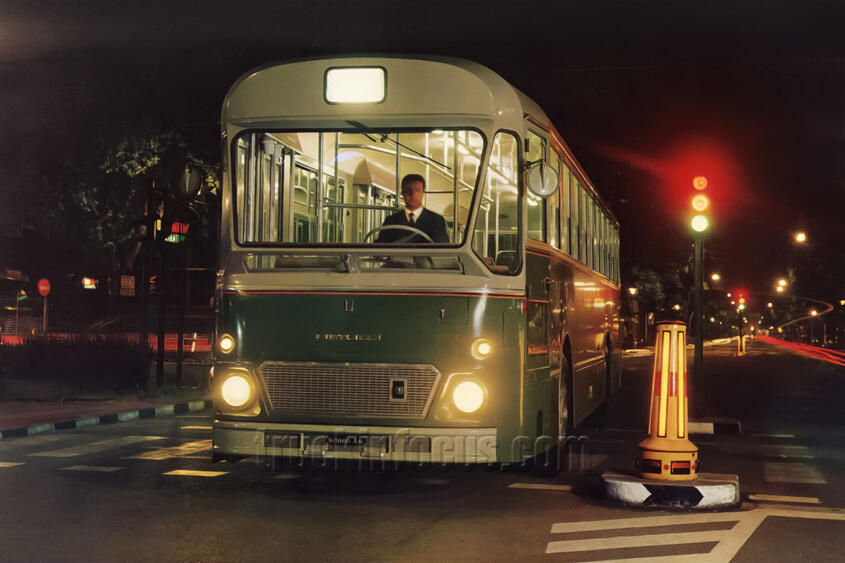
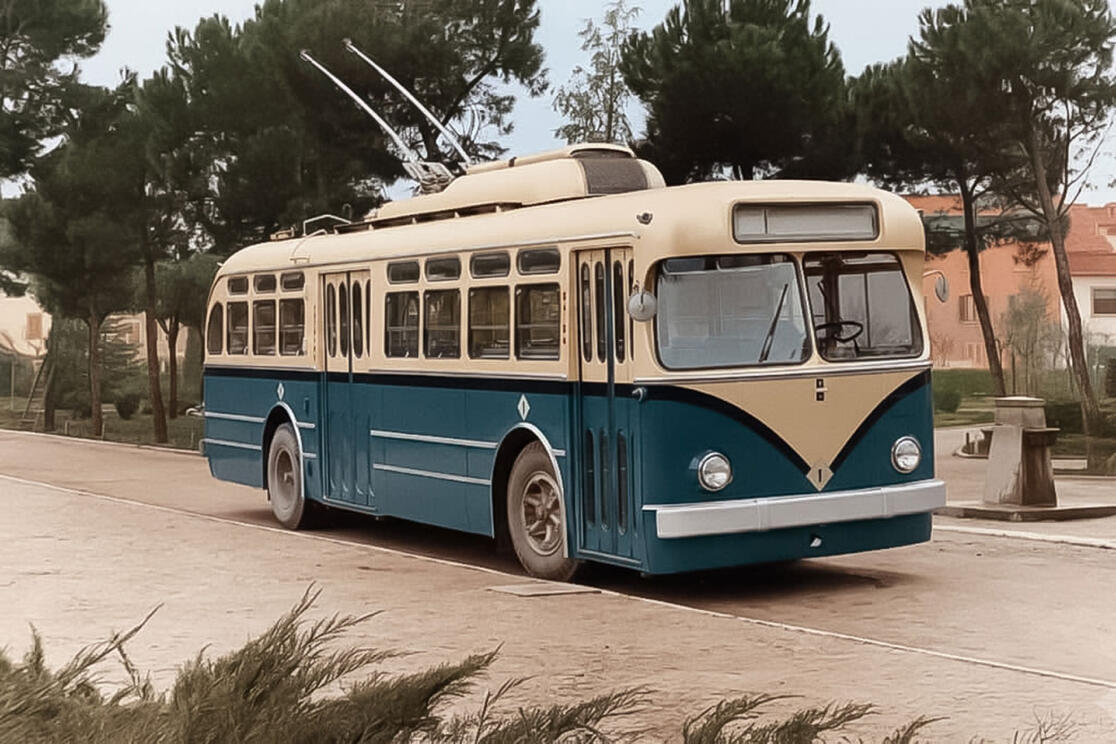
In this article, we present more city buses and coaches from Italy as they were in the 1950s and 1960s. As in the first part, we have embellished the old black-and-white photos with some color brochure illustrations and hope that our readers will enjoy them. The color photo of a trolleybus that we chose as the cover photo was originally a black-and-white photo. It was carefully colored by Nancy Koppens from the Netherlands. The trolleybus is an Alfa Romeo with the type designation FI.311/B, bodied by Pistoiesi, which was exported from Italy to Brazil around 1962. It remains to be said that the body manufacturers of a few buses could not be identified. If you have any information that could help us, please click here and send us an email!
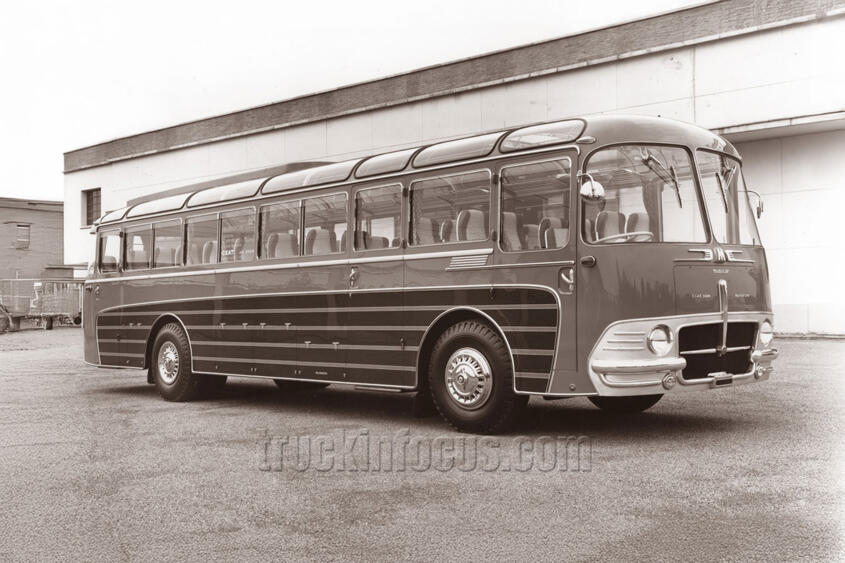
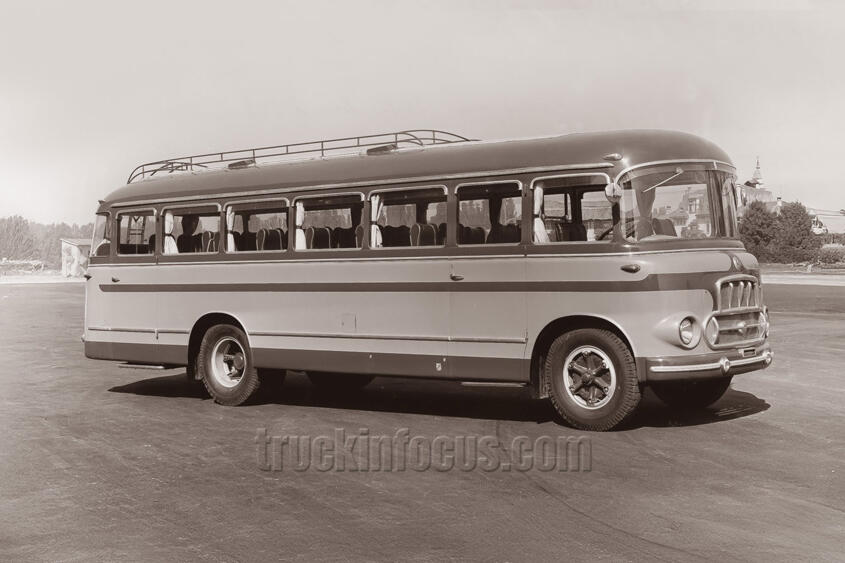
This beautifully designed, self-supporting bus from 1958 was equipped with a horizontal FIAT underfloor diesel engine (10676 cubic centimeters displacement, 144 hp). The chrome strips in the radiator grille are somewhat reminiscent of the appearance of some Spanish Pegaso buses, but this similarity is purely coincidental. The body, designated “Monocar 1041,” was built by Menarini in Bologna, a company founded in 1919 by Ettore Menarini, which initially manufactured mainly horse-drawn buses. In the 1920s, the company began producing bus bodies in collaboration with FIAT. The factory was destroyed during the bombing of Bologna in World War II, but production resumed in 1946. In the mid-1950s, Menarini moved to a new factory in a suburb of Bologna, which is still in use today. In the 1980s, the company sold some shares to Breda Costruzioni Ferroviarie. However, disagreements arose, leading to the Menarini family leaving the company, which was now called BredaMenarinibus. After some turbulence, the company returned to its historic name, Menarini S.p.A., in 1924.
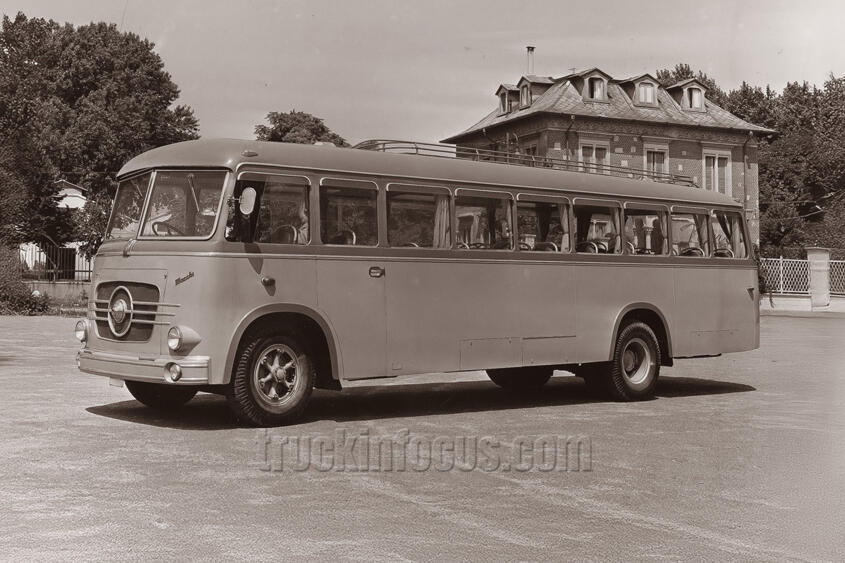
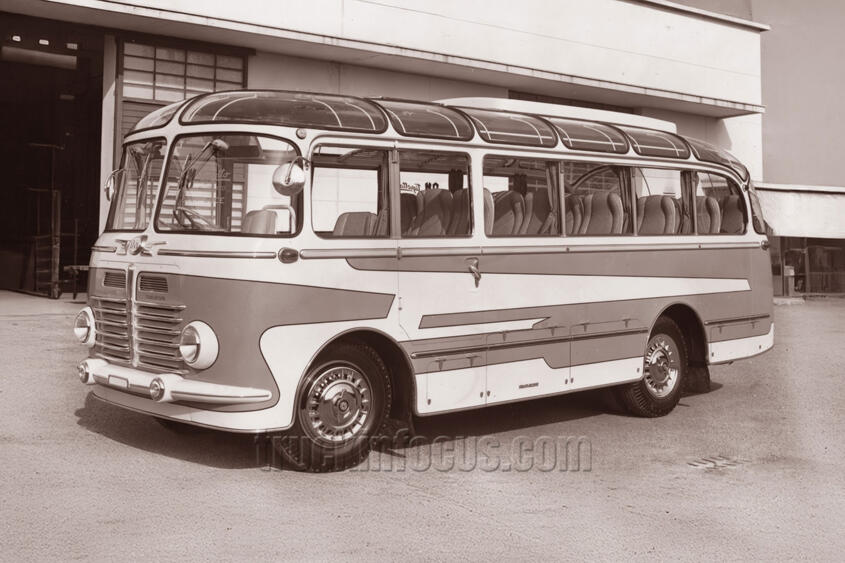
The picture shows an OM Tigrotto Gran Luce. The front-mounted OM Saurer diesel engine had an output of 67 hp. This 3.5-ton chassis also had a body built by Menarini.
This 1958 Alfa Romeo 455 AL also had a front-mounted engine. With a displacement of 6333 cubic centimeters, it produced 90 hp. The body was made by Ambrosini & Botta from Bizzozero, a company already mentioned in the first part of this article.
This photo also shows an Alfa Romeo, this time a 950 A model with a front-mounted 130 hp engine. The bus had a rather simple body by Macchi. The photo is dated 1958.
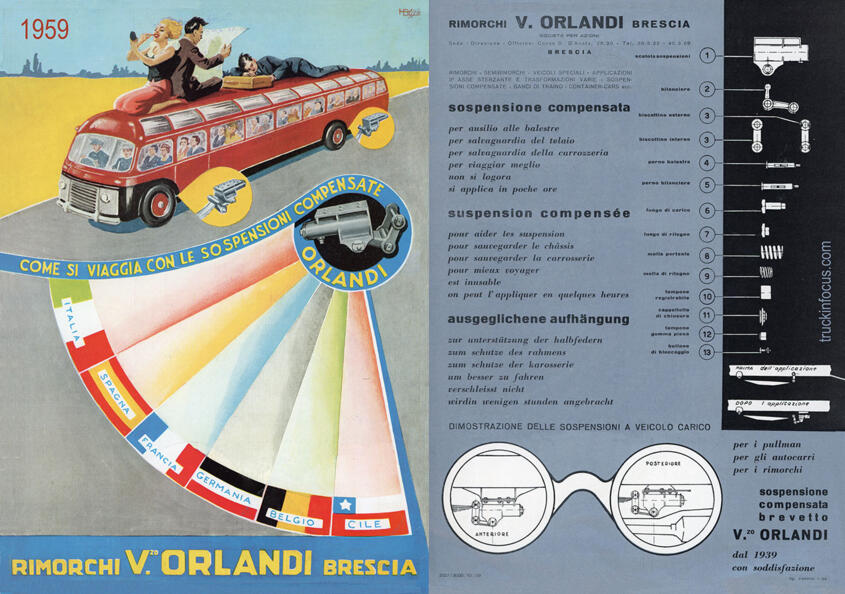
Front and back of an advertising leaflet: At the end of the 1950s, the Rimorchi Vincenzo Orlandi company from Brescia (not to be confused with the important body builder Renzo Orlandi from Modena) offered an invention that improved the suspension of buses to such an extent that passengers could safely sit on the roof to apply lipstick, read the newspaper, or take a nap, using their suitcase as a pillow. That was extremely comfortable and completely vibration-free :)
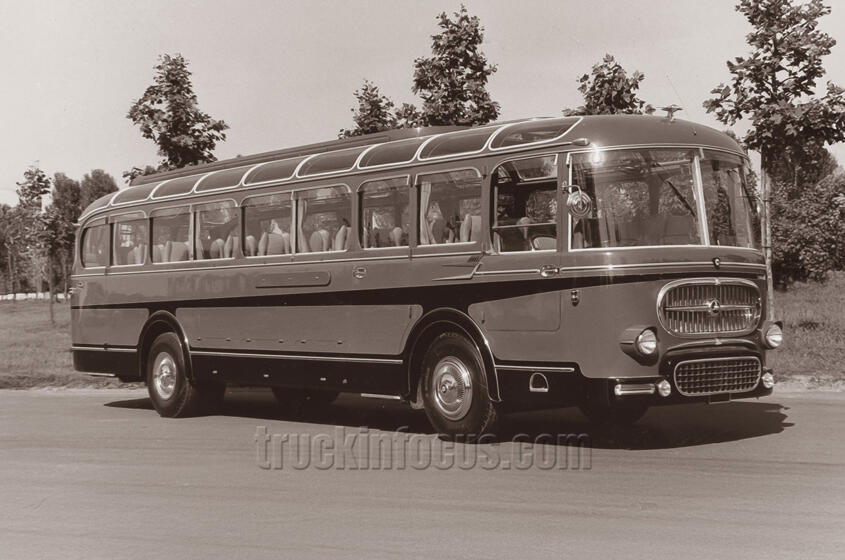
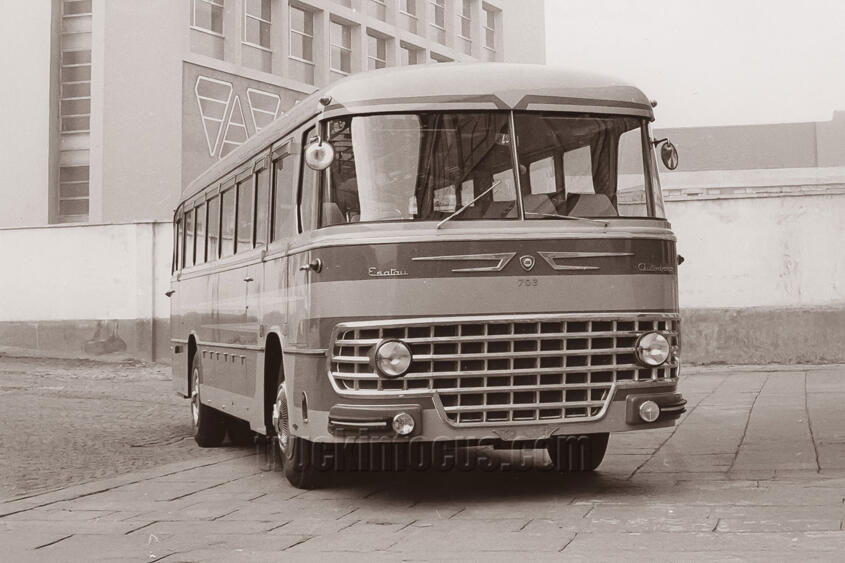
This 1959 Lancia Esatau 703 was equipped with a 150 hp underfloor diesel engine from Lancia. The bodywork, featuring chrome parts, large curved windshields, and roof edge glazing, was supplied by Bianchi & C. of Varese (not to be confused with the Milan-based car manufacturer Bianchi, which later became Autobianchi). Bianchi & C. was founded around 1946 by Giovanni Bianchi and two partners and specialized in high-quality bus bodies. Around 1963, the company ran into financial difficulties and was taken over by Carrozzeria Pozzi, also based in Varese. Pozzi retained the customers and orders and continued to build similar buses.
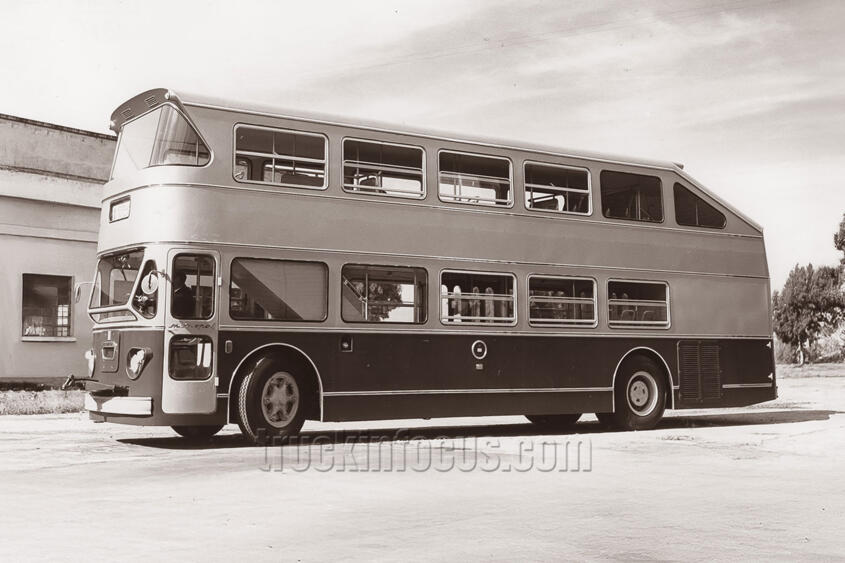
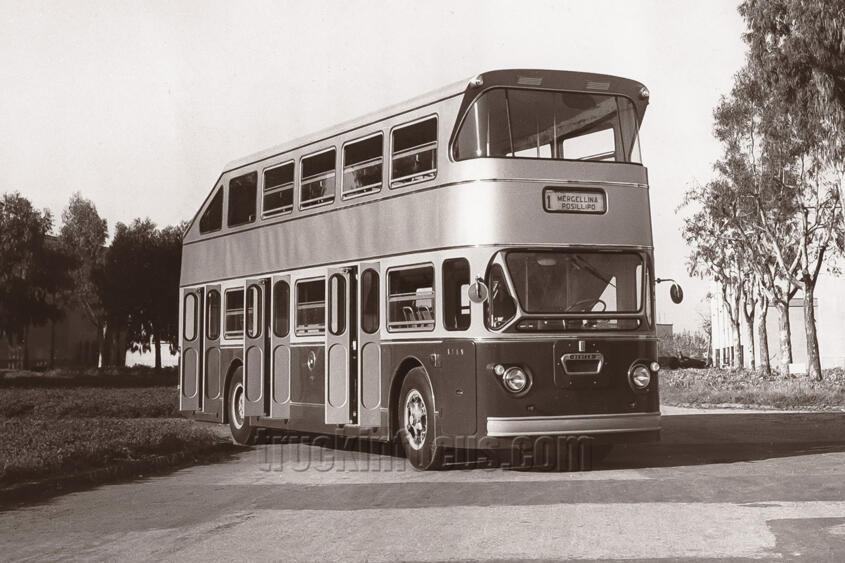
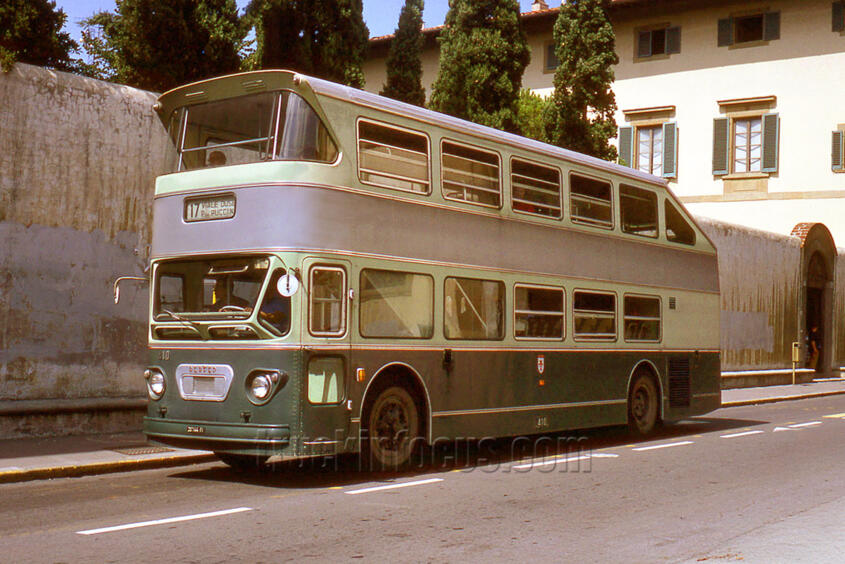
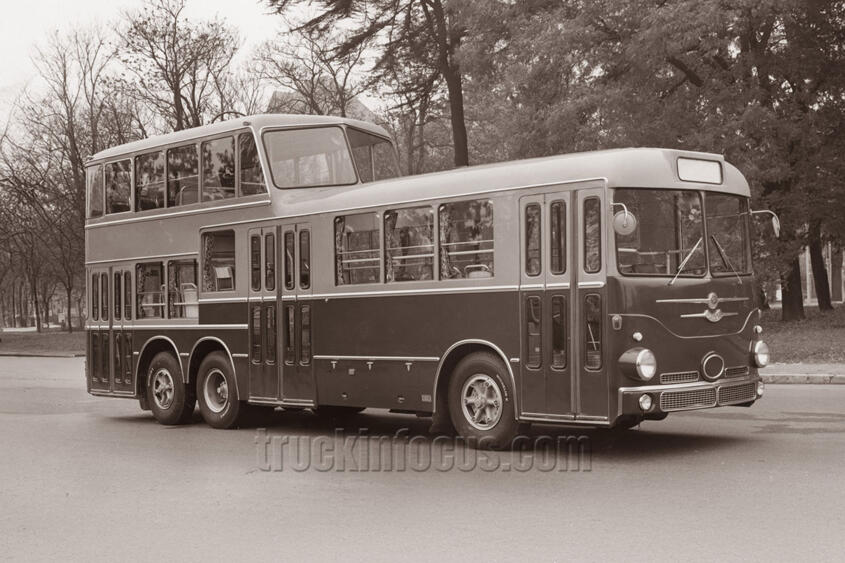
The distinctive Italian double-decker Aerfer VE 111 Metropol was in service in all major Italian cities except Milan. In Rome alone, 58 of these vehicles, also known as Aerfer 412, were in service. The bus was based on chassis parts from the Fiat 412 and was built by Aerfer S.p.A. (Industrie Meccaniche Meridionali Aeronautiche e Ferrotranviarie S.p.A.) in Naples. As the name suggests, the company, founded in 1955, had gained experience in aircraft and railway carriage construction. The self-supporting body of the bus was made entirely of a light metal alloy called Metropol VE 111. Together with the Fiat 412 engine, a flat engine mounted transversely in the rear overhang, it gave the vehicle its names. The double-decker had two staircases and three doors for passengers to board and alight. The driver had a rear-hinged door and a separate compartment, while the conductor had a cabin at the rear entrance door. Passengers alighted through the middle door, and the front door was reserved for passengers with season tickets.
The two photos shown here show the prototype of the Aerfer VE 111 Metropol or Aerfer 412 double-decker bus, built in 1960. In series production, the buses were given a slightly larger radiator grille, but otherwise they corresponded to the prototype. Production began in 1962 and ended in 1969, when Aerfer merged with FIAT's aviation division to form Aeritalia and turned its attention to its core business of implementing aviation projects, while the last bus orders were still being fulfilled. By then, 160 to 180 double-deckers had left the Aerfer factory in Naples, 15 of which went to Paris. It is said that very few examples have survived to this day as museum collector's items.
On the production model of the Aerfer VE 111 Metropolitan, the grille at the front was slightly larger. The photo, which was taken in Florence, was provided to us by Ivan Nôta from Slovakia. He runs a Slovak-language website about buses, which you can find here.
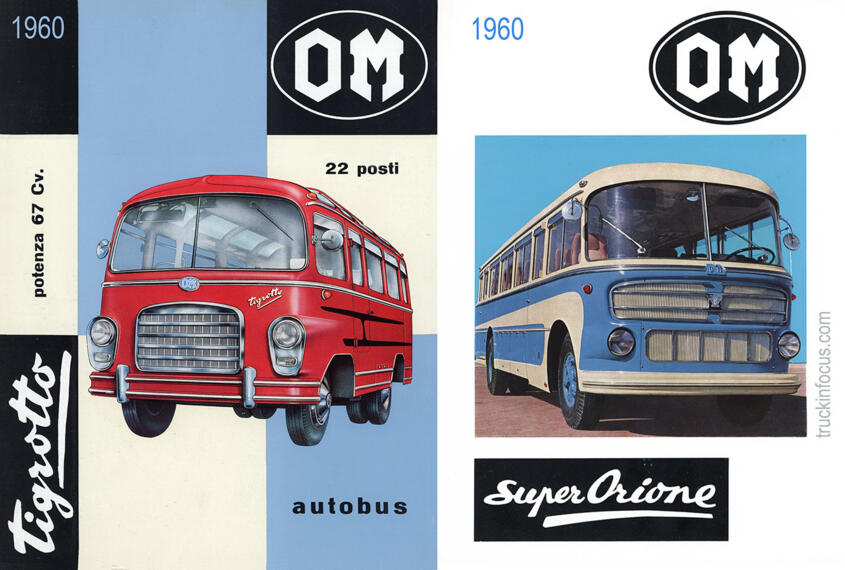
The two brochures from OM from 1960 show the Tigrotto and Super Orione models. The body manufacturer of the Tigrotto is unclear (possibly Menarini), while the Super Orione was bodied by Carrozzeria Gaetano Borsani & C., based in Cornaredo near Milan. This body manufacturer was already mentioned in the first part of this article.
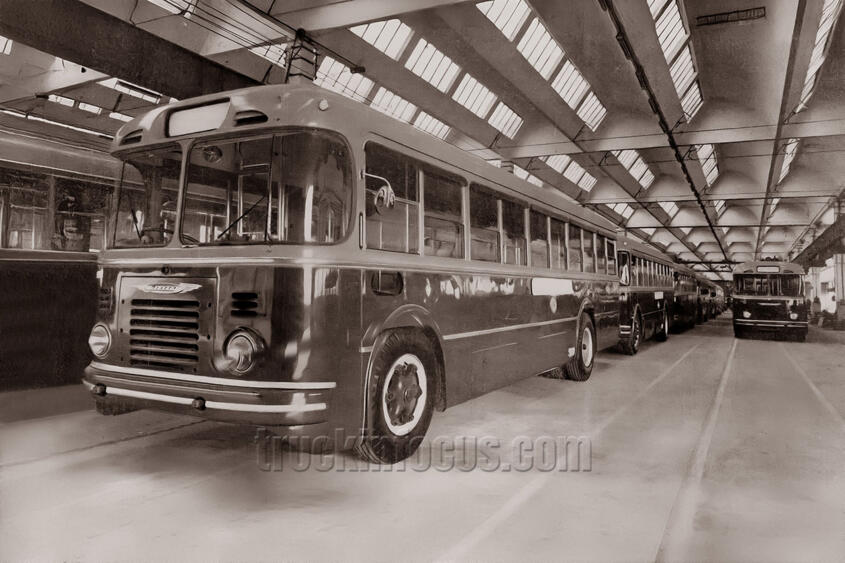
Aerfer did not only produce double-deckers. This view of the production halls of the Neapolitan company from 1961 shows a number of AU 310 buses. Equipped with 140 hp FIAT 203 engines, they were intended for city transport in Naples. The Aerfer brochure from which this illustration is taken states: “Aerfer bodies for trolleybuses and city buses are manufactured under license by the railway workshops in Pistoia, formerly San Giorgio, and by the southern Italian engineering and aeronautical company in Naples.”
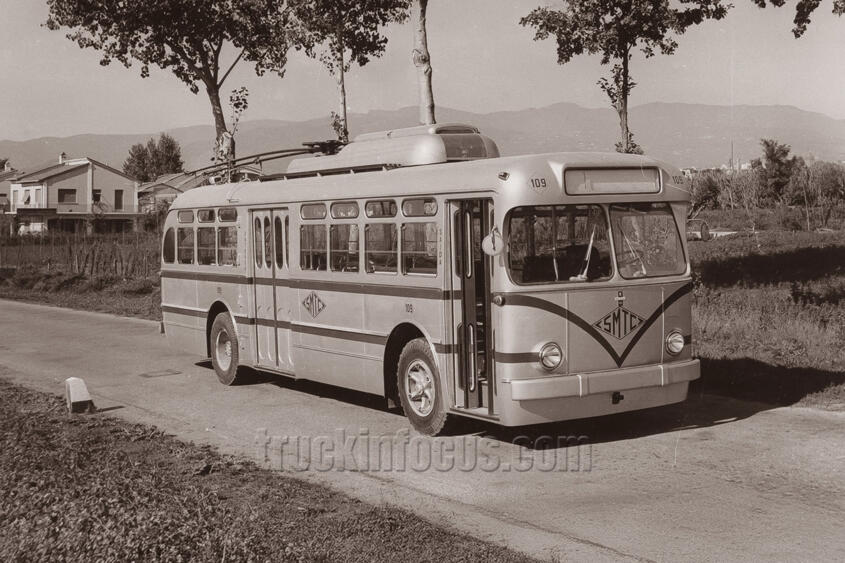
In the early 1960s, the Brazilian city of Salvador, capital of the state of Bahia, ordered trolleybuses from Italy with chassis supplied by Alfa Romeo. The photo from 1962 shows one of these vehicles with the type designation FI.311/B and a body by Pistoiesi. Research into the manufacturer of the buses in the city of Pistoia is difficult. The Italian Wikipedia states the following: "The factory in Pistoia was founded in 1906 as Officine San Giorgio. Its area of responsibility was the production of car bodies and later repairs to railway vehicles. During the Second World War, the factory was subjected to heavy bombing due to its proximity to the railway station. After resuming operations, the company changed its name to Officine Meccaniche Ferroviarie Pistoiesi (OMFP) and was taken over by Aerfer. From 1969, it operated under the name Ferroviaria Breda Pistoiesi and employed around 1,000 people." The construction of buses is not explicitly mentioned anywhere.
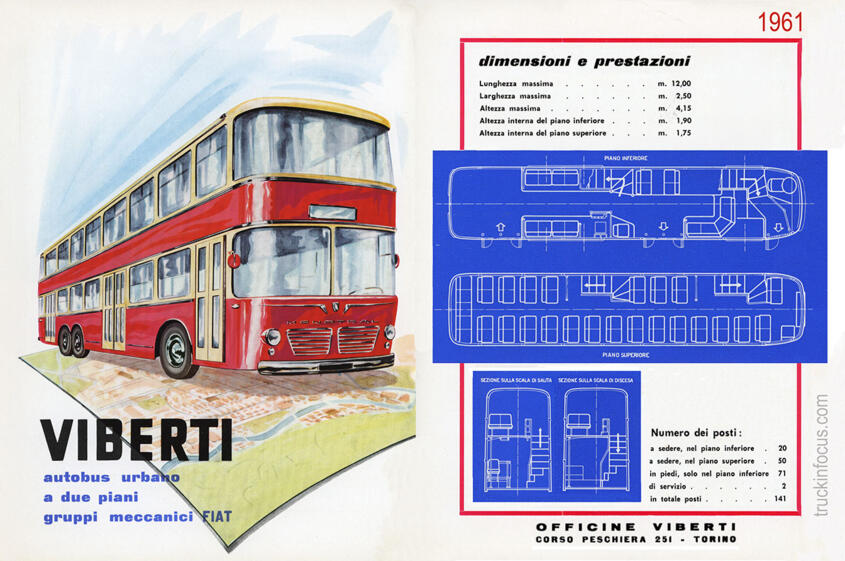
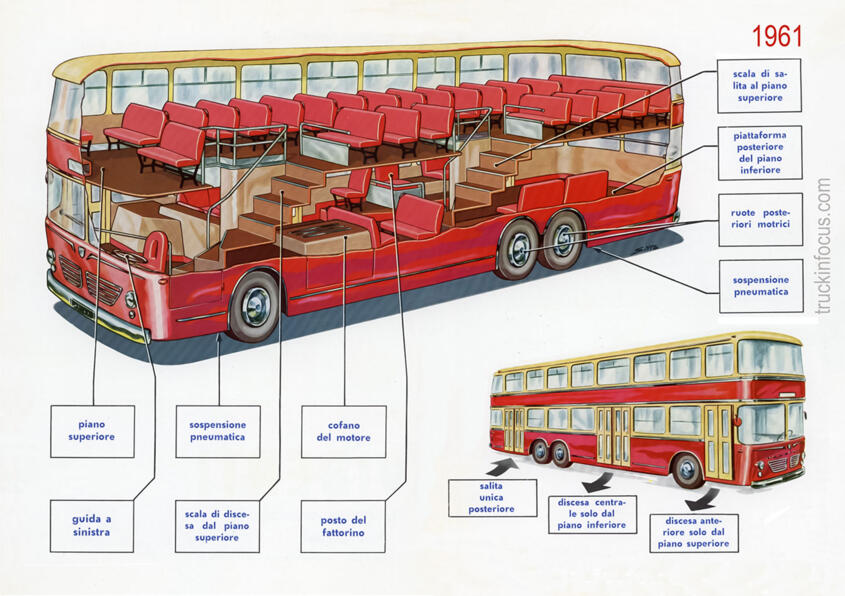
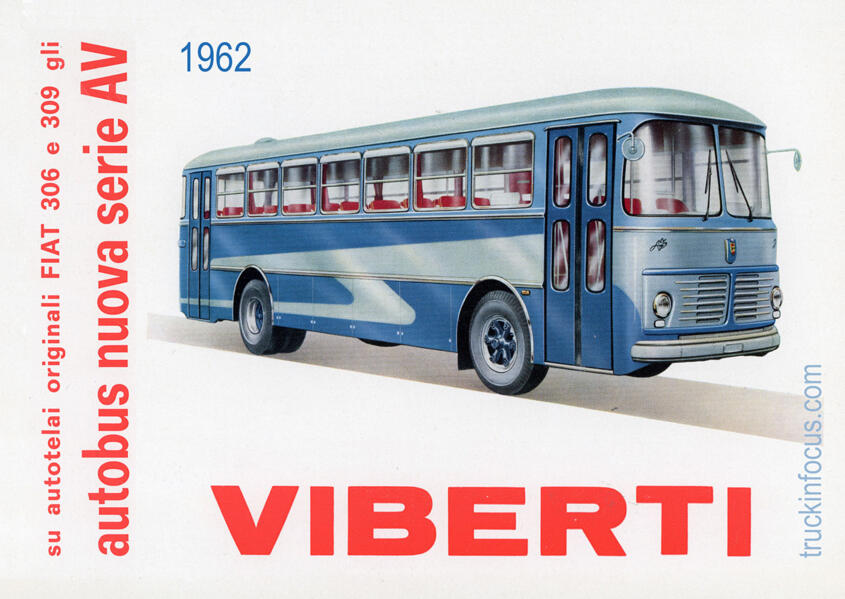
This illustration and the one below show the outside and inside of a brochure for double-decker city buses from Viberti. The company is one of Italy's most important body builders. It was founded in Turin in 1922 by Candido Viberti. After his death in 1946, his son Angelo Elisio took over the management. One of Viberti's most significant collaborations is with Fiat-Iveco, which began shortly after the company was founded, initially involving the manufacture of buses and trolleybuses, and continues to this day. In the field of freight transport, Viberti is best known for the construction of trailers and semi-trailers.
The Fiat Viberti Monotral CV61 was undoubtedly a superlative in the field of double-decker bus construction. There is no photo of the vehicle in the brochure, but this link shows a real-life example published on Wikipedia.
Another brochure shows the distinctive front design of many Viberti buses from the 1950s and 1960s with horizontal struts and a vertical center bar.
This beautifully designed coach with its very distinctive design was manufactured by Autodromo in 1963. We already encountered the Modena-based company Carrozzeria Autodromo, later CAM, in the first part of this article. It remains to be mentioned that this bus is based on a Lancia Esatau 703 with a 150 hp underfloor engine.
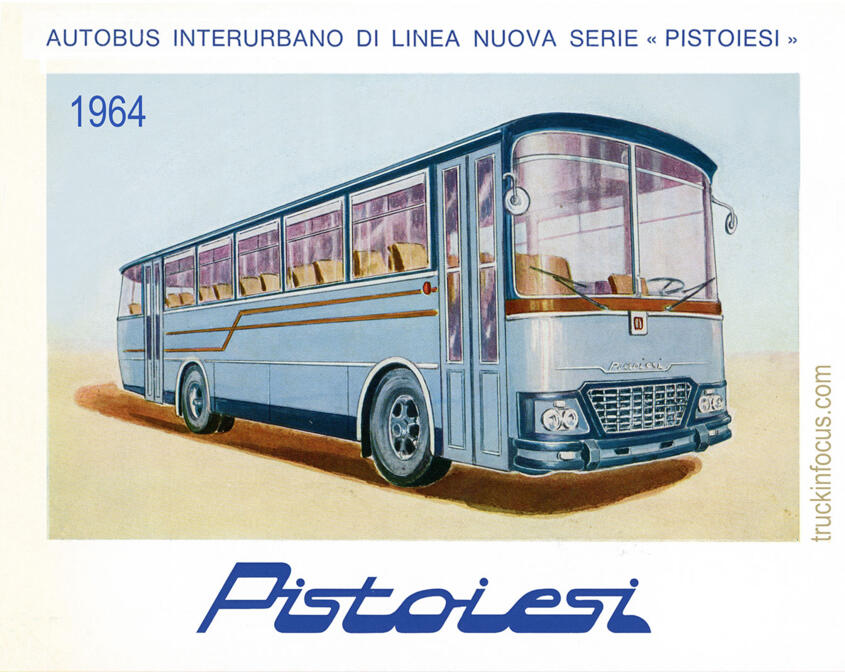
Here is a rare brochure from Pistoiesi from 1964. We already mentioned above that there is hardly any information available about the bus body factory in Pistoia, which operated under the name Officine Meccaniche Ferroviarie Pistoiesi and was actually based in wagon construction. At least we can provide some data about the bus pictured, which can be found on the inside pages of the brochure: The vehicle was eleven meters long, had 49 or 51 comfortable seats and, on request, twelve folding seats and five cubic meters of luggage space. FIAT engines with 153 or 176 hp were recommended as the power source, but other engines could also be installed.
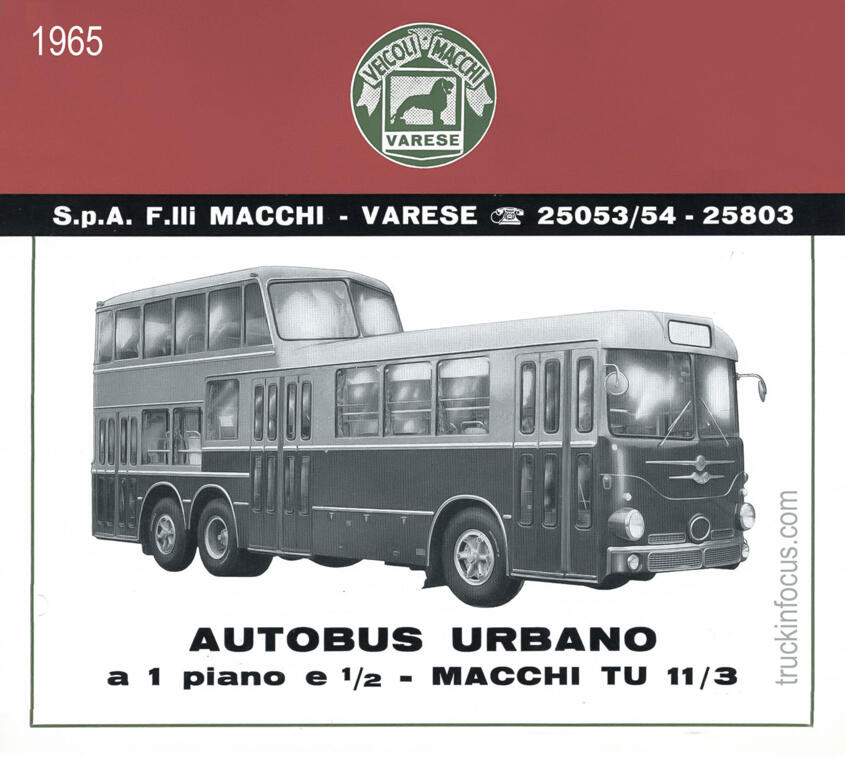
In the early 1960s, Fabbrica Macchi in Varese, then the general importer of Büssing products in Italy, acquired a license from the German company Gebrüder Ludewig to reproduce Aero single-deck buses. However, only a handful of vehicles were built, and their design differed significantly from that of the Ludewig buses.
Along with the photo, we are also providing an advertising print from the Macchi company featuring the Büssing lion emblem, for which this very photo was used – albeit in a slightly retouched form. The vehicle was equipped with a Büssing U 11/200 underfloor engine, which produced 191 hp and enabled the bus to reach a top speed of around 70 kilometers per hour. There were 10 seats on the lower deck and 15 on the upper deck, as well as standing room for 101 passengers. 
During the 1960s, the curves of the post-war period in car body design were gradually replaced by more angular shapes. A rather curious example is the Aerfer “Raedapol VE 1204,” which gives the impression that it is missing its bumper. However, this is not the case. Designed as a touring coach, the 11-meter bus had 62 seats, was made of aluminum, and was equipped with FIAT's 153 hp 220/H engine, which was installed horizontally between the axles.
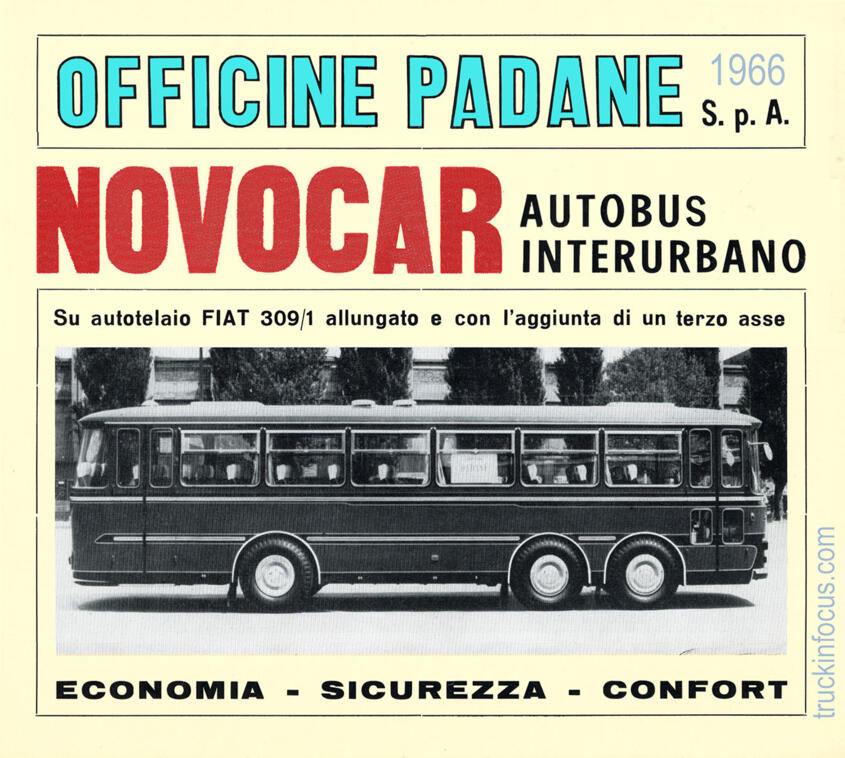
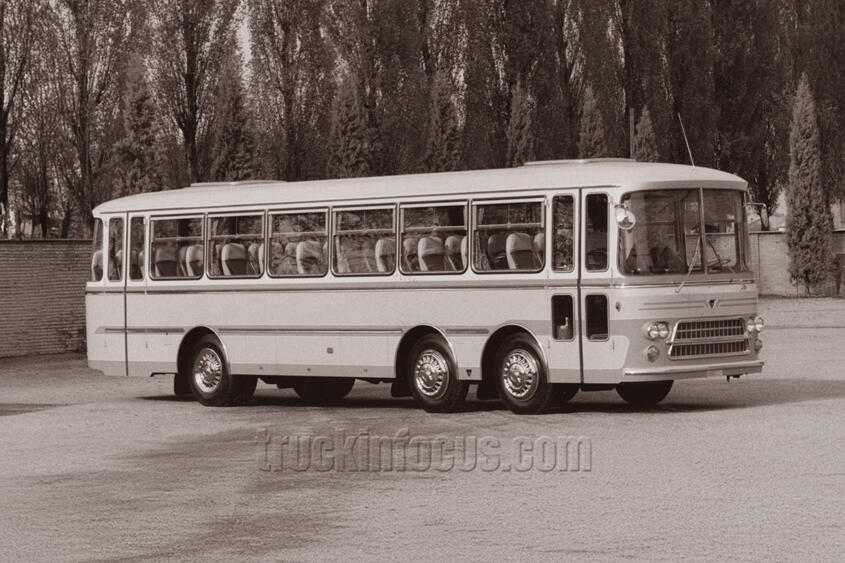
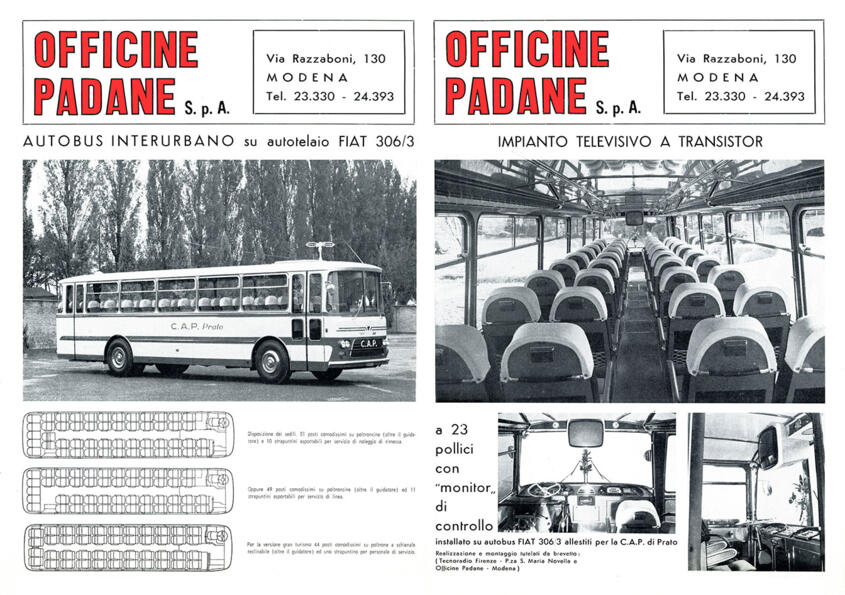
In 1966, Padane fitted the extended bus chassis of the FIAT 309/1 with a second steering axle at the front. The reason for this measure, which is rare in bus construction, is not really clear, but it made the vehicle something of a one-off. The bus, which was almost eleven meters long, was equipped with a 153 hp 200/H engine from FIAT.
The photo to go with the advertising leaflet shows the Padane bus with two steered front axles. Officine Padane was founded in 1943. The company traces its roots back to the Modena-based Orlandi company, which primarily manufactured bus bodies from 1921 onwards (not to be confused with the manufacturer of trailer couplings of the same name). The company initially operated under the name “Carrozzeria e Meccanica Padana,” but in 1950 the name was changed to “Officine Padane.” The name refers to the Italian name for the Po Valley. Padane also primarily manufactured bus bodies. The chassis for these came from Fiat, Mercedes, Lancia, OM, and Volvo. Many buses were exported. In the early 1980s, the Milan-based Società Costruzioni Industriali Milano (Socimi) took over the company. Due to financial difficulties at the new parent company, Padane was also affected and had to close after filing for bankruptcy in 1992.
This Panade advertising leaflet from 1966 shows another bus for regional transport based on the Fiat 306/3. It was offered with three different seating arrangements, depending on the type of use. The company was particularly proud of the 23-inch tube monitor, which allowed at least the passengers traveling in the front of the bus to watch black-and-white television. An external antenna was also provided – we wish them good reception in retrospect!
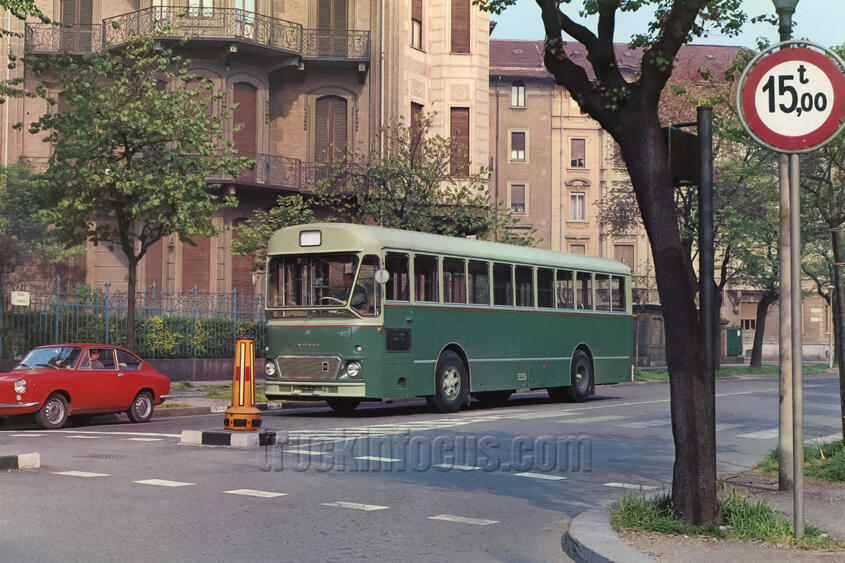
Even this 11-meter city bus, which looks rather modern, has almost half a century under its belt. It was built in 1969 with OMS bodywork. The Esagamma 718 chassis and engine, which delivers around 190 hp, came from Lancia. OMS stands for Officina Meccanica della Stanga, a company mentioned in the first part of this article.
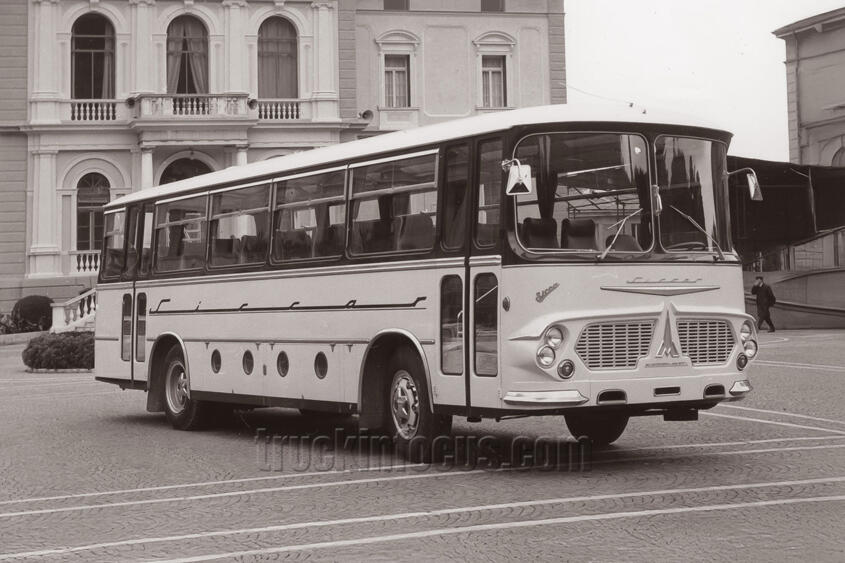
The 1968 bus pictured here was equipped with an engine from the German manufacturer Magirus-Deutz. The bodywork was supplied by Carrozzeria SICCA, a company based in the province of Treviso, which marketed its buses under the name Siccar. Carrozzeria SICCA (Società Italiana Costruzioni Carrozzerie Automobili) was founded in 1949 by Vittorio Armelin in Vittorio Veneto in northern Italy. In 1950, Armelin filed a patent that would revolutionize the design and construction of buses. He had developed a bus chassis that is still used by all manufacturers today: a self-supporting lattice structure to which the mechanical elements and the chassis are attached. The space under the floor could now be used for luggage transport, and the engine, housed in an insulated compartment at the rear, emitted no diesel fumes and did not disturb the driver or passengers with its noise. The first vehicle in the world to use this solution was the Alfa Romeo 902 AS public service and coach bus, introduced in 1951. In the early 1990s, SICCA was integrated into IVECO.
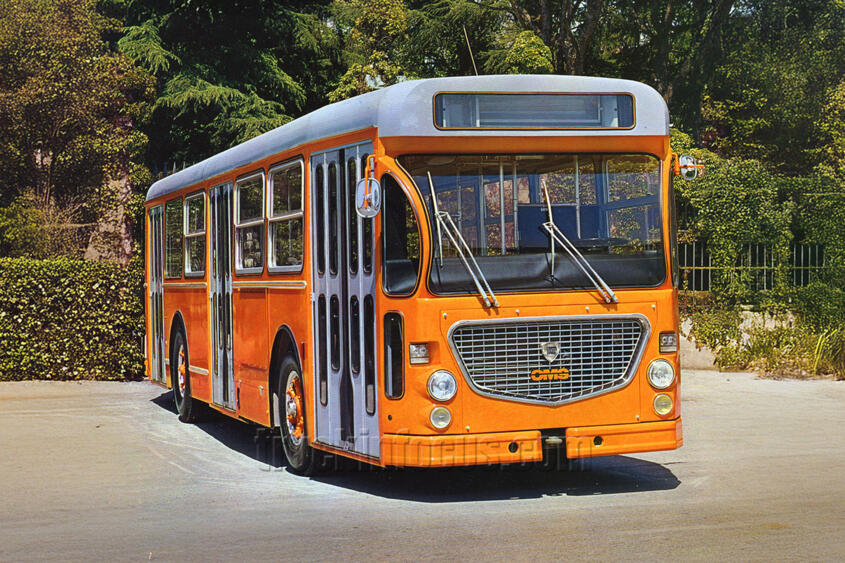
The last two illustrations in this two-part article on Italian buses of the 1950s and 1960s are taken from a 1968 brochure published by the Pistoiesi company and show a city bus known throughout Italy in color. The 11-meter bus was based on FIAT chassis components and the centrally mounted FIAT 410 underfloor engine, or the 409 engine in the 9.7-meter version.
Although these buses from Pistoiesi (Officine Meccaniche Ferroviarie Pistoiesi) were widely used in Italy, very little is documented about the bus production of the company based in Pistoia near Florence, whose core business was railway construction. 

You might also be interested in: