Hartmannsdorf 2026: Germany’s Largest Classic Vehicle Show
Commercial vehicles of all types well represented
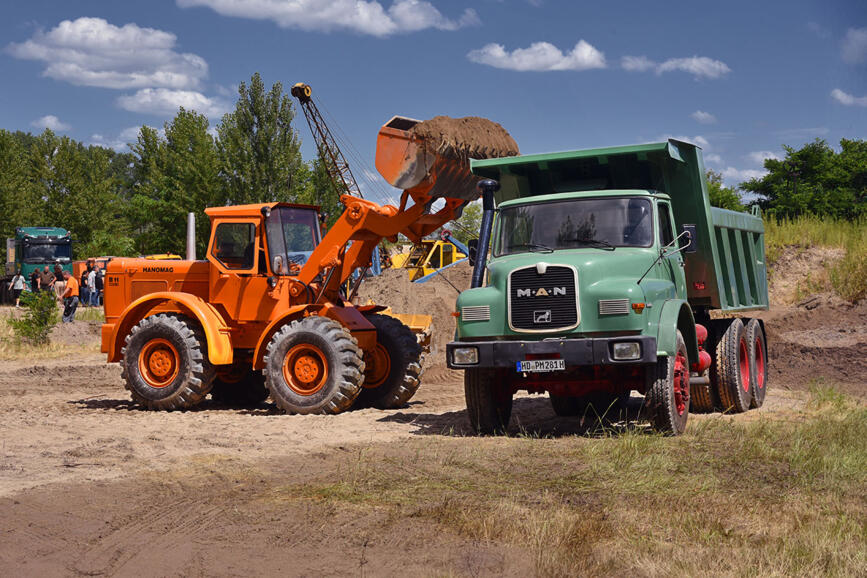
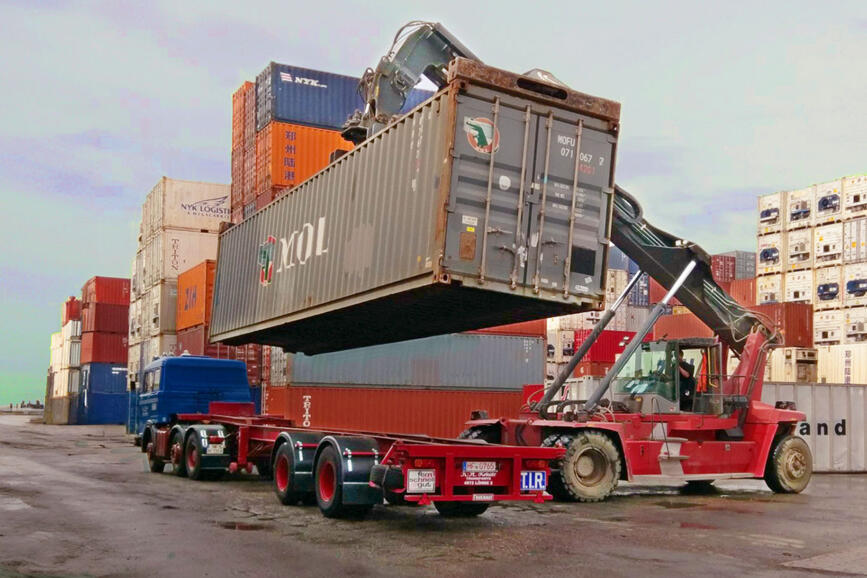
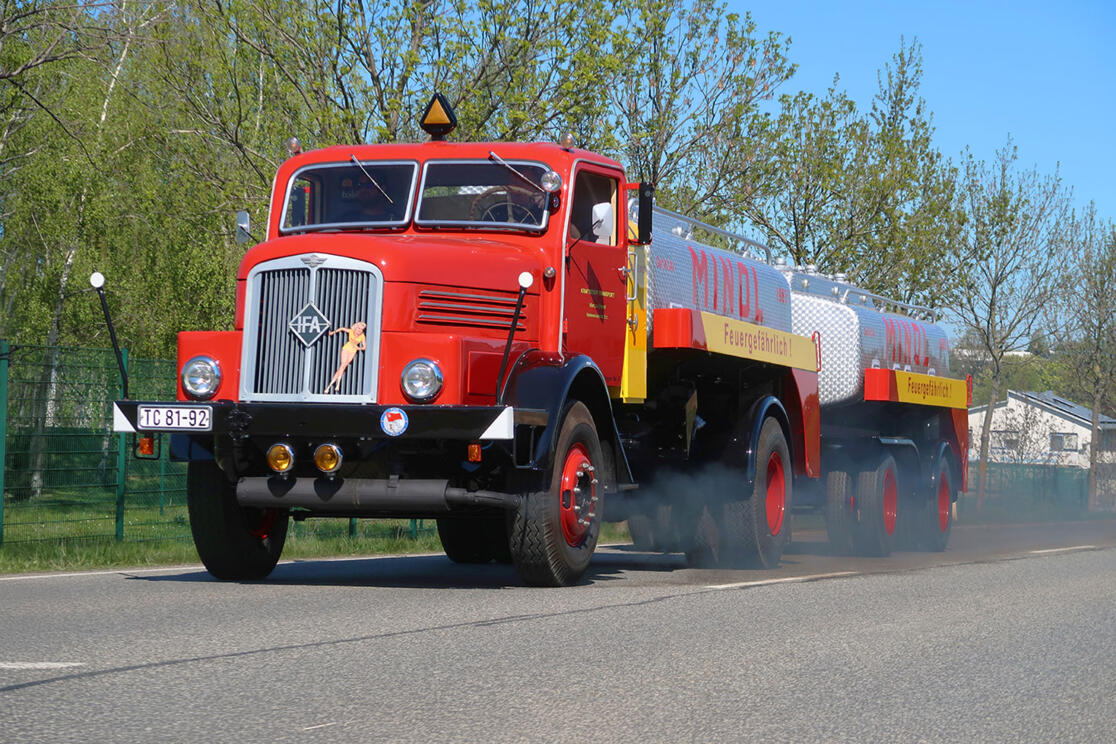
Every year on May 1, a large vehicle show takes place in Hartmannsdorf near Chemnitz – the largest gathering of historic vehicles in Germany. Vehicles of all types are represented. Among the well over 3,000 vehicles on display are motorcycles, cars, tractors, and a large number of commercial vehicles of all kinds, primarily from the GDR, but also from other countries of the former Eastern Bloc and from the West. Nowhere else in Germany can you admire so many classic vehicles in one place at the same time.
Germany’s Largest Classic Vehicle Show
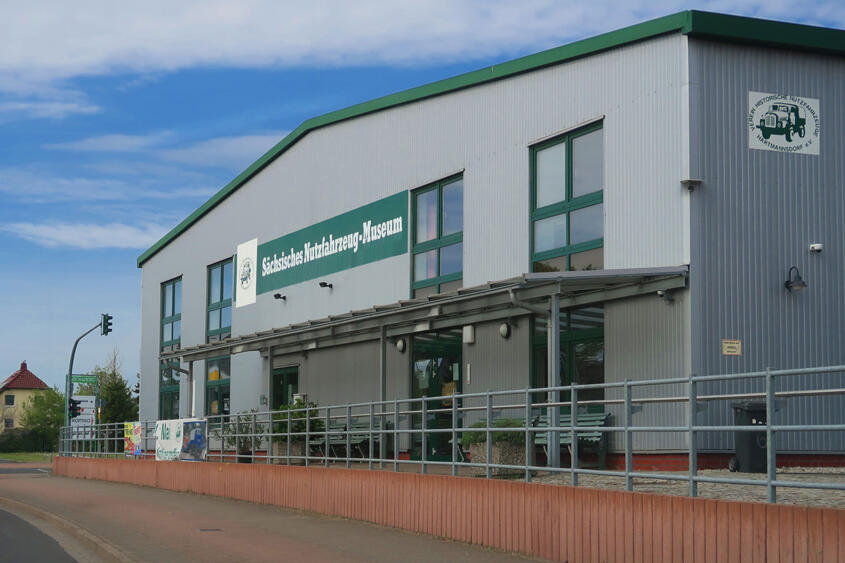
As always, the organizer of the gathering – now in its 23rd year – was the Association for Historic Commercial Vehicles, which also operates the Saxon Commercial Vehicle Museum. The museum hall is located directly at the entrance to the event grounds. For the duration of the gathering, the entire industrial park surrounding the museum was fenced off. Adults aged 18 and older were granted access for a fee of five euros per person; children and teenagers were admitted free of charge. Entry for historic vehicles was free, but vehicle occupants were required to pay the admission fee.
It is admirable how the museum team handled the influx of people and vehicles in such a relaxed manner. Under the motto “Just come and feel at home,” all owners of classic vehicles were invited to participate without prior registration or formalities, as long as their vehicles met the requirements – that is, were at least thirty years old. This year, three to five thousand vehicles arrived, of which about 3,000 had four or more wheels; the rest consisted of motorcycles and mopeds. The exact number of utility vehicles could not be determined (they should have simply been counted), but it can realistically be estimated at around 1,000. The number of visitors is reported to be in the tens of thousands upon inquiry. There was ample visitor parking, though in some cases a walk of a few hundred meters was required. However, there was also a shuttle service with vintage buses that ran on two different routes to the towns of Hartmannsdorf and Burgstädt, also stopping at the train station. The fare for adults was three euros.
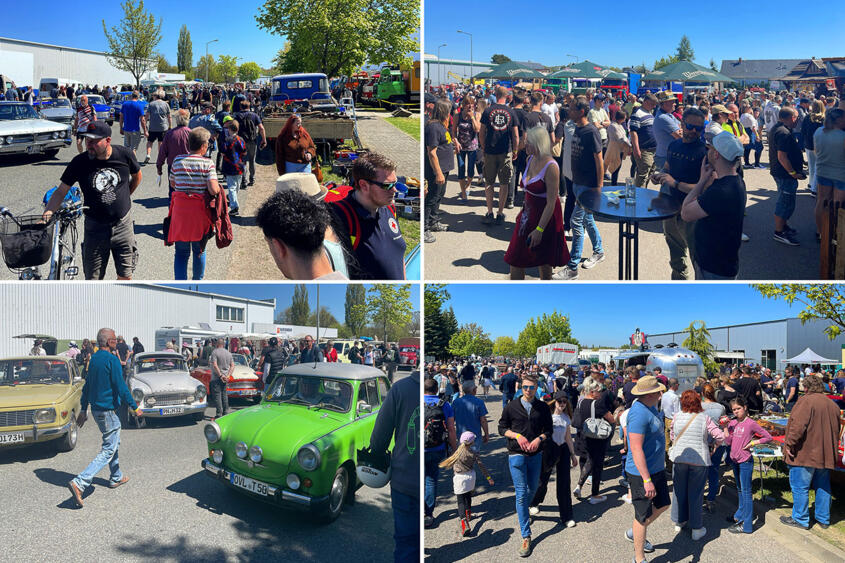
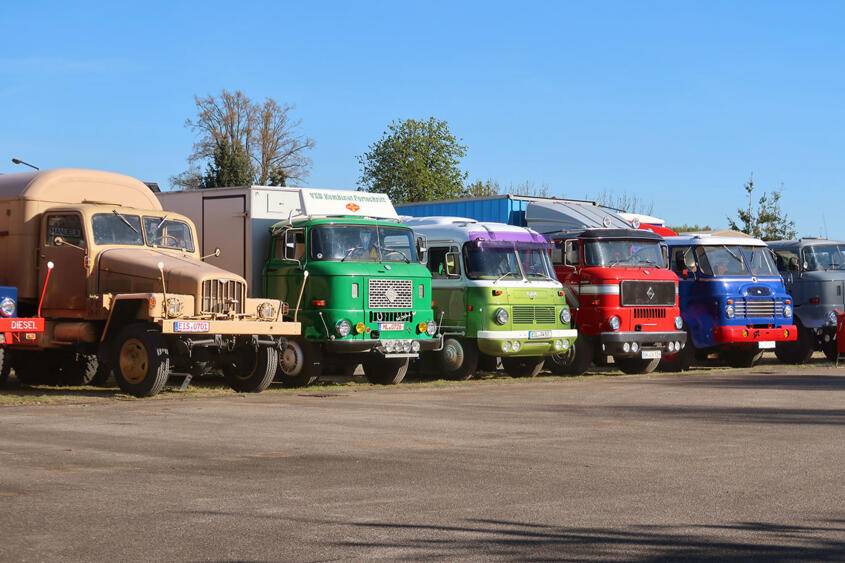
In addition to the many vintage vehicles, there were all sorts of other attractions, such as a small fairground with a carousel and a shooting gallery, plenty of places to satisfy hunger and thirst, and stalls selling car parts, collectibles, and other useful and useless items could be found everywhere. A group of street musicians had even set up on a small stage, repeatedly adding to the festive atmosphere with well-known hits from the ’70s and ’80s.
The atmosphere was like a folk festival of a special kind, because the event in Hartmannsdorf is undoubtedly the most underrated classic car meet, yet probably the largest gathering of vintage vehicles in all of Europe. Anyone interested in the automotive heritage of the GDR should definitely attend the Hartmannsdorf meet and also pay a visit to the museum (adults pay five euros admission per person, children and students half that).
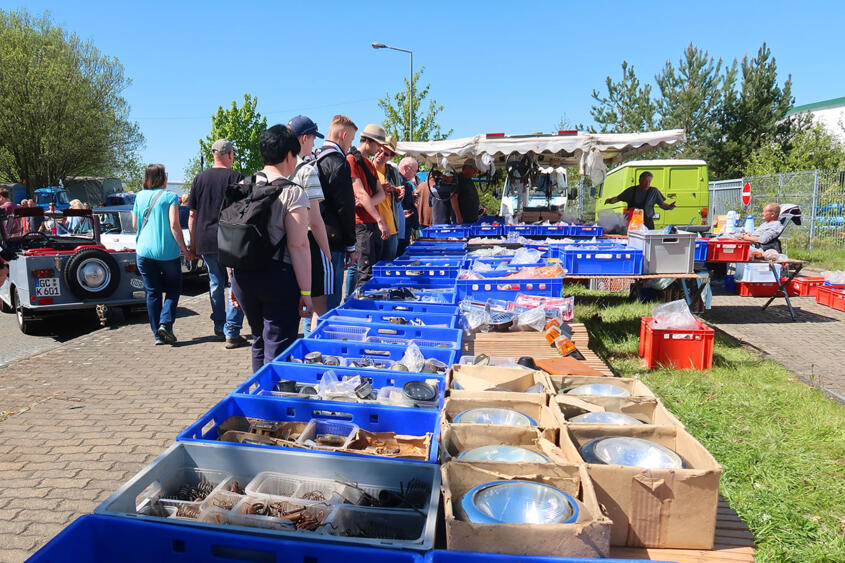
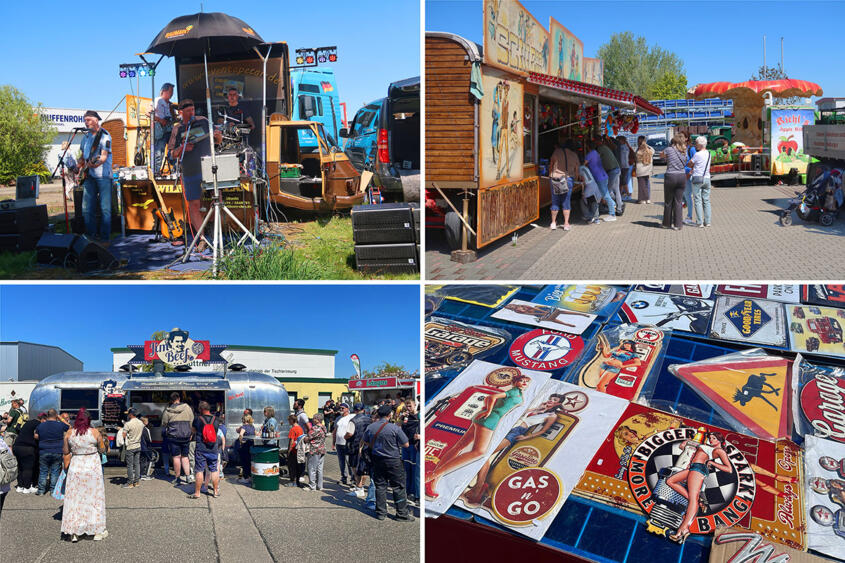
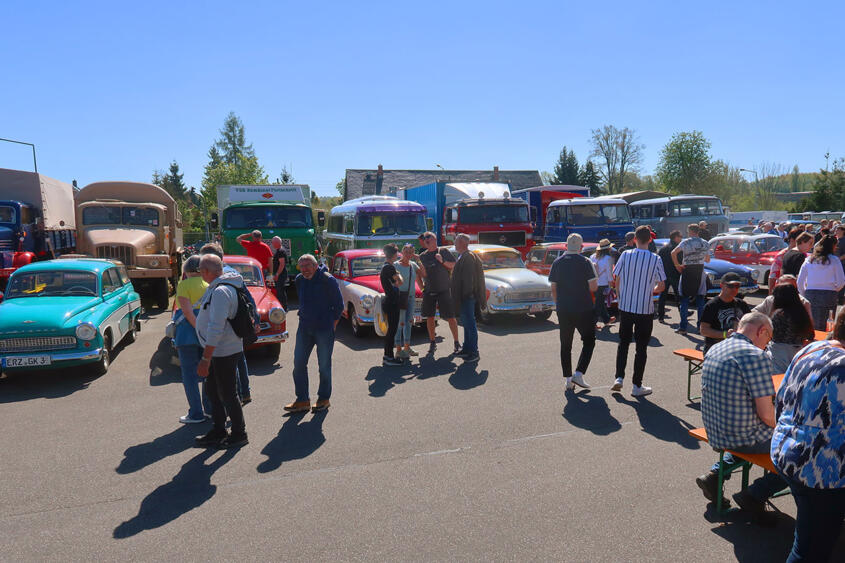
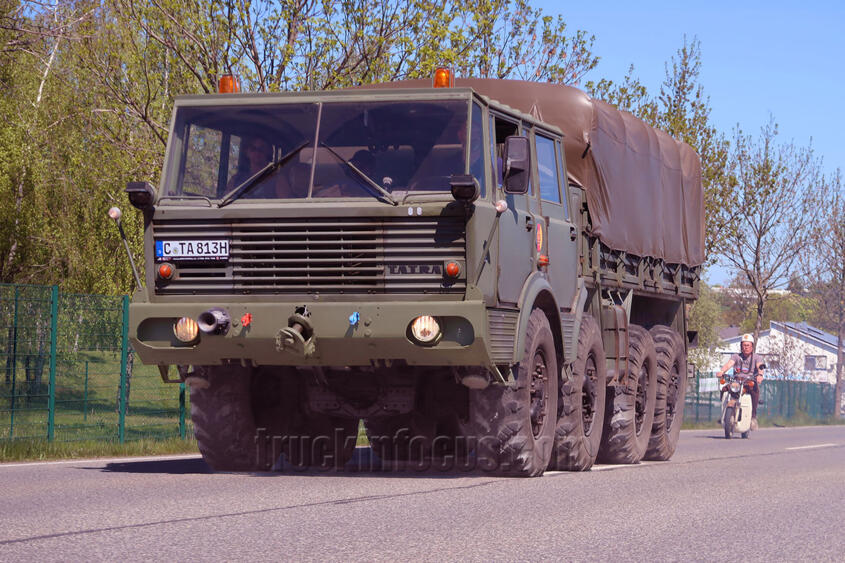
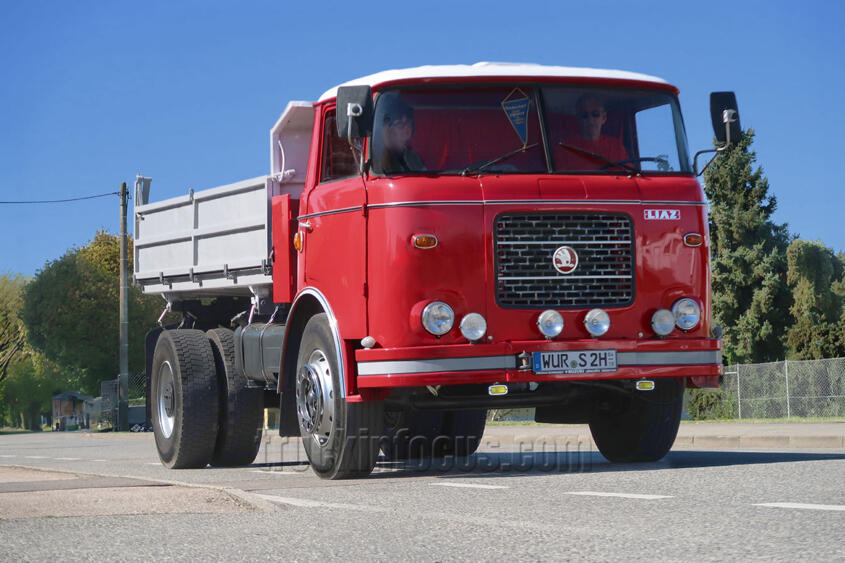
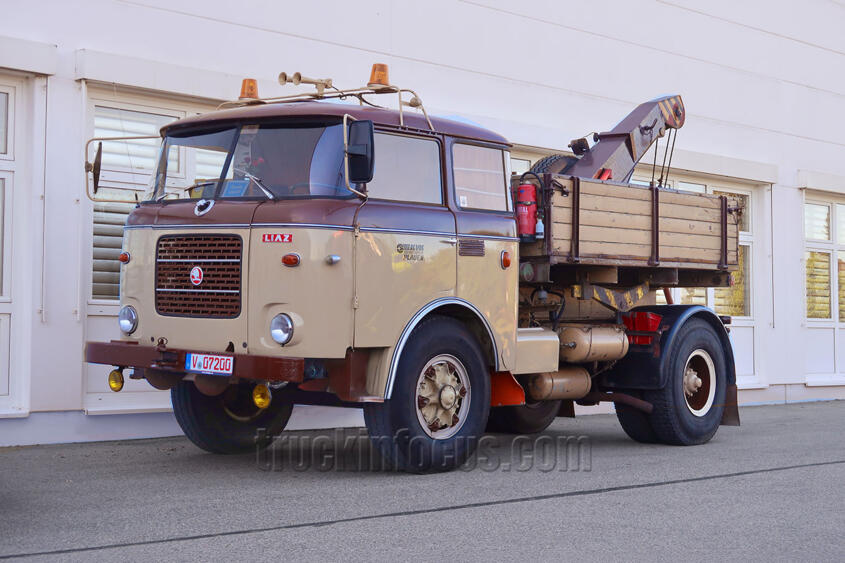
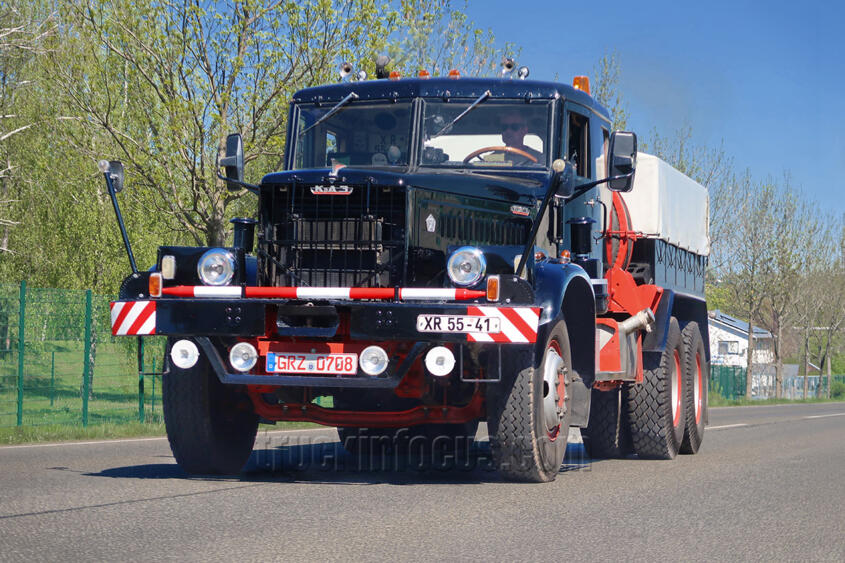
As we did last year, we’re covering the Hartmannsdorf meet with an article featuring more than 75 photos of commercial vehicles. Most of the vehicles were photographed on the surrounding roads as they arrived and departed, since taking photos at the event itself was nearly impossible. After all, tens of thousands of spectators were swarming the grounds, more than happy to linger in front of the vehicles and not particularly inclined to make way for photographers.
This time, we have divided the article about the gathering in Hartmannsdorf into sections. First, a few images capture the atmosphere of the event. These are followed by photos of individual vehicles. Instead of a colorful jumble of all makes, the images are organized by manufacturer. Finally, there is a mix of photos under the heading “What Else Was There.”
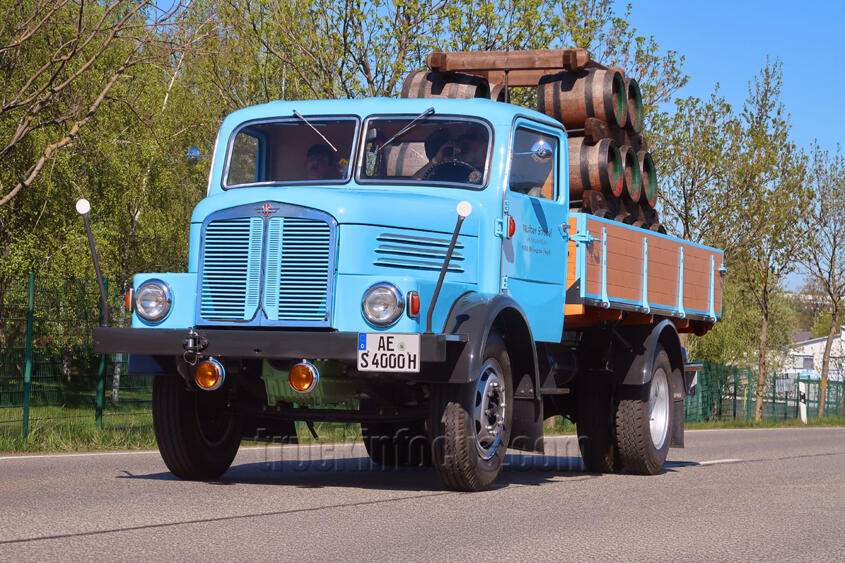
H 3 A and S 4000-1
After World War II, the H 3 was the first truck built in the Soviet occupation zone (from 1949, the German Democratic Republic GDR). It was produced from 1947 to 1949 at the Horch Works in Zwickau. A faithful replica is on display at the Saxon Commercial Vehicle Museum in Hartmannsdorf. Its successor was the H 3 A, also built in Zwickau, whose engine was based on a design by Vomag.
Starting in 1957, the former state-owned enterprise (VEB) Horch operated under the name VEB Sachsenring. In 1958, the successor model S 4000-1 was introduced with a 90-horsepower engine instead of the previous 80-horsepower unit. The external difference from the predecessor model was the simplified radiator grille; however, the first S 4000-1s were still delivered with the old grille.
Starting in 1958, production of the S 4000-1 was gradually relocated to the “Ernst Grube” vehicle plant in Werdau to make room at the Zwickau plant for the production of the Trabant compact car. In October 1959, the last truck rolled off the assembly line in Zwickau.
The S 4000-1 was offered with various body types and, starting in 1959, also as a tractor unit. There was also a road tractor designated S 4000-1 Z, featuring a short wheelbase, low gear ratio, and a ballast flatbed.
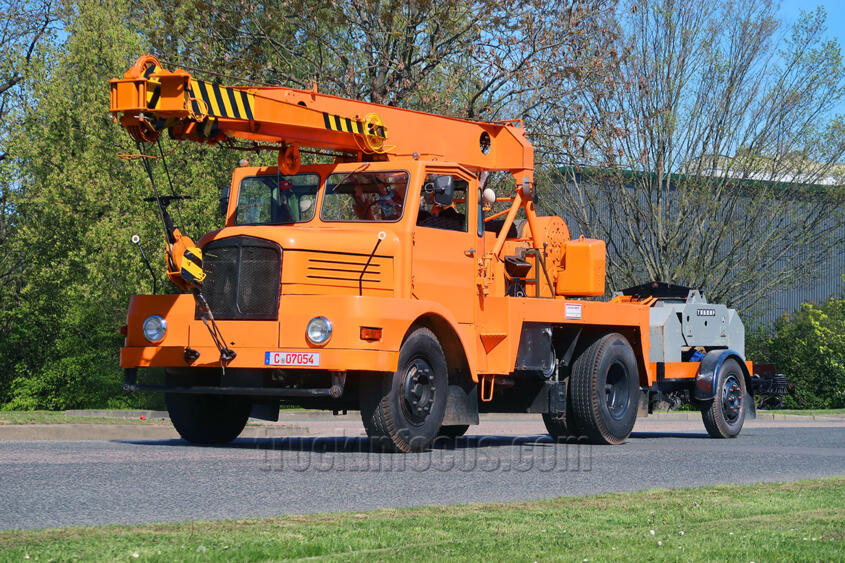
Production ceased in 1967. Only the ADK 63-2 truck-mounted crane, which bears a resemblance to the S 4000-1, remained in production until 1972, though not in Werdau; instead, it was manufactured by VEB Hebezeugwerk in Sebnitz and later in Magdeburg. Parts of the body and the engine were sourced from the S 4000-1, but the axles came from the H 6.
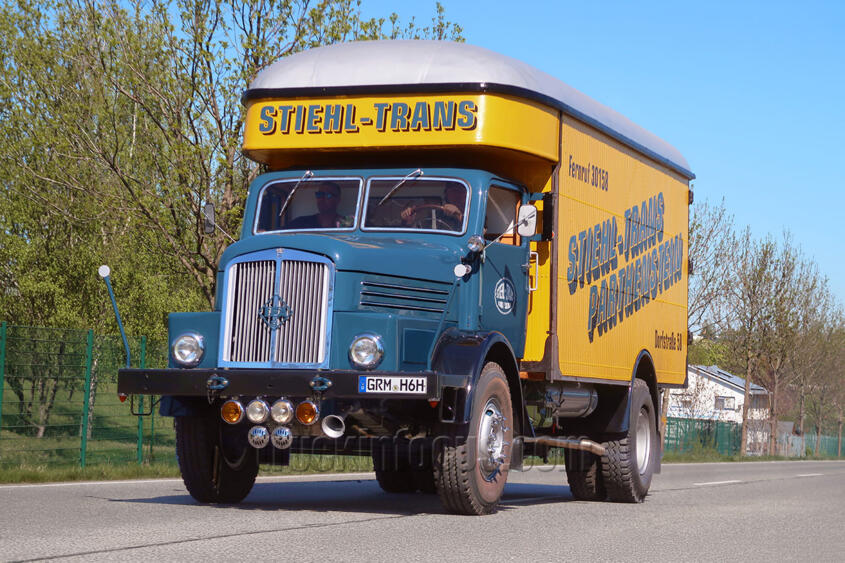
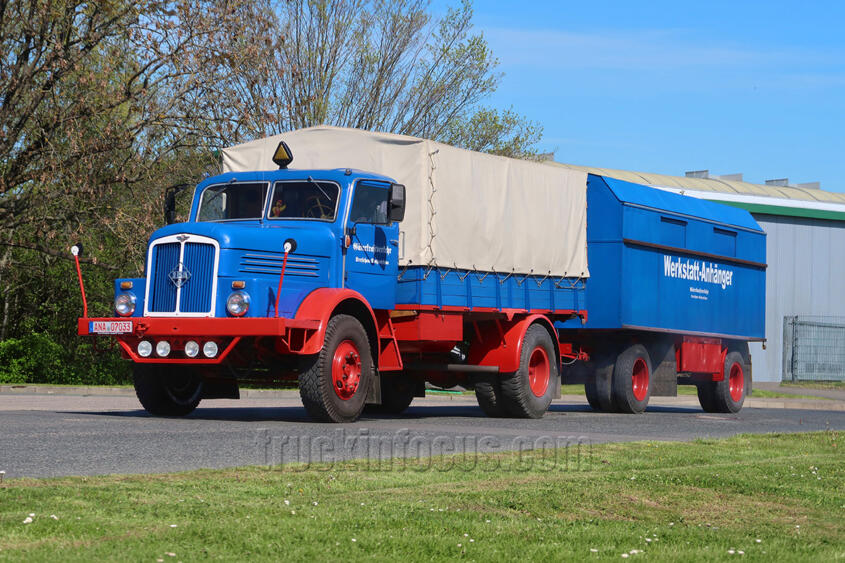
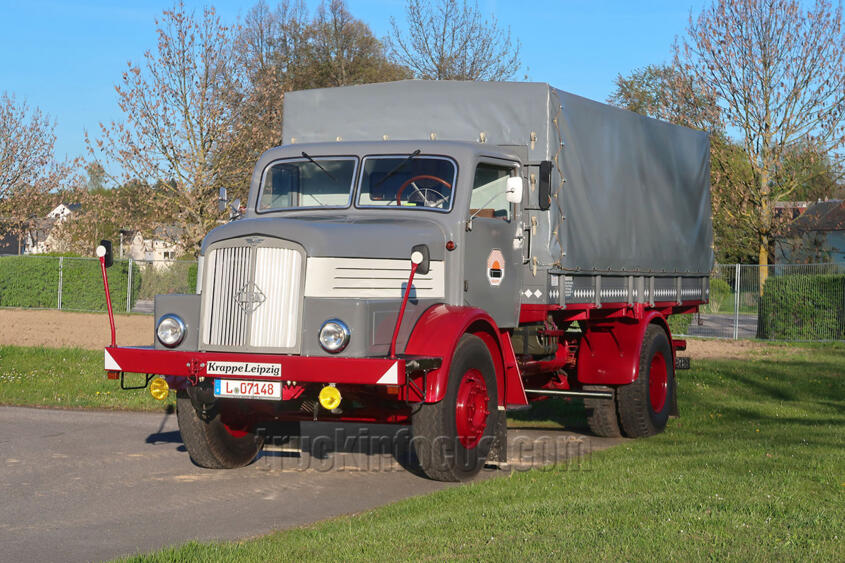
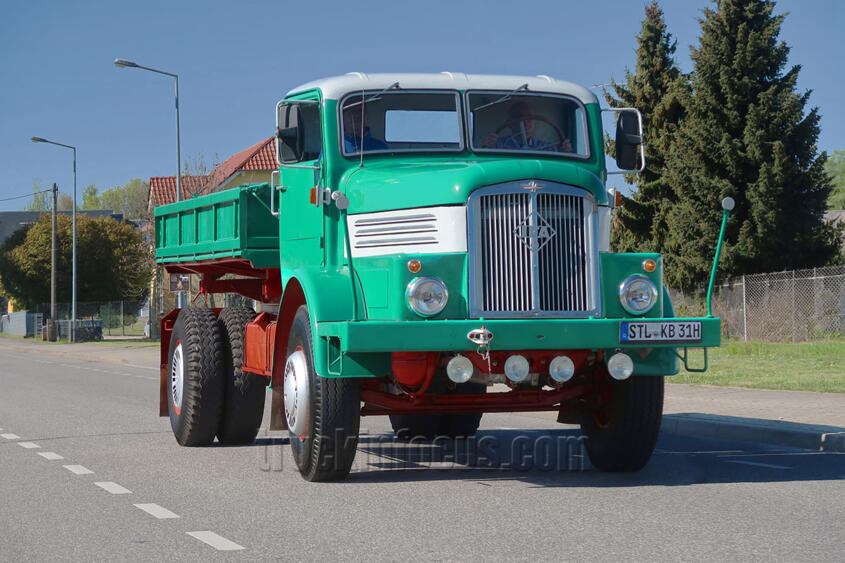
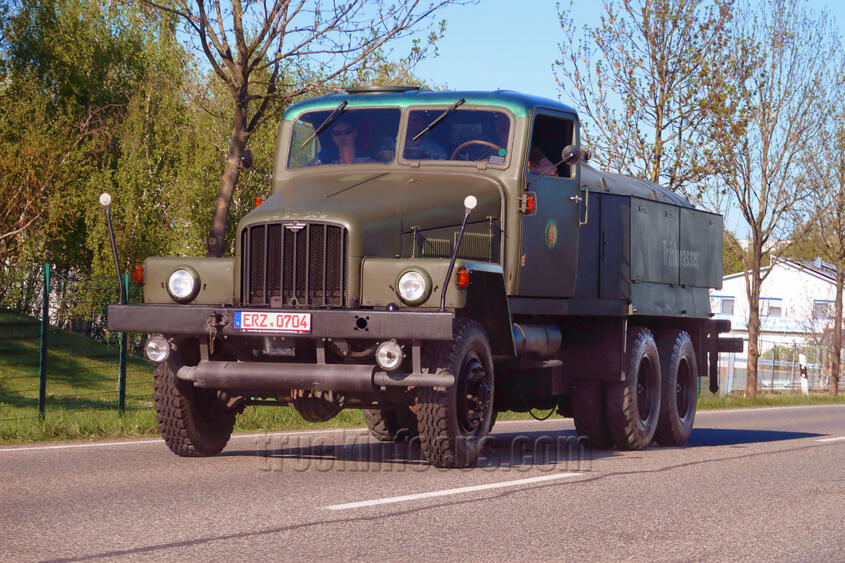
IFA H 6 and G 5
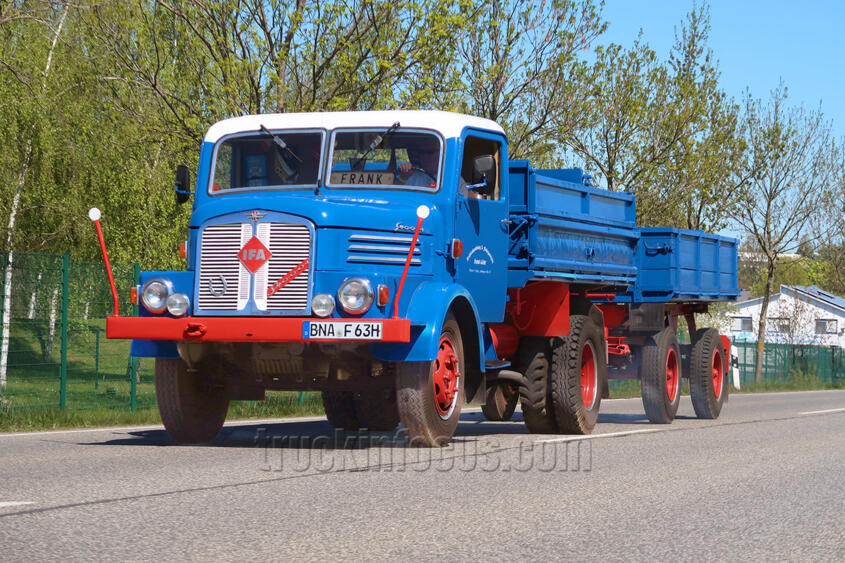
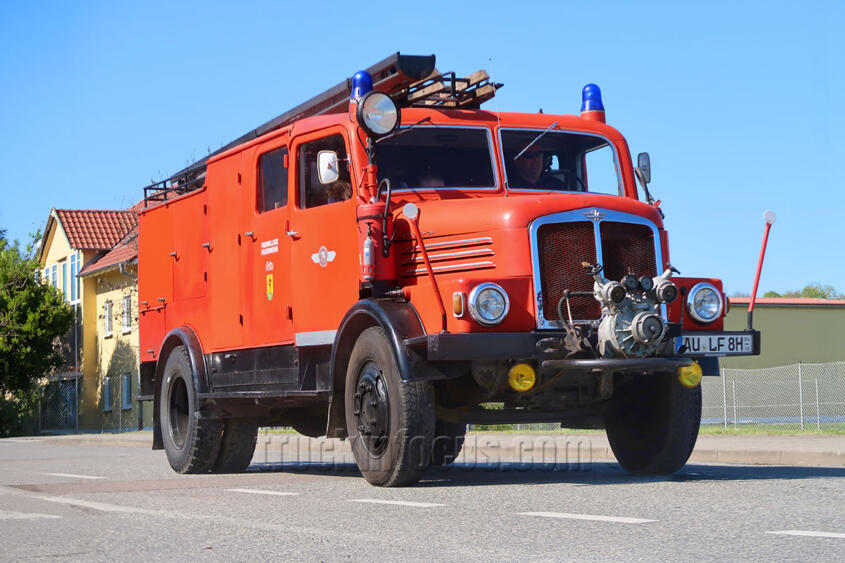
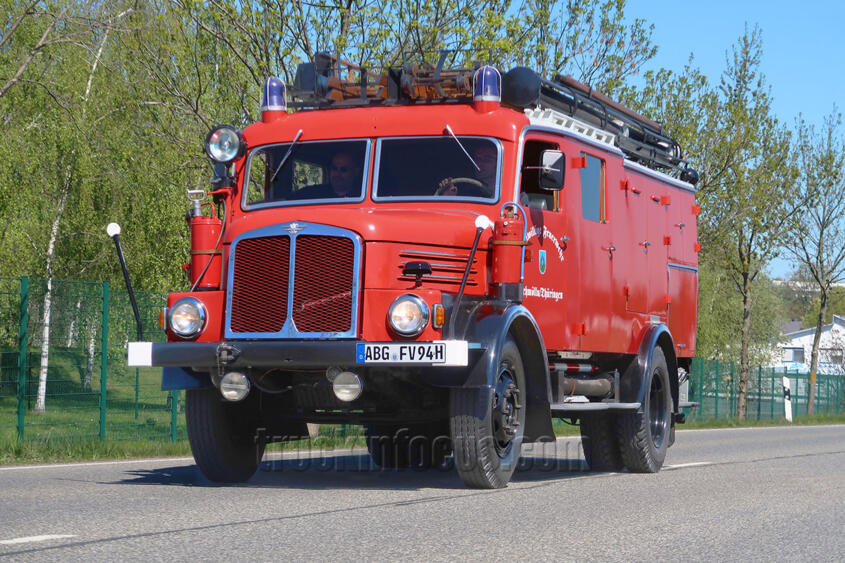
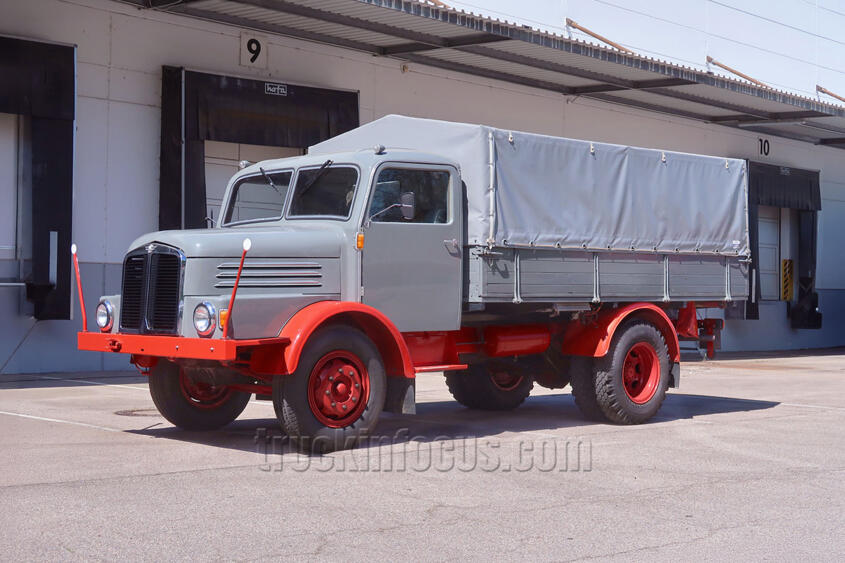
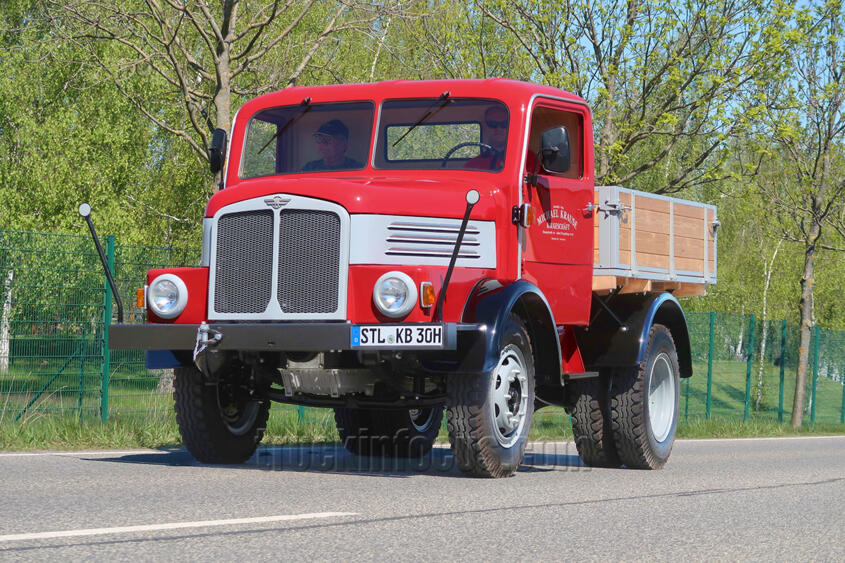
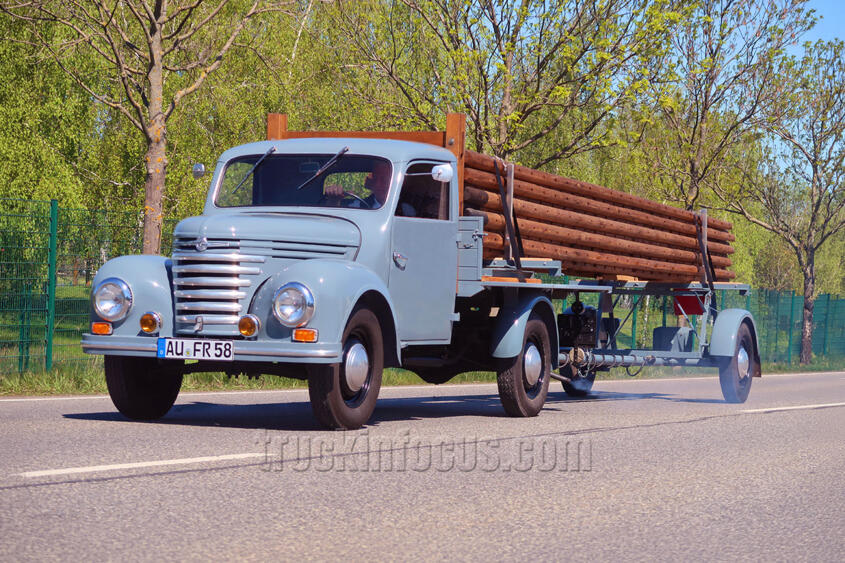
In addition to the IFA H 3 A, the H 6 was also developed at the Horch plant in Zwickau. The cabs and other parts of both trucks were identical, but the hood of the H 6 was taller and longer, as its six-cylinder engine required more space than the four-cylinder engine of the H 3 A. At first glance and from almost any angle, the external difference is evident in the taller headlight housing of the H 6, which has a few centimeters of space above the lamp ring. Turn signals were often installed there.
The H 6 was produced from 1952 to 1959 in a total of around 7,500 units at the VEB Kraftfahrzeugwerk “Ernst Grube” in Werdau. The plant was named after a member of the Reichstag from the Communist Party of Germany (KPD) and a resistance fighter against National Socialism. After years of imprisonment in various concentration camps, Ernst Grube died of typhus at the Bergen-Belsen camp just a few days before the end of World War II.
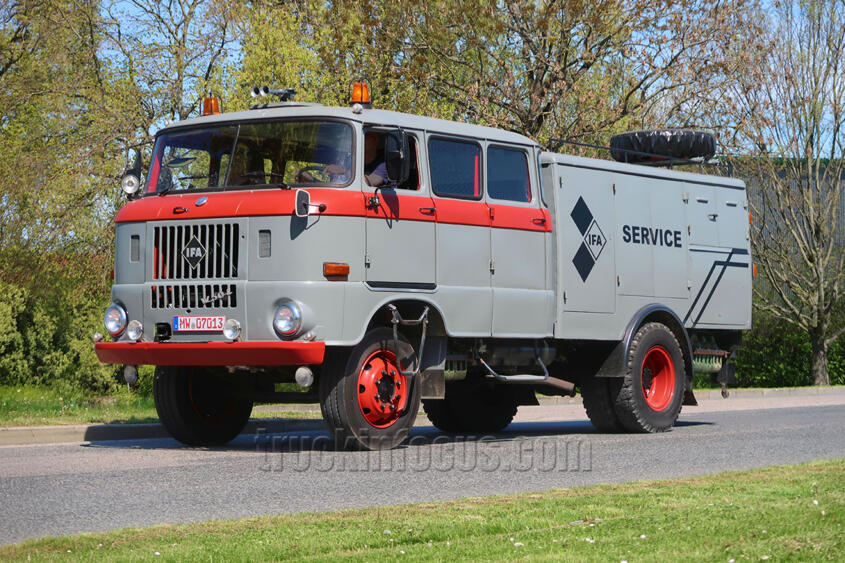
Using components from the H 6 model, the Vehicle Development Plant in Karl-Marx-Stadt (now Chemnitz again) developed the all-wheel-drive three-axle G 5 in 1953 on behalf of the National People’s Army (NVA). Approximately 10,000 units with various body types were produced at the Werdau vehicle plant by 1964. The G 5 was used not only by the military but also in the construction industry – as a dump truck or three-sided tipper, as a flatbed truck, and with workshop and fuel tank bodies.
IFA W 50 and L 60
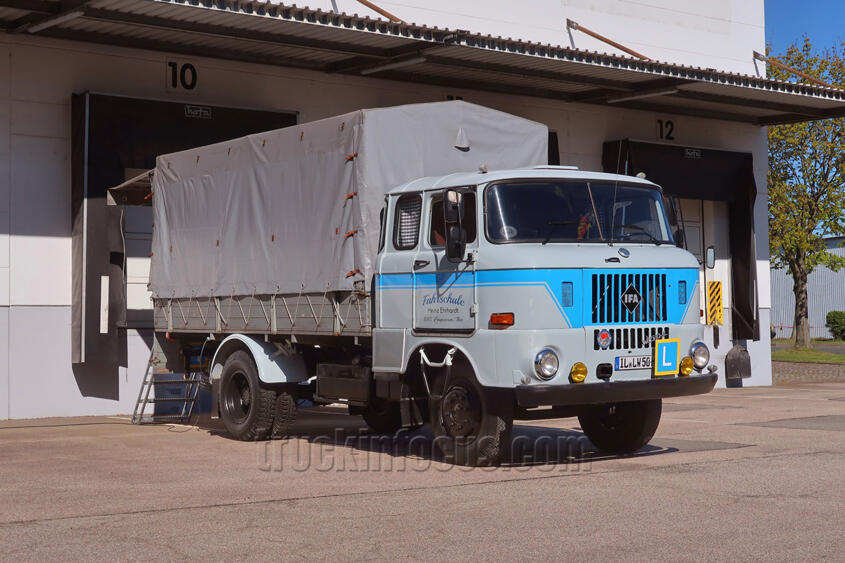
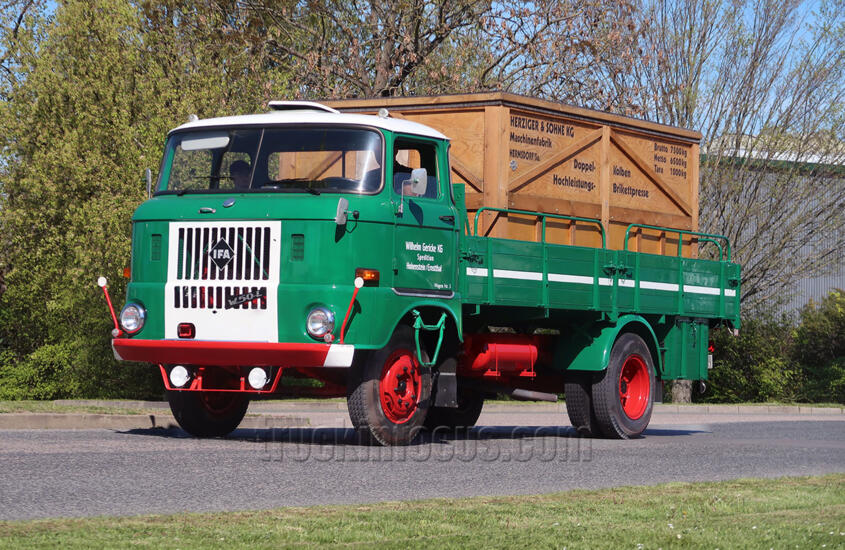
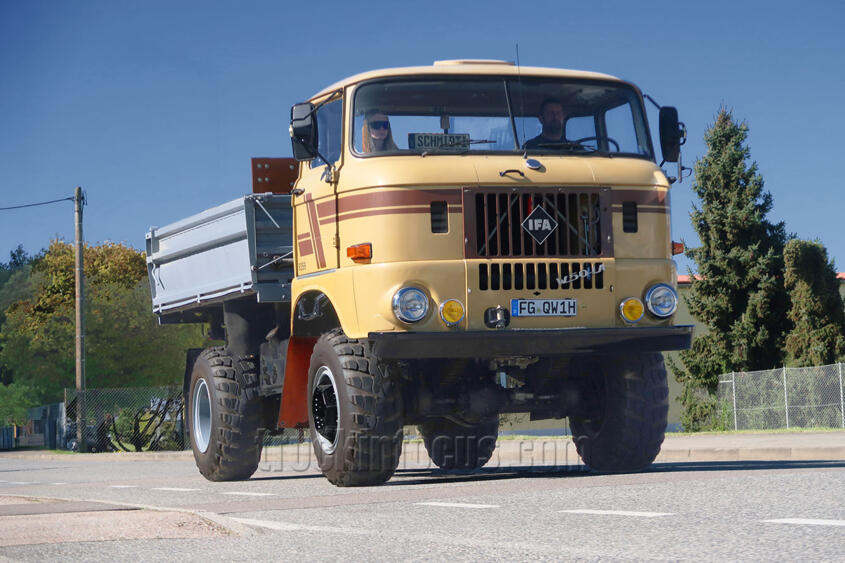
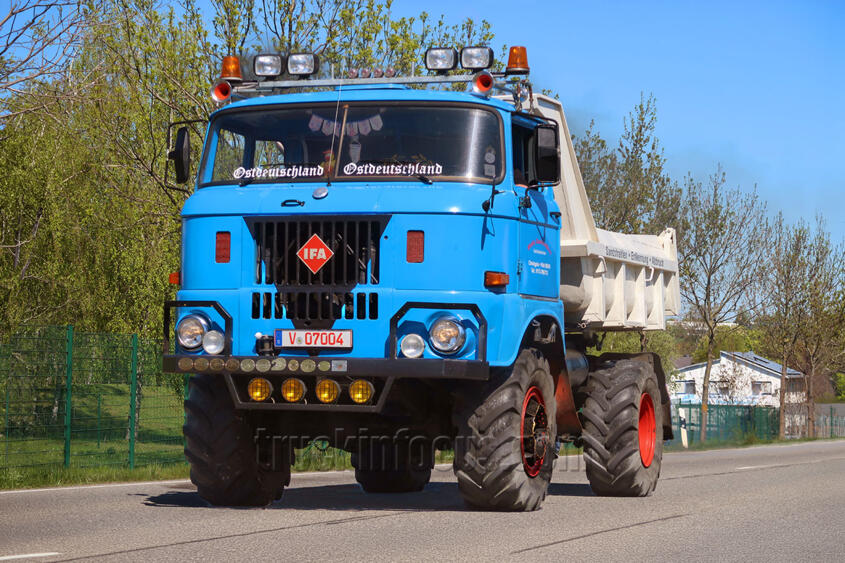
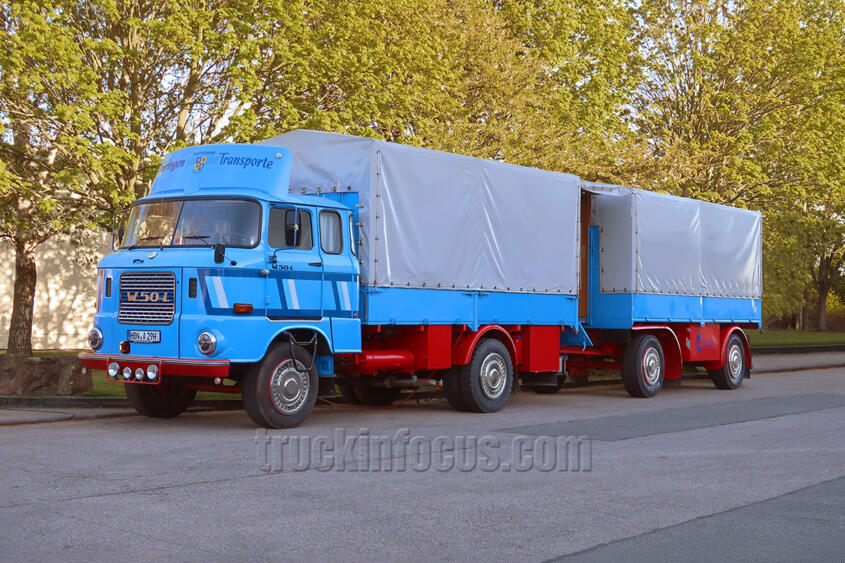
As early as late 1958, work began in Werdau on the further development of the S 4000-1. After building several prototypes – including conventional models – series production of the W 50 began in 1965 at the VEB Automobilwerk Ludwigsfelde, as the facilities in Werdau would not have been sufficient for the planned production volumes. The W 50 was designed and manufactured as an all-wheel-drive vehicle from the very beginning. While its primary focus was military use, it was also employed in agriculture, as the collective farming movement had led to a massive increase in transportation needs on large-scale farms. The W 50 LAZ was the signature variant, a two-way tipper with increased towing capacity, combined with a specially developed HW 80 two-way tipper trailer with an eight-ton payload. Both the tractor and the trailer were equipped with the same 16-20 low-pressure tires.
Later, there were around 50 body variants. Production of the W 50 ended in 1990, after approximately 570,000 vehicles of this type had rolled off the assembly line. More than 70 percent of production was exported, even to Asia, Africa, and Latin America.
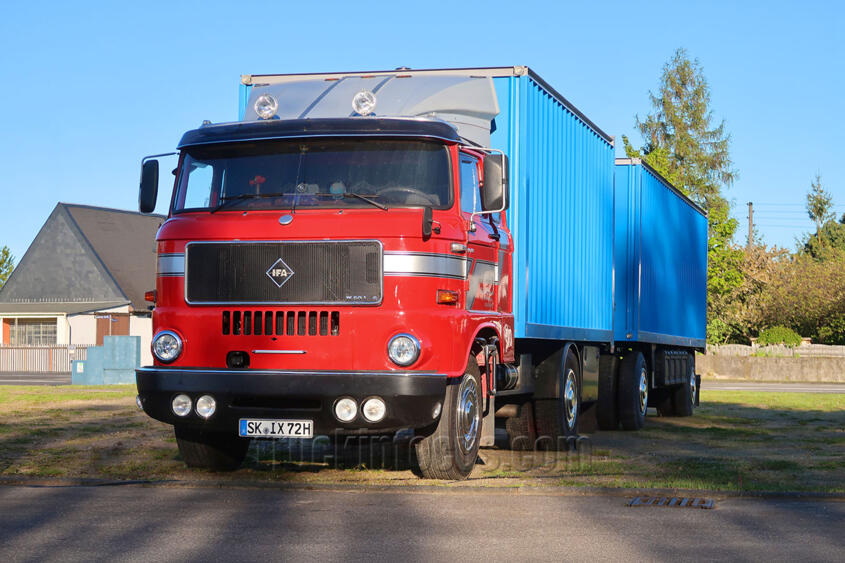
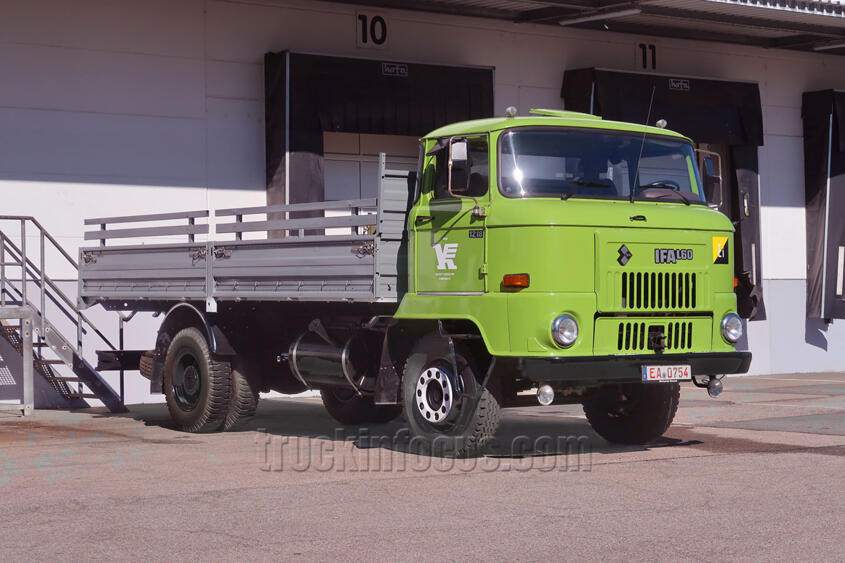
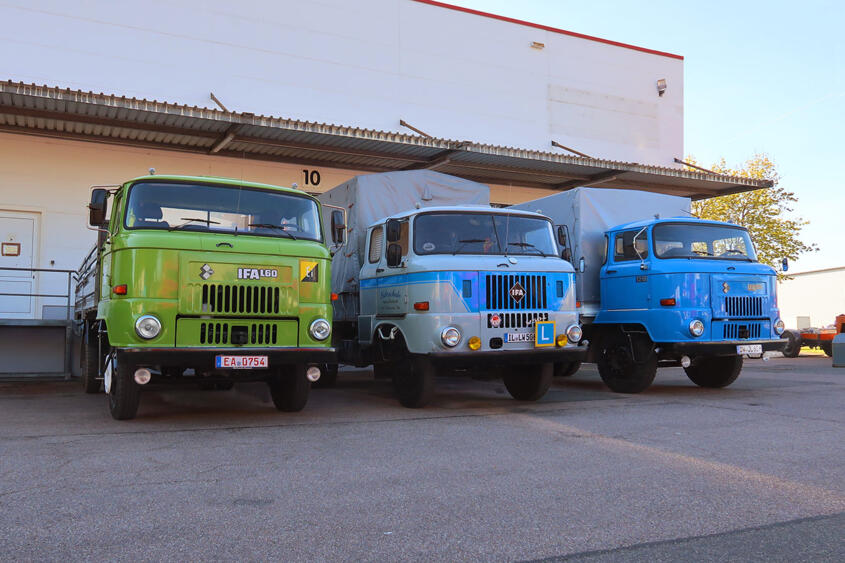
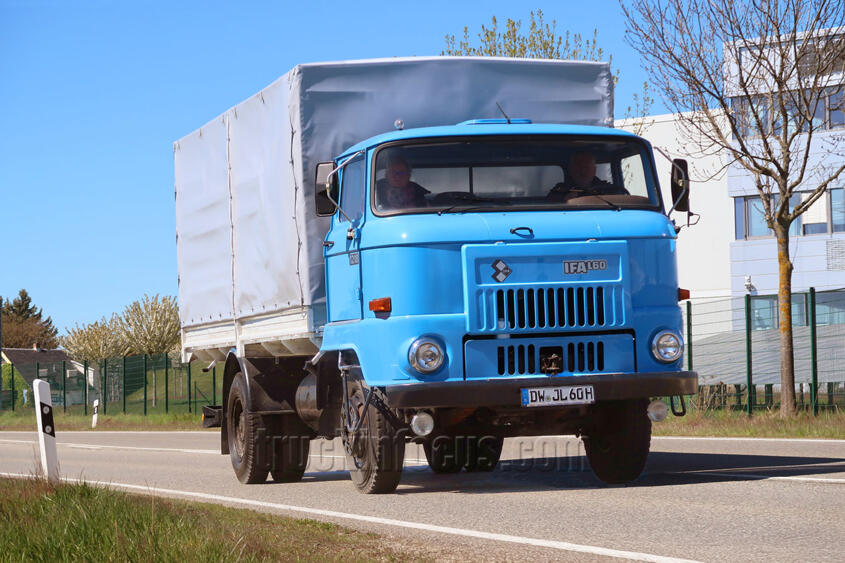
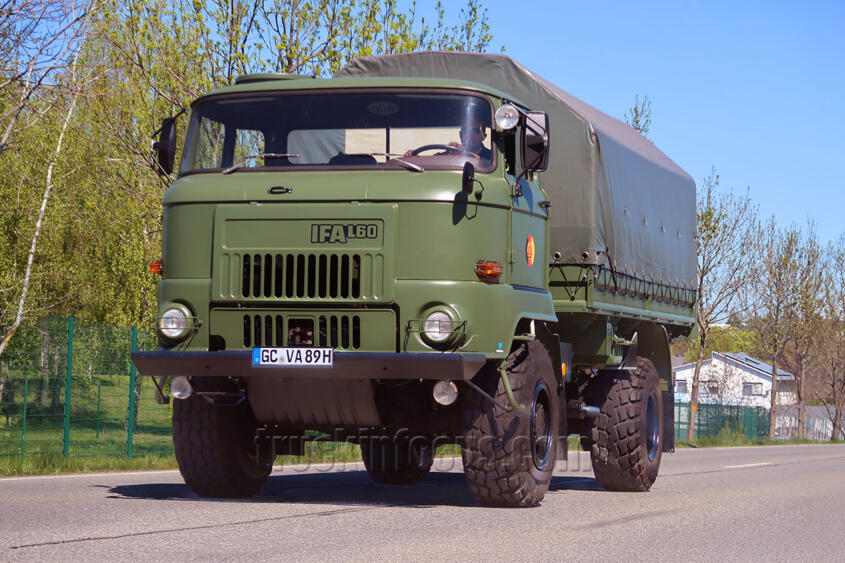
In order to offer a model with a tilting cab and higher engine power, development of a new truck with a six-cylinder engine began in Ludwigsfelde as early as the late 1960s. Following the construction of prototypes, several design changes, and a failed attempt to adopt Volvo’s “Club-of-Four” cab, the L 60 finally appeared in its all-wheel-drive version at the end of 1986. Production of the 4x2 version did not begin until 1989 and ended just one year later. In total, barely more than 20,000 L 60 vehicles were produced.
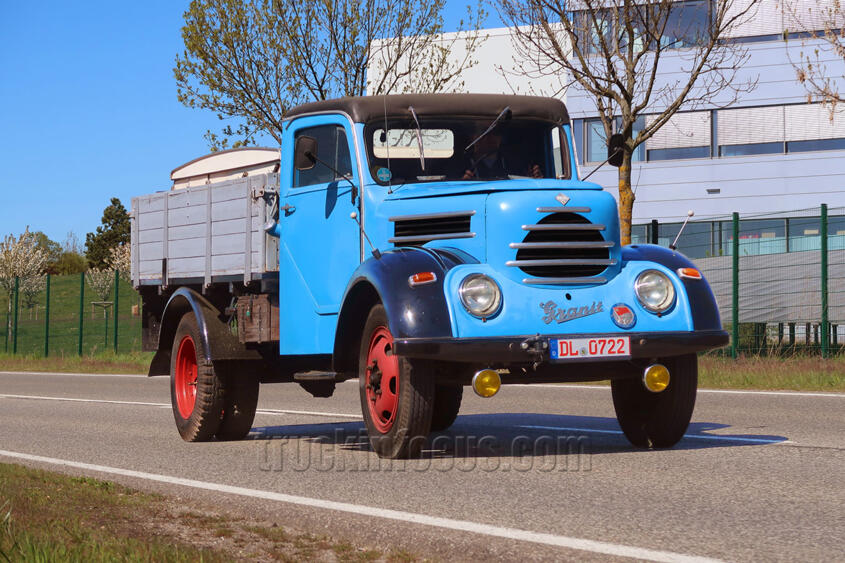
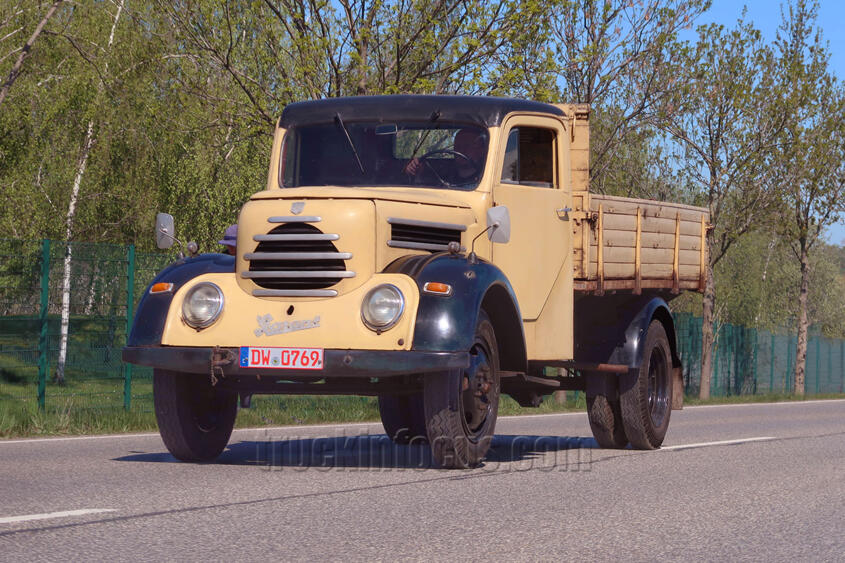
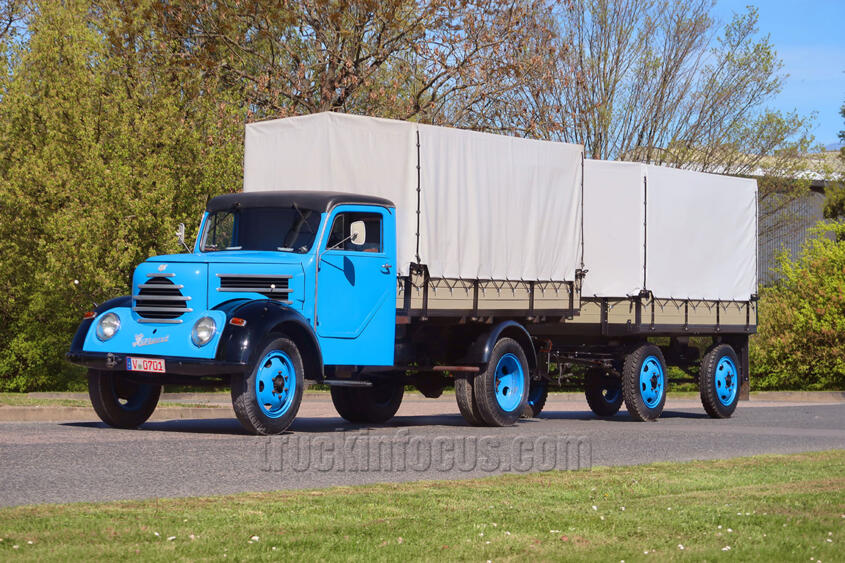
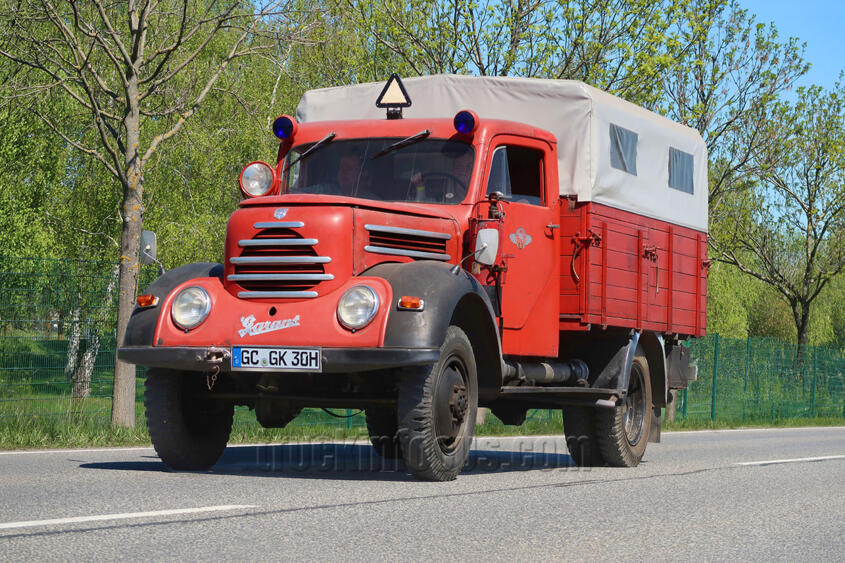
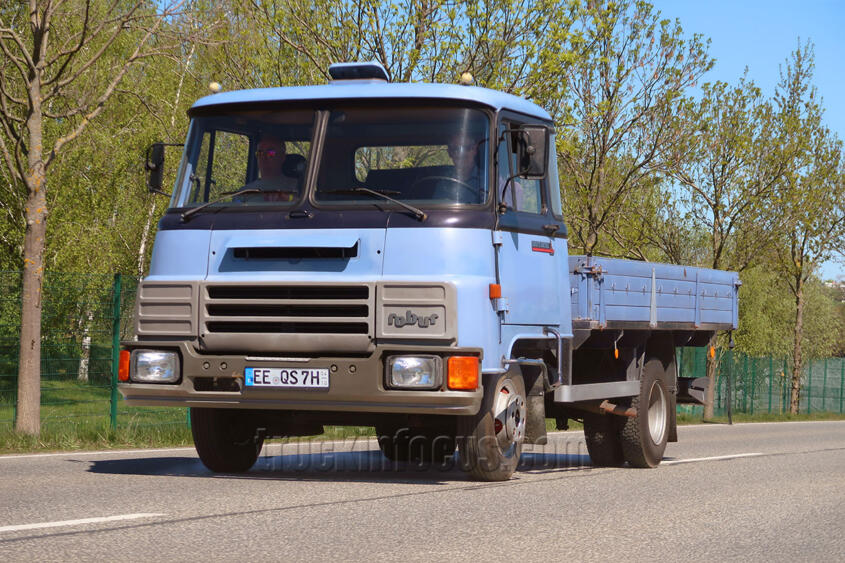
Phänomen Granit, Robur Garant, and Robur LO/LD
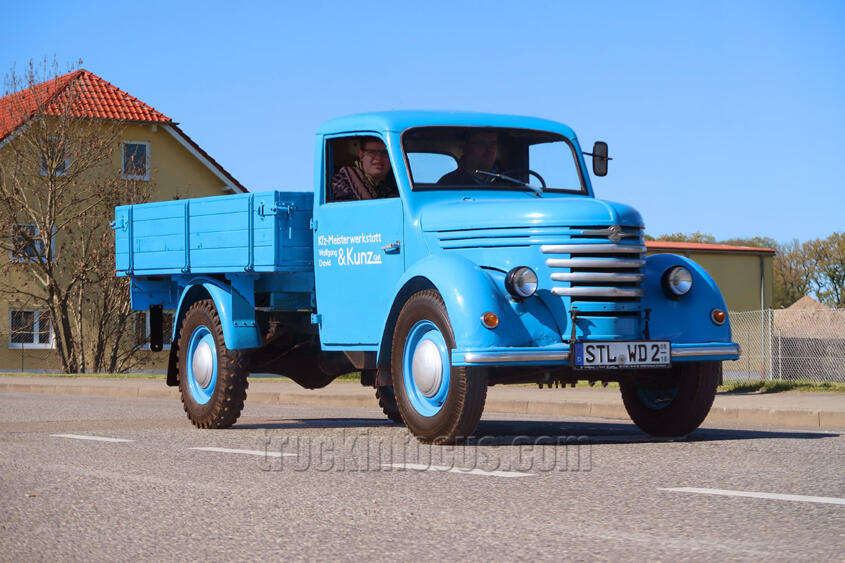
Founded in Zittau in 1888, Gustav Hiller AG was originally a manufacturer of textile machinery. In 1907, the company launched the Phänomobil, a three-wheeled delivery van, followed in 1927 by the Phänomen Granit, the first German commercial vehicle with an air-cooled engine. After World War II, the Soviet occupiers expropriated and dismantled the factory facilities. In 1948, the company was incorporated into the IFA Association of State-Owned Vehicle Works. The production facility was now called Werk Phänomen Zittau. From 1949 to 1953, the plant produced the Phänomen Granit 27 with a 50-hp gasoline engine – featuring a new front design – and, starting in 1951, the Granit 32 with a 52-hp diesel engine. Unfortunately, none of these outwardly identical models were on display in Hartmannsdorf in 2026.
In 1953, production of the Granit 27 was discontinued and the Granit 30 K with a 55-horsepower gasoline engine was introduced. The diesel engine of the Granit 32 remained unchanged, but both models had a new hood into which the headlights were integrated.
In 1956 and 1957, both the vehicle’s name and the company name had to be changed after a lawsuit filed by the expropriated owners was successful. The van was now called Garant, and the company was henceforth known as VEB Robur.
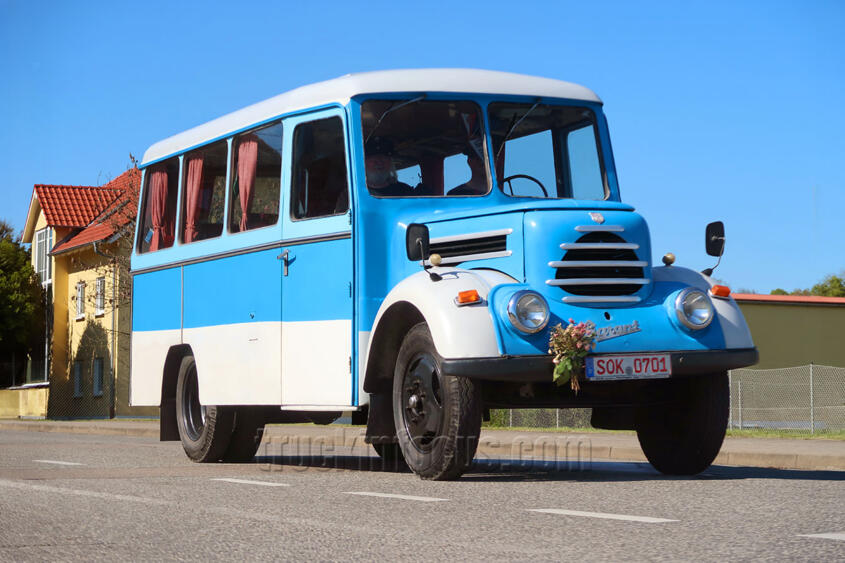
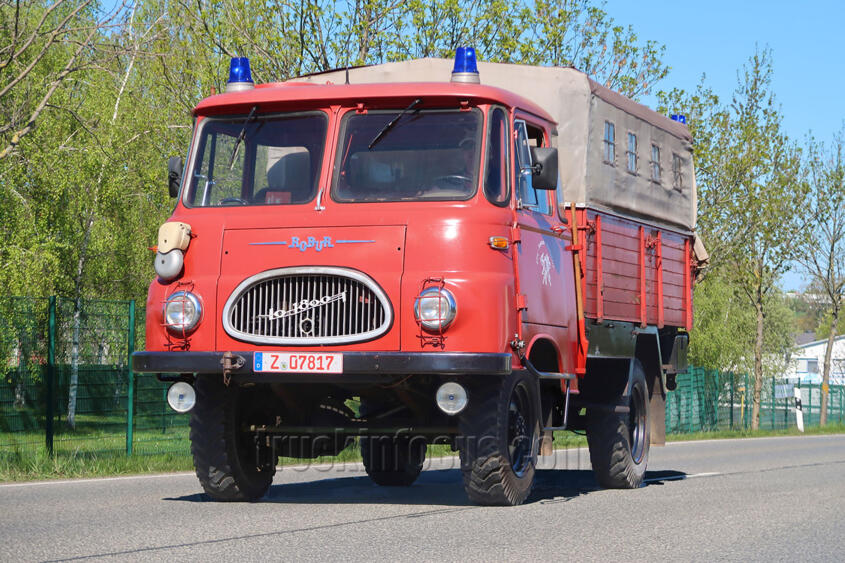
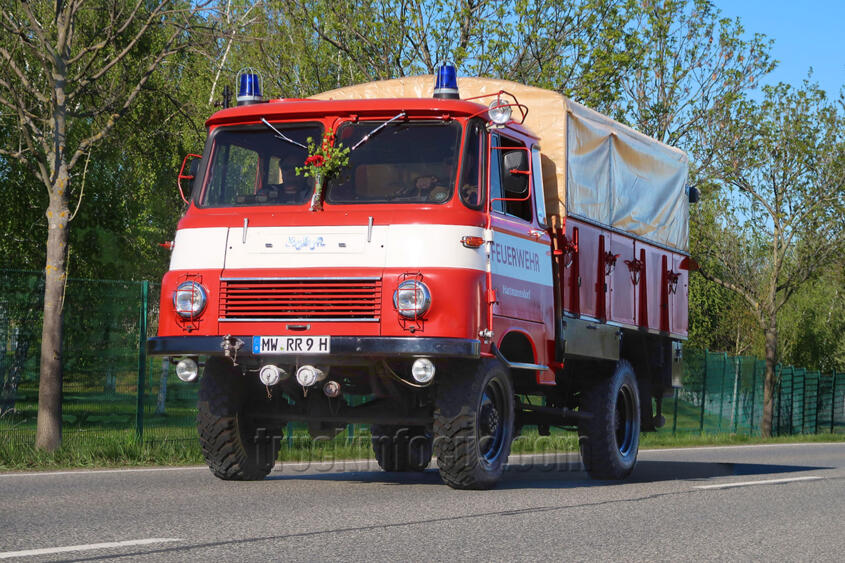
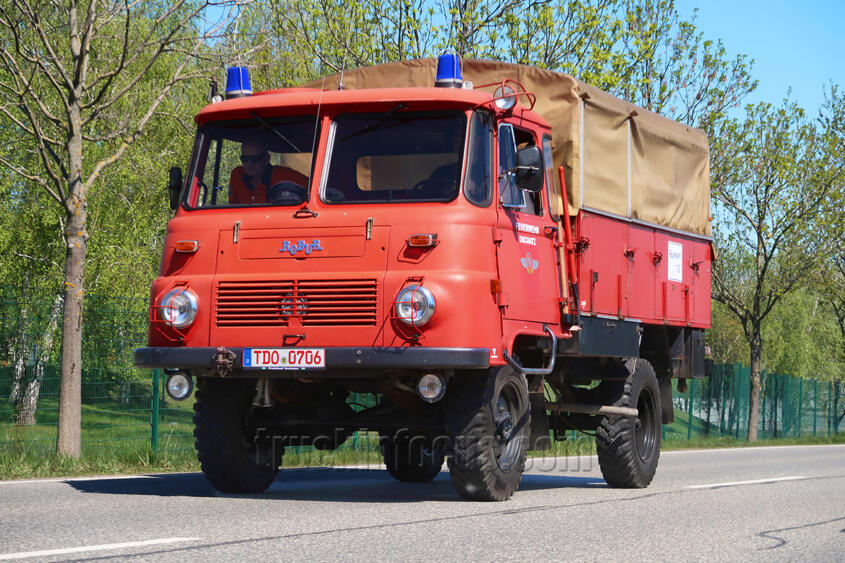
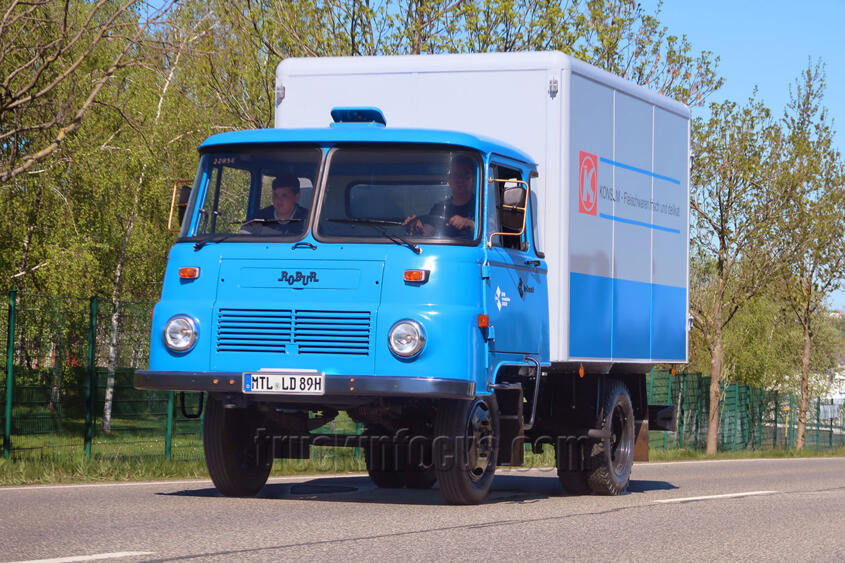
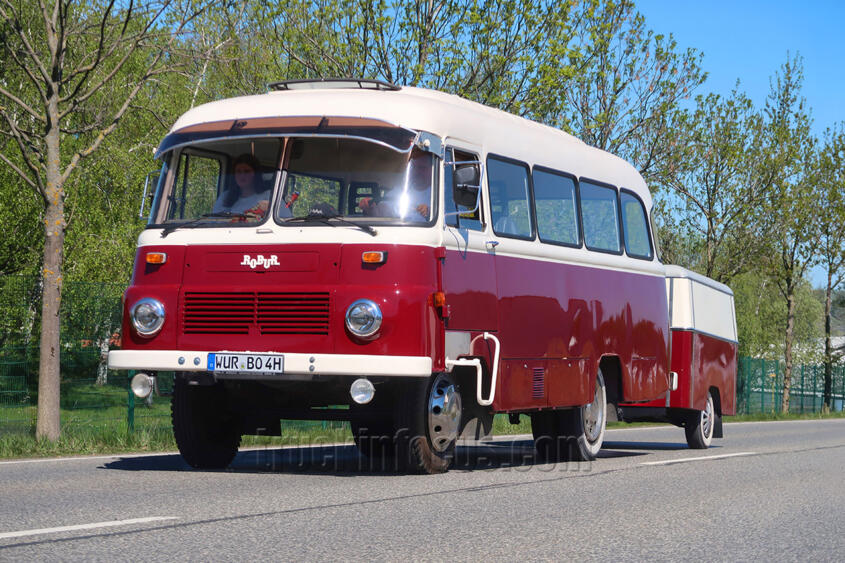
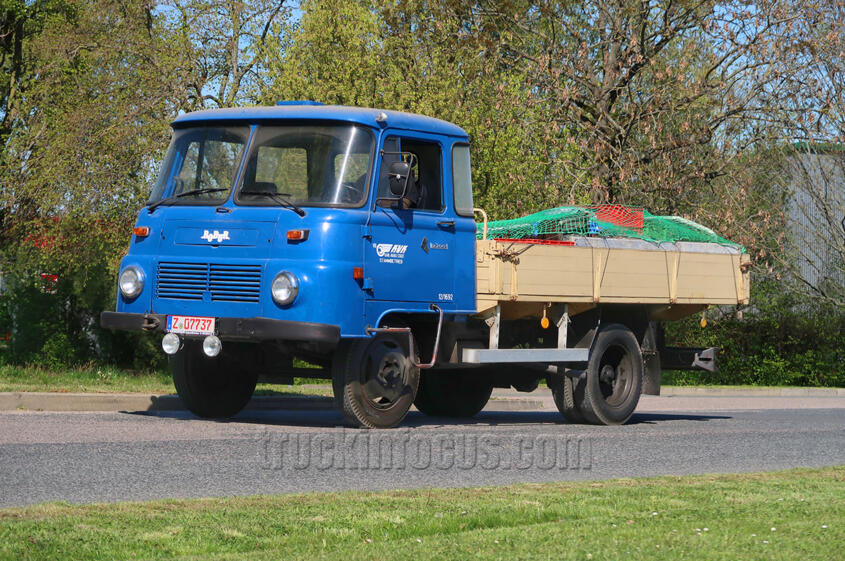
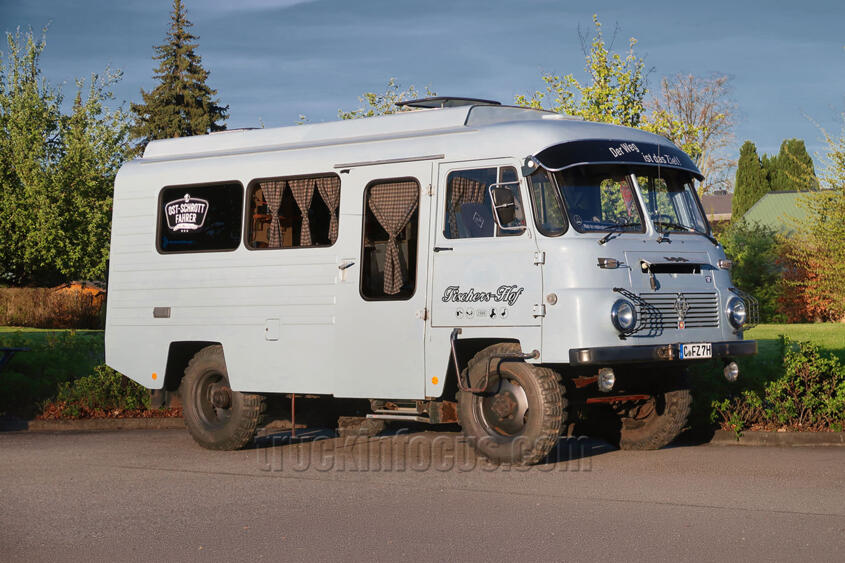
In 1961, the Garant was replaced by the LO 2500 cabover model. As early as 1957, a bus variant had been introduced, which was produced in small numbers from 1958 to 1960. The Robur LO 2500 in its original form with an oval radiator grille rolled off the assembly line until 1964, also as the LD 2500 with a diesel engine, as well as a bus, and with many body variants.
In 1965, the Robur LO 2501 and the LD 2501 were introduced, featuring a simplified and perhaps more modern radiator grille. The oval, chrome-plated frame had given way to horizontal slits. In 1974, the LO 3000 and LD 3000 models followed with an almost identical appearance, as did the LD 2002 A/MZ multipurpose vehicle starting in 1985.
The last Robur, the LD 3004, was introduced in 1991 following German reunification, featuring a new plastic grille and a Deutz diesel engine. Due to its 7.50-16 tires instead of 6.00-20, the vehicle had a significantly lower loading height. However, only 300 units were built before production by the once-prominent manufacturer was completely discontinued that same year. By that point, a quarter of a million vehicles had rolled off the assembly line since 1950.
Framo and Barkas
Metallwerke Frankenberg was founded in 1923 by the Danish industrialist Jørgen Skafte Rasmussen, who already owned Zschopauer Motorenwerke. Initially, parts for Rasmussen’s DKW motorcycle production were manufactured on a former barracks site; however, starting in 1927, the first three-wheeled delivery vans were produced there.
Under the new company name “Framo-Werke GmbH,” the company moved to Hainichen in Saxony in 1933 and began manufacturing three- and four-wheeled vehicles a year later. Various models were developed in the following years; the company was particularly successful in the construction of delivery vans.
In 1939, production of three-wheeled vehicles had to be discontinued because the Nazi government ordered the standardization of all vehicle categories. Together with the companies Gutbrod, Manderbach, Ostner, and Vidal, a 0.65-ton vehicle was to be developed, but the plans came to naught due to the outbreak of war.
Production continued of the Type V 500 (15 hp), introduced in 1938, which became the “Standard Type 650” in 1941 with the model designation V 501/I (14.5 hp). From 1942 to 1943, the V 501/II model with 17 hp continued to roll off the assembly line; then vehicle production ceased, and the company switched entirely to the manufacture of military equipment.
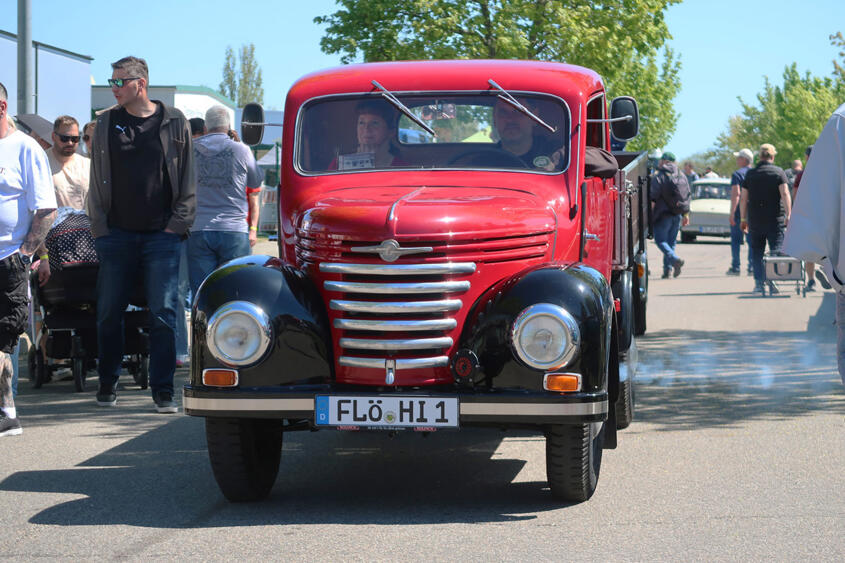
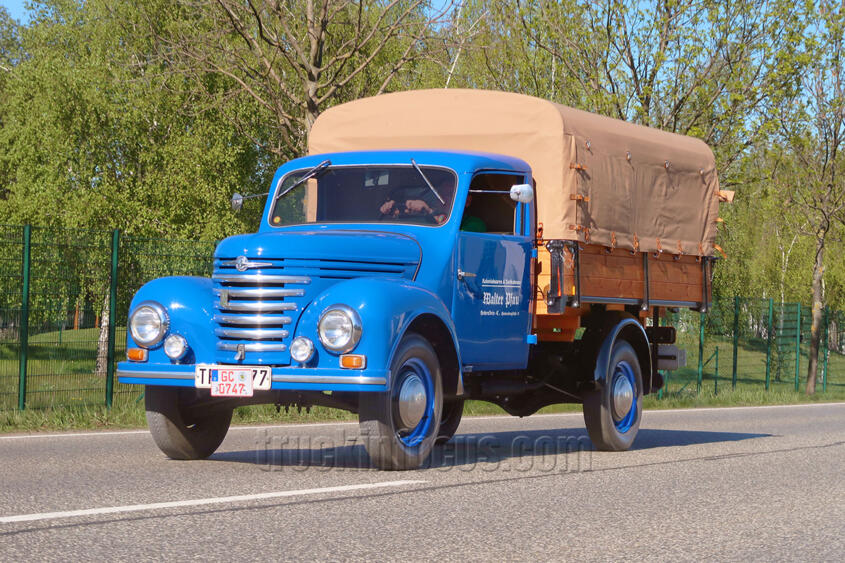
In 1945, the Framo Works resumed operations, initially with the production of transport carts and horse-drawn wagons. This was followed by the production of spare parts for motor vehicles, and in 1949, vehicle production resumed. Under the name “IFA Fahrzeugwerk Framo VEB,” production began on the wartime model V 501/II, of which 65 units left the factory. The following year saw the introduction of the V 501 with a new front design, followed by the V 901 in 1952. In addition to flatbed trucks, there were now also variants as panel vans, minibuses, and ambulances.
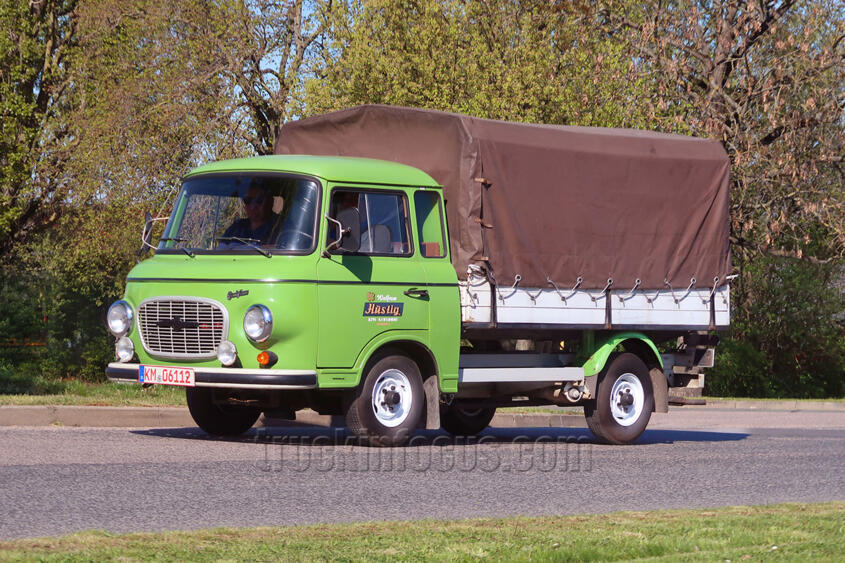
From 1957 to 1961, the vehicle plant in Hainichen manufactured the final version of the 901 series. The new model, designated 901/2, featured a wider cab and headlights integrated into the fenders. In addition, the van was equipped with the three-cylinder engine from the IFA F9 car, the Wartburg 311. The plant now operated under the name VEB Barkas-Werke, and the headquarters were relocated to Karl-Marx-Stadt, today’s Chemnitz.
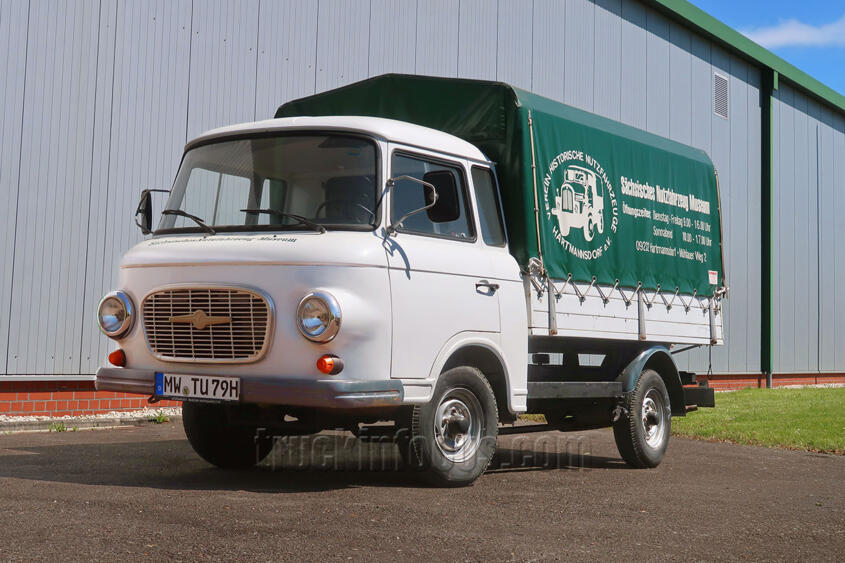
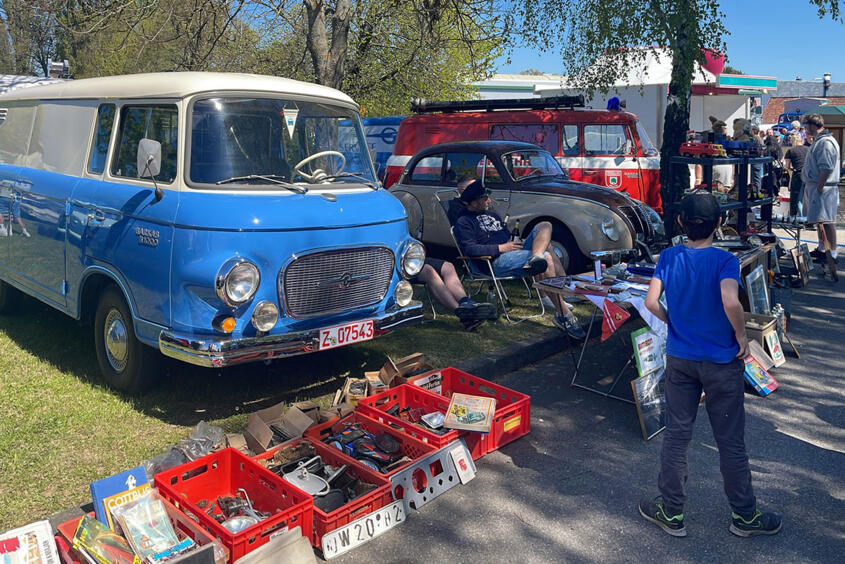
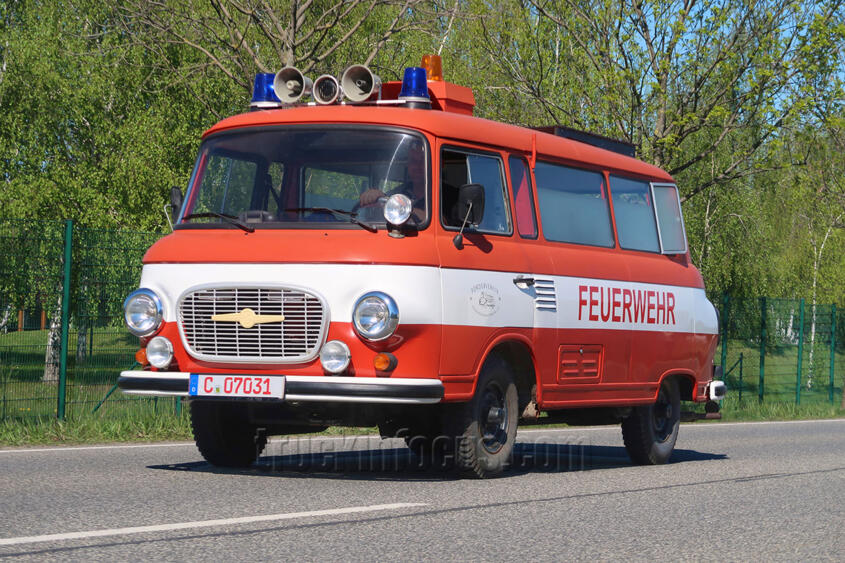
In June 1961, production began on the Barkas B 1000, a particularly attractively designed cabover vehicle that reflected the design language of its time. Initially, it was available only as a panel van. The eight-seater station wagon followed in 1964, and a year later, flatbed trucks, minibuses, ambulances, and police vehicles were introduced to the market.
The B 1000’s advanced design – namely front-wheel drive, a low loading height thanks to torsion bar springs, good road holding, and a favorable curb weight-to-payload ratio – made the van a popular vehicle. In the early years of its production, the power of the 45-horsepower engine from the Wartburg 311 car, with a displacement of 1,000 cubic centimeters, was still entirely sufficient, but it was gradually deemed too weak for the commercial vehicle with a one-ton payload. In 1989, the B 1000 was still released with the VW engine manufactured under license – the same one that powered the Wartburg 1.3 – but the update came too late to meet the changing demands of the customer base. Production was discontinued in 1990.
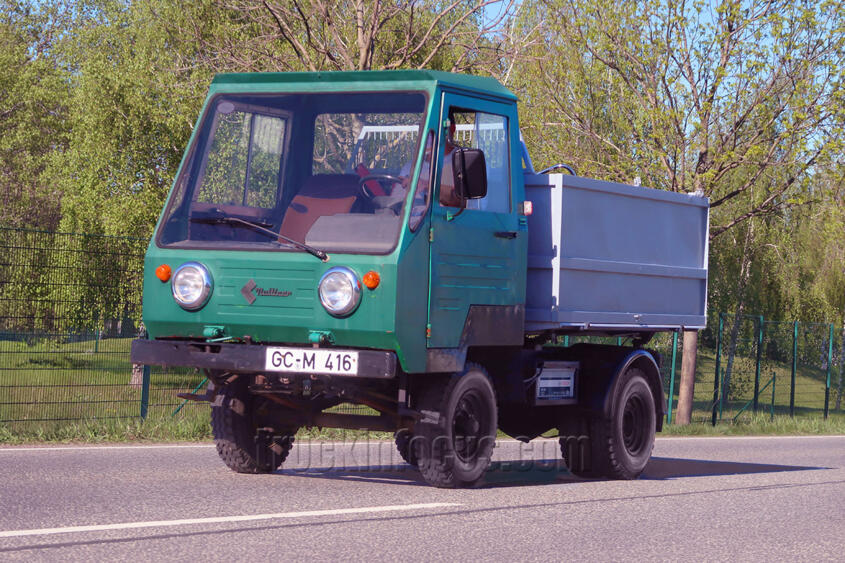
Diesel Ant and Multicar
In 1925, the engine manufacturer Kühne was founded in Obercunewalde, Saxony. Four years later, the Dresden-based company Otto Bark took over the plant. Initially, the company built powertrains for motorcycles and soon after also components for aircraft engines on behalf of the army. In 1946, the company was nationalized as VEB Motorenwerke Cunewalde and initially manufactured primarily diesel engines for stationary use.
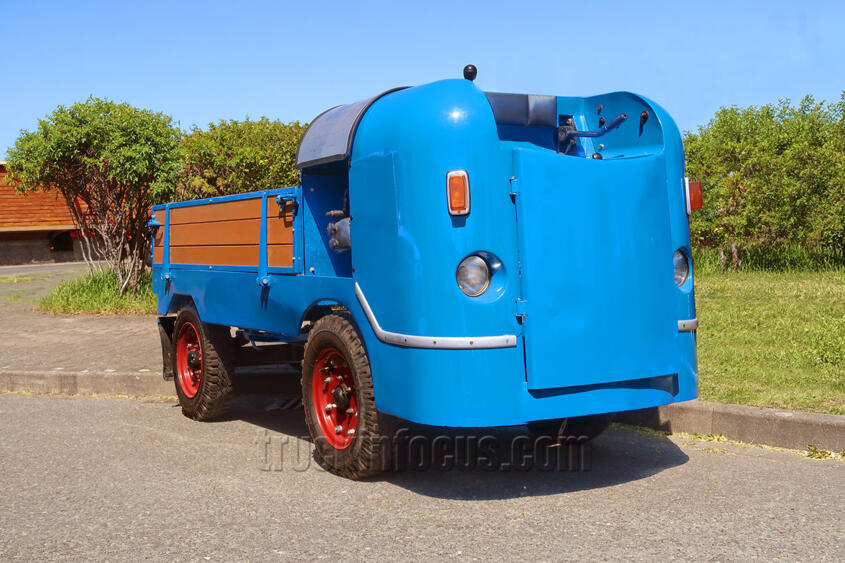
Starting in 1950, the company developed a small van called the Electric Ant in collaboration with the Brand-Erbisdorf foundry and forge. However, since there were not enough batteries available for series production, a version with a diesel engine soon followed. It was designated DK for “Diesel-Karren.” The driver stood on a platform open at the front and steered the vehicle using foot pedals. The payload was two tons, or 1.85 tons for the tipper version. The towing capacity was specified as 1.8 tons. After production had initially been relocated to Brand-Erbisdorf, the Ludwigsfelde Industrial Plant took over construction of the Diesel Ant in 1954; however, it was not permitted to officially bear this name because the corresponding naming rights had already been assigned in West Germany.
By 1956, around 1,000 vehicles had rolled off the assembly line; production was subsequently taken over by the VEB Fahrzeugwerk Waltershausen. In 1958, the vehicle was given a rounded body with a door that opened forward. Although the Diesel Ant still had an open-top driver’s compartment, it now resembled a small van. The model designation was initially DK 2004, then DK 4, and finally, at the end of 1959, Multicar M 21, with the “2” standing for the payload and the “1” for the series.
In 1964, the time had come: At the Leipzig Spring Fair, a new Multicar was unveiled featuring a covered, asymmetrical cab and a steering wheel instead of the impractical foot pedals. The Multicar M 22 was born. A new air-cooled two-cylinder four-stroke diesel engine with 14 hp enabled a top speed of 23 kilometers per hour. There were many body variants, including even a concrete mixer. Domestic sales figures and export successes demonstrated the need for such a multipurpose vehicle. Yet the call for a two-man cab grew louder.
In 1969, the Multicar M 23 with a two-seater cab reached the prototype stage. However, the GDR government did not release the necessary funds for production, despite countless inquiries from both within the country and abroad for such a vehicle.
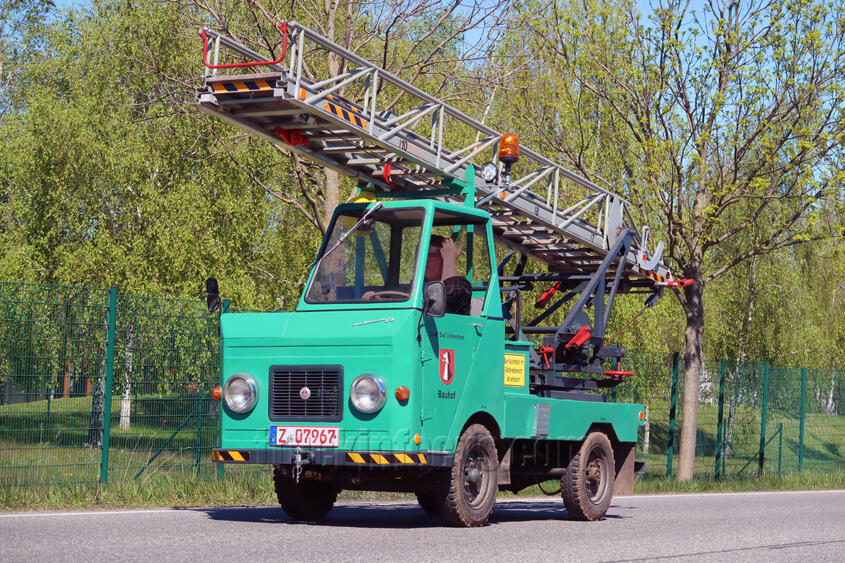
In 1974, there was another model change: The IFA Multicar 24 featured a tilting single-seat cab and a more powerful four-cylinder engine. The new, water-cooled 45-horsepower engine from Cunewalde, with a displacement of 1,996 cubic centimeters, gave the small van a top speed of 50 kilometers per hour. As a result, the Multicar was no longer a traffic hazard in urban areas. In 1977, a variant with a two-seater cab was finally added under the designation IFA Multicar 24-0. Of the total 25,659 Multicar 24 units built, more than half were exported.
The IFA Multicar 25, unveiled at the 1978 Leipzig Autumn Fair, featured a new, low-slung windshield. Starting in late 1982, a limited number of units were also sold with all-wheel drive. The wheelbase was 2,100 millimeters. Later, a version with a wheelbase 500 mm longer was also introduced, available as either 4x2 or 4x4, with a correspondingly longer cargo bed or space for a loading crane behind the cab. A double cabin was now also available. A shock-absorbing suspension seat further improved the ride comfort of the Type 25.
In 1990, all state-owned enterprises in the GDR were placed under the administration and liquidation of the so-called Treuhand. However, this step did not prevent the disappearance of all GDR automobile brands – with one exception: the Multicar. By 1991, approximately 100,000 Multicars of the 25 series had been sold. Of these, about 75 percent were exported, including to Western European countries. After the German reunification, production continued in Waltershausen under the name Multicar Special Vehicles Ltd. The Schörling company from Hanover joined the venture; the payload of the Type 25 was increased to 2.4 tons, and some components were now sourced from the West. The hydraulic system for municipal applications was supplied by Mannesmann-Rexroth, and the vehicle was equipped with a 54.5-horsepower diesel engine from VW. The switch to the new engine led to a significant increase in the proportion of 4x4 models and long-wheelbase models in production.
The 1992 Multicar 26 received a new front design featuring an anthracite-colored plastic panel to give the vehicle a more modern look. The Volkswagen diesel engine enabled a top speed of 80 kilometers per hour. Starting in 1994, Iveco turbodiesels with up to 105 hp were also available. Vehicles equipped with these engines received the additional designation “Champion.” The Multicar 26 model remained in the lineup until 2010.
In 1998, the Hako Group from Bad Oldesloe joined the venture. Fifteen years later, the name “Multicar” was dropped as a company designation, though some model series in current production still bear the “Multicar” lettering (M31, M27, Fumo, and Tremo).
Visits from the Pre-1945 Era
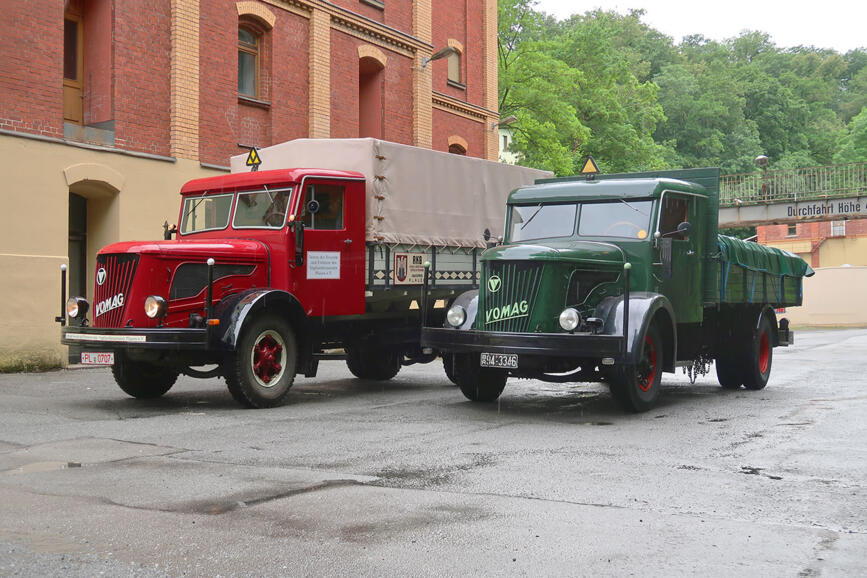
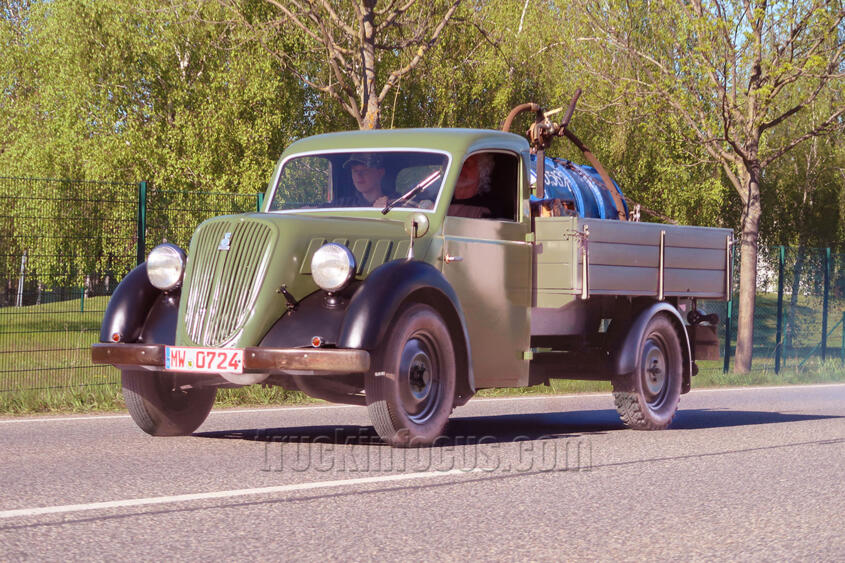
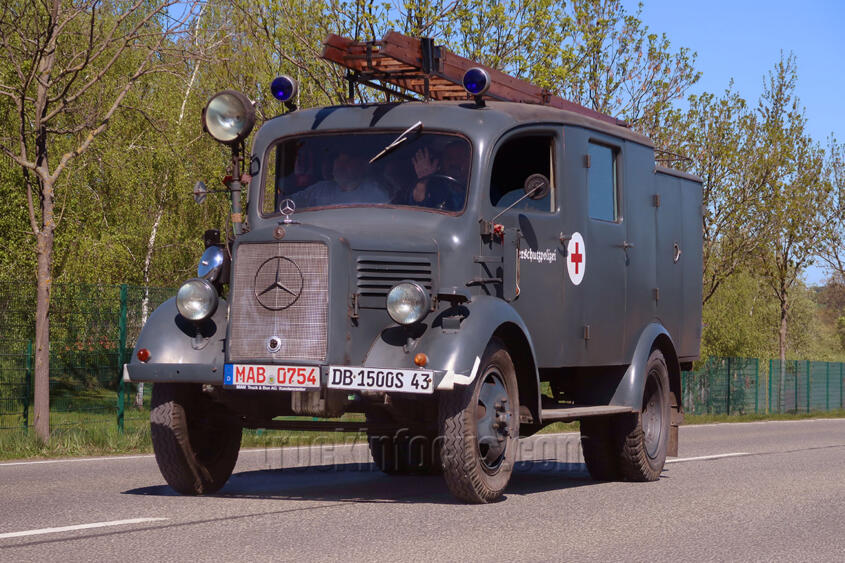
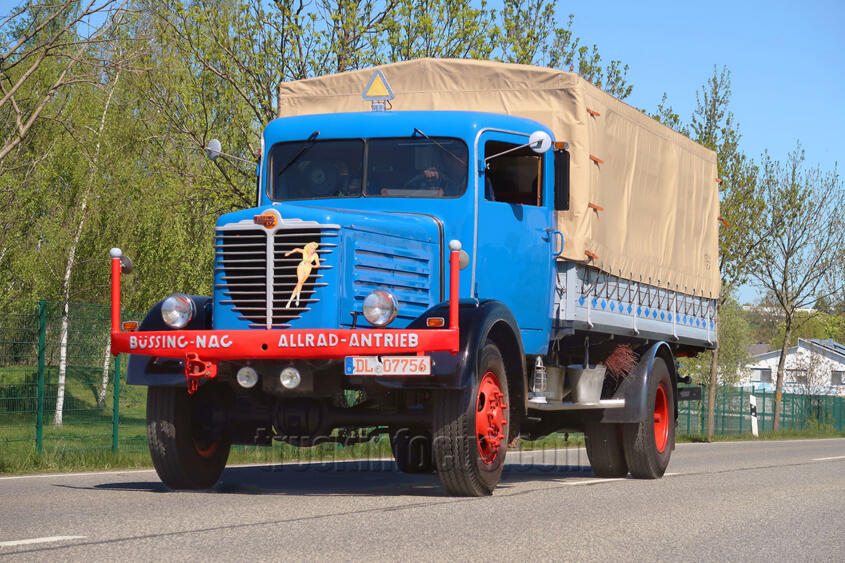
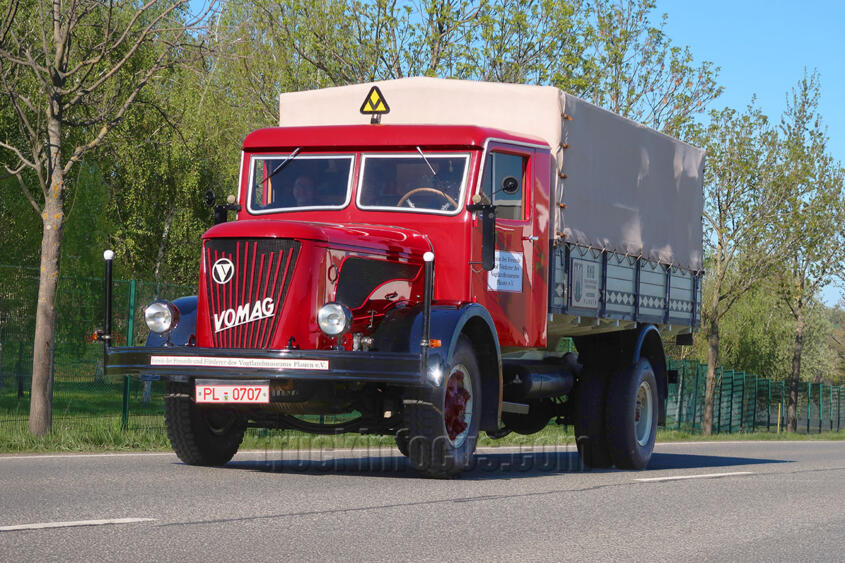
As with other classic car events, vehicles from the pre-1945 era were a rare sight in Hartmannsdorf. Still, in addition to the 1938 Framo shown above and a larger number of cars, at least three commercial vehicles from the 1930s had made their way to the event under their own power. The following pictures show them leaving the gathering on their way home.
Buses and Coaches
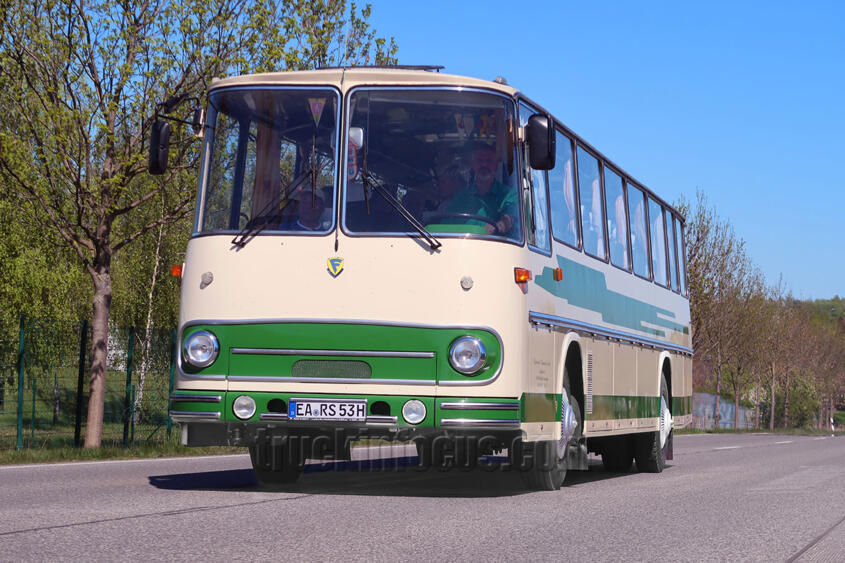
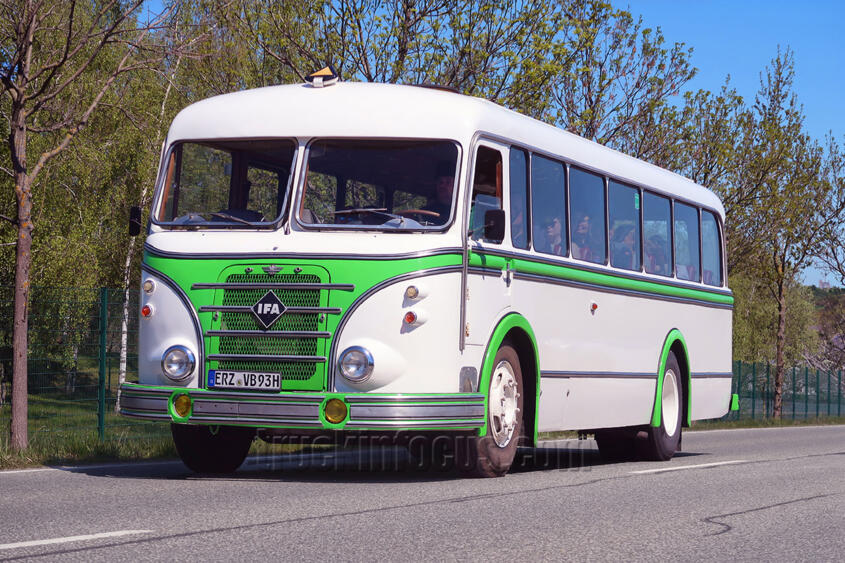
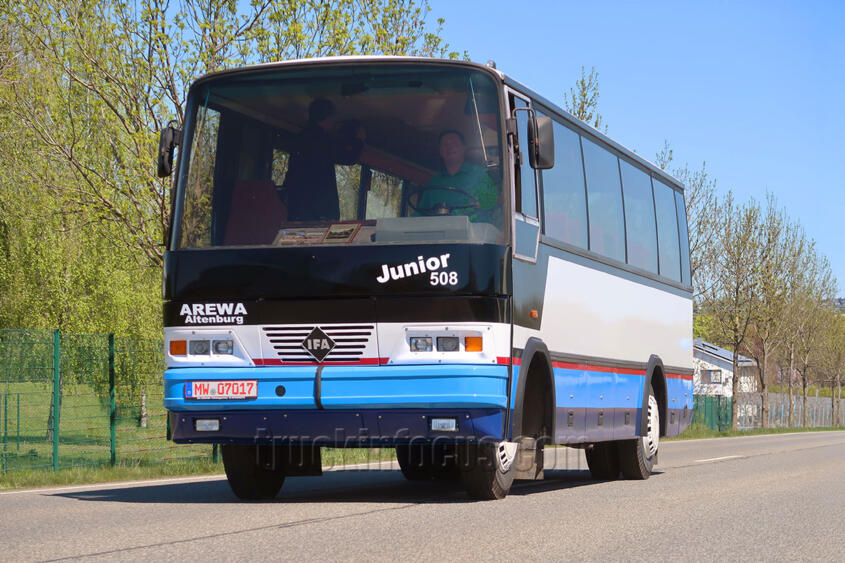
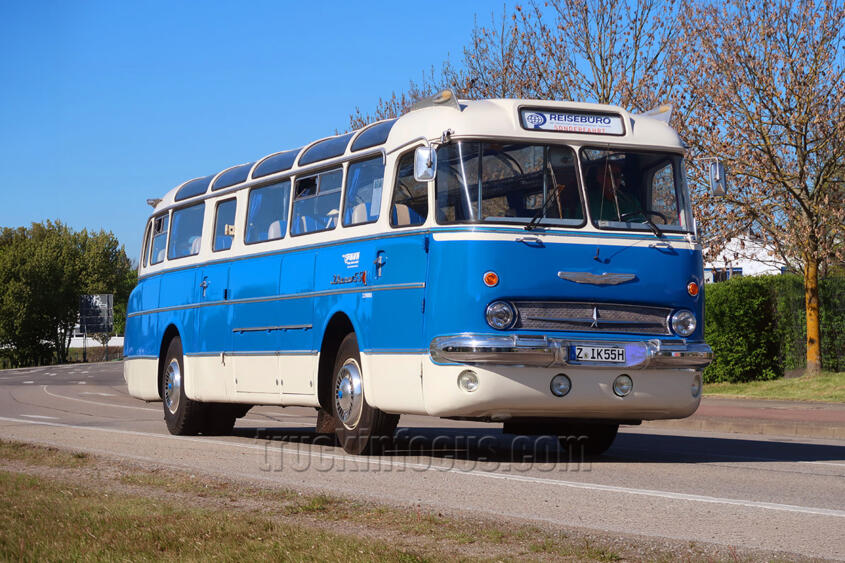
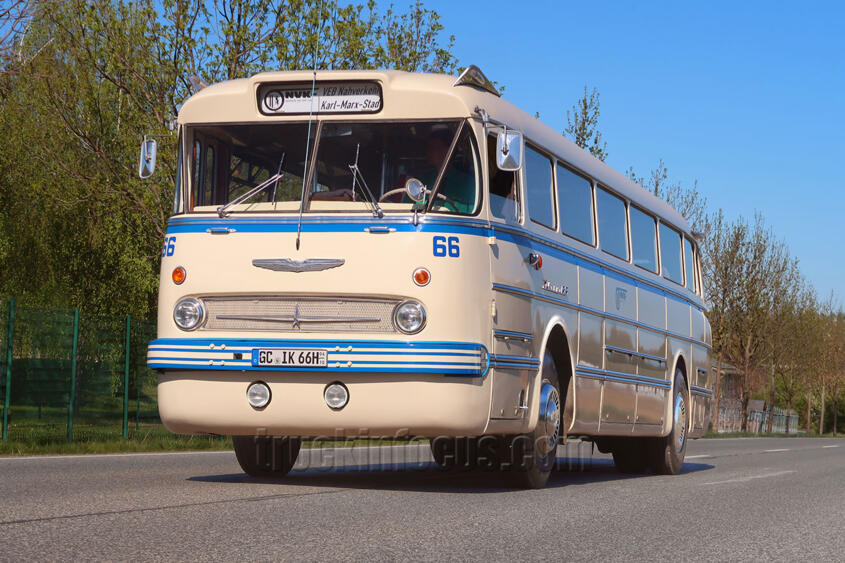
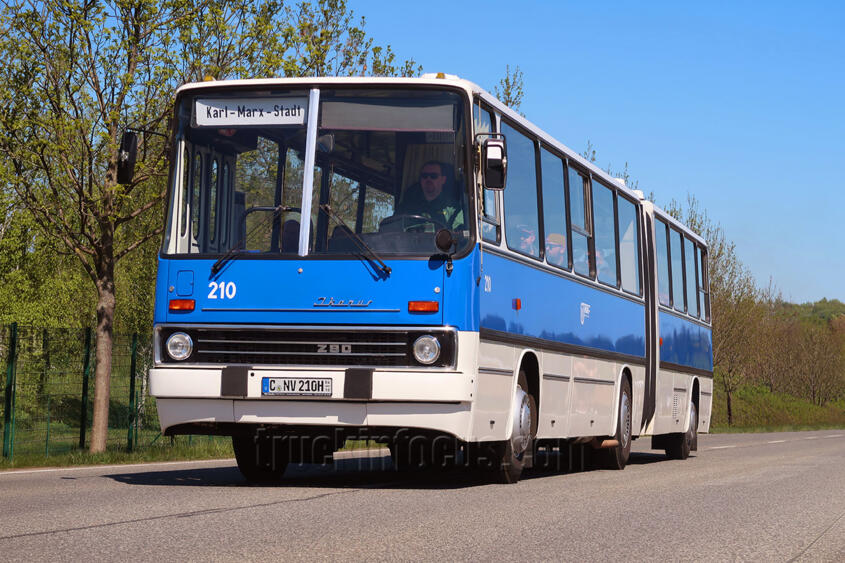
Larger buses manufactured in the GDR were rare even back then and are even rarer today. It was often Hungarian Ikarus buses that were used for passenger transport in the GDR. However, one example of each of the two most important bus models produced in East Germany was in service in Hartmannsdorf as a shuttle to bring visitors who had come without a car to the event and later return them to the surrounding towns and the train station. Several Ikarus buses were also in service as shuttles in Hartmannsdorf.
What else was there
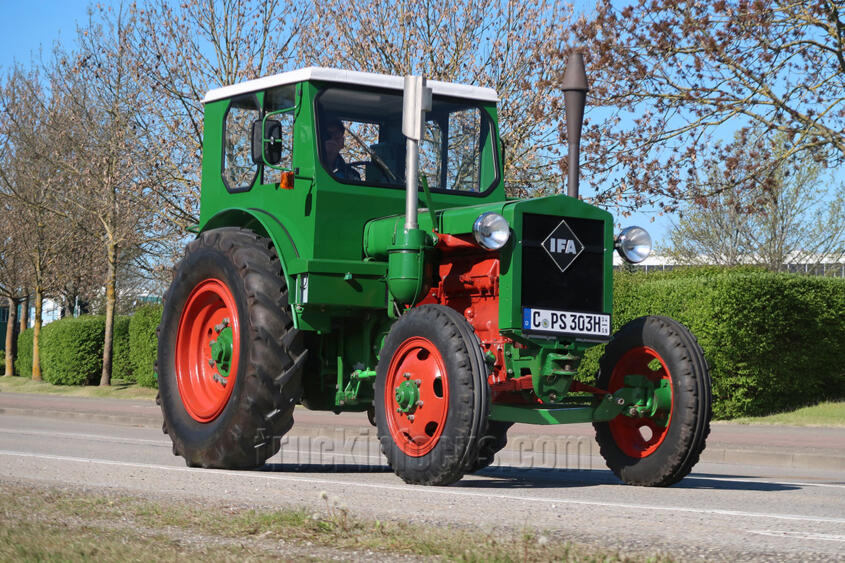
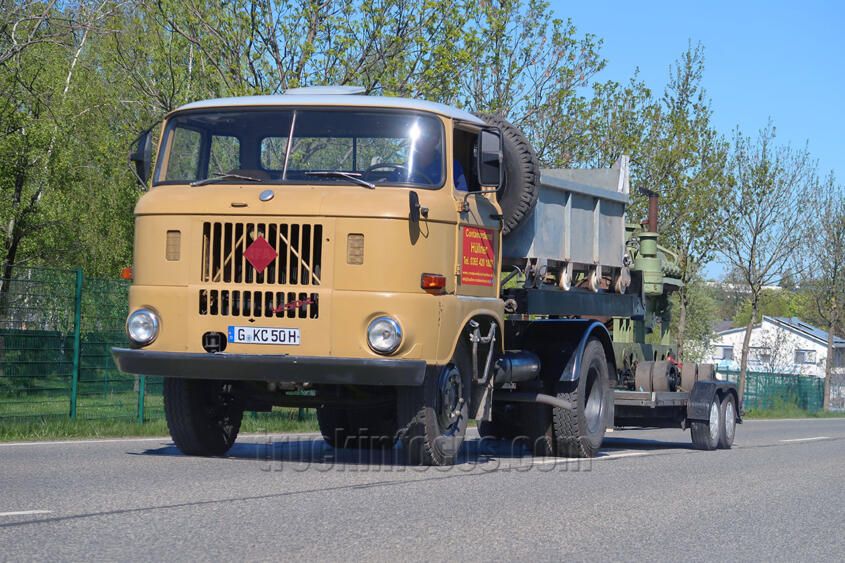
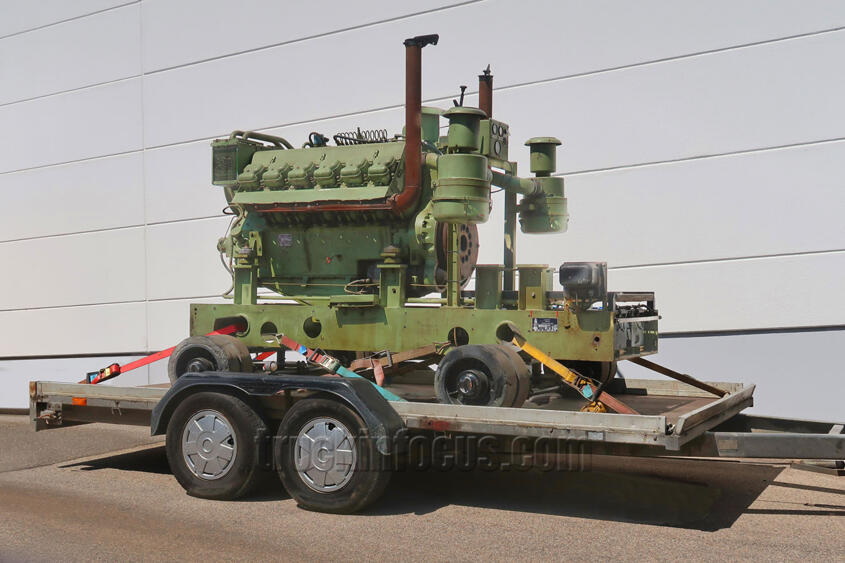
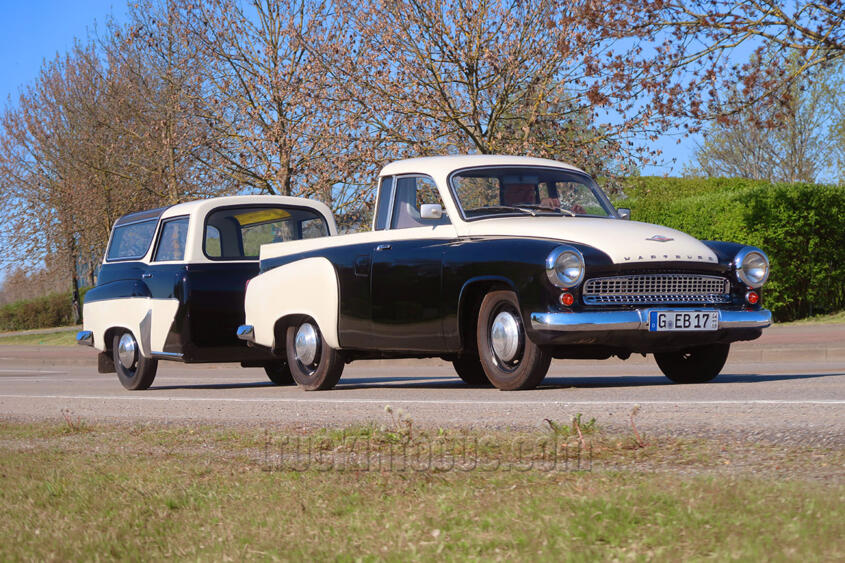
Of course, the event in Hartmannsdorf had much more to offer. In addition to a number of farm tractors – of which we show only one example here – there was, for instance, a massive marine diesel engine from the Elbewerk in Rosslau, which a participant had brought along on his trailer, or a Wartburg pickup truck with a matching trailer.
From around the world
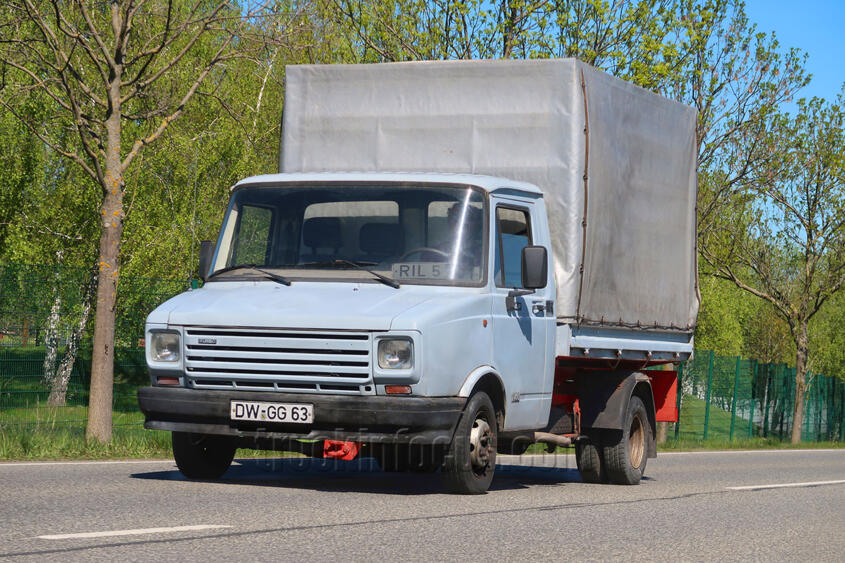
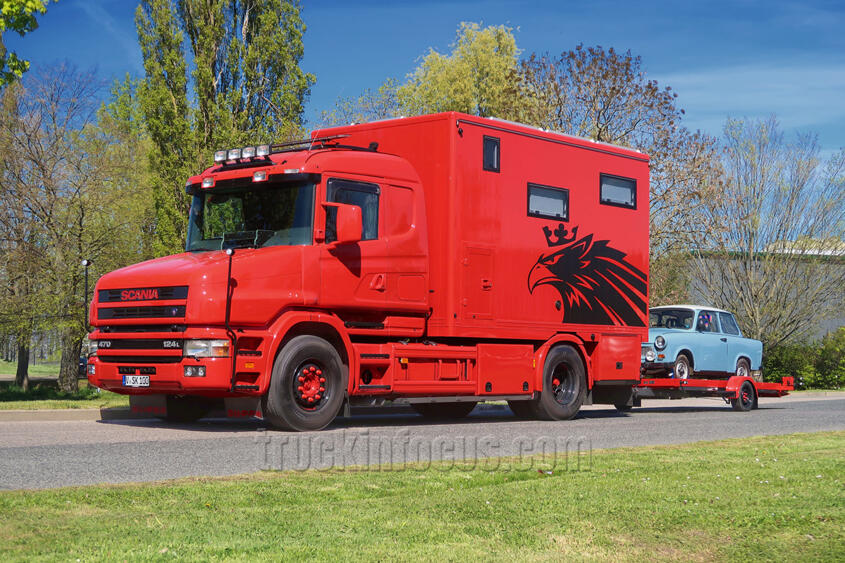
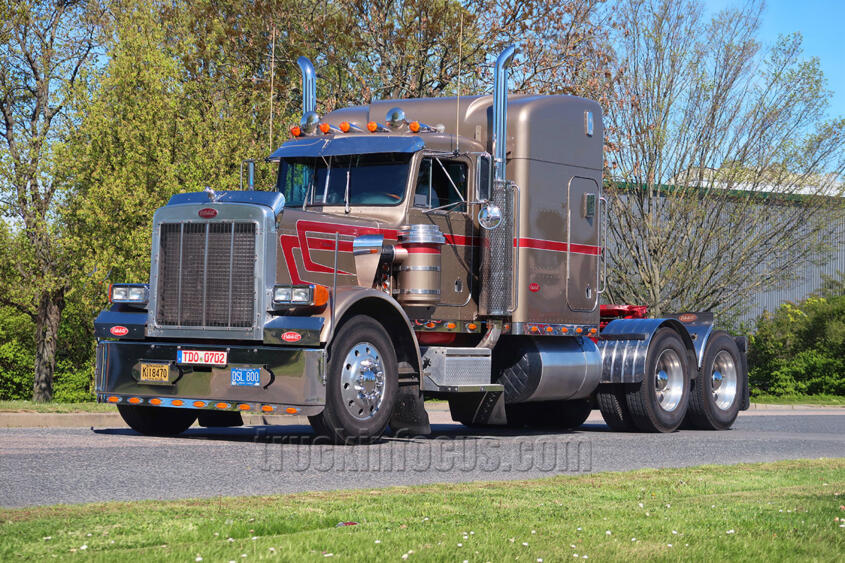
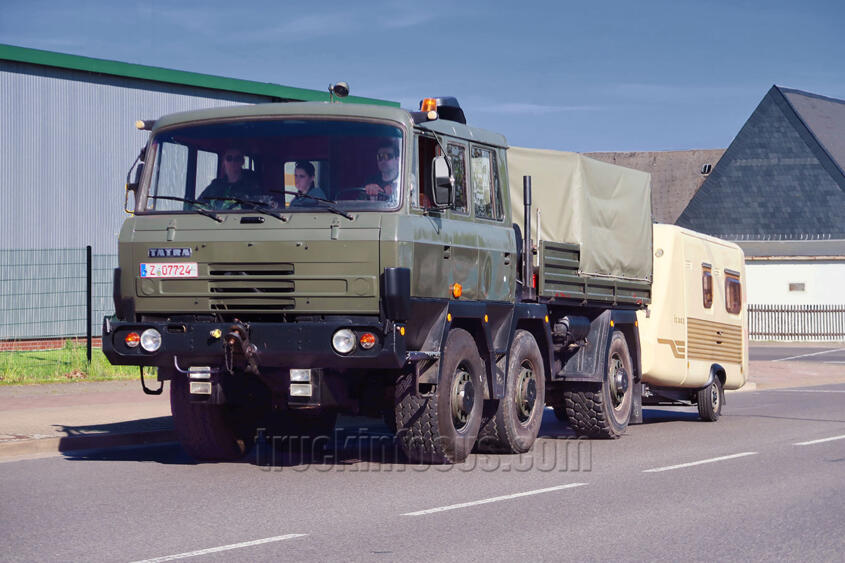
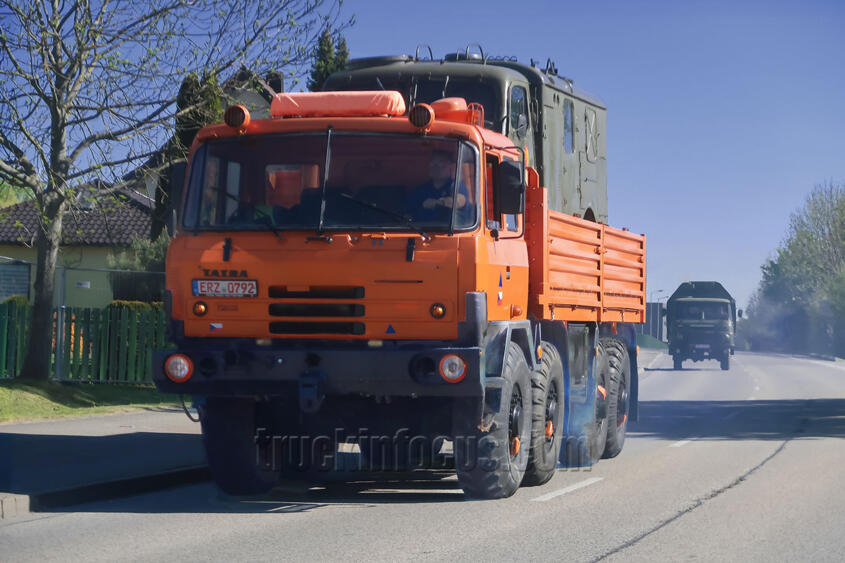
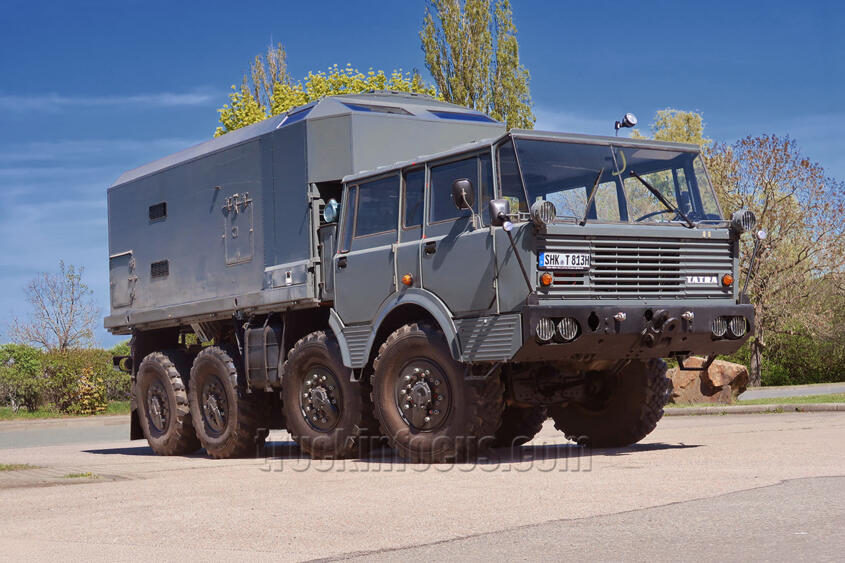
On display were not only rare commercial vehicles from the former socialist countries, but also from Western Europe and the USA. Equally impressive was the seemingly endless number of cars and two-wheelers from many countries, which we do not show here, as we specialize in commercial vehicles.
Closing remarks
When selecting photos, we made sure to largely replace vehicles we had featured last year with different ones this time. That’s why it’s worth taking a look at our 2025 article, as many of the vehicles pictured there were also present again this year. Here is the link.
We thank the staff of the Saxon Commercial Vehicle Museum for their assistance in compiling this article.
Text and photos: Steve St.Schmidt