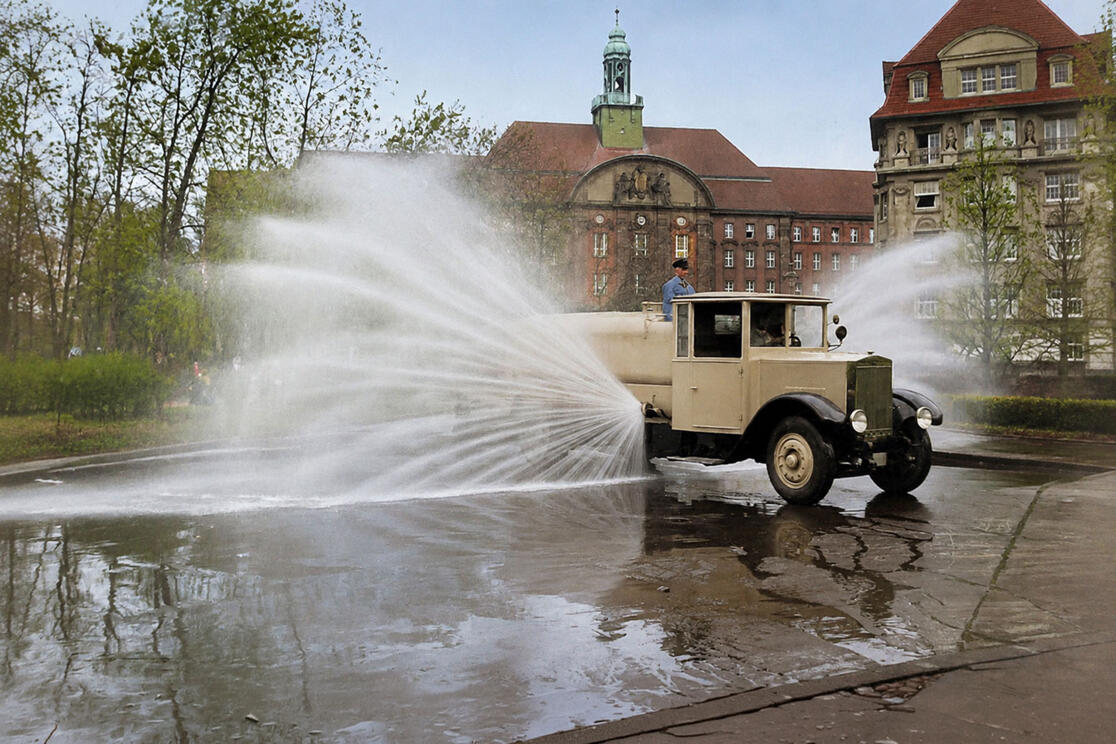
After a summer in which Europe's cities have suffered from a historic heat wave and people have been discussing cooling solutions, it's worth taking a look back. More than a hundred years ago, special street watering vehicles were already in use in many cities around the world. Their purpose was simple: to spray water on streets, suppress dust, and cool down overheated urban areas — at least for a short time. These sprinkler trucks played an important role in urban life. From the 19th through the 20th century, they were used widely in many countries. They helped reduce temperatures on overheated road surfaces—a simple remedy for summer heat stress in cities, long before air conditioning or modern urban greenery existed.
The Emergence of a Municipal Vehicle Class
With the rapid growth of cities in the 19th century, the problem of street dust also increased. At that time, most streets were not yet paved but consisted of gravel, crushed stone, or compacted natural soil. Horse-drawn carts constantly kicked up dust, which was not only unpleasant but also considered harmful to health. As early as the mid-19th century, numerous cities began regularly spraying water onto the roadways. Initially, this was done using simple barrels on horse-drawn carts. Soon, specially designed sprinkler trucks with large water tanks and adjustable spray nozzles were developed, which distributed the water evenly across the roadway. Street sprinkling served several purposes: binding road dust, improving air quality, reducing dirt caused by horse-drawn traffic, and cooling heated streets in the summer.
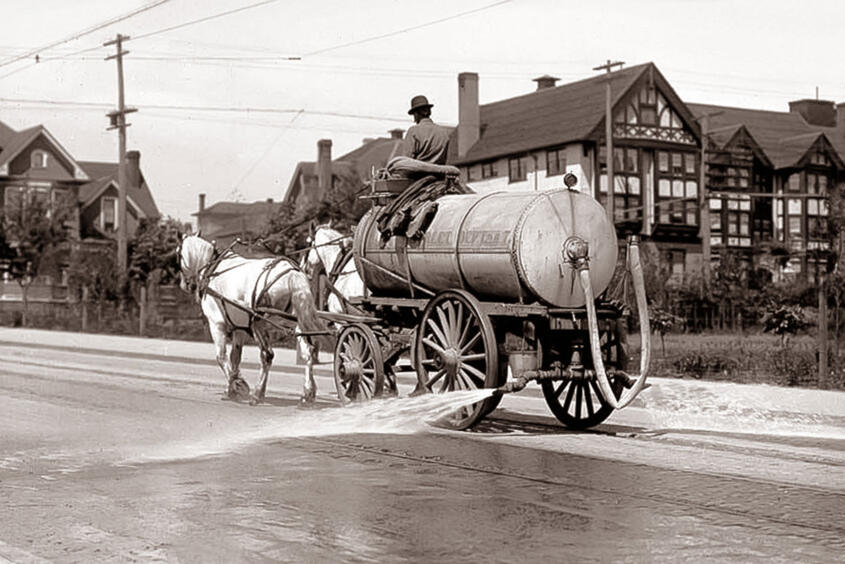
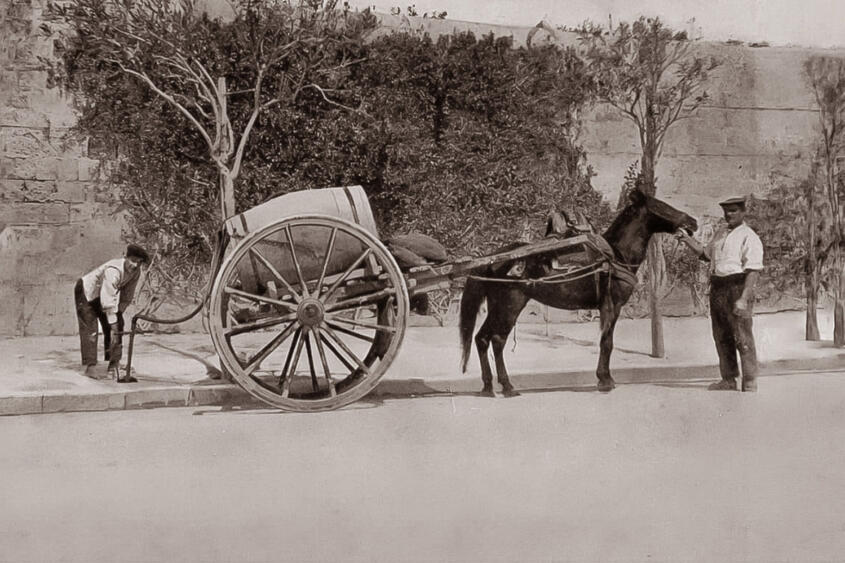
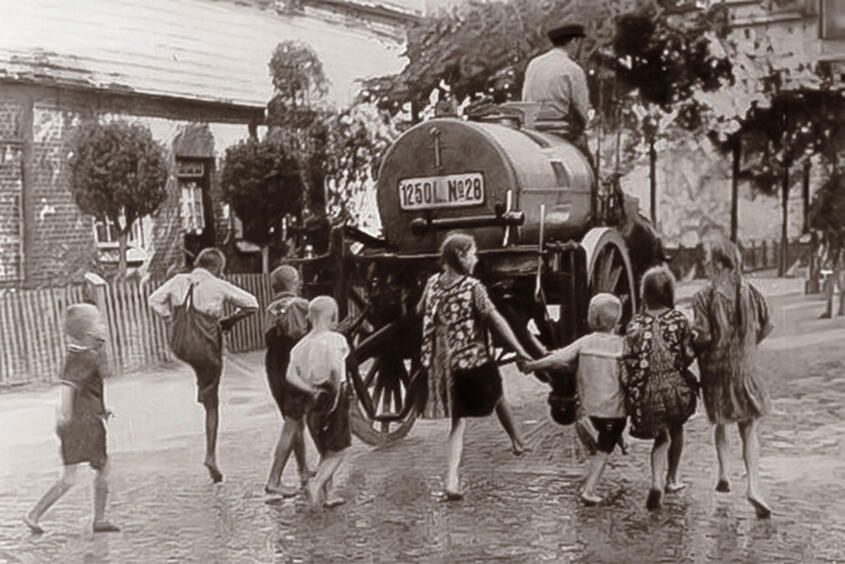
As was the case all over the world, horses were used as draft animals to pull vehicles before the advent of motorization. Also the first sprinkler vehicles were horse-drawn, as seen here in Seattle. The operator could control the water stream from his driver’s seat. The photo is from Wikimedia Commons and was provided by the Museum of History & Industry in Seattle (Webster & Stevens Collection).This photograph is from a 1920 tourist guide to the island of Malta and shows a horse-drawn sprinkler vehicle being filled from a fire hydrant. The photo is from Wikimedia Commons and was provided by Lee Stuart Sherriff.Whenever the sprinkler vehicle passed by in the summer and children were nearby, they had a reason to celebrate. It was great fun to run behind the vehicle and get splashed by the cool stream of water. The 1905 photo is from Wikipedia; the photographer is unknown.
Street Sprinkling as Part of Public Health
At that time, street cleaning was understood to be an important component of public health. Especially during dry summers, major thoroughfares were watered several times a day. The German city of Düsseldorf provides a striking example: regular street sprinkling began there as early as 1871. In the city center, streets were sometimes sprinkled up to eight times a day during periods of extreme heat.
From Horse-Drawn Carts to Motorized Sprinkler Trucks
Technical development proceeded in several stages. The first vehicles were wooden or iron water barrels mounted on carts. The water was distributed either by gravity or using simple pumps. Starting in the 1920s, and especially after World War II, sprinkler vehicles were increasingly built on truck chassis. Typical features now included tank capacities of up to several thousand liters, spray bars at the front and rear of the vehicle, side nozzles, adjustable water flow, and a hydrant connection for quick refilling.
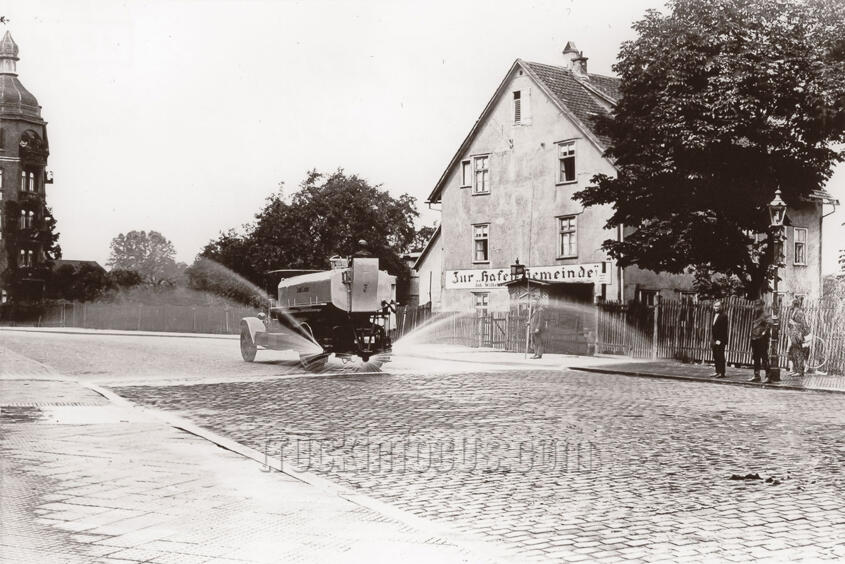
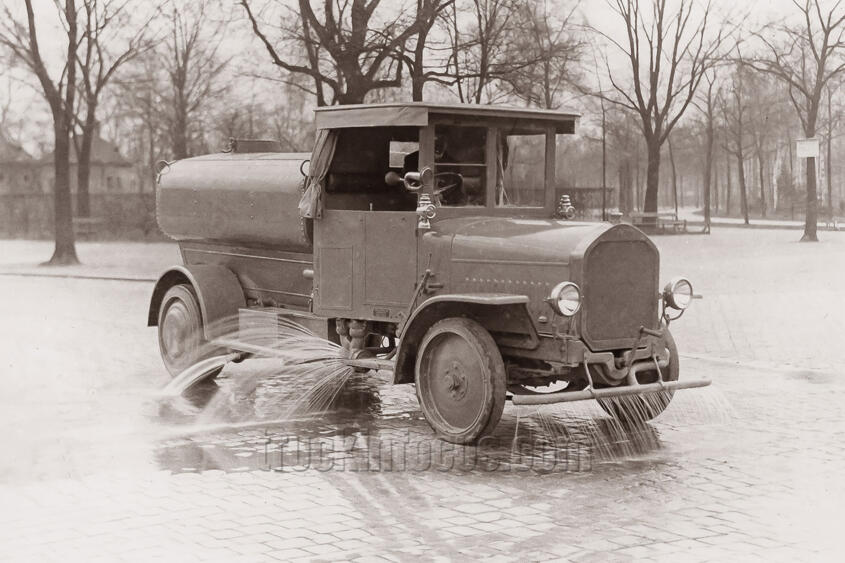
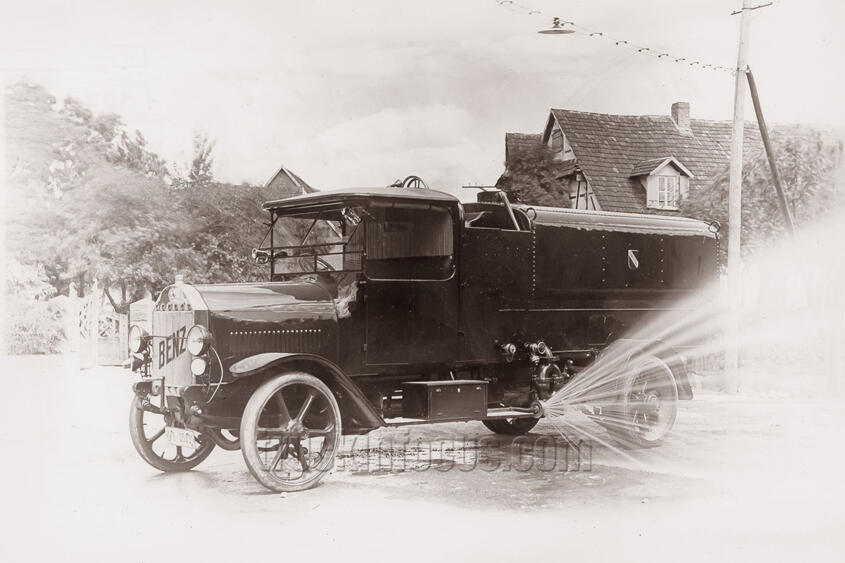
With the advent of the first trucks, motorized sprinkler vehicles also came into use. The crew typically included not only the driver but also another person who, from an elevated workstation, regulated the water jet and turned it on and off as needed — for example, to prevent passersby from getting wet.This photograph shows a German FAUN gasoline-electric truck with wheel-hub electric motors from 1926. The body of the sprinkler truck, which held 3,500 liters of water, was built by Kuka. The water spray function could be controlled from the cab.The body of this 5,000-liter water truck was also built by Kuka. The workstation for the person who regulated the water jet was located between the cab and the tank. The base vehicle was a five-metric-ton Benz from Gaggenau, built in 1924.
The “Rolling Air Conditioner”
In addition to suppressing dust, water sprinkler trucks served another purpose. During hot summers, they cooled the pavement through evaporation, thereby temporarily cooling the surrounding air as well. Densely built-up city centers benefited from this in particular. Many older residents recall how children used to run after the water sprinkler trucks and deliberately let themselves be hit by the water spray. Although the cooling effect of the spraying was only local and temporary, it was certainly appreciated.
An impressive municipal effort
Street spraying was by no means a rare measure. Records from the history of Düsseldorf’s municipal sanitation department show that the first iron sprinkler truck was purchased in 1878. By 1900, the fleet already consisted of 23 sprinkler trucks, and by 1909, the number had risen to 48 vehicles. During the exceptionally hot summer of 1911, approximately 340,000 cubic meters of water were sprayed over 172 days of operation. These figures demonstrate the great importance attached to street watering at that time.
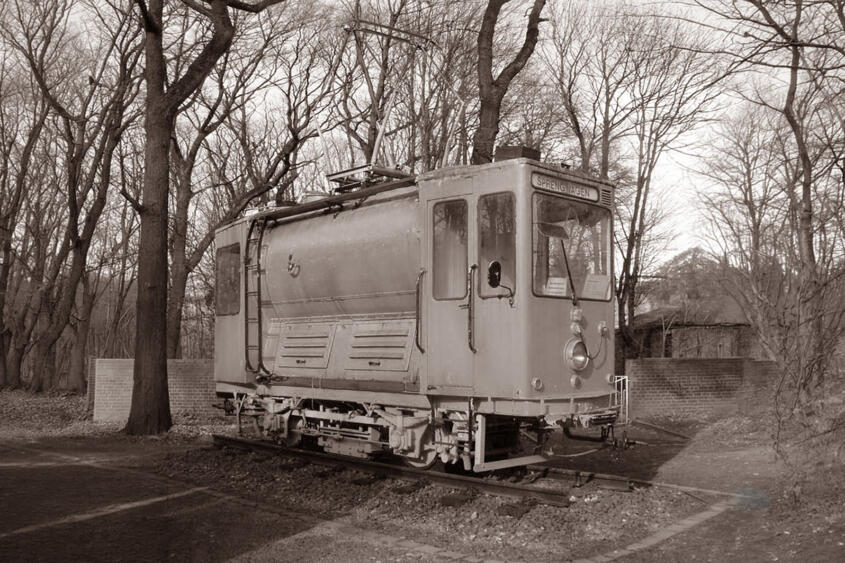
Rail-mounted water trucks were relatively rare, but they existed in various European countries as well as in the U.S. They operated on the streetcar networks of some cities and were distinguished by their high water capacity. The 1914 model pictured here was operated by Bochum-Gelsenkirchen-Streetcar and is now on display at the Emschertal Museum in Herne (Germany). The photo is from Wikimedia Commons and was provided by Stefan Kunzmann.
Sprinkler Vehicles on Rails
A variant that is almost forgotten today was the streetcar-based water truck. These did not travel on the road but on the tracks of the streetcar networks. Because of their larger capacity, they could transport significantly more water than road vehicles. Some even had electric pumps that could spray water up to 15 meters. Interestingly, historic tram-based sprinkler wagons are still occasionally modernized and put into service today. For example, in 2023, Rhein-Neckar-Traffic converted a former trailer car into a watering vehicle for grass-covered tracks.
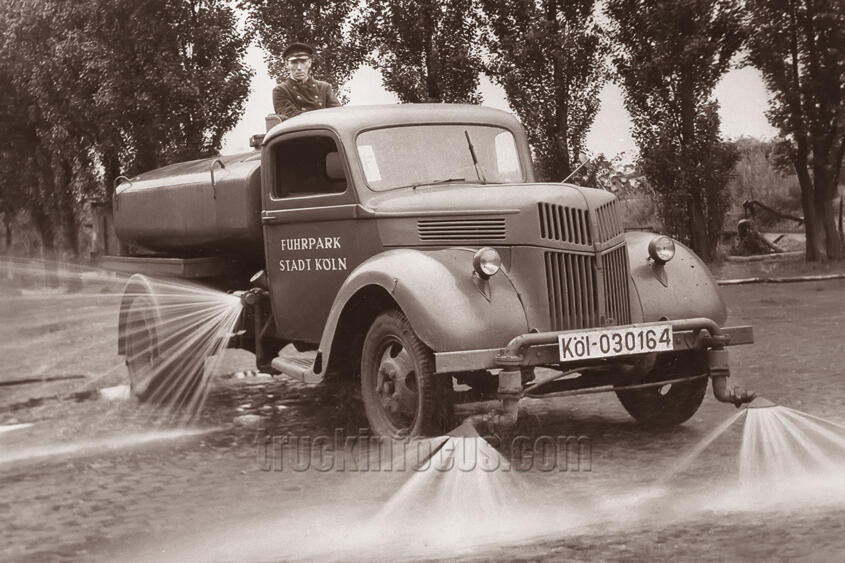
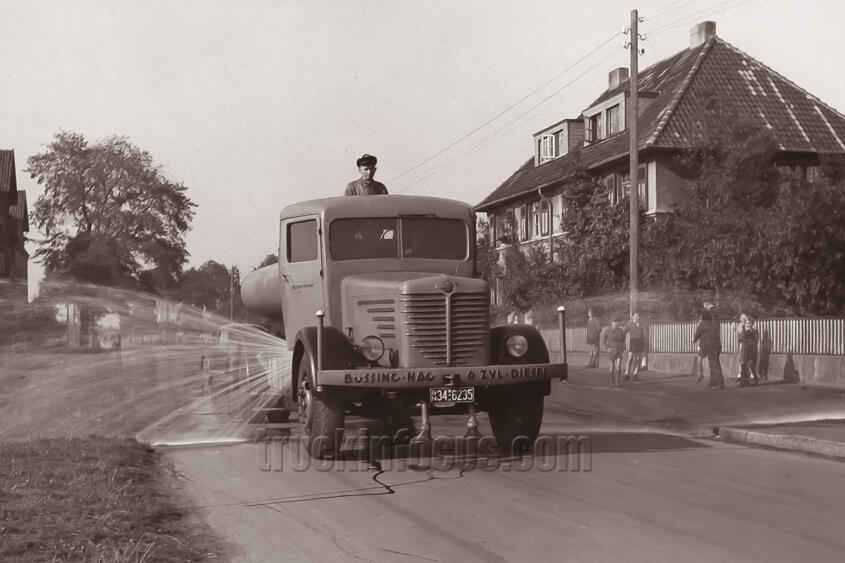
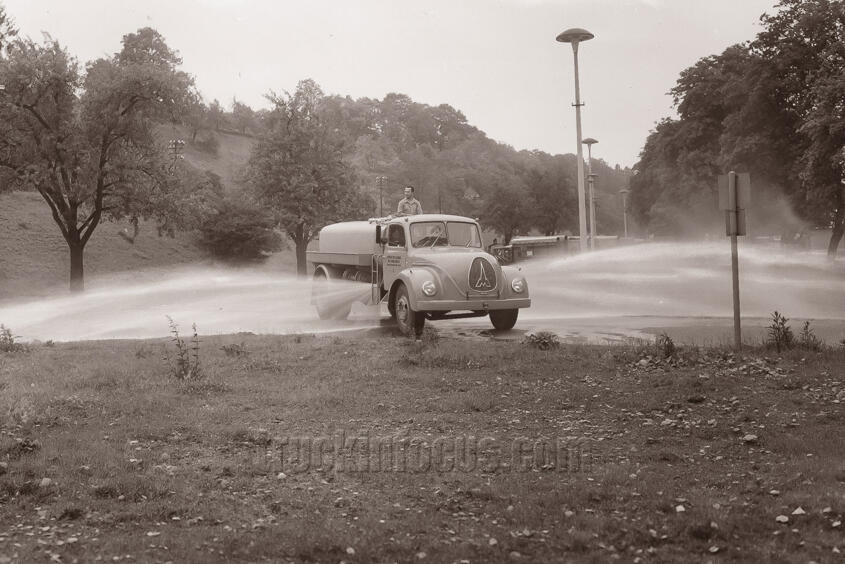
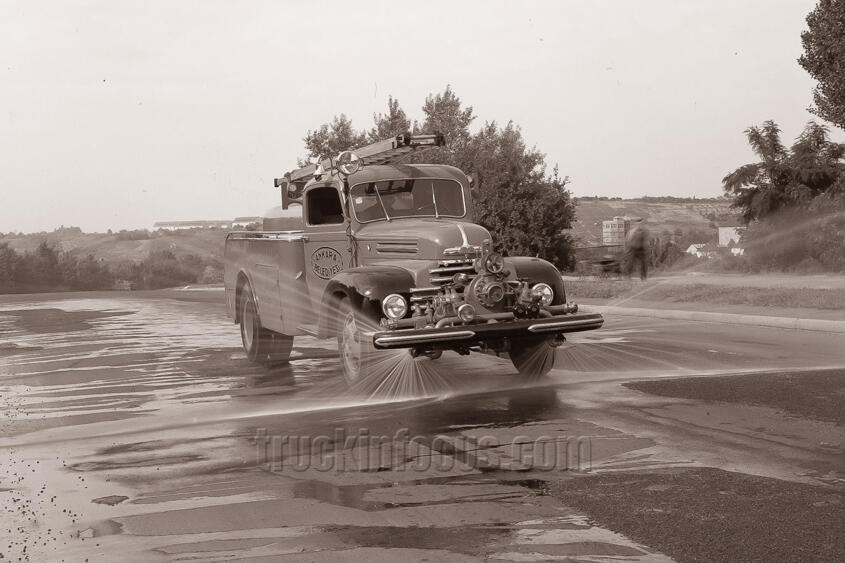
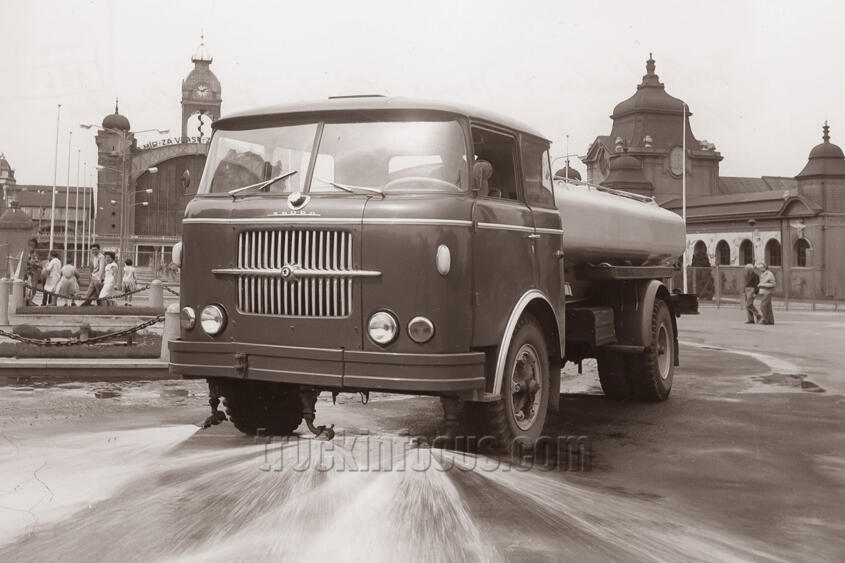
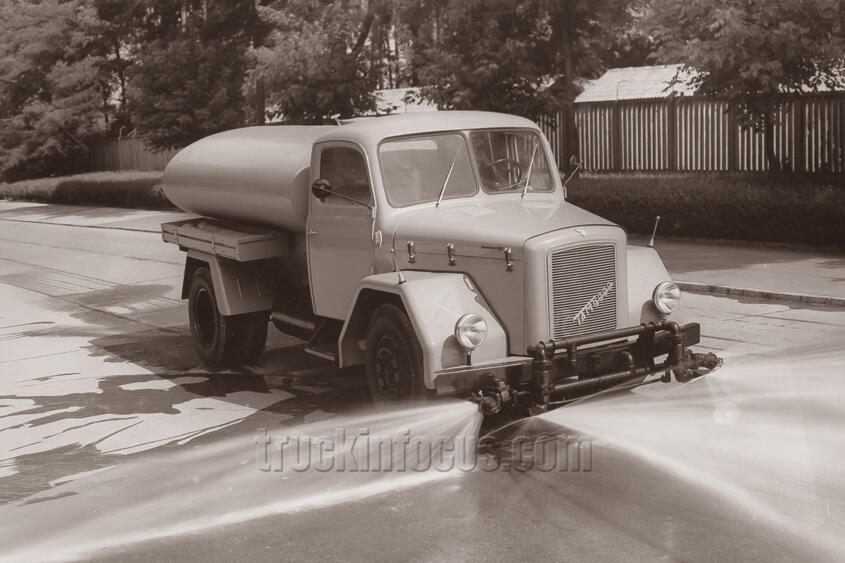
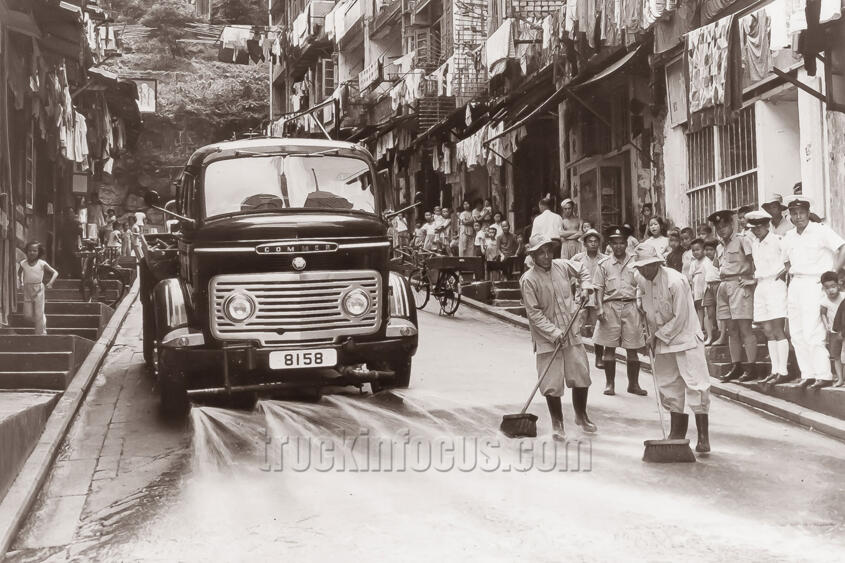
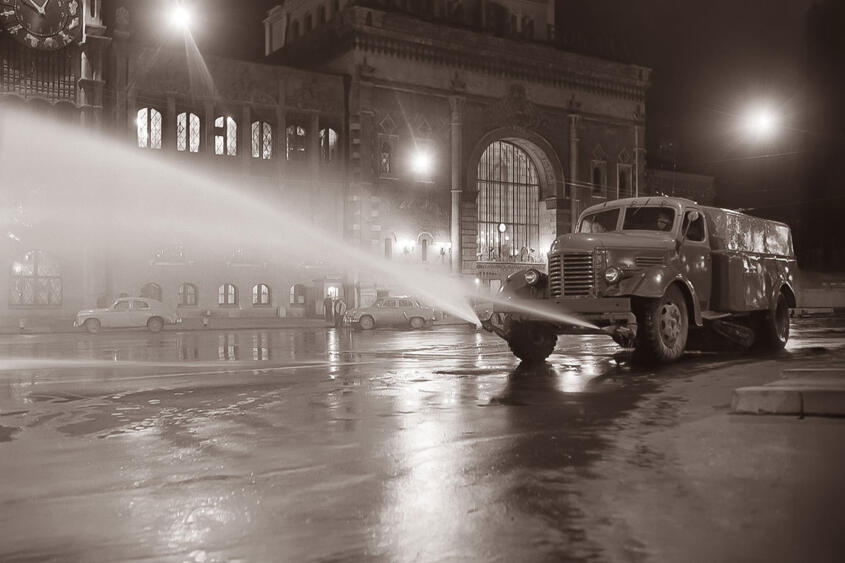
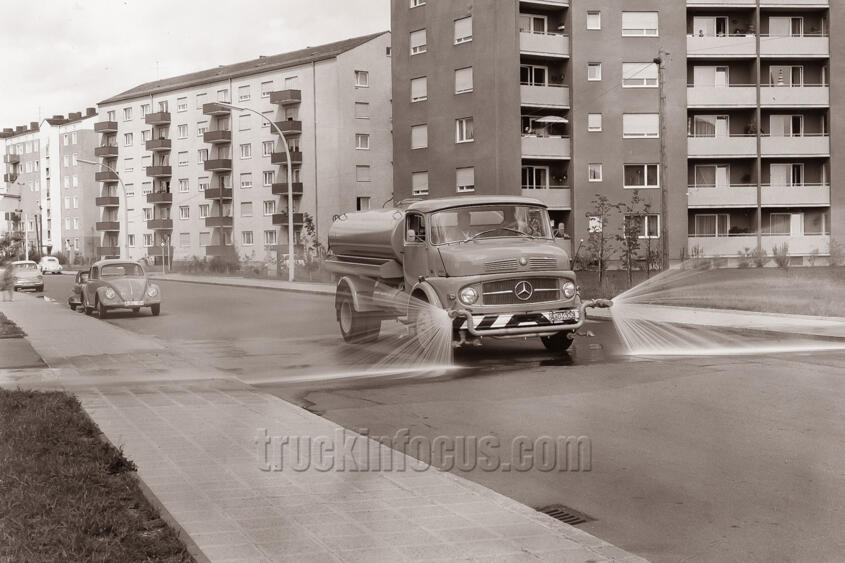
This photograph shows a 1948 Ford V 3000 S, the first truck manufactured in Germany after World War II by the American brand Ford. Behind the cab, you can see the man who, from his elevated position, made sure that no water jets landed where they weren’t welcome.In 1936, Büssing-NAG introduced the “new face.” This referred to a revised appearance that stood out primarily due to the radiator grille with crossbars in the shape of a coat of arms. The Type 5000 S fire truck, however, was from the postwar period, as evidenced by the hood side panels with wing-shaped ribs flush with the front. The vehicle had a pre-war radiator grille and a sprinkler truck body built by Schörling in Hanover.This Magirus-Deutz round-hood truck with an air-cooled engine – which earned it the nickname “weeping boje” – was presumably on a test drive and still without license plates, spraying water on everything in its path. The vehicle type is listed as an S 5500 Saturn; the sprinkler truck body was manufactured by Stadler in Neu-Ulm. Year of photograph: circa 1957.The German-built Ford FK 3500 was a widely used 3.5-metric-ton truck in the 1950s, suitable for many applications. The special body, supplied by Fahrzeugbau Haller of Stuttgart-Feuerbach as a tank fire engine with a front-mounted fire pump, was additionally equipped with a street-watering system. The vehicle was part of the fleet of the municipal administration of the Turkish capital, Ankara.The Škoda S 706 RT was built as a sprinkler truck with a Karosa body from 1958 to 1975. During this period, the radiator grille underwent several changes. It is noteworthy that the 7,000-liter tank body could be replaced with a flatbed if necessary.Tovarna Automobilov in Motorjev (TAM) was a Slovenian commercial vehicle brand founded in 1946. The country gained independence from Yugoslavia in 1991. The 5000 P truck was built by TAM starting in 1958 under license and using stamping dies from Magirus-Deutz. Air-cooled engines from the Klöckner-Humboldt-Deutz brand were also manufactured under license. However, the conversion into a sprinkler truck was likely carried out in-house.This photograph from around 1960 was taken in Hong Kong, which was a British Crown Colony until 1997. Sovereignty was subsequently transferred to the People’s Republic of China. British cars and commercial vehicles continued to dominate the streetscape for a long time. The photo shows a Commer truck with a QX cab. This model was built between approximately 1956 and 1962. Not much of the sprinkler truck’s bodywork is visible, but the astonished looks on the passersby’s faces indicate that the vehicle caused quite a stir as it drove by.There were also sprinkler trucks in Moscow. This atmospheric nighttime shot shows a ZIS 150. This model can be considered a replica of the International KB series. The photo, taken in 1963, comes from Wikimedia Commons; it was taken by Nikolai Rakhmanov and made available by the Main Archive of Moscow.In front of the typical postwar apartment buildings — which are anything but architectural gems and lend almost every German city a touch of bleak monotony — we come face to face with a sleek Mercedes L 322 short-bonnet truck with a Kuka special-purpose body, serving as a sprinkler vehicle in full action.
Other Uses
Sprinkler trucks were more versatile than their name suggests. Depending on the need, they were used as fire department tankers, irrigation vehicles for parks and construction sites, and as water suppliers at large events. In smaller communities, a single vehicle often performed several of these tasks.
Why Did Sprinkler Trucks Disappear?
Starting in the 1960s and 1970s, classic water trucks became increasingly obsolete. There were several reasons for this: paved roads generated significantly less dust, modern street sweepers could clean them without prior watering, water consumption was viewed more critically, and road traffic became noticeably more congested – slow-moving water trucks began to obstruct traffic.
Today, traditional water trucks exist only in isolated cases. Modern water trucks instead take on specialized tasks such as watering green spaces or cleaning large traffic areas.
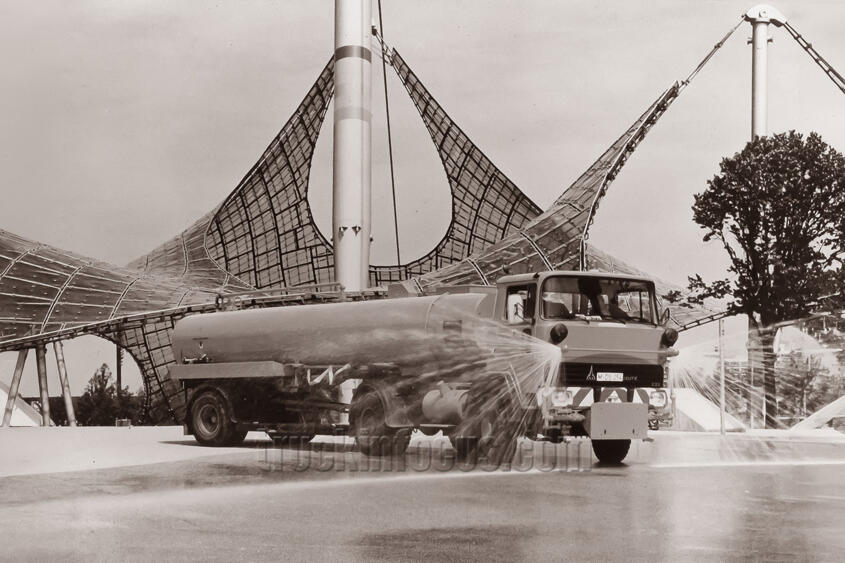
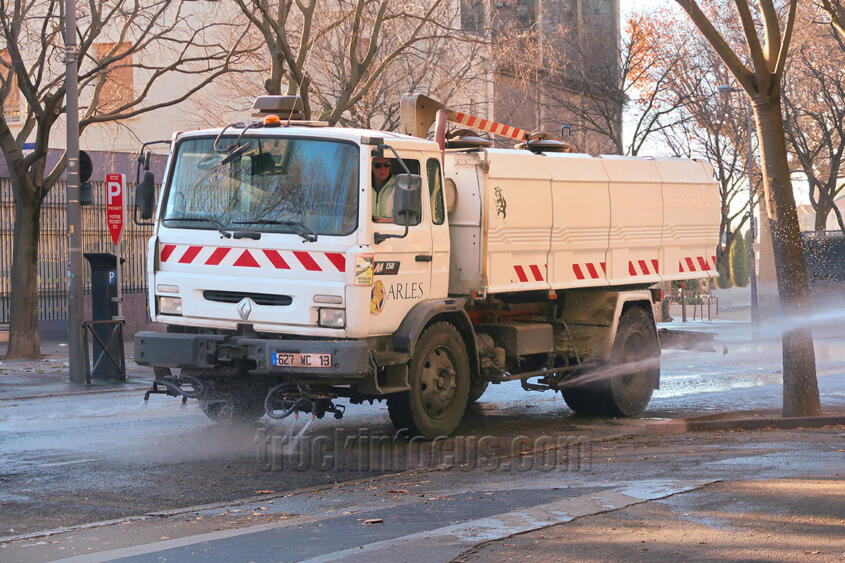
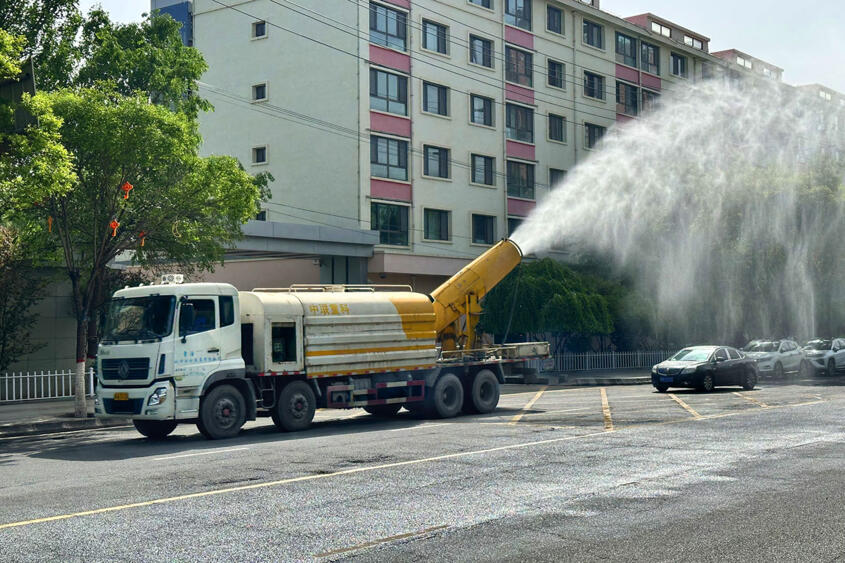
A Magirus-Deutz four-wheel-drive tractor unit unit with a tank semi-trailer was in service at the Munich Olympic Park in 1972 during the XX Olympic Games. The sprinkler equipment was supplied by Kuka in Augsburg. The vehicle model is listed as 232 D15 FAS from 1971.This photograph from the year 2025 proves that street sweepers still exist in Europe, even if they may not be of the latest design. In Arles, in southern France, a large market takes place every week where regional products are sold. As soon as the market stalls close for the day in the afternoon, the street sweepers go into action. In no time at all, they use a targeted water jet to sweep up all traces of the bustling activity. Shortly thereafter, the thoroughfare is reopened to traffic. The Renault, converted into a water cannon truck, is a midliner from the final model series with a club-of-four-cab, built from 1996 to 2000 and then replaced by the Midlum series.To wrap up this pretty wet article, let’s really go all out. In China, such spray cannons don’t seem to be a rarity. In this case, a four-axle truck from Dongfeng, serves as the base vehicle. The photo from the year 2025 comes from Wikimedia Commons and was provided by Michael Beim.
A current trend
In light of increasing summer heat, water-based cooling measures in cities are once again attracting interest. Although historic sprinkler trucks will not return to their original scale, modern water trucks are once again being deployed in some places to specifically irrigate squares, streets, or trees and mitigate local heat islands. In retrospect, the old sprinkler truck thus appears almost like an early precursor to today’s climate adaptation measures.
Conclusion
The sprinkler truck was far more than just a curious municipal vehicle. For nearly a century, it was an indispensable part of the infrastructure in many cities. It combined road maintenance, sanitation, dust control, and summer cooling in a single vehicle. As road construction and cleaning technology evolved, it largely disappeared from the cityscape – yet what remains is an interesting chapter in the history of municipal technology, one that now seems surprisingly relevant again in light of new challenges posed by heat and drought.
Unless otherwise noted, all photos in this article are from the Edition Diesel Queen archive. The cover photo has been colorized.