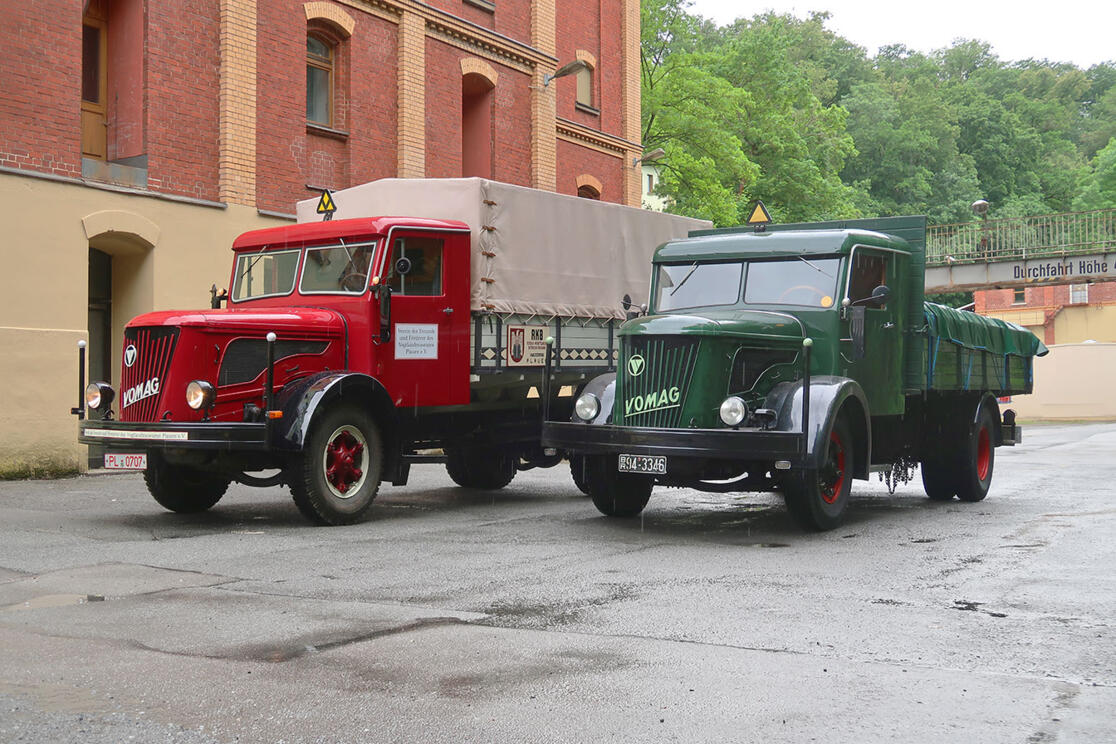
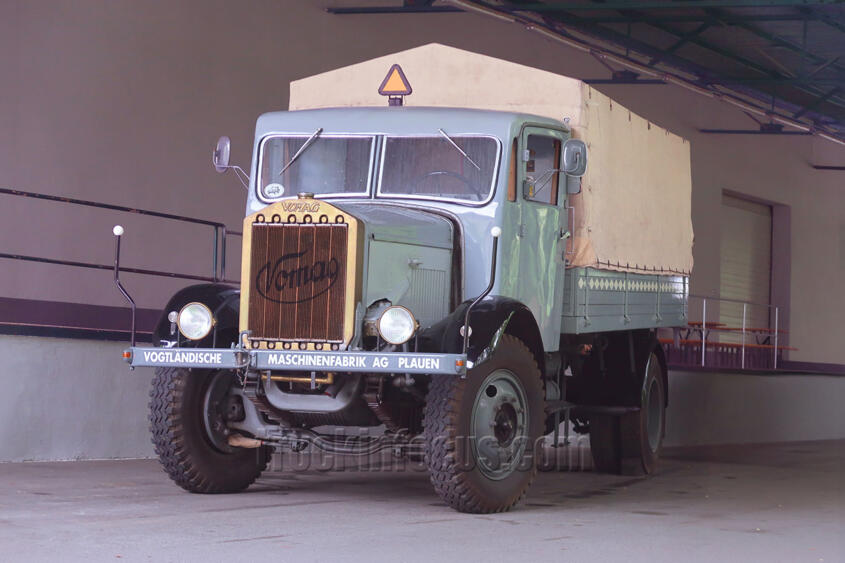
Commercial vehicles from the legendary VOMAG brand have not been built in Plauen for more than 80 years. In 1945, Soviet troops completely dismantled the production facilities and transported them to Russia. This brought to an end a 30-year history of commercial vehicle manufacturing and a more than 60-year history of mechanical engineering. Yet the name VOMAG still resonates today, as the company was renowned for the outstanding quality of its trucks and buses. In mid-June 2026, at the invitation of VOMAG specialist Christian Suhr, a gathering took place featuring the last roadworthy and, for the most part, carefully restored examples.
About a hundred years ago, Plauen was one of the wealthiest cities in Germany. Although it was largely destroyed by Allied bombing shortly before the end of World War II, the city’s former wealth is still evident in the elaborately designed facades of many residential buildings. Around 1912, that is, before World War I, the city had a population of just under 130,000; today, that number has shrunk to half.
The “Vogtländische Maschinenfabrik Aktiengesellschaft“ (VOMAG) contributed significantly to the city’s prosperity. As early as 1881, the company—which at that time was still operating under the name “Stickmaschinenfabrik J. C. & H. Dietrich”—began producing embroidery machines. At that time, Plauen lace—an ornate, machine-made embroidery—was experiencing rapid growth. Due to the strong growth of the embroidery industry, there was an enormous demand for high-performance embroidery machines, which led to the company’s rapid expansion; by 1895, operating under the name VOMAG, it had become a world leader in embroidery machine manufacturing. With more than 6,000 employees, the company was the largest employer in the Vogtland region and one of Saxony’s most important industrial enterprises.
Another milestone was the development of the first fully automatic embroidery machine in 1910, which became an international sales success. The company also produced fully automatic looms. Even before fashion trends shifted and embroidery became less in demand, the company expanded its product portfolio to include the manufacture of rotary printing presses. The company had already begun manufacturing printing presses in 1900. It achieved worldwide recognition with both small, space-saving and large rotary offset presses. By 1919, the company was the international market leader in offset printing presses.
The Plauen-based company had long been manufacturing machine tools for its own use. In 1932, VOMAG began producing precision boring machines for the final machining of bores, for example in engine manufacturing. The company was also very successful in this specialized field of custom machine tools. Numerous well-known automobile and engine manufacturers used VOMAG machines for drilling. For example, the bores of Auto Union’s eight-cylinder inline engines could be drilled in a single operation. In 1944, the company delivered its first automatic production line featuring tool changing and partially automated workpiece feeding.
Starting in 1915, truck manufacturing developed into a major branch of VOMAG’s production. In the 1920s and 1930s, the robust VOMAG trucks gained international recognition. During World War II, production increasingly focused on military vehicles and armaments. After the war ended in 1945, production ceased when Soviet troops dismantled the manufacturing facilities. It is said that the precision machinery transported to Russia rotted away there and was never used again.
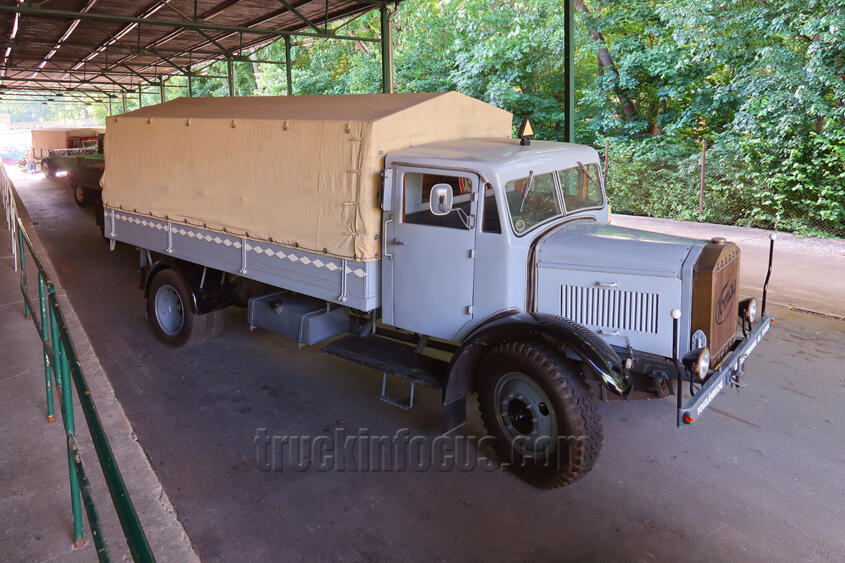
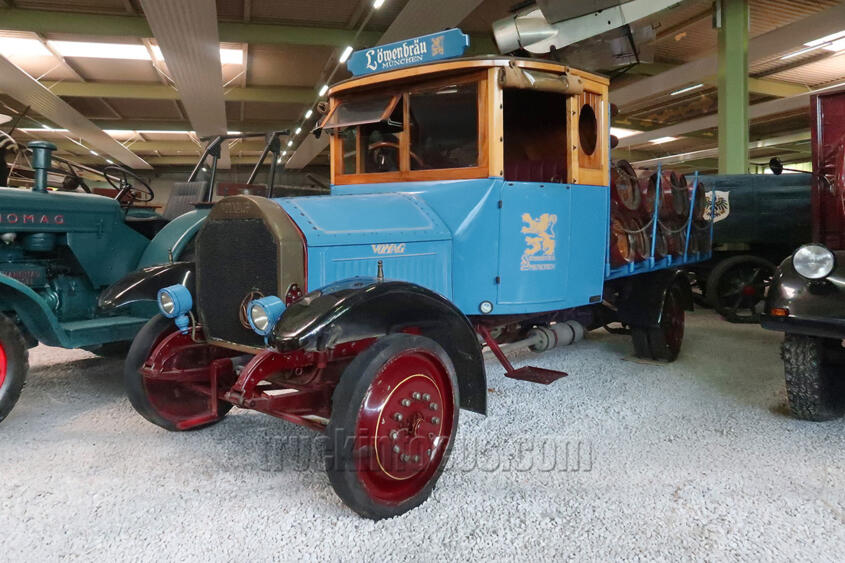
The oldest VOMAG on display at the 2026 Plauen meet is a Type 5 CZ 50 from 1928. It originally ran on solid rubber tires, which were called “Elastik” tires at the time. In 1935, it was converted to 10.00-24 pneumatic tires. The cab is also not original, but like many other trucks, this nearly 100-year-old vehicle was fitted with a more comfortable cab featuring slanted windshields over the course of its long life.Another photo of the 5 CZ 50 shows the vehicle from a different angle. The perfectly restored five-metric-ton truck is part of the collection at the Commercial Vehicle Museum in Hartmannsdorf.
Today, there are very few roadworthy trucks remaining from VOMAG’s production. Over the past few decades, some of them have been on display at various vintage commercial vehicle gatherings. In 2015, the Association of Friends and Supporters of the Vogtland Museum organized a VOMAG gathering in Plauen, where five restored trucks were on display. Now, in June 2026, Christian Suhr, a passionate VOMAG enthusiast and collector from Reichenbach, has organized an event to which all VOMAG owners were invited. Suhr’s enthusiasm for VOMAG began when he was a teenager, and over the past decades he has compiled an extensive VOMAG archive and published various books on the subject, most recently through his own publishing house, “SammelSUHRium.” You can see what’s on offer there via this link: “Books by Experts for Connoisseurs.”
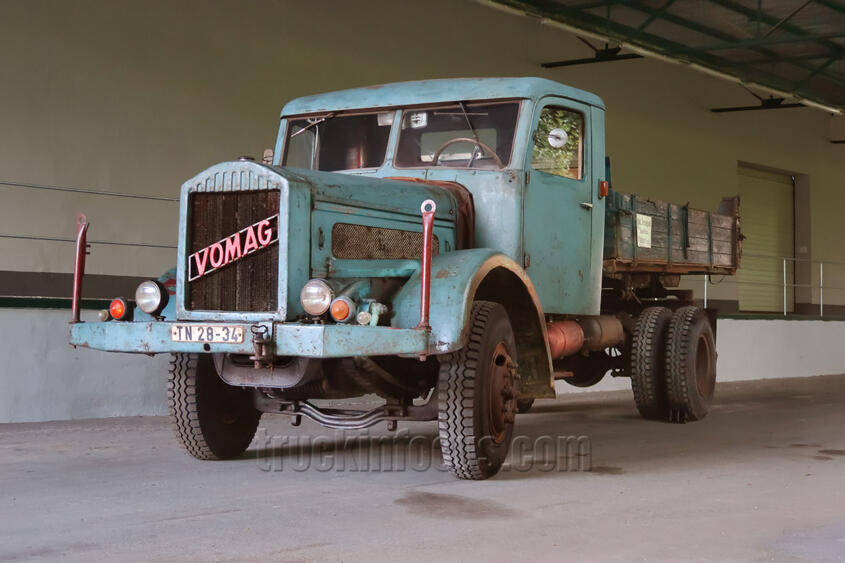
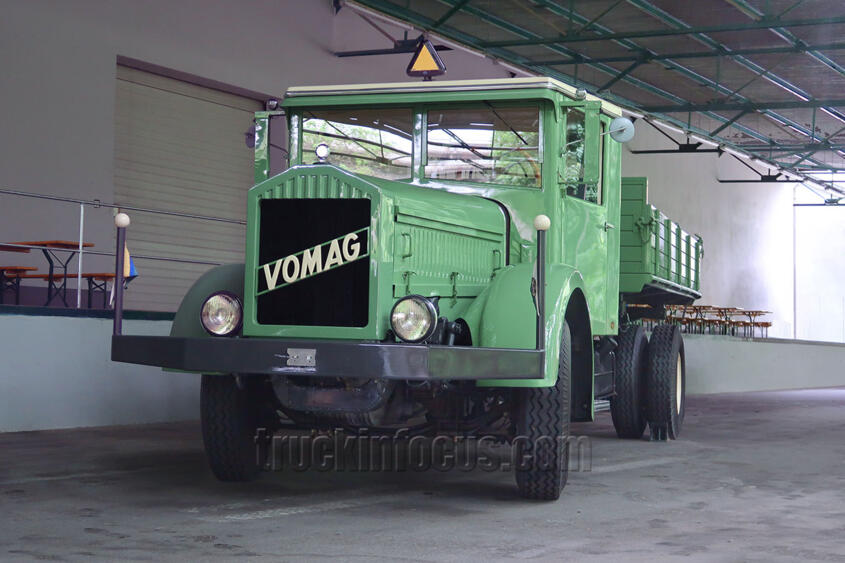
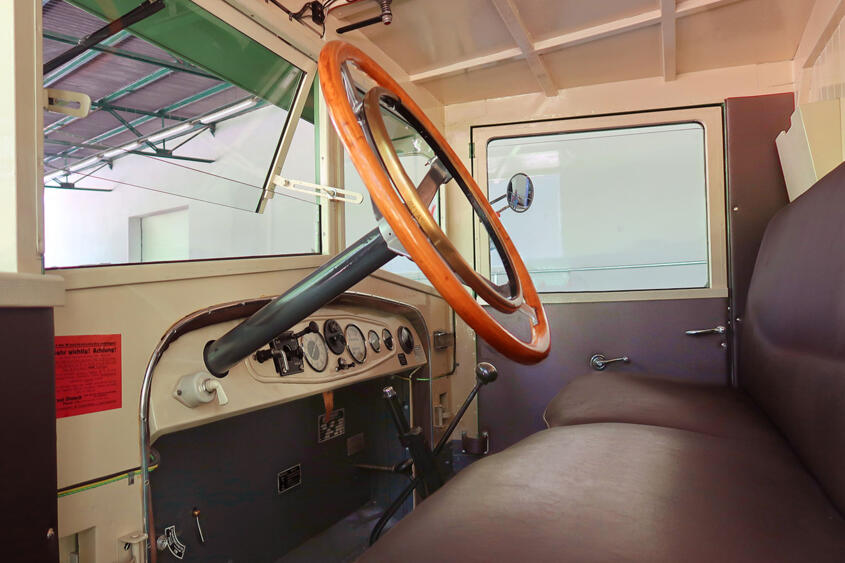
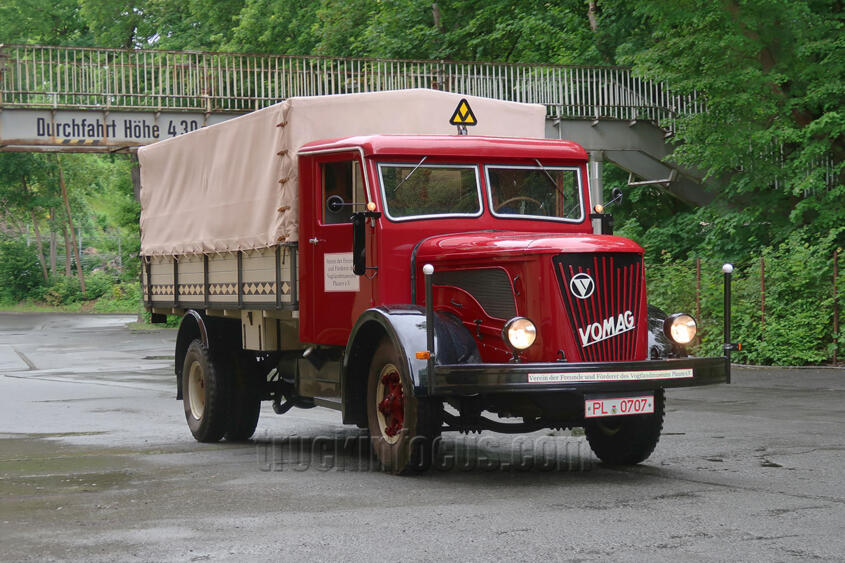
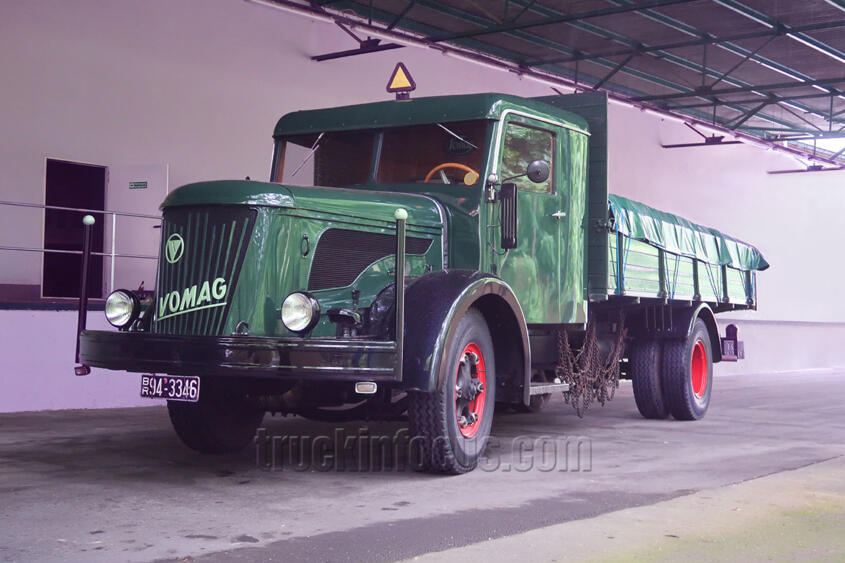
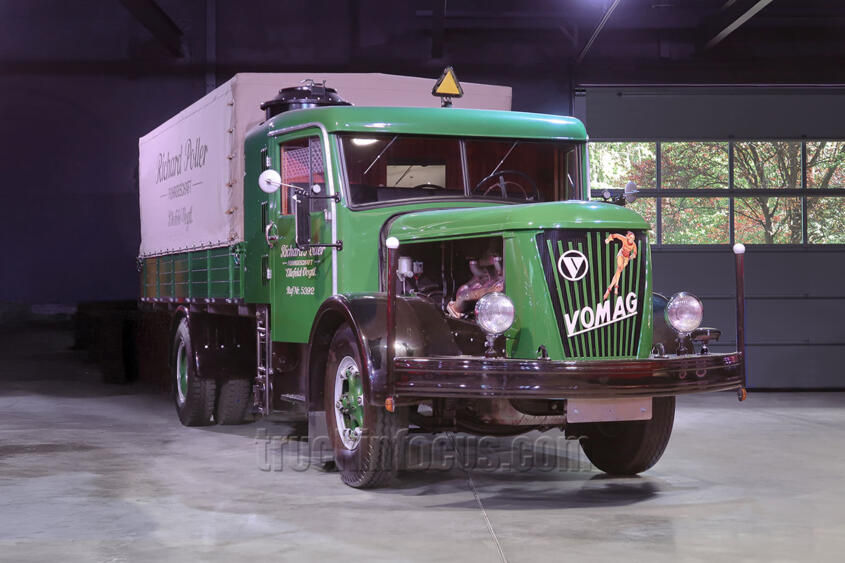
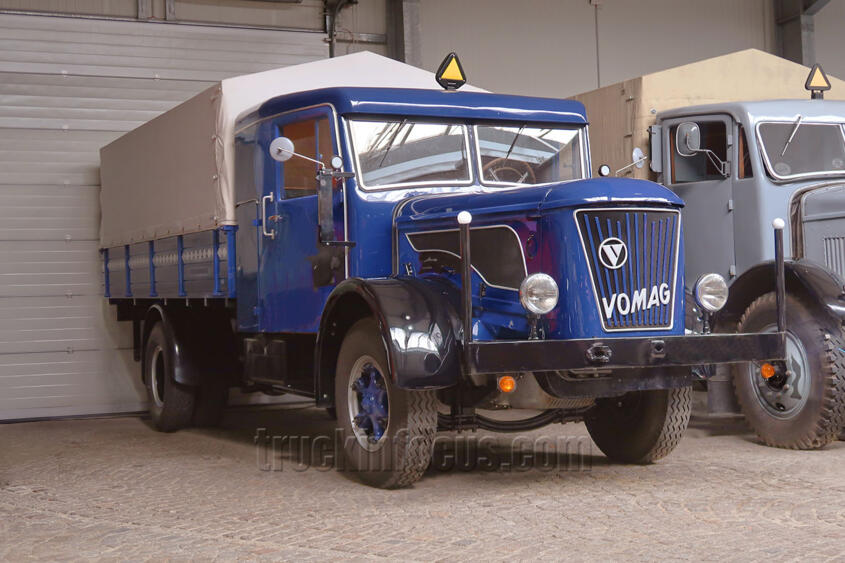
An unrestored truck was also on display in Plauen. The 1936 VOMAG 5 LR 444 is part of the collection of event organizer Christian Suhr, who has no plans to modify or even restore the dump truck. Still bearing GDR license plates, it is a piece of contemporary history. It once belonged to the fleet of Plauen-based freight forwarder Oskar Trampel, whose fleet was almost entirely conscripted for military service in the late 1930s. He was allowed to keep only his VOMAG. Presumably, its wood gas engine saved it from being scrapped somewhere in Russia, as the army preferred diesel engines. After the war, the truck was fitted with a new cab, and the engine was converted to diesel. Oskar Trampel and his son Edgar drove the old VOMAG until 1989. Following Edgar Trampel’s death, Christian Suhr was able to acquire the truck for his collection in 2017 and “bring it back to life” after three decades of inactivity.The restoration of this immaculate VOMAG dump truck took 22 years. Christian Suhr had purchased the vehicle in Gera in 1992 while he was still a student. Originally equipped with a wood gas engine, a coal merchant had bought the vehicle in 1941 and converted it to diesel in the 1950s, as well as modifying it several times and fitting it with a different cab. Today, the 1940 5 LR 448 is presented in its original condition, with newly crafted fenders and hood parts, as well as a faithful reproduction of the original cab, which was crafted from wood based on photographs and drawings.A look inside the reconstructed cab of the 1940 VOMAG 5 LR 448 illustrates the working environment of truck drivers 85 years ago. It’s amazing how they managed with those tiny rearview mirrors back then!The last generation of VOMAG trucks and buses were the so-called “round-hood” models. From 1940 until the end of the war in 1945, they were built almost exclusively with wood gas engines, but were later mostly converted to diesel operation. The model pictured here, a 4.5 LHG 448, belongs to the Association of Friends and Supporters of the Vogtland Museum in Plauen. It had just arrived at the event grounds.This VOMAG 4.5 LHG 448 had the longest journey: Walter Höcker traveled nearly 450 kilometers from Versmold to Plauen to participate in the gathering with his beautifully restored gem. A Magirus cabover truck with a low-bed trailer helped transport the truck, which originated in Poland. Back in 1996, Höcker had imported it from there in individual parts, hidden among potatoes, because the export of vehicles from Poland was not permitted at the time. The vehicle was then extensively restored in Germany.To admire the third VOMAG 4.5 LHG 448 that participated in the gathering, visitors had to head to Werner Poller’s Truck Museum, on whose grounds the event took place. This also provided an opportunity to view all the other vehicles that Poller exhibits in his museum hall. The entire collection can also be viewed almost in its entirety through photos via this link. The VOMAG made its way to Norway during World War II and was brought back to Germany around 1990. It eventually reached its home region, the Vogtland, and was carefully restored by Poller and his team – while preserving the wood gas system located to the right behind the cab.
At the gathering in June 2026, Christian Suhr presented his new VOMAG book. The audience was able to browse through the book and purchase copies. The author also signed copies upon request. Fortunately, the event was a great success for Christian Suhr, as far more people attended than he had expected. He is an architect by profession and had never organized such an event before. Originally, the event was supposed to take place on the grounds of the former Plamag, a successor to VOMAG, but at the last minute, the project nearly fell through due to insurance requirements. It was a good thing that Werner Poller quickly and readily made his museum grounds in Plauen available and even opened the truck museum to the public free of charge. Several thousand visitors came, most from Plauen and the surrounding area. Even 80 years after the company’s closure, the name VOMAG still holds strong appeal there. In addition, owners of other vintage commercial vehicles and classic cars brought their treasures along. The entire weekend was filled with lively activity. Some old friends reunited and marveled at one or another of the VOMAG trucks on display that they had never seen before.
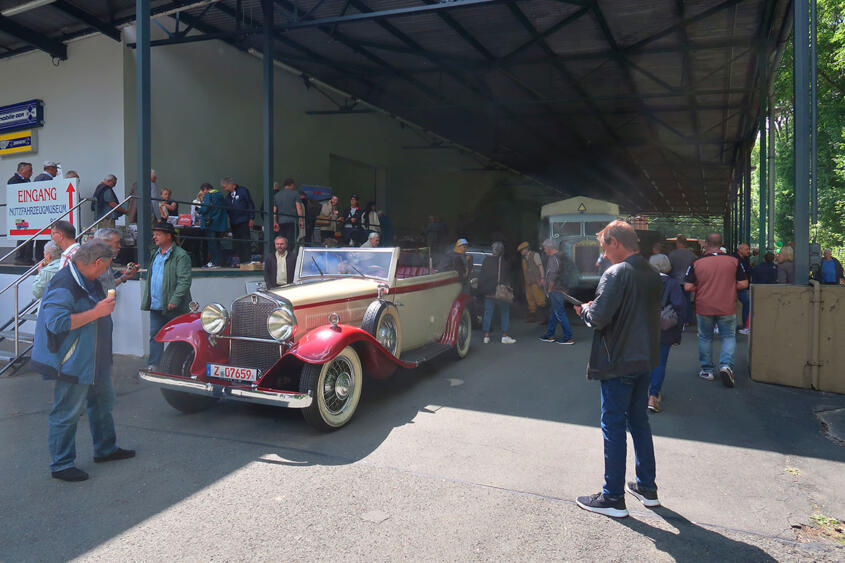
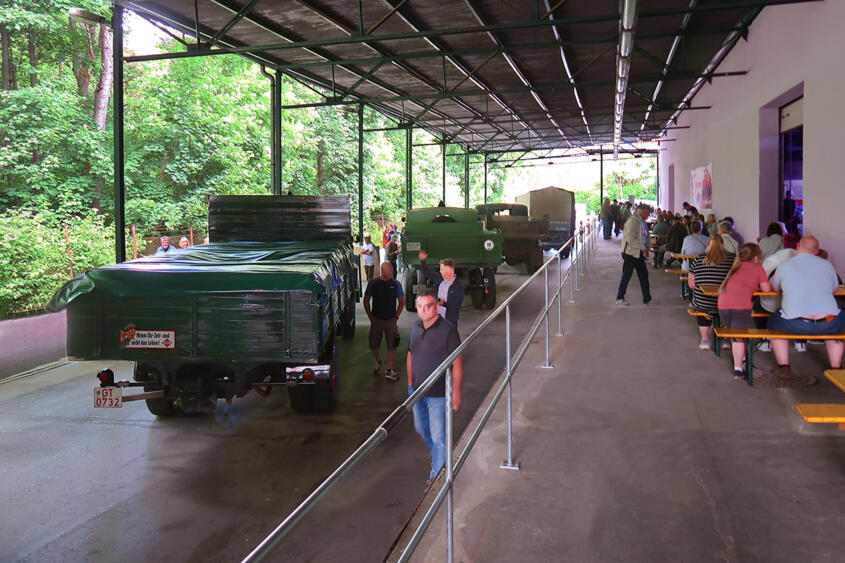
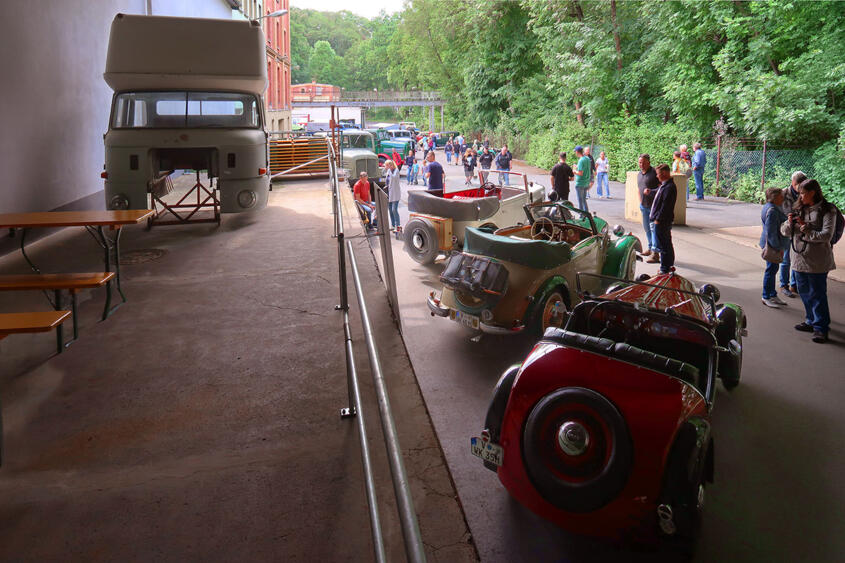
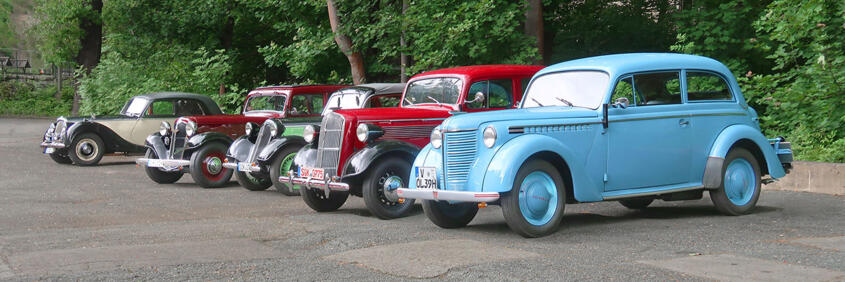
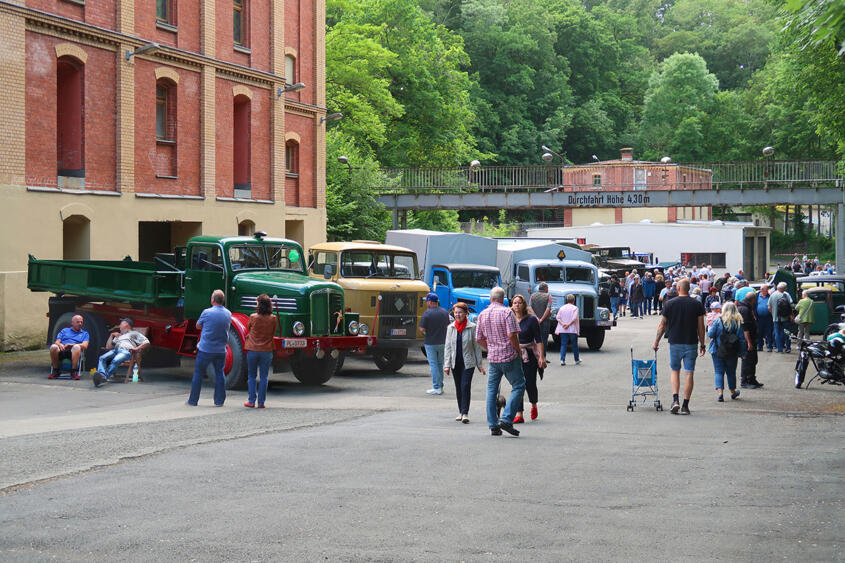
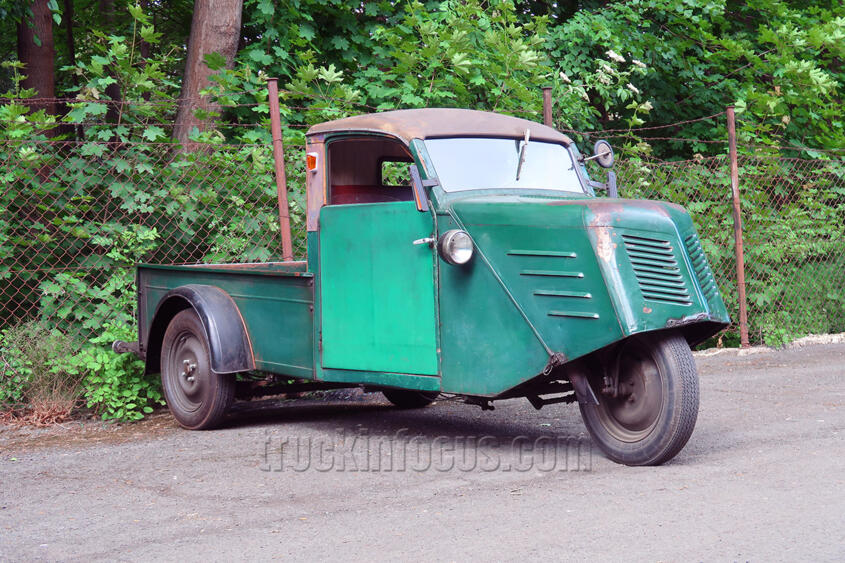
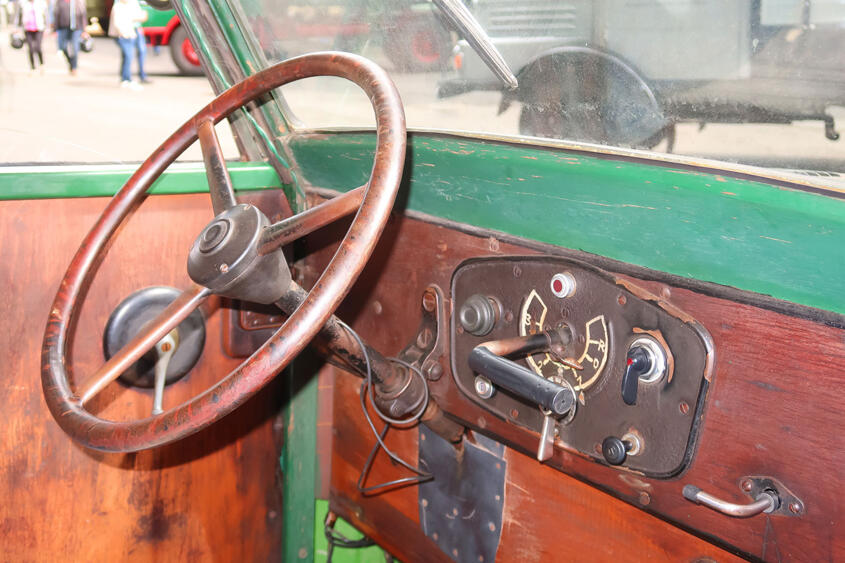
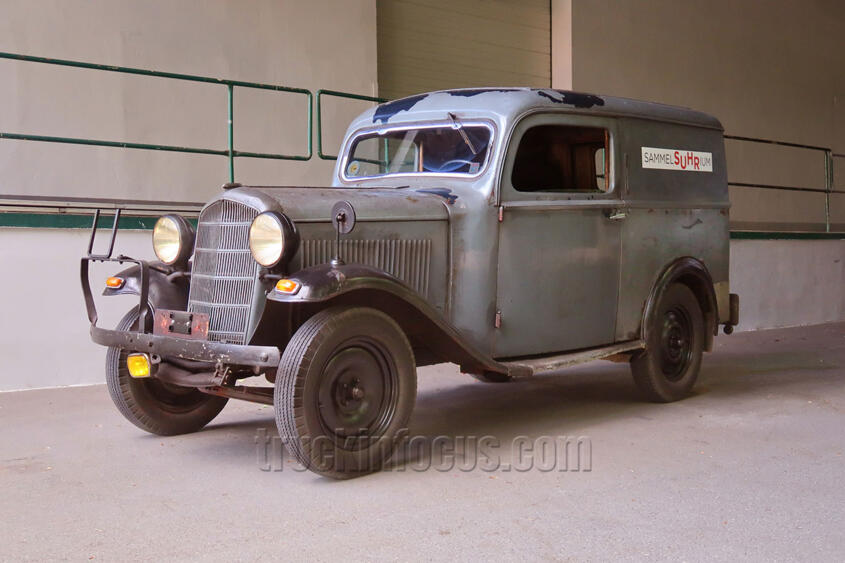
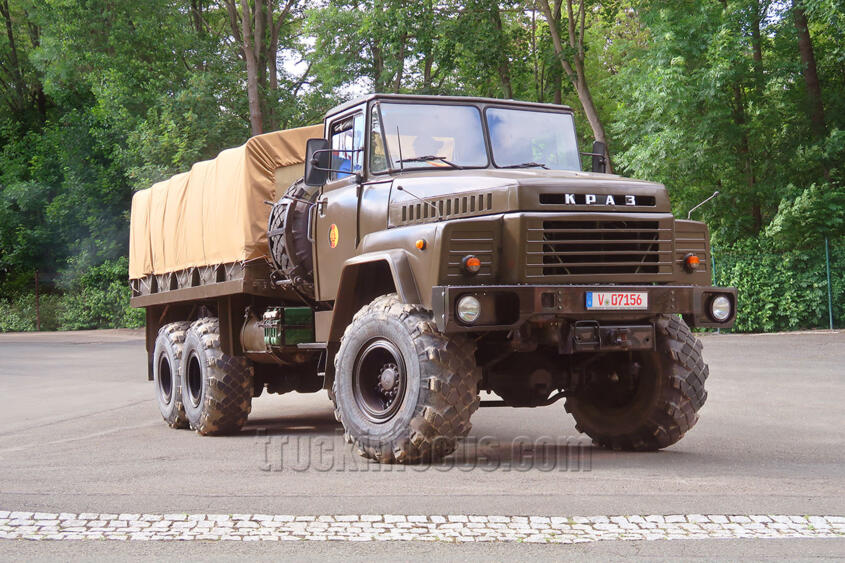
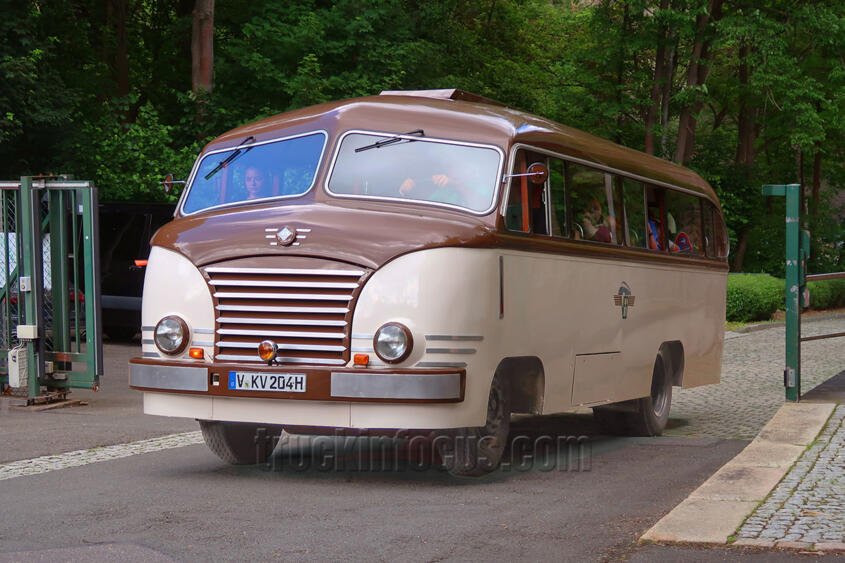
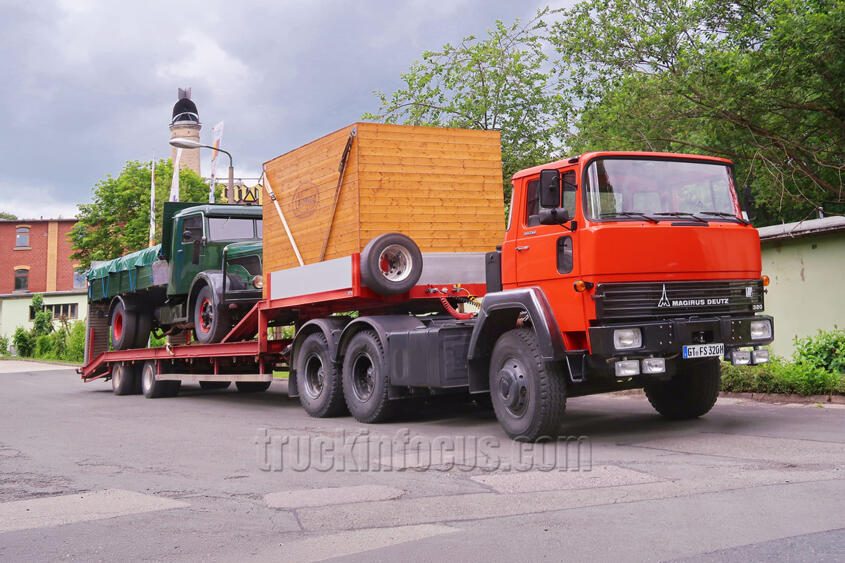
The organizer, Christian Suhr, also invited owners of vehicles outside the VOMAG line to participate in his event and informed the local press about it. As a result, the audience was treated to quite a few gems of automotive and commercial vehicle history that no one had expected, since no advance registration or other formalities were required.The valuable VOMAG vehicles were lined up in front of the covered ramp located to the side of Werner Poller’s museum hall. The hall formerly belonged to the Sternquell Brewery in Plauen, which has since moved into new buildings on the outskirts of town. Tables and benches were set up on the ramp, where the public could enjoy the delicacies available at the snack stand. The museum entrance can be seen on the right side of the picture.In the rear area of the former brewery grounds, there was enough space for the vehicles that some visitors had brought along. On the left side of the picture is a W-50 cab with a topsleeper, a model that was never produced in series. Trucks brought by visitors can be seen in the background.Also noteworthy was a small exhibition of pre-war cars. From right to left, the following can be seen: two Opels, a DKW, a Hanomag, and a Riley from UK.The vintage trucks brought to the event – most of which were manufactured in the GDR – also attracted great interest from the audience.This apparently completely unrestored three-wheeled delivery van from the late 1930s is a Framo LTS 300. The model is very rare and hardly known.Here you can see the driver’s compartment of the Framo LTS 300. Apparently, back then, people could still reach their destination without power windows, power steering, and – believe it or not – even without satellite-guided navigation.This Opel 1.1-liter commercial vehicle has been preserved to this day exactly as it looked on its last day of service in 1990. Only about a thousand were built. Christian Suhr acquired this rare relic for his collection in 2006, overhauled it mechanically, and restored it to a condition that allowed it to pass inspection without altering the vehicle’s appearance. Its eventful history should still be evident at a glance.Slightly larger than the Opel commercial vehicle is this vehicle, which is also very rare in Germany: The all-wheel-drive, three-axle KrAZ 260 rolled off the assembly line in Kremenchuk, Ukraine – then still part of the Soviet Union – starting in 1979. From 1988, the National People’s Army of the GDR (NVA) also adopted this heavy conventional for its fleet. Since only a few years passed before the end of the GDR, it can be assumed that only a small number of these vehicles were procured for the NVA.Another rarity that visitors to the VOMAG meet were able to take on a city tour of Plauen was the so-called “Maikäfer” (May bug). The cute little bus with the fitting nickname bore the model designation Horch H 3 B. It was built from 1952 to 1957 at the Horch Works in Zwickau. Estimates of the number produced range from 230 to 405.This is how it made its way from Versmold to Plauen: Walter Höcker’s VOMAG 4.5 LHG 448. Another real eye-catcher was the 1980 Magirus-Deutz 320 D22 FS 6x4, which was hauling not only the VOMAG but also a large wooden box that serves as comfortable mini flat at truck meets.
Worldwide, only about two dozen vehicles manufactured by VOMAG are known to exist. With the exception of three examples located in Brazil, Finland, and Serbia, they are scattered across various locations in Germany. Of all the vehicles listed, six are roadworthy and were present at the gathering in Plauen, with one exception: a 1918 P 30, which is on display at the Oulun Automuseo in Finland.
Not all of the recorded vehicles are fully preserved. Some consist only of the chassis; others are currently being restored; and still others stand unrestored in their owners’ garages, having waited for years to be refurbished. Some VOMAG trucks did not make it to Plauen. Either they are currently undergoing restoration and have been disassembled, or they could not – or would not – be moved for other reasons. We’re showing some of them at the end of the photo gallery in this post, but not others, as we were asked to keep them confidential.
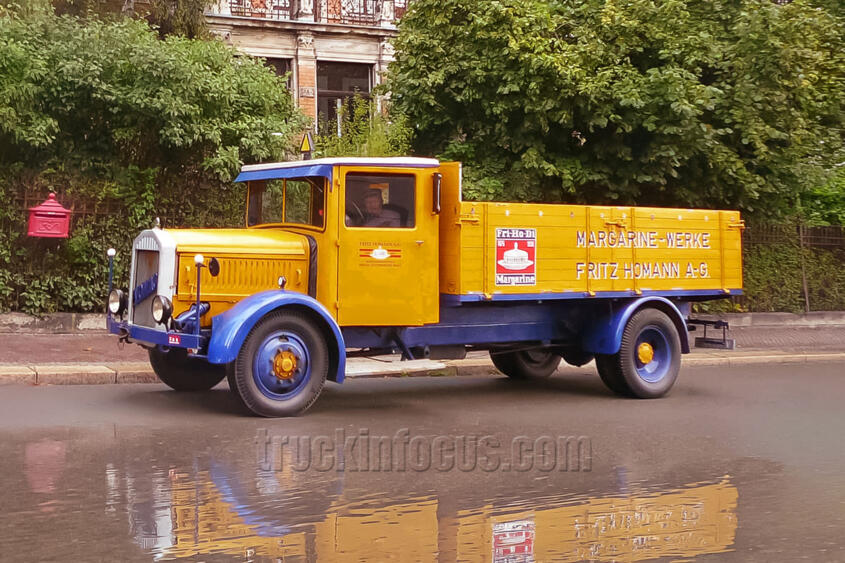
At the Sinsheim Auto and Technology Museum, visitors can admire one of the oldest VOMAG trucks. It is a P 30 model from 1921. The vehicle was restored – though not entirely true to the original – before 1980 and brought to Sinsheim on permanent loan in 1989.The Commercial Vehicle Museum in Hartmannsdorf has two exhibits from VOMAG’s production line. One of them was on display at the Plauen meet (partially visible at the right edge of this photo). The other is this dark blue 4.5 LHG 448, the fourth in the group of restored vehicles of this type.The VOMAG, which has been a fixture in the German vintage truck scene for the longest time, is currently undergoing restoration and will soon be on display in a dark green paint job. The 3 LR 443 once belonged to Dr. Peter Borstel, who organized Germany’s first commercial vehicle rallies under the name “Steam and Truck Festival.” In the early 1980s, Borstel brought the VOMAG back from Norway, restored it, and painted the truck in the colors of the “Homann-Margarine” company. After changing hands twice in recent years, the vehicle has returned to the Vogtland region.
Hopefully, in the future, we’ll see one or two additional vehicles from Plauen that have since been fully restored or have resurfaced from obscurity. In any case, we’re looking forward to the next VOMAG meetup, no matter when or where it takes place.
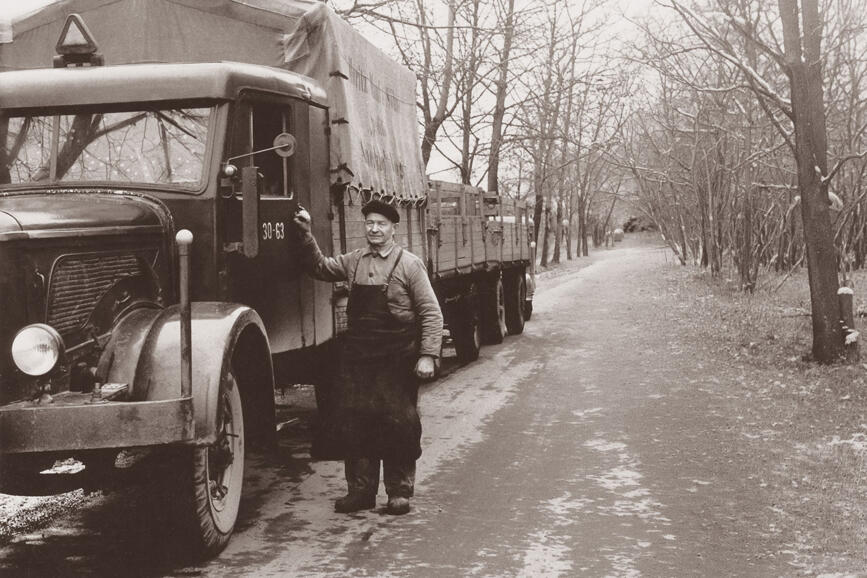
Text and photos (except for the last one): Steve St.Schmidt (Special thanks to the event organizer, Christian Suhr, and to Bernd Goerke of the Association of Friends and Supporters of the Vogtland Museum in Plauen e.V.)