The Ackermann Story, Part 4
New Plans, Mergers, and an Abrupt End
The fourth part of our Ackermann chronicle focuses on the last quarter-century of the Ackermann company from Wuppertal. In 1979, the spectacular GLZ introduced an innovative concept for increasing cargo space to the market, but the hoped-for success failed to materialize. By then, Ackermann had become part of the American Frühauf Group and was manufacturing trailers and bodies of all kinds until its unexpected demise in 1996. Our freelance contributor Markus Hügle from Teningen has thoroughly researched and described in detail what Ackermann had to offer during its nearly 150 years of existence. Part 1 covers the early days through the post-war period, while Parts 2 and 3 describe the period up to the 1970s.
Around 1970, Ackermann CEO Carl Wilhelm Kölker had the idea of merging the three Wuppertal-based body builders into the “United Wuppertal Body Manufacturers.” Each of the three companies, Ackermann, Blumhardt, and Eylert, was to focus on specific areas and modernize and specialize their facilities accordingly. Competitive pressure among them would only diminish the individual companies’ prospects, whereas specialization and rationalization would allow for the offering of more cost-effective products. Discussions between the company management teams were well advanced, but shortly before the first joint presentation in 1971, the Blumhardt owners unilaterally made far-reaching decisions that prompted Kölker to call off the planned merger and devise new plans for Ackermann. In order to make the necessary investments, he felt compelled to seek a strong partner outside Germany for his successful and financially sound company. He eventually found one in the American Fruehauf Group, which was in the process of expanding its European operations.
Subsequently, Kölker sold his company. Only the small branch plant in Switzerland remained in Ackermann’s possession. Starting in 1972, the long-established Wuppertal-based company operated under the name Ackermann-Fruehauf. The established brand name “Ackermann” was thus retained, and a new logo consisting of the letters A and F was created. The various production divisions were now distributed across the individual locations. This also included the former Vidal plant in Hamburg-Harburg, which Fruehauf had acquired in 1970. Previously, the German company Fruehauf GmbH had already been producing semi-trailers in Schierling, Bavaria. At that time, there was an enormous demand for three-axle semi-trailers, as 38-ton semi-trailer rigs had been approved in Germany since 1965 and the old two-axle semi-trailers had to be gradually replaced.
However, the 1973 oil crisis led to a slump in demand for new commercial vehicles. Although business recovered, the European commercial vehicle market was undergoing profound changes at that time. Traditional German brands such as Büssing and Henschel were acquired, and Magirus was absorbed into a European consortium (IVECO). These developments also indirectly affected suppliers of bodywork, trailers, and semi-trailers. They, too, faced enormous cost pressure, as most freight carriers wanted inexpensive and low-maintenance standard vehicles. Custom one-off or small-batch production, which had been a lucrative business for decades, was no longer in demand. As a result, Eylert ceased operations as early as 1973.
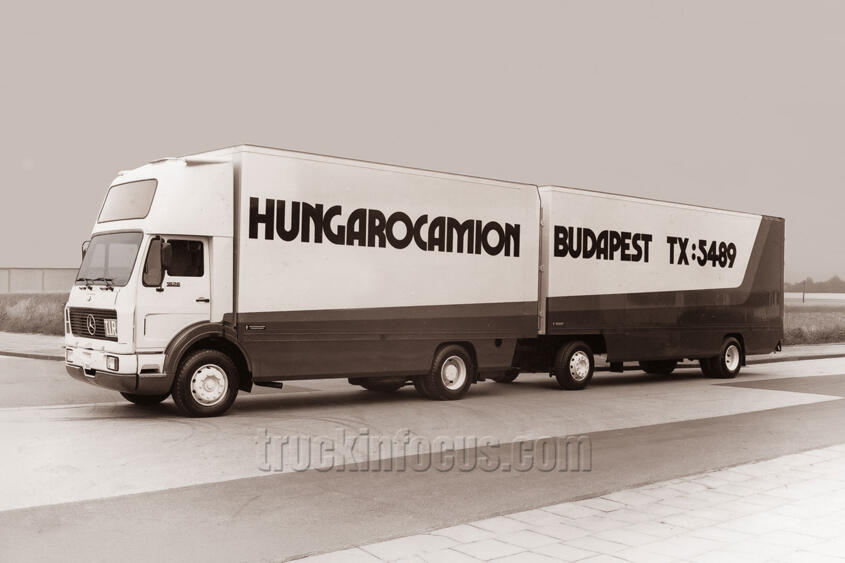
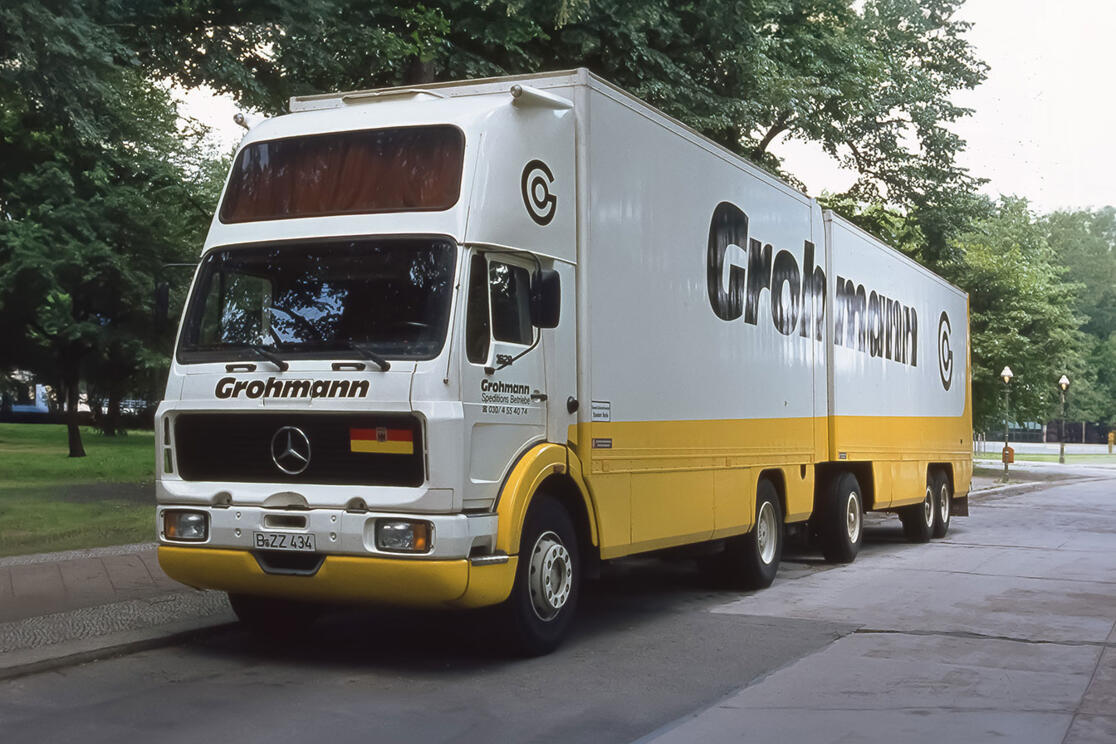
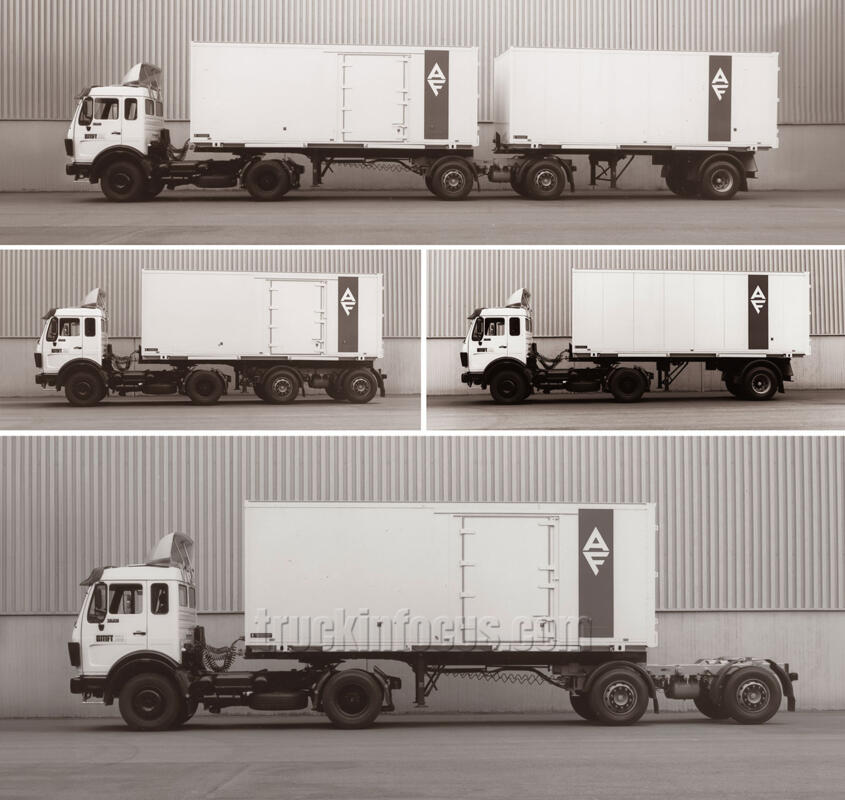
In 1979, Ackermann-Fruehauf presented the large-capacity truck-trailer combination (GLZ), developed in Wuppertal, to an astonished industry. Compared to the standard 18-meter truck-trailer combination, the GLZ offered ten percent more cargo volume and saved ten percent in fuel consumption thanks to a lower body weight. This was made possible by significantly reducing the distance between the tractor and trailer from 1.6 meters to just 70 centimeters and eliminating the sleeping area behind the seats. In exchange, the short cab of the Mercedes-Benz NG was fitted with a high sleeper cabin and side wind deflectors. The almost futuristic design was created in collaboration with the renowned German designer Luigi Colani. Initially, the vehicles featured an oversized Mercedes star on the front, and the Topsleeper was equipped with distinctive position lights at the upper corners.
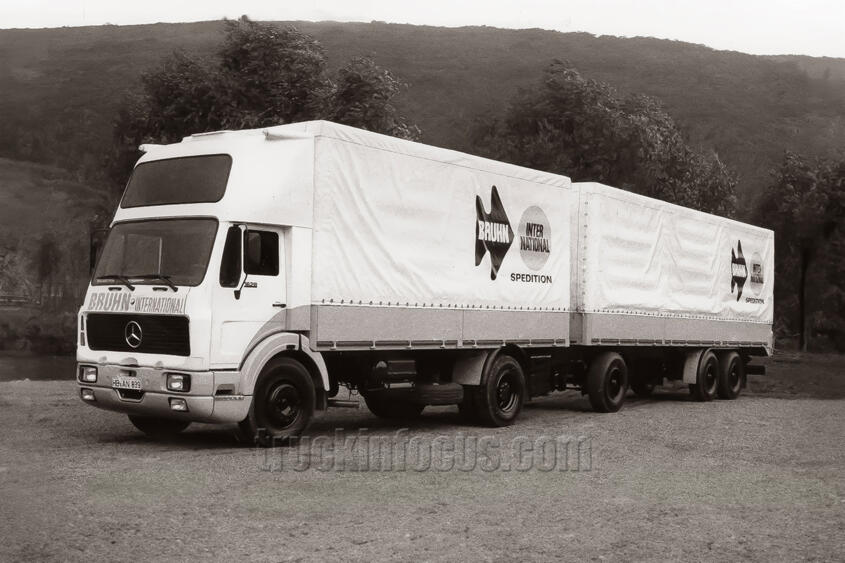
The GLZ was available as a flatbed/tarpaulin truck and as a panel truck, optionally with deep-drawn side walls on the body. A telescopic fork ensured the short distance between the tractor unit and the trailer. At a driving speed of more than 35 km/h, the telescopic fork pulled the trailer’s front, self-aligning trailing axle toward the tractor unit. At the same time, wind deflectors folded out at the rear of the tractor unit to close the aerodynamically unfavorable gap. Although the innovative and technically complex design attracted considerable attention upon its introduction, the GLZ was not a commercial success; only a few units found buyers. The main drawbacks were the difficulty of maneuvering the GLZ in tight depots, as well as the wear and susceptibility to failure of the short-coupling system. Furthermore, the GLZ offered little flexibility, as the truck and trailer formed a single unit and could not be combined with other vehicles. The GLZ was therefore best suited for use on fixed routes with full loads.
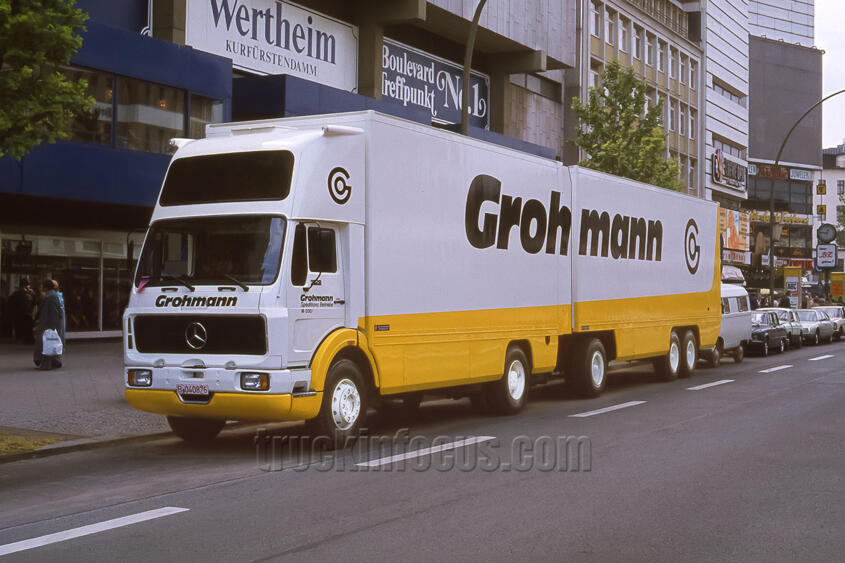
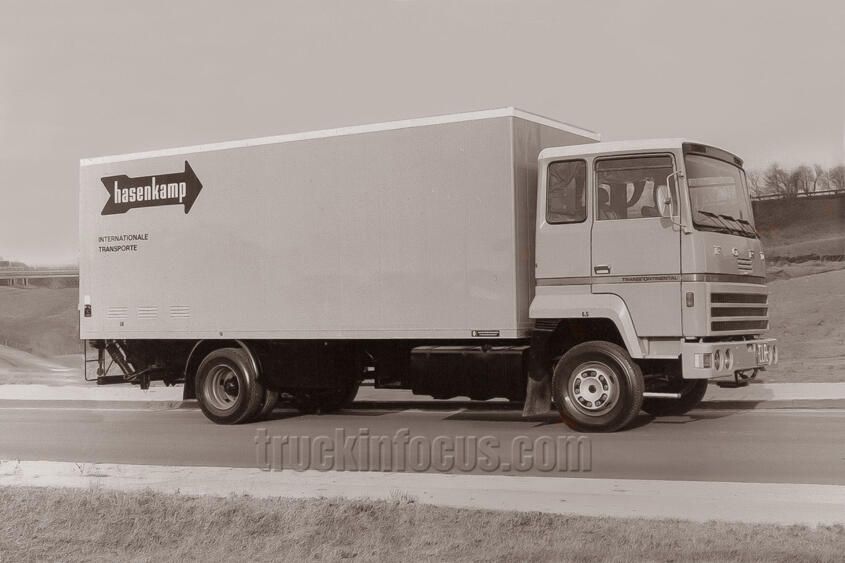
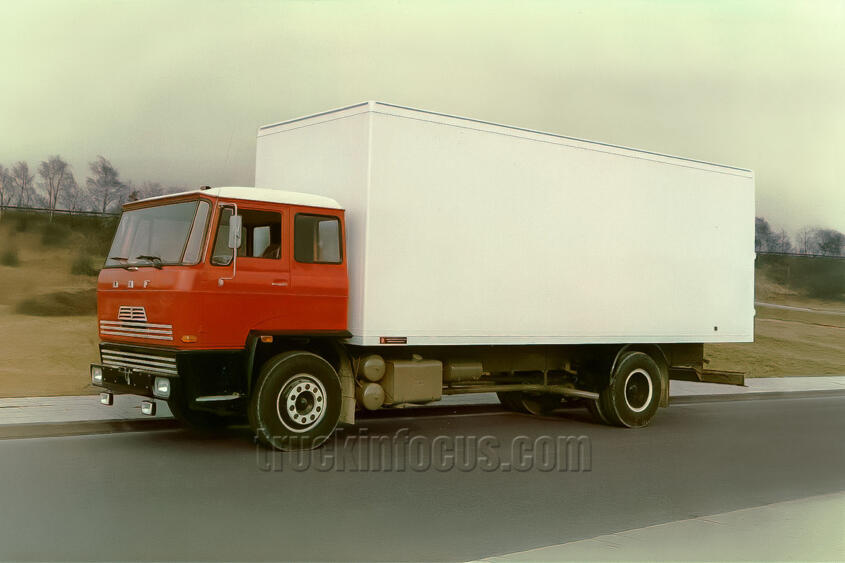
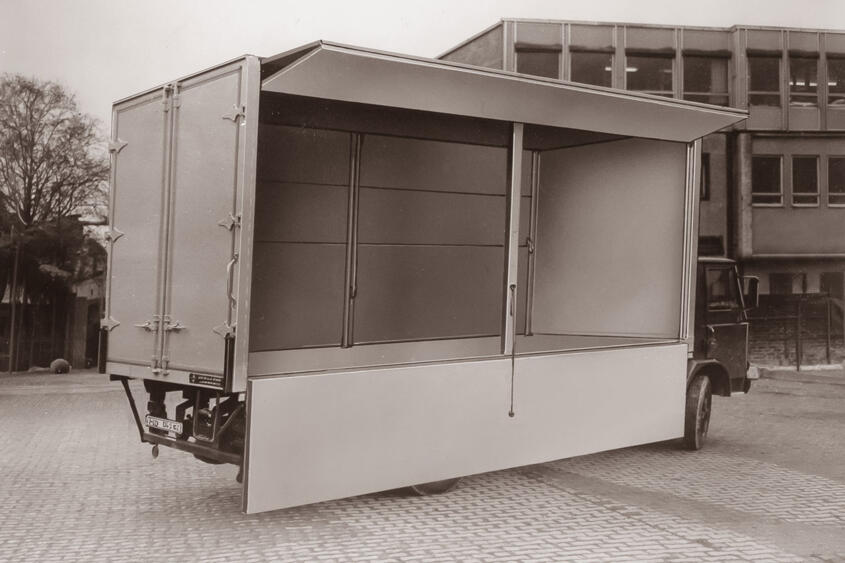
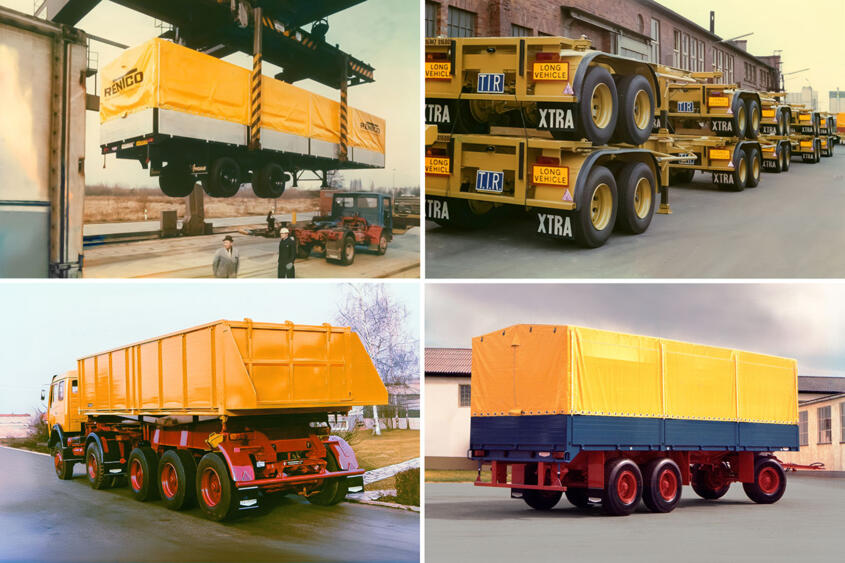
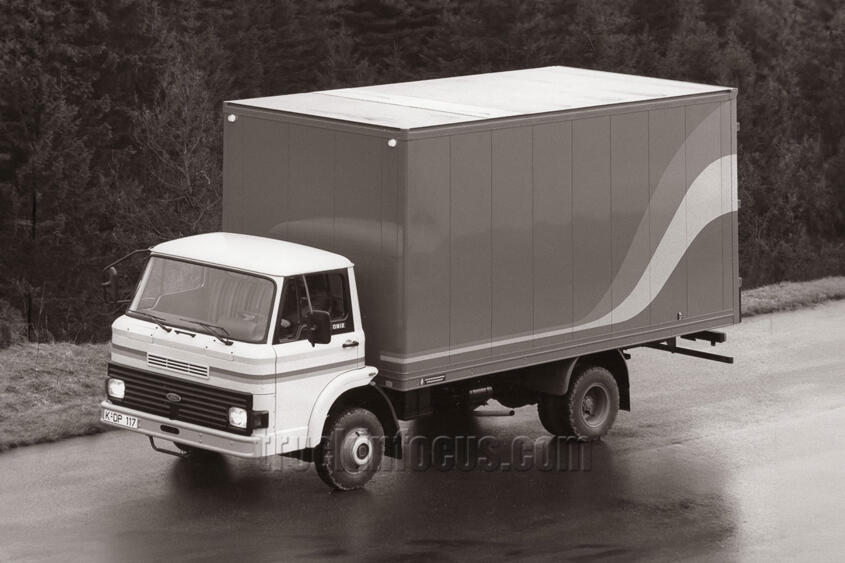
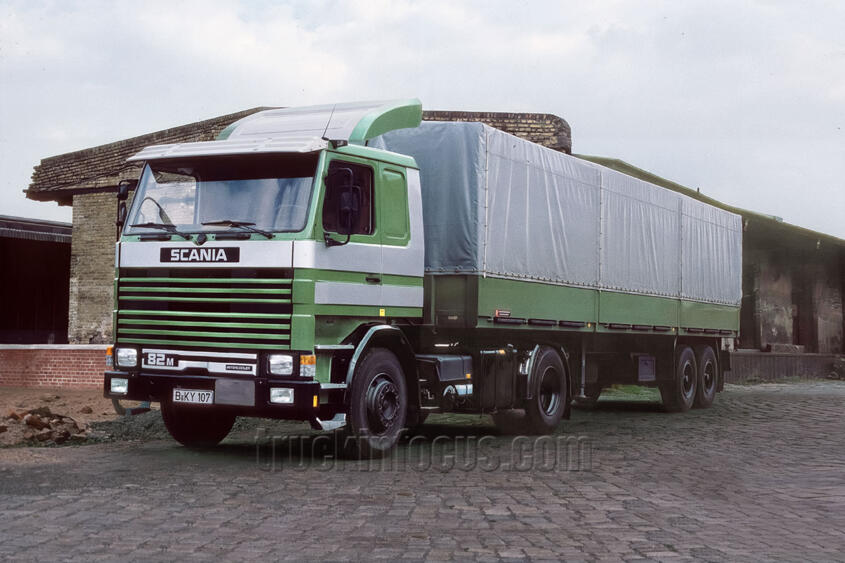
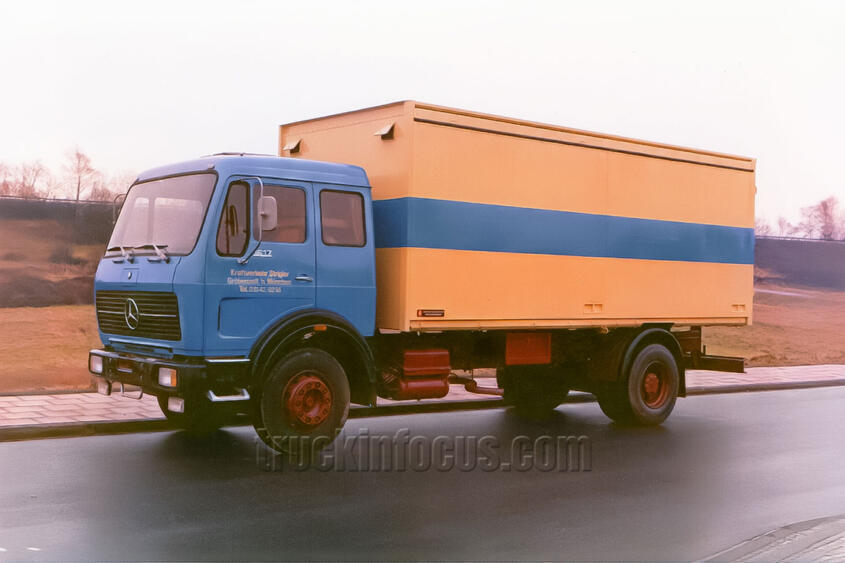
In the early 1980s, Ackermann-Fruehauf recognized that the cramped factory facilities in Wuppertal-Vohwinkel offered little room for expansion and decided to build a state-of-the-art plant in a newly developed industrial park in Kerpen-Sindorf, which was finally occupied in 1987. All production was relocated there, and many employees from the main plant in Wuppertal followed. The other plants were closed; only in Wolfhagen did production continue for body kits for licensees as well as swap body frames for trucks and trailer chassis. The Fruehauf Group also included plants in other European countries that manufactured semi-trailers and trailers, as Fruehauf had previously acquired various body manufacturers. In 1987, all companies were consolidated into a largely independently operating European Ackermann-Fruehauf Group headquartered in Paris. Production took place at plants in France, the United Kingdom, the Netherlands, and Germany. This marked the beginning of the American conglomerate’s gradual withdrawal. Shortly before that, in 1984, Ackermann-Fruehauf had acquired its former direct competitor, Staufen Fahrzeugwerke Eislingen, after the latter had run into financial difficulties. However, the plant in the Fils valley was sold on to a Danish conglomerate after only a few years.
West German commercial vehicle manufacturers also benefited from the boom following German reunification in 1990. In Oschersleben near Magdeburg, Ackermann-Fruehauf took over a vehicle manufacturing plant, where truck bodies were subsequently produced under favorable conditions. But a severe recession followed in 1992–93, and the transportation industry held back on new purchases. The economy was stagnating in the U.S. as well. Fruehauf therefore decided to refocus on its home market and sell the European Ackermann-Fruehauf Group to a financial consortium. The large-scale factory facilities in Kerpen-Sindorf were far from operating at full capacity, and management was unable to secure orders on a large scale. Thus, in 1996, the Ackermann company ceased to exist in its previous form. After less than ten years, the new production halls stood empty and were eventually taken over by other companies.
However, this withdrawal did not mark the definitive end of the Ackermann name in vehicle manufacturing, as the managing directors of the Oschersleben and Wolfhagen plants founded “Ackermann Fahrzeugbau GmbH” as early as the fall of 1996, with the support of GESCO SE. In 2012, AluTeam, a specialist in vehicle technology and panel body kits, took over the plant in Wolfhagen. At “Ackermann Fahrzeugbau Oschersleben GmbH,” however, panel bodies and flatbed trailers for various transport purposes are still being built today. The plant in Switzerland, which has been in operation since 1962 and now operates under the name “Ackermann Fahrzeugbau AG,” also continues to build vehicles for furniture and food transport as well as swap bodies.
In 1996, Fahrzeugwerke Blumhardt in Wuppertal ceased operations. Its production was heavily dependent on exports, which ultimately proved to be a serious disadvantage following the global political changes of the 1980s. This marked the end of Wuppertal's once-thriving commercial vehicle manufacturing industry.
This text was written for truckinfocus.com in April 2023.
The author is Markus Hügle from Teningen, Germany
Did a misprint slip into this article? If you have suggestions for improvements, please send us an email, and we will look into clarifying and correcting the issue. Thank you for your help.
Sources:
Bernd Regenberg: “Truck Yearbook 1998” (Podszun-Verlag 1997) ISBN: 3-86133-179-9
Bernd Regenberg: “Truck Yearbook 2016” (Podszun-Verlag 2015) ISBN: 978-3-86133-779-9
Bernd Regenberg: “Truck Yearbook 2023” (Podszun-Verlag 2022) ISBN: 978-3-7516-1054-4
Wolfgang H. Gebhardt: “German Truck Trailers” (Motorbuch-Verlag 2019) ISBN: 978-3-613-04147-9
Ackermann and Ackermann-Fruehauf brochures from the archives of Edition Diesel Queen
GESCO AG press release dated April 27, 2012 (presseportal.de)
Wikipedia entry on Ackermann-Fahrzeugbau
Wikipedia entry on the city of Wuppertal