The Borgward chronicle with Hansa-Lloyd from 1931, Goliath, and Lloyd
Page 8
By Christoph Büch and Steve St.Schmidt (2026)
Borgward in the early 1950s
The nomenclature of Borgward trucks in the early 1950s was based on payload. This explains designations such as B 1250, B 2000, B 4000, and B 4500.
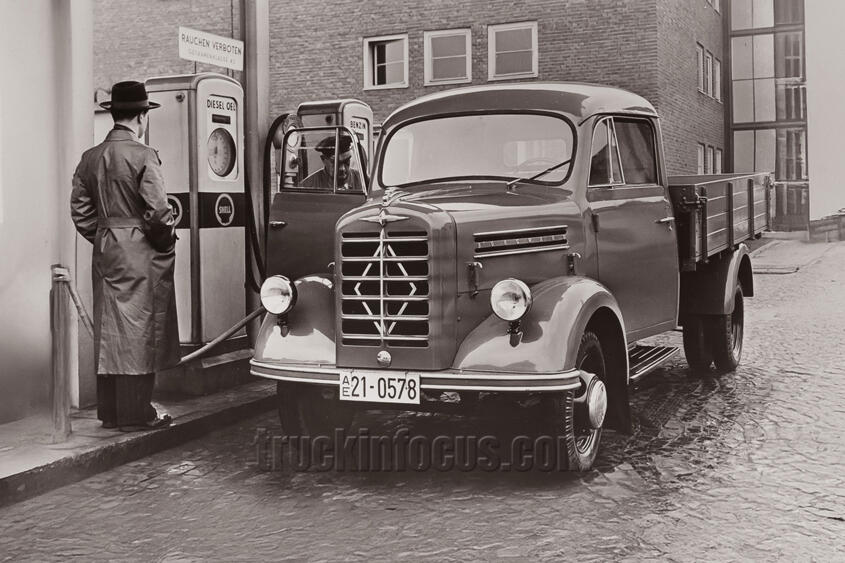
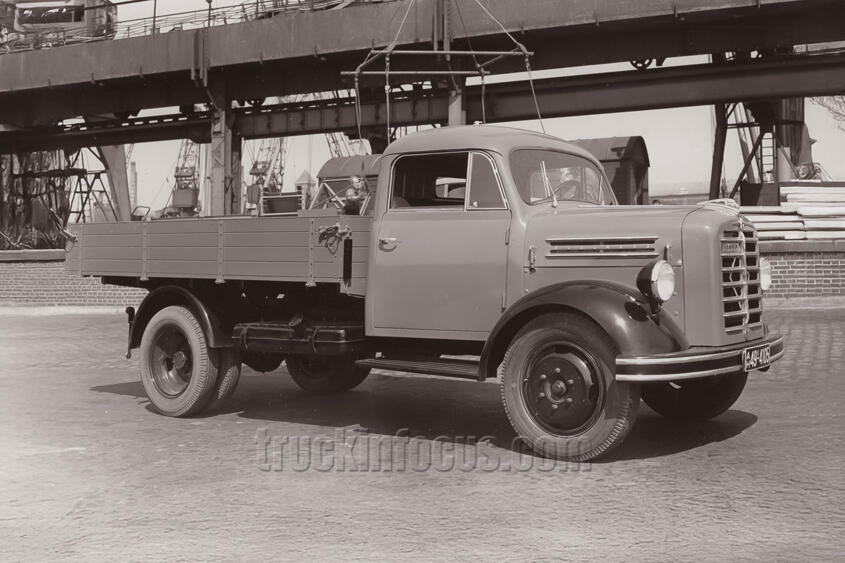
In 1949 and 1950, the payload of both post-war models was increased. In 1949, the one-ton B 1000 became the 1.25-ton B 1250. It was also given a twin-tire rear axle. The following year, the three-ton B 3000 grew to become the B 4000 with a payload of four tons. It was built until 1961, with an improved cab interior from 1957 onwards. The B 4000 also had a special low-frame chassis (BO 4000) for bus bodies. In 1959, the B 4000 was given the new type designation B 544. In addition, the B 533 was available as a reduced-load version of the B 544 with a lower payload in order to remain below a total weight of 7.5 tons. This meant that it could be driven with a German driver's license for cars. The last version of the B 533 and B 544 models from 1960 was equipped with turn signals on the front fenders.
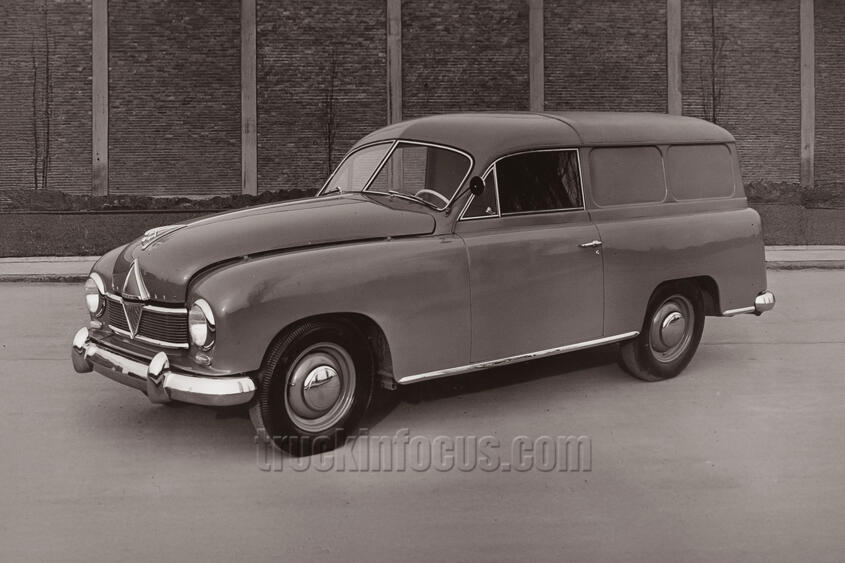
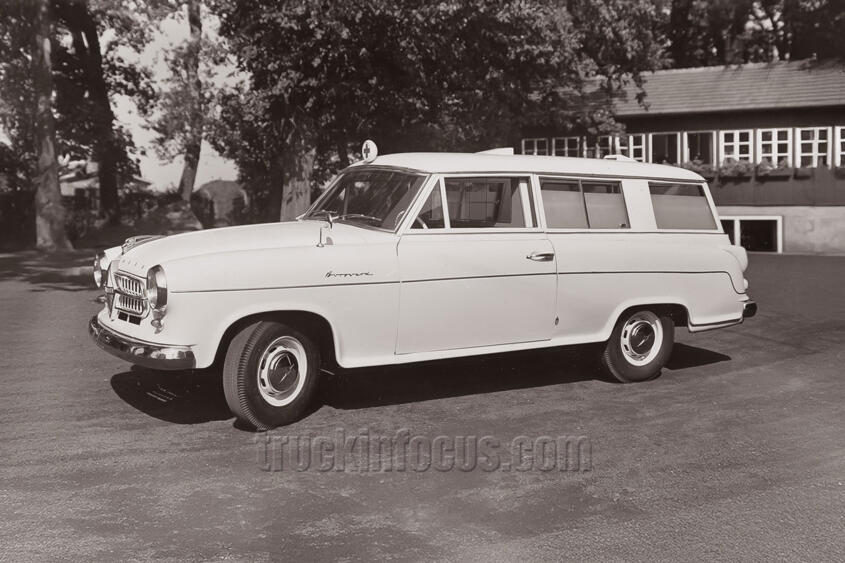
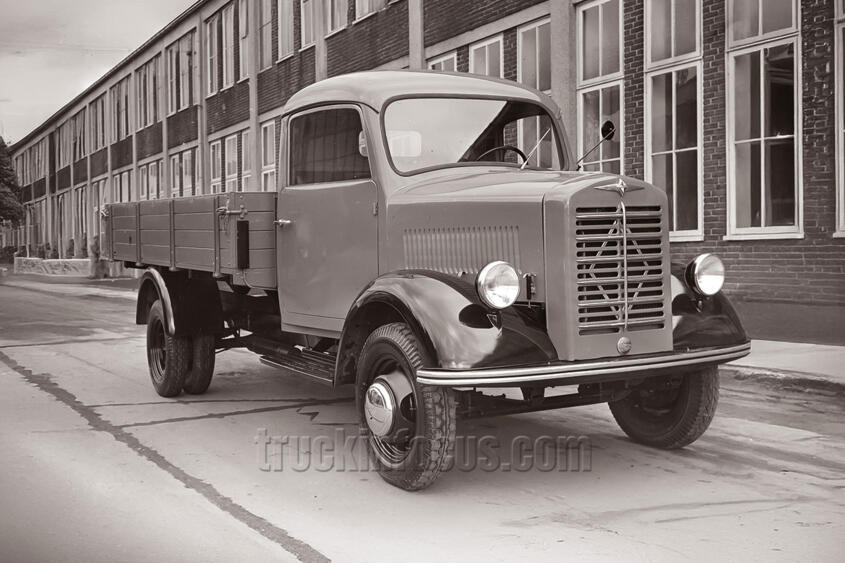
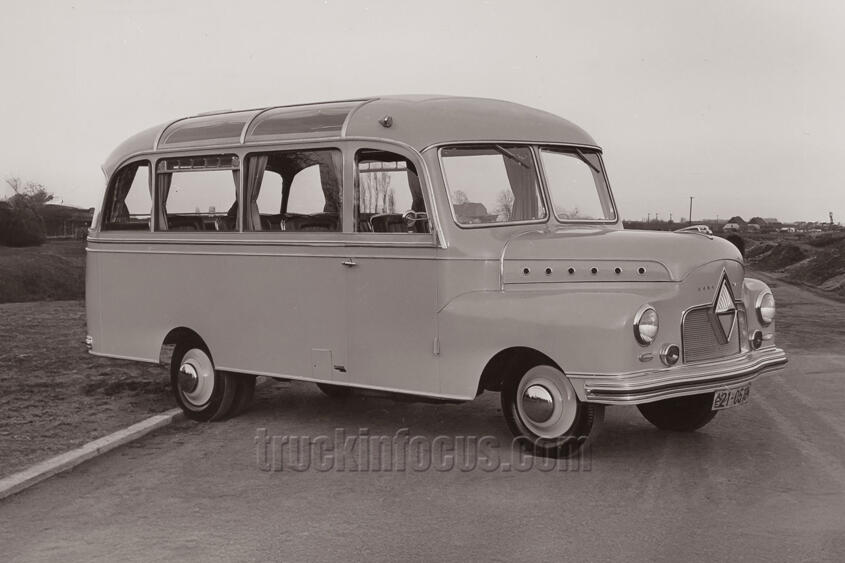
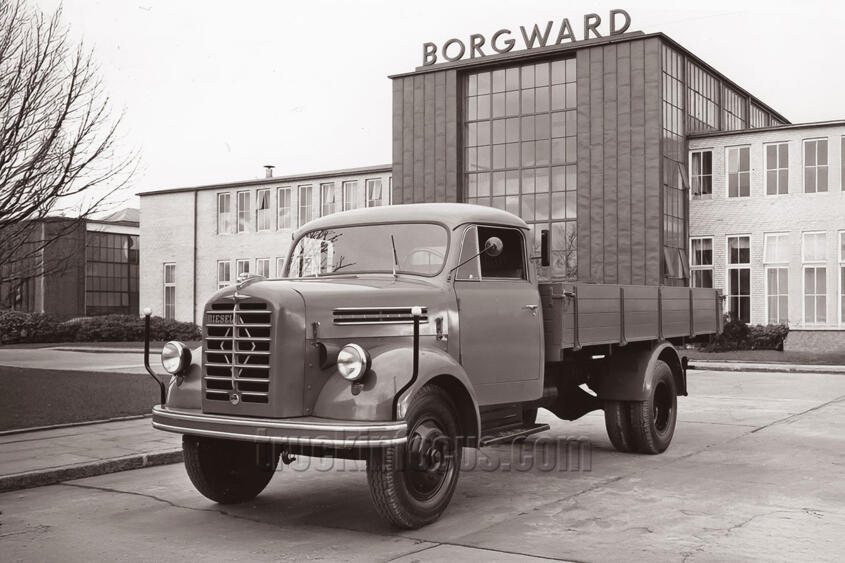
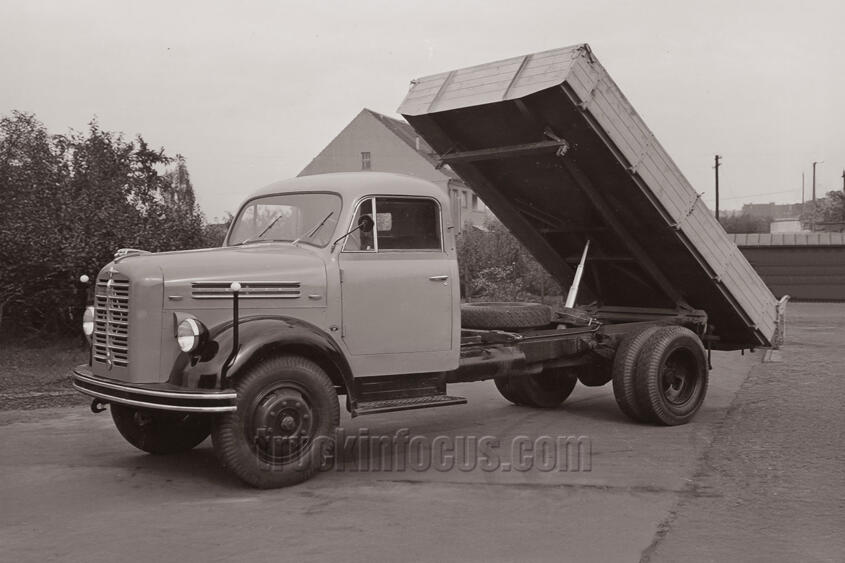
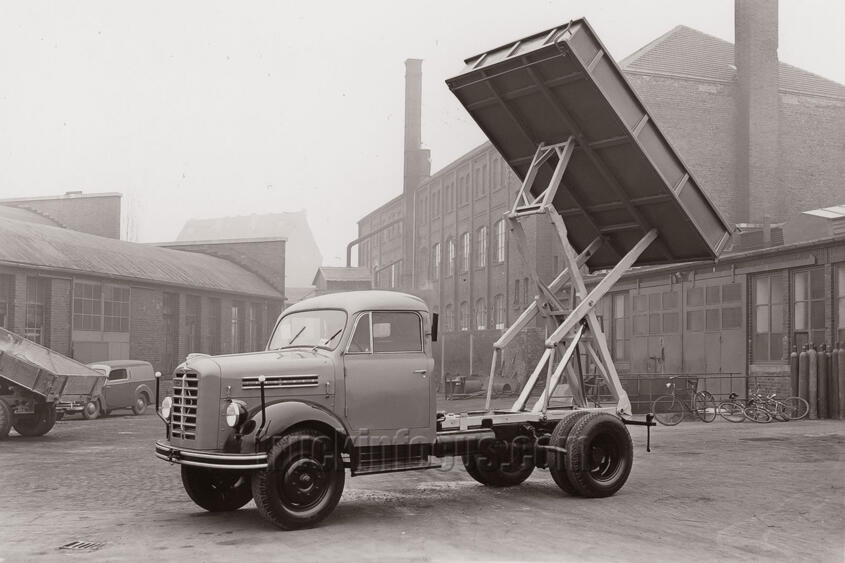
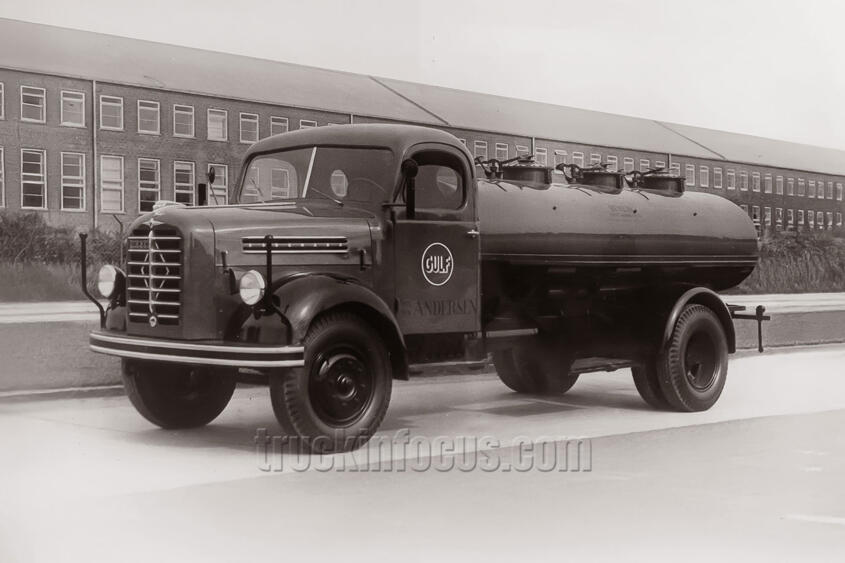
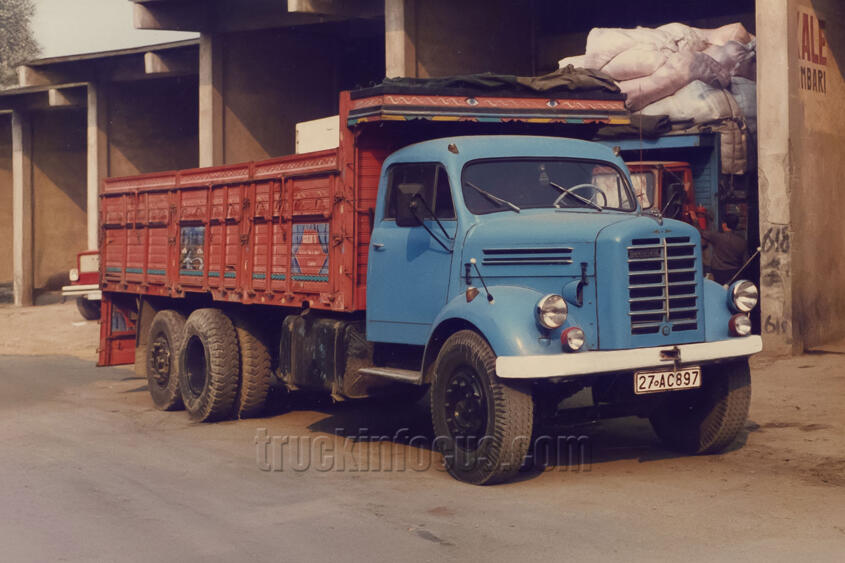
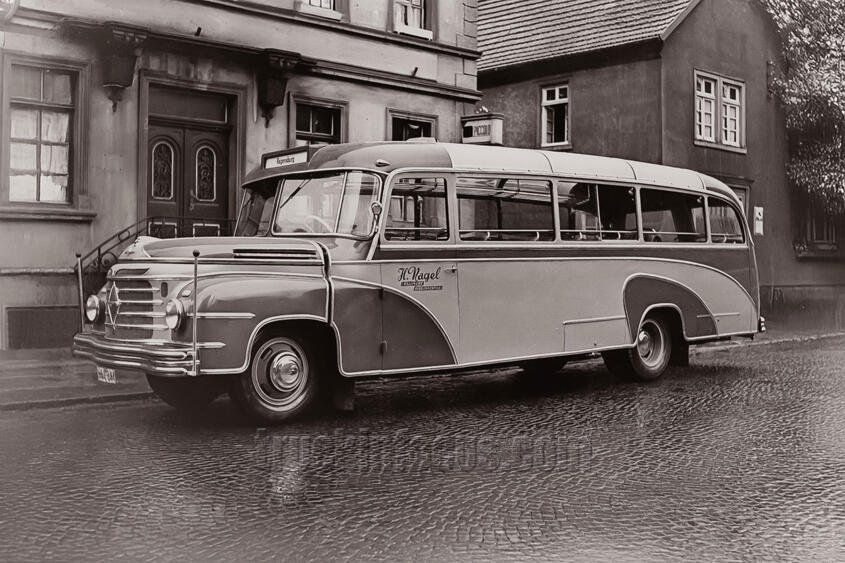
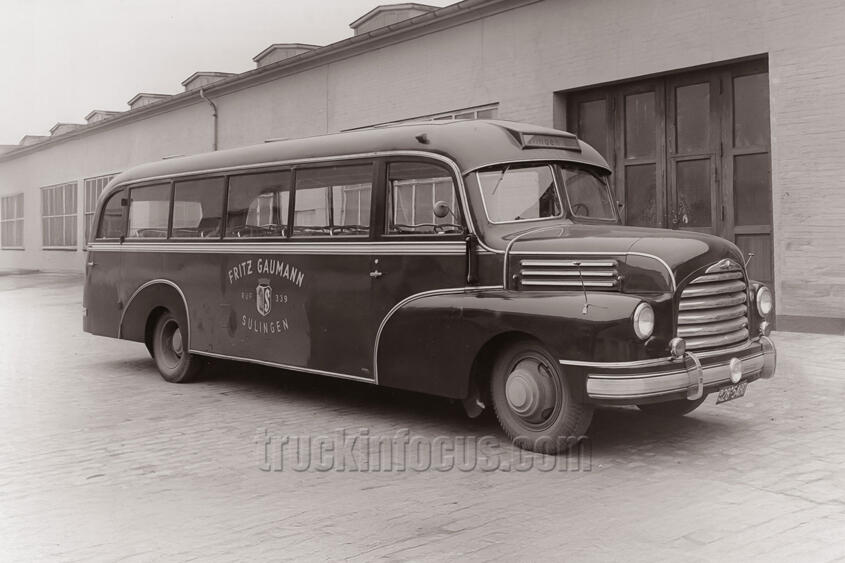
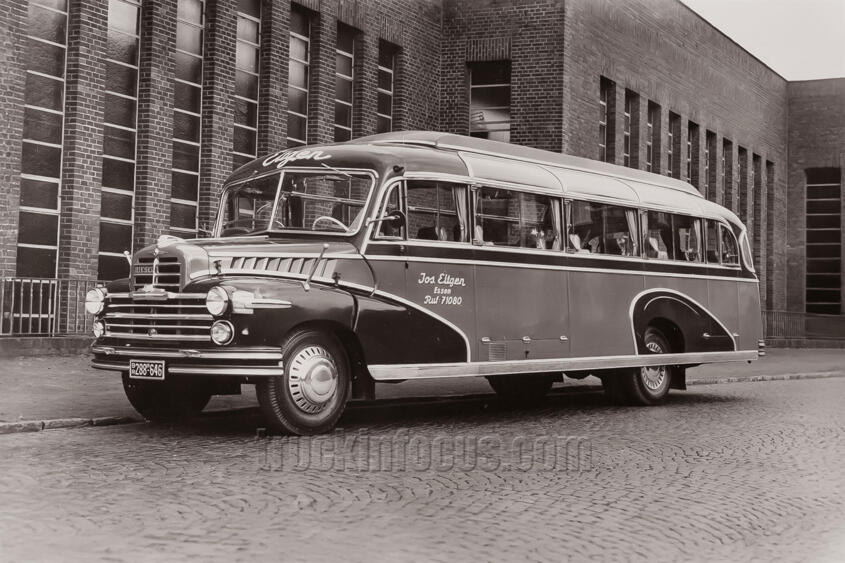
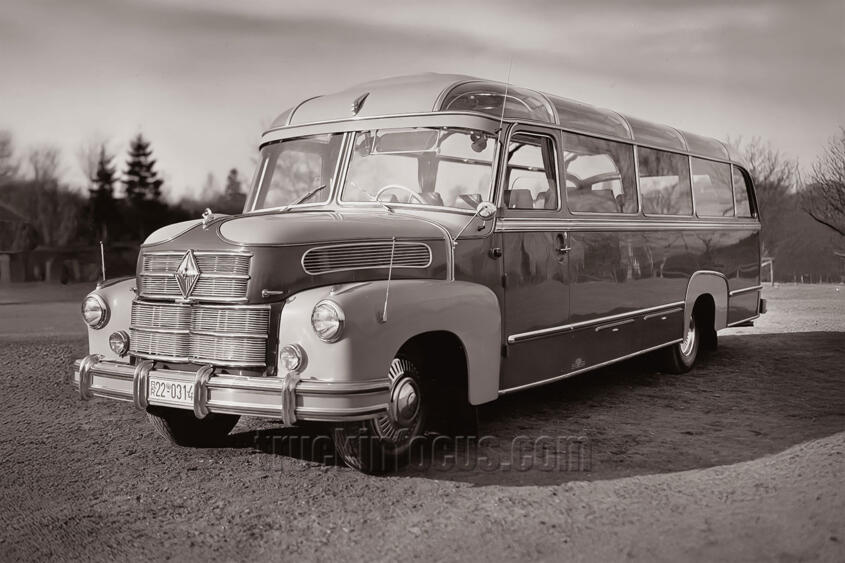
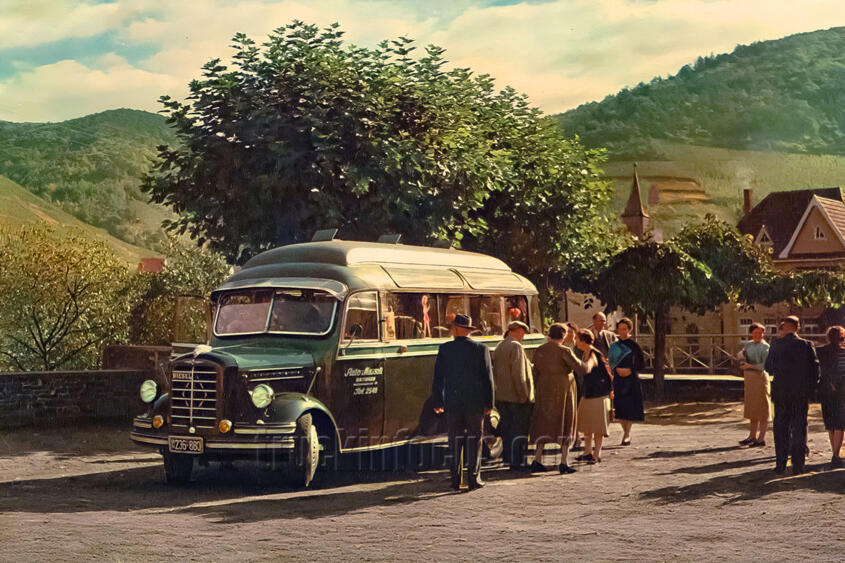
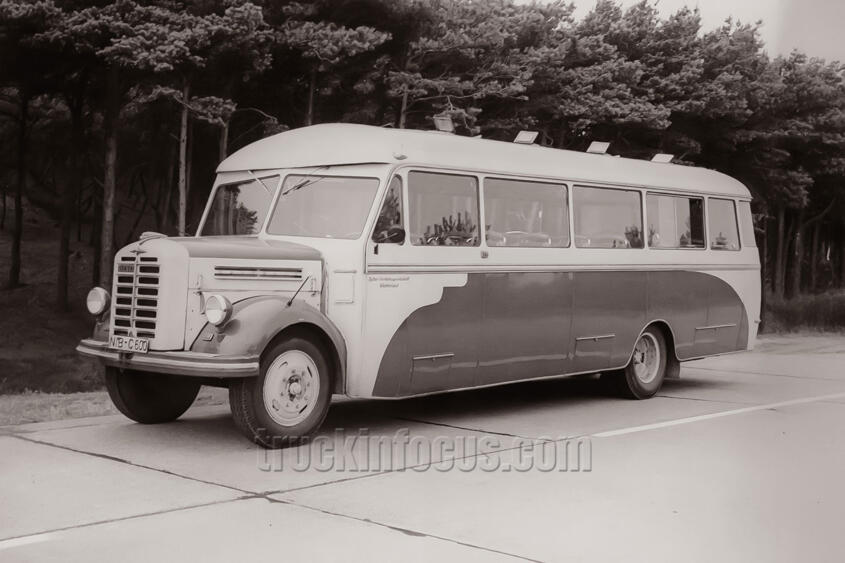
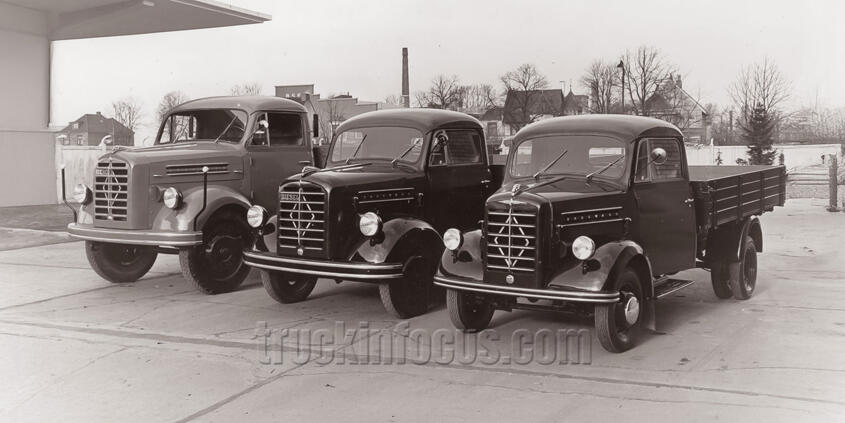
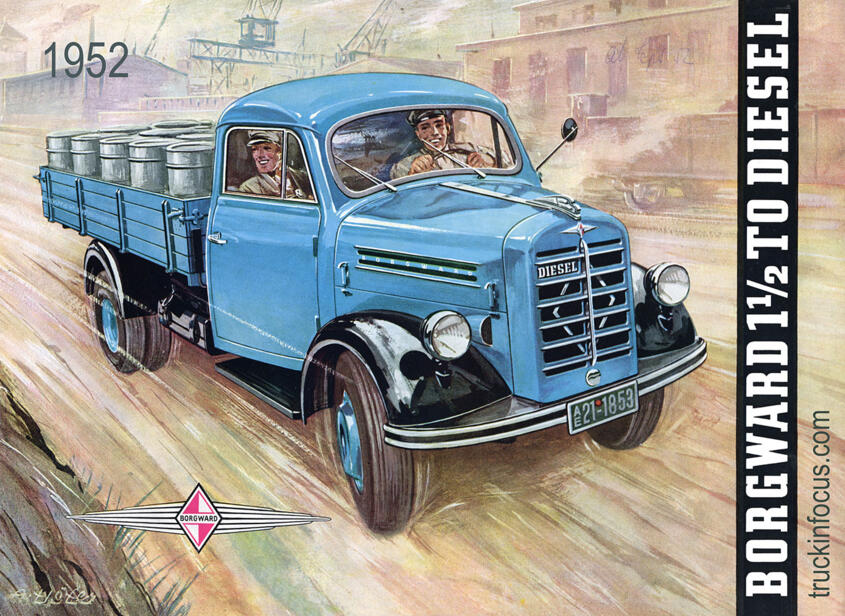
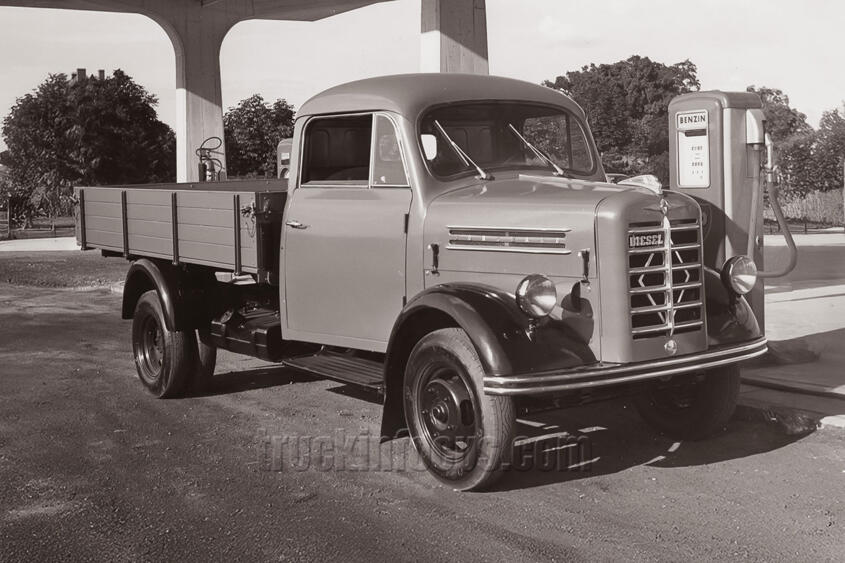
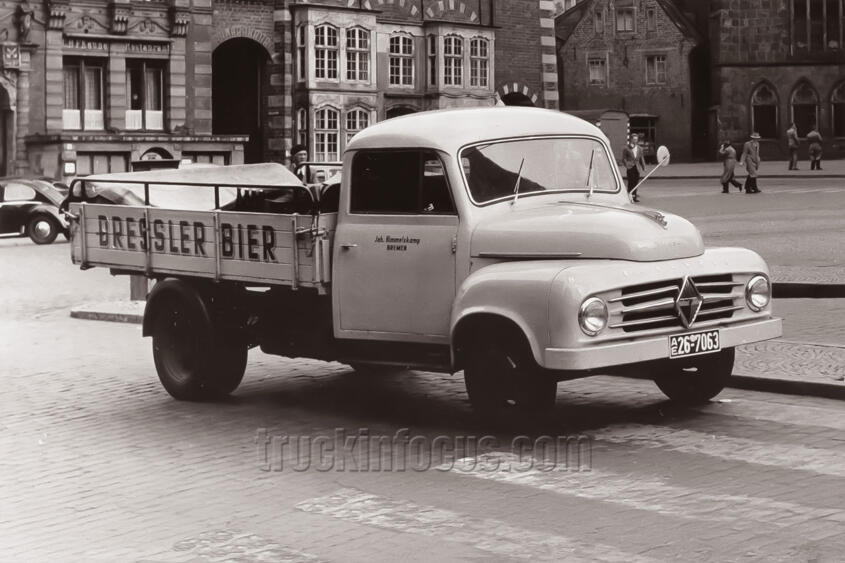
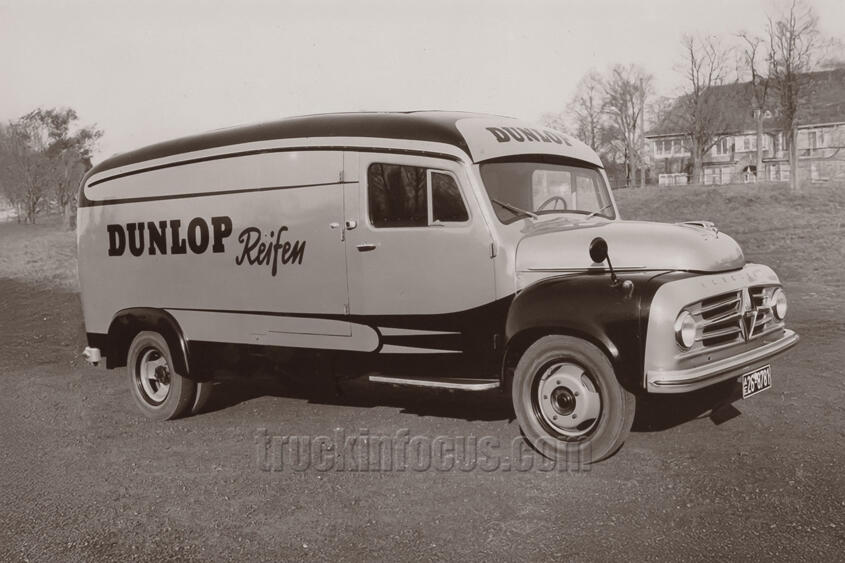
We begin the Borgward chronicle of the 1950s with two passenger car variants, as the commercial vehicle line included more than just trucks. The first picture shows the Hansa 1500 model as a delivery vehicle with a payload of 360 kilograms. As a passenger car, the Hansa 1500 was presented at the Geneva Motor Show in 1949 as the first new Borgward creation after the war and earned admiration for its modern pontoon body. Soon after, it was also available as a business car, a variant of the station wagon. In 1952, the model was replaced by the Hansa 1800.The Isabella was the best-known Borgward passenger car of all time and sold more than 200,000 units between 1954 and 1961. Its success contributed significantly to Borgward's rise to become the fourth-largest German car manufacturer. From May 1955, the Isabella, equipped with a 60 hp engine, was also available as a station wagon. The photo shows a special ambulance body built by the Miesen company in Bonn.Let's move on to the trucks of the 1950s: The B 1250 was available from 1949 to 1952. The first version still had the old hood with vertical slits in the side panels and a grille with 12 horizontal slits. The small truck had a 48 hp gasoline engine and a payload of 1.25 tons. The photo shows the 1950 version, which differed from the first version in its chrome hubcaps and headlight rings, as well as aluminum strips on the bumper.At the end of 1950, the B 1250 was given a new hood with a rounded radiator grille and the hood side panels typical of Borgward designs.The Borgward B 1250 was also available as a chassis suitable for special bodywork. One example is this minibus for 14 passengers with bodywork by Pollmann.As a replacement for the three-ton B 3000, Borgward introduced the “4 To Diesel Truck” in September 1950, which soon received the type designation B 4000. From 1957, there were two versions: a 3.5-ton truck with 7.50-20 tires and a four-ton truck with 8.25-20 tires. In 1959, these variants were given the type designations B 533 and B 544.The B 4000 was originally equipped with the 78 hp engine from its predecessor, the B 3000. An additional air filter and higher revs increased the power to 85 hp. In 1952, the engine power was increased by a further 10 hp to 95 hp. In 1957, the B 4000 was finally fitted with the new 110 hp engine from the B 4500.The picture shows the B 4000 from 1953 with a rare body called a scissor tipper. It was manufactured by Toussaint & Hess (Teha) in Düsseldorf.This photo was taken in Denmark. There, the tanker truck was fitted with a cab typical of the country, which was more spacious than the original Borgward B 4000.In Turkey, it was common practice to equip trucks with trailing axles to increase their payload. This was also the case with this Borgward B 4000, which Michael Haeder discovered in 1988.Since Borgward also offered some of its commercial vehicles with low-frame chassis, it made sense to use them for bus bodies. This was also the case with the B 4000, which was used by various bodywork companies for bus bodies, some of which were very elaborately designed in the style of the 1950s. Here we present a small photo gallery featuring a variety of buses based on the B 4000. We start with a 1951 B 4000 with a low frame, built by Puppe in Arnsberg-Hüsten. The family business is now in its third generation and continues to operate in Arnsberg, specializing in trailers, tail lifts, and commercial vehicle bodies.Another bus based on the B 4000, whose body manufacturer is unfortunately unknown to us. If you know anything about it, please contact us by email.Here, everything is clear again: this gem comes from the Ludewig brothers from Essen-Altenessen. The bus, built on the basis of a Borgward B 4000, also had an elaborate interior design: there were seats in a vis-à-vis arrangement with tables in between.This low-frame chassis was bodied as a bus by Steib from Eiserfeld-Sieg around 1952. The curved windshields are noteworthy, as they were a technical innovation at the time, since it had long been impossible to bend glass. Curves could only be made from Plexiglas, which was not scratch-resistant and therefore not suitable for windshields. For this reason, split windows were used, as in the bus with a Puppe body shown above.Here is another bus on a Borgward chassis, the body manufacturer of which is unknown. An interesting feature is the raised roof in the middle, which presumably serves to create a standing height that allows even tall people to walk upright.This Borgward B 4000 was in service on the island of Sylt. The photo was provided to us by Karsten Puck, a veteran of Sylt who is well known in vintage commercial vehicle circles. Sadly, the former bus driver passed away in 2025.Let's return to the trucks. The photo shows Borgward's truck production line from 1951: on the left is the B 4000 with a diesel engine, in the middle is the B 2000, also with a diesel engine, and on the right is the B 1250, which was only available with the gasoline engine from the Hansa 1500 car.
Further models were added: from 1951 to 1959, there was the 2 to 2.5-ton B 2000 to fill the gap between the light and medium-duty models. In 1952, the payload of the B 1250 was increased by another quarter ton, and the B 1500 was born. It was available until 1960, with a change in appearance in 1954: a wider cab and a new hood, similar to the Opel Blitz (also known as “Soft-Blitz”) and the Hanomag L 28, gave the vehicle a modern look based on American models. Its type designation changed to B 511 in 1959. The new type designations from 1959 identified the different models, with the first digit referring to the design: 5 stood for conventional trucks, 6 for cabovers.
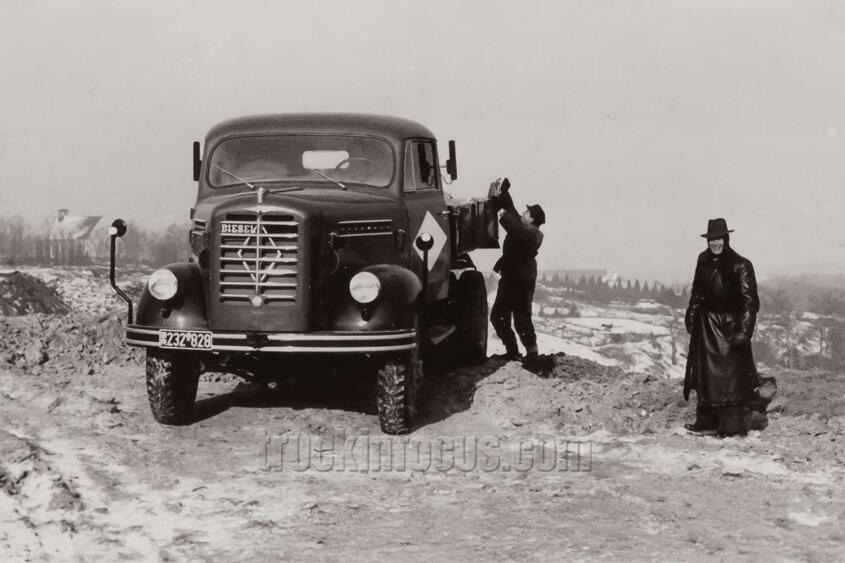
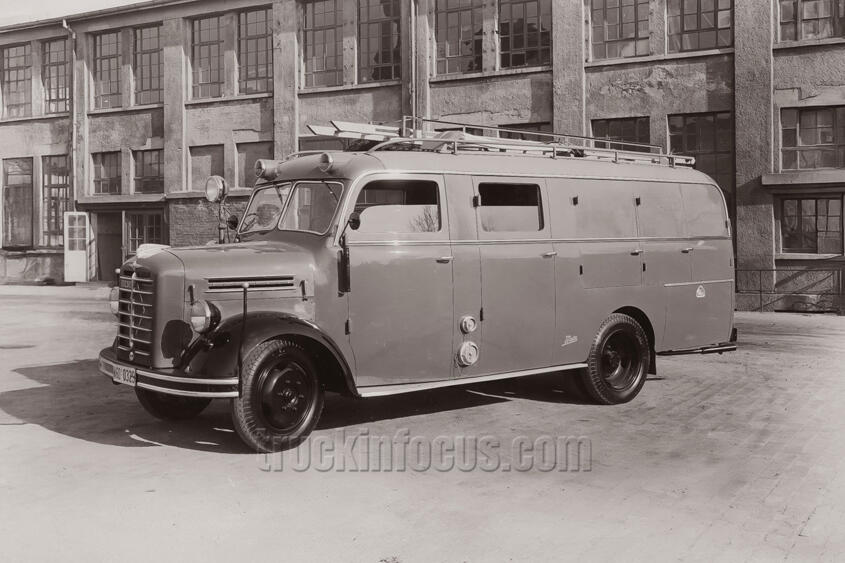
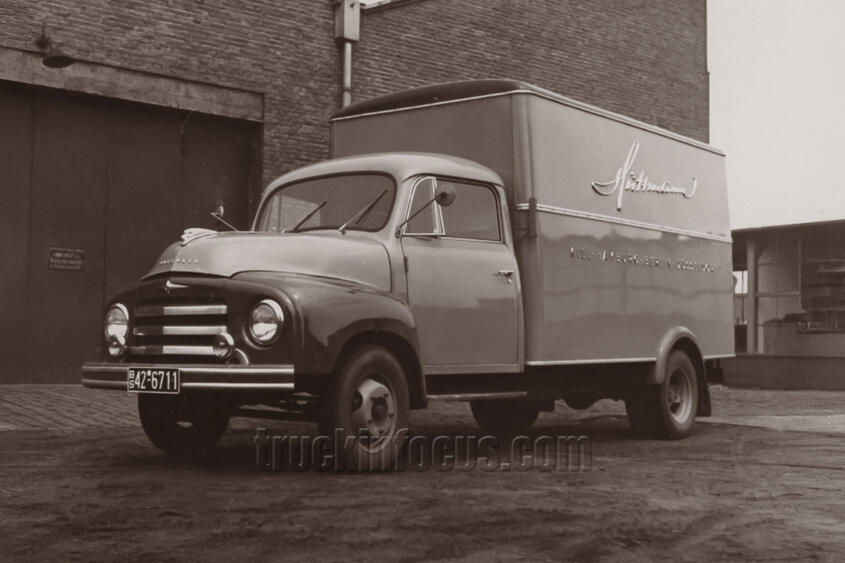
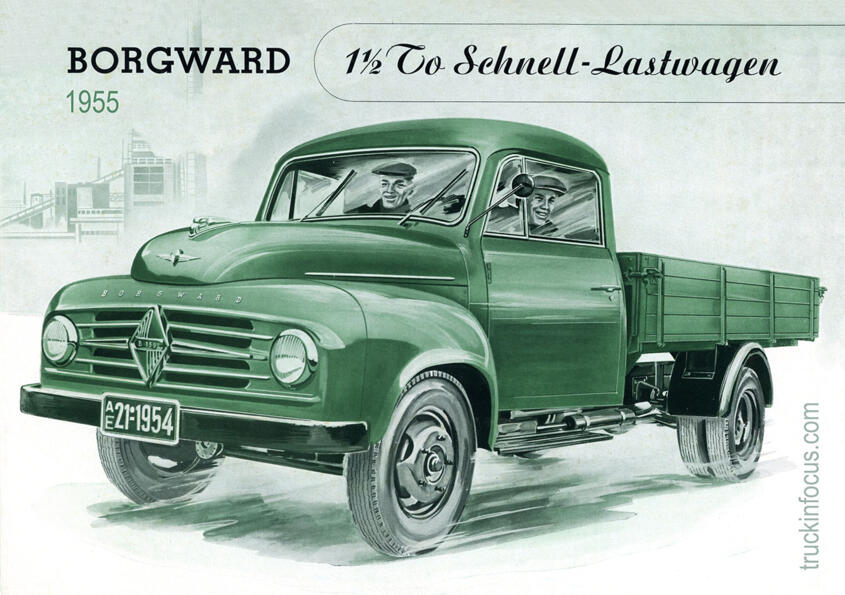
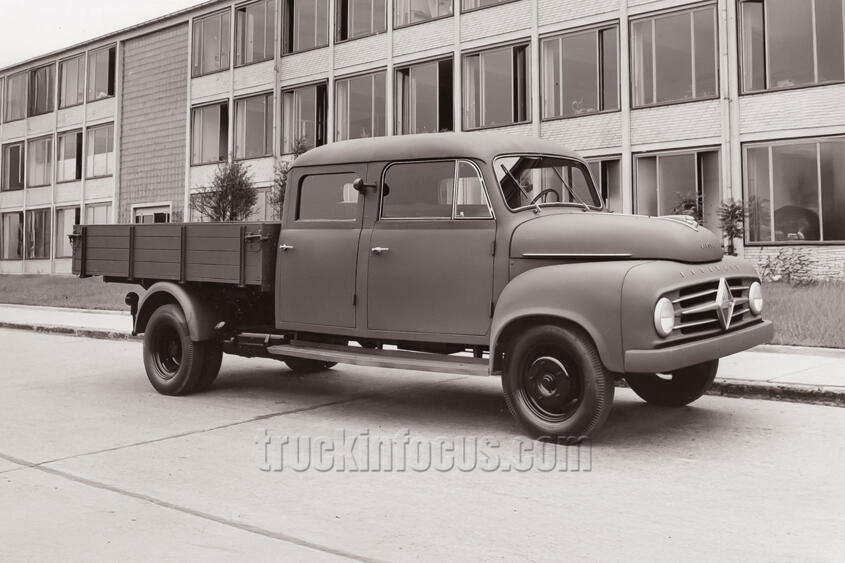
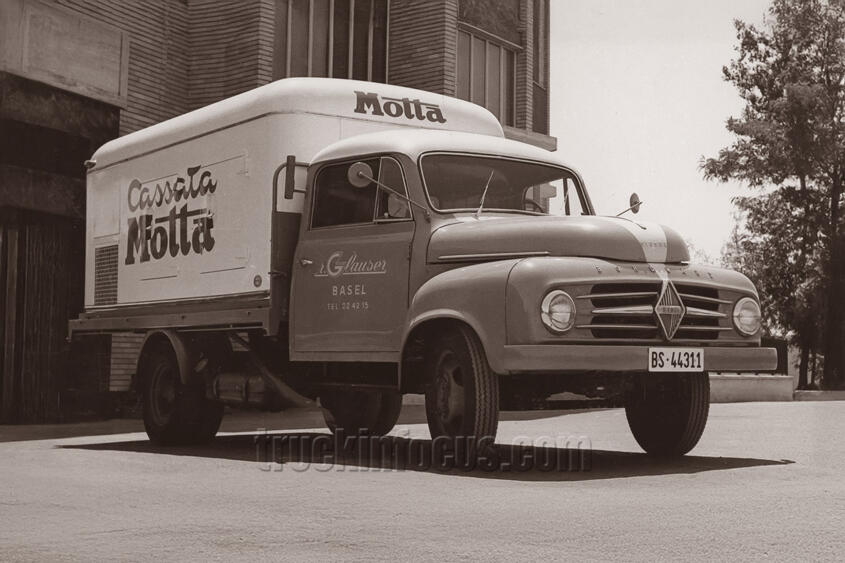
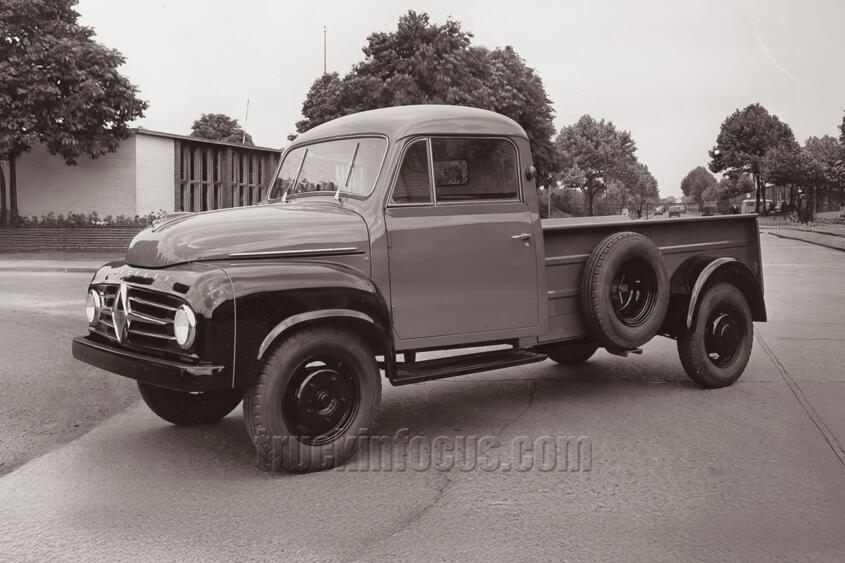
The two- to two-and-a-half-ton B 2000 was launched in the fall of 1951 and remained in the Borgward line until 1959. It filled the gap between the light B 1250 model and the medium-duty B 4000 model. It was equipped with an engine specially developed for this payload class with a displacement of 3,308 cubic centimeters and an output of 60 hp. On request, it was later also available with the 2337 cc gasoline engine from the Hansa 2400 car with 82 hp. In 1958, a new diesel engine with a displacement of 3,331 cc and 70 hp was added to the line.This photo looks like something out of a surrealist film: a Borgward B 2000 on a construction site somewhere in the Rhineland. While the driver appears to be hoisting something onto the loading area, another person in remarkable clothing looks at the camera and smiles. The circumstances surrounding this event can’t be clarified.The LF 8 fire engine superstructure with a center-mounted pump on a Borgward B-2000 chassis was manufactured by the Carl Metz firefighting equipment factory, which was founded in Heidelberg in 1842. In 1905, the Bachert brothers took over the company and relocated it to Karlsruhe (Feuerwehrgerätefabrik Metz & Co.). In 1956, Metz merged with Kaelble (Villingen) to form Kaelble-Metz AG. In 1998, the firefighting division was sold to Rosenbauer, which still produces aerial rescue vehicles in Karlsruhe today.In 1952, the Borgward B 1500 one-and-a-half-ton truck was launched as the successor to the B 1250. At first, it looked similar to its predecessor, but in 1954 it was given a wider and more modern cab and a completely redesigned hood.For two years, from 1952 to 1954, the Borgward B 2000 still featured the typical Borgward design. Then it underwent a modernization push, while all other Borgward trucks retained their previous appearance.Initially, there were various prototypes of the new Borgward B 1500, which either resembled the Hanomag L 28 or, like the vehicle in the photo, were confusingly similar to the Opel Blitz. In the end, a hood based on the US model was developed, which could no longer be considered quite so much of a copy of Hanomag or Opel.From 1952 to 1960, the final model of the B 1500 was finally available. Like all other Borgward commercial vehicles, it was given a new model designation in 1959: B 511.A brochure from 1955 advertises the one-and-a-half-ton truck, which initially had to wait for the model designation B 1500. The small truck was initially available with a four-cylinder gasoline or diesel engine, which also powered the Borgward Hansa 1800 passenger car. In September 1954, the gasoline engine was replaced by the new Isabella engine. All of these engines had an output of 60 hp.This photo could simply be titled “Double cab primed,” as it is not known what this B 1500 was intended for after its completion.This panel van with a refrigeration unit was used in the Swiss city of Basel. The body was built by Franger Frigor, an Italian manufacturer of bodies for refrigerated vehicles. The company was founded in Padua (Veneto) in 1945 and is still in business today.It is doubtful that the B 1500 became a bestseller as a pickup truck in the USA.Not only is the paintwork of this B 1500 hard to beat in terms of elegance, but so is the dynamic shape of the panel van body. Unfortunately, it is not known which company built the bodywork of this gem.