The 1965 Büssing Platform Truck
An innovative concept that led the Braunschweig-based company into crisis
The legendary German truck brand Büssing existed from 1903 to 1971. Even today, more than 55 years after the brand ceased to exist, the name Büssing remains familiar among truck enthusiasts, and many Büssing vehicles have survived to this day. Carefully restored, they can be admired at vintage truck gatherings. Among them is the only platform truck ever built – one of the most unusual vehicles in truck history. This article examines the history, technology, and fate of the “Supercargo 22-150” Decklaster, which caused a sensation in its day and, unfortunately, also contributed to the demise of the Büssing brand.
Until December 31, 1971, the Büssing company in Braunschweig was one of Germany’s leading commercial vehicle manufacturers. Heinrich Büssing, who had spent decades manufacturing switches and signal boxes for the railroad, decided at the age of 60 to start producing trucks. That was in 1903. Over the next 68 years, the development and sales of Büssing trucks and buses progressed steadily. Many innovations were the work of Heinrich Büssing and his engineers.
After World War II, Büssing increasingly focused on the underfloor engine, having already introduced its first buses with underfloor engines in front of the front axle as early as 1935. In 1949, the 5000 TU bus was introduced, featuring a six-cylinder engine positioned between the axles. As cabovers replaced conventional trucks, Büssing increasingly equipped its trucks with underfloor engines. The advantages were obvious: a level floor in the cab, free from engine noise and diesel fumes, and favorable weight distribution thanks to the centrally mounted engine, which was easily accessible for maintenance work.
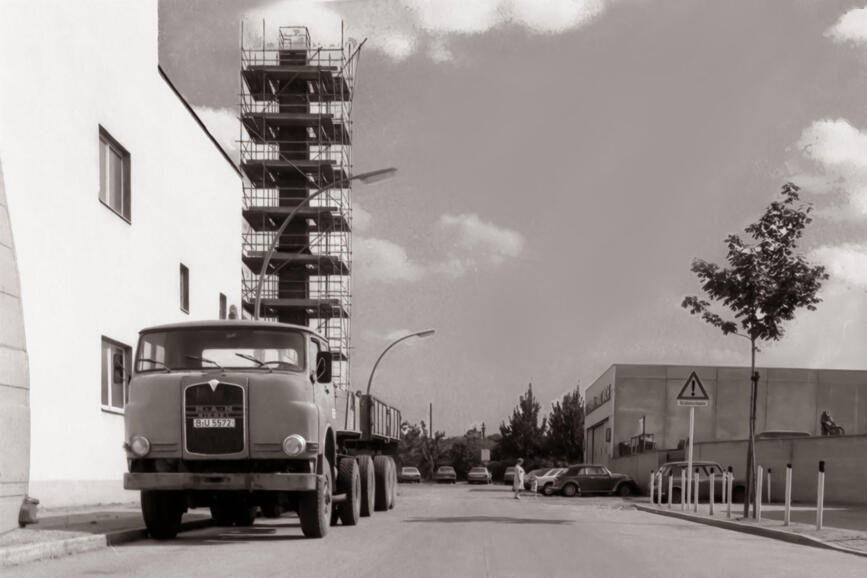
In the decades that followed, trucks of all classes with underfloor engines rolled off the Büssing production line. Not only the designers but also many customers and their drivers were convinced by this concept, even though Büssing continued to offer cabover trucks with vertical engines. Only in tractor units was it not possible to install an underfloor engine without difficulty, as the short wheelbase and the diesel tanks housed between the axles left no room for powertrains. Nevertheless, in the mid-1960s, Büssing invested heavily in technical solutions to implement the underfloor engine in these vehicles as well. However, the plan did not work out: tractor units and all-wheel-drive dump trucks with an underfloor engine positioned in front of the front axle met with little enthusiasm—the idea had to be abandoned.
Now we come to the actual topic of this article: the Decklaster. Although this Büssing project—which also resulted in significant losses—was certainly innovative, it consumed enormous sums in development costs without delivering the hoped-for success.
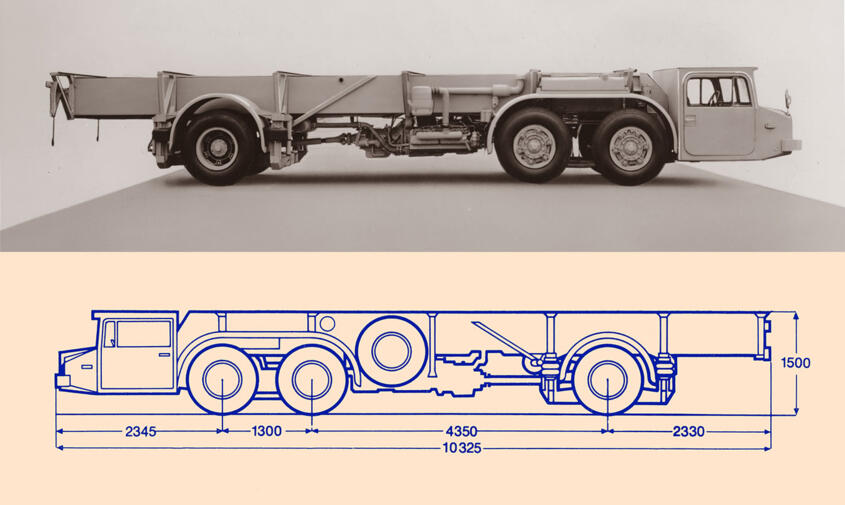
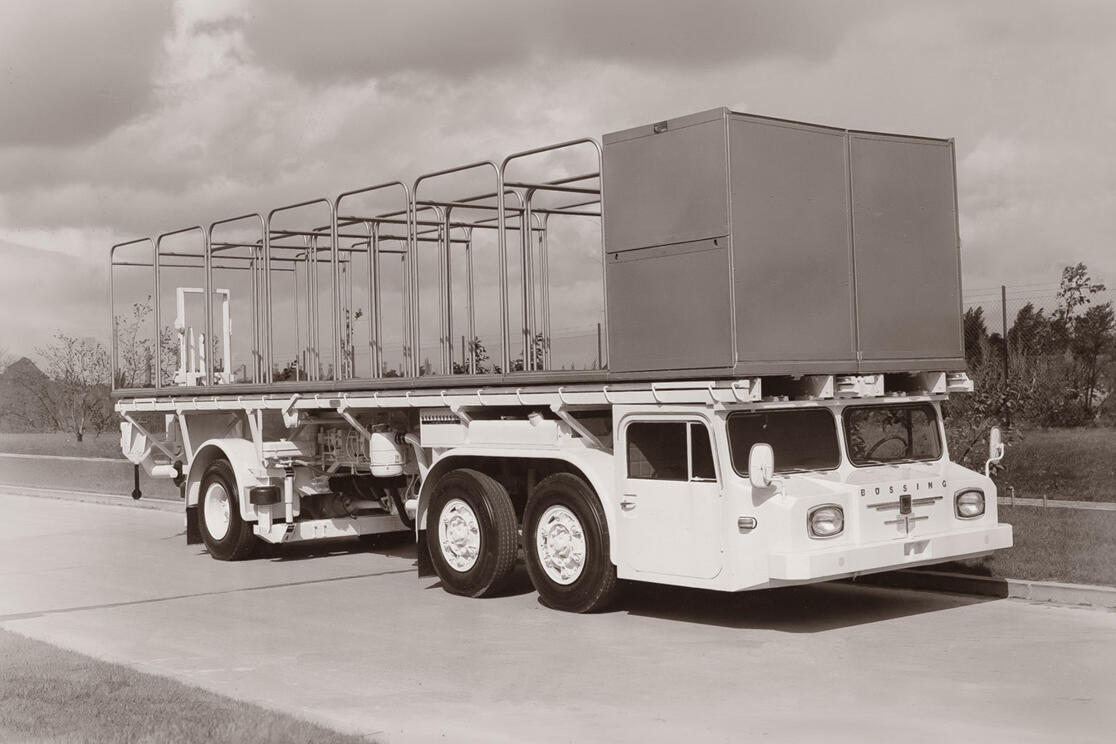
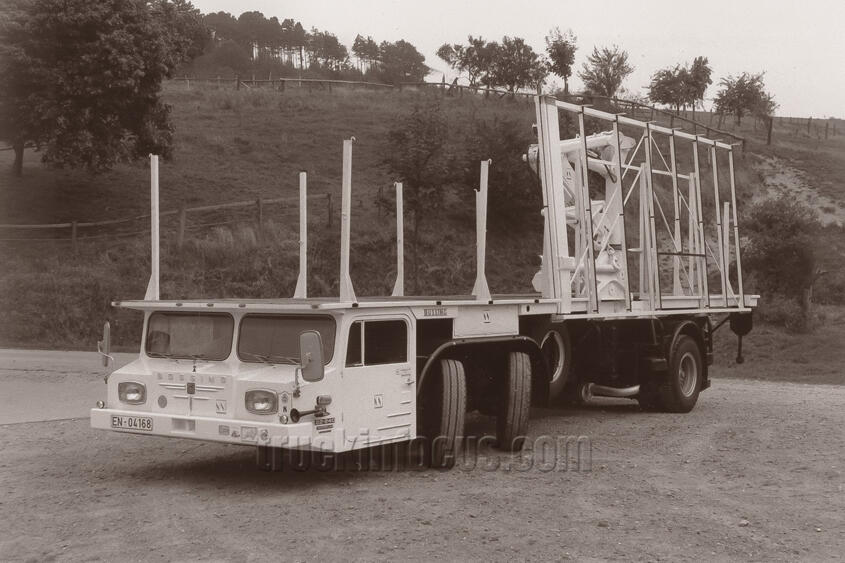
After more than two years of development work, Büssing realized its final forward-looking idea with the Supercargo 22-150 model. The “Platform pallet Truck” with two steered front axles had a payload of 14.7 tons and a gross vehicle weight of 22 tons. The concept was part of a transport and storage system designed by the Swiss company Rationorm AG. By positioning the very low-profile cab beneath the cargo area, the entire surface could be fully utilized. A continuous platform extended 1.50 meters high across the entire 10.5-meter length of the vehicle. Naturally, an underfloor engine was used: the 150-hp U7, which was paired for the first time at Büssing with a fully automatic Allison transmission that drove the rear axle. The clutch was replaced by a torque converter.
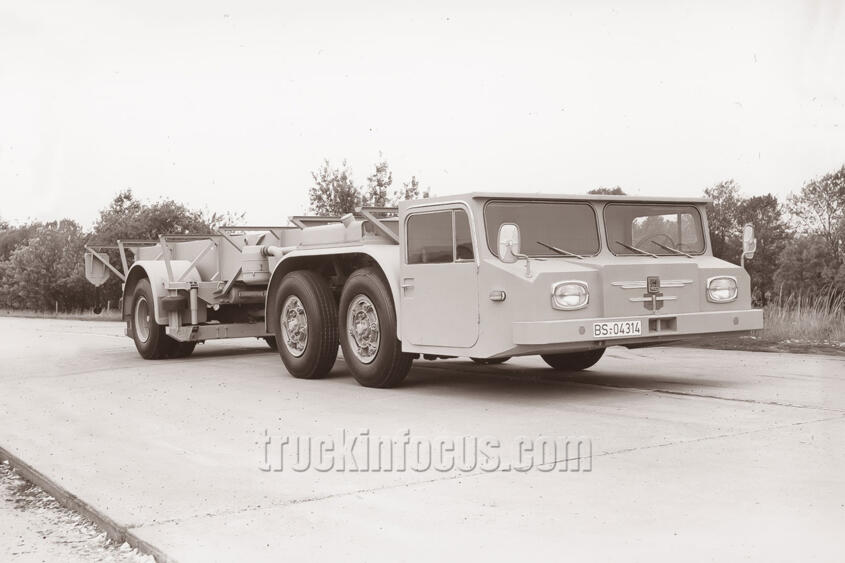
The platform truck featured air suspension and hydraulic shock absorbers from Koni, ensuring a high level of ride comfort and stable road holding. Its standard hydro-spindle steering allowed precise control of the four steered wheels. The vehicle was equipped with a hydraulic, compressed-air-operated dual-circuit braking system, supplemented by a parking brake on the rear wheels and an electro-pneumatically activated engine brake. All-around, the new-generation Trilex wheels were used, whose wheel hubs could be removed together with the brake drums without first disassembling the hubs.
The cab, suspended beneath a box frame welded from hollow sections in front of the two steerable front axles, was quite spacious with an interior height of around 1.30 meters. However, the seat angle borrowed from the VW Beetle, the upright steering wheel, and above all the seating position—at the same height as car drivers, which was unusual for trucks—felt alien to the kings of the highway, as the familiar field of view was lacking.
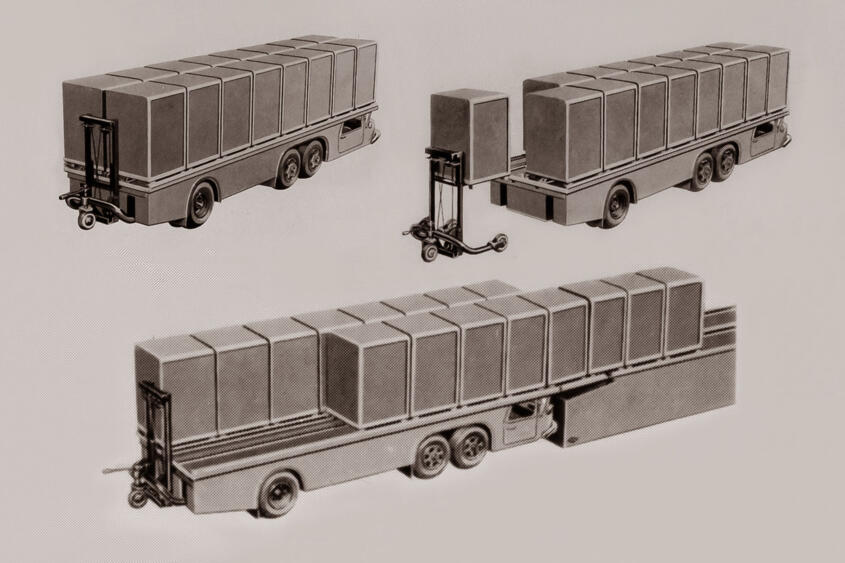
The container concept had already been introduced in 1963, but the corresponding truck had not yet been fully designed at that time. The aim of the approach was particularly efficient freight transport based on a clearly structured transport chain. A number of platform trucks, tailored to demand, were to operate between standardized loading and unloading stations, which were to be equipped with standardized ramps. For loading, the vehicles were to pull up to these ramps head-on, where the containers would be automatically picked up from the ramp edge, distributed across the loading area via a rail system, and secured there. Unloading took place in reverse order. The entire process could be supervised by just one person. Where no ramp was available, a self-propelled portable forklift developed by the Hamburg-based machine manufacturer Jungheinrich and named “Ameise” (Ant) was used. With a lifting height of 1.75 meters, it could be carried at the rear of the platform truck. To do so, after the forks were inserted beneath the loading platform, it raised itself automatically into its transport position.
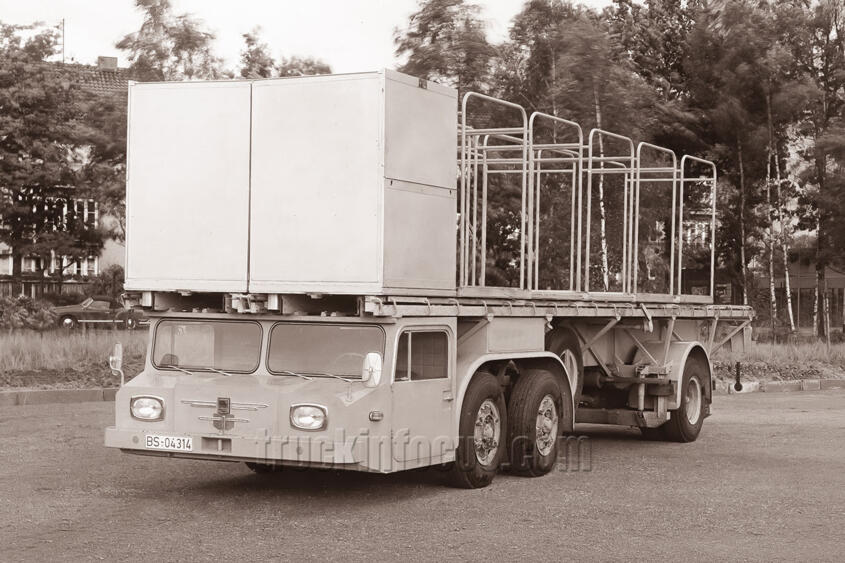
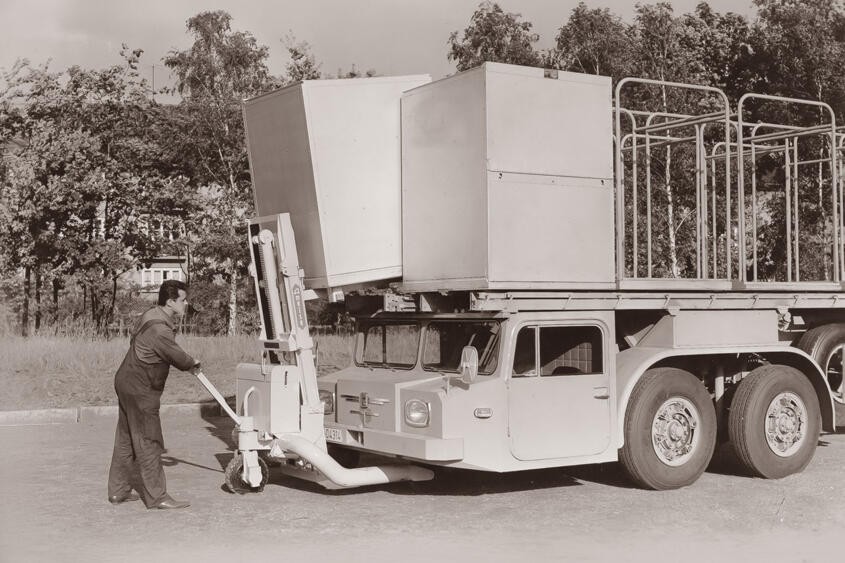
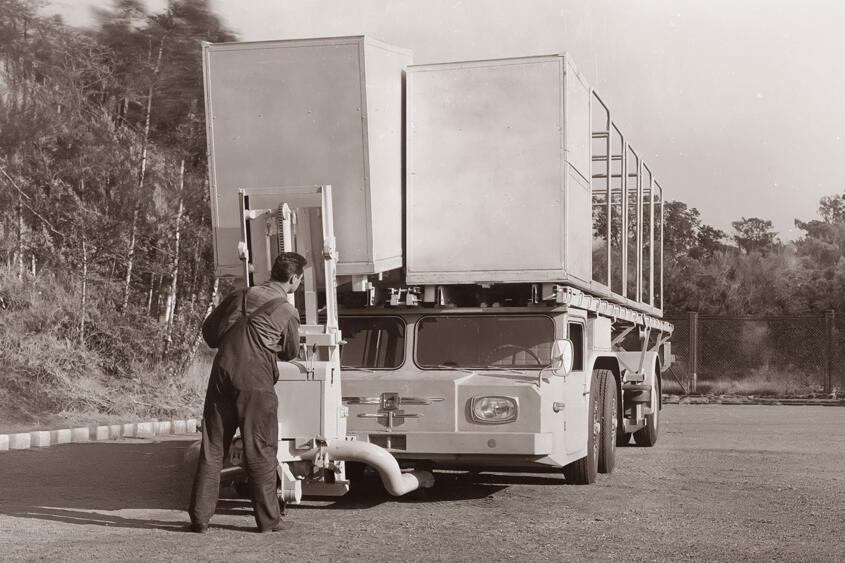
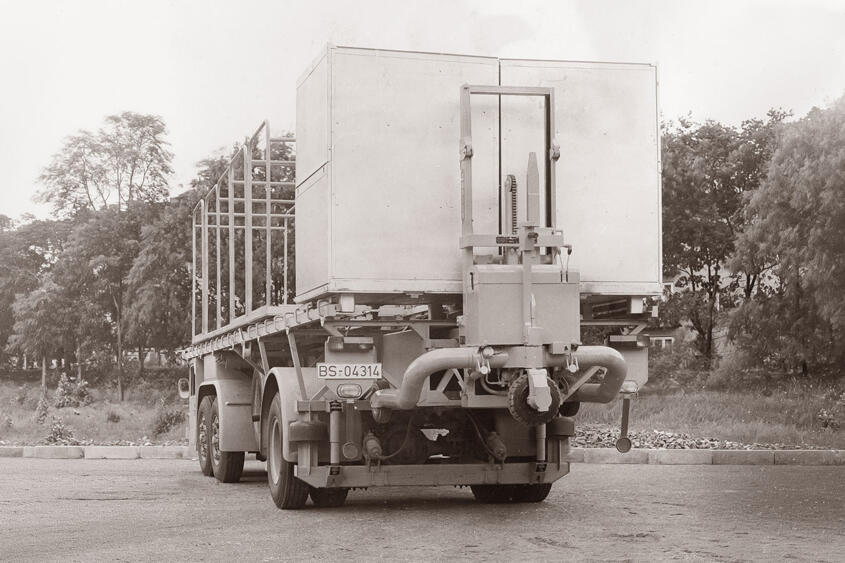
To attach the “Ant” to the rear of the deck loader, its forks were maneuvered into two designated openings. The forks then lowered, thereby lifting the forklift’s chassis into the “travel position.”
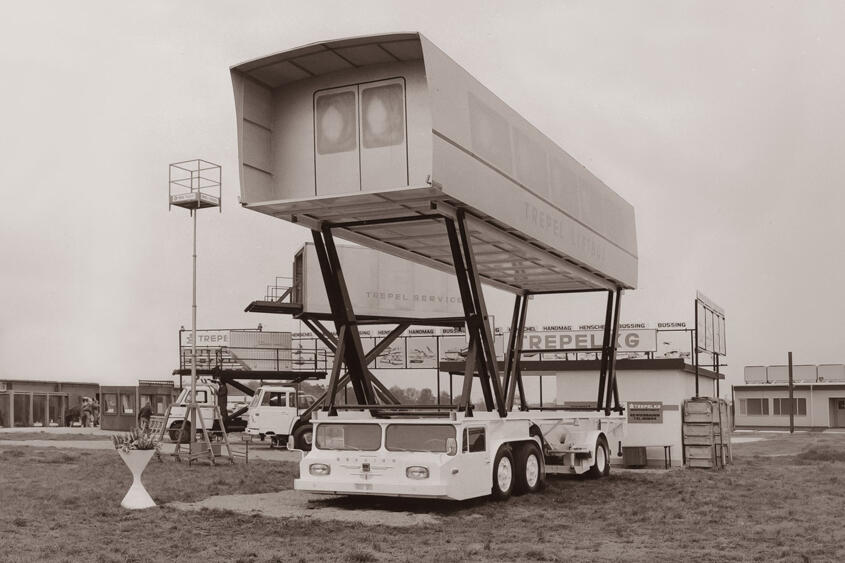
The containers included in the concept measured 126 x 86 centimeters with a height of 180 centimeters and were supplied by Rationorm AG of Zurich. However, the investments required for the planned transport chain—specifically in containers and suitable deck loaders—proved to be too high, especially as internationally standardized large containers were rapidly gaining acceptance. Thus, only a single prototype of the platform truck was ever built. After it was unveiled at the 1965 IAA, it remained unused for a long time. It then served as an eye-catcher for Trepel Airport Equipment GmbH at an aviation exhibition. For this purpose, a mock-up of a liftable airport bus—intended to transport passengers to wide-body aircraft in the future—was mounted on the platform truck’s chassis. Finally, just before it was destined for the scrap press, this one-of-a-kind vehicle was put into regular service after all: equipped with a loading crane, it transported large sheets of flat glass for the Wisthoff Glassworks in Essen. The platform truck is said to have covered more than one million kilometers transporting glass. In the early 2000s, Robert Fehrenkötter, a well-known freight forwarder and collector of vintage commercial vehicles, acquired the vehicle and thus preserved it for the future. After his death in 2014, the collection, including the platform truck, passed to his son Joachim. Since then, the vehicle has been a regular sight at vintage truck events.
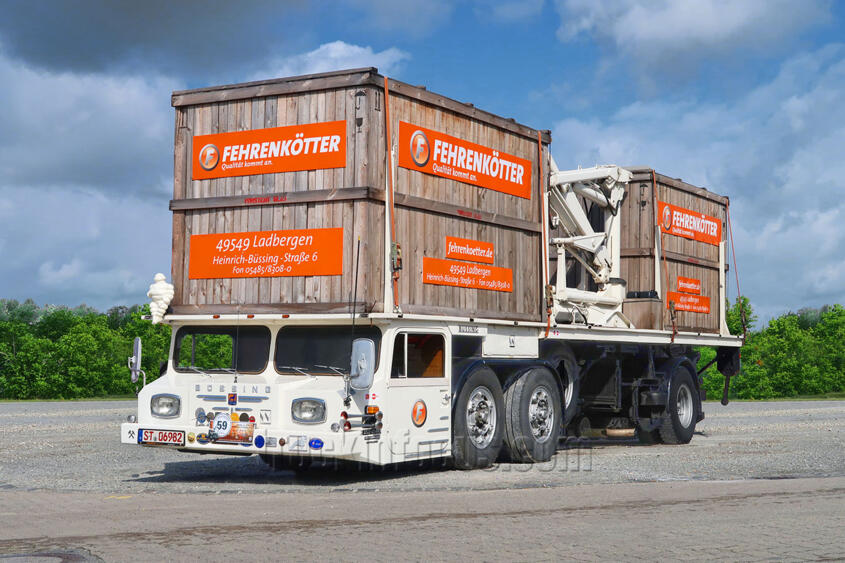
Büssing ceased to exist as an independent brand at the end of 1971, after shares had already been gradually transferred to MAN. The enormous misinvestments in new vehicles with underfloor engines – including the platform truck – had plunged Büssing into financial difficulties. On July 1, 1972, Büssing was fully acquired by MAN following further transactions involving Gutehoffnungshütte Aktienverein, of which MAN was a member. In 1979, the name MAN-Büssing was discontinued, having been retained initially for market strategy reasons. MAN continued to offer trucks with underfloor engines until 1994, but with the introduction of the F 2000 series, they too became a relic of the past. Only the Braunschweig Büssing lion still adorns all MAN vehicles today as a reminder of Heinrich Büssing’s achievements, albeit now designated as the Munich lion.
Much of the technical information on the platform truck in this article is taken from the book “Büssing – Das Lastwagen-Album” by Bernd Regenberg (now out of print), published in 1994 by Podszun-Verlag (ISBN 3-86133-119-5).
The article was written by Steve St.Schmidt.