Autonomous Truck at Lidl
Germany’s First Driverless Truck Hits the Road
No driver, no steering wheel, not even a cab: In northern Hesse, Germany’s first autonomous electric truck in everyday operation is on the road — and a discount retailer, of all companies, is putting it there. Together with Swedish technology partner Einride, Lidl is supplying a store near Kassel with a vehicle approved by Germany’s Federal Motor Transport Authority for SAE Level 4 operation. How autonomous driving has long been legal in Germany, why Lidl is ahead of Daimler and MAN, how the safety concept works, and what the driverless truck means for logistics — an overview.
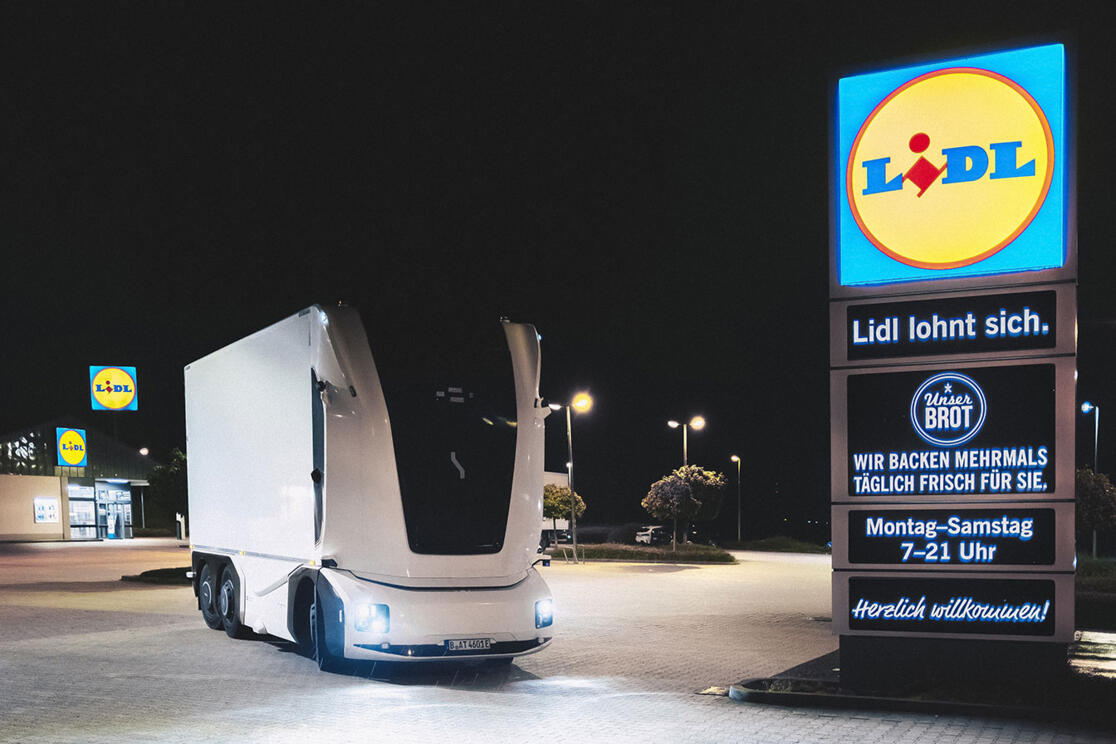
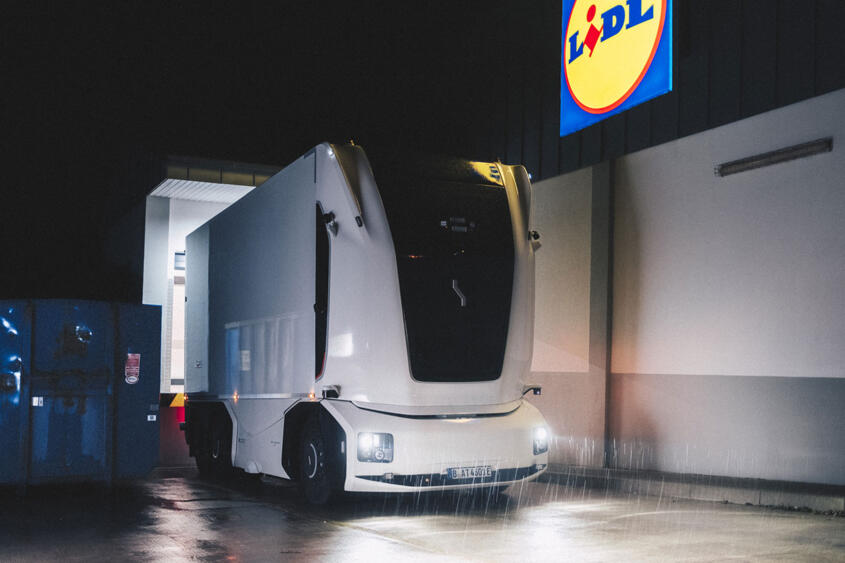
In Edermünde near Kassel, an autonomous electric truck without a cab, steering wheel, or anyone on board has been traveling on a public road since mid-September 2026. It was not Daimler Truck or MAN that put it on the road, but a discount retailer: Lidl has received approval from Germany’s Federal Motor Transport Authority for the first autonomous, driverless electric truck in everyday operation in Germany. The technology partner is Swedish company Einride, and the autonomous-driving project was presented at IAA Transportation in Hannover.
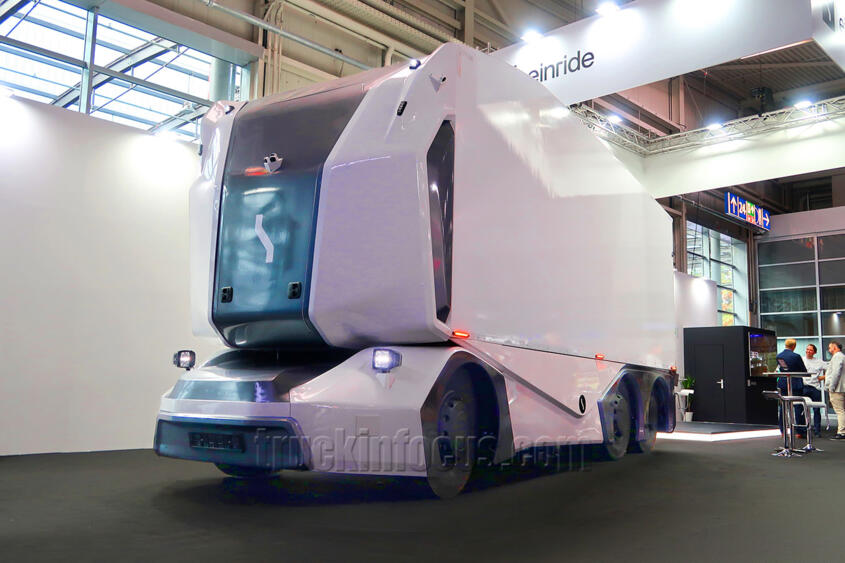
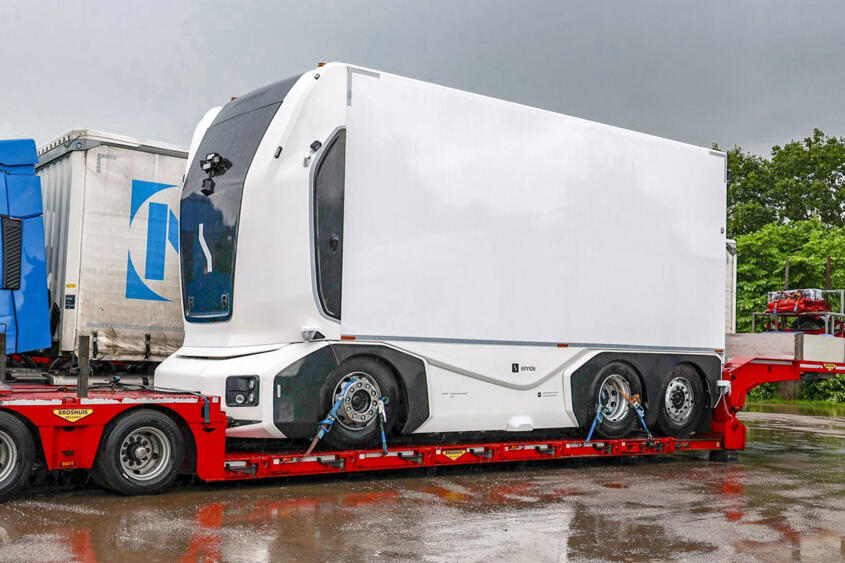
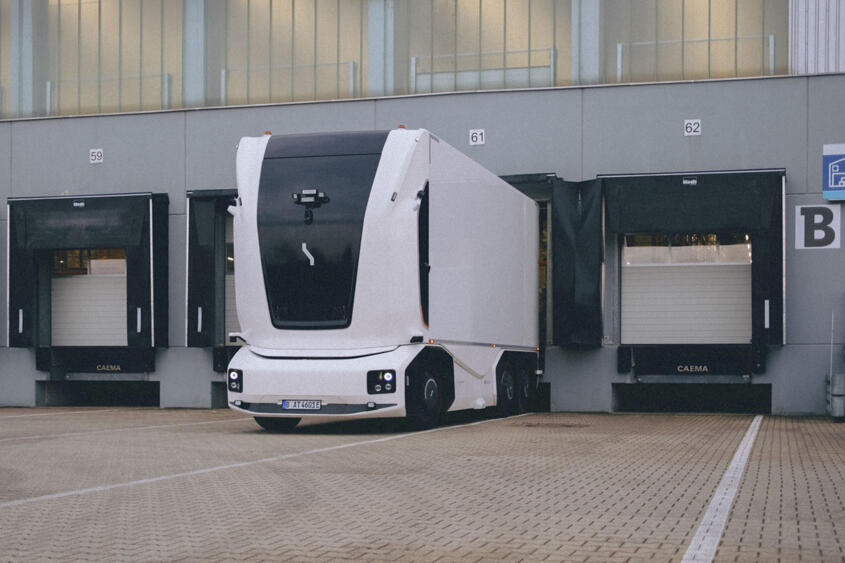
The Einride eBot is a driverless truck with space for 15 Euro pallets and operates at SAE Level 4. That means the vehicle moves entirely on its own within a clearly defined area, without requiring human intervention. The route between the distribution center and the store is about 400 meters long; the vehicle travels it up to three times a day, taking over the complete delivery of dry goods on this route. Over four months, more than 3,000 pallets are expected to reach their destination this way. During the pilot operation, the vehicle may not travel faster than 25 kilometers per hour. Its real significance therefore lies not in the volume of goods moved, but in the precedent it sets: the breakthrough is regulatory, not logistical.
Autonomous driving has long been legal in Germany
Contrary to a common assumption, autonomous driving is not prohibited in Germany — and the truck is not operating on private property, but on public roads. With the 2021 Act on Autonomous Driving, Germany created the world’s first legal framework allowing driverless Level 4 vehicles on public roads, limited geographically to what is known as a defined operating area. Since 2022, this has been specified in greater detail by the Autonomous Vehicles Approval and Operation Ordinance (AFGBV); in 2025, the Road Traffic Remote Control Ordinance added the legal basis for remotely controlled vehicles.
The speed of the approval process is not due to lax oversight by the authorities, but to a deliberately narrow use case. For a short, consistently repeated route at low speed, a robust safety case can be established. According to the publicly accessible list of trial approvals issued by the KBA, the permit was granted effective August 14, 2026; for the time being, it runs through February 28, 2027.
Why Lidl, of all companies, has put the autonomous truck on the road so quickly
On closer inspection, it makes sense that a discount retailer has moved ahead of the established manufacturers. First, there is the ecosystem of the Schwarz Group, an internationally leading retail group with around 14,500 stores and approximately 604,000 employees: the project was initiated by Schwarz Corporate Solutions and Schwarz Digits, so the IT and digital expertise is in-house. Second, there is the ideal test environment: 39 administrative and distribution centers and more than 3,250 stores in Germany create countless regular short-haul routes that fit precisely with narrowly defined Level 4 operating areas. Third, there is an existing partnership: Einride has been working with Lidl in Sweden for some time, and an expansion was announced as recently as August 2026. For Einride, Germany, as Europe’s largest road freight market, is a key market in any case.
How safety is ensured for the autonomous truck
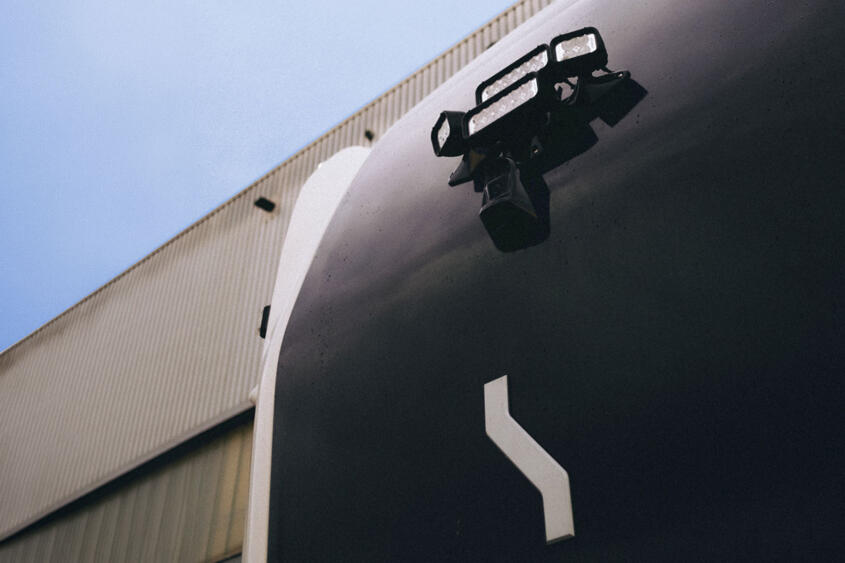
The safety concept rests on several layers. The most effective is the restriction itself: low speed, the same short route every time, and defined conditions. In addition, there is a requirement not mentioned by the companies involved in their announcement: a support vehicle with a driver must follow the autonomous truck, as required by the Federal Motor Transport Authority for the pilot operation. The human operator in the background is also central. Einride uses teleoperation: a Remote Pod Operator monitors the vehicle at all times over a 5G network and can remotely control steering, acceleration, and braking. Because of the vehicle’s autonomous capabilities, however, the operators do not actively drive it, but supervise several vehicles at the same time. There are also redundant core systems — Knorr-Bremse is putting a second braking system for driverless trucks into series production — as well as a legally required separate liability insurance policy for the technical supervisor.
Autonomous trucks: These companies are in the race
Lidl and Einride are not alone. Development is furthest advanced in the United States: Aurora Innovation transports commercial freight between Dallas and Houston without a human in the cab, while Kodiak Robotics operates autonomous Class 8 trucks on similar routes. In February 2026, Aurora tripled its network to ten routes with major customers including FedEx and Uber Freight. German manufacturers are focusing on long-haul transportation: Daimler Truck plans to launch a commercial Level 4 system for hub-to-hub long-haul operation in 2027 together with its subsidiary Torc Robotics. MAN laid the groundwork with the ATLAS-L4 consortium project, Munich-based start-up Fernride relies on teleoperation in ports, and ZF has nationwide approval for testing in Germany. Chinese provider Pony.ai presented a new electric Level 4 heavy-duty truck at the IAA; series production is scheduled to begin before the end of 2026.
Autonomous driving in logistics: What impact the industry expects
The underlying problem is structural: earlier BGL estimates already put the shortage of truck drivers in Germany at around 100,000 to 120,000. The most interesting effect is not the disappearance of jobs, but their transformation. Einride deliberately hires experienced truck drivers as operators; compared with conventional driving, remote operation is intended to be safer, offer more regular working hours, and provide a more pleasant working environment. The economics are changing as well: an autonomous truck does not need a legally mandated rest break because the driving system does not get tired — but it does bring high fixed and system costs for sensors, redundant technology, computing power, software, and control centers. Lidl is already thinking ahead: for a second phase beginning in 2027, the route is planned to be expanded into a so-called milk run with multiple stops. The limitations remain real: loading and unloading, dispatching, maintenance, and many specialized transports still depend on people.
Conclusion
Einride has shown that a cabless vehicle can make it through one of the strictest approval procedures in the world — how far the KBA will open up the operating area afterward will be decided over these four months. The fact that a discount retailer and a Swedish start-up are leading the way in everyday driverless operation is likely being watched very closely in Stuttgart and Munich.
The text for this article was written by Torsten Alberts.
Generative AI was used to support the research, structuring, and wording of the article.
Frequently asked questions about the autonomous Einride eBot:
Does the Lidl truck really operate without a driver?
Yes. The vehicle has neither a cab nor a steering wheel, and there is no one on board. For the pilot operation, however, the Federal Motor Transport Authority requires a support vehicle with a driver to follow the autonomous truck.
Where exactly does the autonomous Lidl truck operate?
In Edermünde in the German state of Hesse, near Kassel, between the distribution center and a nearby Lidl store. The route is about 400 meters long.
How fast does the autonomous truck travel?
During the pilot operation, the maximum permitted speed is 25 kilometers per hour.
Who manufactures the truck?
It comes from Swedish technology company Einride. The model is called the eBot and has space for 15 Euro pallets.
Who approved the autonomous truck?
Germany’s Federal Motor Transport Authority (KBA). The approval took effect on August 14, 2026, and is currently valid through February 28, 2027.
Is autonomous driving legal in Germany?
Yes. In 2021, Germany created the world’s first legal framework for driverless Level 4 vehicles on public roads with its Act on Autonomous Driving — although only within a predefined operating area.
What happens after the pilot project?
For a second phase beginning in 2027, Lidl and Einride plan to expand the route into a so-called milk run with multiple stops.