A Vehicle Identity Card for the 1899 Daimler
How the FIVA ID Card Documents the History of an Early Motor Truck
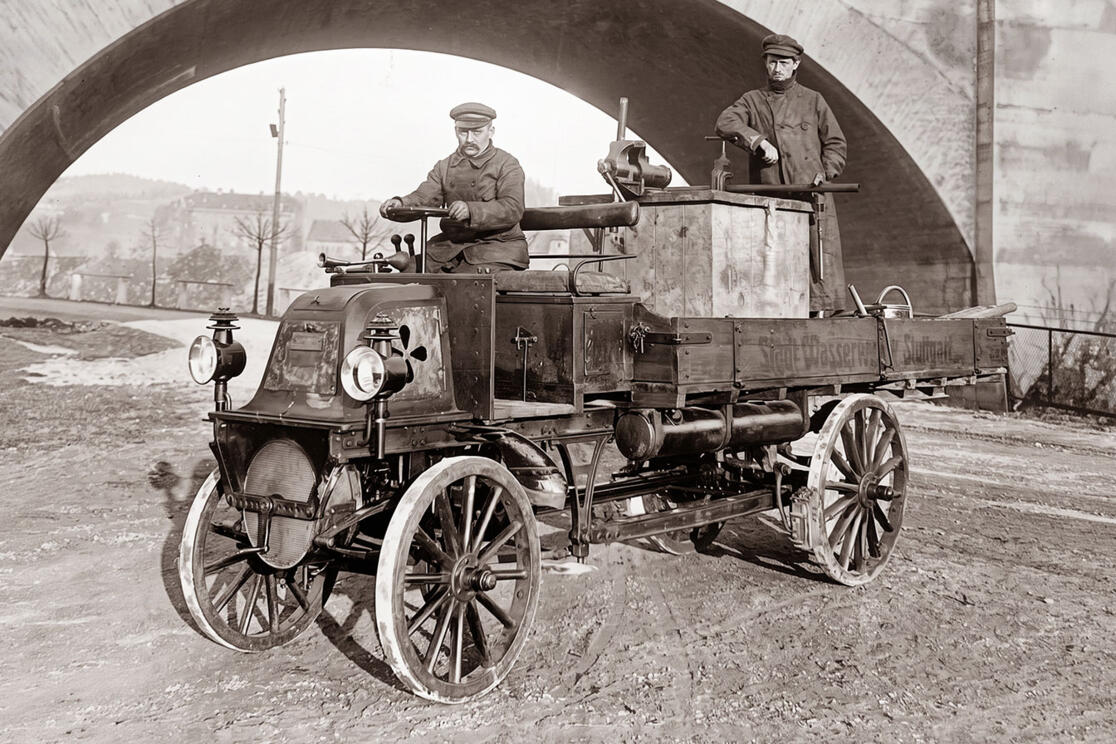
Built for Stuttgart’s municipal waterworks, moved to Dresden during the war for safekeeping, and now back in running order: a Daimler motor truck from 1899 has a remarkable history. At the initiative of historic vehicle enthusiast Holger Hahn, it received a FIVA ID Card in 2026. The document also records the changes the truck has undergone over more than 125 years.
An Original Alongside the Replica
Holger Hahn knows the Mercedes-Benz Trucks Classic collection well. In early 2026, one of its oldest trucks caught his attention: a Daimler from 1899. While the first Daimler truck from 1896 is represented today by a replica, this truck, built three years later, survives as an original. Hahn suggested documenting its history and current condition in a FIVA ID Card.
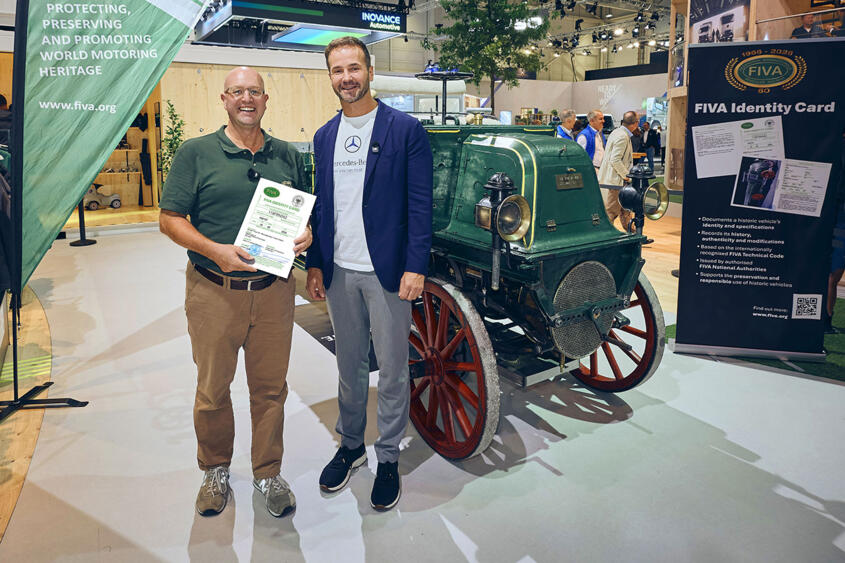
The timing suited the anniversary year: in 2026, DaimlerTruck is celebrating 130 years of truck history. Both the 1896 replica and the surviving 1899 motor truck were on display at IAA Transportation. The replica represents the beginnings of the motor truck, while the original preserves the technology of that era. The FIVA ID Card for the 1899 truck was also presented at the DaimlerTruck booth.
The Organization Behind FIVA
The Fédération Internationale des Véhicules Anciens, or FIVA, is the international federation for historic vehicles. Founded in 1966 by several organizations, it works to preserve historic vehicles and their associated culture, and to keep them in use. Its remit also includes trucks, buses, and agricultural vehicles.
The FIVA ID Card is an internationally standardized vehicle identity document and serves primarily as evidence of authenticity. It brings together technical specifications, the known vehicle history, modifications, and restoration work. In Germany, ADAC Klassik is responsible for issuing it. The process requires documentation from the owner and an inspection of the vehicle. For the Daimler, Holger Hahn, a FIVA inspector for commercial vehicles, carried out this inspection on August 3, 2026. The document was issued on August 24.
A Working Vehicle for the Waterworks
The truck’s story begins with an order from the city of Stuttgart. On March 10, 1899, the construction department of the municipal waterworks ordered it from Daimler-Motoren-Gesellschaft in Cannstatt. The vehicle identity document gives August 5, 1899, as the probable delivery date. The truck then remained in service with the waterworks until the early 1920s.
Its two-cylinder gasoline engine displaces 1,527 cubic centimeters. A manual transmission provides four gears. The wheelbase measures 3,000 millimeters. Chassis number 179 and other identification numbers link the documentation to this individual vehicle.
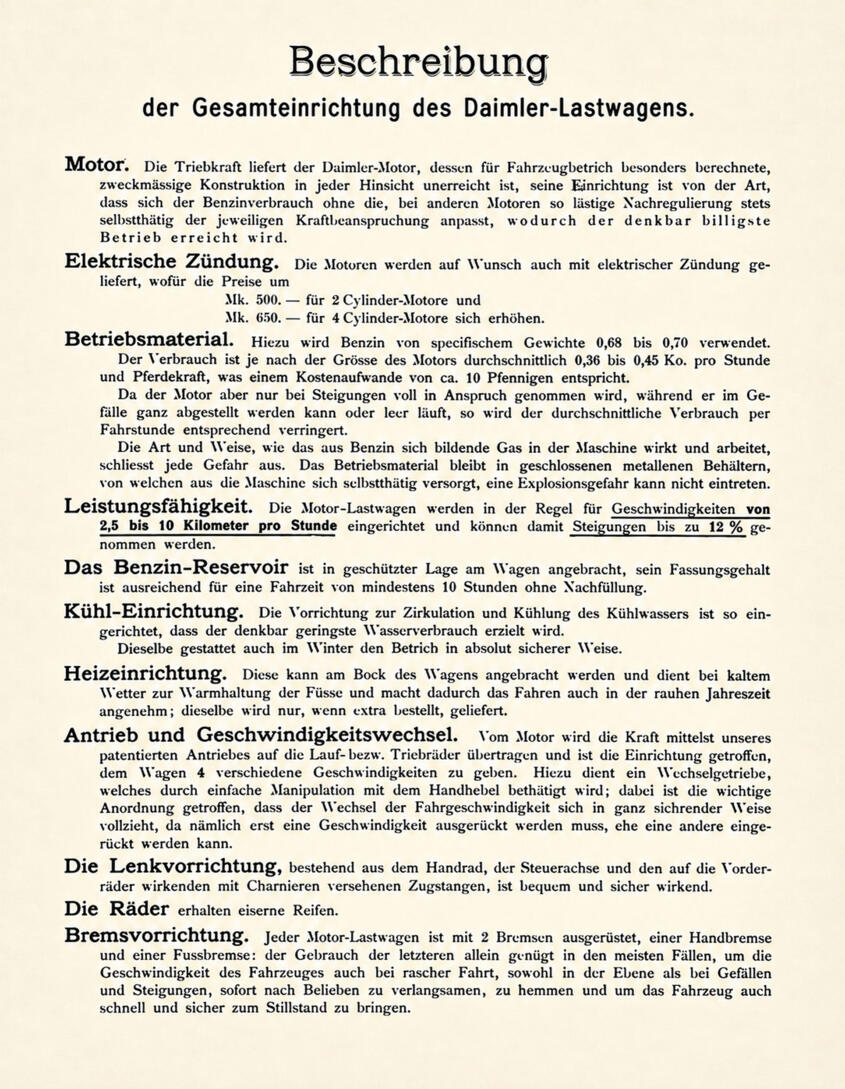
A historical description of the Daimler truck shows how modest expectations for early trucks were by today’s standards. It lists typical speeds of 2.5 to 10 kilometers per hour and the ability to climb grades of up to twelve percent. Electric ignition cost extra. An optional heater was also available to keep the driver’s feet warm. The document describes the equipment offered at the time, but does not, on its own, establish which options were fitted to the Stuttgart truck.
A Museum Piece as Early as 1923
On February 21, 1923, the city of Stuttgart handed the truck, then just 24 years old, over to Daimler-Motoren-Gesellschaft for its museum. Its value as a witness to the early days of motorized transport had therefore already been recognized by 1923.
During World War II, the truck was moved to Dresden along with other museum vehicles to protect it from air raids. It survived the war and remained there afterward. The FIVA ID Card records its addition to the collection of the transport museum. It did not return to the Daimler-Benz Museum collection until 1991. Today, it belongs to Mercedes-Benz Trucks Classic within DaimlerTruck AG.
Traces of Its Working Life Remain
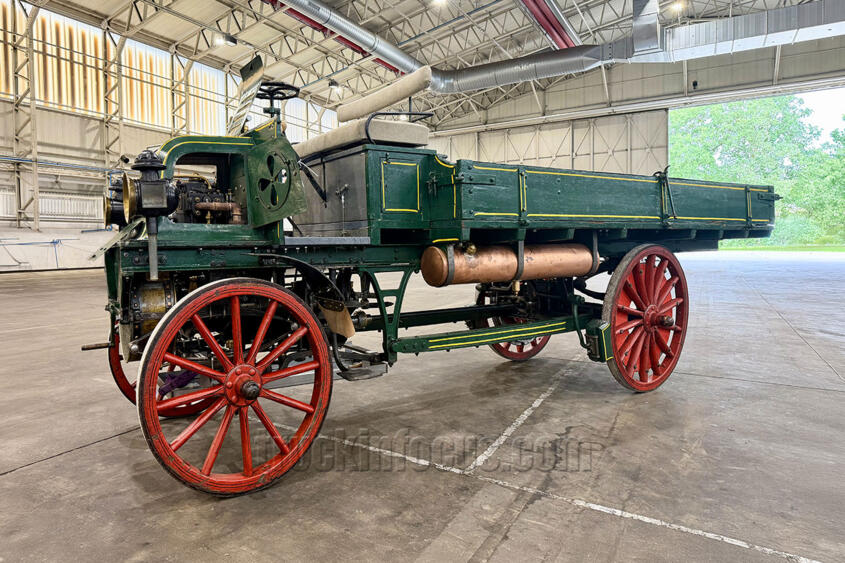
The surviving truck largely reflects its condition in 1923. This includes repairs carried out during its working life. Sometime between 1899 and 1923, it was involved in an accident, the circumstances of which are unknown. Afterward, the spring mounting bracket on the left side of the front axle was replaced with a more roughly welded, less finely detailed version. The engine was also replaced by another of the same design. Engine number 1594 gave way to the engine still fitted today, number 1695.
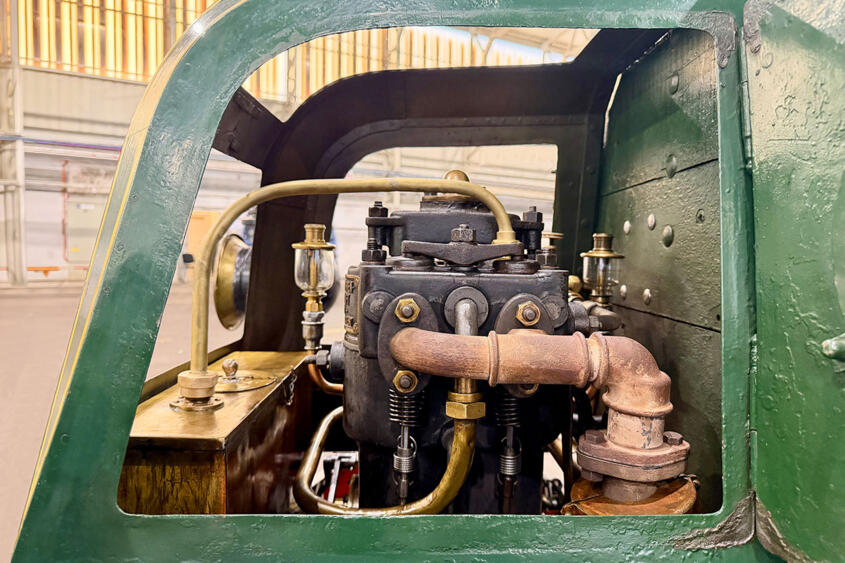
The latest restoration ran from November 2025 to August 2026. Friedrich Först and Klaus Junge, two former DaimlerTruck employees, worked on the vehicle under the supervision of Mercedes-Benz Trucks Classic. The FIVA ID Card lists work on the engine, transmission, drivetrain, and brakes, along with other repairs. The hand-operated air pump was also replaced. It creates the pressure needed in the fuel tank. The non-running engine in particular required extensive repair work. The truck is now back in running order.
Evidence of Historical Authenticity
The FIVA ID Card serves primarily as evidence of a historic vehicle’s authenticity. It documents the vehicle’s identity and historical classification on the basis of the available records and the vehicle inspection. This includes known repairs, modifications, and restorations. It therefore does not certify that every part dates from the vehicle’s year of manufacture, nor does it provide an unconditional guarantee of authenticity or a complete history. It does not replace vehicle registration or a valuation report.
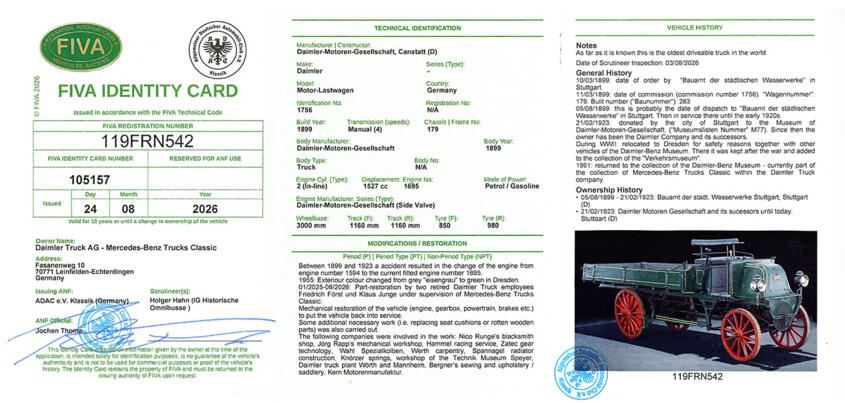
The Daimler’s document bears the number 105157 and the permanent vehicle registration number 119FRN542. It is valid for ten years, but expires earlier if ownership changes. It qualifies its claim about the truck’s age: to the best of current knowledge, the Daimler is the world’s oldest truck in running order.
A Vehicle Identity Document with Practical Benefits
The Mille Miglia demonstrates that such documentation also has practical significance. The Registro 1000 Miglia requires a valid FIVA ID Card for its certificate, which is needed for the standard entry process for this long-established event. The 2026 event regulations also accept other recognized vehicle documents for the vehicle checks. The FIVA ID Card is thus firmly established in the international historic vehicle community.
So far, only a few FIVA ID Cards have been requested and issued for commercial vehicles. However, FIVA increasingly welcomes applications for authentic historic trucks, buses, and other commercial vehicles. The 1899 Daimler shows that a vehicle repaired and modified during its working life can still have a traceable historical identity. Applying can give owners an opportunity to bring existing records together, document changes, and preserve their vehicle’s story for future generations.
Further information is available on the FIVA website.
You can apply for a FIVA ID Card for your historic commercial vehicle through the FIVA application portal.
Technical Specifications and Key Facts:
Manufacturer: Daimler-Motoren-Gesellschaft, Cannstatt
Designation: Motor-Lastwagen
Year of manufacture: 1899
Engine: two-cylinder gasoline engine, 1,527 cubic centimeters
Currently fitted engine: number 1695
Transmission: four-speed manual
Wheelbase: 3,000 millimeters
Front and rear track: 1,160 millimeters each
Chassis number: 179
FIVA Registration Number: 119FRN542
FIVA ID Card number: 105157
Vehicle inspection: August 3, 2026
Document issued: August 24, 2026
This article was written jointly by Holger Hahn and Steve St.Schmidt, with support from generative AI. All illustrations were supplied by Holger Hahn.
Frequently Asked Questions About FIVA and the 1899 Daimler
The Fédération Internationale des Véhicules Anciens is the international federation for historic vehicles, founded in 1966. It works to preserve these vehicles and their associated culture, and to keep them in use.
The FIVA ID Card serves primarily as evidence of authenticity. It describes an individual vehicle’s identity, technical features, known history, modifications, and restorations. It is based on documentation and a vehicle inspection.
The FIVA ID Card provides evidence of authenticity on the basis of the available records and the vehicle inspection. However, it does not provide an unconditional guarantee of authenticity for every component or a complete vehicle history. It does not replace vehicle registration or a valuation report.
No. Unlike the replica of the first Daimler truck from 1896 shown today, this truck survives as a historical original. It was modified during its working life and restored later.
It has been back in running order since the restoration carried out in 2025 and 2026. Its FIVA ID Card describes it, to the best of current knowledge, as the world’s oldest truck in running order.
Yes. Trucks, buses, and other historic commercial vehicles can also receive one if they meet FIVA’s requirements. So far, only a few commercial vehicles have been documented in this way. Further applications are welcome.
This document is valid for ten years from its date of issue. It expires earlier if ownership changes.