The IVECO S-Way was launched in 2019 and has been produced at the Madrid plant for the European market ever since. The heavy-duty trucks, with their striking front design, sparked heated debate right from the start. Some were immediately captivated by the harmonious lines, while others initially complained about what they saw as a clown face. The controversy has since died down, as stunning paint jobs, alternative powertrains, and sophisticated technology are making the S-Way increasingly popular. In this article, we present an IVECO press release introducing the assembly plant in Madrid. Along with this, you'll find 22 photos of the heavy-duty models that have been manufactured there since 1990.
The IVECO plant in Madrid once produced trucks for the legendary Spanish brand Pegaso. Production had been moved in 1955 from the former Hispano-Suiza plant in Barcelona to new facilities in Madrid. Following the takeover by Iveco in 1990, the last Pegaso trucks of the Troner series continued to roll off the assembly line until 1993. At the same time, IVECO models were already being produced, initially the EuroStar and the EuroTech, which received the “Truck of the Year” award in 1992. These were followed by the Stralis, the Stralis Hi-Way, and the S-Way.
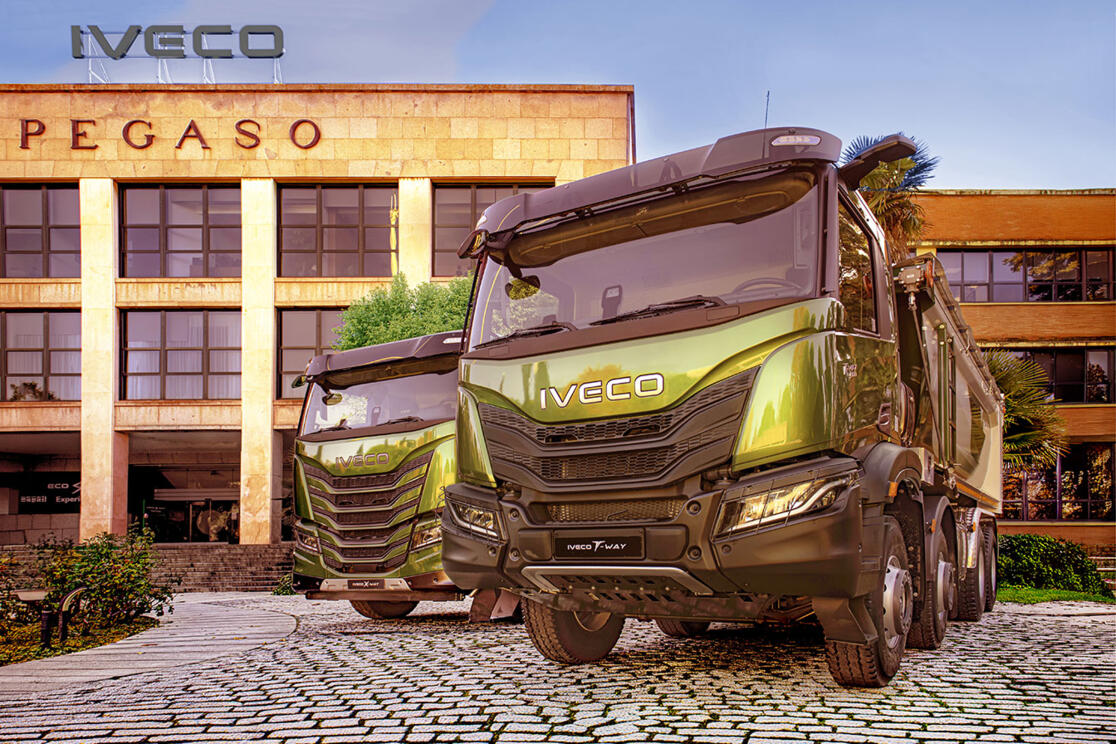
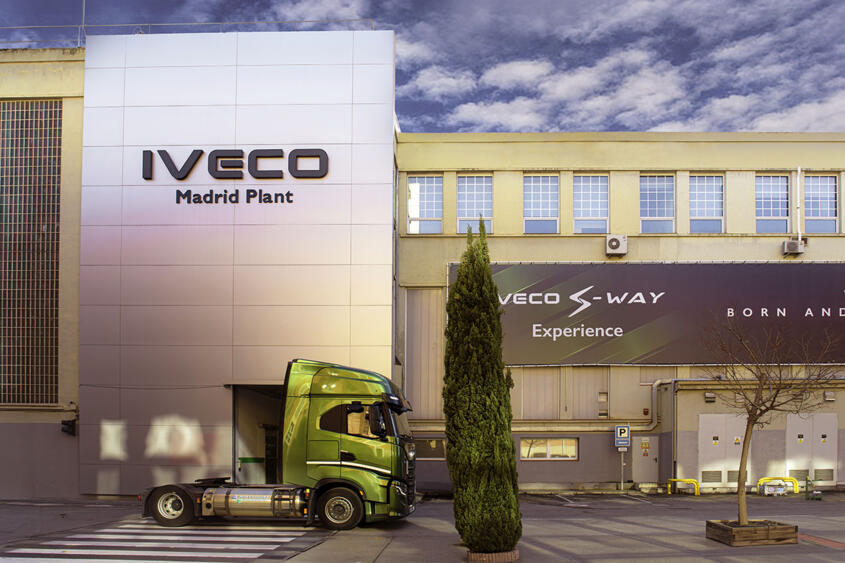
The IVECO plant in Madrid is Spain’s sole production site for heavy-duty commercial vehicles. The S-Way and X-Way have been produced there since 2019, and the T-Way – the successor to the Trakker – since 2021. All these heavy-duty series are delivered throughout Europe. Other sales regions include Africa, the Middle East, and select Asian markets. In Latin America, there are also IVECO plants in Sete Lagoas (Brazil) and, since 2026, in Córdoba (Argentina).
All heavy-duty IVECO models for Europe are produced at the former Pegaso plant in Madrid.
A press release from May 2026, illustrated with photos, provides insights into the Spanish production facility. Covering an area of 374,000 m², the plant features a main assembly line more than a kilometer long and offers nearly 40,000 possible vehicle configurations. With 267 base models and more than 2,800 customization options, each truck is specifically tailored to the requirements of the respective customer, meaning that each configuration is produced on average only about three times a year.
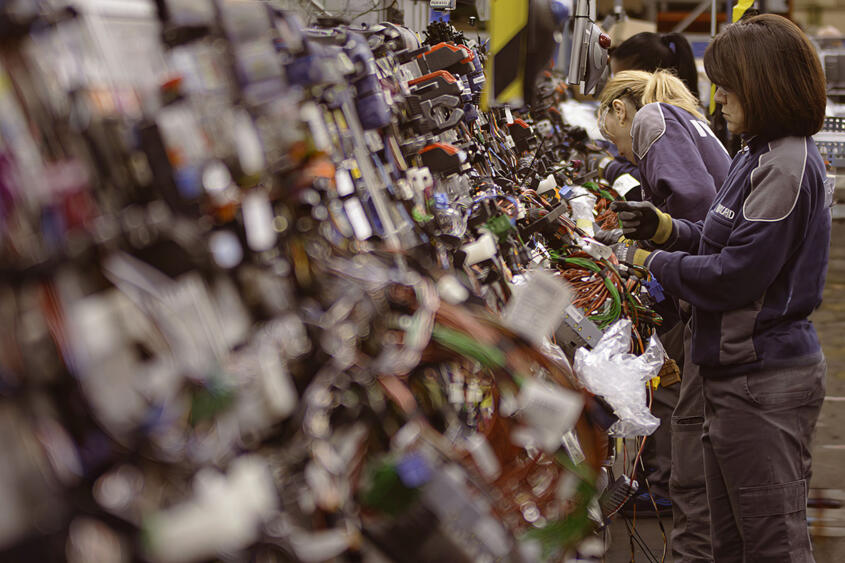
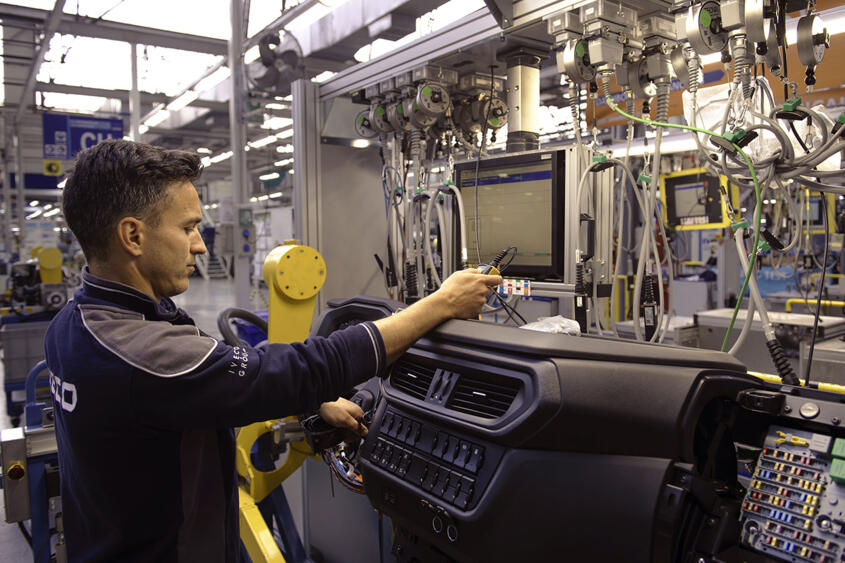
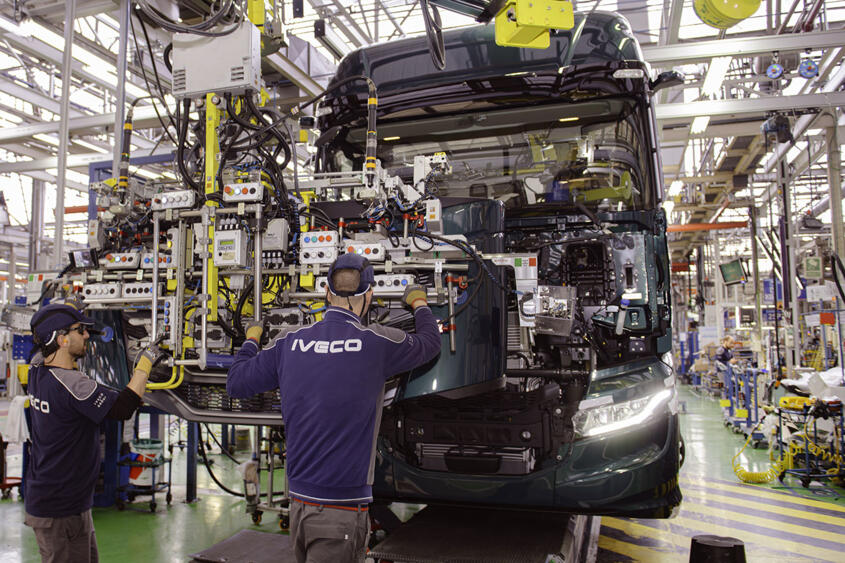
The photo shows a large carousel for production carriers, a rotating system for supplying decks – these are mounting platforms where components are attached. Electronic parts are mounted on the nearly vertical wall of the carousel, where employees are assembling them.Testing the dashboard wiring harness before installation: A technician performs electrical functional testing with a test device and monitors the results on a screen.
“Every truck we build is essentially a one-of-a-kind vehicle, custom-built to specific specifications,” says José Manuel Jaquotot, Director of the IVECO plants in Madrid and Valladolid. “Each vehicle receives a unique identifier that allows us to track it seamlessly from cab production in Valladolid to final assembly in Madrid. This is a significant contribution to greater transparency and quality assurance.”
The production process in Madrid is supported by modern logistics and automation systems. A dedicated AGV system (Automated Guided Vehicle System) transports the vehicles through the assembly line. This technology enables dynamic adjustment of cycle times to the respective complexity of the vehicles without interrupting the overall flow of production.
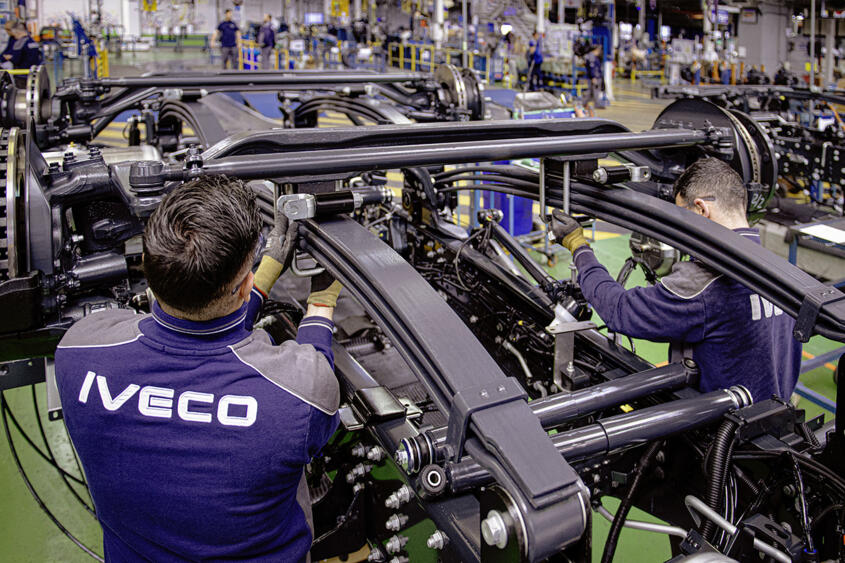
Assembly of truck axles before installation on the vehicleAssembly of the truck cab and its major components
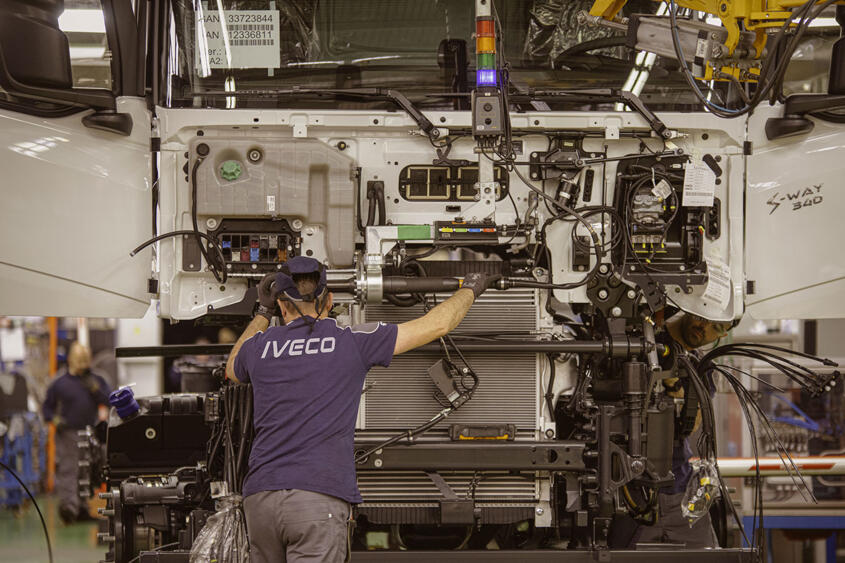
The cabs delivered from the Valladolid plant are already welded and painted. In Madrid, they are fully equipped, including the dashboard, seats, sleeping berths, and airbags. Due to its complexity, the dashboard alone undergoes more than 100 electrical tests and is assembled on a separate line.
A key milestone in the assembly process is the so-called “marriage” of the chassis and cab. The truck then takes its final form through the installation of exterior components, the mounting of the wheels, and comprehensive final tests, which include leak tests, axle and geometry calibration, and functional checks.
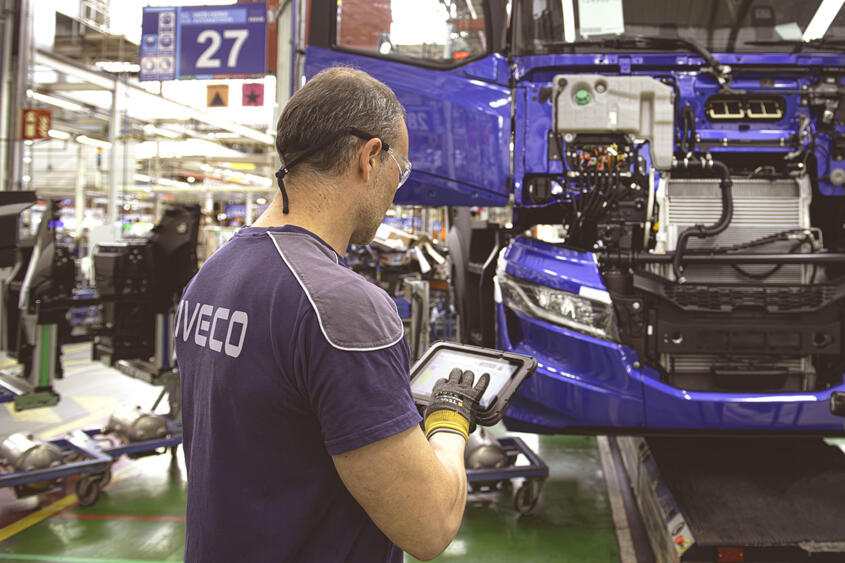
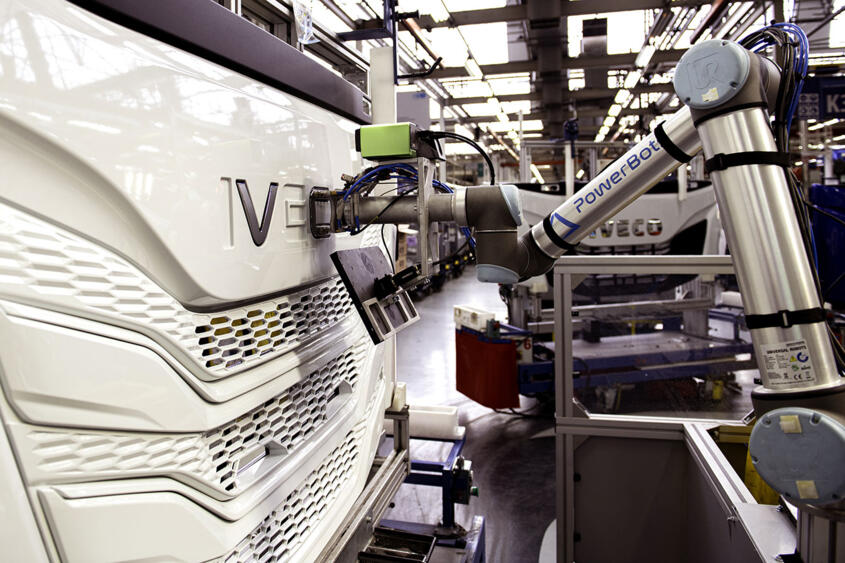
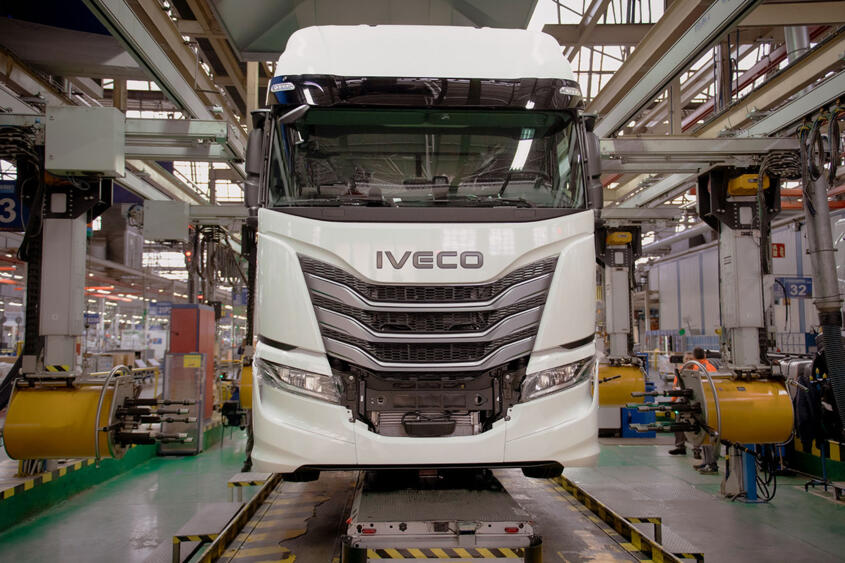
Final checks and tests to verify vehicle quality and functionalityInstallation of the radiator grilleThe Acronym Robot bonds the individual letters of the new IVECO logo into the corresponding recesses on the front of the vehicle.Almost done: a new IVECO S-Way after the wheels have been installed
In addition to its technology, the plant’s strength lies above all in its staff. More than 2,700 employees contribute extensive expertise and a high degree of flexibility to manage continuous product improvements and new production launches.
Sustainability is an integral part of all production steps. For example, the Madrid plant uses 100 percent electricity from renewable energy sources and has recycled nearly 90 percent of the water used in the production process in 2025. Together with the Valladolid site, it is a pioneer within the IVECO Group in the field of sustainable production. It is also part of a groundbreaking solar self-consumption project with Edison Next Spain, which helps avoid approximately 500 tons of CO2 emissions annually. IVECO’s commitment to decarbonization therefore extends far beyond vehicle technology. When it comes to the vehicles themselves, the company is pursuing a decarbonization strategy with a multi-energy approach that drives the further development of diesel and HVO, biomethane, battery-electric, and fuel cell technologies.
So much for the IVECO press release on which this article is based. There is also a 43-second video on LinkedIn (click here). What follows is a look back at the IVECO models that have been built at the Madrid plant since the acquisition of Pegaso. Finally, a series of photos of the current heavy-duty S-Way model.
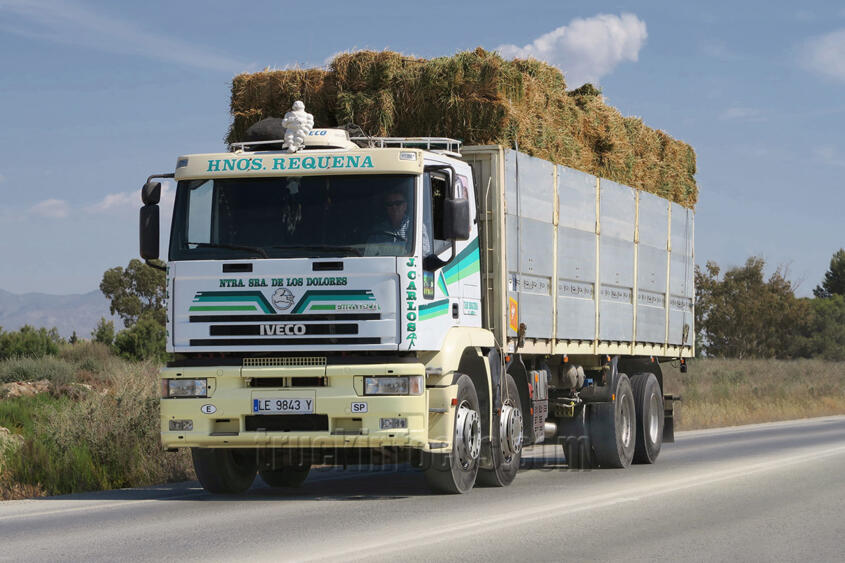
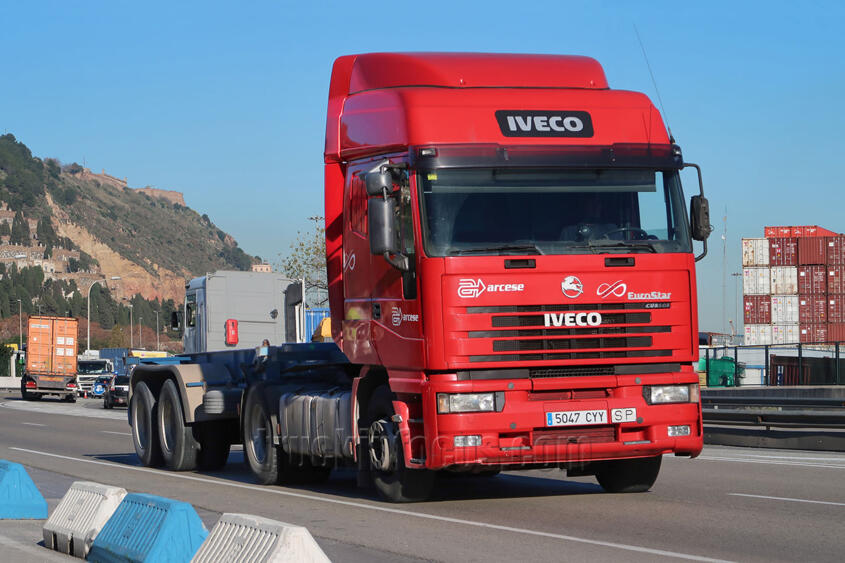
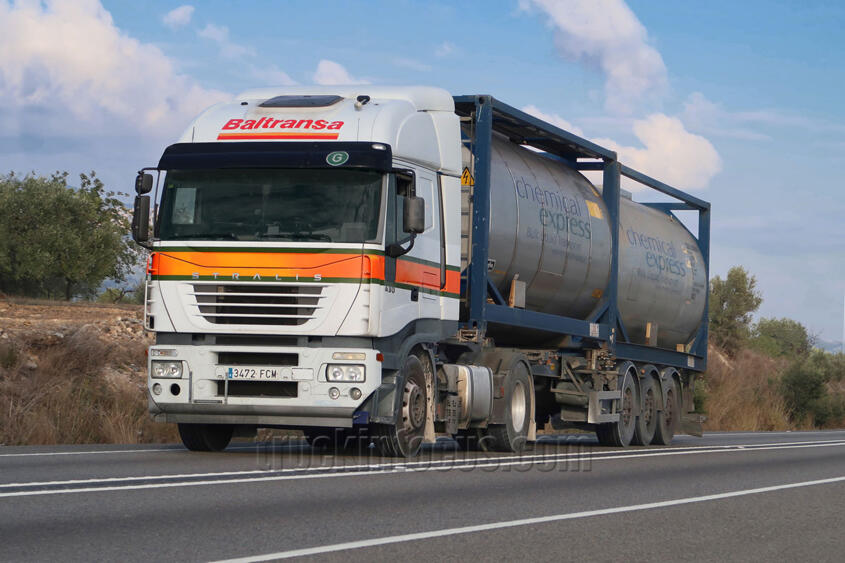
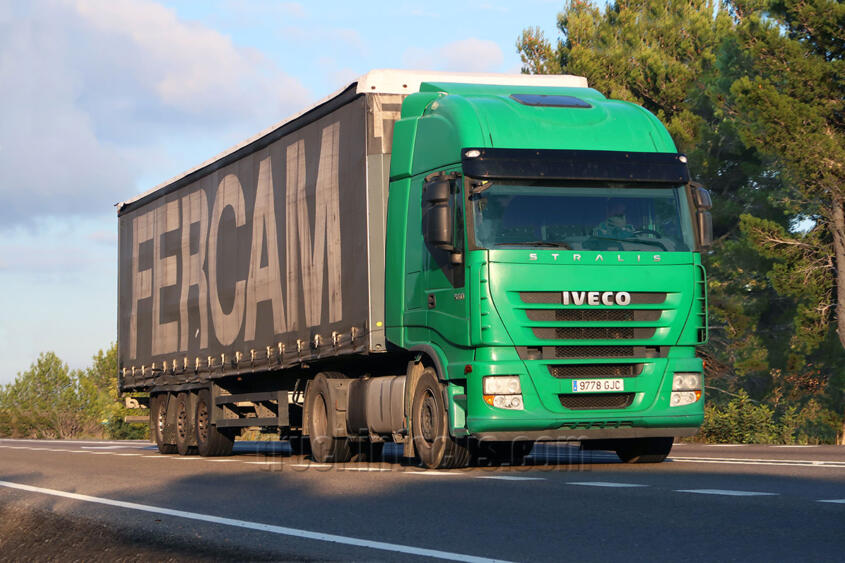
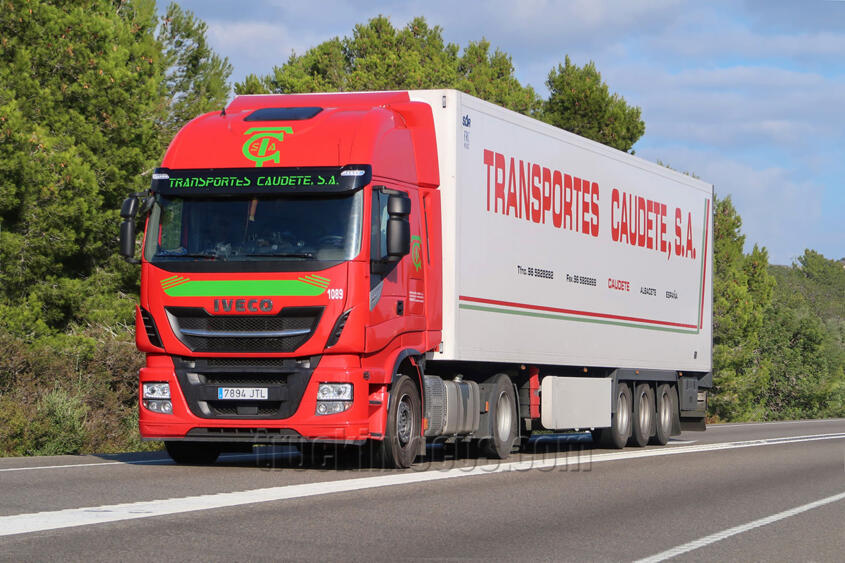
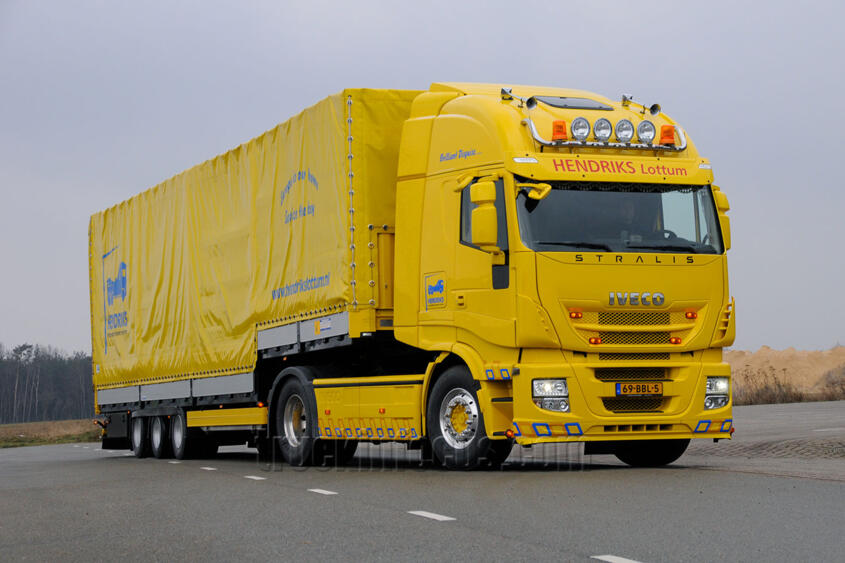
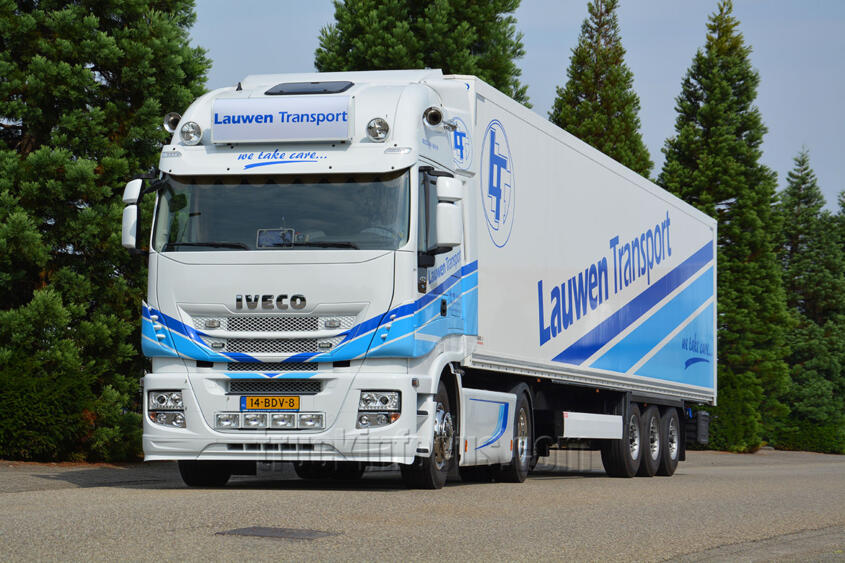
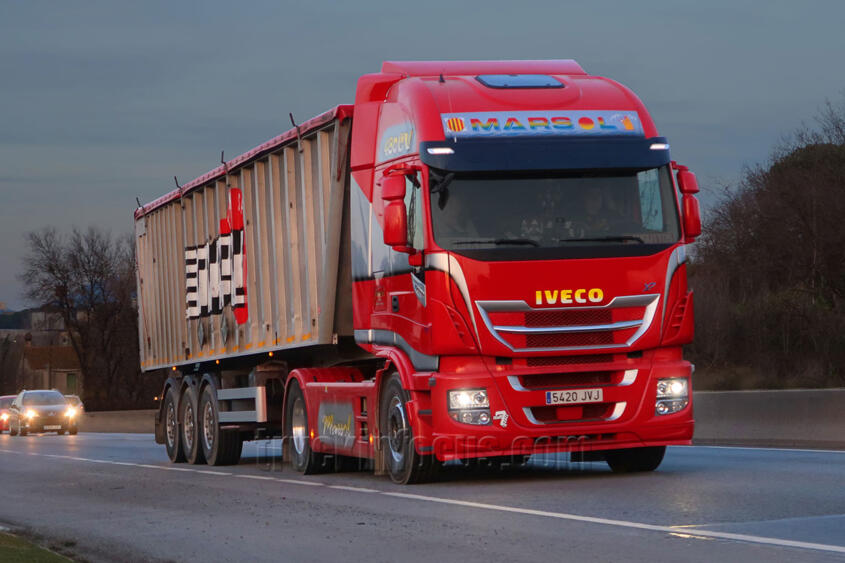
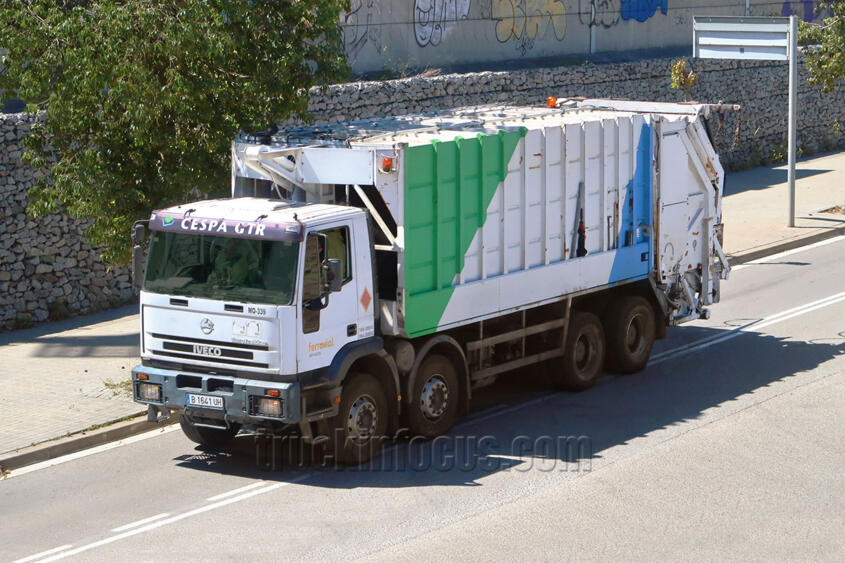
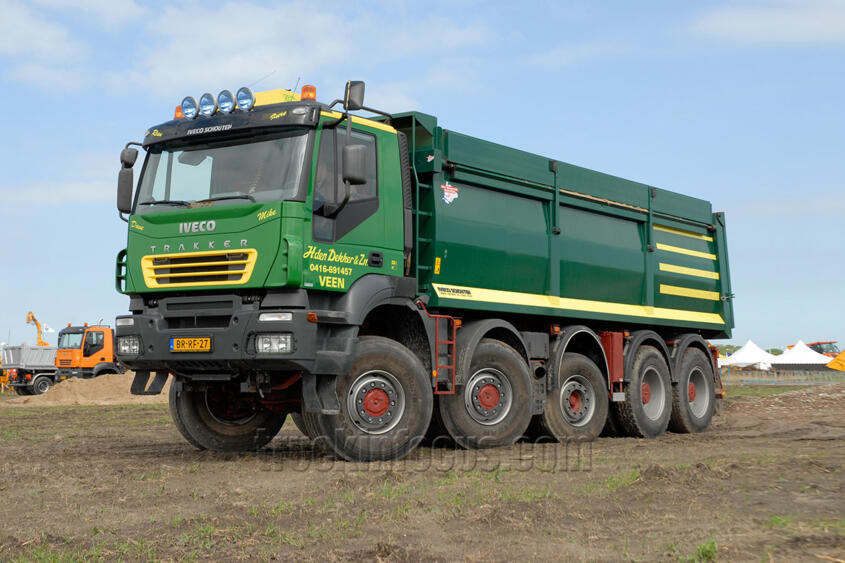
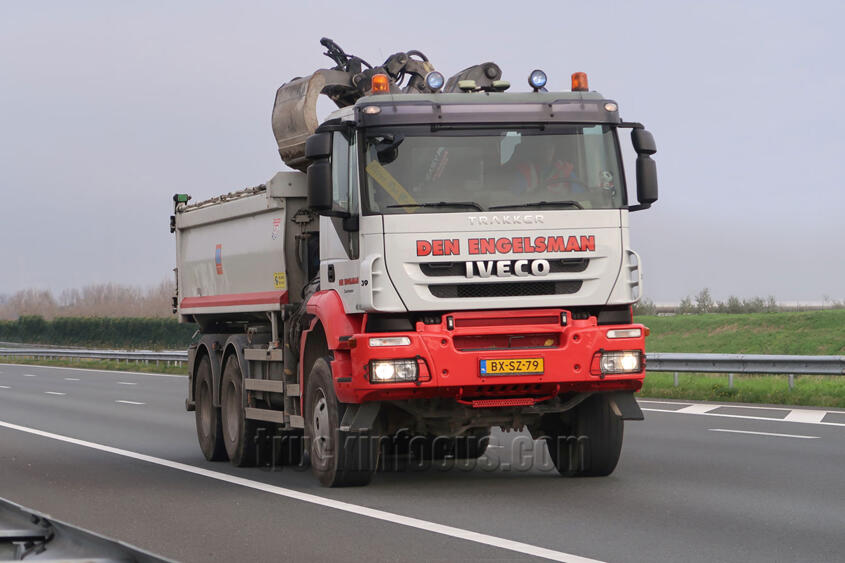
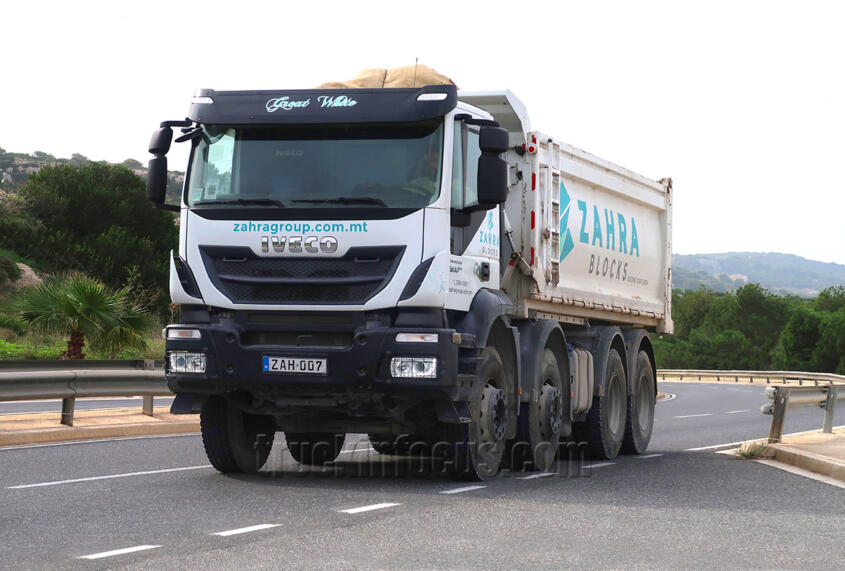
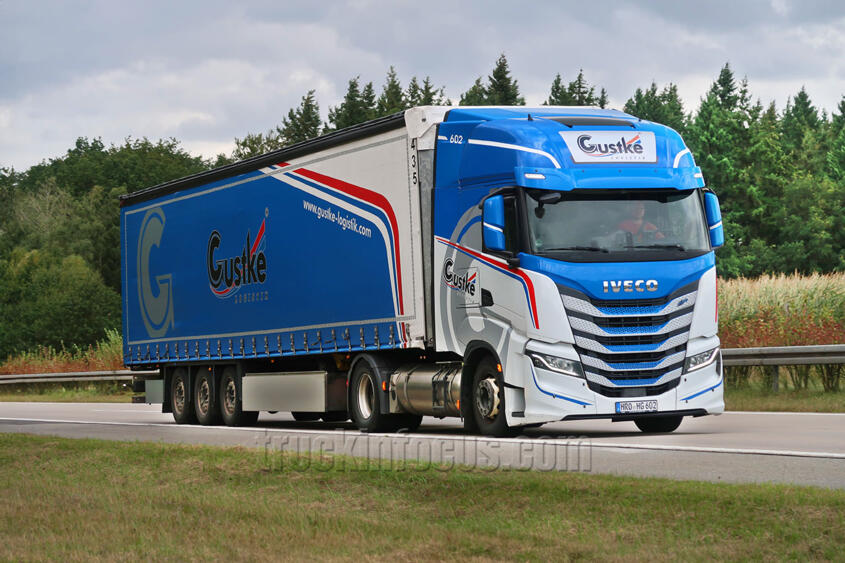
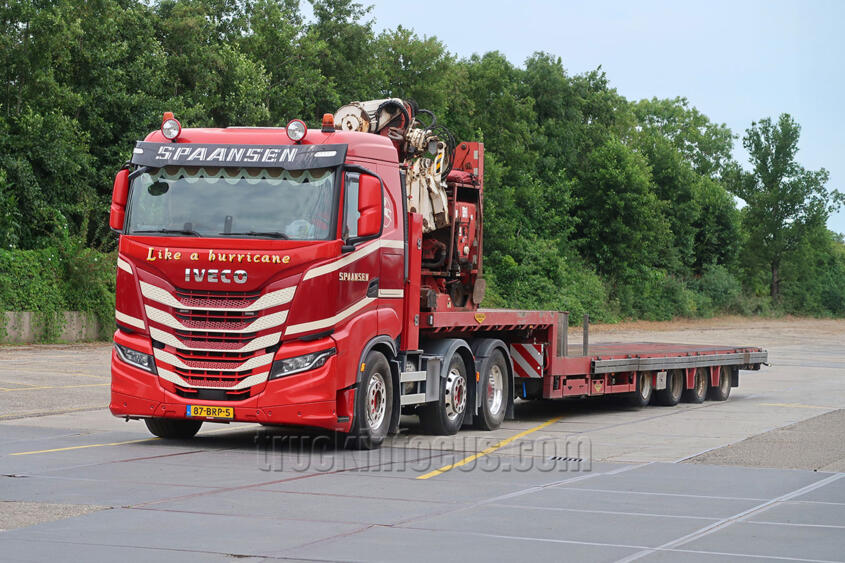
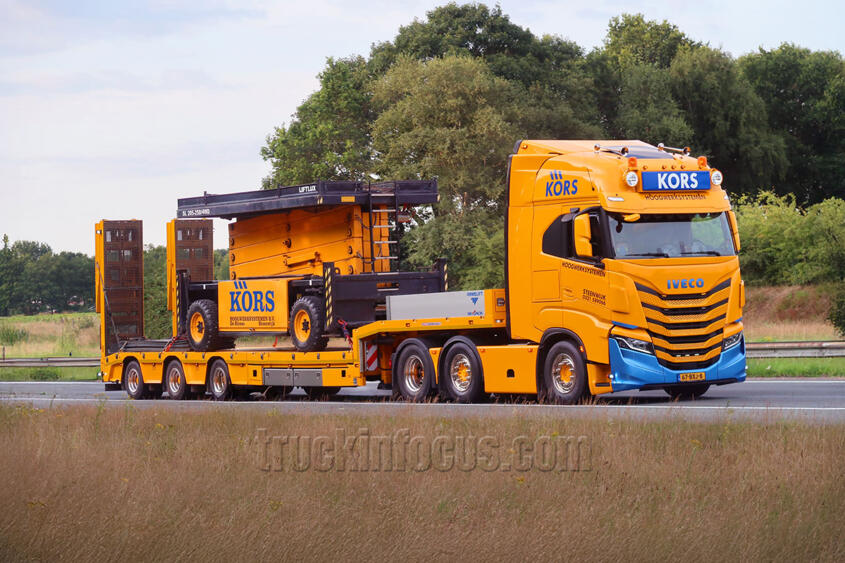
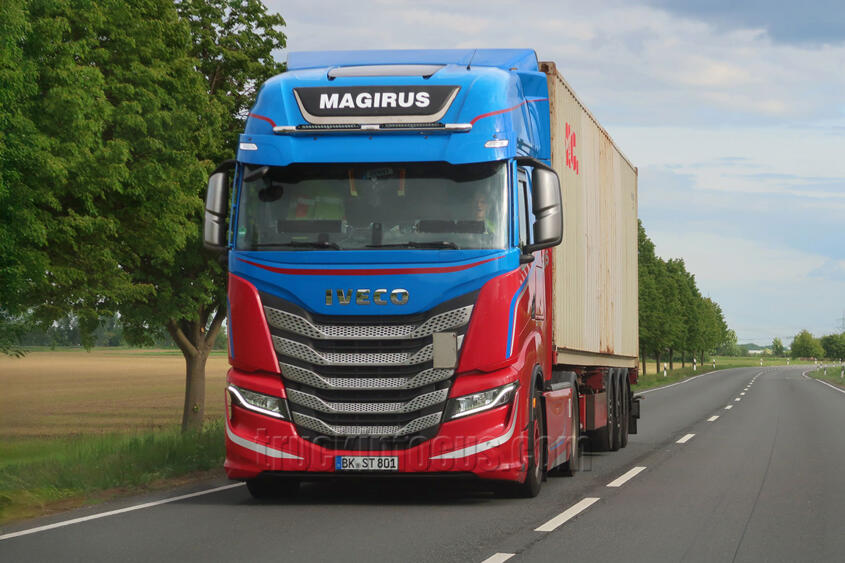
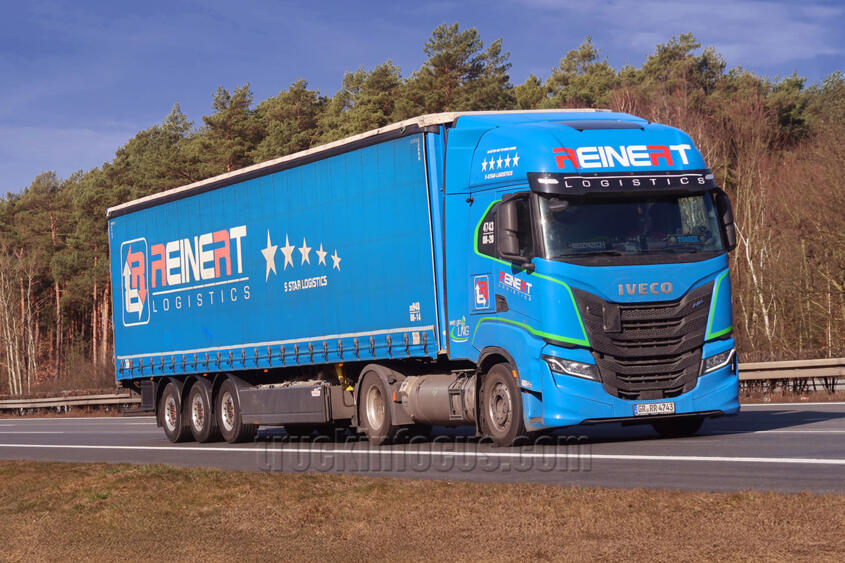
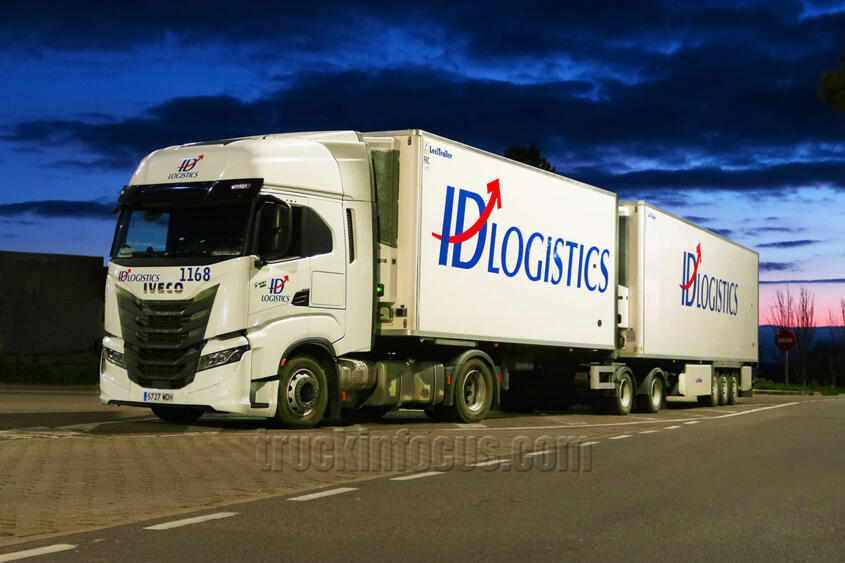
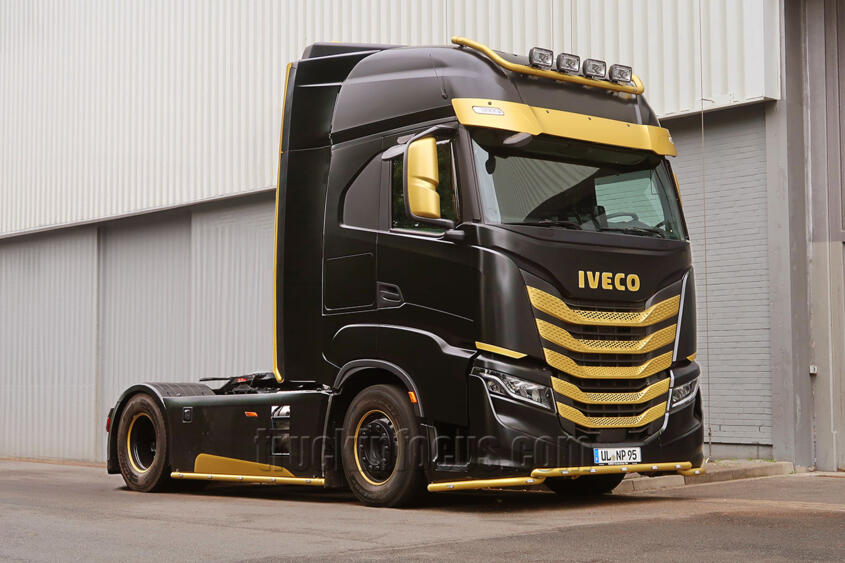
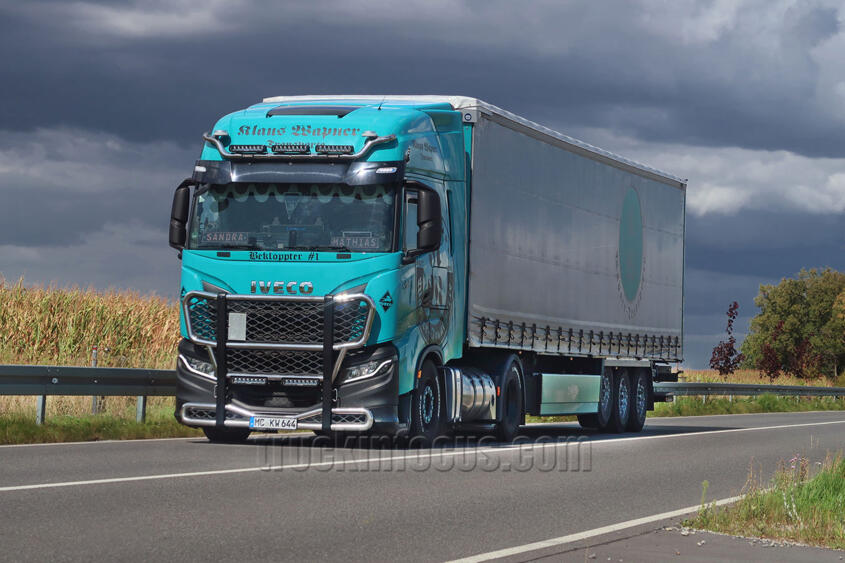
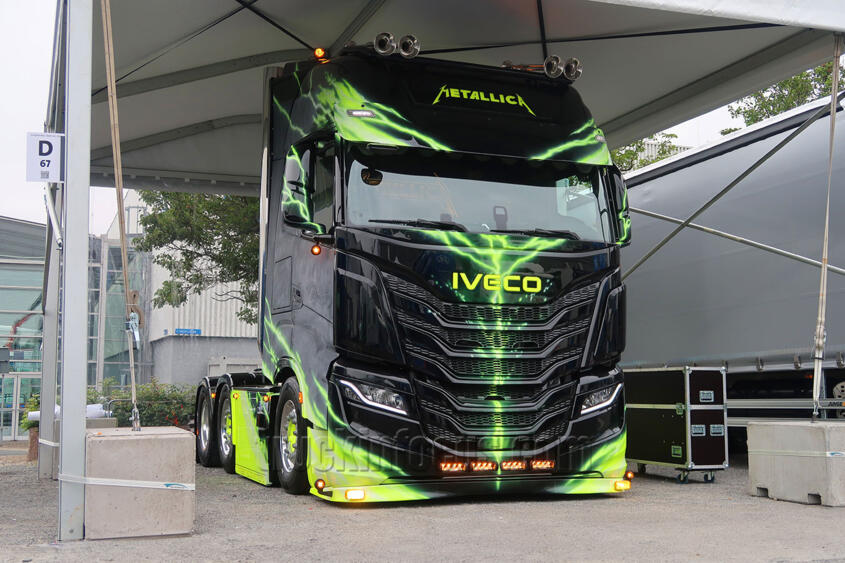
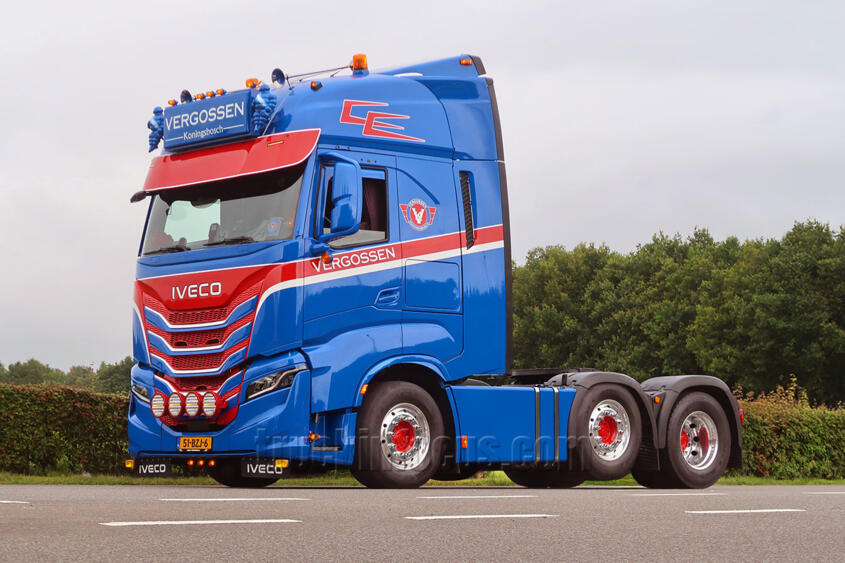
When IVECO began production at the former Pegaso plant in 1990, the EuroTech and the EuroStar were the first IVECO models to be built in Madrid. The photo shows a EuroTech equipped with four axles, in keeping with old Spanish tradition. The vehicle, which still bears the Pegaso logo and is in excellent condition, was still in daily in 2016.The EuroStar was IVECO’s flagship model until 2002. The vehicle shown in the photo, bearing the Pegaso logo, was used as a container transporter and could be found in the Port of Barcelona in 2016.The Stralis era began at IVECO in 2002. The radiator grille of the first model series featured four narrow horizontal openings in the upper section. The top-of-the-line model with a wide cab was called the Stralis AS, where AS stood for Active Space.The 2007 Stralis AS looked more dynamic thanks to the redesigned radiator grille. The four slits had been replaced by three horizontal openings, the shapes of which continued downward. The new lighting unit also gave it a more modern look.The third generation of the Stralis was introduced in 2012. In addition to the redesigned radiator grille, the aerodynamic air deflectors had also been adapted to the slanted design of the vehicle’s front.All in yellow and particularly stylish: a Stralis 3 from a Dutch trucking company, photographed in 2013This Stralis 3 design also hails from the Netherlands. It is not clear whether it is a paint job or a wrap. The design completely ignores the vehicle’s contours, yet looks absolutely stunning overall.The fourth and final Stralis 3 in this photo series was photographed in Spain. The striking paint job impressively showcases the tipper semi-trailer. The photo dates from 2016.Now let’s take a step back in time and take a closer look at the construction vehicles. The four-axle garbage truck, which was on the road in Barcelona, comes from the EuroTrakker series, which was produced from 1993 to 2004. It was positioned as a construction site and off-road series within IVECO’s heavy-duty product range at the time and was technically closely based on the EuroTech, but with a reinforced frame, off-road capabilities, and all-wheel-drive variants.Five-axle models were never part of IVECO’s standard lineup, but in the Netherlands there are specialized companies that equip construction vehicles with additional axles to increase payload capacity. The photo shows an IVECO Trakker AD. The series was introduced in 2004.Similar to the Stralis, the Trakker’s radiator grille was redesigned in 2007.In 2012, the Trakker 3 also adopted a new front design. The photo was taken on the island of Malta in 2021. A year later, a new generation of IVECO construction vehicles, the T-Way, was launched.To conclude our IVECO photo gallery, here are a few images of the Italian commercial vehicle group’s new generation of heavy-duty trucks, which are built in Madrid. The Heinrich Gustke trucking company from Rostock on the Baltic Sea operates at least 30 IVECO S-Way NP LNG tractor units powered by liquefied natural gas. Thanks to cryogenic tanks for liquefied natural gas cooled to around minus 160 degrees Celsius, the vehicles achieve a range of up to 1,600 kilometers. When they were purchased in 2020, they accounted for about a quarter of the vehicle fleet.“Like a hurricane” – at the Dutch concrete construction company Spaansen, every vehicle bears a unique slogan on the front. The elaborate paint jobs in two shades of red with beige make Spaansen’s trucks true showpieces, including the IVECO S-Way tractor units.The elaborately designed IVECO S-Way from the Dutch company Kors Hoogwerkers B.V. is on the road with a Liflux scissor lift mounted on a Vlastuin semi-trailer.Starting in 2020, the IVECO S-Way Magirus Edition was introduced as a limited special edition of the heavy-duty long-haul truck. Eye-catching design accents in Magirus red and blue, along with interior and exterior details, give it a distinctive look within the S-Way series.The German company Reinert Logistics, based in Schleife near Cottbus, also operates many of its truck-trailer combinations on LNG. The narrow green stripes on the cab indicate the alternative powertrain.In service as a Long Combination Vehicle (LCV): An IVECO S-Way from ID Logistics Group SA, a French logistics company based in Orgon in the Bouches-du-Rhône department. The 25.25-meter-long truck is on the road with Spanish license plates.S-Way in matte black with gold accents at the IAA Transportation 2024 in Hanover, still bearing the previous IVECO logo.Impressive: S-Way with front protective grilles and other add-ons from the fleet of Wapner Trucking, based in Malchin in Mecklenburg-Western Pomerania, on a country road in the region.Eye-catching: The S-Way “Metallica” at IAA Transportation 2024 in Hanover. The special edition was created through a partnership between IVECO and the American heavy metal band Metallica. The trade show truck already bears the updated IVECO logo.The final photo in this article on the production of heavy-duty IVECO models in Madrid shows a harmoniously painted S-Way with the new logo from the fleet of Vergossen Transport B.V. in Koningsbosch, north of Maastricht, Netherlands.