A Trucker’s Story
From the Life of a VOMAG Driver
The author of this article, Klaus Schildkopf, has been a well-known figure in the German classic commercial vehicle scene for decades. As early as the 1990s, he was a customer of Edition Diesel Queen and one of the earliest readers of Last&Kraft, two earlier projects by Steve St.Schmidt, who now runs this website. When Klaus Schildkopf recently read our article about the Vomag meetup in Plauen with great enthusiasm, he decided to contribute something on the topic himself. After all, his connection to the brand is no coincidence. His family history is inextricably linked to road freight transport, as his father also worked as a truck driver for many years. Here is his account of the background:
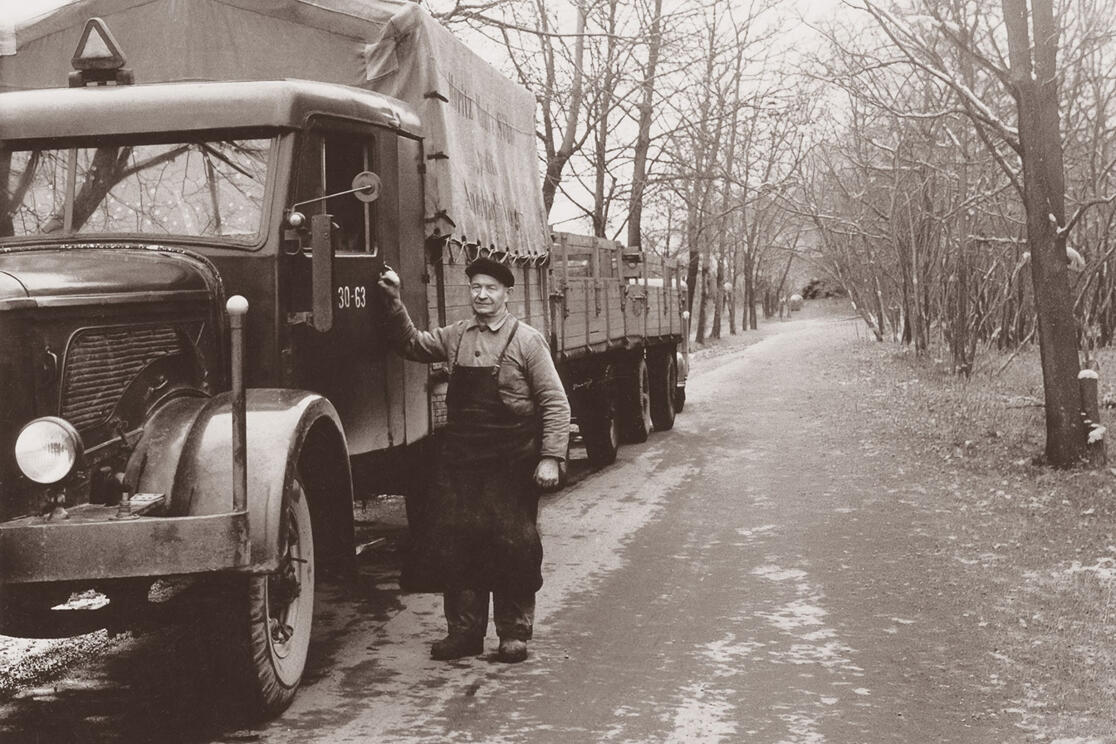
My uncle Fritz Schemm, my father’s older brother, was born in March 1903 in Unterheinsdorf, Saxony, near Reichenbach in the Vogtland region. When his mother got married, he moved at the age of eight to Auerbach, 15 kilometers away, where, after completing elementary school, he began an apprenticeship as a blacksmith, which he successfully completed in the spring of 1921 with his journeyman’s examination. Immediately afterward, he joined the Moritz Maul & Sons freight forwarding company in Auerbach, initially as a blacksmith and coachman. The company was well-established and, in addition to two VOMAG trucks, also operated the local taxi and ambulance.
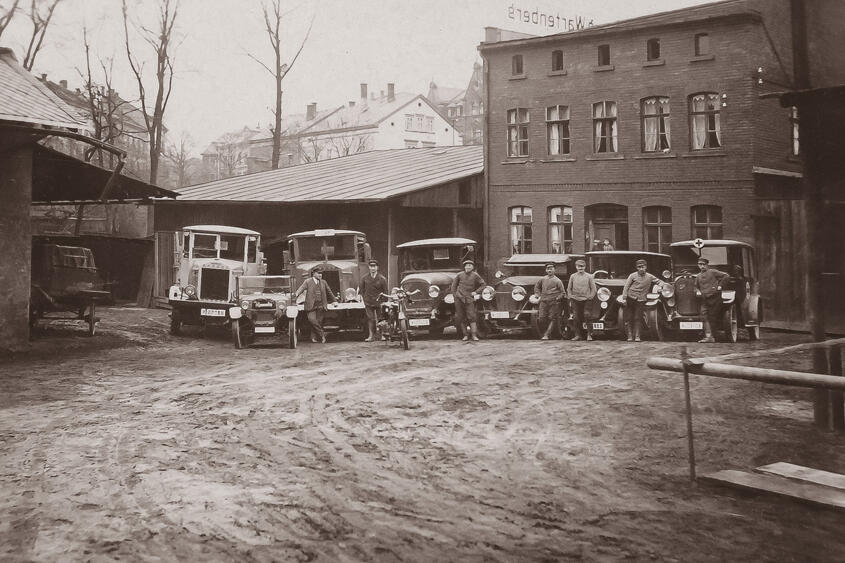
When his girlfriend Else became pregnant, Fritz was able to move into two rooms without a private bathroom in the back building of the freight forwarding company, and his boss gave him a bed and a wardrobe as a helping hand to get started. A year after little Fritz was born, the couple married in April 1924; Margarete was born a month later. Fritz and Else lived their entire lives in this house, where they also raised their two children. It wasn’t until around 1960 that the toilet, which had been tucked away in a dark corner of the vehicle shed, was replaced by indoor plumbing. That was a relief for me, too, because as a small child I was very afraid when I had to go to that outhouse in the dark—it smelled of diesel, oil, and grease, and sometimes the still-warm trucks made strange cracking noises. For many years, Else used a large pitchfork to shovel piles of coal from the freight yard onto the loading beds of the horse-drawn carts. And she cleaned the drivers’ lounge and washroom until she was 85 years old.
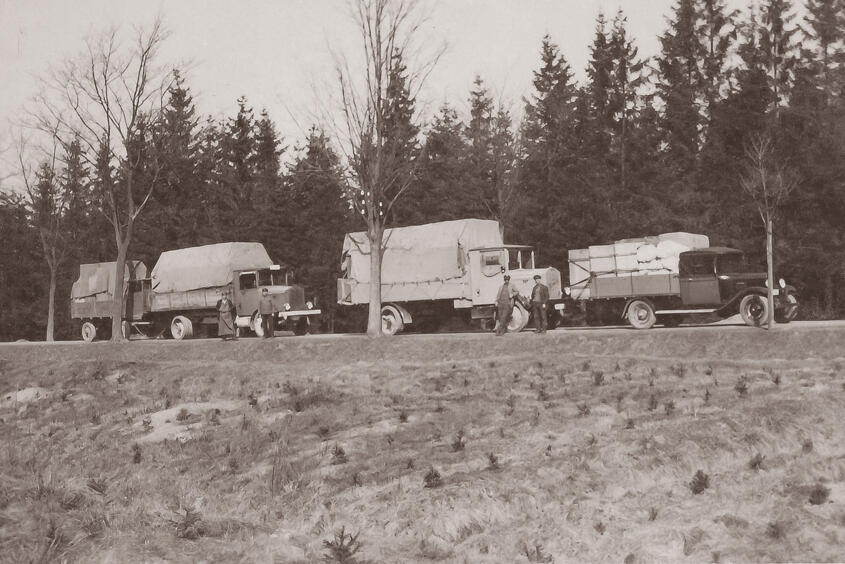
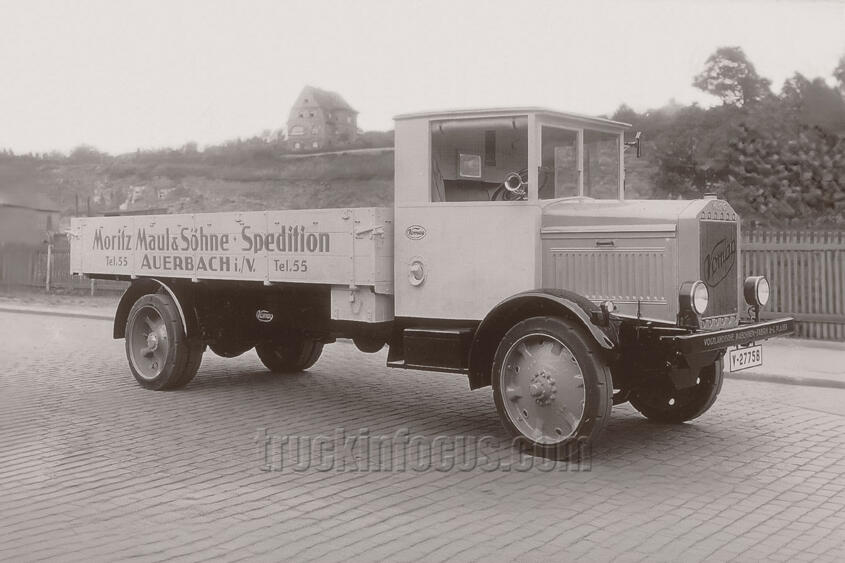
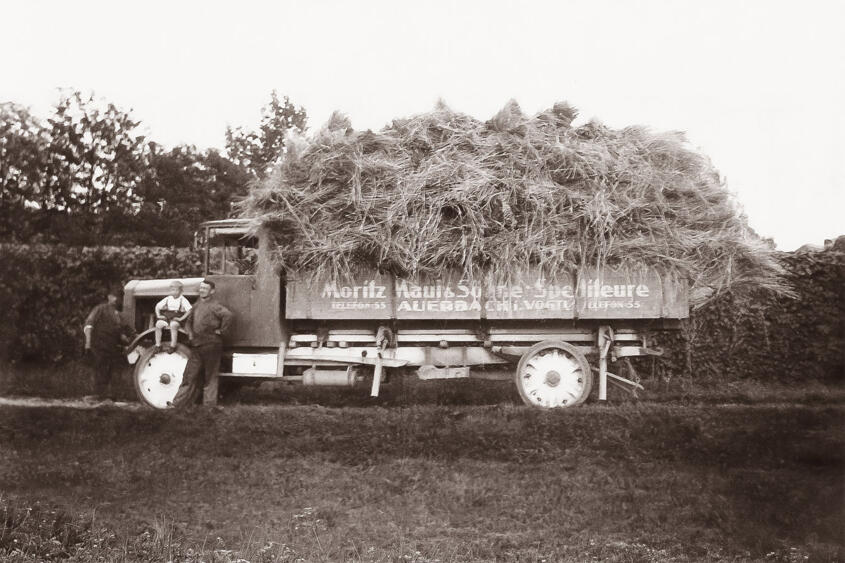
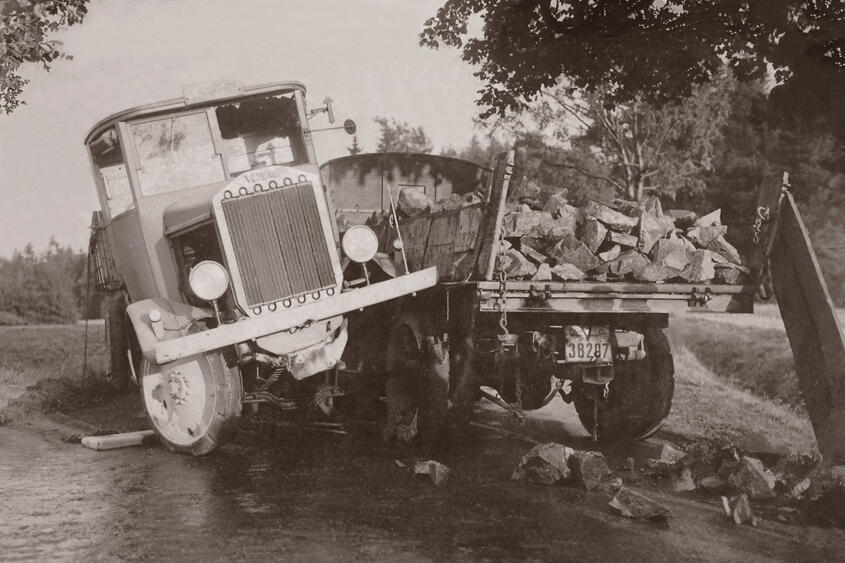
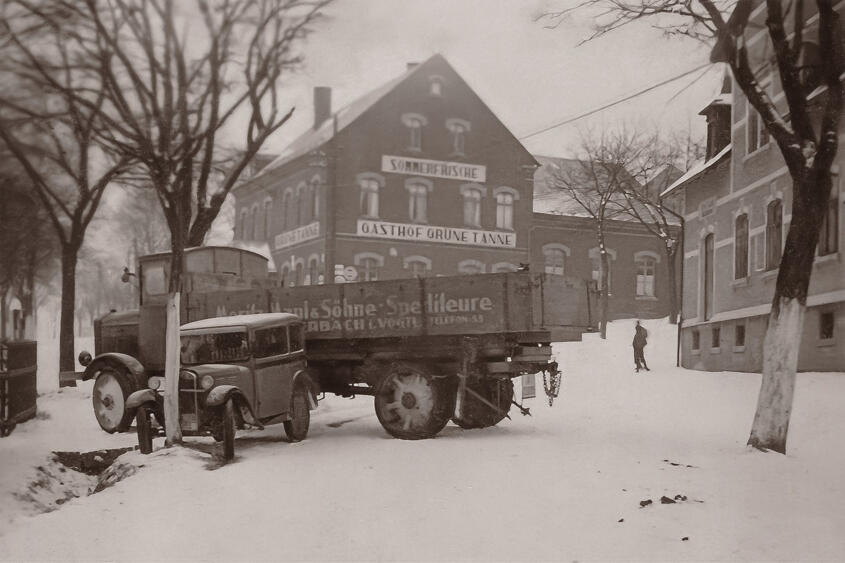
In his job as a coachman, Fritz quickly managed to train his horses to respond exclusively to his personal commands—a click of the tongue or a whistle. One day, when the boss himself tried to move the team to the side because it was standing in the middle of the freight yard, the horses didn’t budge an inch. This earned him a scolding: “Schemm, stop this nonsense!” Despite such minor incidents, Fritz was promoted to “special transport worker” in 1923, and later the boss entrusted him with one of the two VOMAG trucks. He drove this truck for the next few years.
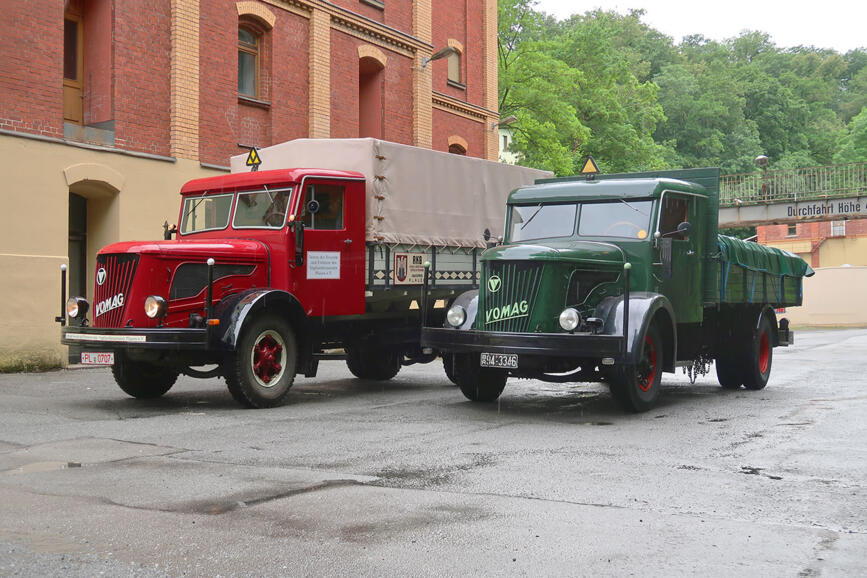
After a few stints with Mercedes and Magirus trucks, the Moritz Maul freight company purchased a new 4.5 LHG model truck from VOMAG in Plauen in 1942. The four-and-a-half-metric-ton truck was equipped with a wood gas engine, which was subsidized by the government at the time. Wood was considered a “domestic fuel” independent of imports; diesel fuel was reserved primarily for the army. The truck was assigned to Fritz Schemm. In those days, every driver considered it a great honor to be entrusted with a brand-new vehicle – one felt a sense of responsibility. Prudence, care, and taking personal responsibility for maintaining the vehicle were a given. As a result, Fritz could usually be found on, in, or under “his VOMAG” even in his free time.
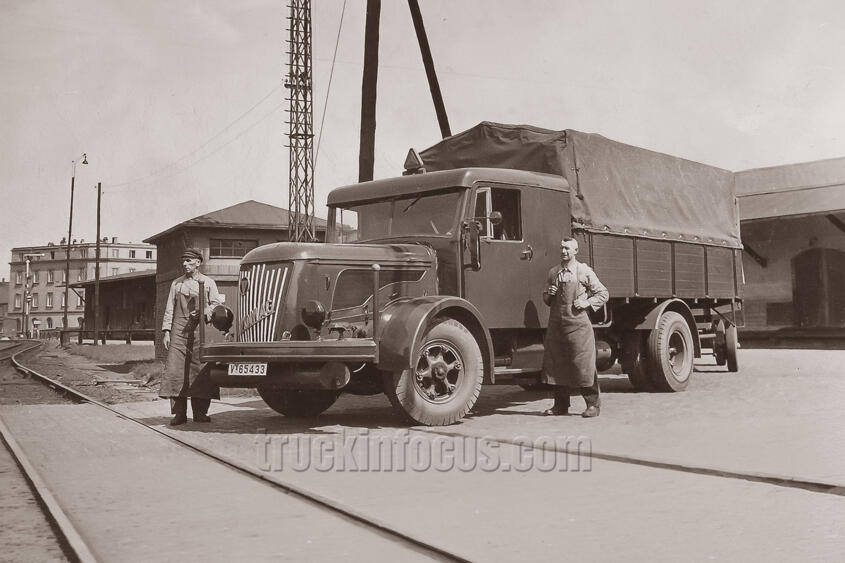
The boss obviously had excellent connections all the way to the top. Thus, both the VOMAG and its driver were classified as “indispensable for supplying the regional population,” thereby escaping confiscation by the army and deployment in the war effort. The continued existence of the Moritz Maul & Sons freight forwarding company was secured.
When World War II ended, the vehicle remained the backbone of the business and was also used for convoy transports for the Red Army. This is how driver Schemm made it all the way to the eastern border of Poland in the VOMAG. He carried out the conversion of the fuel system from wood gas to diesel on his own. Later, he played a key role in the reconstruction of the cab.
The Maul trucking company’s fleet also included a wartime Ford and a Dodge, two Phänomen Granit trucks, and an Horch H 3 A. But until the mid-1960s, the VOMAG remained the heaviest and, at the same time, the most important vehicle. It was usually in service with two trailers.
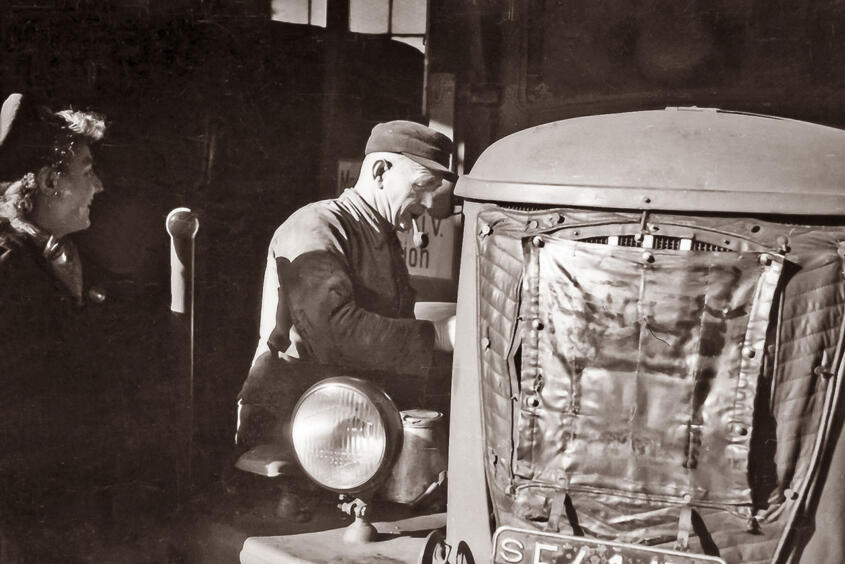
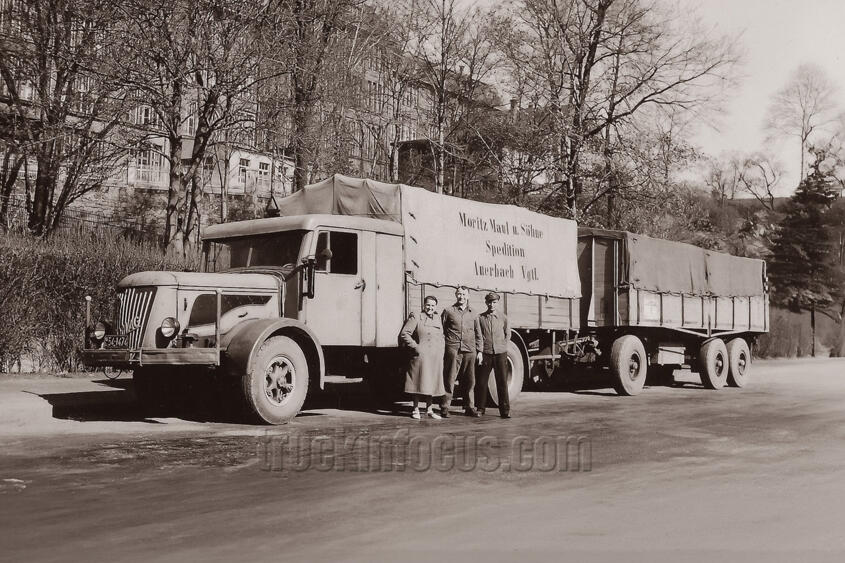
By 1967, thanks to excellent care and meticulous maintenance, Fritz Schlemm had achieved a total mileage of 1.3 million kilometers with the vehicle, requiring only a single engine overhaul. This achievement – which was fantastic for its time – was honored with a major article in the regional press.
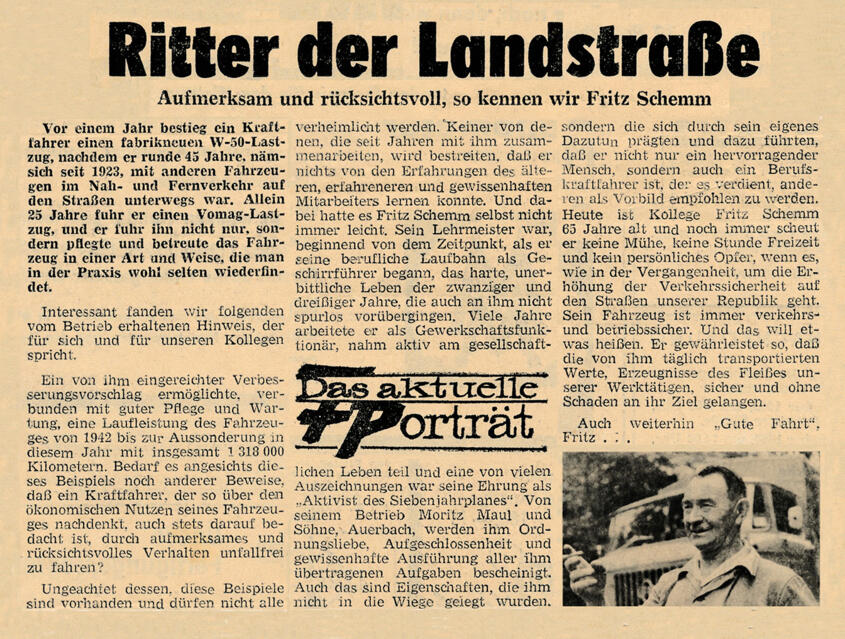
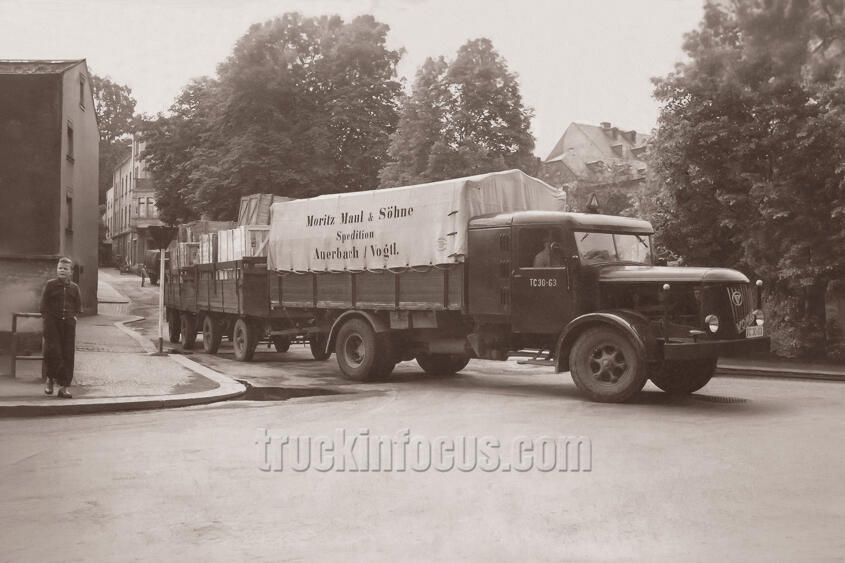
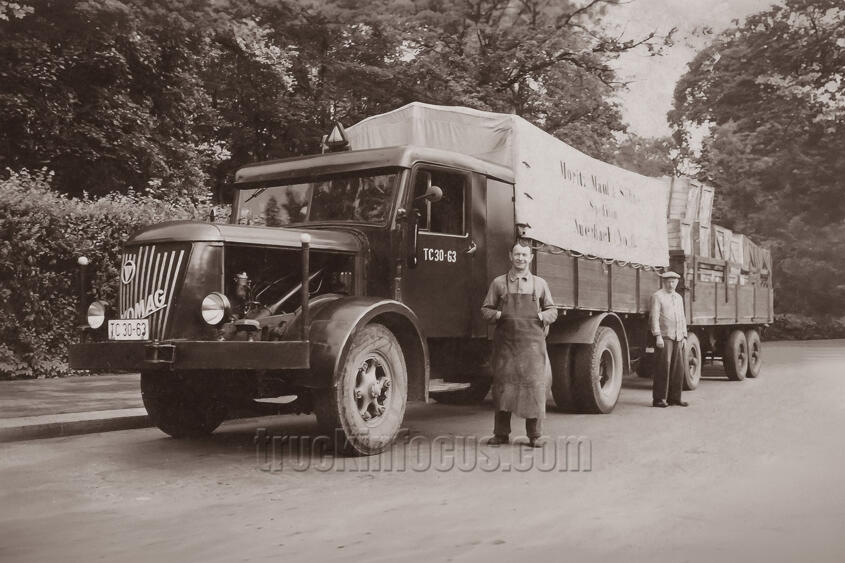
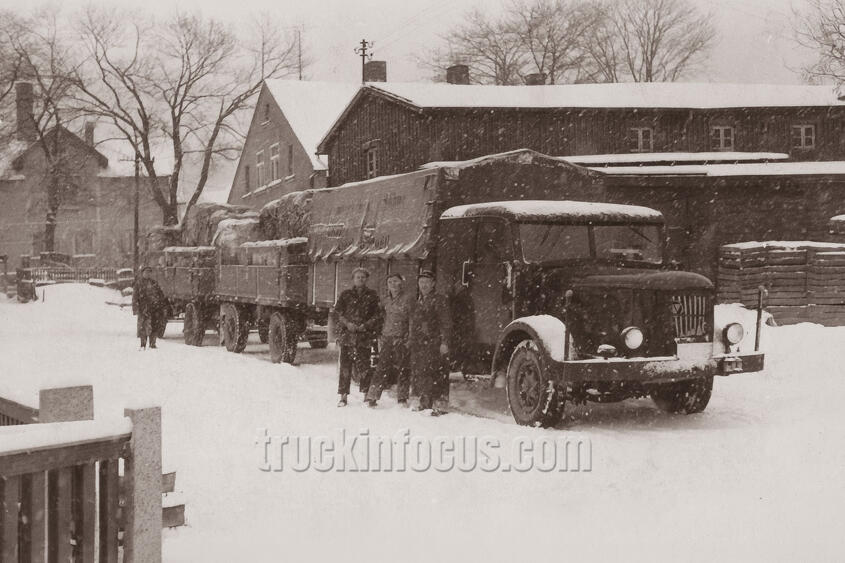
Occasionally, I was allowed to accompany my uncle on his trips. For me as a teenager, driving the truck through the Vogtland region and the Ore Mountains was an unforgettable experience. One day, however, the time came to say goodbye to the veteran VOMAG when the Maul company received a brand-new IFA W 50 in 1967, which was, of course, assigned to Fritz Schlemm. Filled with pride over the new truck, but also with tears in his eyes as he said goodbye to his beloved VOMAG after 25 years, he took the wheel of the sturdy, East German-made cabover truck for the very first time. In the years that followed, he sat behind the wheel of the W 50 every day until he was 73, when a severe hip condition forced him to give up his life as a trucker.
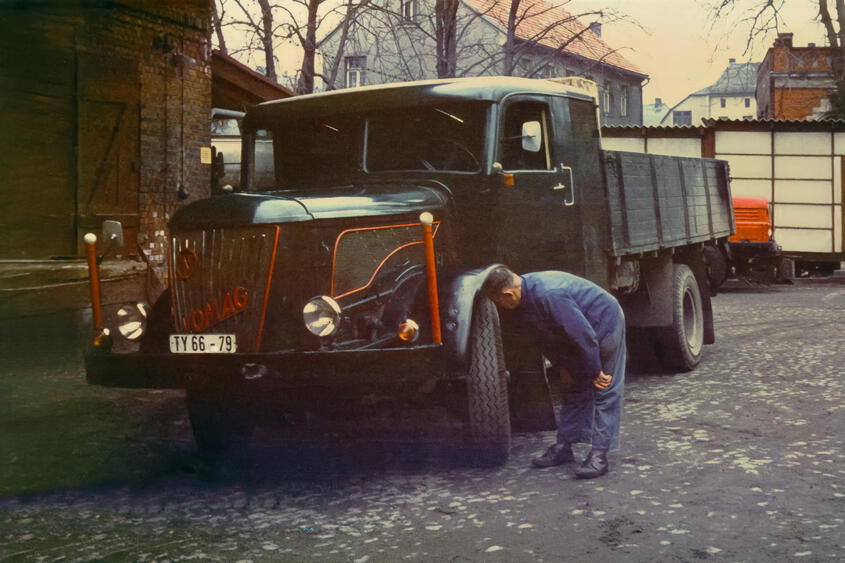
The VOMAG was then purchased by a private trucking company in Netzschkau near Reichenbach, which later put another vehicle of the same make into service.
Ten years later, my uncle – already in poor health – visited his beloved VOMAG once more. I accompanied him on that trip. Fritz Schemm died in 1982; his wife, Else, followed him in 1997 at the age of 97. To the great surprise of all family members, she left 120,000 German marks in her checking account upon her death. Tragically, her two children, Fritz and Margarete – both childless – had already passed away before her. But there was an illegitimate granddaughter whom my cousin had “fathered” during a company outing. Much to the chagrin of some freeloaders who had been eyeing a share of the inheritance, the granddaughter, of course, inherited everything.
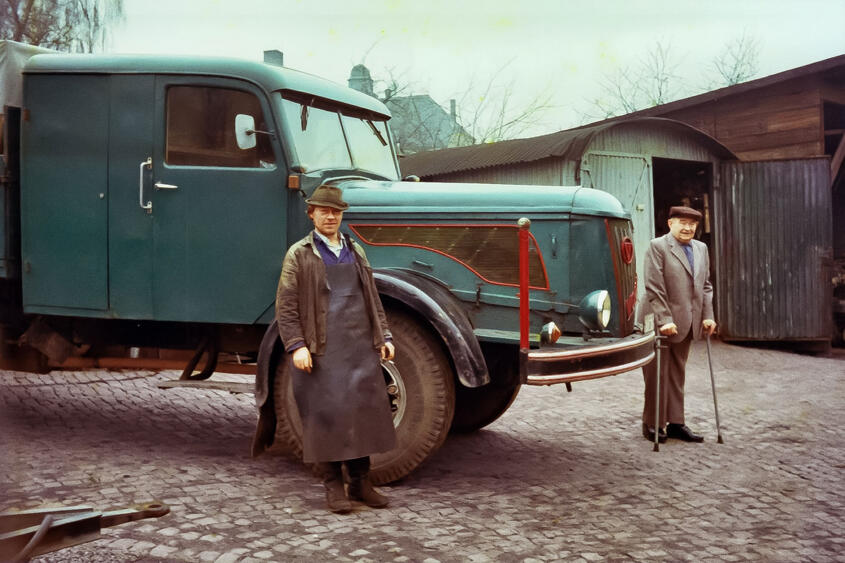
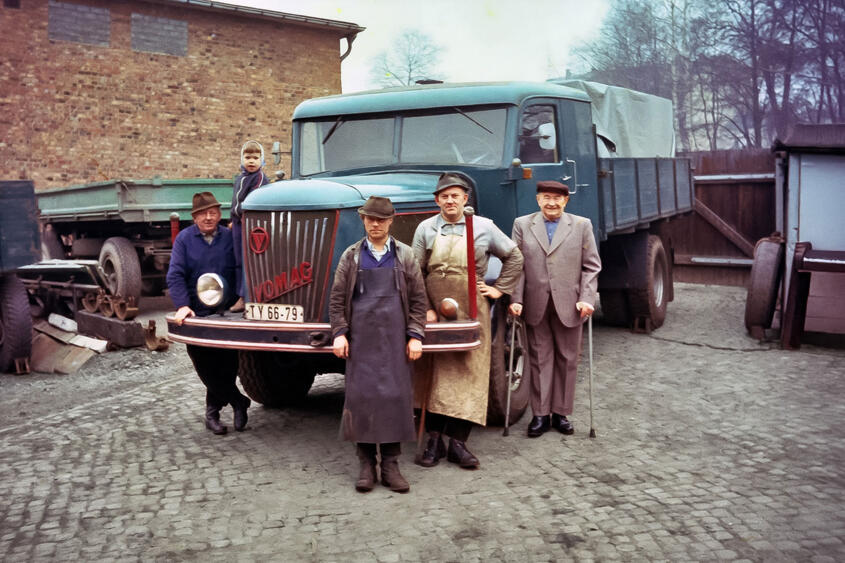
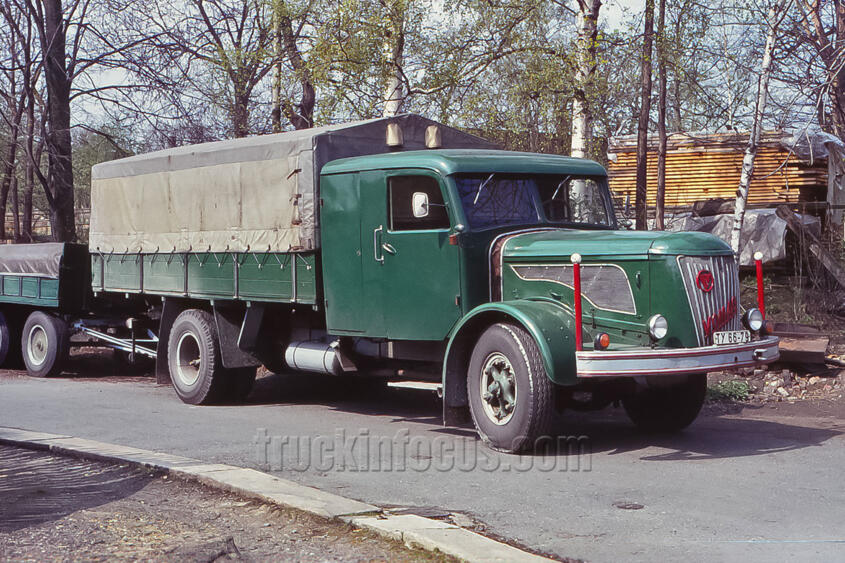
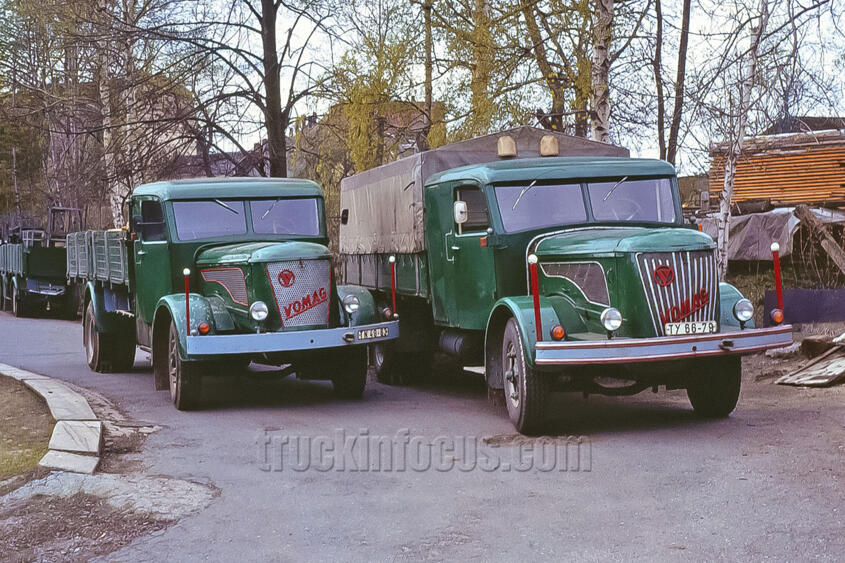
Unfortunately, the old VOMAG in Netzschkau had to undergo several upgrades to remain operational in the fleet. As a result, the original VOMAG engine was replaced with a Schönebecker engine, and the transmission, differential, and axle drive were taken from a Skoda 706. The braking system was also extensively upgraded. These measures, however, ensured the vehicle’s survival – I never lost sight of it all those years – until after German reunification. In 1990, the vehicle’s active service came to an end; it was likely the last VOMAG still in operation. Right where its owner parked it under a roof back then, it still awaits its fate in Netzschkau today. Its owner, now more than 80 years old, is not yet ready to part with it.
This article was written by Klaus Schildkopf, who also provided all the photos.